

To paint is, in itself, an act of care.
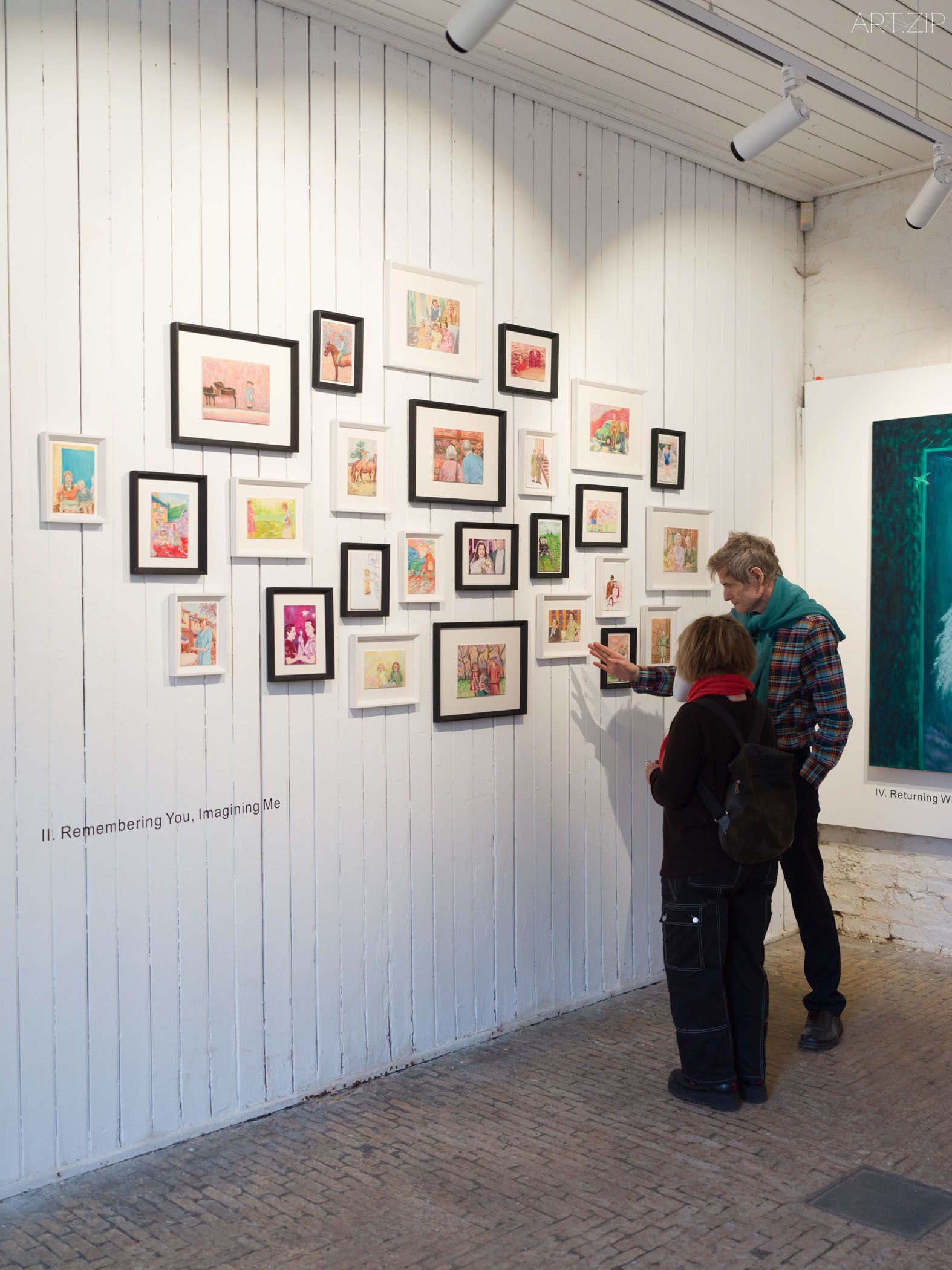
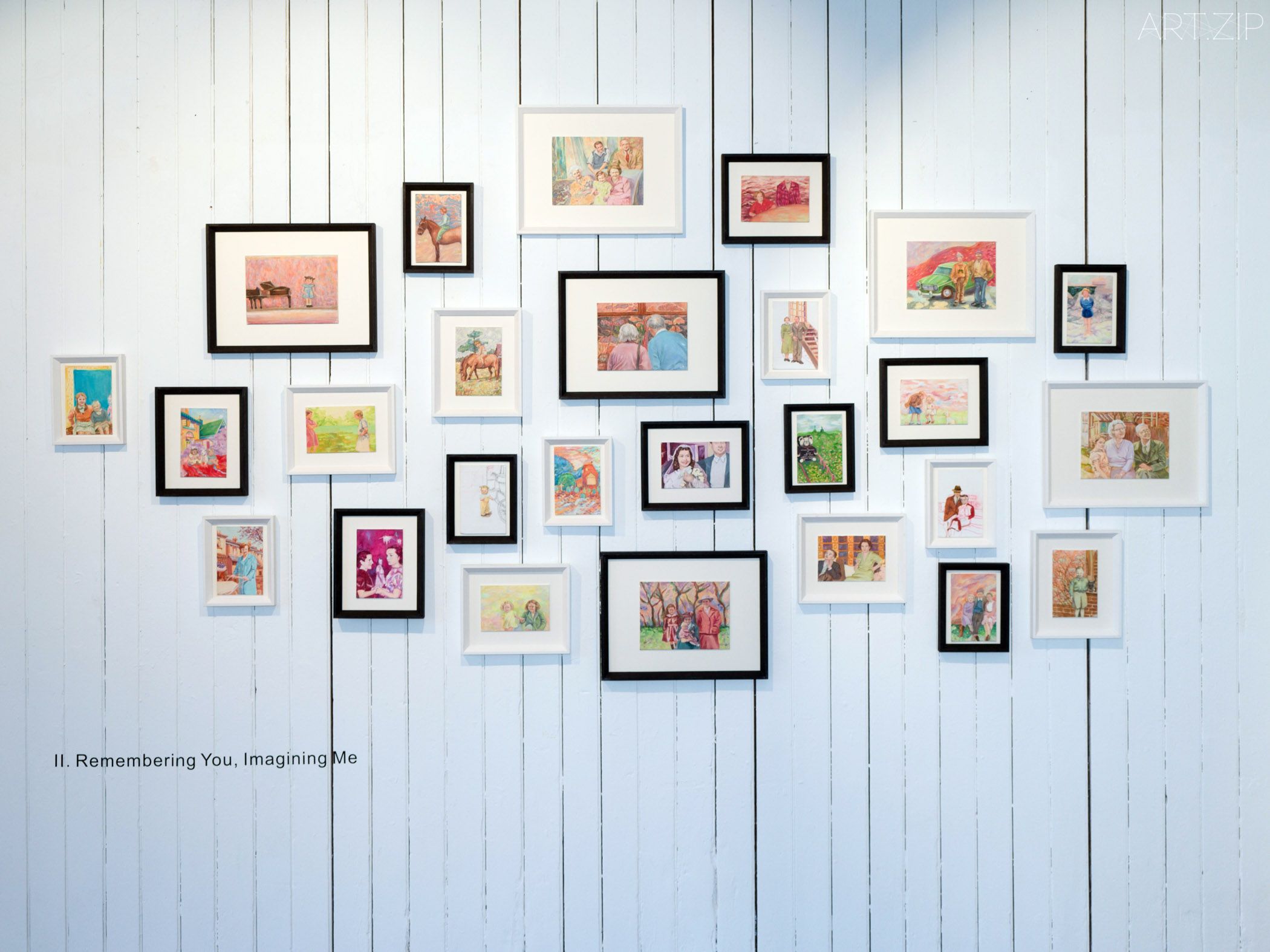
Family photographs that have drifted into the second-hand market are stripped of the relations and memories once attached to them. Passing from one owner to another, they lose their sense of belonging, and slip into the state of the unsayable. It is here that Yang Xinan turns to painting, using it as a way to approach the emptied contexts and dislocated emotions that continue to linger behind the image.
To enter someone else’s family image is to cross a boundary. So too is stepping into the past of a stranger, or touching narratives that have lost their original owners. In Yang’s practice, however, this crossing takes the form of care. Her intervention is gentle, imaginative, and empathetic. It opens a space for proximity without possession, and for attention without appropriation.
Care, here, becomes a way of remaining ethically close to the image while refusing to take possession of it. It means entering its space, drawing near to its past, and yet leaving it free from the burden of being fully told. In a contemporary art world so fluent in appropriation, translation, collage, and the quick consumption of images, Yang’s slower, more withholding, almost old-fashioned way of working acquires a subtle force of resistance in her practice. There is something quietly countercultural in her refusal to resolve, to extract, or to explain. She does not mine these images for content. She sits with them.
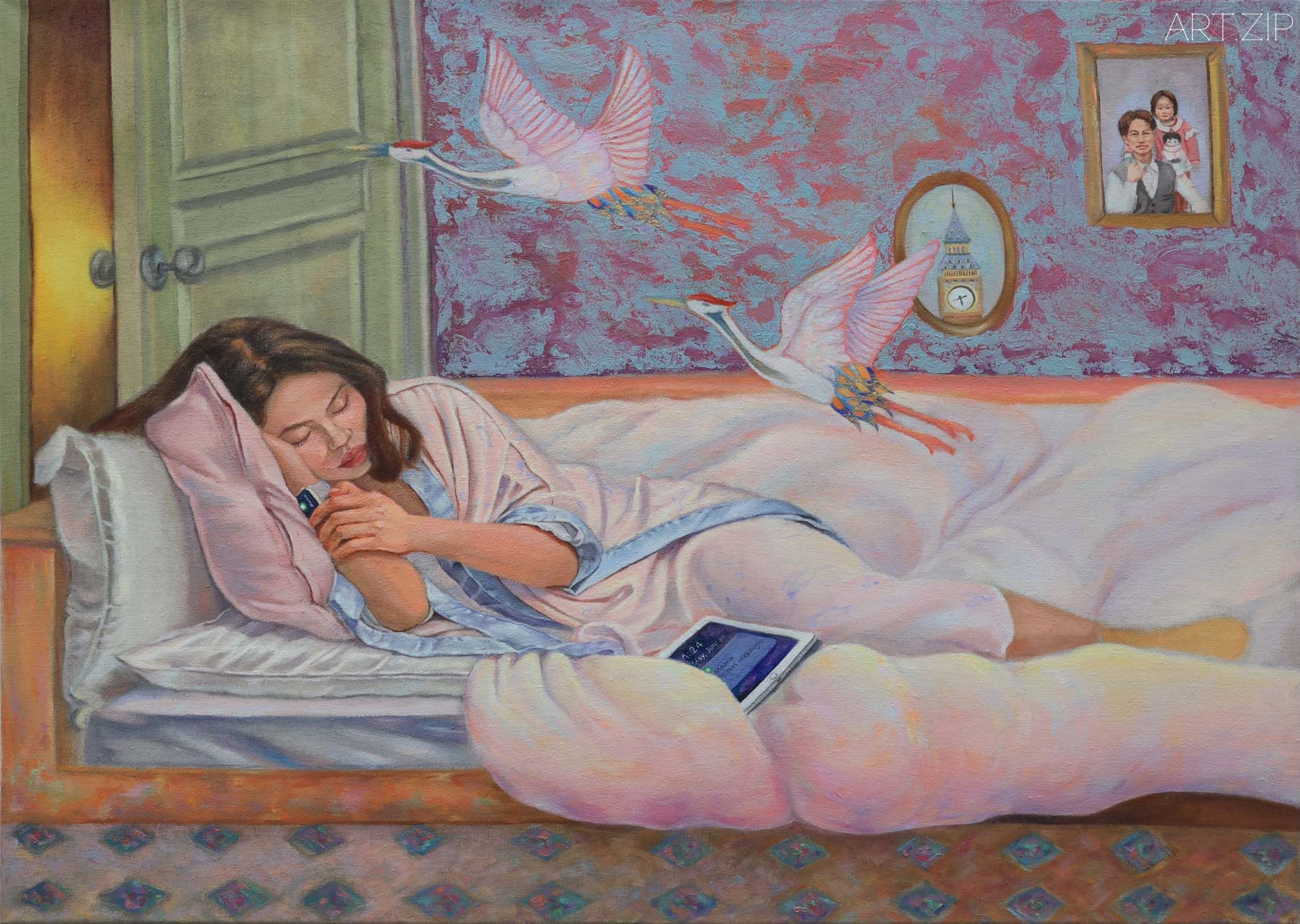
I still care I (2022), oil on canvas, 120x85cm, by Yang Xinan, Courtesy of the artist.
And what is left unsaid does not belong only to unfamiliar images. It lives just as fully within the most intimate of relations. No clear border has ever held between the stranger and the familiar. Strangers can carry the shape of intimacy, just as those closest to us, whether people, objects, or space, so often hold within them a distance that words cannot reach. Yang’s other series continue to explore within this atmosphere of ambiguity and suspension.
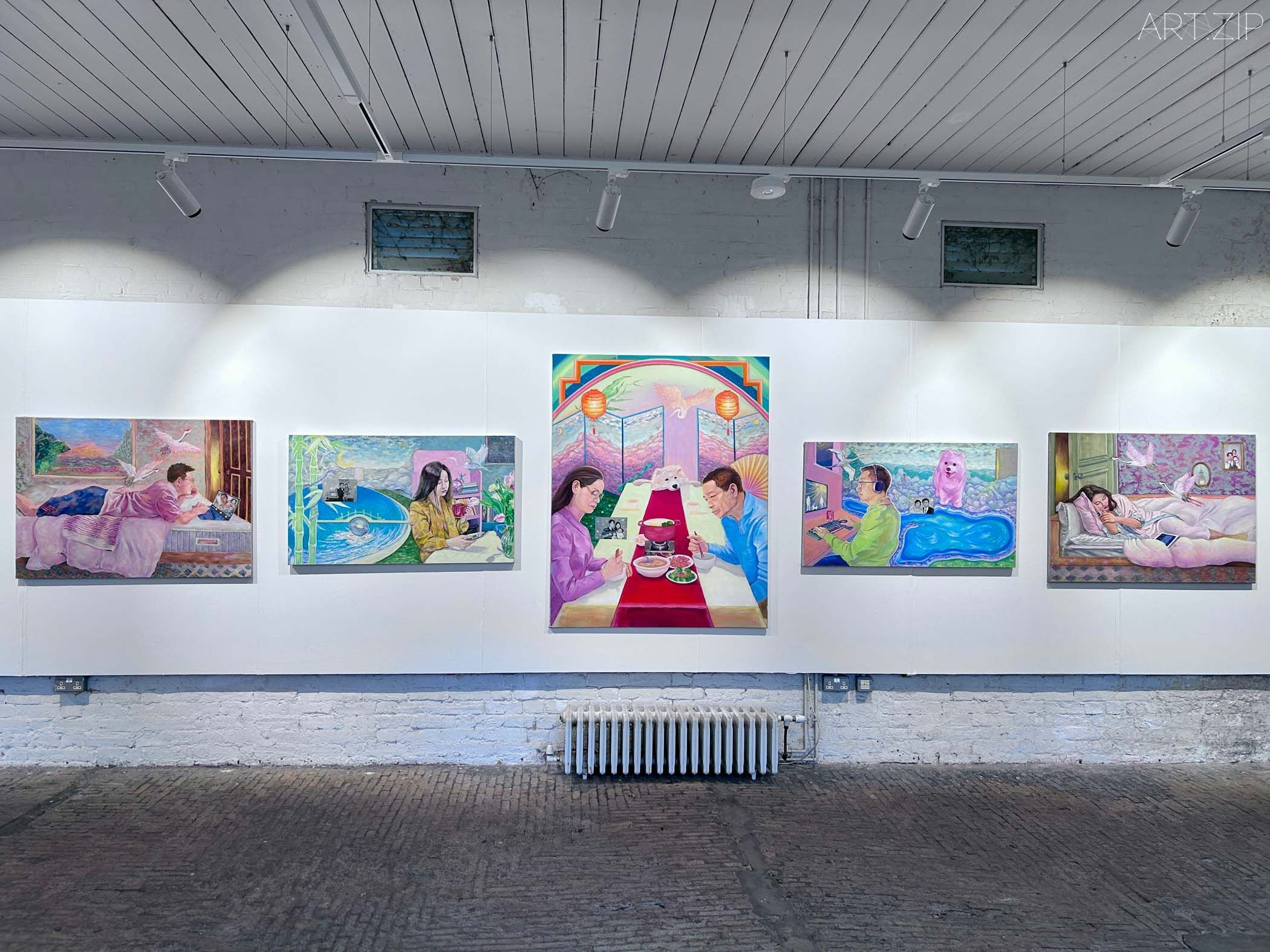
During the pandemic, Returning Without Arrival grows out of a life lived across three continents, with Yang and her family held apart by distance. The bond is still there, though altered by time and delay, made to endure through imagination and through images. Family, which ought to feel like the most certain of ties, remains present in a form that is stretched and deferred. Held somewhere between stability and fragility. The paintings in this series carry a particular kind of longing — not acute grief, but the quieter ache of continuity strained across geography and circumstance. Connection persists, but in a form that must be continually reimagined.
In Family Dinner and I Still Care series, attention turns to the structures that shape relations across generations. What passes between parents and children carries a sense of closeness, though never entirely shared. It lingers in the space between figures, held at a distance that is neither separation nor ease. There is no movement towards drama here, no turn towards resolution. Only a certain tension remains, difficult to name, and left undisturbed. Yang finds in these everyday situations a pressure that is all the more affecting for being so understated. The ordinary, in her hands, becomes the place where the most complex emotional negotiations are quietly conducted.
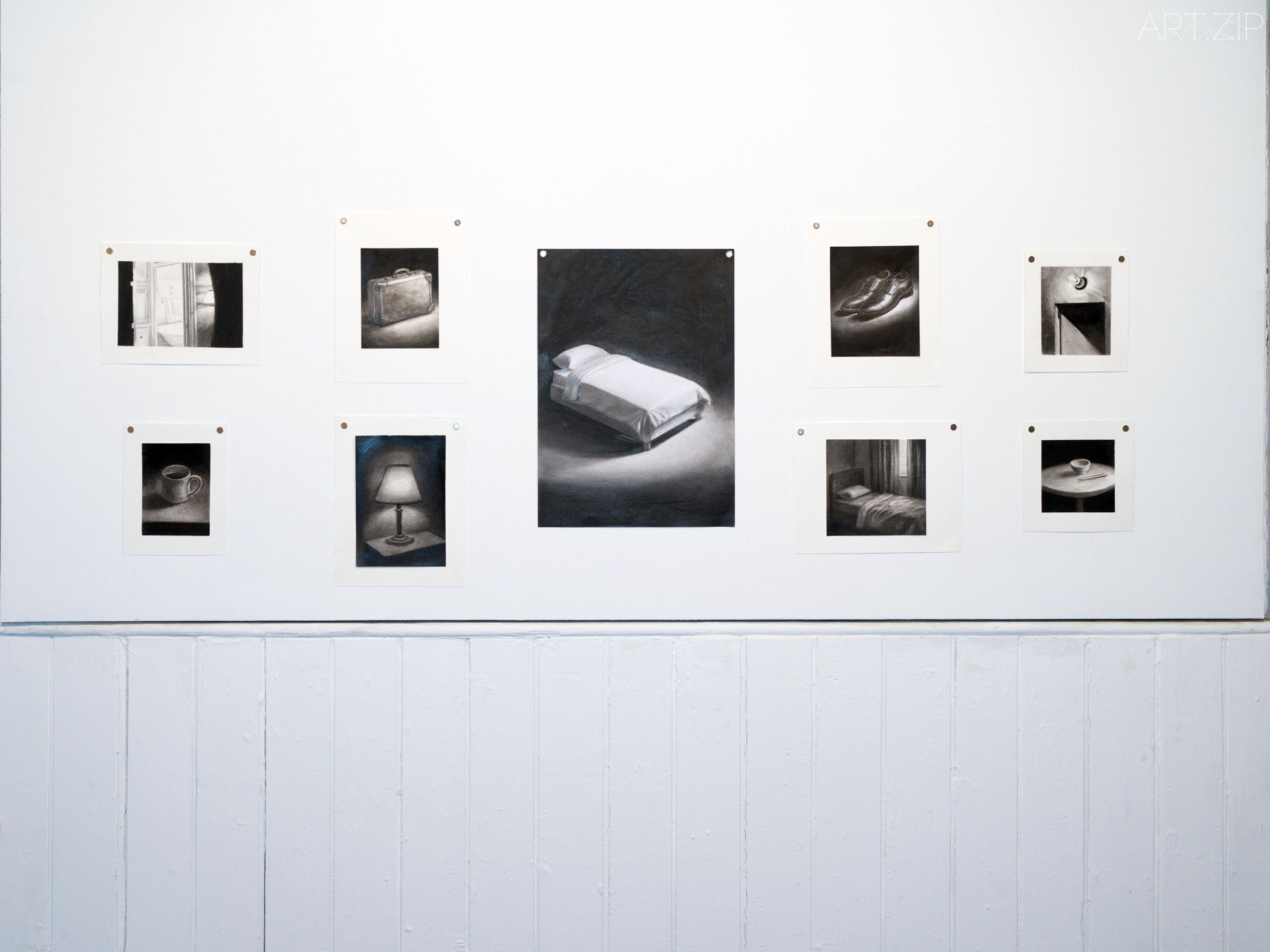
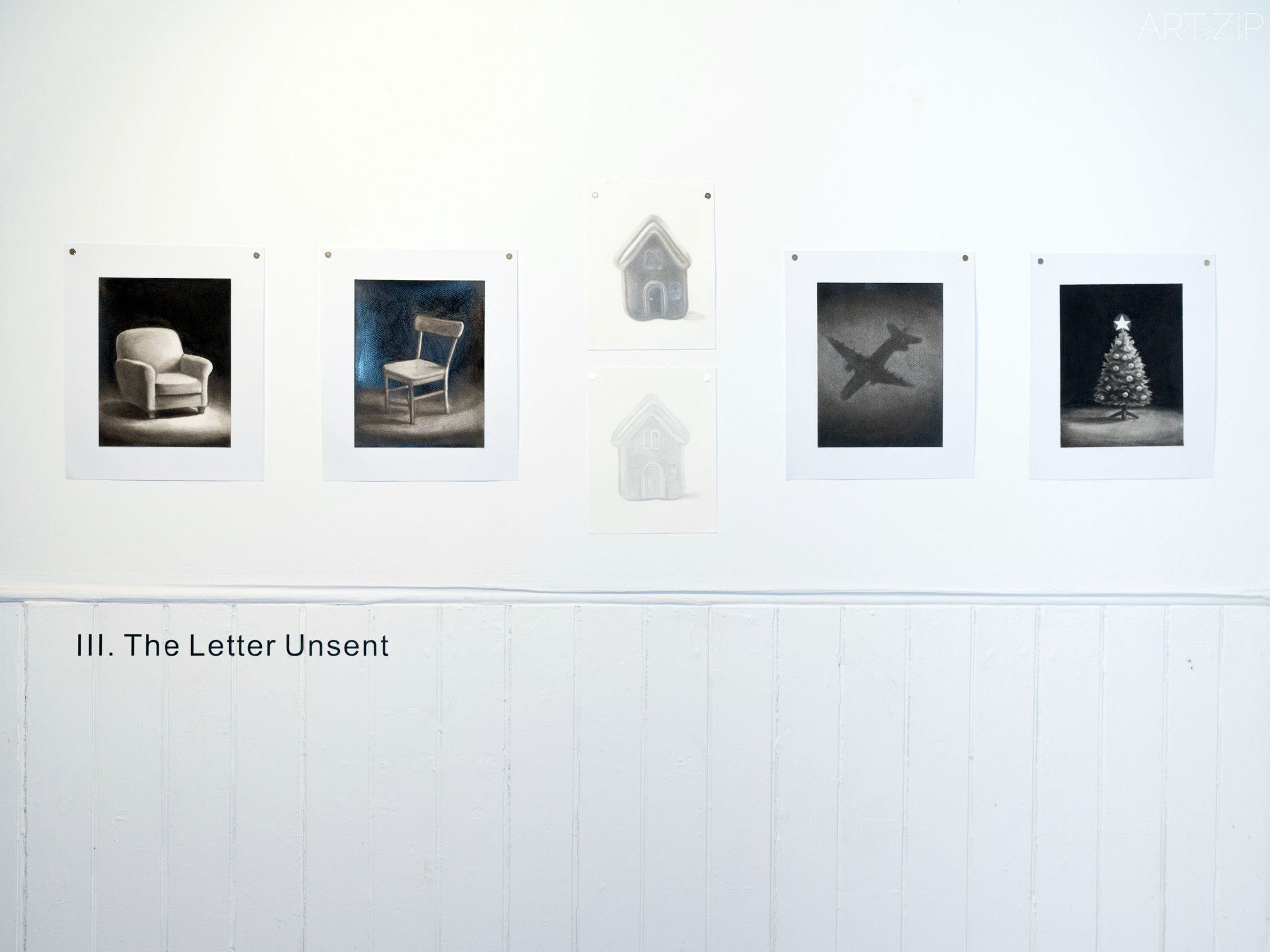
In the more theatrical The Letter Unsent, the unsayable drifts away from the figure and settles into the domestic interior. It comes to rest among pieces of furniture and the ordinary arrangements of home. Chairs, tables, familiar objects of the room, things that would scarcely draw a glance in everyday life, take on a faint note of melancholy. Quietly, they seem to gather within themselves the people and stories that have passed through. Objects, in Yang’s reading, are not merely props or backdrops. They are witnesses — absorbing, over time, what those who inhabited the space could not say aloud.
Across these series, Yang is never entirely absent. Born in the 1990s and working from an East Asian context, she paints out of experiences that have touched her directly – the pull of family, the long shadow of distance, as well as the strain placed on intimacy by time, separation, and return. These works remain close to those origins, yet the feelings move outward, carrying something others can recognise without needing it to be explained. In that movement lies much of the force of her work: a way of staying faithful to the particular while allowing itself to speak.
Care, in this sense, becomes a way of meeting existence and responding to it over time, allowing something to stay perceptible. To care for the unsayable within lived experience may be what gives Yang Xinan’s paintings their enduring pull.
去繪畫,便是去照料。
流落在二手市場的家庭舊照,剝離了原本附著其上的關係與記憶,在被佔有與被轉手的過程中一次次失去歸屬,由此陷入「不可言說」——藝術家楊希南以繪畫為方法,去觸及那些圖像背後真空的語境與出離的情感。
《Remembering You, Imagining Me》 中,圖像裡的人物早已無人知曉,她卻巧妙地無意於考證其背後的故事,而是保留失去指認後仍然滯留的情緒狀態,以顏料留鎖氤氳。
進入他人的家庭影像、進入陌生人的過去、進入失去原主的敘事,這本身是一種越界。但越界並不意味著掠奪。楊希南以溫柔的、想像的、富於同理心的介入,承擔其這些圖像的「照料者」角色。
從這個角度看,「照料」所指向的,是與圖像保持倫理距離的方式——進入其中,卻不急於佔有;靠近其過去,但不替它講述。在藝術已經高度習慣於挪用、轉譯、拼貼與快速消費圖像的語境中,這樣一種緩慢的、反消費的、甚至略顯保守的姿態,反而構成了楊希南創作中的對抗性。
有趣的是,這種「不可言說」並不只存在於陌生圖像之中。它同樣存在於最親近的關係裡。陌生人與親近者之間本就沒有絕對的邊界。陌生的,也可能帶著親近的投射;最熟悉的人與物,也常藏著無法被明說的距離。楊希南其他系列中的實踐,亦在觸碰這其中的曖昧與懸置。
例如 《Returning Without Arrival》 系列中,疫情期間的她與家人分處三塊大陸,這段經驗在畫面中被處理成一種延宕的連接狀態。家庭關係,一種本該最為堅實的聯結,只能通過想像與圖像的方式維繫。
《Family Dinner》 與《 I Still Care》系列則指向代際之間的情感結構,與父輩間既親密又難以完全共享的處境被保留在人物之間若即若離的關係裡。畫面中並未出現戲劇化的衝突,也未滑向抒情化的和解,而是停留在一種更難命名的張力中。
在更具劇場感的《The Letter Unsent》系列,楊希南又將這種「不可言說」從人物身上移開,轉而交給居家空間中被抽離出來的傢具與物件。椅子、桌子、室內陳設,原本只是尋常之物,卻添上一縷感傷,沉默地收納著它所經歷的人與故事。
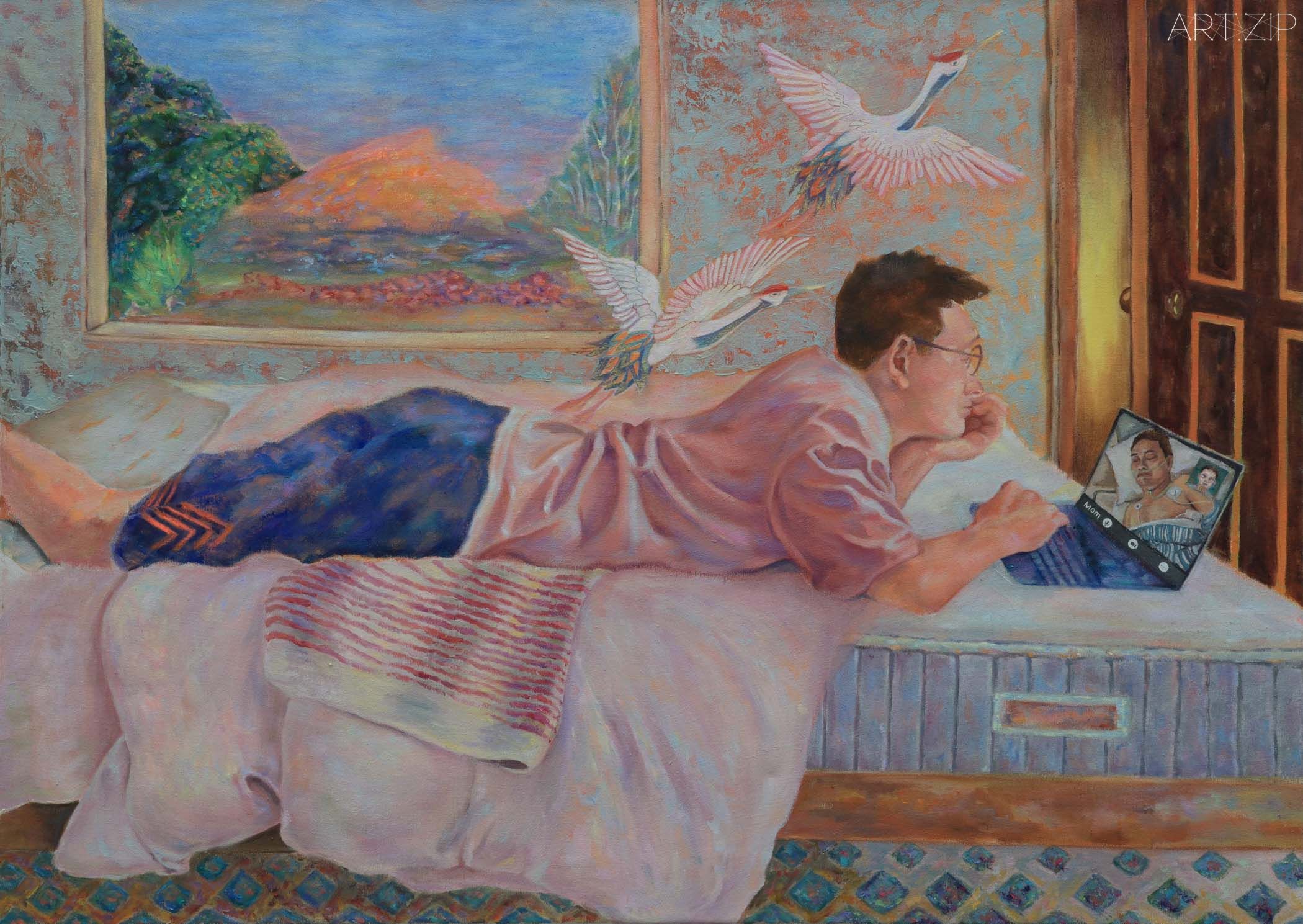
I still care II (2022) by Yang Xinan, oil on canvas, 120x85cm, Courtesy of the artist.
在這些系列作品中,楊希南從未真正缺席。她生於1990年代,在東亞的文化脈絡中創作,以親身經歷為繪畫的根基——家庭的牽引、距離投下的漫長陰影,以及時間、別離與重聚在親密關係上留下的張力。楊希南以繪畫與之停留,始終都在照料那些無法被語言說清、卻又始終縈繞的心緒。正是在這樣的流動之中,她的作品蘊含著強大的力量:一種忠於個人特殊性,同時又讓自身得以言說的方式。
既此,「照料」,是對存在的正視與持續回應,為它留存仍可被感知的可能。去照料生活經驗中的不可言說,或許正是楊希南繪畫之所以動人的原因。
Text by Huanzhi Zhang
Published on 3rd April 2026