


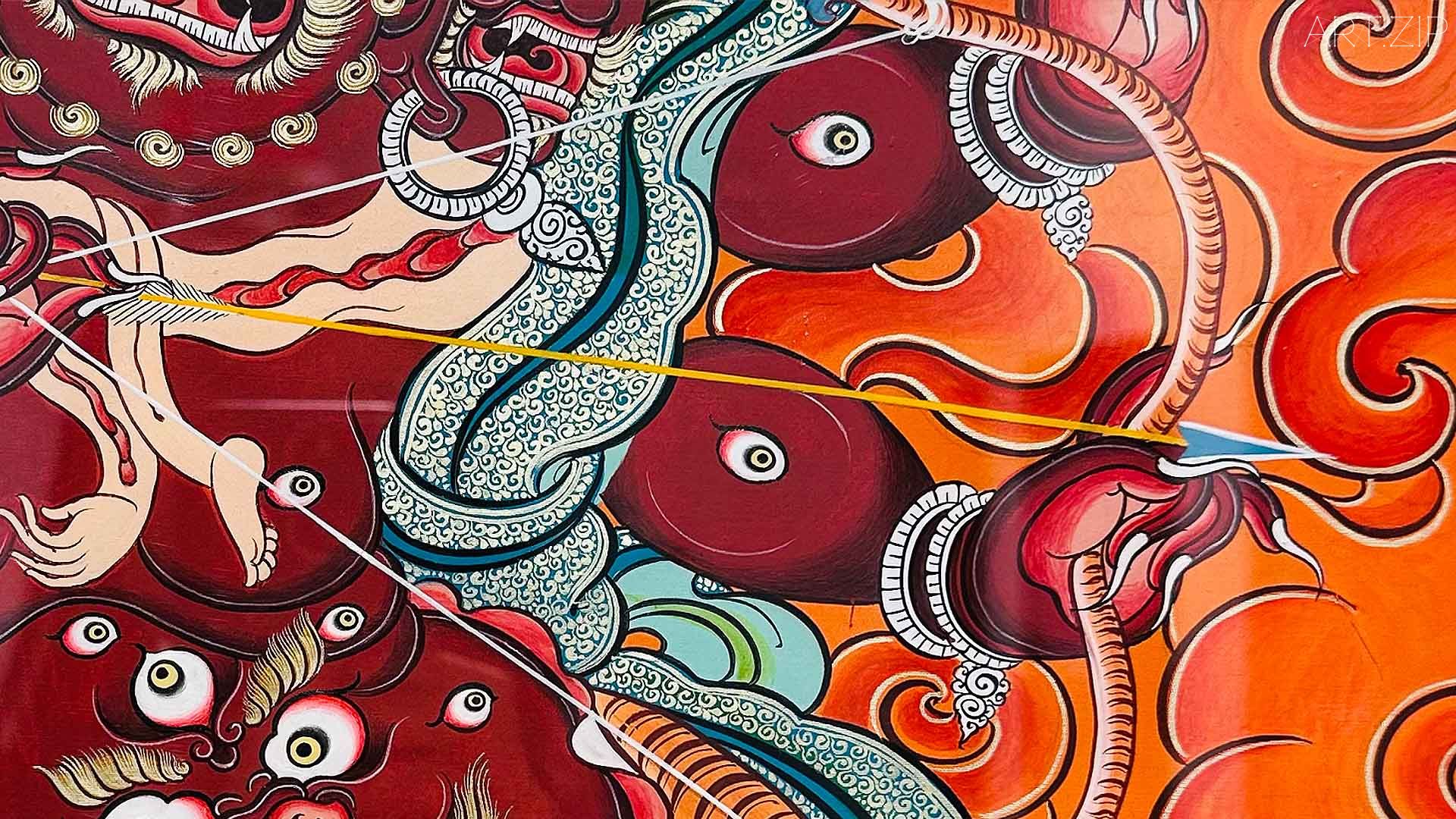
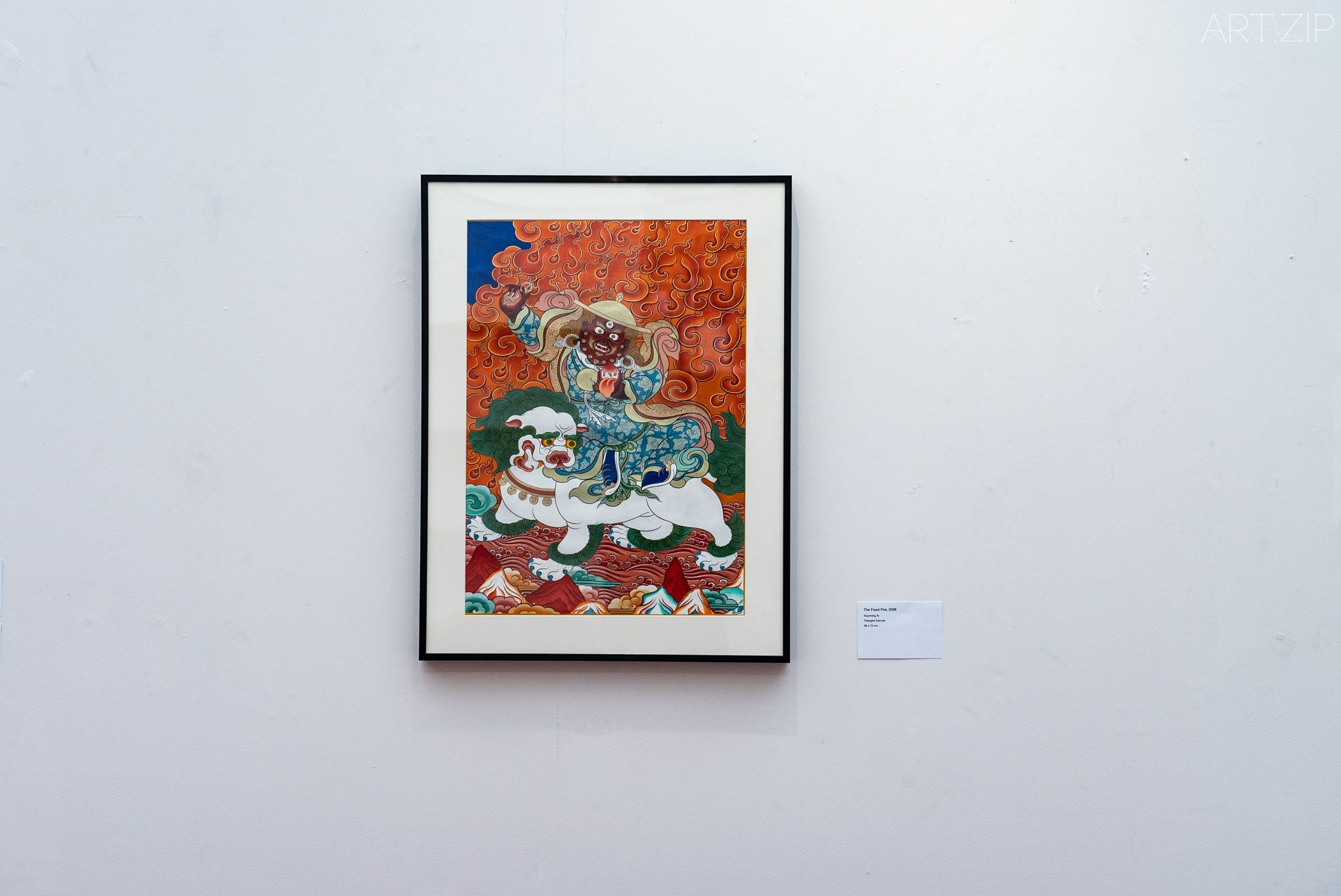
Within a reality shaped by chaos, desire, and constant change, Xiaoming Ai’s practice explores how consciousness constructs its own sense of internal order. In the aesthetic principles of Thangka art, the artist identifies a dharma of intentional image making.
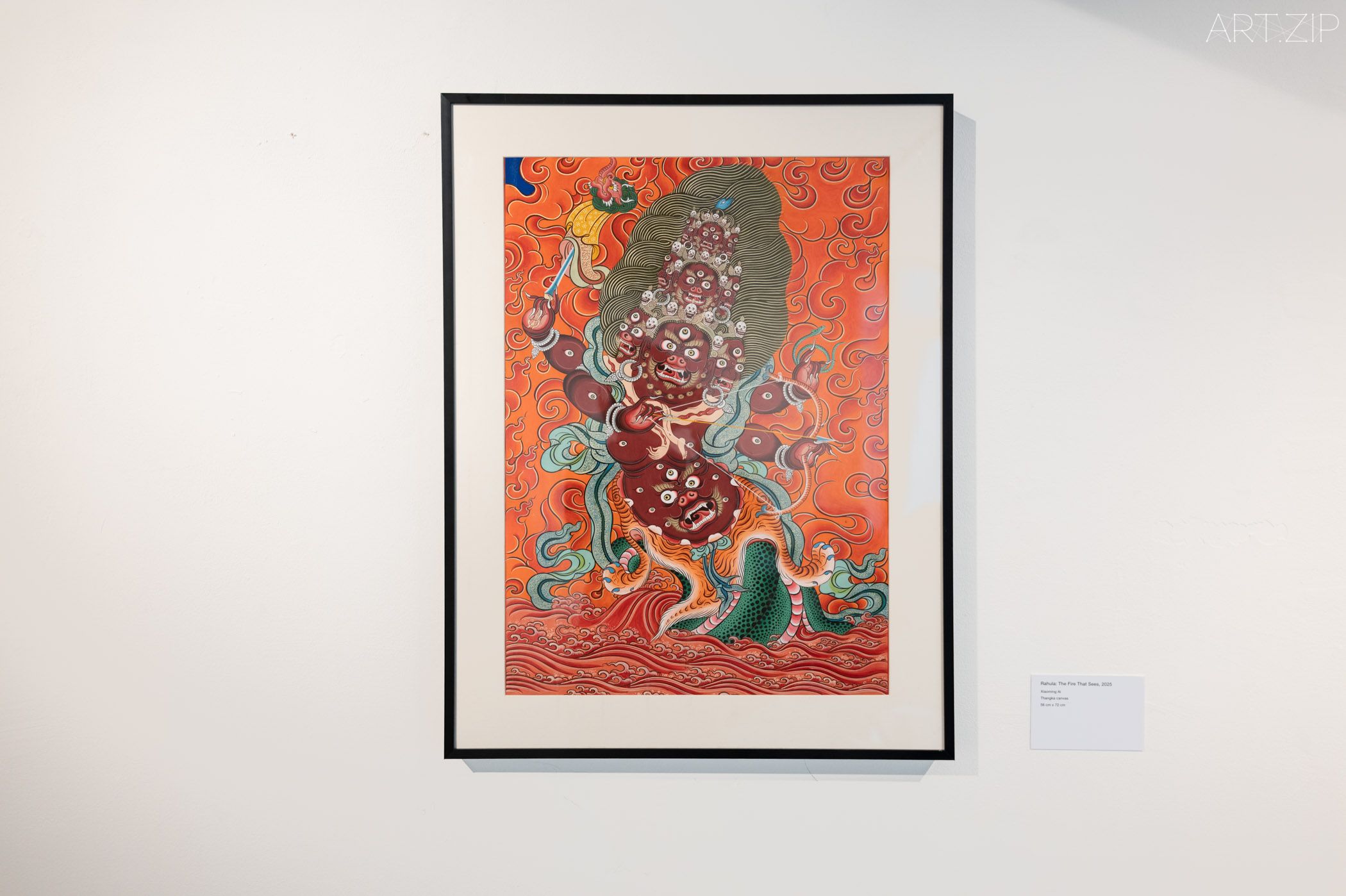
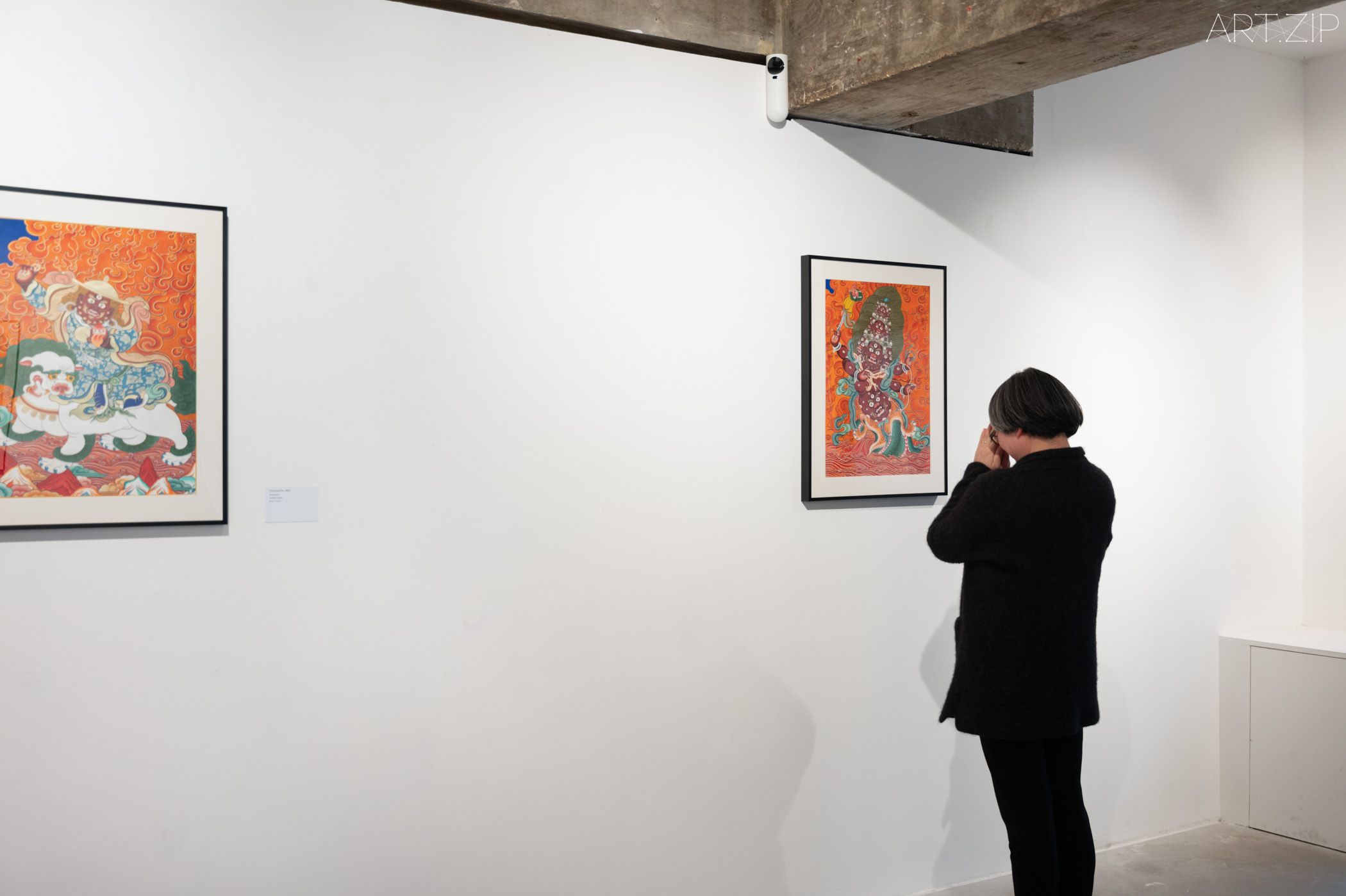
Ai’s approach to religious imagery, is by all intents and purposes, a Jungian one; symbols, and deities deployed as the open language of the collective psyche. In the painting One (2026) for example, she depicts Ekajati, a fiery protectoress of the Nyingma school dharma, identified by a headdress of skulls, tiger pelt skirt and single eye on her forehead. The depiction is that of a frightening, wrathful presence, trampling on humanity, but what we are truly seeing is a representation of enlightened energy in proactive form.
Detail of One, 2026.Courtesy of the artist. Photopgrapher: Violet.
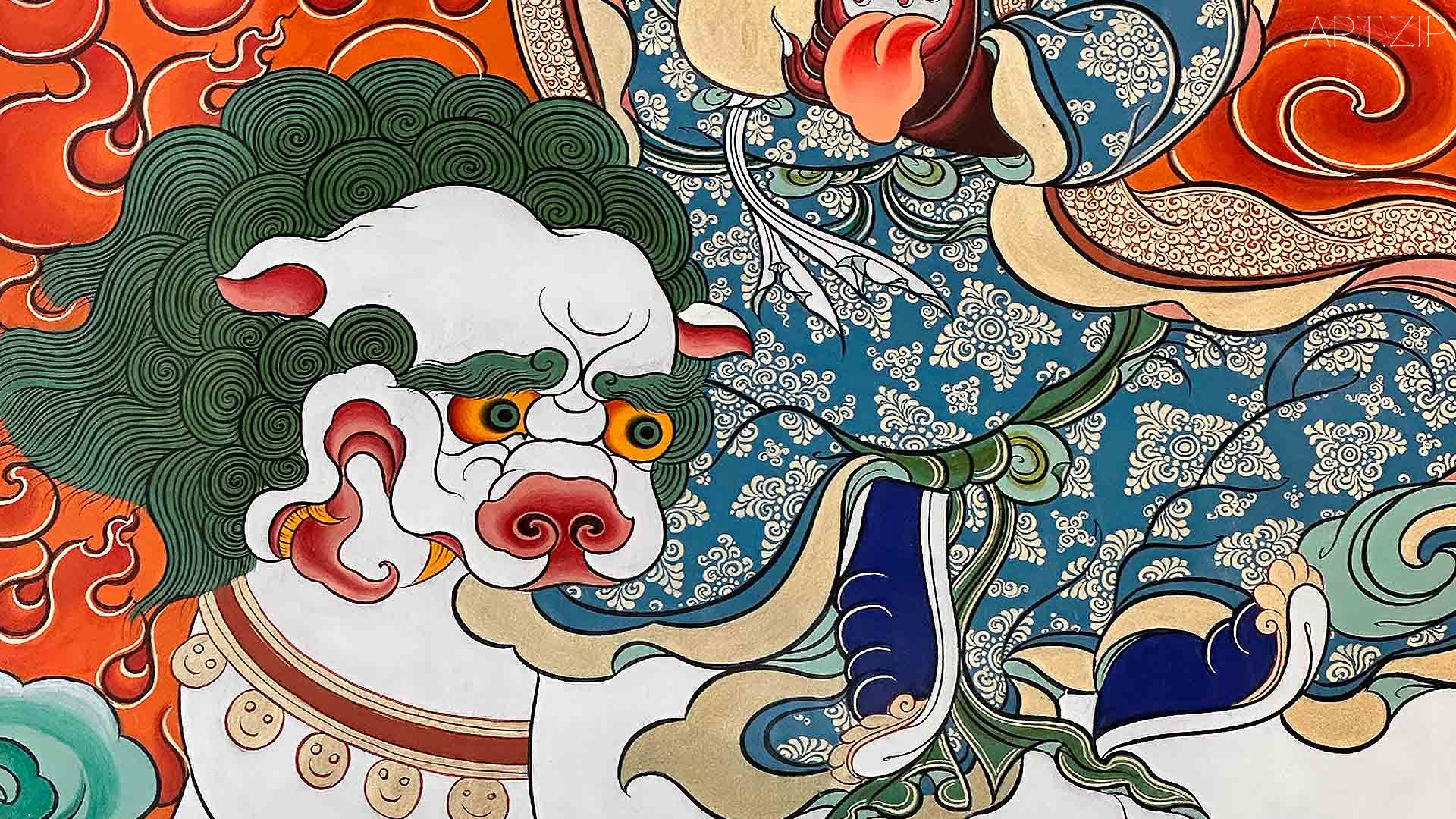
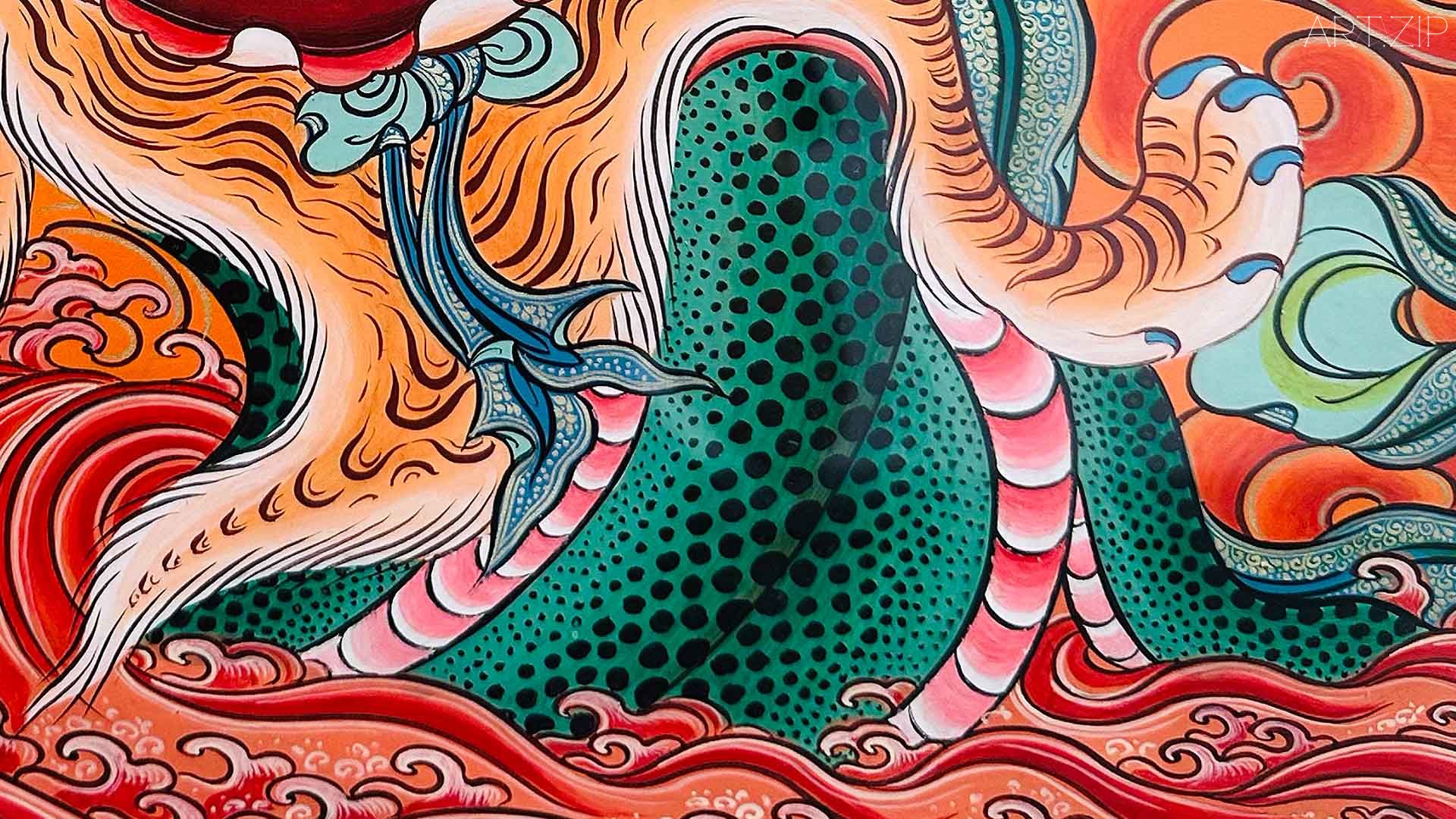
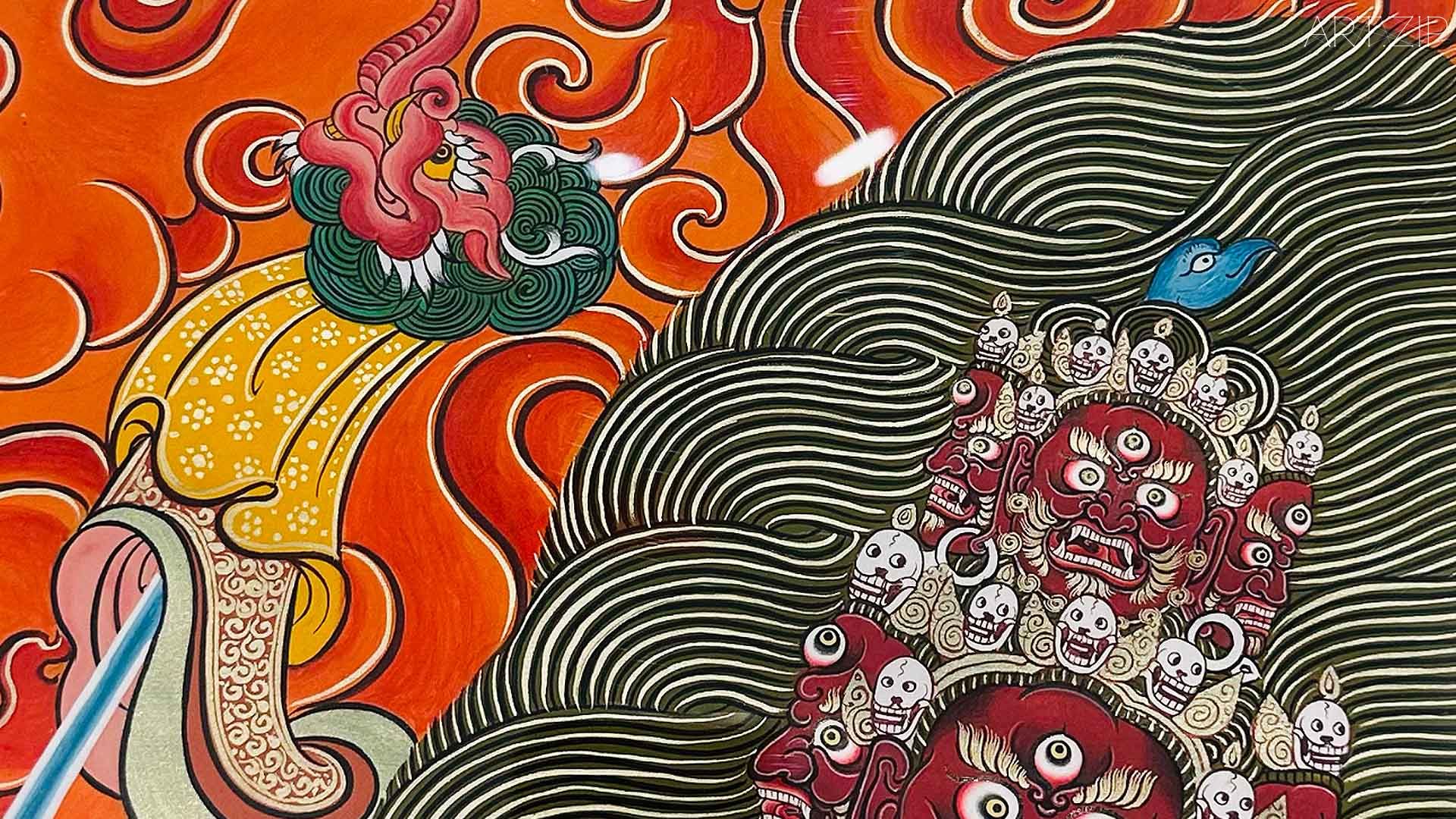
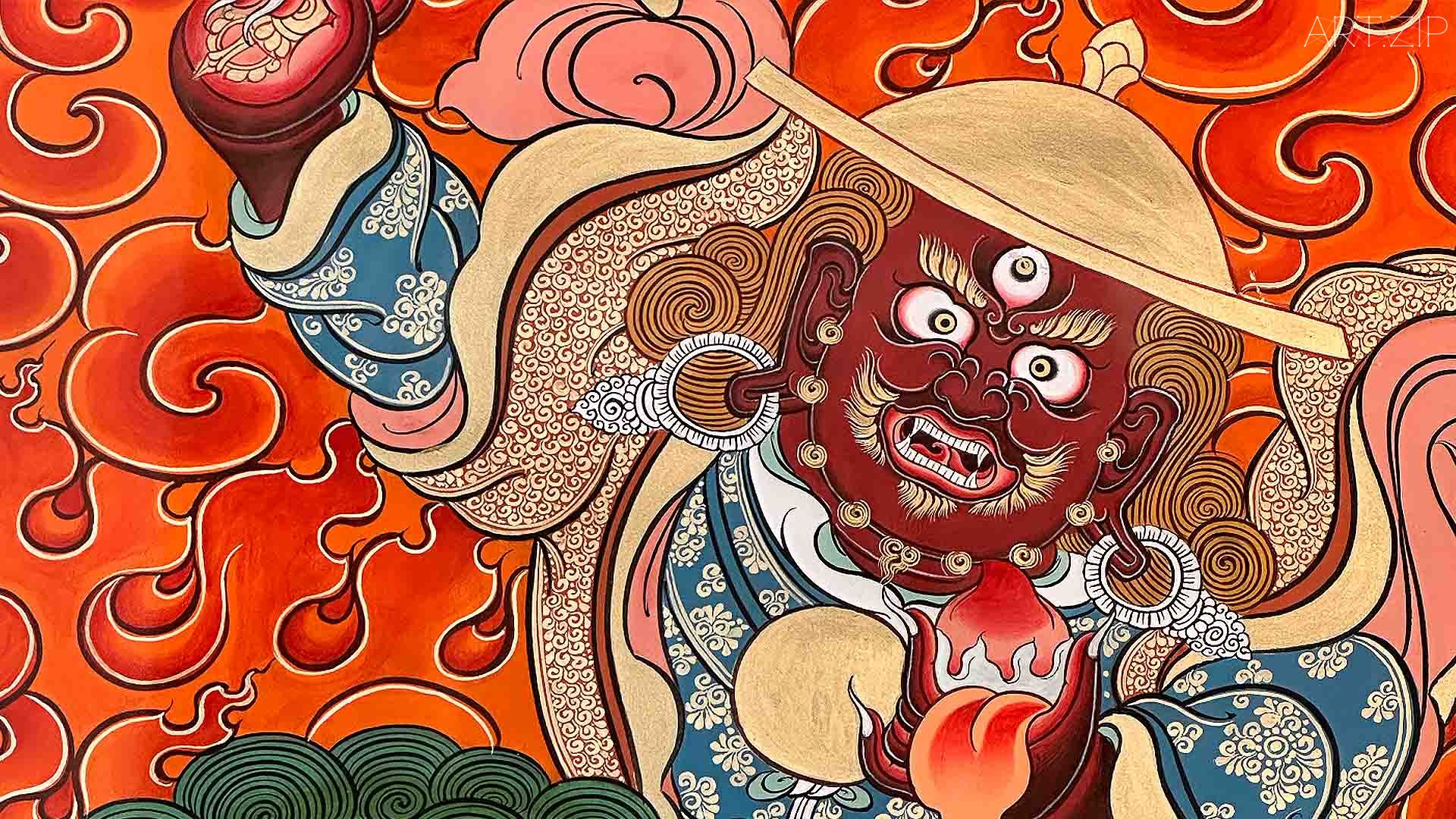
Taking Carl Jung’s view of religious imagery as a psychological reality and a container for overwhelming emotions, the deity can be experienced as a vessel through which the undesirable aspects of existence – fear, arrogance and self-obsession – are purified. Ekajati’s single eye is also the kind of symbol Jung’s ‘transcendent function’ describes: the image that emerges when the psyche holds two opposing positions in tension, reconciling them at a higher level.
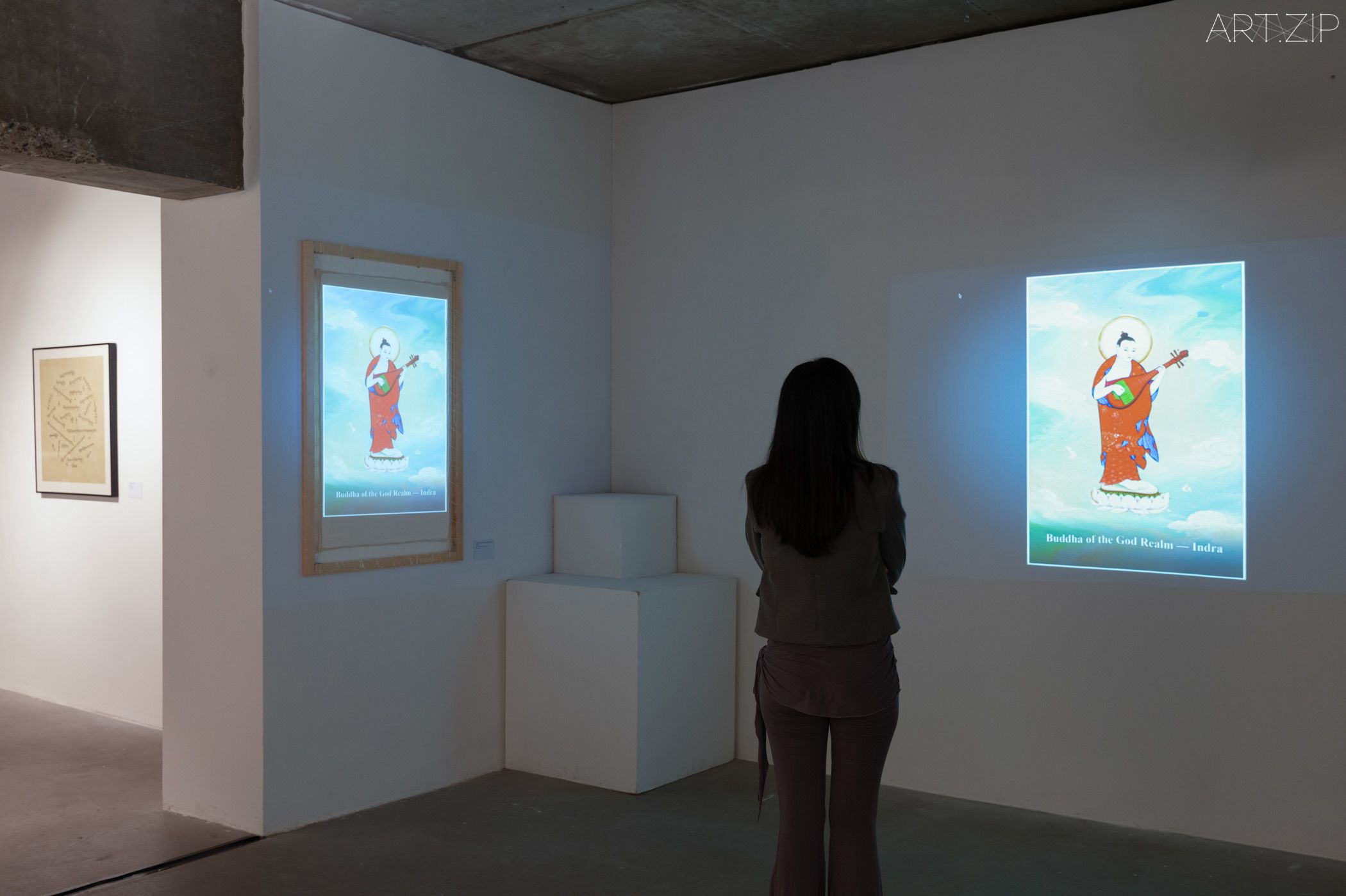
For Ai, Thangka imagery is a medium through which contemporary states of consciousness are reconsidered and associations redrawn. The body, algorithms and mindfulness (2026) is an interactive digital art piece projected onto Thangka canvas that transforms the viewer’s physical presence into parameters that shape the visual presentation. Ai demonstrates an extensive capability in programming, using algorithms to orchestrate the sequencing of deities, chromatic auras, and particle dynamics. The work deals contemporaneously with embodied participation, a fundamental intention of Thangka image making. Images are not simply for blind prayer or entertainment, as we encounter them in the feeds of today, but, when executed with discipline and devotion, may become portals of visualisation, the viewer recognising the same qualities in their own mind.
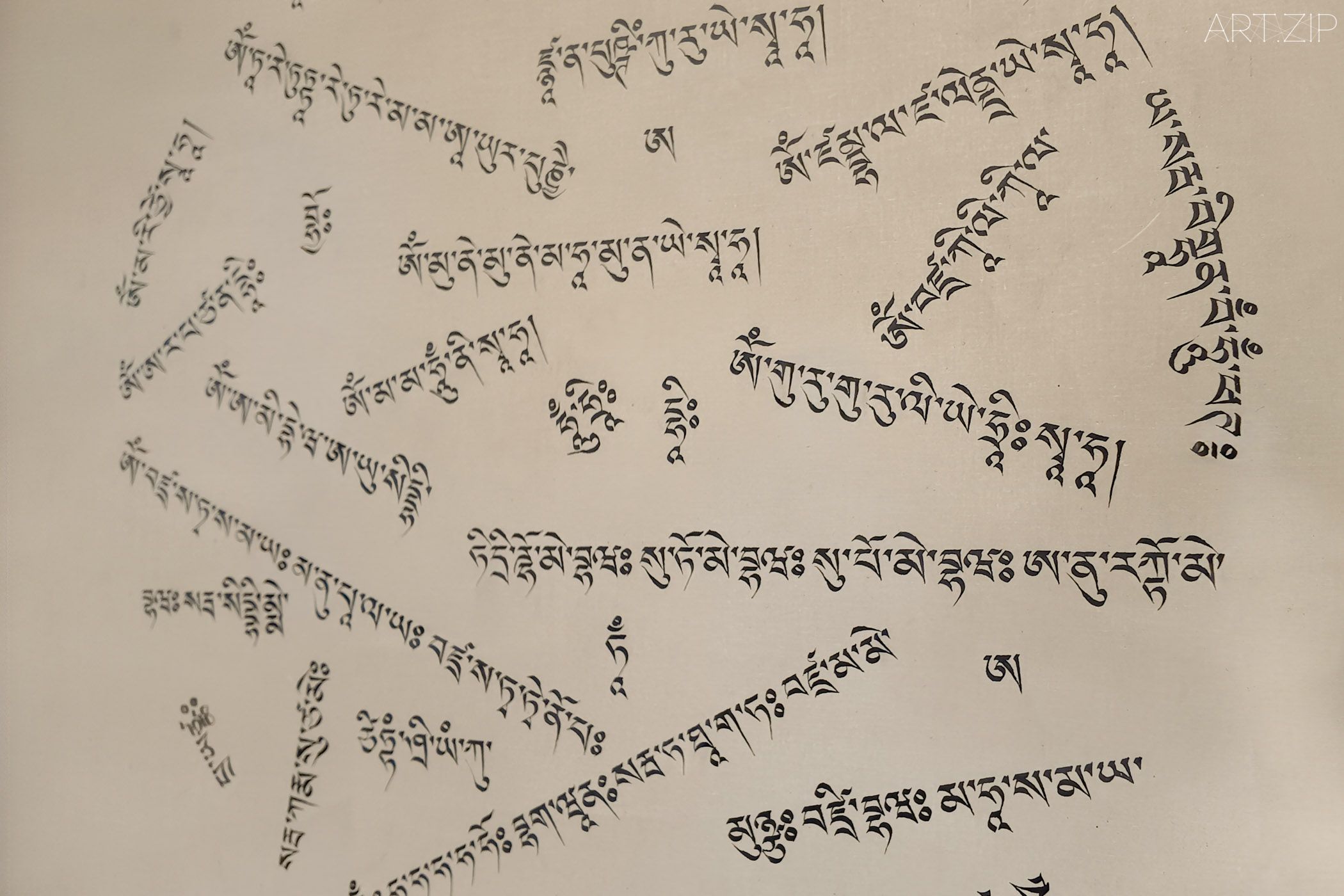
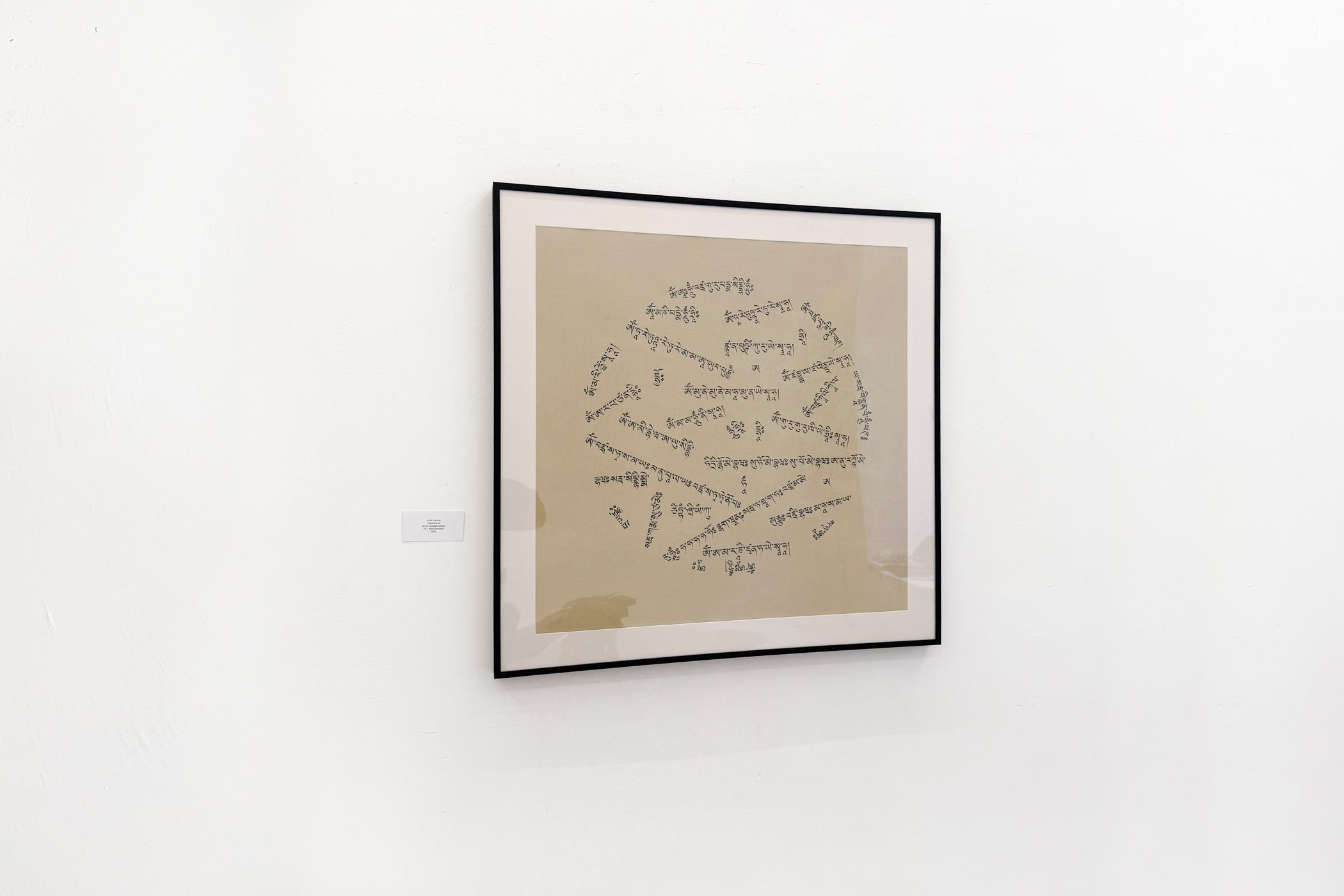
In Jungian terms, the circularity of the mandala is a picture of psychological wholeness. The psychologist observed that when his patients’ inner lives were in turmoil or were in the process of reorganising, that many spontaneously drew similar forms without necessarily having any knowledge of the mandala’s Eastern origins. A symbol of order that transcends. What Ai offers us with in the turning (2025), is a kind of meditative boundlessness.
The micrographical drawing constructs the concentric form of the mandala with traces of Tibetan script, many beginning with ༀ or Oṃ, a sacred syllable that in Buddhism, represents the primordial sound of the universe and the ultimate nature of reality. Through perpetual rotation and repetition, Ai models a time without beginning or end, that evolves from language into energy fields. In this sense, she moves closer to the traditional reading of the mandala as a sacred environment in which the viewer is reaching towards an enlightened consciousness.
Text By MILLEN BROWN-EWENS
Published on 28th October 2026


