


Constable’s Six Footers: When Landscape Gains Weight
康斯特博的六英尺:当风景被赋予重量
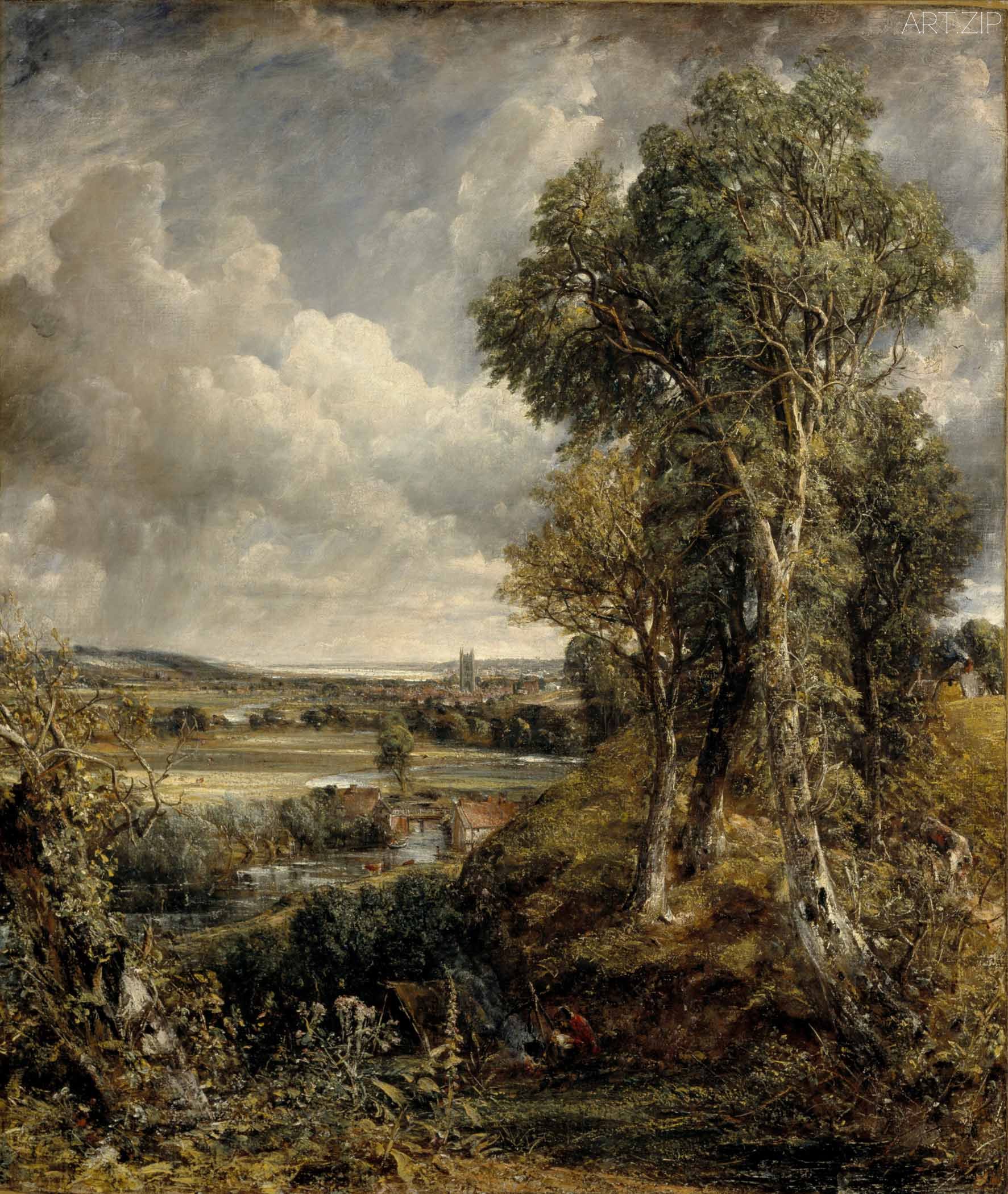
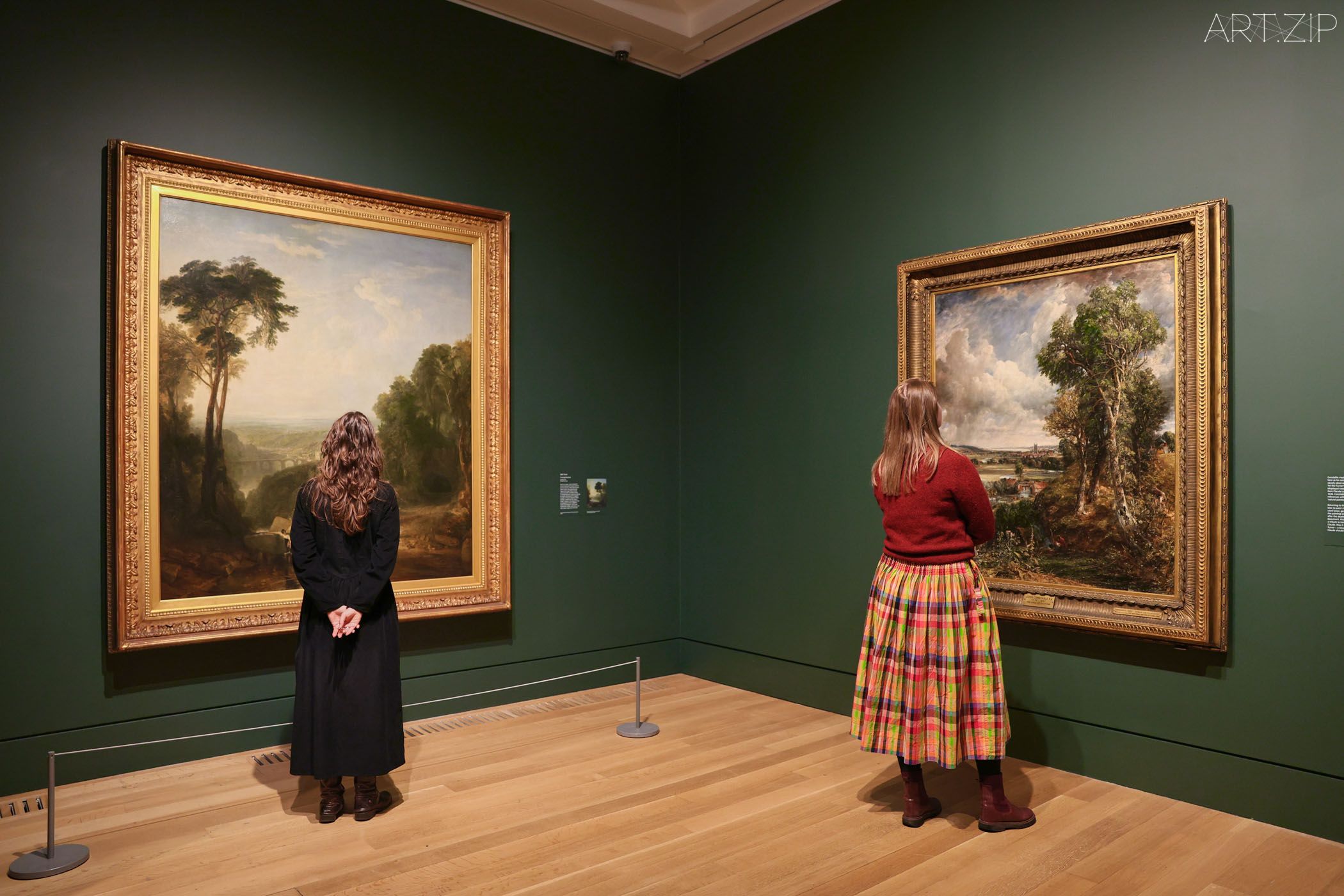
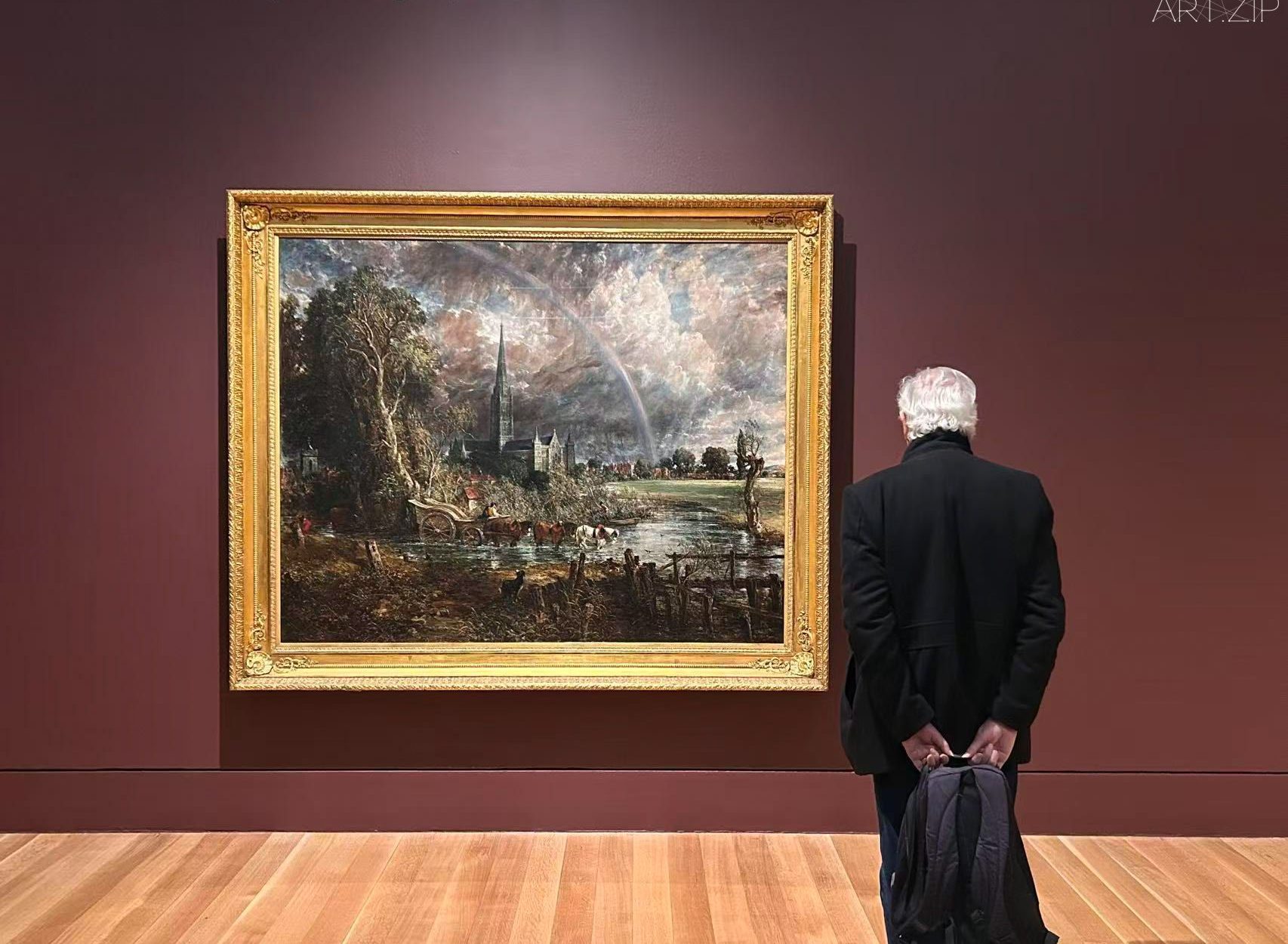
In British art history, there is a term that belongs almost exclusively to John Constable —— the “Six Footers”.
The phrase refers to a group of monumental landscape paintings Constable produced in the early nineteenth century. “Six feet”, in practical terms, means a canvas roughly 1.8 to 2 metres across —— nearly the width of an entire wall.
In Constable’s time, such dimensions were reserved almost exclusively for history painting, religious scenes, or mythological subjects. Landscape painting occupied a lower position in the hierarchy: smaller in size, modest in ambition, often treated as decorative rather than declarative. Constable made a deliberate reversal of this order. He elevated landscape to the scale traditionally associated with history painting.
There was, of course, a strategic logic behind this choice. Early nineteenth-century salon exhibitions were densely hung, paintings stacked from floor to ceiling. Without sufficient size, a work could easily disappear into a sea of images. Enlarging the canvas meant claiming space, visibility, and attention. Yet Constable’s confidence went beyond mere the practical. Even when landscape was not considered a dominant genre, he trusted his painterly language — and trusted that landscape itself could bear this weight.
Over time, “Six Footers” became a fixed term, used to designate this group of monumental landscapes. But standing before these works, one quickly realises that their impact does not rely on size alone. What Constable expanded was not merely the canvas, but the very possibilities of landscape painting.
In the early nineteenth century, most landscape painting remained subordinate to the narrative framworks of history and religious art. Even when landscape appeared as an independent subject, it was often idealised — organised, polished, approaching a mythic vision of nature. Constable was among the few painters who consistently worked outdoors. What he painted was not distant, sublime scenery, but the familiar environment of his home: trees, rivers, villages, farmhouses, and even scenes that appeared slightly worn, uneven, or neglected.
These images do not present a “picturesque” landscape. Instead, they convey a striking sense of lived presence. One can almost sense the dampness of the soil, the weight of the air, the resistance of leaves moving in the wind. When this experience is expanded to a six-foot scale, the boundaries of landscape painting shift. The painting is no longer something to be observed from afar; it becomes a space one can enter.
在英國藝術史中,有一個幾乎只屬於約翰·康斯特博(John Constable)的術語——「六英尺巨作」(Six Footers)。這一術語指的是康斯特博在19世紀初創作的一系列六英尺巨幅風景畫。所謂 six foot(六英尺),換算成實際尺寸,大約在一米八到兩米之間,幾乎相當於一整面牆的寬度。在當時的英國,這樣尺幅的作品幾乎只屬於歷史畫、宗教畫或神話題材。而風景畫通常被視為次要門類,多以小尺寸出現,用作陳設性或裝飾性的觀看對象。康斯特博卻做出了一次反向選擇:他有意識地把風景畫推至「歷史畫級別」的尺度。
這一選擇當然具有現實層面的策略性。19世紀初的沙龍展覽中,繪畫往往從地面一直密集懸掛至天花板。如果作品尺寸不足,很容易被直接淹沒在一片畫海裡。放大畫幅,意味著在展廳中獲得更多注意力和空間。然而,康斯特博之所以敢於做出這樣的選擇,並不僅僅是為了「顯眼」。哪怕風景畫當時不是主流題材,他對自己的繪畫語言有著極強的信心——他相信,風景本身,能夠承受這樣的尺度。
後來,「Six Footers」便逐漸成為一個專有術語,用來指代他這一時期的巨幅風景畫。但當人們真正站在這些作品面前時會意識到:這並不是一種單純依靠體量製造震撼的繪畫。康斯特博所放大的,並不僅是畫布的尺寸,更是風景畫本身的可能性。在19世紀初,大多數風景畫依然從屬於歷史畫與宗教畫的敘事結構,即便作為獨立題材出現,也往往呈現為一種被理想化、被整理過的自然——一種接近「神話」的風景。但康斯特博卻是那個時代少數真正長期走向戶外寫生的畫家之一。他描繪的並非遙遠而崇高的自然景觀,而是自己熟悉的家鄉環境:樹林、河流、村莊、農舍,甚至是略顯破敗與雜亂的角落。
它們傳達出的不是一種「如畫的風景」,而是一種非常切實的現場感——你幾乎能聞到土地潮濕的氣味,感受到樹葉和空氣的重量。當這種真實的經驗被放大到六英尺的尺度時,風景畫本身的邊界也隨之被徹底拓寬了——它不再只是供人遠觀的圖像,而成為一種可以「進入」的空間。
Constable’s Snow: When the Brushstroke Precedes the Landscape
康斯特博的飄雪:笔触先于风景
What is most striking is that Constable’s modernity lies not in what he painted, but in how he painted–a painterly language is highly condensed, immediate, and at times verging on abstraction. This is most clearly visible in works associated with what critics once called “Constable’s snow”.
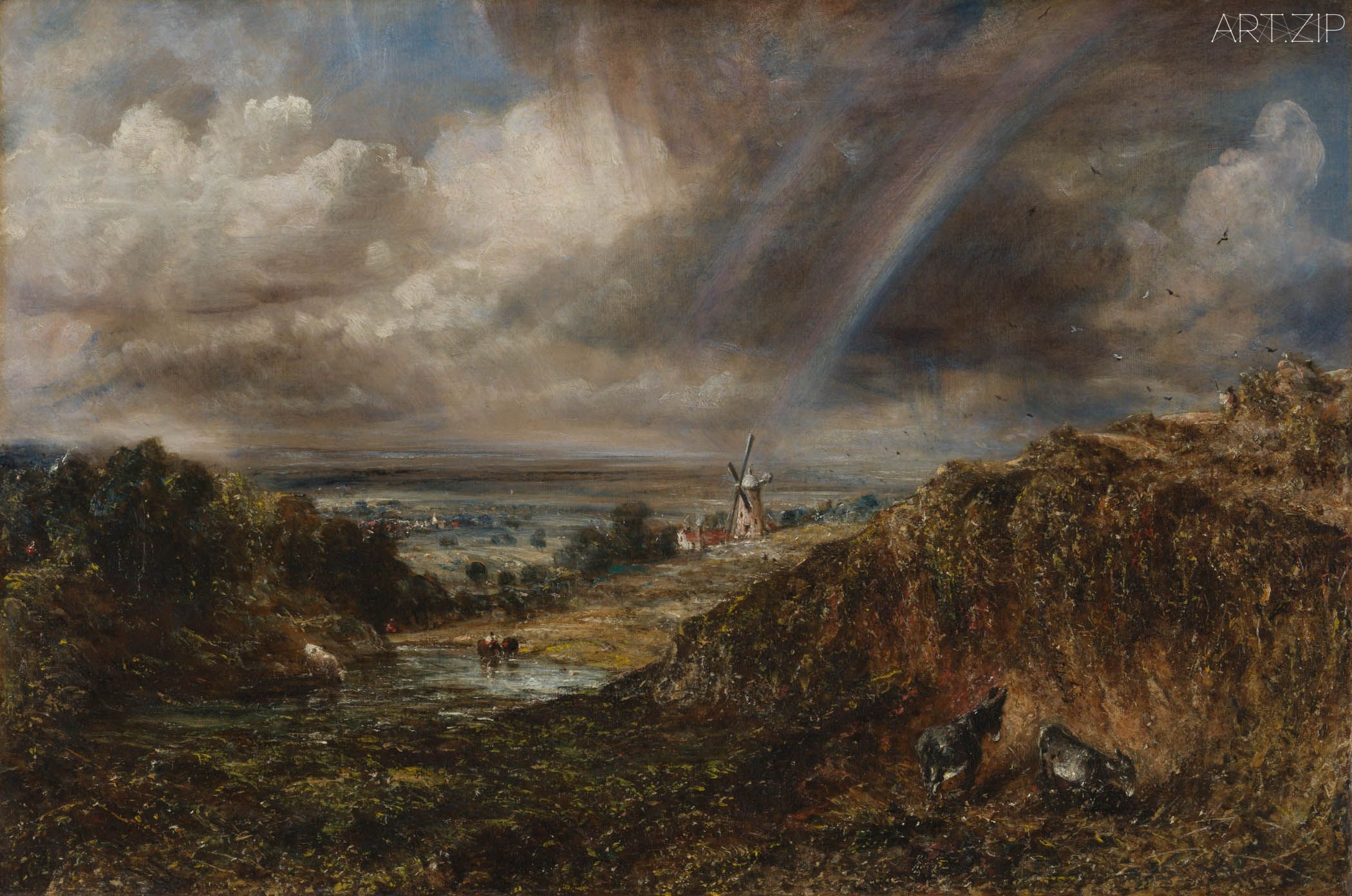
Viewed today, some of Constable’s landscapes feel uncannily contemporary. Without reading the label, they do not immediately register as works from the early nineteenth century. What commands attention first is not the landscape itself, but the movement of the brush. The sky presses low. Grey-white clouds appear churned and unsettled. The foreground — trees and ground — is built up with heavy, direct strokes of dark colour. Across these dense passages, Constable suddenly scatters flecks of white, creating an unstable, flickering visual rhythm.
Early nineteenth-century critics mocked these marks, calling it “Constable’s snow”. In their eyes, such scattered white marks were seen as signs of disorder, a loss of control — a surface too fragmented, too rough, that disrupted the unity and finish expected of landscape painting.
Yet it is precisely this so-called “misreading” that reveals Constable’s radical position. These whites are not decorative highlights. They function as direct inscriptions of light, moisture, and fleeting atmospheric change. The paint seems to have flung onto the canvas. Light flashes, leaves stir, the ground catches the cold illumination of the sky.
Constable was no longer concerned with making landscape beautiful. What mattered was how to translate the state of nature as it was happening. These white marks function less as detail than as record — capturing the instability of weather and the brevity of a moment.
Here, painterly language moves decisively to the foreground. It no longer serves landscape representation; it becomes an autonomous mode of expression. In this sense, “Constable’s snow” is not a stylistic preference, but an act of trust — trust in intuition, in speed, in the uncorrected gesture.
He believed that only through speed — through uncorrected, unpolished brushwork — could the energy of nature remain intact. Many passages verge on abstraction. He is not painting what a tree looks like, but what one sees while standing in the wind. Branches are swept across the surface, paint lands and breaks apart, sometimes touching the canvas only briefly. The result is so immediate that it scarcely feels anchored to its historical moment.
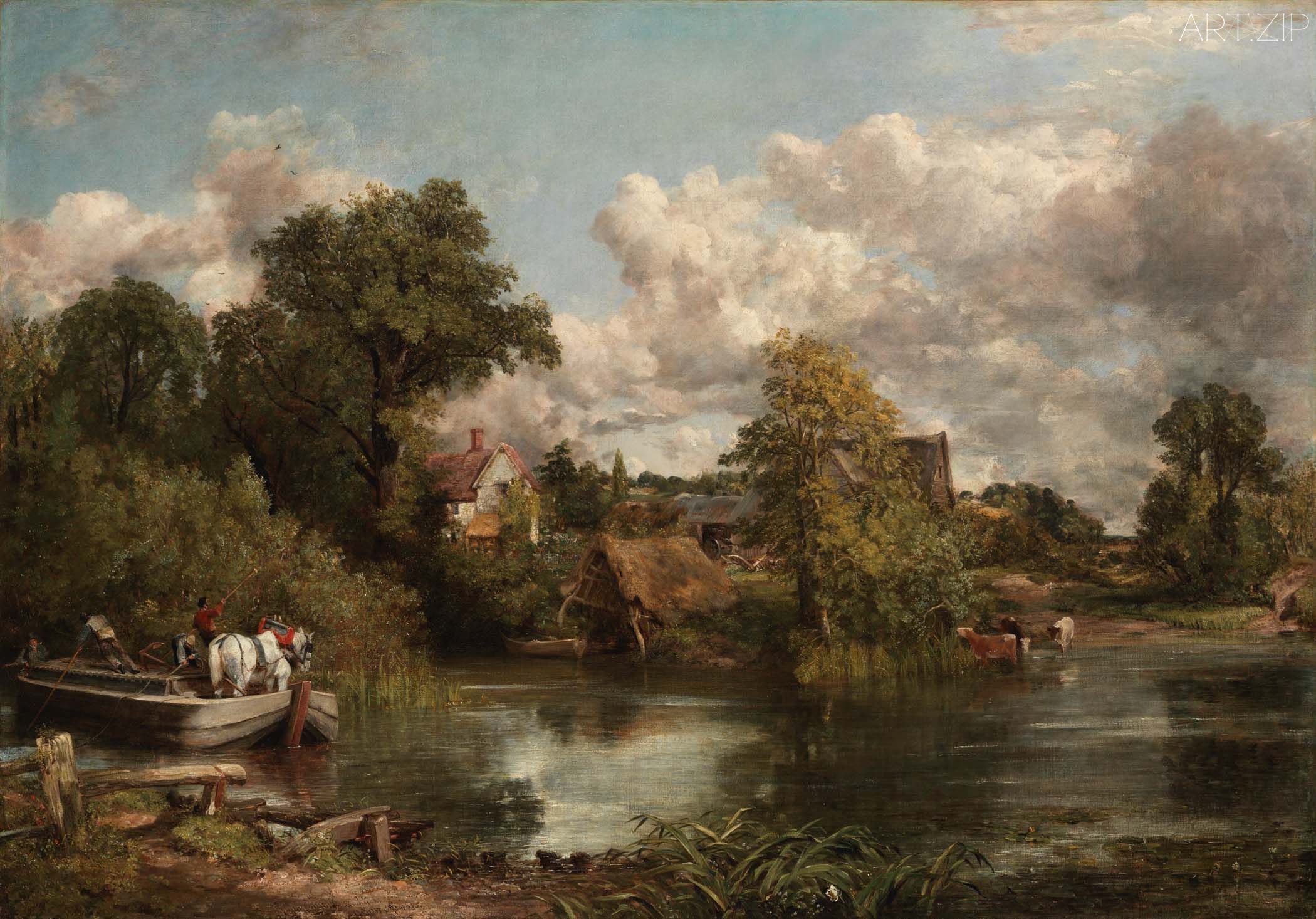
On the River Stour is a characteristic late landscape by Constable: faster, harsher, uncompromisingly personal, with no interest in pleasing the viewer. It recalls a phrase from Chinese calligraphy used to describe a state of full maturity and self-awareness — “the person and the writing have grown old together (人書俱老)”.
康斯特博的現代性,並不是他畫了什麼,而是他的繪畫語言,一種高度概括、接近抽象的寫生方式。在今天的觀看經驗中,人們在面對他的作品時首先看到的不是風景本身,而是筆觸的運動:天空被壓得很低,灰白的雲層翻滾而下。前景的樹叢和地面被厚重而直接的暗色筆觸鋪展開來,就在這些沉重結構之上,他又突然拋灑出大量白色高光。這些零散而突兀的白色筆觸,被19世紀初的批評家調侃為「Constable’s snow(康斯特博的飄雪)」。在當時的語境中這是一種失控——畫面過於破碎、粗糙,破壞了風景畫應有的整體感和完成度。
然而正是這種「誤讀」,現在看來反而更清楚地揭示了康斯特博的超前之處。那些白色並非裝飾性的高光,而是他對光線、濕度與瞬間變化的直接書寫。灰白色的顏料彷彿被直接甩向畫布,光在閃,樹葉在動,地面在反光。他關心的不再是「如何把風景畫得美」,而是如何把自然正在發生的狀態,直接轉化為繪畫本身。這些白色筆觸更像是一種即時的記錄,那是天氣變化時短暫而不穩定的一瞬間。
在這裡,繪畫語言第一次被如此明確地推到前台——它不再只是服務於風景的手段,而成為一種獨立成章的表達方式。從這個意義上說,「Constable’s snow」並不是一種風格偏好,而是一種對直覺與直接性的高度信任。他相信,只有在速度中、在未被修飾的筆觸里,自然的能量才不會被削弱。你甚至會發現,很多局部已經接近抽象。他畫的不是「樹長什麼樣」,而是在捕捉「站在風中看到的那一瞬間」。枝葉部分被一種掃蕩式地處理,顏料仿佛被快速甩上去,留下斷裂的痕跡,許多地方甚至只是一瞬間的觸碰。這種語言直接而不加修飾,以至於很難令人相信它出自19世紀初。
《On the River Stour》是一張很典型的康斯特博晚年風景畫:更快、更狠,畫的非常自我,沒有什麼要討好觀眾的想法。它讓我想起中國書法中對這種高度成熟與自覺狀態的形容——「人書俱老」。
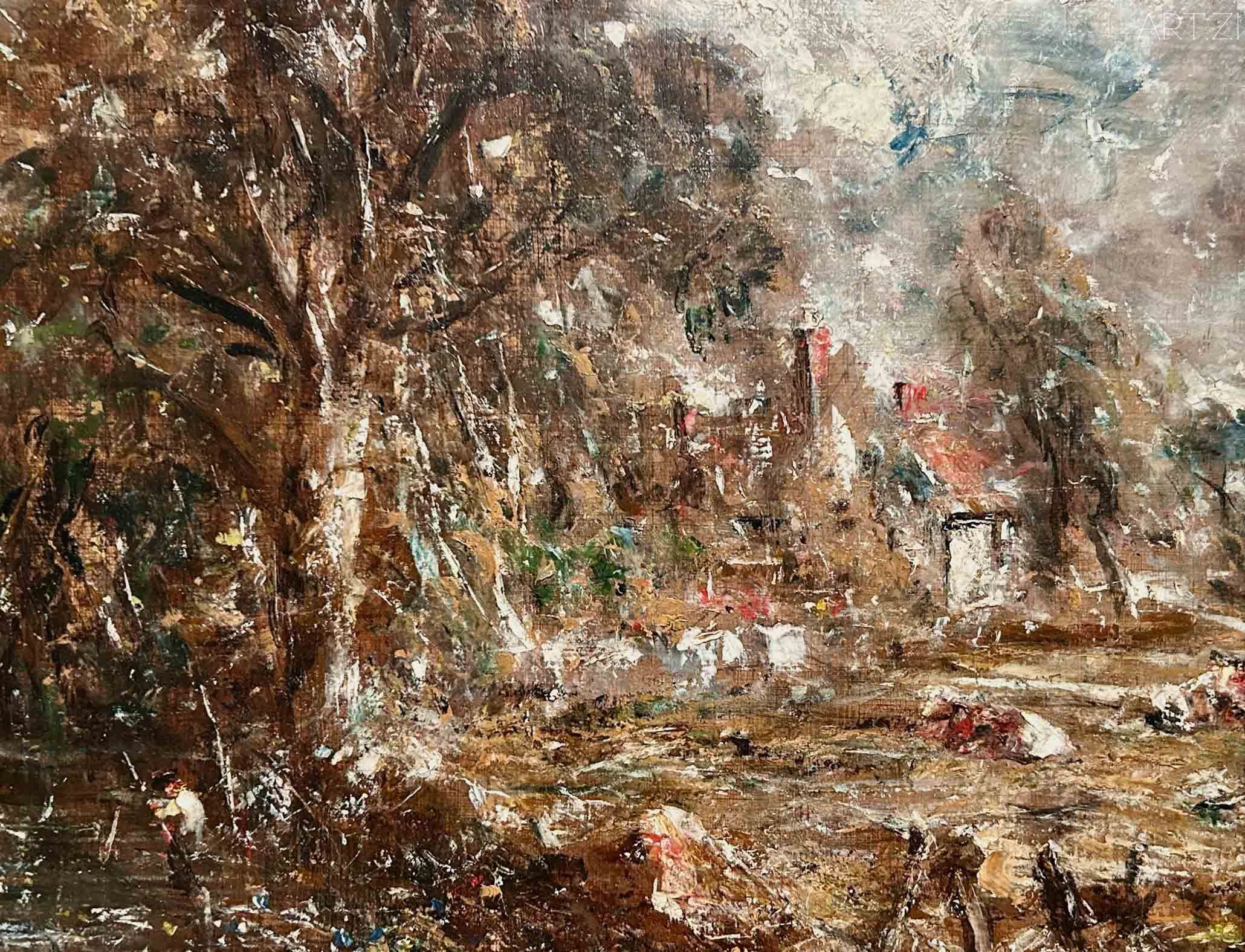
(Part )On the River Stour (1834-7) by John Constable. Photo by Danqing Liu.
Sketches: Testing the Limits of Endurance
康斯特博的草图:關於承受力的測試
Constable produced a vast number of small-scale sketches, many of them painted outdoors. Though modest in size, they are remarkably radical. Brushwork loosens. Paint is thrown boldly across the surface. Sky, air, and moisture are treated as materials that can be written directly onto the canvas. The image is no longer carefully constructed; it is seized.
These sketches evoke the spirit of “xieyi” (大寫意, freehand brushwork) in Chinese painting — a process of stripping away the unnecessary to leave only form, momentum, and vital energy. Even more astonishing is the existence of a six-foot outdoor sketch called “Sketch for ‘Hadleigh Castle’“— identical in scale to the finished work. In the early nineteenth century, this was almost unheard of. Large formats belonged to completed, formal paintings; sketches, especially those made outdoors, were considered light, provisional, and private.
Why work this way? Perhaps in smaller sketches, Constable tested new painterly language. But in this monumental sketch, what he tested was not technique, but endurance. Could such a raw, immediate, unfinished way of painting sustain itself at the scale of a finished work? Could it carry weight, emotion, and time?
By using the dimensions of a finished painting for a sketch, Constable forced uncertainty, improvisation, and bodily movement into a format traditionally associated with stability and control. What mattered, perhaps, was not whether the final painting achieved perfection, but that in this sketch he confirmed something essential: landscape did not need to be corrected or refined. It could exist — directly, imperfectly, and alive.
康斯特博留下了大量小尺幅的寫生草圖,大部分為戶外寫生。這些作品雖然尺寸不大,卻極為激進:筆觸鬆動,顏料被大膽地拋灑在畫面上,天空、空氣與濕氣被當作可以直接「書寫」的對象。畫面不再被層層搭建,而是被迅速捕捉。在這些小畫里,他仿佛在不斷測試著新的繪畫語言。這也讓人想到中國畫里的「大寫意精神」——剔除所有不必要的修飾,只留下最核心的形、勢與氣。
但更令人驚嘆的是,有一張被稱為《Sketch for “Hadleigh Castle”》的六英尺戶外寫生,其尺寸與最終完成品完全相同。這在19世紀初非常罕見。當時,大尺幅幾乎只屬於完成度極高的正式作品,而草圖,尤其是戶外寫生,則被視為輕便、私密且功能性的練習。在同一時期,幾乎沒有藝術家會在室外,用與完成品同樣巨大的尺度來畫「草圖」。
他為什麼要這樣做呢?如果從結果倒推,或許是——在小尺幅中,他測試的是對繪畫語言的突破;而在這樣一張大尺寸草圖裡,他實驗的不再是技巧,而是畫面的承受力。
這種直接、粗糲、未完成的繪畫方式,能否在「完成品的尺度」上成立?它能不能承載重量、情緒和時間?用完成品的尺寸來畫草圖,等於把不確定性、即興性與身體性的繪畫狀態,直接推到了一個本該「穩定、莊嚴、完成」的尺度上。也許,對康斯特博來說,真正重要的不是最後那張「完成品」是否更完美,而是在這個同樣尺度的草圖中,他確認了一件事:風景可以不被整理、不被修復,而是以一種直接、略顯失控的方式存在。


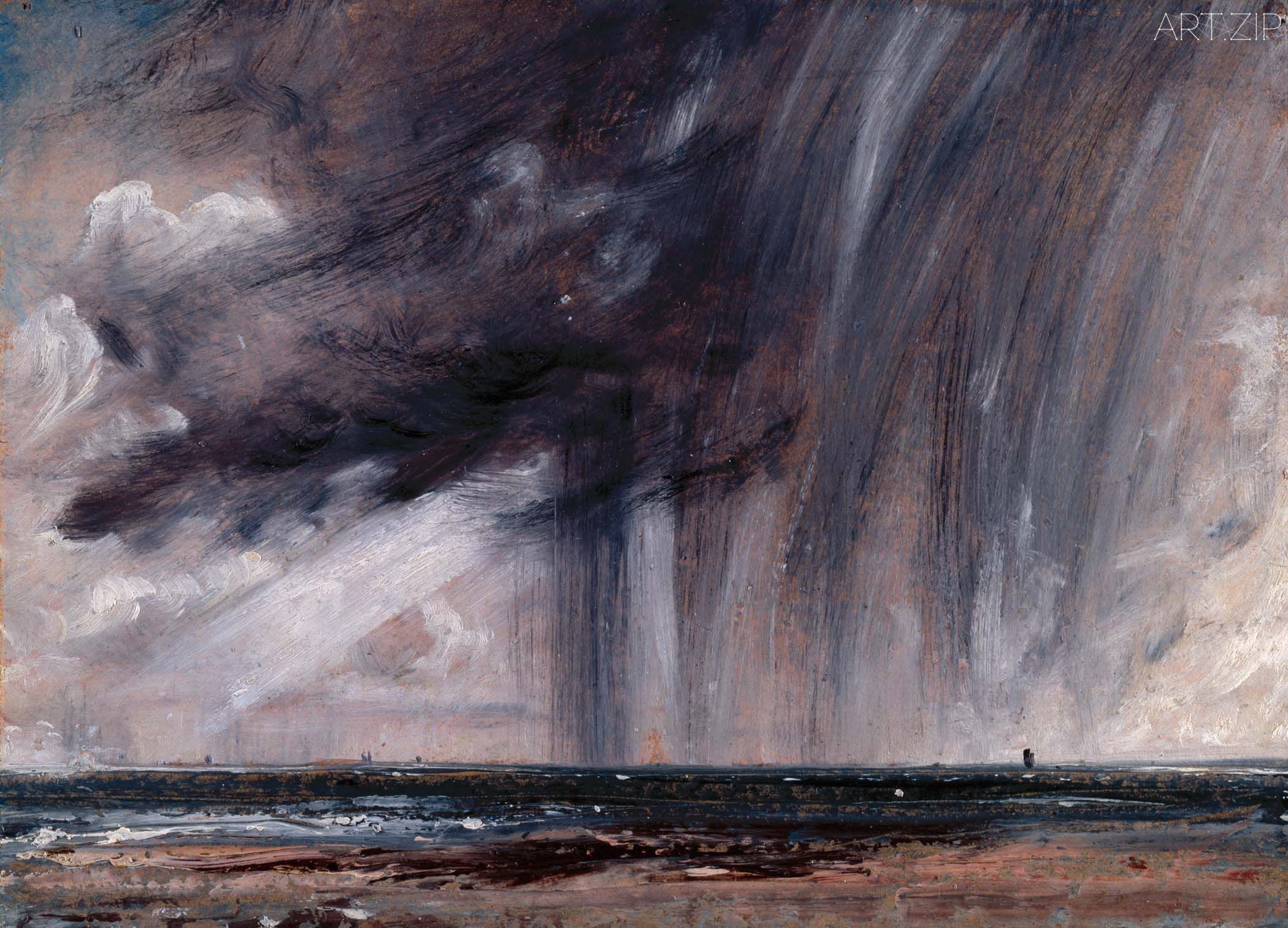
John Constable RA, Rainstorm over the Sea, ca. 1824-1828. © Photo Royal Academy of Art
Constable’s Clouds: Letting Time Enter Landscape
康斯特博的雲:讓时间进入风景
In Constable’s work, the sky is never secondary. Clouds surge and fold into the landscape; and through them, time enters painting.
In this exhibition, his studies of sky and cloud are presented as a distinct body of work. What becomes immediately clear is that Constable’s clouds are never background. Traditional painting locates drama in figures and events. For Constable, drama arises from the sky — from the turbulence of clouds, sudden shifts of light, and the moment when weather changes.
Clouds generate movement. They guide light across the land: grass brightens or darkens, leaves flicker or dim. The landscape itself does not change; the sky animates it. Crucially, sky and ground share the same painterly language. The swirling motion of clouds continues into the trembling of treetops. The weight of trees presses back, lowering the sky. Even colour circulates between them: clouds are never pure white, but infused with grey, pale blue, and moisture. The earth absorbs traces of cold light from above.
What emerges is not a view, but a system — a network of mutual influence. Landscape is no longer a fixed moment, but a state unfolding in duration. Constable brings time into landscape painting.
This is why his works caused such a sensation when shown at the Paris Salon in 1824. “Landscape can be painted like this?” some artists reportedly exclaimed. The Barbizon painters and, later, the Impressionists would find their path forward within this expanded way of seeing nature. When we encounter air, light, and fleeting change in Impressionist landscapes, we can still hear Constable’s echo — and feel the life that continues to move through his paintings.
在康斯特博的作品裡,天空始終佔據著異常重要的位置。他把翻湧的雲層和風景融為一體。是的,他把「時間」帶進了風景畫。在這次展覽中,他對天空與雲層的研究被單獨呈現出來。你會發現,康斯特博的雲,從來不是背景。傳統繪畫里的戲劇性,往往來自人物與事件。但在康斯特博這裡,戲劇性仿佛來自天空:來自雲的翻湧,光線的突變,來自天氣正在發生變化的那一瞬間。他之所以反復畫雲、觀察雲,或許來自於他對「變化本身」的敏感。
雲的生成、移動、破裂與消散,構成了一種持續展開的過程。雲在他的畫里仿佛在引導著光線。草地忽明忽暗、樹葉忽亮忽沉,不是風景在變,而是雲在推動光線發生變化。更重要的是,他並沒有把天空畫成風景的背景,雲的翻滾,與樹冠的翻滾,用的是同一種筆觸語言。天空的旋渦感延伸進樹林的搖動;樹的重量又反過來把雲壓得更低、更厚。甚至連在色彩上,兩者也是相互滲透、相互交織的。雲並非純白,而是混合著冷灰、淺藍與濕氣的顏色;地面不是單純的褐色,它會被天空的冷光輕輕染上一層。你看到的不是單一的「景色」,而是一整套彼此影響的系統,天空與風景渾然一體。在這裡,風景不再是一個靜止的瞬間,而是一種持續展開的狀態,康斯特博把「時間」帶入了風景畫之中。
正因如此,當他的作品在1824年於巴黎沙龍展出時,才會引起如此強烈的反響。甚至有法國藝術家驚呼:「風景原來還可以這樣畫。」隨後出現了巴比松畫派與印象派,正是康斯特博把這一種全新的觀看自然的方式傳遞給後來的藝術家。當我們在印象派的風景畫中看到空氣、光線與瞬間變化時,依然能夠聽到康斯特博的回聲,感受到他畫面里持續湧動的生命力。
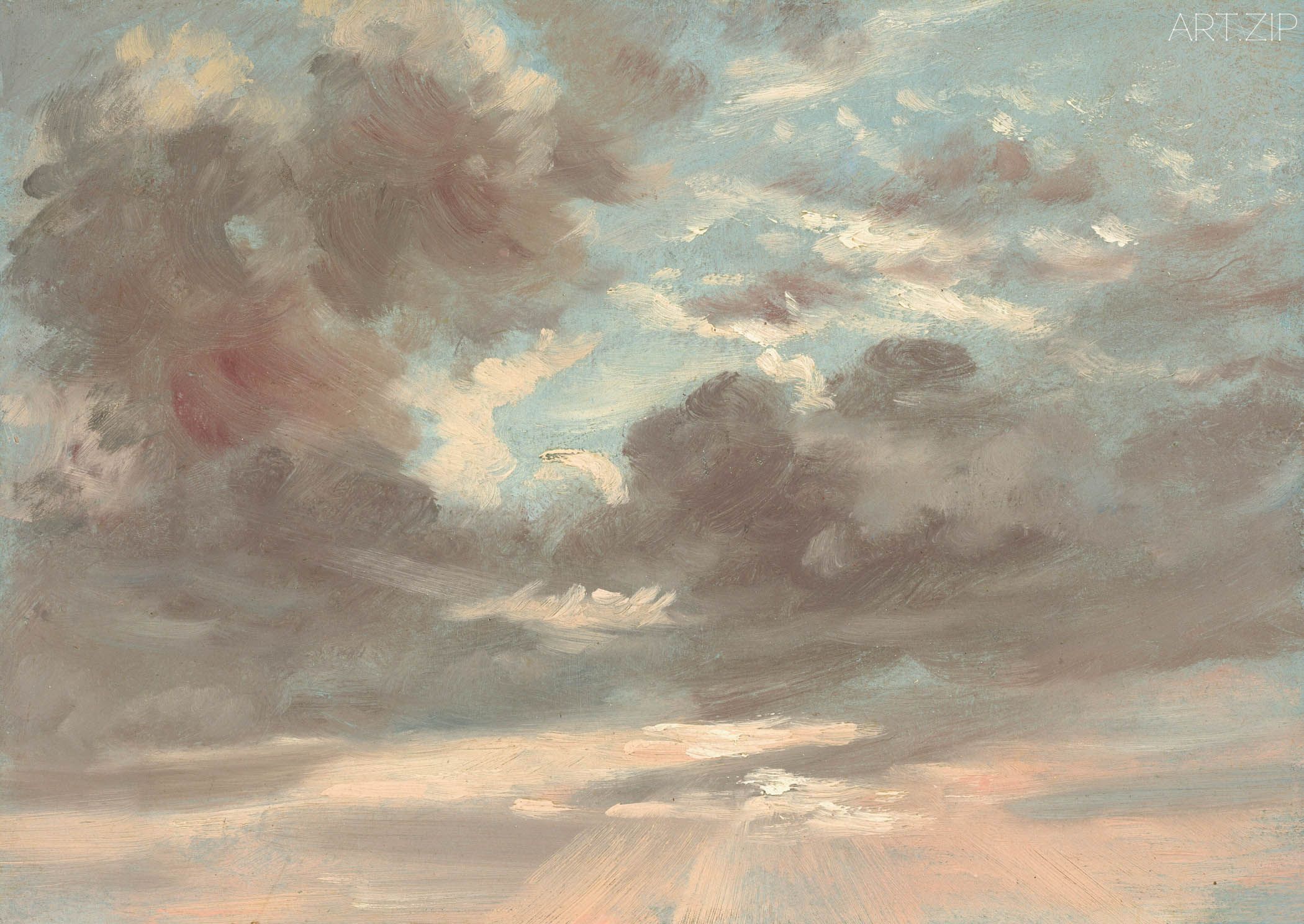
Cloud Study: Stormy Sunset (1821-1822) by John Constable
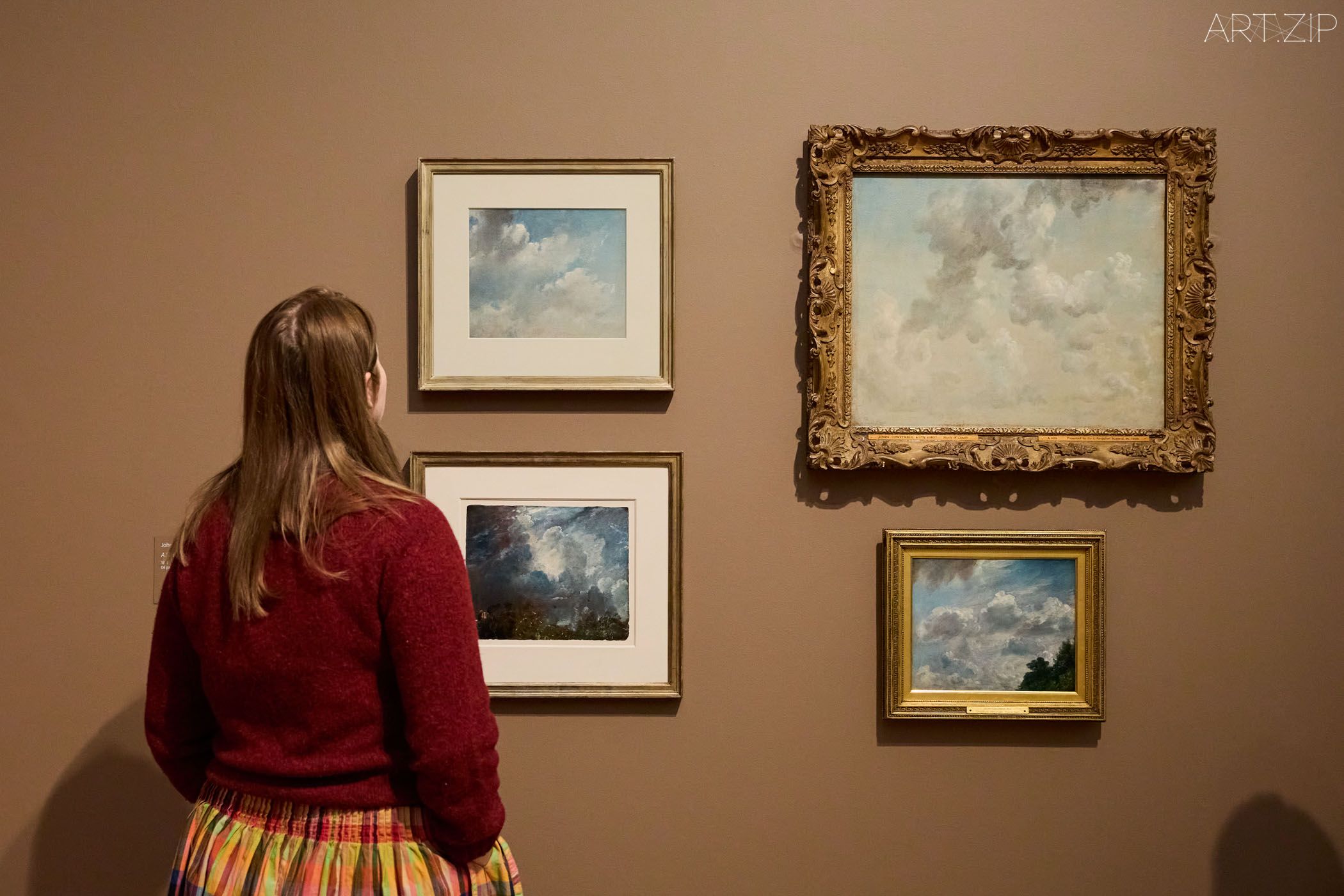
Installation view of John Constable cloud studies A study of high clouds (1821), Study of Clouds (1822), Cloud Study (1821) and Cloud Study, Hampstead, Tree at Right (1821) in Turner and Constable: Rivals and Originals at Tate Britain. Photo © Tate Photography (Yili Liu).
Turner & Constable — Rivals & Originals
Tate Britain
27 November 2025 – 12 April 2026
Text by 撰文 x Danqing Liu 劉丹青