
1989年.jpg?v=1770504855)
“She has long since taken up the fight.”
— Marianne Pitzen, Director of Frauenmuseum Bonn
「她早已投入這場抗爭。」
—— 瑪麗安娜·皮岑,波恩女性博物館館長
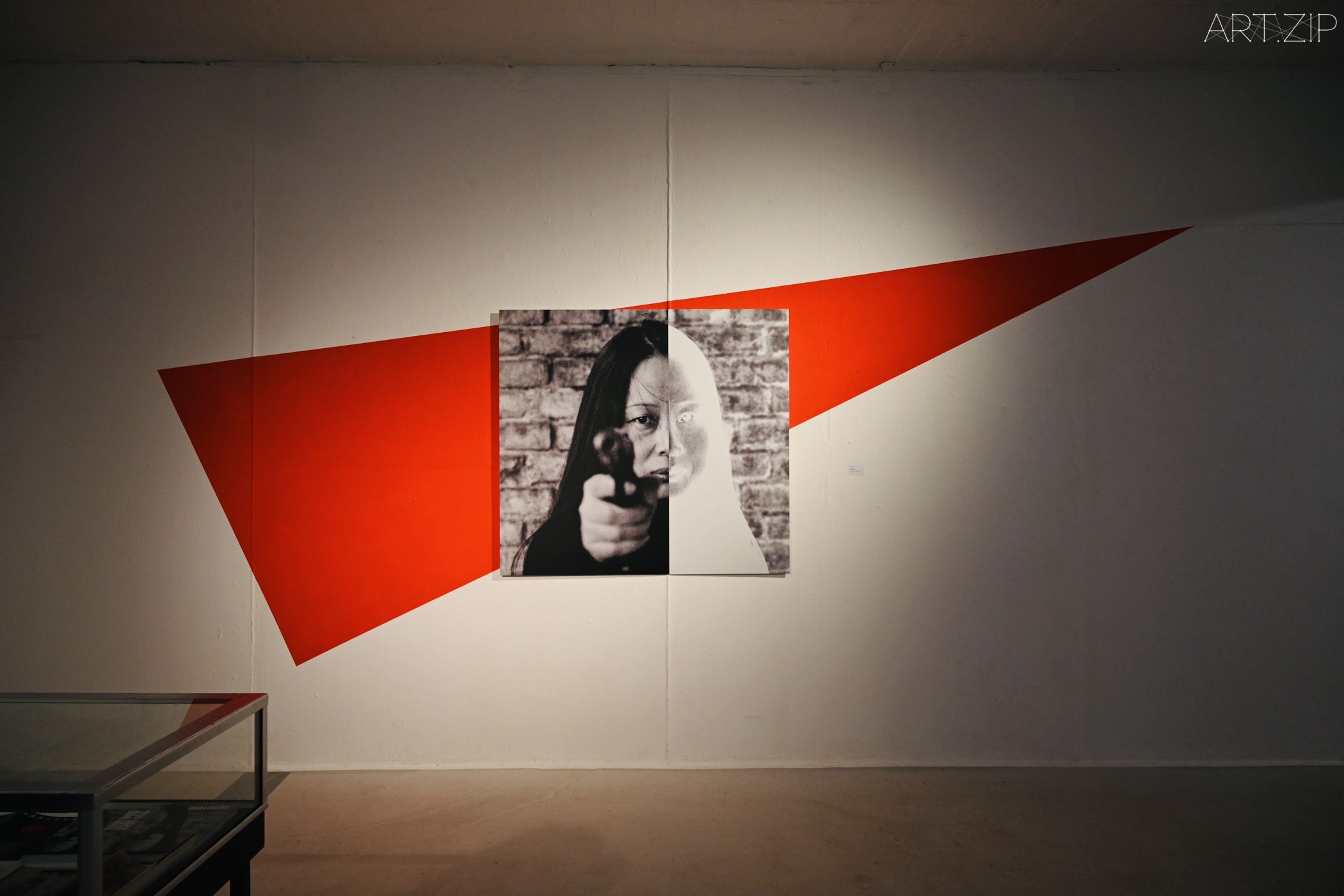
Xiao Lu : First Gunshot of Chinese Feminist Art. Installation view. Courtesy of the artist.
In 1989, at the opening of the China Avant-Garde Exhibition at the National Art Museum of China in Beijing, Xiao Lu fired a gun at her installation Dialogue.
At that moment, she did not yet speak the language of feminism.
That shot was instinctive, a visceral response from deep within, intense and inexpressible, rooted in the body rather than theory.
No one could have anticipated that this single act would later unfold a prolonged dispute over authorship, while simultaneously exposing the systemic silencing of women within Chinese contemporary art.
Only 15 years later, through repeated struggles with violence, dependency, trauma, and self-assertion, did Xiao Lu gradually find words for experiences that had always formed the core of her work.
The global reverberations of the #MeToo movement placed her personal experience within a wider political and gendered context. What had once been radically personal came into focus as a practice with clear political force.
Xiao Lu’s gunshot continues to resonate today, not as an isolated event, but as a warning, a demand, and a critical position.
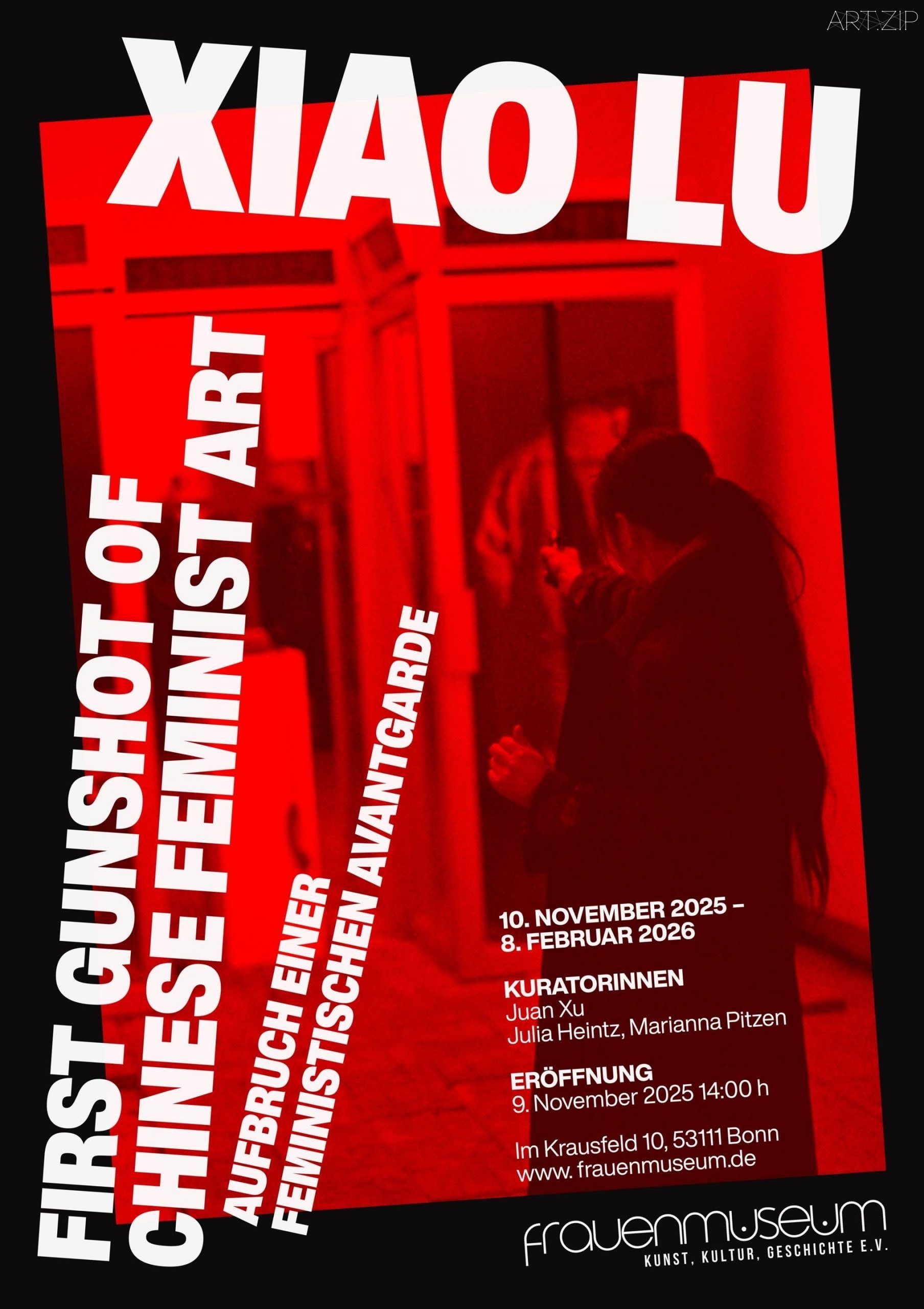
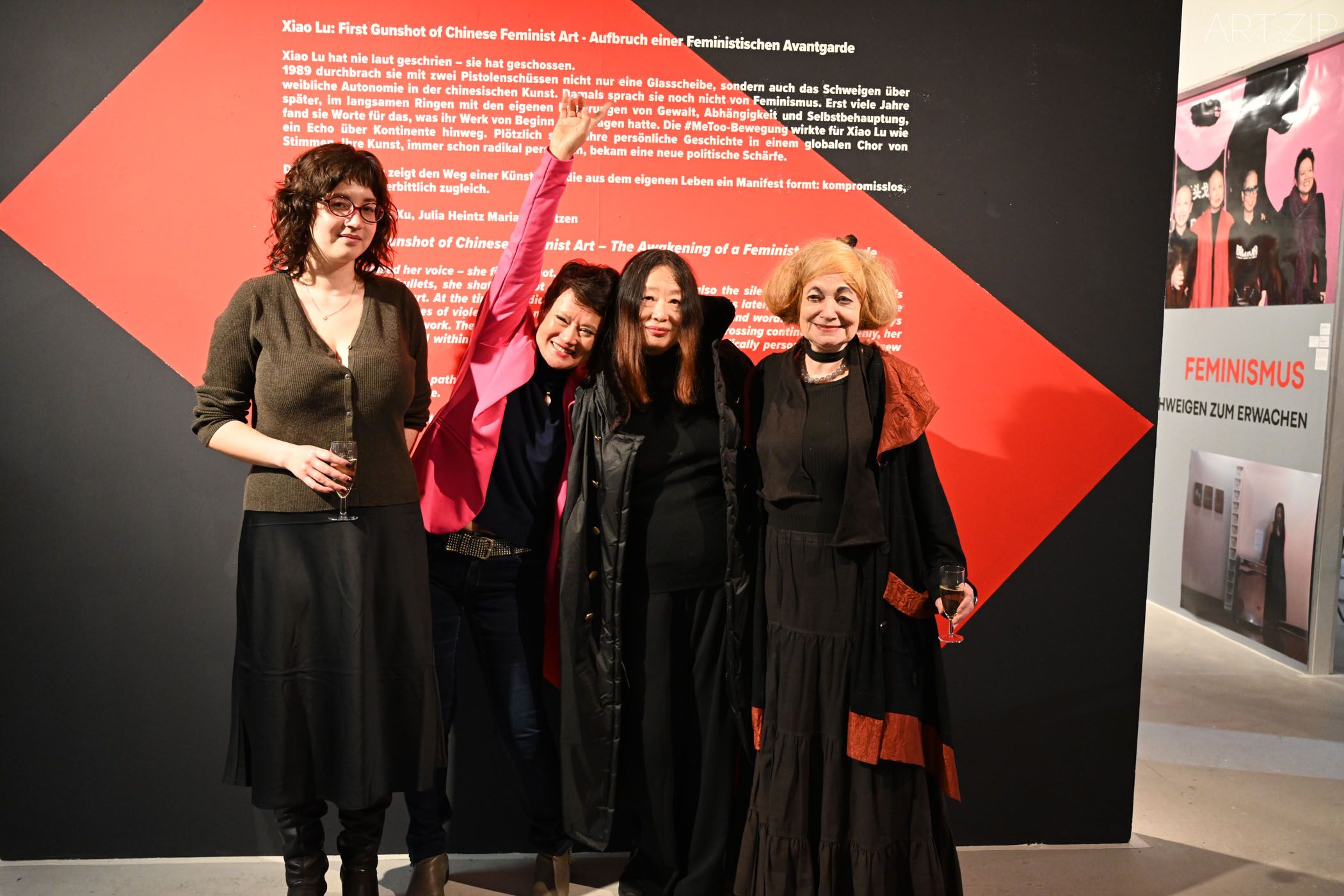
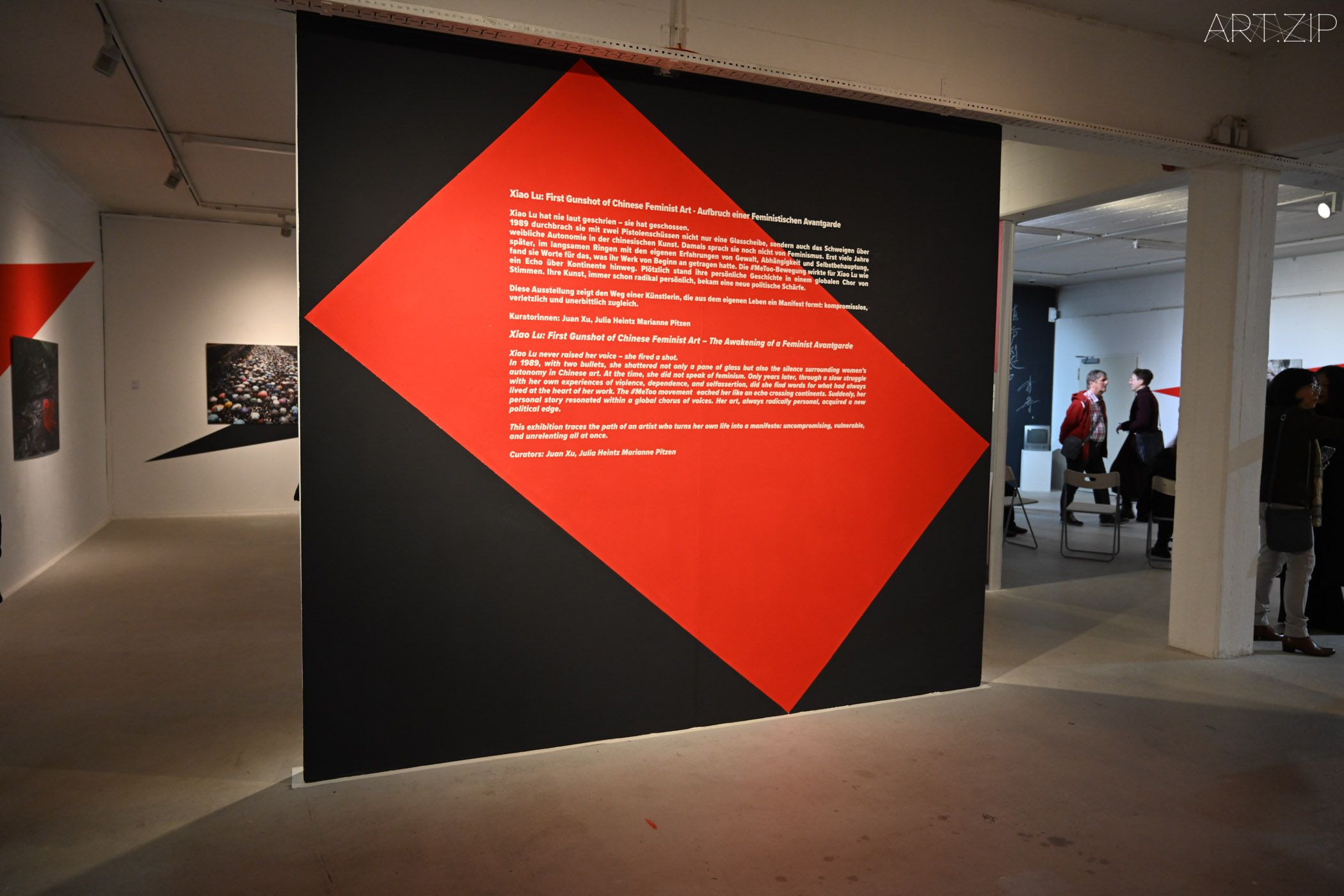
From 10 November 2025 to 8 February 2026, Xiao Lu’s solo exhibition Xiao Lu : First Gunshot of Chinese Feminist Art is presented at the Frauenmuseum Bonn (Bonn Women’s Museum), Germany.
According to the curator Julia Heintz, since its founding in 1981 the Frauenmuseum Bonn has consistently addressed a fundamental question: the visibility of women artists is of often only achieved through targeted interventions and critical deconstructions of patriarchal power relations. Therefore, the historical exclusion of women’s perspectives from the canon of art history should not be understood as a closed chapter of the past, but as an ongoing struggle for recognition and presence.
It is within this context that Xiao Lu : First Gunshot of Chinese Feminist Art unfolds. The exhibition places Xiao Lu’s work within the tension of structural power relations, reopening the discussion on authorship and the institutional positioning of feminist art. Beyond presenting the works themselves, the exhibition draws on archival documents and historical materials to reveal how patriarchal narratives have shaped, obscured, and rewritten women’s artistic practices. It invites a rethinking of how art history is written, and how women’s art can claim presence within, and ultimately reshape its core.
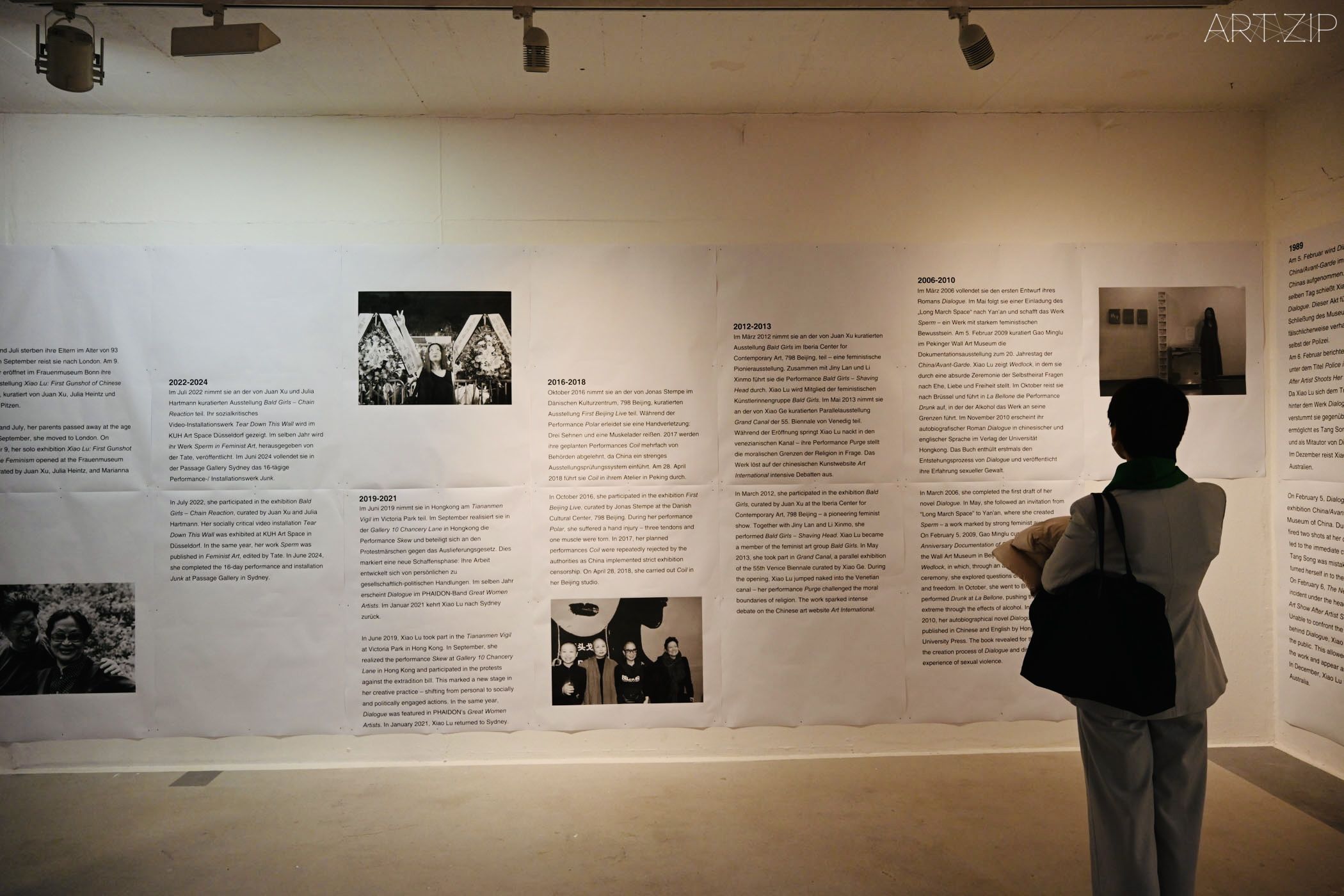
The exhibition spans four galleries and presents Xiao Lu’s artistic practice from 1989 to 2024, covering 35 years of work. Two of the galleries are dedicated specially to the question of authorship surrounding Dialogue, forming a central focus of the exhibition.
1989年,在北京中國美術館「中國現代藝術展」開幕現場,肖魯向裝置作品《對話》開槍。
當時,她並不清楚「女性主義」這一概念。那一槍,是發自內心深處、最激烈卻又無法言說的身體回應。
誰也沒有想到,這一槍竟引發了之後的作者權之爭,也揭露了中國當代藝術中長期存在的女性失語狀態。
十五年之後,在對暴力、依附、創傷與自我確立的反復掙扎中,肖魯才逐漸為那些早已存在於作品核心的經驗找到了語言。
#MeToo運動的全球回響,使她的個人經驗被重新置入一個更為廣闊的政治與性別語境之中。原本極度個人化的藝術實踐,也因此獲得了清晰而鋒利的政治緯度。
肖魯的那一聲槍響至今仍在回蕩,作為警示,作為要求,也作為一種批判性的立場。
2025年11月10日至2026年2月8日,肖魯個展《肖魯:中國女性主義藝術第一槍》於德國波恩女性博物館舉辦。
策展人朱莉婭·海因茨(Julia Heintz)表示,自1981年成立以來,波恩女性博物館始終致力於直面一個問題:女性藝術家的可見性,往往只能通過有針對性的干預,以及對父權權力關係的批判性解構來實現。因此,女性視角在藝術史正典機制中的歷史性排除,並非僅是過去的遺留問題,而是一場仍在持續的、關於承認與在場的抗爭。
而這次展覽《肖魯:中國女性主義藝術第一槍》正是在這一脈絡中展開:它將肖魯的創作置於結構性權力關係的張力中,重新討論藝術作者權與女性主義藝術的制度位置。展覽不僅呈現作品本身,更通過文獻、影像與歷史材料,揭示父權敘事如何塑造、遮蔽乃至改寫女性藝術實踐,促使我們在全球語境中重新思考藝術的書寫方式,以及女性藝術如何真正進入並重塑藝術史的核心。
此次展覽共有四個展廳,完整呈現肖魯自1989年至2024年、橫跨35年的藝術實踐。其中,圍繞《對話》的作者權問題佔據了兩個展廳,是本次展覽的重點議題。
Gallery I|1989:Dialogue and the Return to Facts
第一展廳:1989,《對話》與事實的回歸
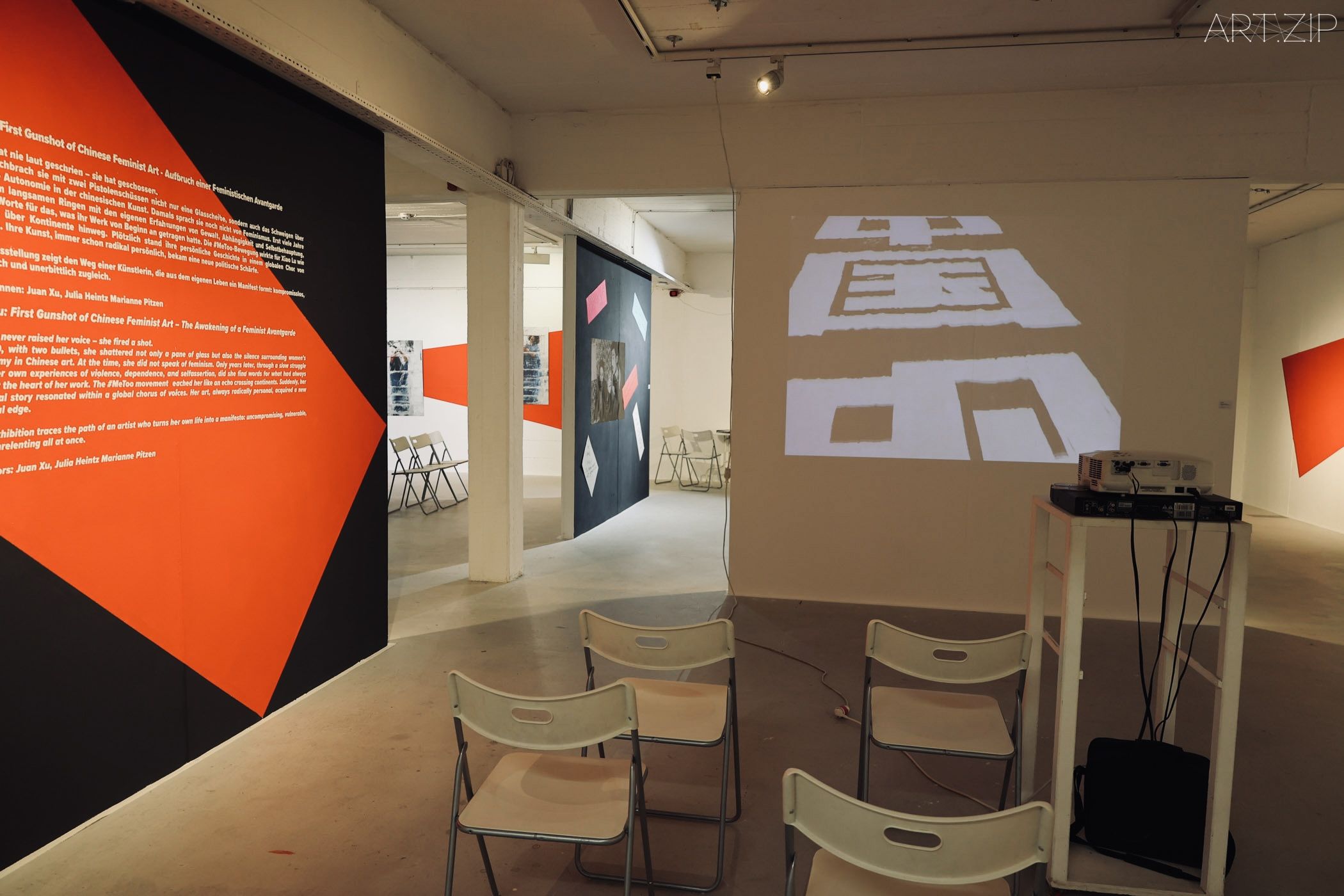
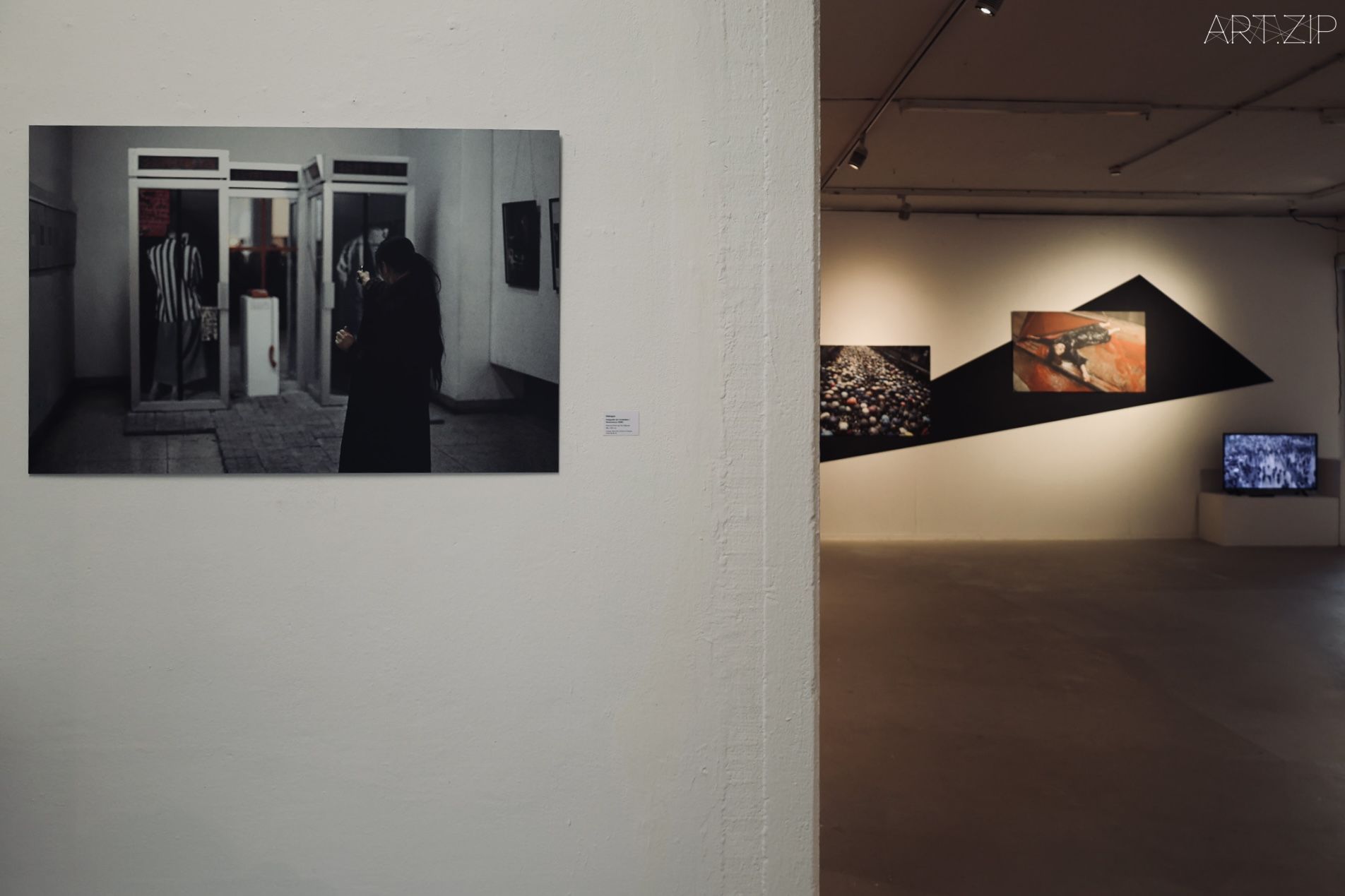
The exhibition unfolds with a video: in 2022, curator Juan Xu engaged in a discussion with Xiao Lu at the Women’s Museum Bonn, focusing on the controversy surrounding the authorship of Dialogue. What follows are on-site photographs and video materials from the Wen Pulin Archive of Chinese Avant-Garde Art, which formally inaugurate the exhibition. These materials directly document the fact that Xiao Lu fired a gun in 1989, returning the viewer to the origin of the controversy, and reaffirming that this act is neither a legend nor a second-hand account, but a clearly verifiable historical event.
展覽從一段影像展開:2022年,策展人庸現在波恩女性博物館與肖魯圍繞作品《對話》的作者權爭議展開討論。緊接呈現的,是來自溫普林中國藝術檔案的現場攝影與錄像資料,正式拉開展覽序幕。這些材料直接呈現了1989年肖魯開槍的事實,將觀眾重新帶回爭議發生的原點,並再次確認這一行為並非傳說或二手敘述,而是一個清晰可考的歷史事件。
1989年.jpg)
“Dialogue”, Performance Photo. 5 February 1989. National Art Museum of China, Beijing. Photo by Wen Pulin Archive of Chinese Avant-Garde Art.
Gallery II|Authorship in Dispute: How Documents Produce “False Histories”
第二展廳:作者權之爭——文獻如何製造「錯誤歷史」
The second gallery begins with Xiao Lu’s photographic work Open Fire (2004), tracing how the authorship of Dialogue was progressively distorted, misread, and reproduced.
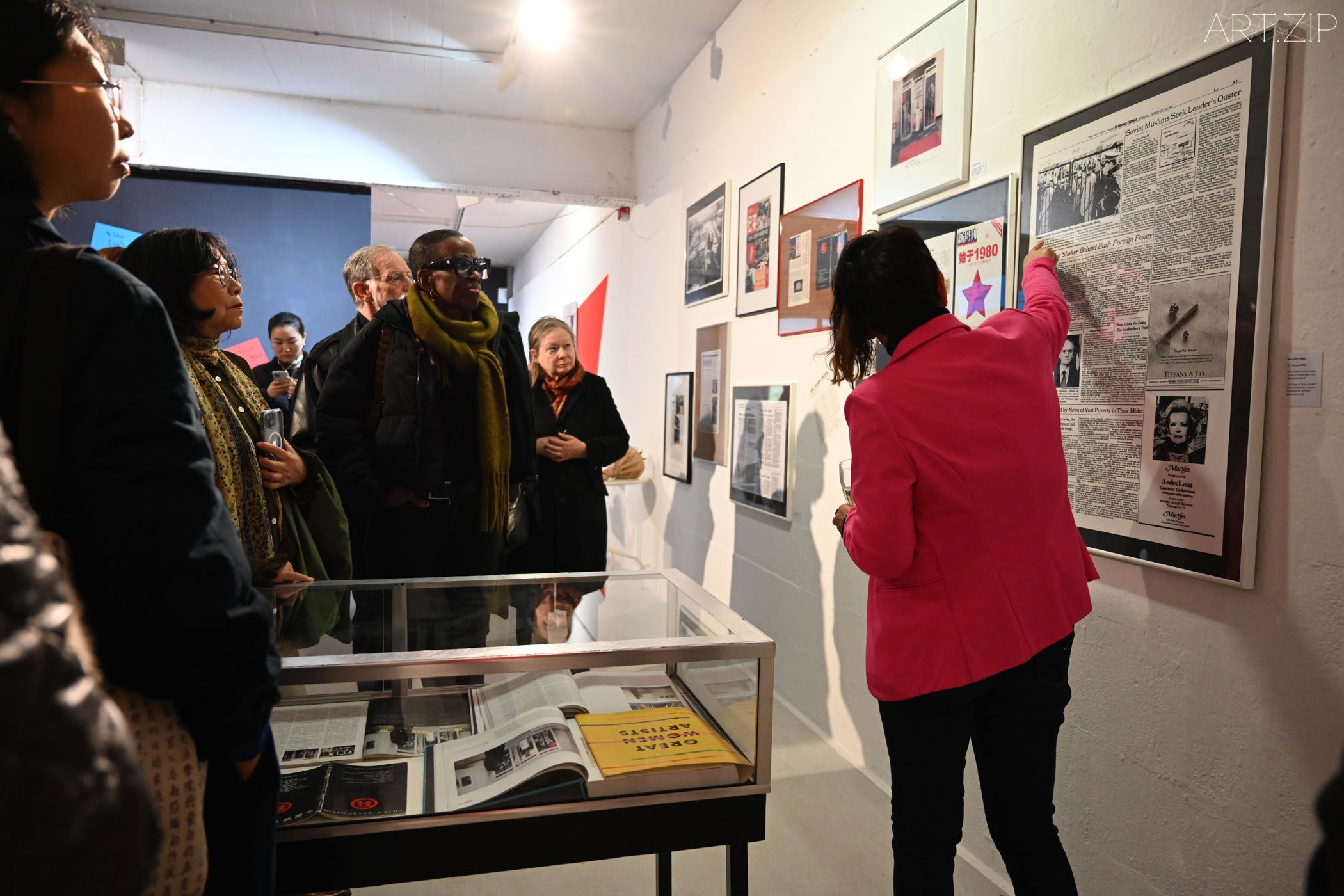
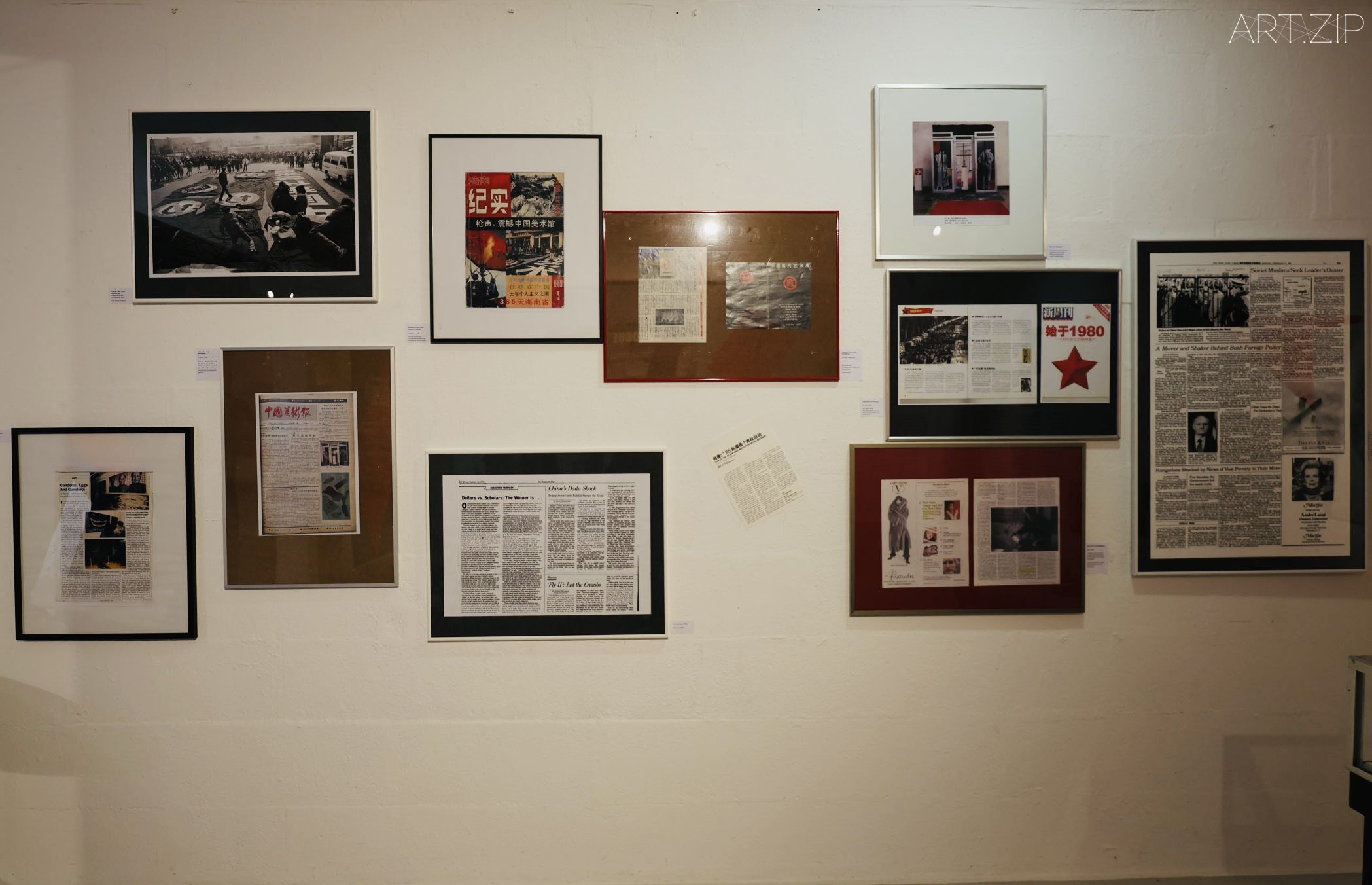
A full archival wall presents key publications and media reports in chronological sequence, including early exhibition catalogues and international press that credited Xiao Lu as the sole author, followed by later texts that introduced and solidified a narrative of “dual authorship”.
1988, Meishu magazine (back cover): Dialogue by Xiao Lu
1989, China Avant-Garde Exhibition catalogue: Dialogue by Xiao Lu
1989, reports in The New York Times, The Washington Post, TIME: Dialogue by Xiao Lu
1989, Chinese Art Newspaper, article by Li Xianting listing “Dialogue by Tang Song, Xiao Lu”
1993, The New York Times Magazine, Andrew Solomon’s erroneous description of “two artists firing at their installation”
2005, in an interview report by New Weekly with critic Li Xianting, it was stated that “Tang Song and Xiao Lu fired two shots from a revolver at their work, Dialogue…,” a description that further reinforced a narrative of dual authorship
2015, Harper’s Bazaar Art China, retrospective critique titled Xiao Lu: The ’85 New Wave as a Patriarchal Movement
Together, these materials demonstrate how the silencing of a woman’s voice enabled the gradual transfer of interpretive authority to male artists within the art system.
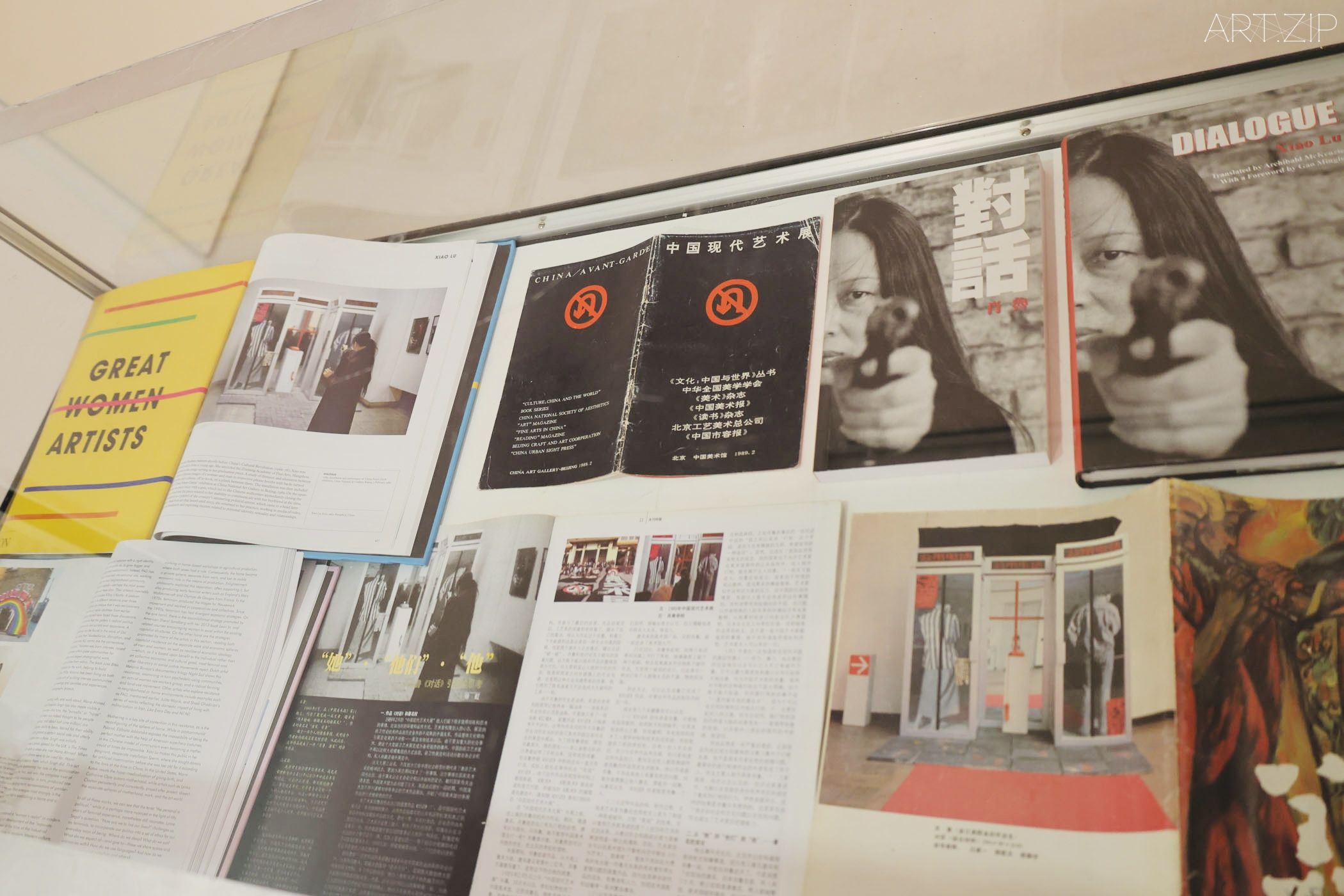
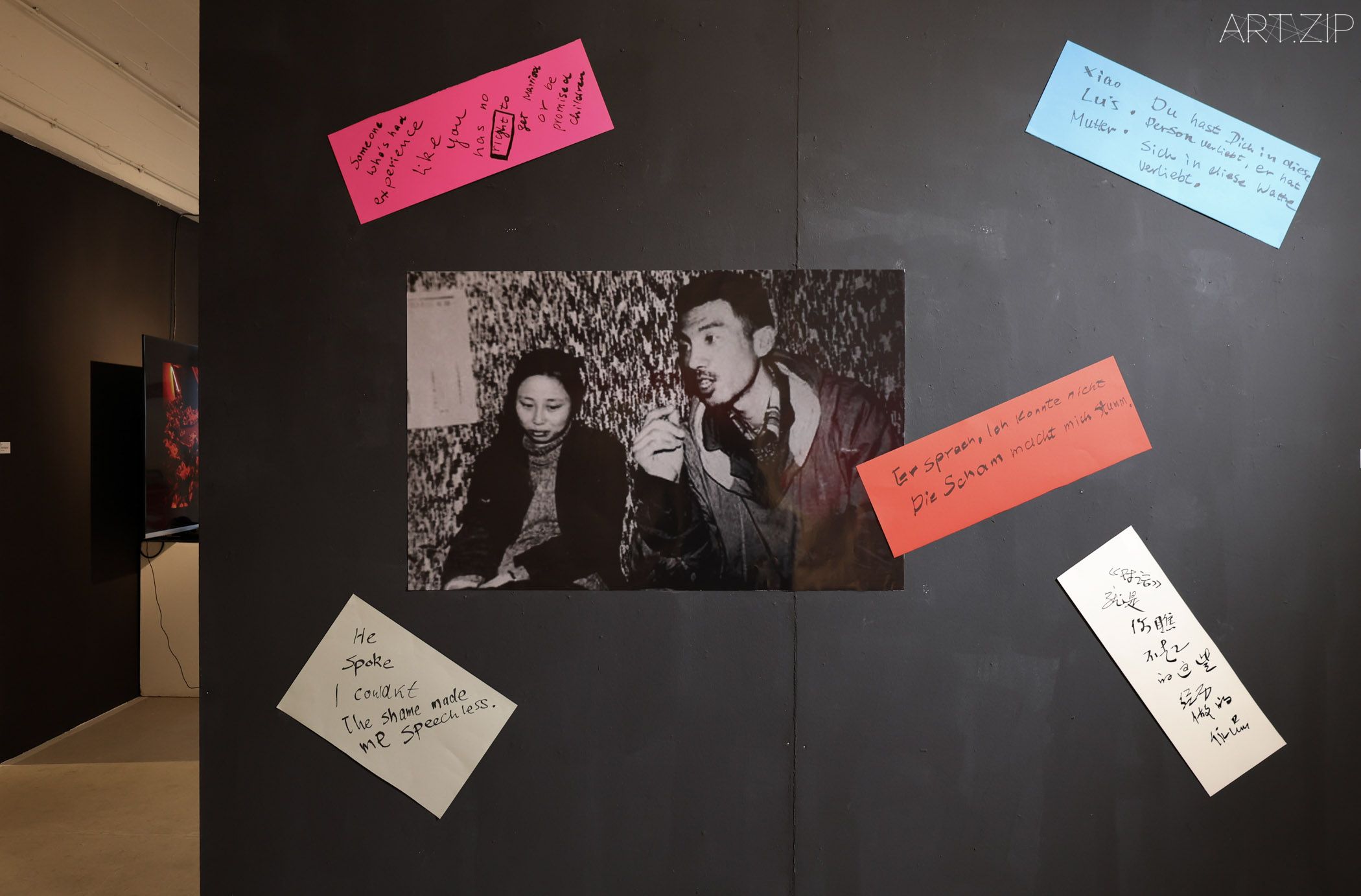
Alongside the archival wall, a vitrine of archival materials and a photograph taken shortly after the 1989 incident–showing Xiao Lu and Tang Song facing the public–form another, more implicit narrative thread within the gallery.The silence of the female artist stands in stark contrast to the rapid appropriation of discursive authority by the male figure, making visible how Dialogue, through repeated telling, citation, and misreading, gradually underwent a transfer of authorship.
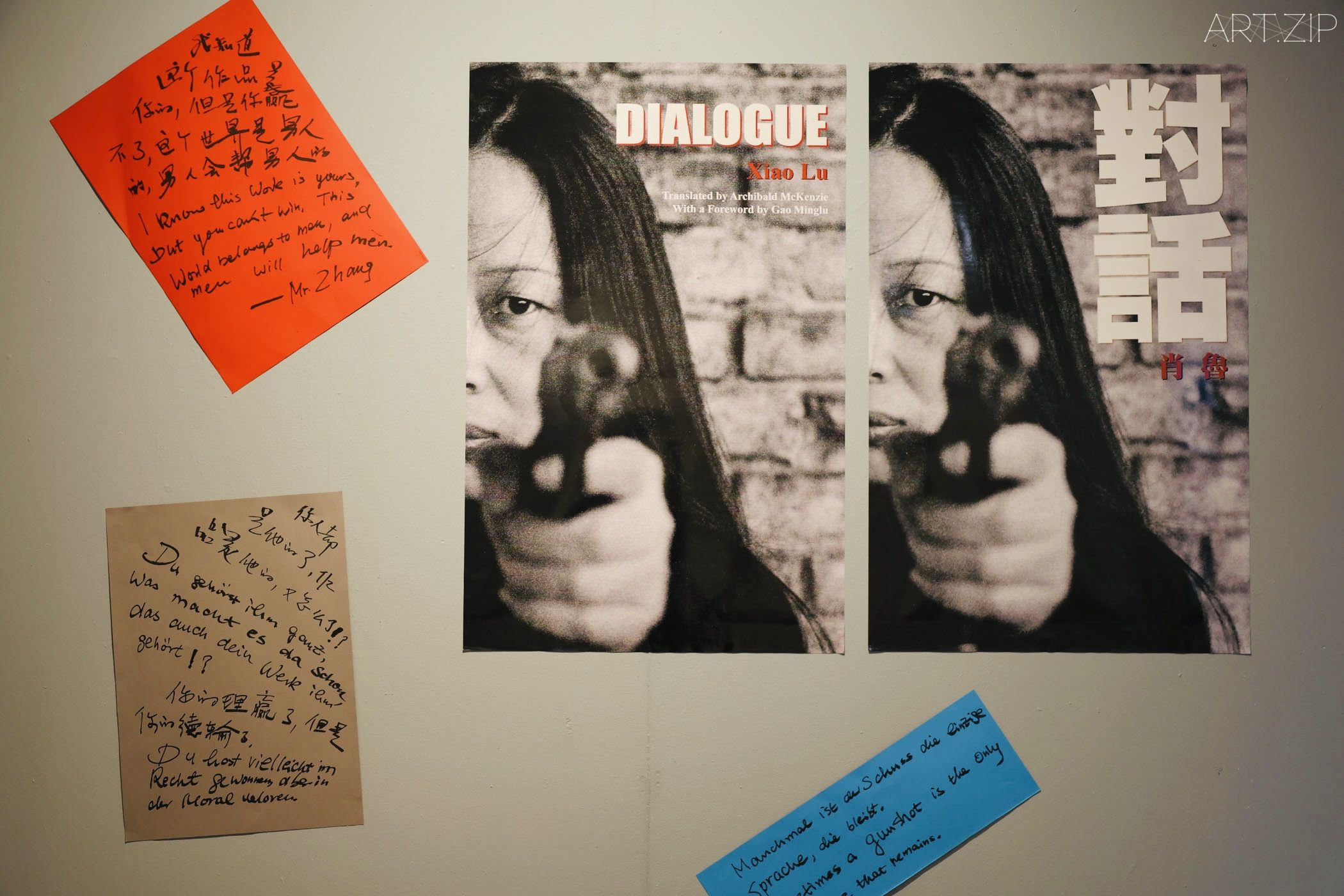
Another wall presents Xiao Lu’s novel Dialogue (Hong Kong University Press, 2010), in which she first articulated the #MeToo experience behind the work, offering an internal logic for her long silence.
第二展廳從肖魯2004年的作品《開火》(攝影)展開,系統梳理《對話》作者權被篡改、誤讀與再生產的全過程。
一整面文獻牆按時間順序呈現關鍵出版與媒體節點,包括:
1988年《美術》雜誌封底:《對話》署名:肖魯
1989年《中國現代藝術展》圖錄:《對話》署名:肖魯
1989年《紐約時報》《華盛頓郵報》《時代週刊》報道:《對話》署名:肖魯
1989年《中國美術報》栗憲庭文章中首次出現「唐宋、肖魯」並列署名
1993年《紐約時報雜誌》Andrew Solomon 的錯誤表述:「兩位藝術家向他們的裝置作品開槍」
2005年《新週刊》對栗憲庭的採訪報道:「唐宋和肖魯用一枝左輪手槍向自己的作品《對話》開了兩槍……」進一步固化「雙作者」敘事
2015年《藝術芭莎》以《肖魯:85新潮是個男權運動》為題的再反思報道
這條文獻時間線清晰揭示了:女性的失語,如何一步步讓男性掌控作品的敘事主導權。
文獻牆一側的文獻櫃與一張1989年槍擊事件後肖魯與唐宋面對外界的合影,共同構成這一展廳的另一條隱性敘事線索。影像中沉默的女性,與隨後被男性迅速掌控的作品話語權形成殘酷對照,直觀呈現了《對話》如何在一次又一次被講述、被引用、被誤讀的過程中,完成了作者權的轉移。
另一面牆則呈現肖魯2010年在香港大學出版社出版的小說《對話》。這是她第一次以書寫的方式,公開作品背後的 #MeToo 經驗,為長期失語提供了內在邏輯。
Gallery III|Body, Emotion, and Resistance
第三展廳:身體、情感與抵抗
The third gallery brings together performance works from different periods, revealing Xiao Lu’s layered narrative strategies.
In Drunk (2009, Brussels), emotion becomes the primary axis, as states of consciousness and unconsciousness intertwine within the body, confronting raw and unfiltered affect.
In Polar (2016, Beijing), Xiao Lu is trapped within a block of ice, repeatedly chiseling her way out. Despite an accidental injury and bleeding, she continues the action — bodily persistence becoming the work’s central tension.
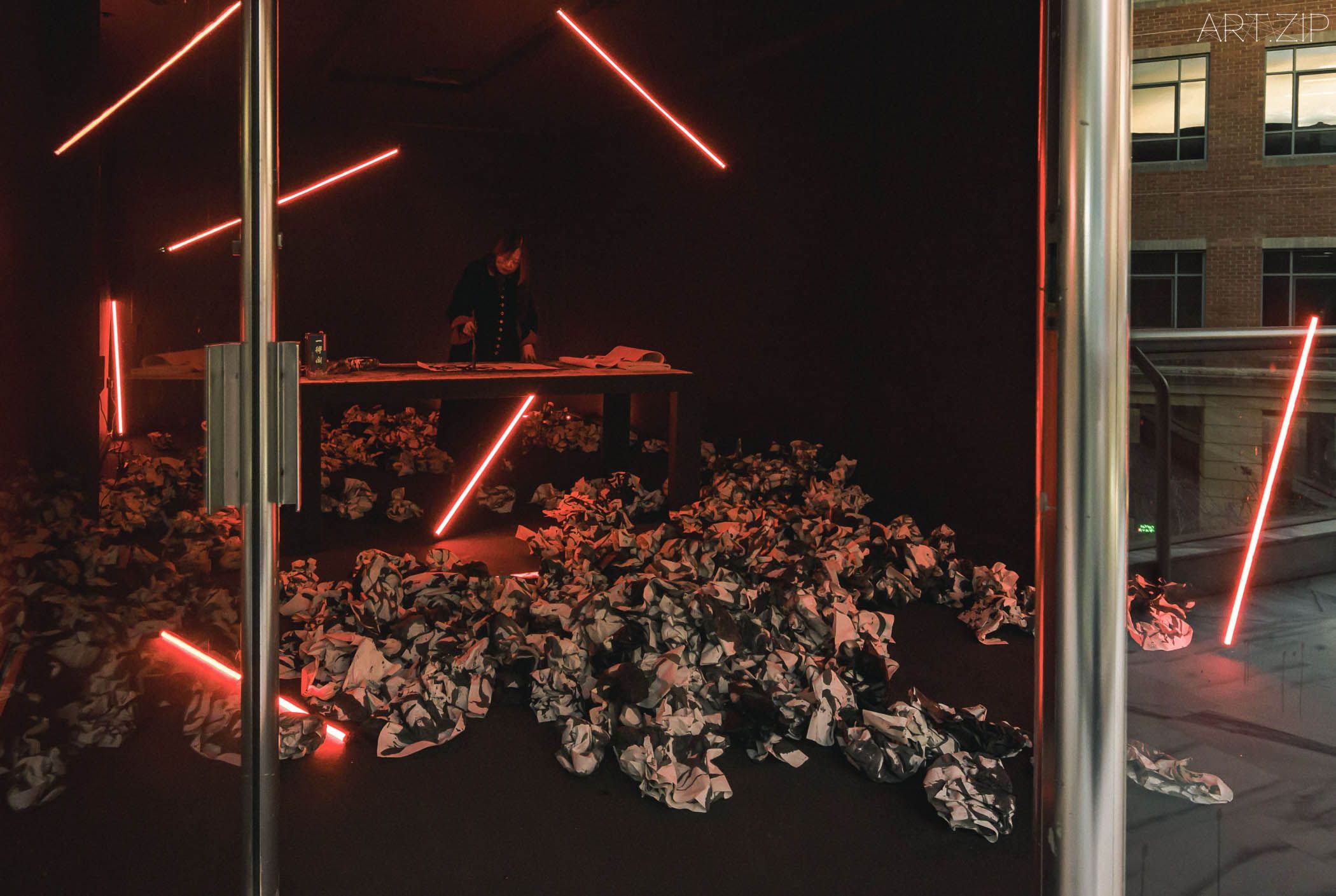
Junk (2024, Sydney) marks a rare and significant turn toward direct critique of cultural and institutional systems.
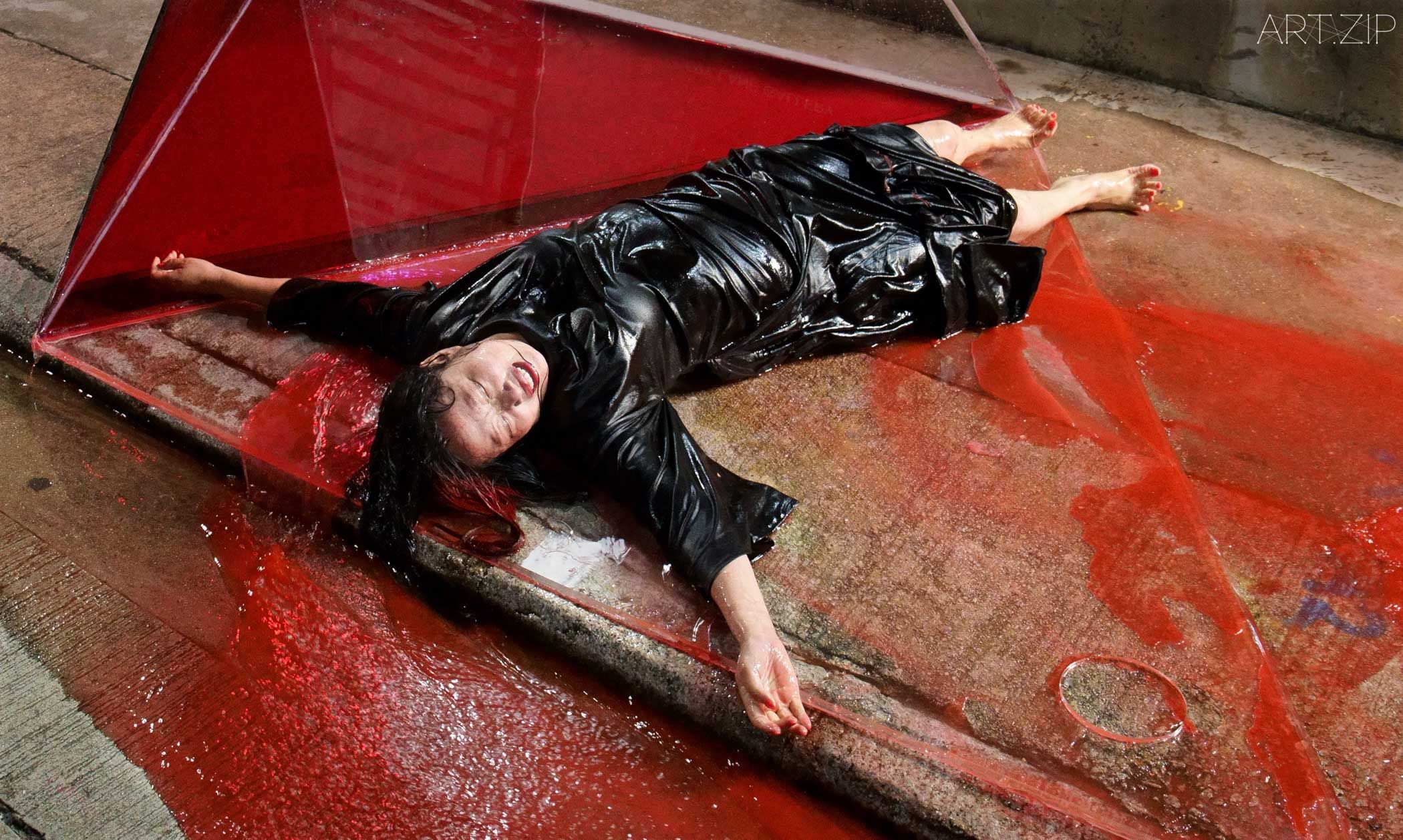
In Suffocation (2025, Bonn), created after the death of both parents in the same year, unbearable grief is transformed into artistic form, once again underscoring the inseparability of life and practice in Xiao Lu’s work.
第三展廳選取肖魯不同時期的行為作品,展現其多層次的敘事結構:
《醉》(2009,布魯塞爾)
以「情感」為線索,呈現意識與無意識在身體中的交錯,直面赤裸而真實的情感狀態。
《極地》(2016,北京)
肖魯被困於冰層中央,反復鑿冰試圖突圍。行為中意外割傷流血,她並未中止行動,身體的堅持成為作品最具張力的部分。
《垃圾》(2024,悉尼)
對文化與制度的直接批判,是她創作中罕見而重要的轉向。
《窒息》(2025,波恩)
父母在同一年相繼去世,無法承受的悲痛被轉化為作品。這件作品再次印證了肖魯藝術實踐中生命與創作高度重合的特質。
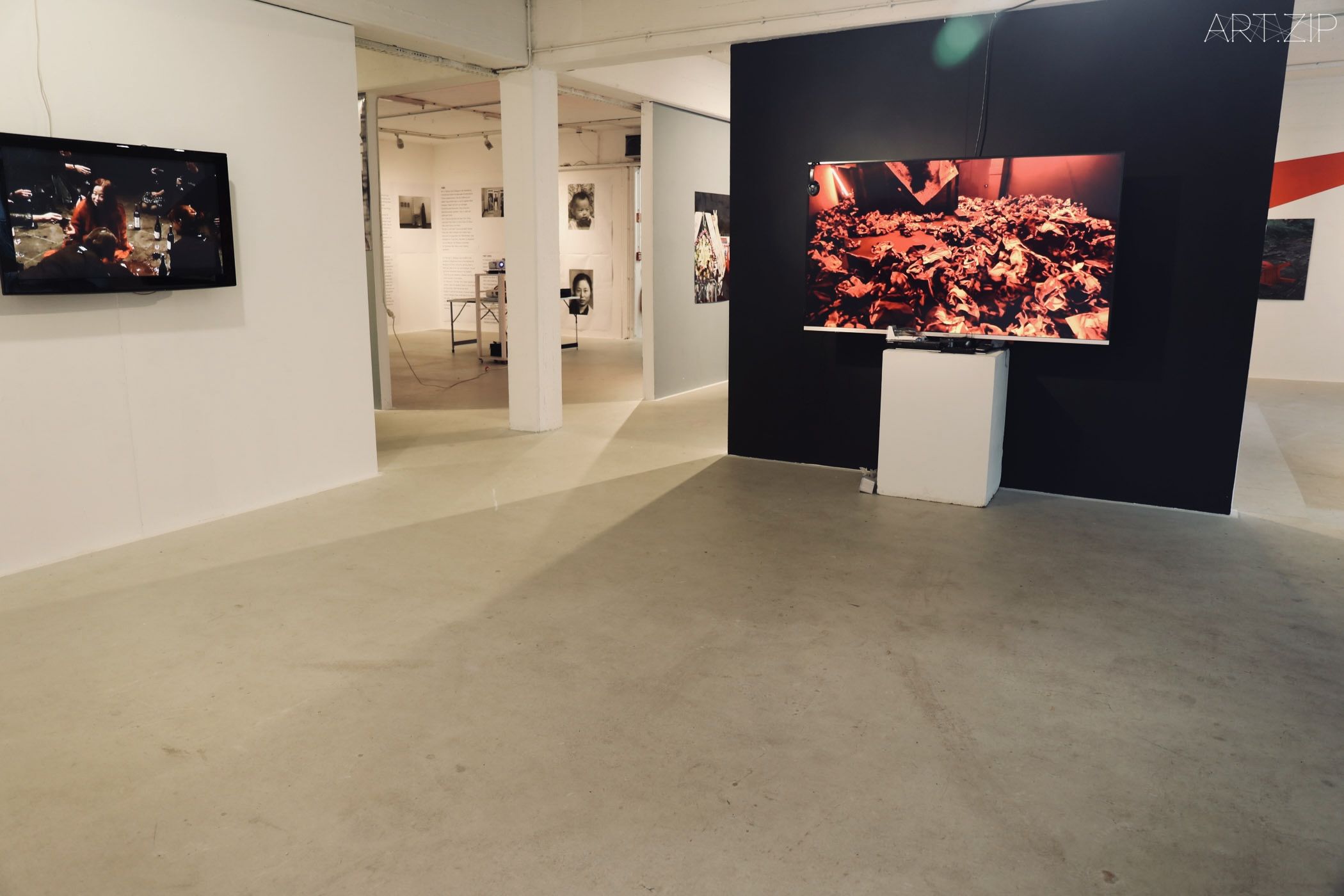
Xiao Lu : First Gunshot of Chinese Feminist Art. Gallery III Installation view. Courtesy of the artist.
2009.jpg)
2016.jpg)
Gallery IV|Art and Society in Direct Confrontation
第四展廳:藝術與社會的正面交鋒
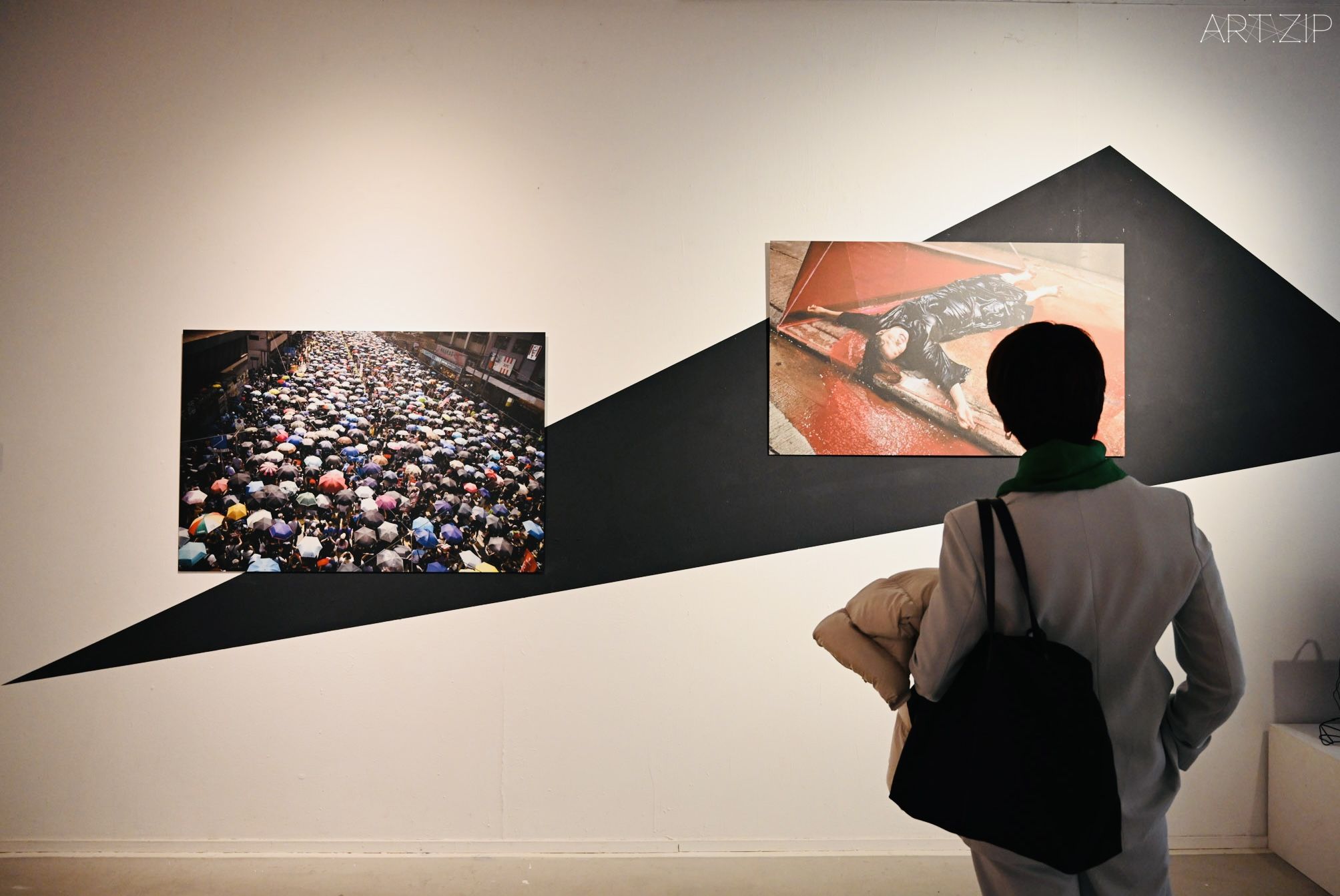
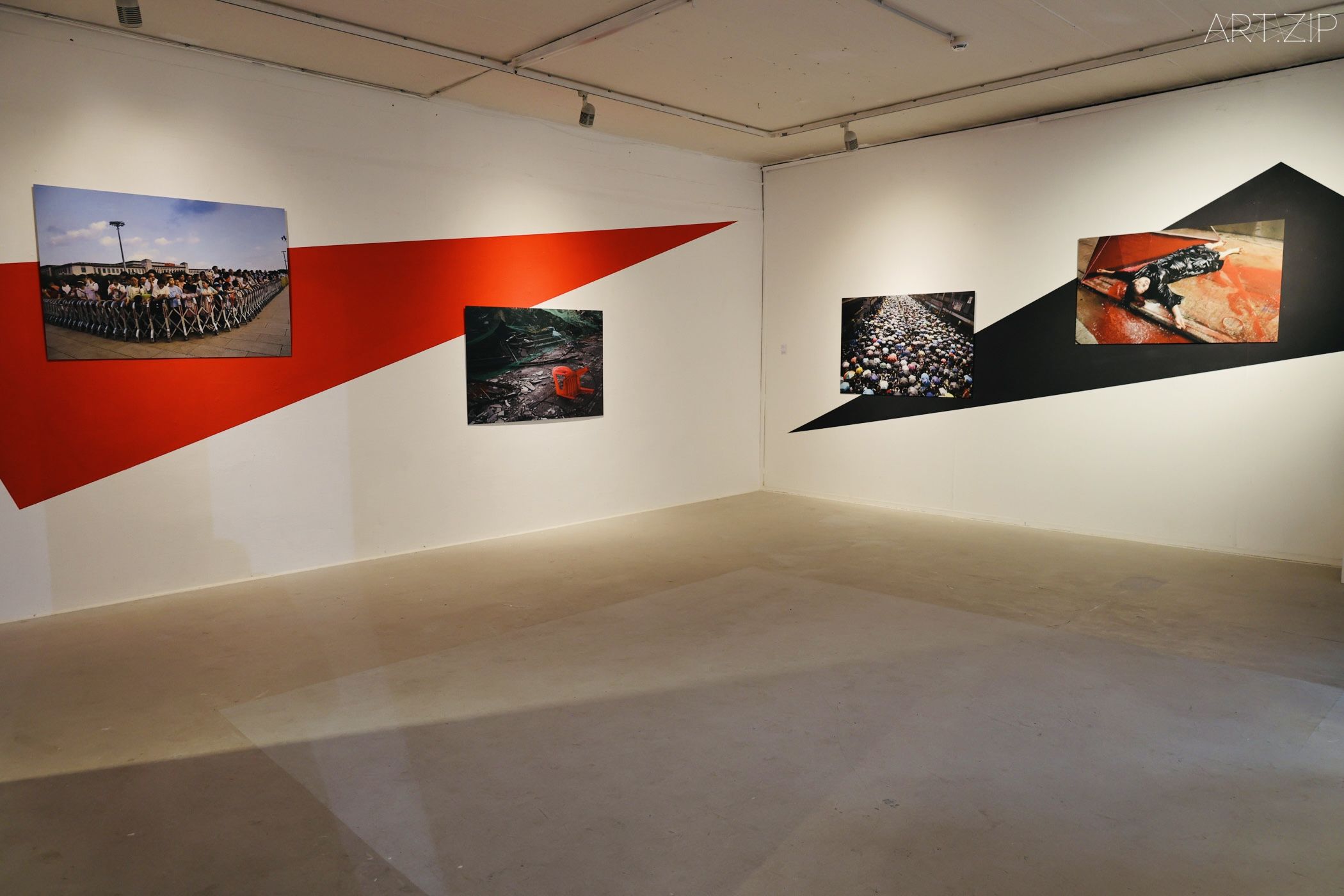
The final gallery focuses on Xiao Lu’s engagement with social reality. These works are not slogans, but interventions grounded in lived situations, using art to register the pressures of our times.
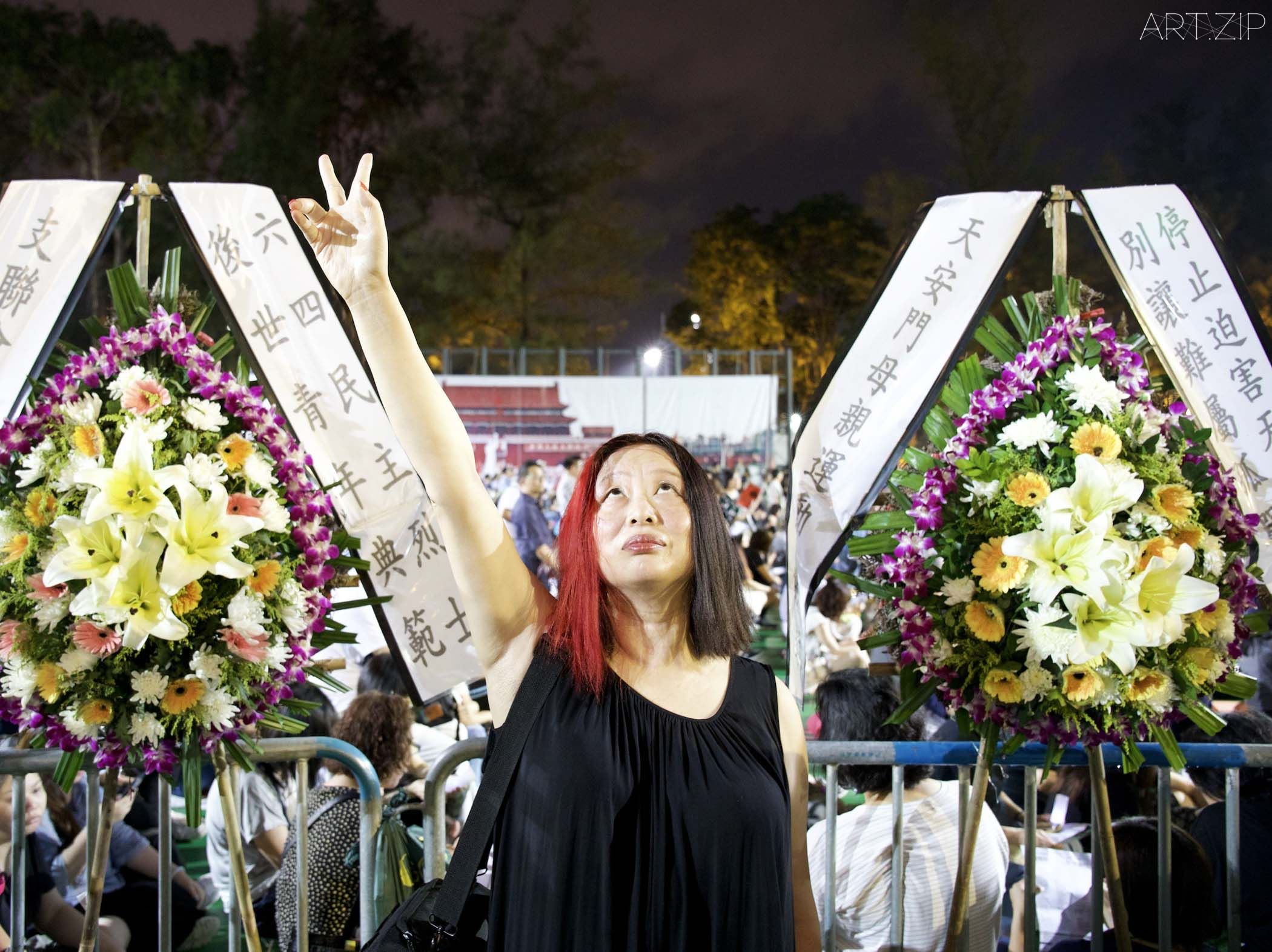
They include works responding to the Hong Kong protests (Skew, 2019; Protest, 2019), projects addressing social realities in mainland China (Evacuating the Low-End Population, 2017; Trapped, 2024). The photographs taken at Victoria Park on June Fourth (2019) are not artworks in a conventional sense, but articulate a clear political position.
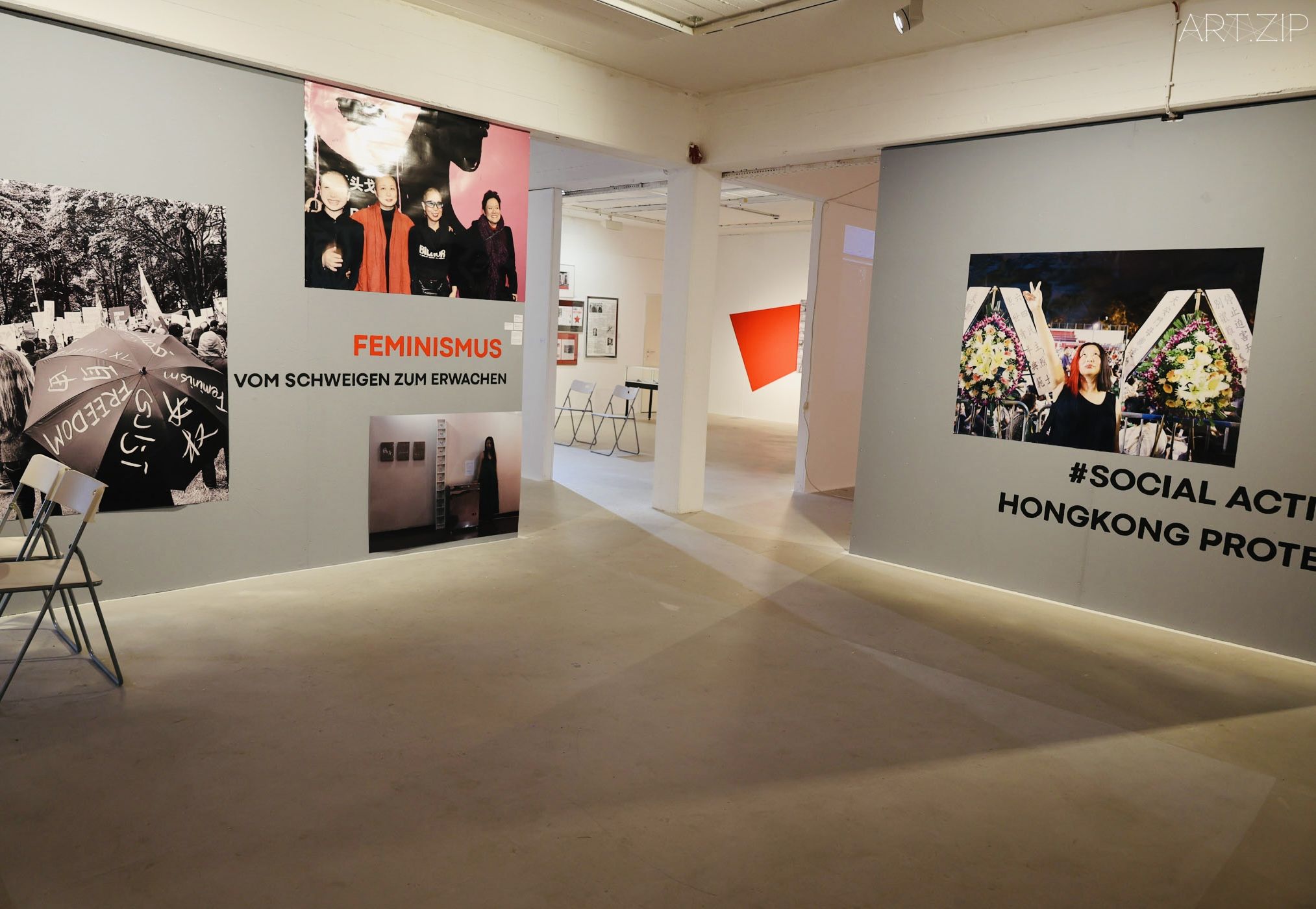
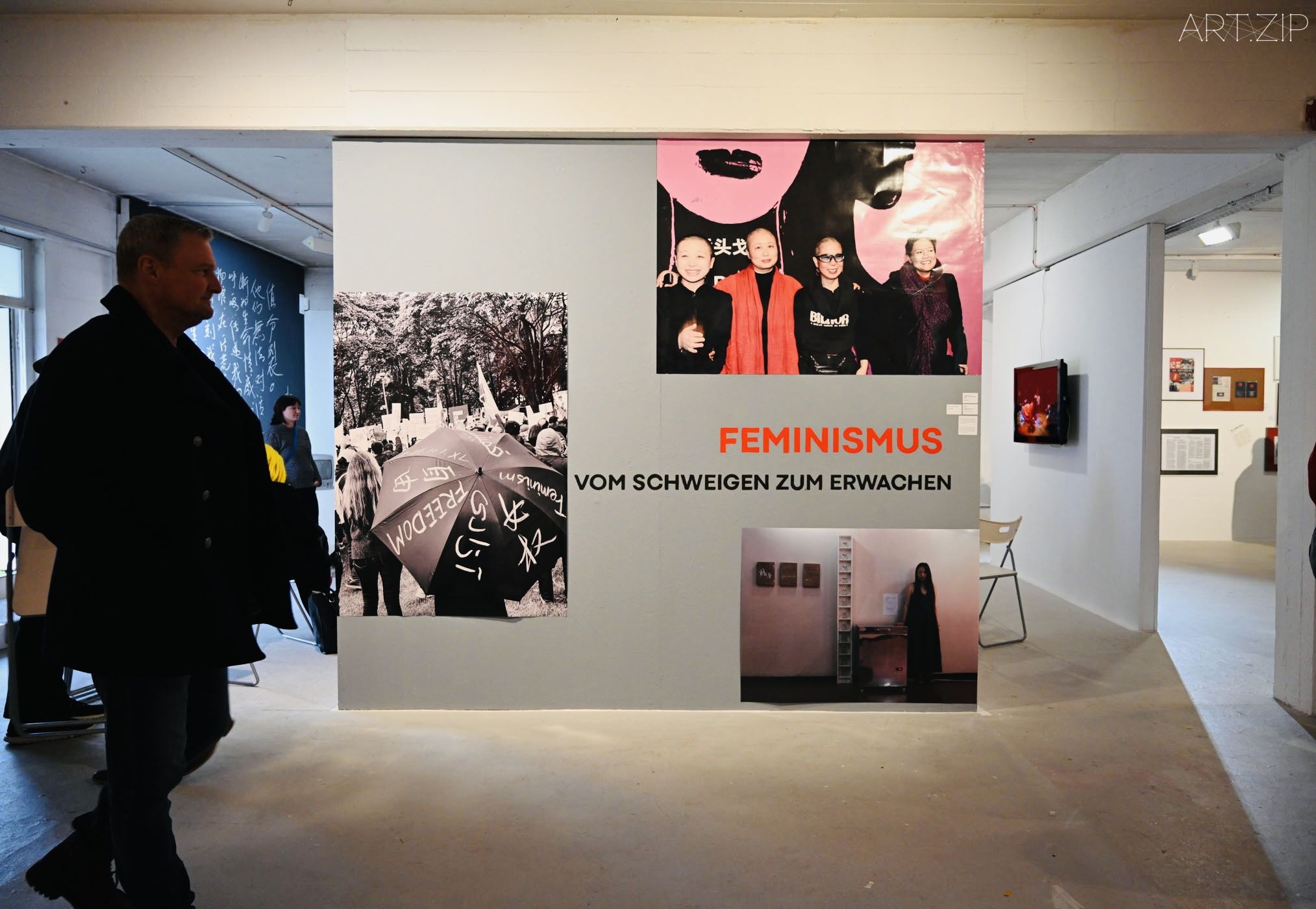
A dedicated feminist wall presents Sperm (2006), documentation of the Bald Girls exhibition (2012), and images from Iranian women’s rights demonstrations in Sydney (2022). Together, these works and contexts articulate the feminist consciousness embedded in both Xiao Lu’s artistic practice and social actions.
第四展廳聚焦肖魯與社會現實的關係。這些作品並非口號,而是切入真實場景,用藝術去觸摸這個時代的脈搏。
香港「反送中」題材作品:《傾斜》(2019)、《抗議》(2019)
中國現實議題作品:《清理低端人口》(2017)、《困》(2024)
「六四維園」現場照片(2019)——它也許不算一件藝術作品,卻清晰呈現了肖魯參與社會政治活動的立場。
另有一面專門的女性主義主題牆面呈現了作品《精子》(2006)、「禿頭戈女」展覽現場(2012)、悉尼伊朗女權集會現場(2022)。 這些作品與場景,集中體現了肖魯作品與社會行動中的女性主義意識。
2019.jpg)
2024.jpg)
Xiao Lu: First Gunshot of Chinese Feminist Art does not seek to construct a personal myth around the artist. Instead, it restores a long-misread and obscured feminist practice to history, documentation, and embodied experience.
As Marianne Pitzen observes,“Xiao Lu combines personal destiny with the struggle of an artist into an impressive complex in her work… in her understanding of feminism, there is no success in a vacuum, liberated from male influence.”
This shot was neither an endpoint nor a spectacle.
It remains a sustained position — a practice that continues.
《肖魯:中國女性主義藝術第一槍》並未試圖為肖魯建構個人神話。 它所做的,是將一個長期被誤讀、被遮蔽的女性藝術實踐,重新放回歷史、文獻與身體經驗之中。
正如 Marianne Pitzen 所言:「肖魯在作品中,將個人命運與藝術家的鬥爭交織為一個極具力量的整體…在她對女性主義的理解中,成功從來不可能存在於一個與男性影響完全隔絕的真空之中。」
這一槍,既不是終點,也不是噱頭。
它是一種持續至今的實踐立場。
Xiao Lu:First Gunshot of Chinese Feminist Art
10th November 2025 – 8th February 2026
Frauenmuseum Bonn
肖魯:中國女性主義藝術第一槍
2025年11月10日–2026年2月8日
德國波恩女性博物館