


By creating surreal imagery featuring fractured bodies and symbolic encounters between women and nature, London-based digital artist Qintong Yu explores the instability of identity, persistence of cultural memory, and psychological complexities of contemporary life.
We are living through an era where identity is increasingly performative, fragmented and filtered through social media. Qintong Yu uses her visual and storytelling talent to offer intriguing and sometimes unsettling reflections on the experience of a woman in an image-driven world.
Yu combines graphic intensity with Surrealist imagery and a nod to symbolism. She constructs dreamlike worlds inhabited by characters that appear human but are eerily devoid of emotion or individuality. In Yu’s images the body becomes a vessel for psychological conflict and cultural inheritance. Her practice occupies an intriguing space between contemporary fine art, literary narrative and contemporary art. Yu adopts the visual language of technology to question its influence on how we view ourselves and others through a filtered lens.
Drawing inspiration from a diverse visual vocabulary, Yu’s most striking works appear to be influenced by Surrealism and Soviet-era propaganda posters. Her visual style seems to be influenced by post-war Korean graphic design, seen in the visual iconography created by Production designer Chae Kyoung-sun and director Hwang Dong-hyuk for Squid Game. Korean nostalgic design utilized an artist concept called dépaysement, which involved placing familiar objects or spaces in an unsettling, dreamlike context.
There are also echoes of Margaret Atwood’s dystopian narrative, particularly Yu’s depiction of anonymous women whose bodies appear vulnerable to invisible forces, recalling Atwood’s chilling novel ‘The Handmaid’s Tale’.
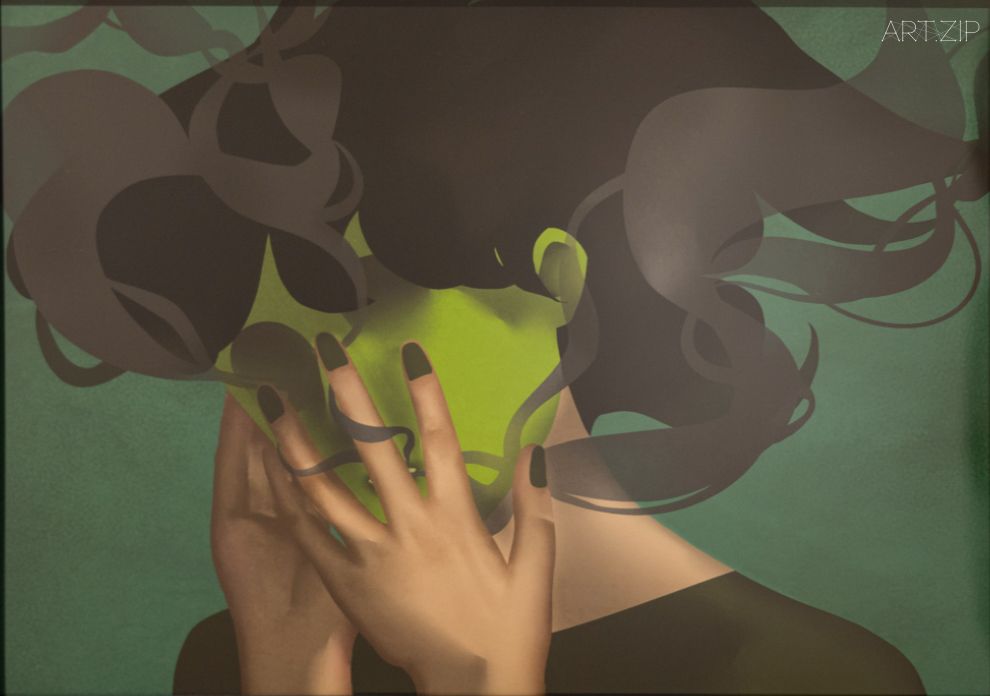
Veil of Becoming by Qintong Yu
Yet Yu’s images resist straightforward interpretation, cultivating an ambiguity that makes the familiar feel strangely alien. Notable artworks by Yu include Veil of Becoming (2025), depicting a woman with a green mask over her face, her smoke-like hair dissolving into the surrounding darkness. The image recalls René Magritte’s Surrealist strategies of concealment and substitution, with the green mask obscuring the woman’s face recalling his iconic painting ‘The Son of Man’ (1946), of a Bowler-hatted man with a bright green apple masking his visage. Veil of Becoming is a seminal work by Yu for it appears to reclaim the Magritte image from a female lens.
Yu shifts the emphasis towards female subjectivity and the pressures of constructing a public persona. The mask becomes a potent metaphor for the identities we adopt, while its artificiality resonates with a culture increasingly conditioned by filters, curated self-images and the mediated experience of reality. Charcoal greys and green-blues, punctuated by electric teal, heighten the psychological tension.
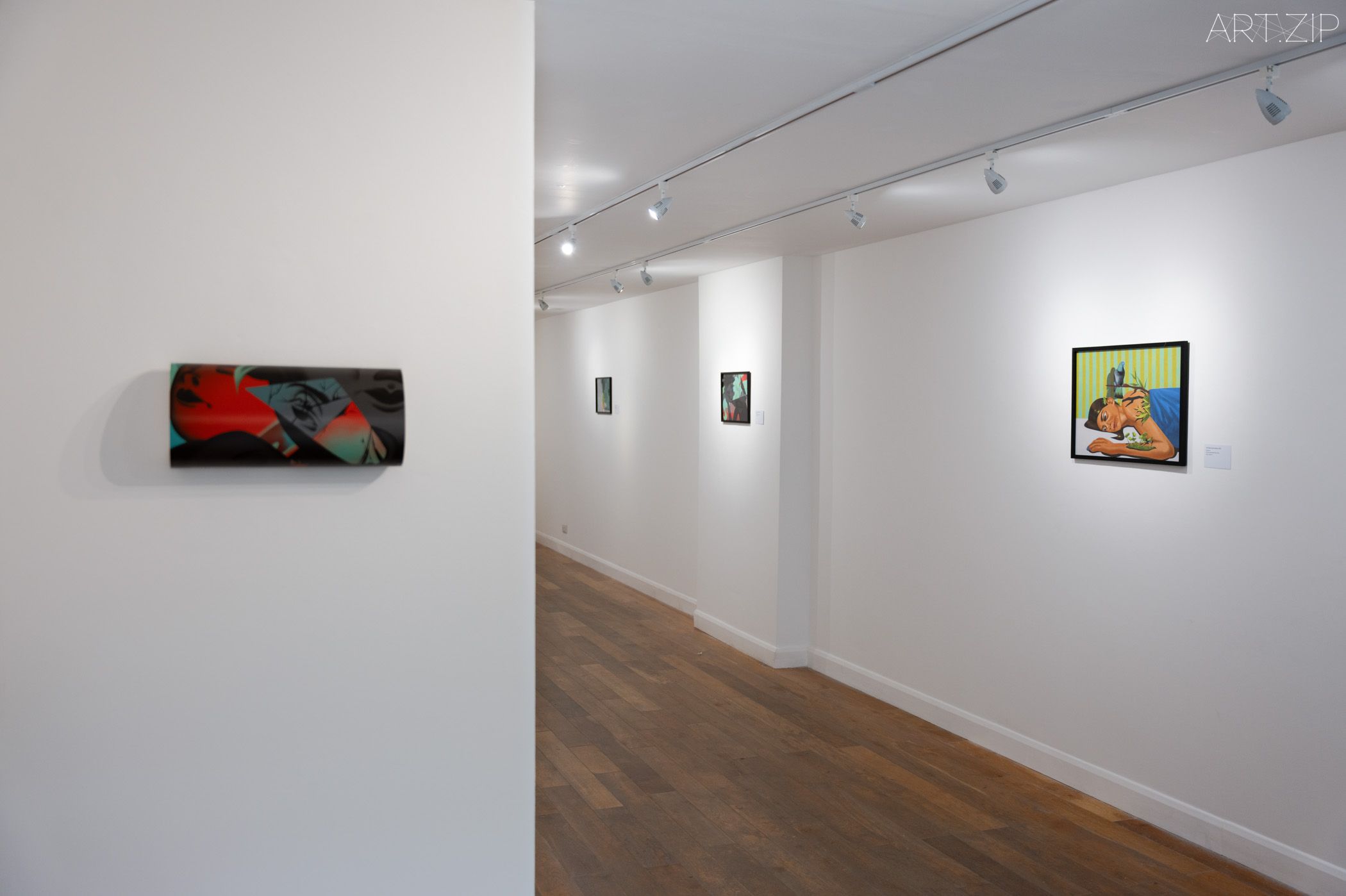
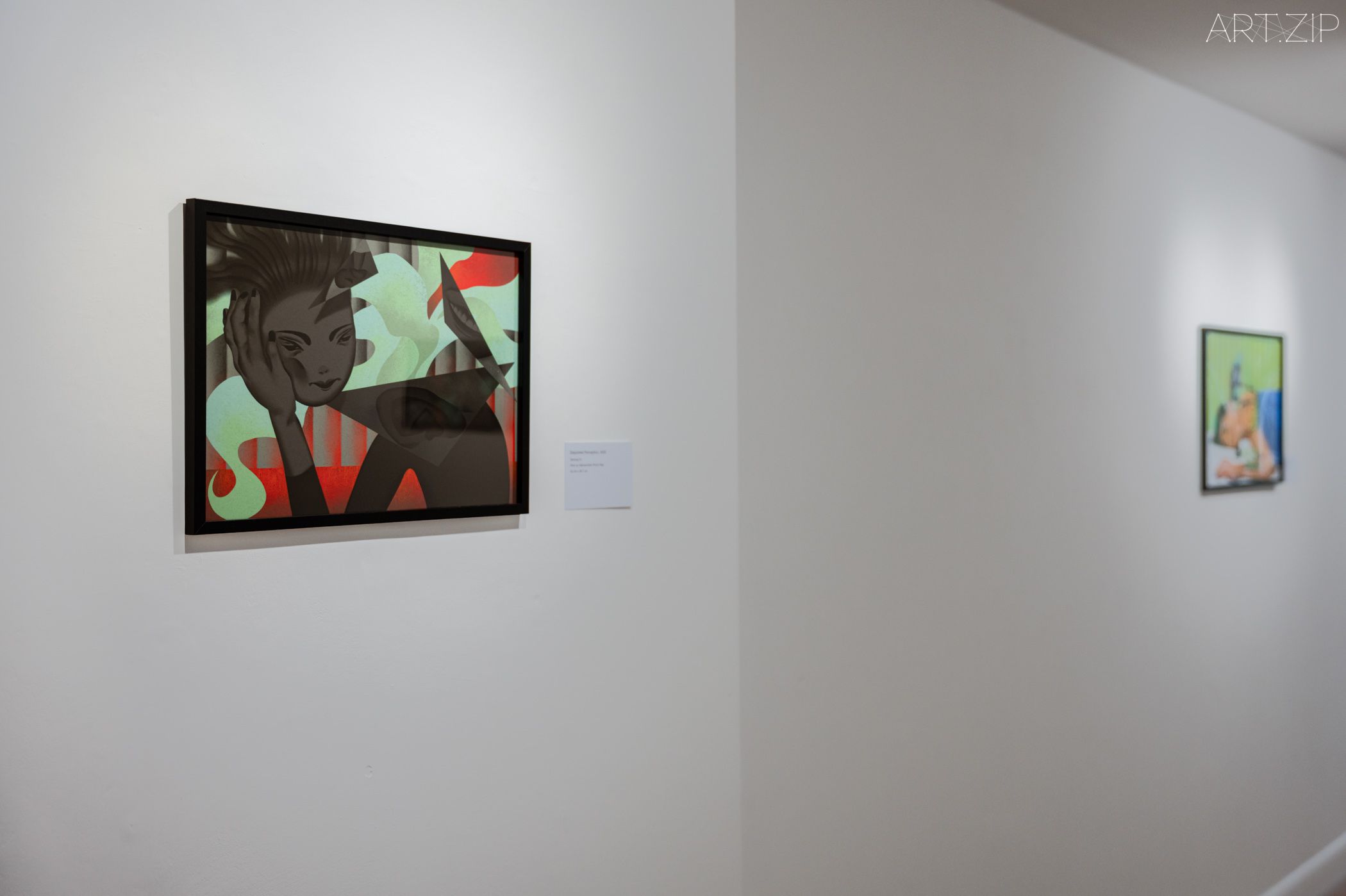
This sense of internal disassembly extends into Fragments and Reconstruction, Disjointed Perception, Layers of Self and Splintered Remains. In Disjointed Perception, isolated eyes, ears and a performing smile occupy sharp geometric fragments, suggesting the exhaustion of processing a world that demands perpetual attention. Layers of Self develops this idea through interlocking limbs and overlapping silhouettes, presenting identity not as a stable entity but as an accumulation of competing experiences. In Splintered Remains, fractured faces and glass-like reflections intertwine with botanical motifs and burning incense, introducing a quieter register of mourning. In these works Yu suggests that fragmentation becomes not simply a condition of contemporary existence but a means of acknowledging the selves we leave behind.
Yu’s digital methodology is central to these visual and technical explorations. Working primarily in Procreate, she builds compositions through overlapping forms, tactile textures and carefully controlled colour. Her intuitive approach to colour often begins in greyscale, allowing structure to emerge before tonal contrasts establish the emotional register. She is a talented Colourist and uses a bold palette of bright reds and greens to introduce a sense of danger and dissonance to her images, while softer hues suggest vulnerability or fading memory. Although digitally produced, her work privileges expressive colour and material sensation over photographic realism, creating images that feel simultaneously artificial and intimate.
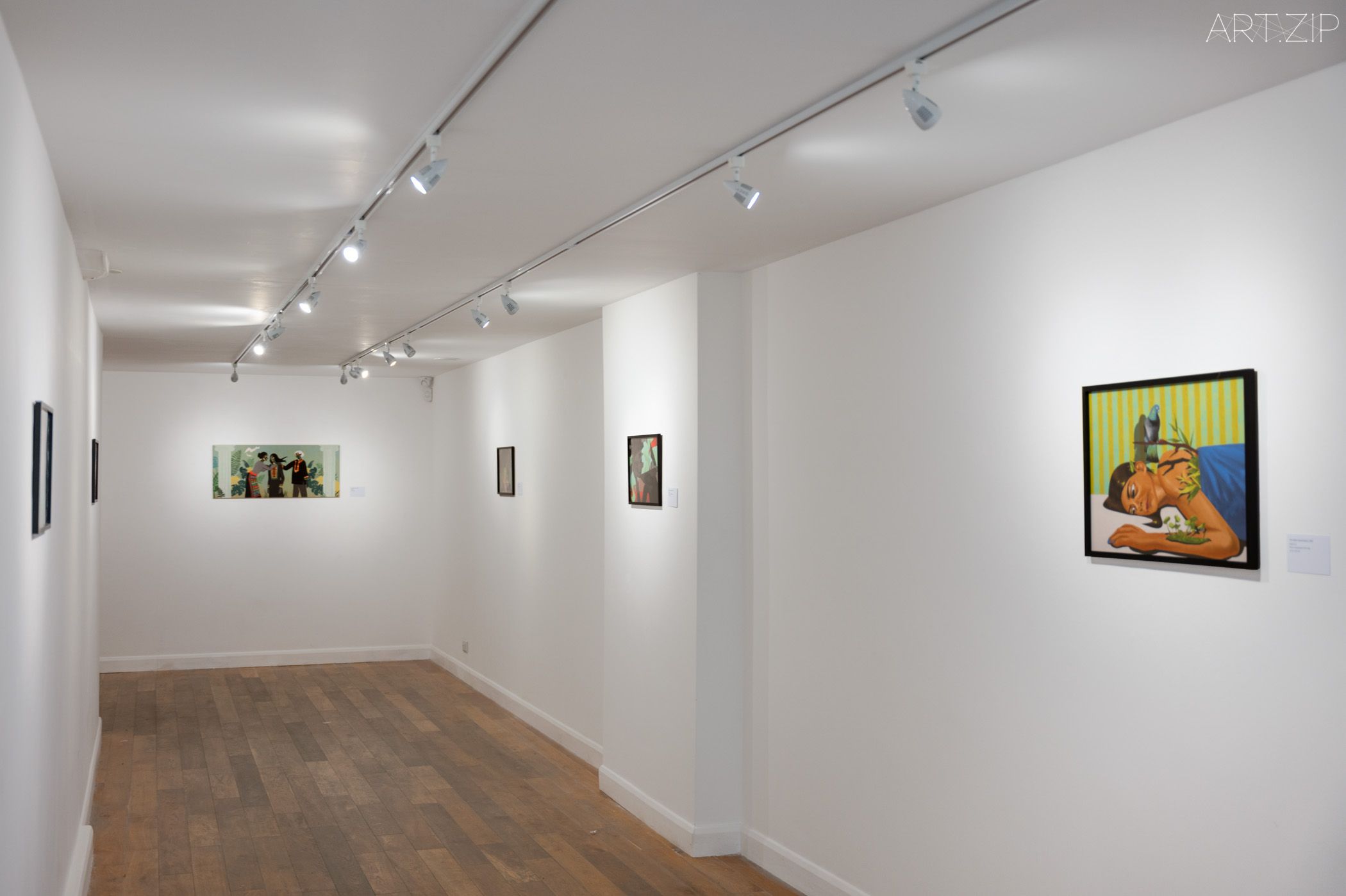
Nature offers a counterpoint to this fractured psychological terrain. In The Silent Germination (2026), a woman lies beneath a sea-blue sheet as foliage emerges from her body and a bird perches on a branch growing from the fabric. Her wide, vacant eyes complicate the apparent tranquillity of the scene, leaving the viewer uncertain whether the figure is resting, suffering or undergoing an inexplicable transformation. The image’s unsettling beauty lies in this tension between vulnerability and regeneration: the body becomes both an object of unease and fertile ground for new life.
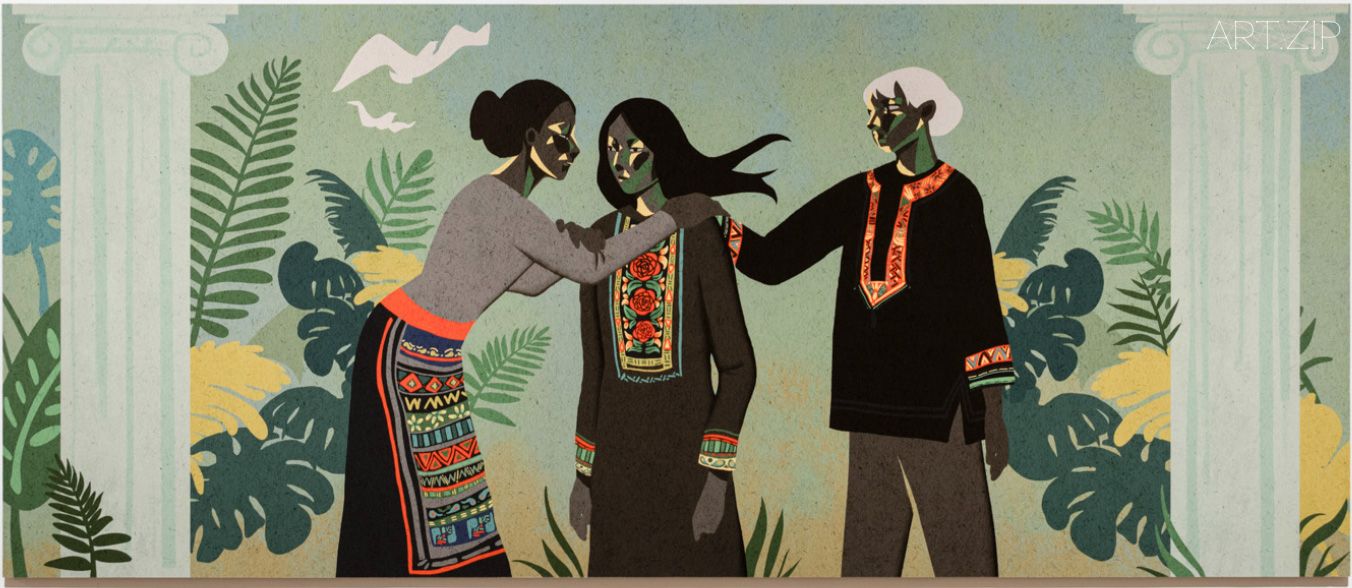
A Matriarchal Weave (2026) by Qintong Yu
By contrast, A Matriarchal Weave (2026) offers a more affirmative vision of female experience. Women gather within a natural sanctuary, their traditional garments enriched with geometric patterns and rose motifs. Textiles become repositories of collective memory, carrying the histories of women whose solidarity has enabled survival and resistance across generations. Where Yu’s fragmented figures suggest the isolating pressures of contemporary identity, this work proposes belonging as something woven through shared heritage and mutual care.
Yu’s most compelling achievement lies in her ability to visualise opposing states in tension, such as concealment and revelation, disintegration and renewal, or alienation and belonging. Her imagery occasionally risks allowing symbolism to dominate, yet its ambiguity also resists a contemporary culture saturated with images. By transforming digital illustration into a space for psychological and cultural inquiry, Yu suggests that identity is neither fixed nor wholly self-authored. It is continually assembled, disrupted and reconstructed through memory, technology and the histories we inherit.
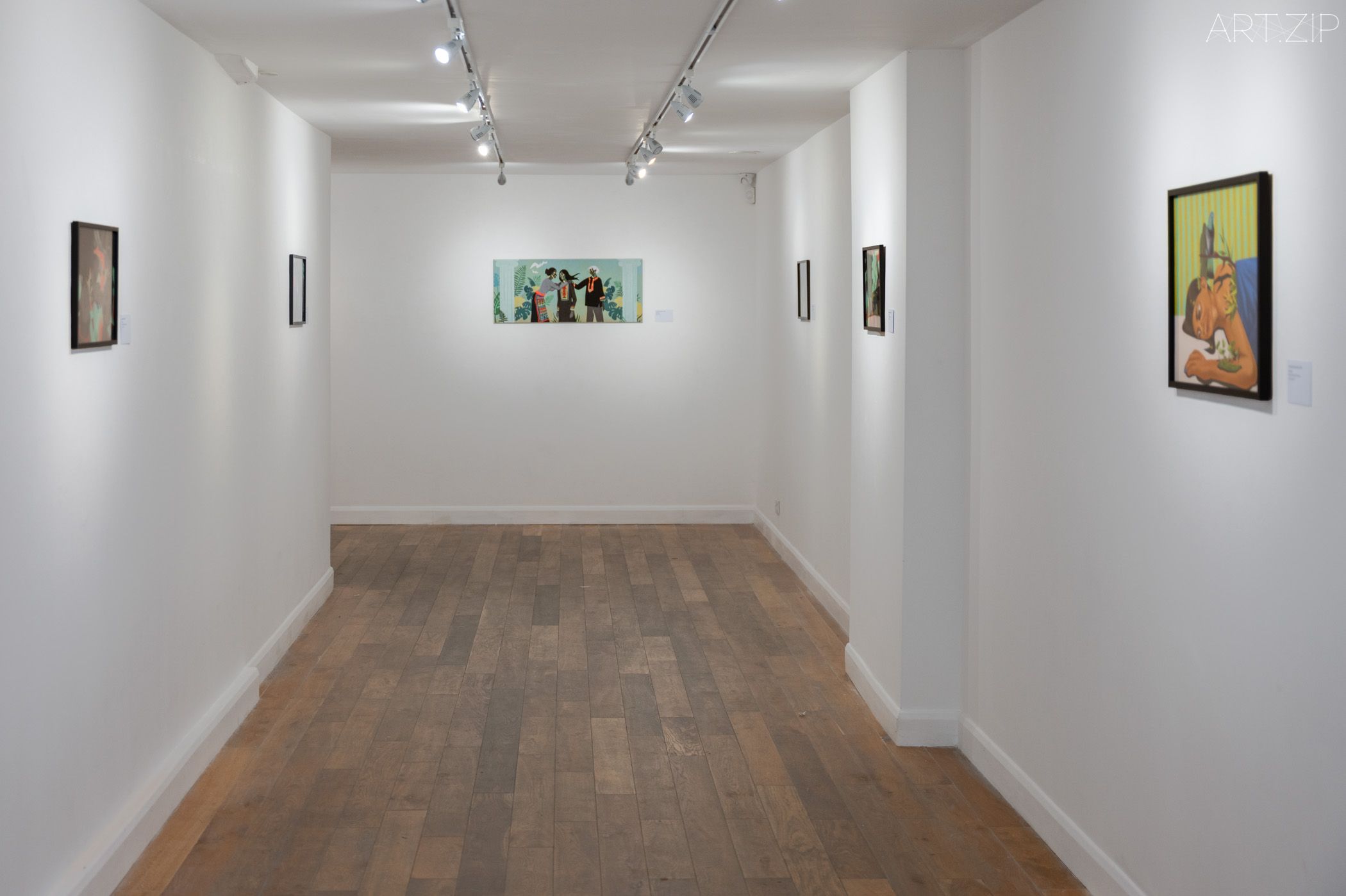
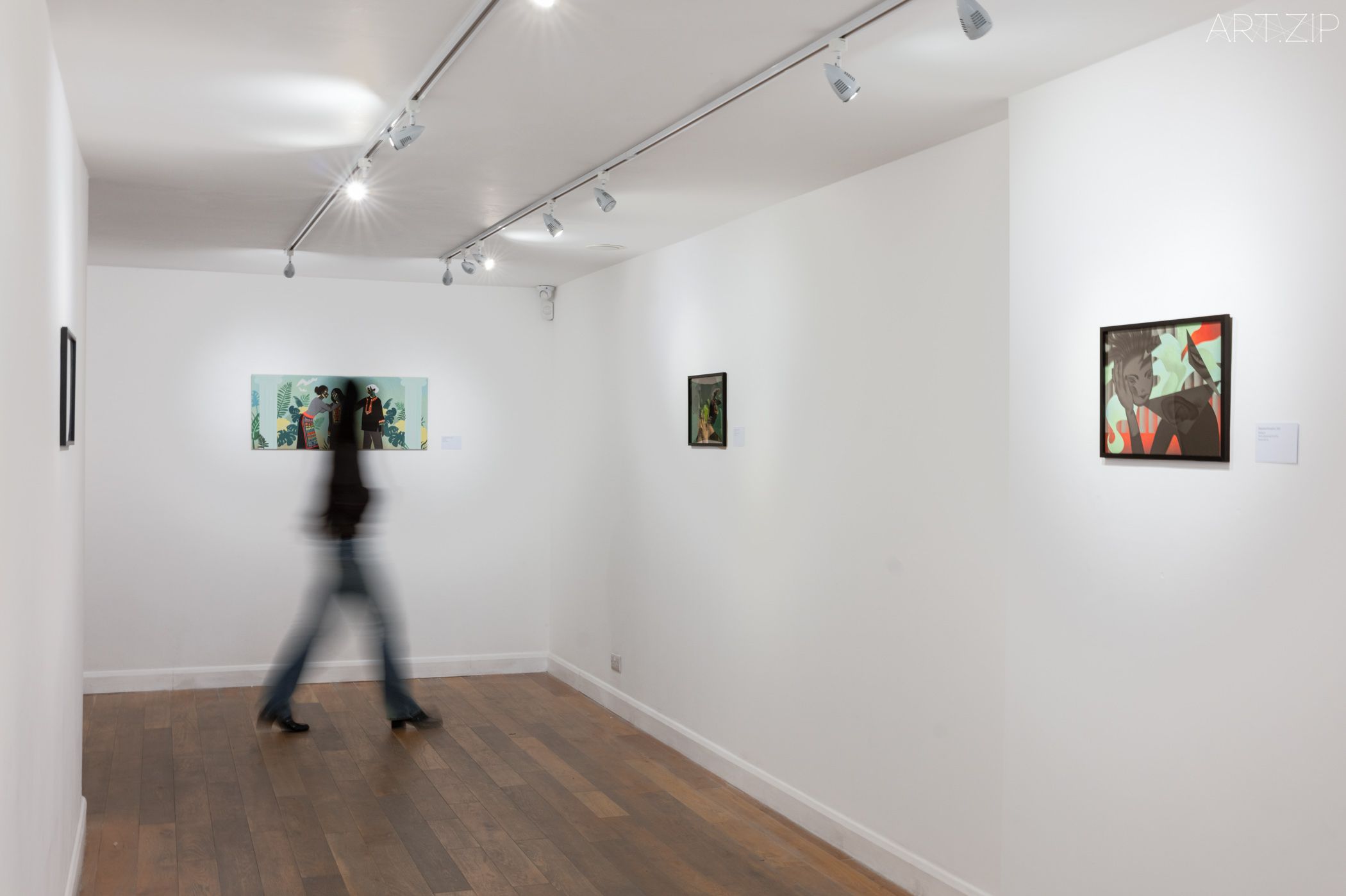
駐倫敦數位藝術家于沁彤以碎裂的身體、女性與自然之間的象徵性相遇,構築出充滿超現實色彩的圖像,藉此探索身分認同的不穩定性、文化記憶的延續,以及當代生活中複雜的心理狀態。
我們生活在一個身分不斷被展示、切割與重塑的時代,社交媒體的濾鏡也悄然改變了我們觀看自己與他人的方式。于沁彤透過圖像與敘事,關注女性在這個高度視覺化的世界中的處境,以及隱藏在日常表象之下的不安與矛盾。
于沁彤的作品結合了鮮明的視覺構成、超現實主義意象與象徵主義元素。她筆下的世界如夢境般熟悉而陌生:那些具有人類形貌的角色,卻往往缺乏鮮明的情感與個性,呈現出一種難以言喻的疏離感。在她的圖像中,身體不只是被觀看的對象,也承載著內在的心理衝突與文化記憶。她的創作遊走於視覺藝術、文學敘事與數位文化之間,借用數位技術的視覺語彙,重新審視技術如何塑造我們對自我與他人的認知。
于沁彤的創作融合了不同時代的視覺語言,其中尤以超現實主義和蘇聯時期宣傳海報的影響最為鮮明。她的作品也讓人聯想到戰後韓國的平面設計風格,以及美術指導蔡炅宣(Chae Kyoung-sun)與導演黃東赫(Hwang Dong-hyuk)在《魷魚遊戲》(Squid Game)中營造的視覺世界。《魷魚遊戲》的場景設計讓人聯想到超現實主義中的「異境化」(dépaysement)手法:將熟悉的物件或空間置於意想不到的情境,使日常事物顯得陌生、不真實,甚至令人不安。
她的作品同樣讓人想起瑪格麗特·愛特伍(Margaret Atwood)的反烏托邦小說,尤其是《使女的故事》(The Handmaid’s Tale)。于沁彤筆下那些身分不明的女性,身體彷彿暴露於某種看不見的力量之下。她們的處境與愛特伍小說中的女性形象形成呼應,也讓作品中的身體多了一層關於權力與控制的意味。
然而,于沁彤的圖像並不提供明確的解讀,而是在熟悉與陌生之間留下想像的空間。在《蛻變之幕(Veil of Becoming)》(2025)中,一名女性戴著綠色面具,煙霧般的髮絲逐漸消散在四周的黑暗裡。這幅作品讓人聯想到比利時超現實主義畫家雷內·馬格利特(René Magritte)慣用的遮蔽與置換手法,尤其是他的代表作《人子》(The Son of Man,1964)。畫中,一名頭戴圓頂禮帽的男子被一顆青蘋果遮住面容。于沁彤同樣以遮蔽面孔的方式呈現人物,卻以女性取代了馬格利特畫中的男性,從女性視角重新詮釋了這一經典的超現實主義意象。
在這件作品中,于沁彤將目光轉向女性的自我認同,以及維持公眾形象所帶來的壓力。面具不僅遮掩了女性的面容,也象徵著人們在不同場合扮演的身分。在社交媒體盛行的今天,人們愈來愈習慣透過濾鏡和精心挑選的圖像展示自己,而面具恰好呼應了這種自我呈現的方式。畫面以炭灰色和藍綠色為主,明亮的青綠色穿插其間,增添了幾分緊張與不安。
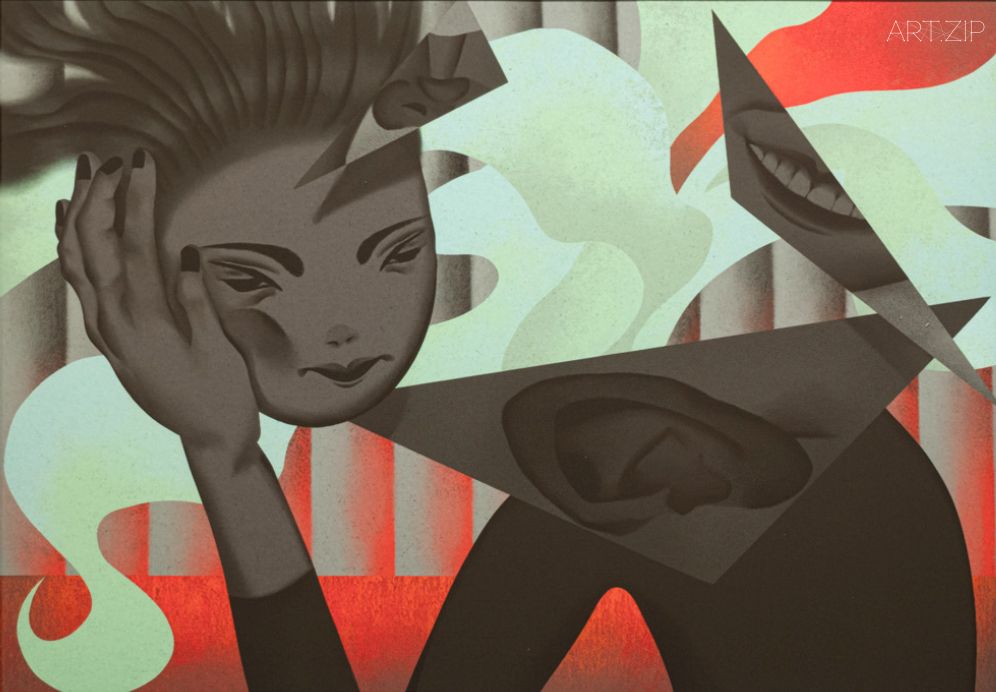
Disjointed Perception by Qintong Yu
這種自我分裂的感受也貫穿了《碎片與重構(Fragments and Reconstruction)》、《割裂的感知(Disjointed Perception)》、《自我的層次(Layers of Self)》和《破碎的殘存(Splintered Remains)》等作品。在《割裂的感知》中,眼睛、耳朵與刻意擺出的笑容散落在尖銳的幾何碎片之間。這些彼此分離的感官與表情,讓人想到在資訊與外界目光的持續包圍下,個體所承受的疲憊與壓力。《自我的層次》則透過交錯的肢體與重疊的人影,呈現自我認同的多重面貌。不同甚至相互矛盾的經驗層層交疊,使身分不再是一個穩定、完整的整體。到了《破碎的殘存》,碎裂的面孔、玻璃般的反光與植物圖案、燃燒的香交織在一起,畫面多了一份沉靜與哀傷。在這些作品中,破碎不只是當代生活帶來的心理感受,也讓人重新審視那些在生命歷程中逐漸失落的自我。
數位技術是于沁彤創作的重要部分。她主要使用Procreate,透過層層疊加的形態、富有質感的肌理與細緻的色彩安排來構成畫面。她對色彩的運用頗具直覺,往往先從灰階入手,確立畫面的基本結構,再透過色彩對比營造不同的情緒。她尤其擅長運用色彩:鮮明的紅色與綠色相互碰撞,帶來危險與衝突的感覺;柔和的色調則流露出脆弱與記憶逐漸褪去的意味。儘管以數位媒介創作,她並不追求攝影般的逼真效果,而是更注重色彩的表現力與畫面的質感,使作品既帶有數位圖像的人工痕跡,又不失細膩而私密的情感。
自然元素則為這些關於身分與心理狀態的探索帶來另一種視角。在《無聲萌發(The Silent Germination)》(2026)中,一名女性躺在海藍色的布單下,枝葉從她的身體中生長出來,一隻鳥停在穿過布料的枝條上。她雙眼圓睜,目光空洞,打破了畫面表面的寧靜。我們無法確定她是在休息、承受痛苦,還是正經歷某種難以言說的轉變。這幅作品在脆弱與新生之間形成微妙的張力:植物從身體中萌發,既讓人感到不安,又暗示著生命延續的可能。
相比之下,《母系織錦(A Matriarchal Weave)》(2026)呈現了女性經驗中更為溫暖、積極的一面。畫面中,女性們聚集在一處被自然環繞的庇護之所,身上的傳統服飾飾有幾何圖案與玫瑰紋樣。這些織物不只是服飾,也承載著代代相傳的記憶,以及女性在相互扶持中延續的生命經驗與抵抗精神。如果說于沁彤筆下那些破碎的人物反映了當代個體的孤獨與身分焦慮,那麼這件作品則將目光轉向女性之間的聯繫,從共同的文化傳承與彼此的照顧中尋找歸屬感。
于沁彤的作品往往遊走於相互矛盾的狀態之間:遮蔽與顯露、破碎與重生、疏離與歸屬。她的圖像有時過於依賴象徵符號,但那些難以被明確解讀的細節,也為觀者留下了思考的空間。在一個圖像無處不在、觀看日益快速的時代,她的作品讓我們有機會重新審視身分與自我之間的關係。透過數位繪畫,于沁彤將個人的心理感受與更廣泛的文化經驗聯繫起來,也讓我們看到,身分並非固定不變,更不是完全由個人自主塑造,而是在記憶、技術與歷史的交織中不斷改變。
Text by Lee Sharrock
Published on 15th October 2026


