


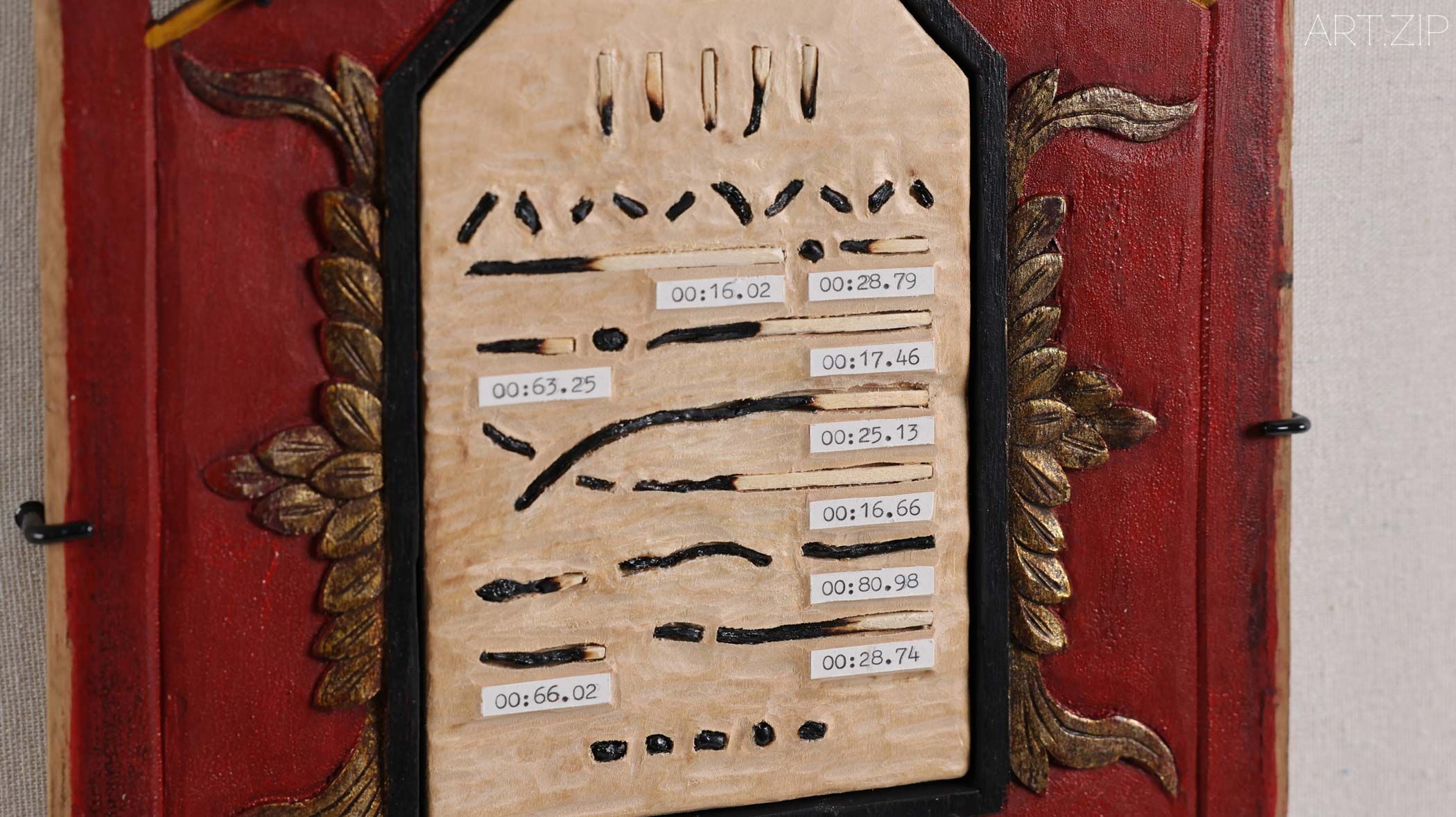
Strike a match.
Frictional heat ignites the red phosphorus; a burst of sparks erupts into the dark.
The flame hesitates for a breath, then surges up the wooden stem.
Sharp and brief, the sting of sulfur dioxide heralds an inception, foretelling a demise.
The fire spreads, consuming as it climbs, scorching and charring the matchstick.
Life moves from its origin to struggle, from sudden bloom to eternal quietude.
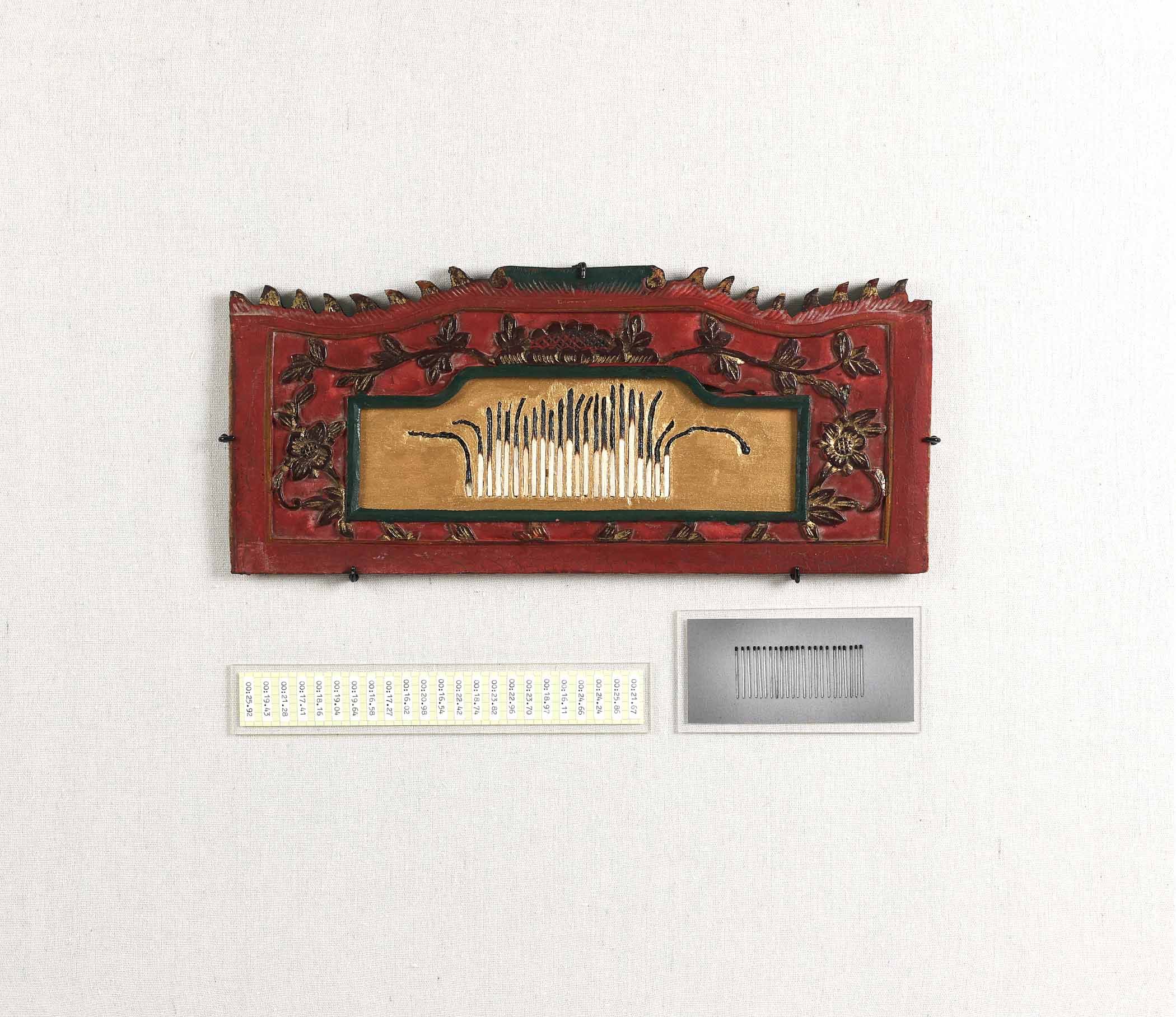
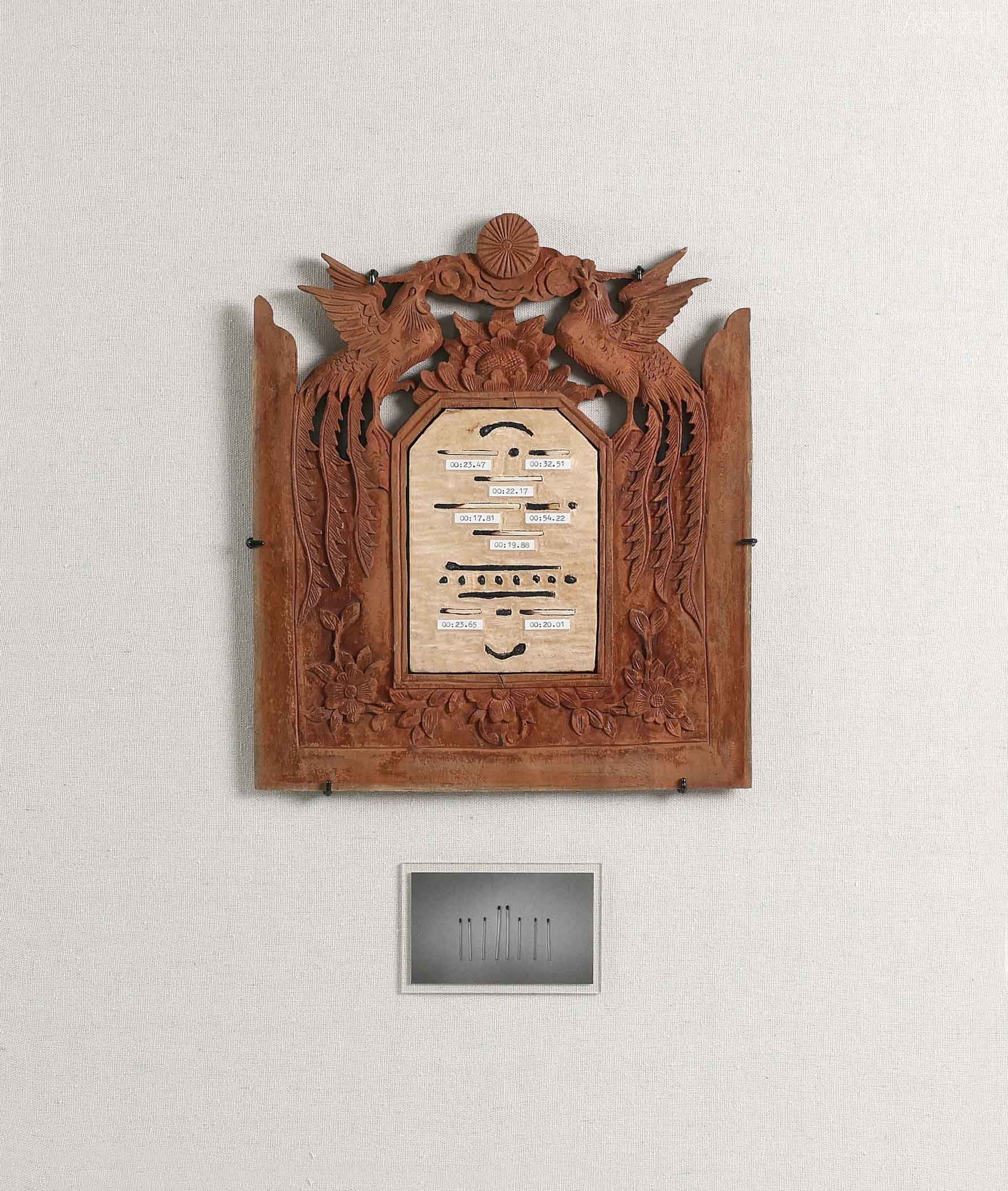
Rebirth – 04 (2026)Courtesy of Artist’s Studio
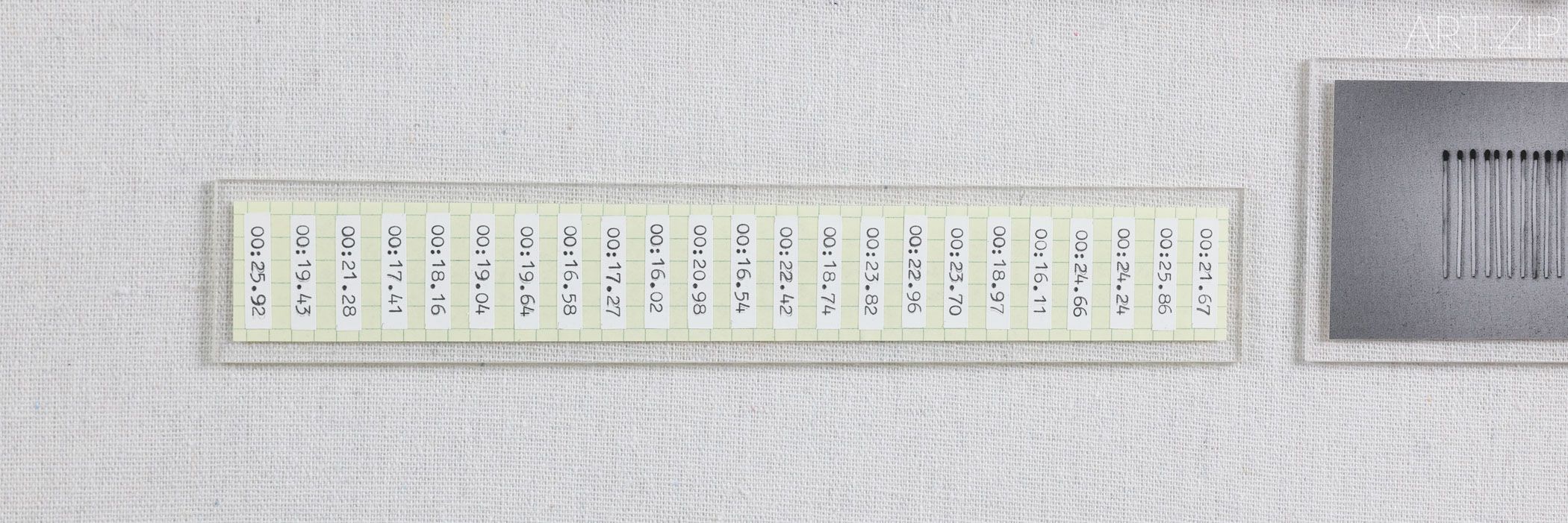
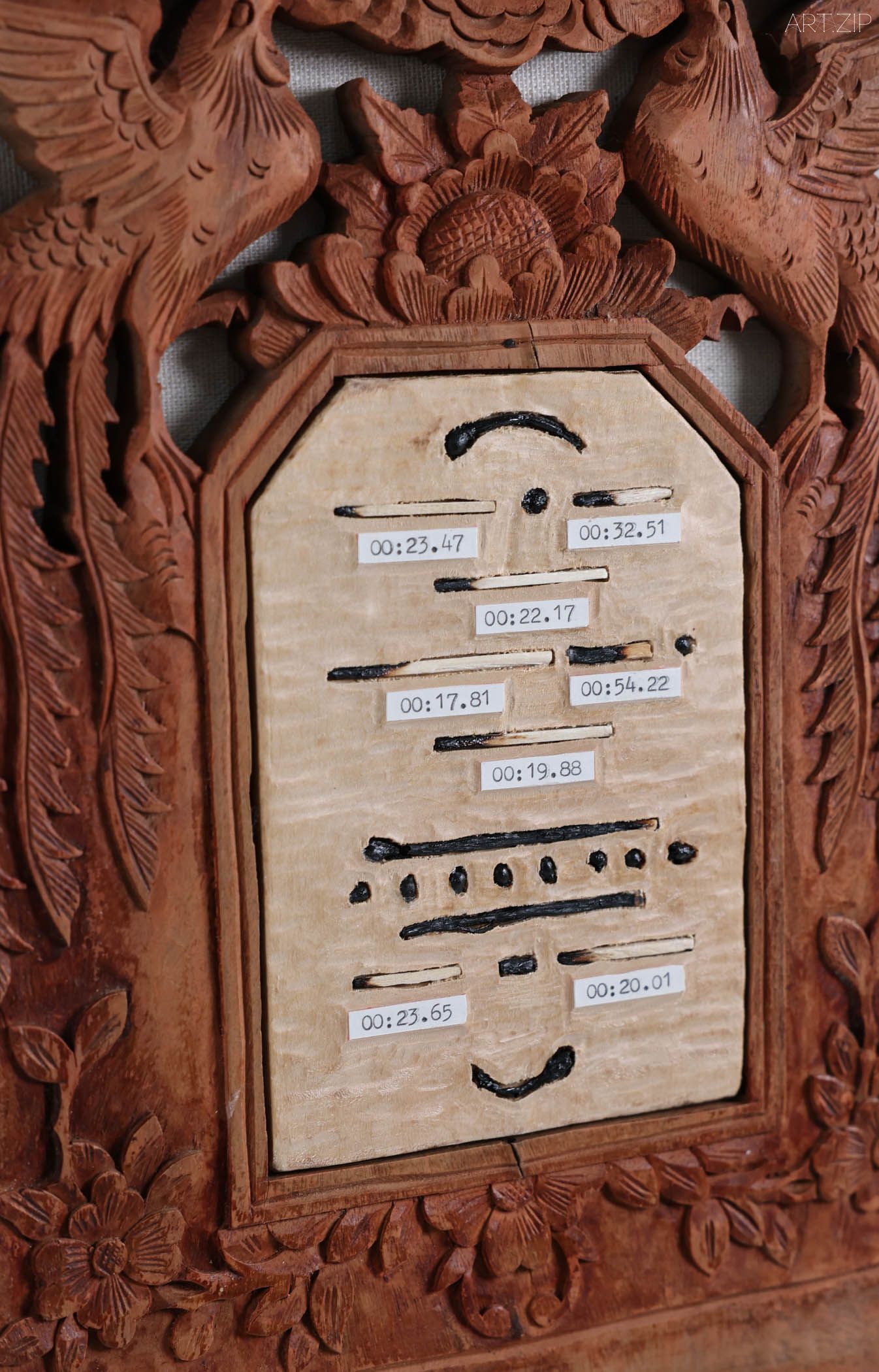
Rebirth – 04(Close-up)(2026) Courtesy of the Artist Studio
Material and Samsara: Wood, Matches, and the Bed
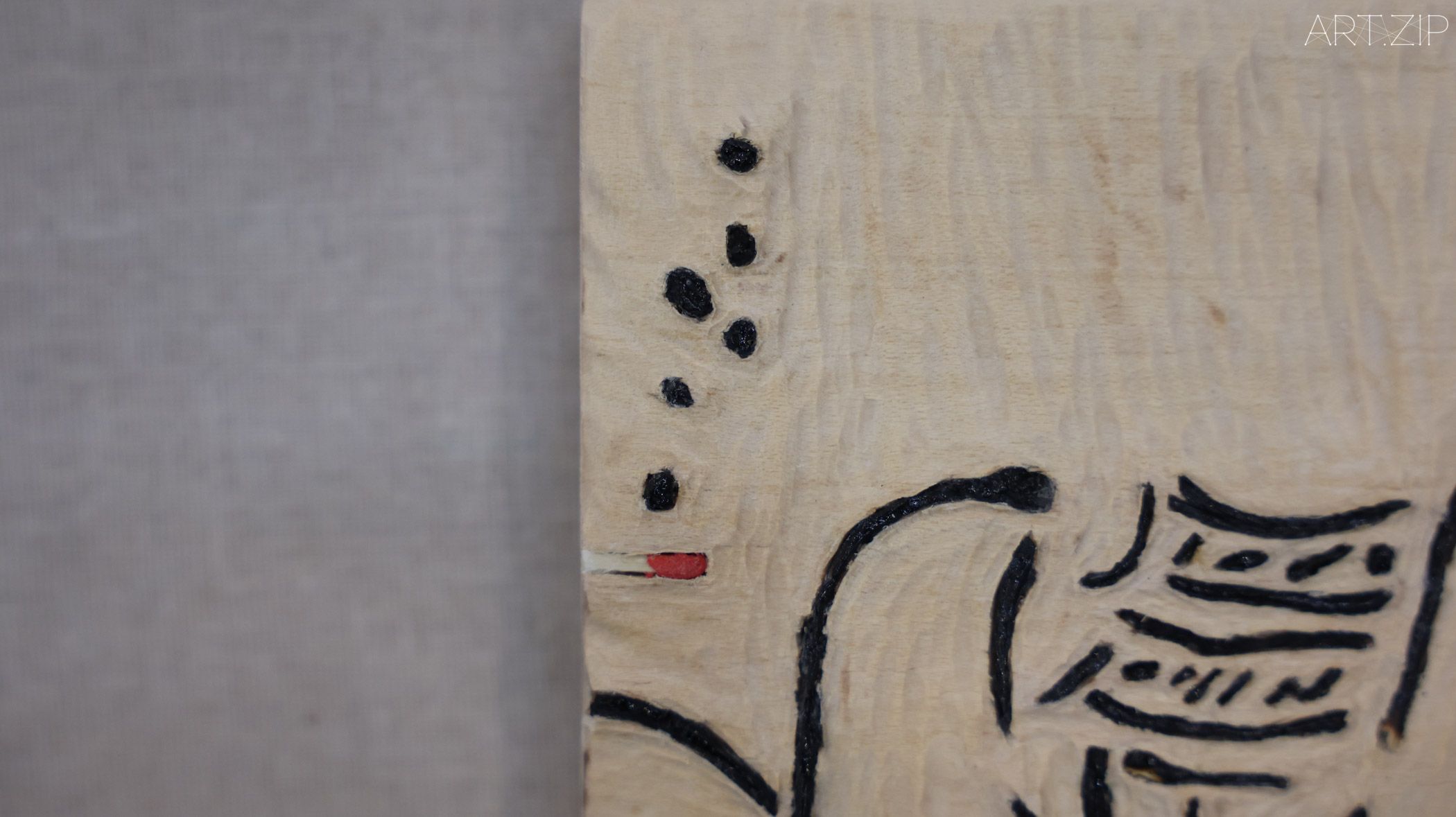
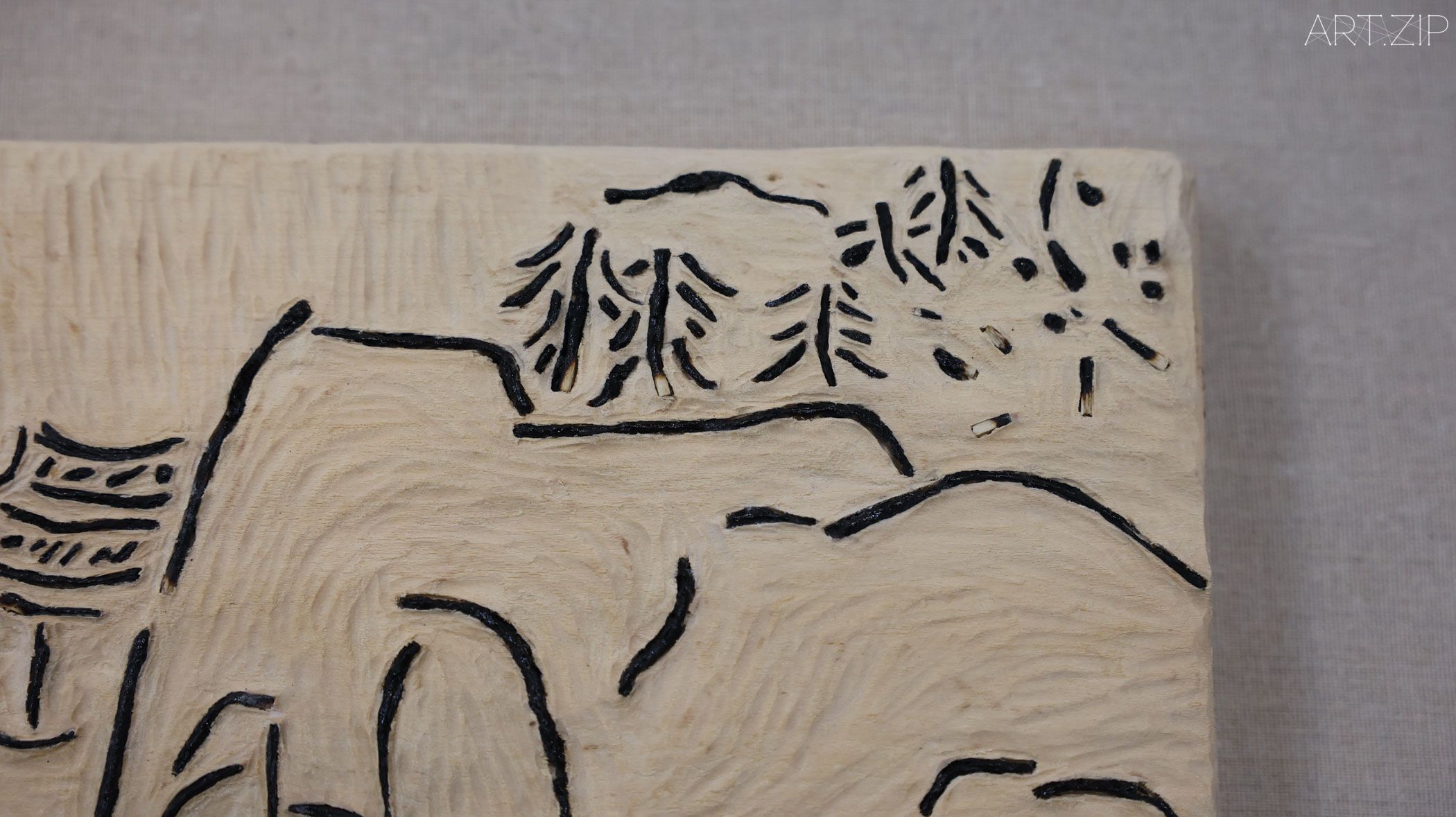
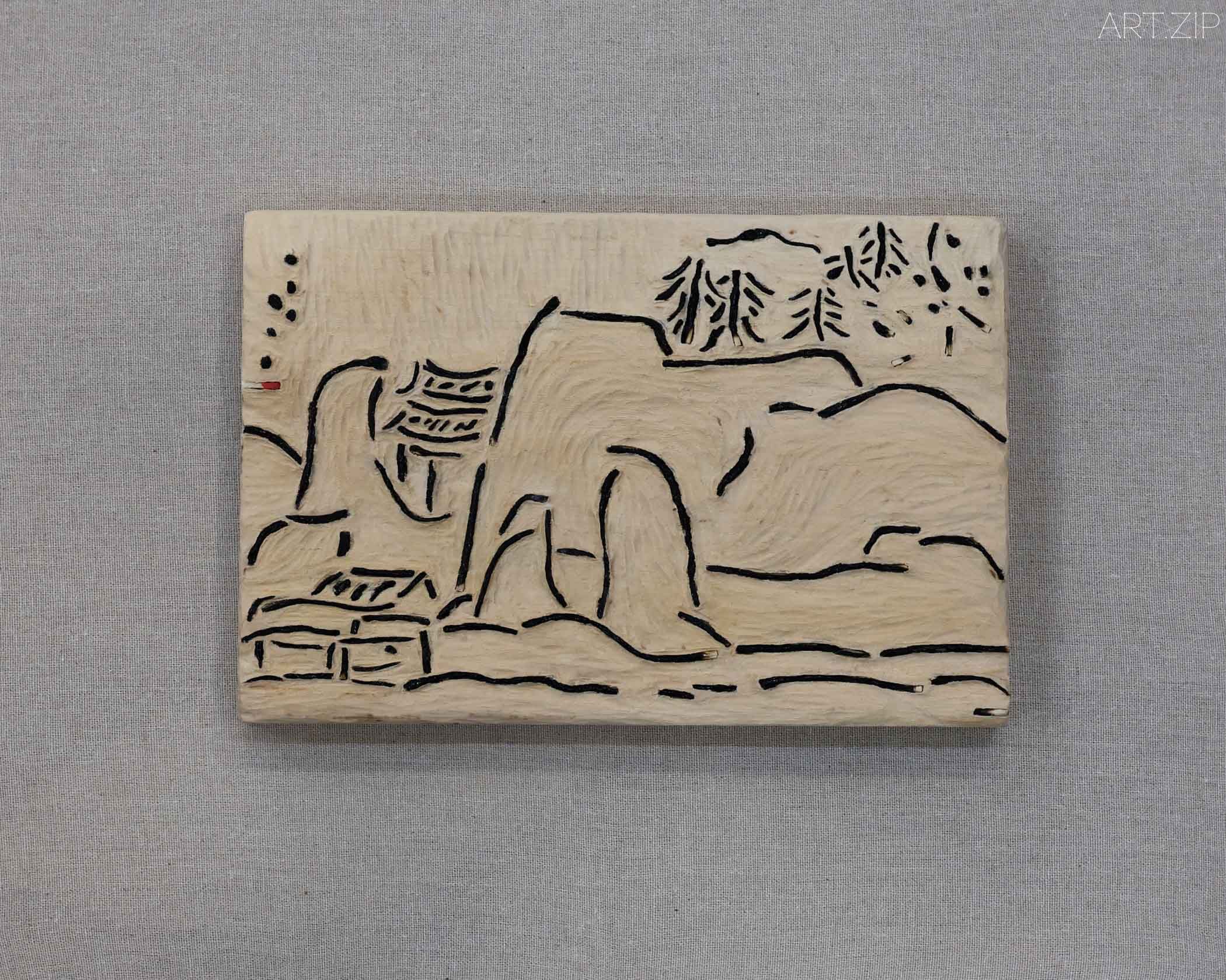
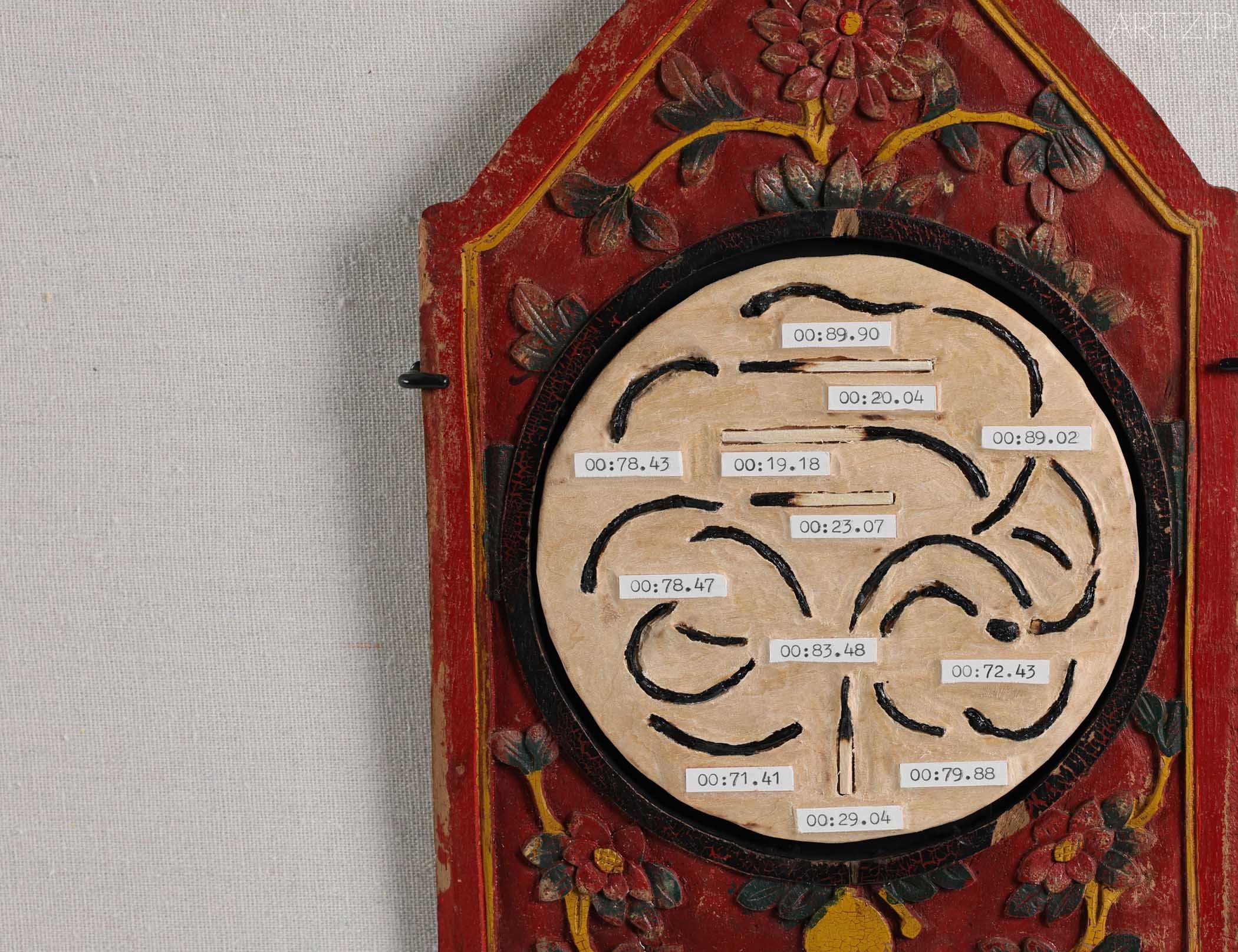
For Shanghai artist Chen Weirui, it all begins with a matchstick – a slender, fleeting object crafted to the precise scale of his childhood memories. The process is an act of physical inversion. Chen ignites the timber, then gathers the fragile residue. Once extinguished, the ash hardens into an impasto-like crust, which he inlays back into raw basswood. What the flame deconstructs, the artist restores to the trunk, closing a material loop: from timber to fire, and back to wood.
Beyond this mechanics of matter, the work opens into a poetic reckoning with mortality. This convergence of substance and existential weight serves as the nucleus of The Matchstick Project. Expanding the premise since 2025 across series such as Life Matrix, Rebirth, and Shanshui, Chen peers into these charred micro-landscapes, searching within the space between an incandescent spark and enduring ash for the quiet, subtle reverberations of time.
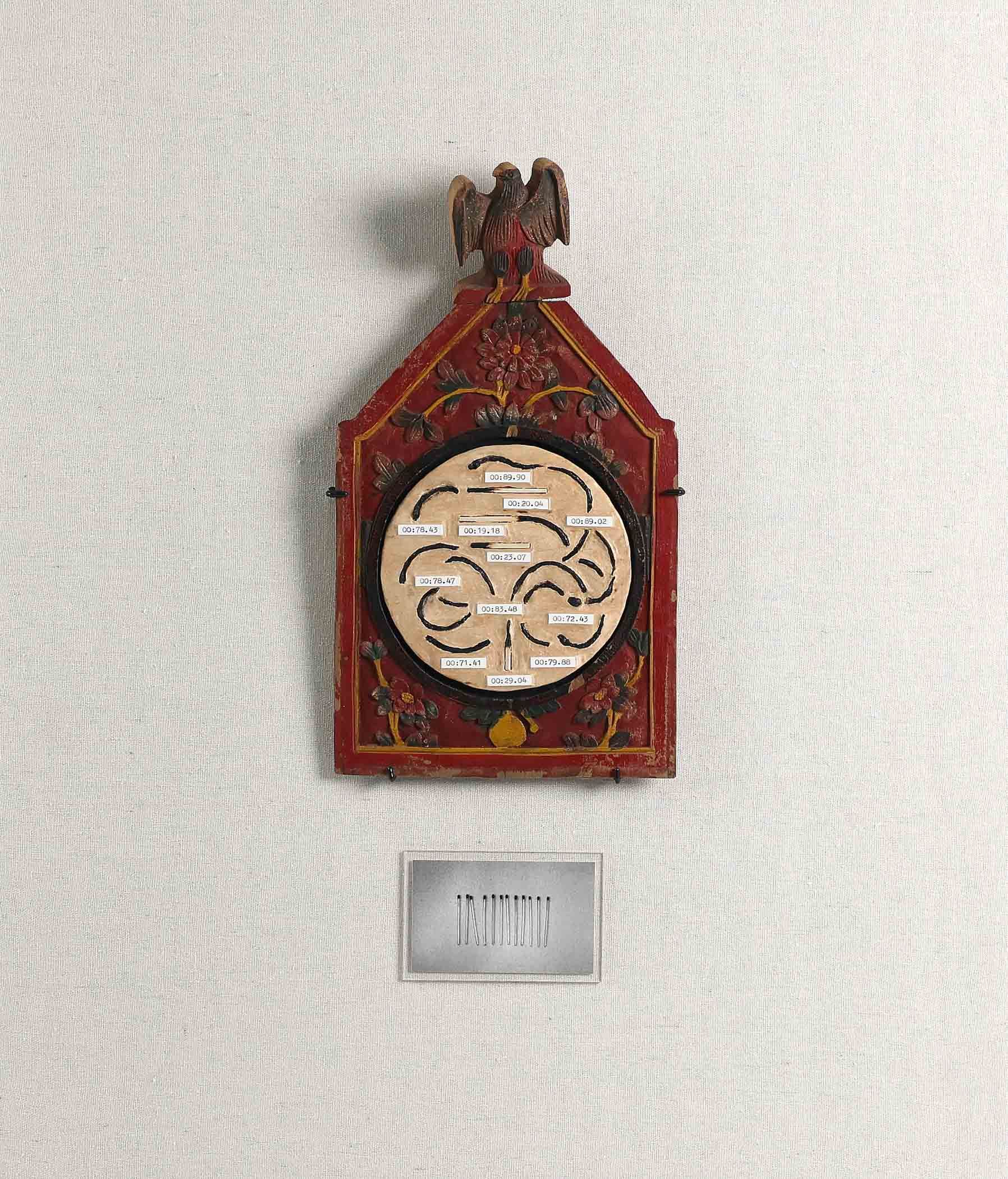
In Rebirth, this inquiry takes on an architectural memory. Chen co-opts salvaged fragments from Republic-era canopy beds, transforming these ancient timbers into structural armatures for his inlays. Adorned with intricate waist panels (taohuanban) and carved door arches (menzhao gualuo), these relics once framed the traditional domestic sphere, a space that stood as the ultimate physical threshold between birth and death. Their low-relief motifs were silent vessels for worldly longings: lineage, prosperity, and generational continuity.
Chen interrupts this obsession with permanence. By encasing the calcified remains of spent matches within these ancient frameworks, he ignites a temporal collision: the instant, violent ruin of a flame set against wood that has survived generations. In this convergence of timber and time, earthly ambition gives way to ash, allowing the intimate decay of the matchstick to challenge the illusion of historical endurance.
Set against the broader lineage of contemporary fire and ash art, Chen’s practice departs from that of his predecessors. Whereas Zhang Huan’s ash paintings channel temple incense as a sociological vessel for collective memory and spiritual transience, and Western practitioners such as Claude Lévêque deploy the matchstick to signal abrupt violence, danger, and adolescent angst, Chen neither relies on the ready-made weight of religious iconography nor leans into the theatricality of the flash. Instead, his innovation resides in conceptual closure. By returning the scars of combustion to their original wooden substrate, Chen turns an irreversible, destructive act into a process of material homogeneity, reshaping the ontology of a mass-produced industrial artefact.
Transposing the Frame: A Wordless Manifesto
The conceptual impulse behind Rebirth traces back to Chen Weirui’s encounters with European ecclesiastical architecture. Within Christian traditions, church walls and sanctuaries are often embedded with commemorative plaques and stone tablets. Carved into unyielding stone and encased within solemn borders, these inscriptions codify divine law or personal legacies. Chen appropriates this ritualistic framing and its inherent imperative of declaration. Whether situated within sacred architecture or the secular domestic space, the nature of the frame remains constant. Through spatial enclosure and material permanence, it condenses abstract authority, dogma, or collective memory into a ritualised object worthy of contemplation.
In contemporary Chinese art practice, the materialisation of ruins and refuse has long operated as a nuanced resistance against grand historical narratives. Chen’s impulse resonates across generations, from Zhang Huan’s accumulation of temple ash into politically charged imagery, to Song Dong’s transformation of discarded objects into micro-archives of familial memory. In Chen’s work, matchstick ashes become historical residue anchored within reappropriated frames. By inserting momentary debris into a spatial structure built for duration, he constructs a form of micro-monumentality centred on the ruin.
Yet as these materials migrate across fields and frames, the substance itself undergoes a metamorphosis of form and phase. Unstruck, the matchstick is a rational, geometric body, an unyielding solid epitomizing industrial order. Once ignited, combustion shatters the rigid linearity of the wood; sulfur and timber collapse, curling into charred relics that embody impermanence and dissolution.
When Chen re-assembles hundreds of these fractured, writhing lines back into the frame – coalescing point into line, and line into plane – this morphological shift crystallises into a microscopic atlas of phase transitions. Burnt contours supplant written script, emerging as visual signs that defy muteness; the trajectories themselves endure as a wordless manifesto, testifying to nameless lives struggling and extinguishing within the tide of time.
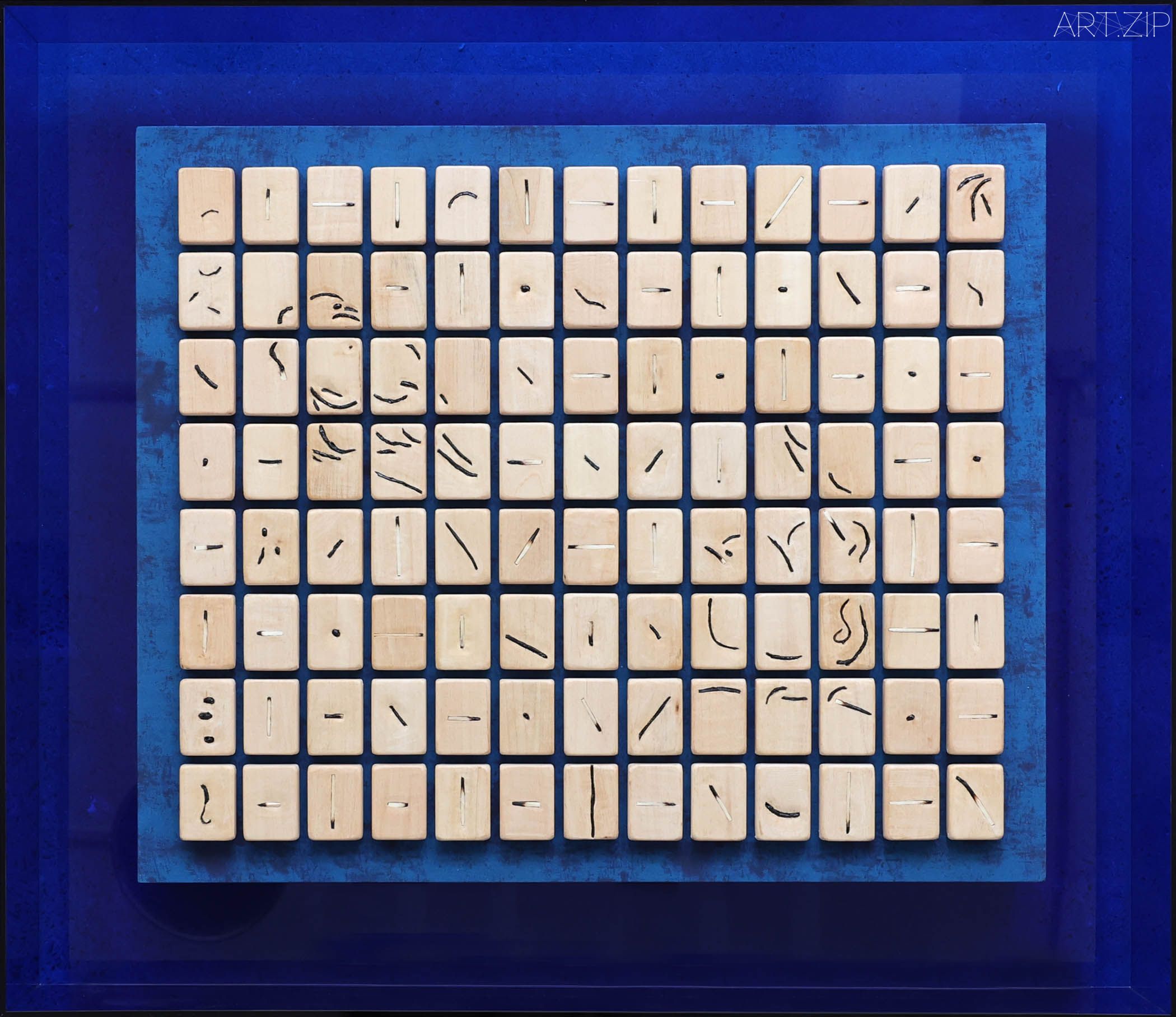
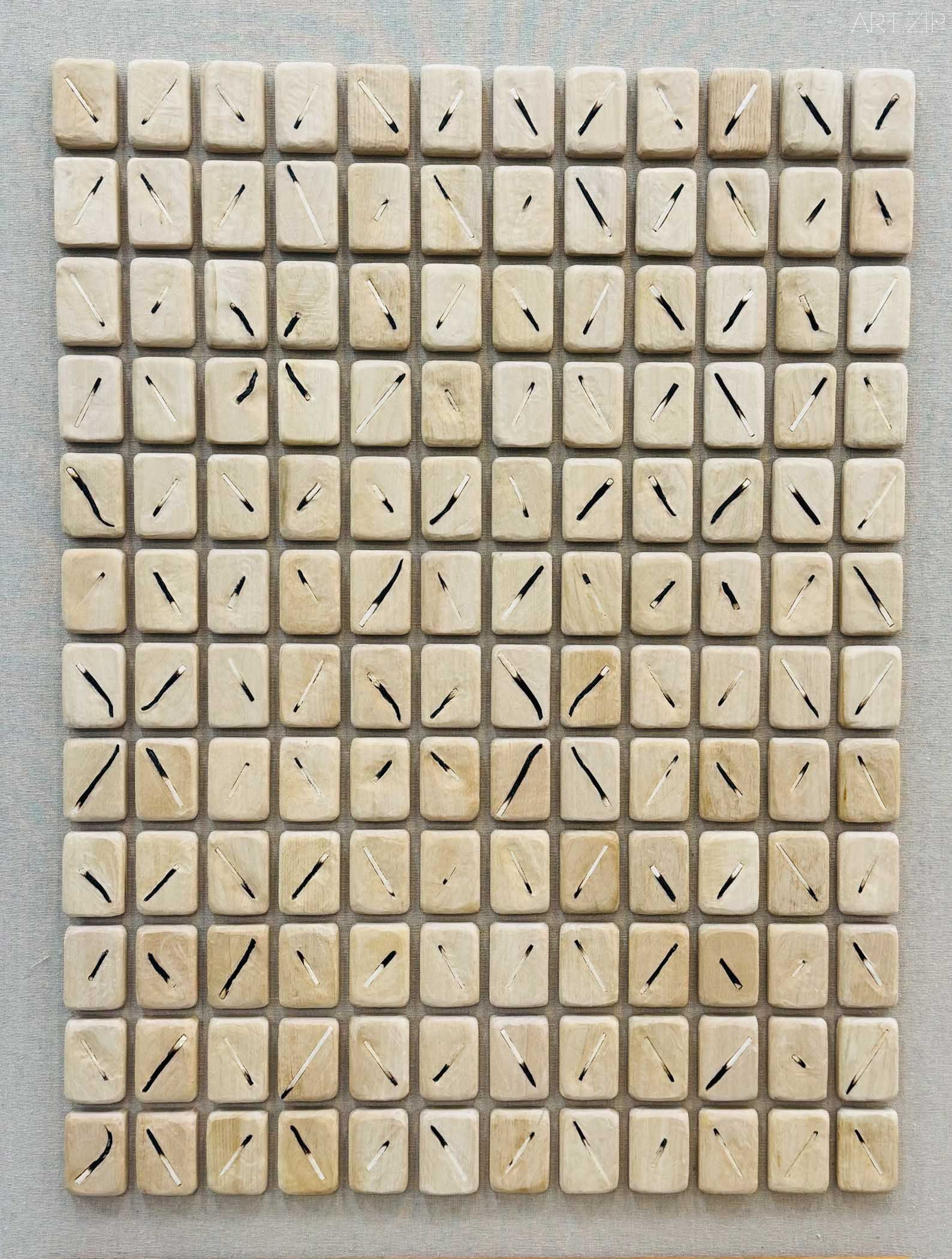
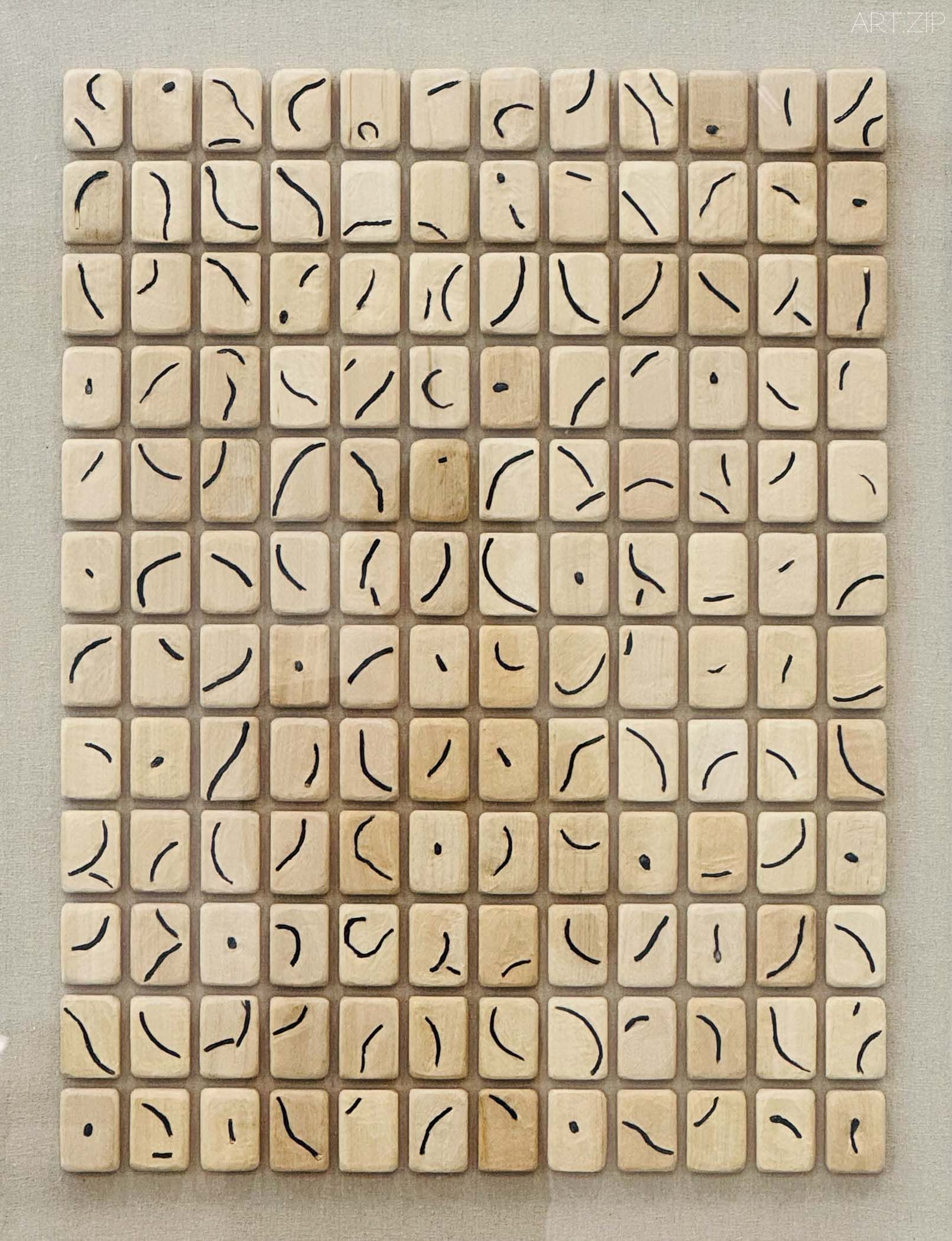
Life Matrix – 08 (2026)Courtesy of the Artist’s Studio
Zen in the Making: A Somatic Practice
Prior to returning to fine art, Chen Weirui worked in the digital gaming industry. This cross-disciplinary background embeds a sharp medium critique into his Life Matrix series – one that directly confronts the primary architecture of the digital realm: the grid.
Modernism once crowned the grid as the ultimate autonomous form. From Agnes Martin to Sol LeWitt, it was designed to purge narrative and proclaim an unyielding industrial order. In the digital age, however, this very grid has devolved. It is now the wireframe of virtual environments, a frictionless skeleton born of algorithmic replication.
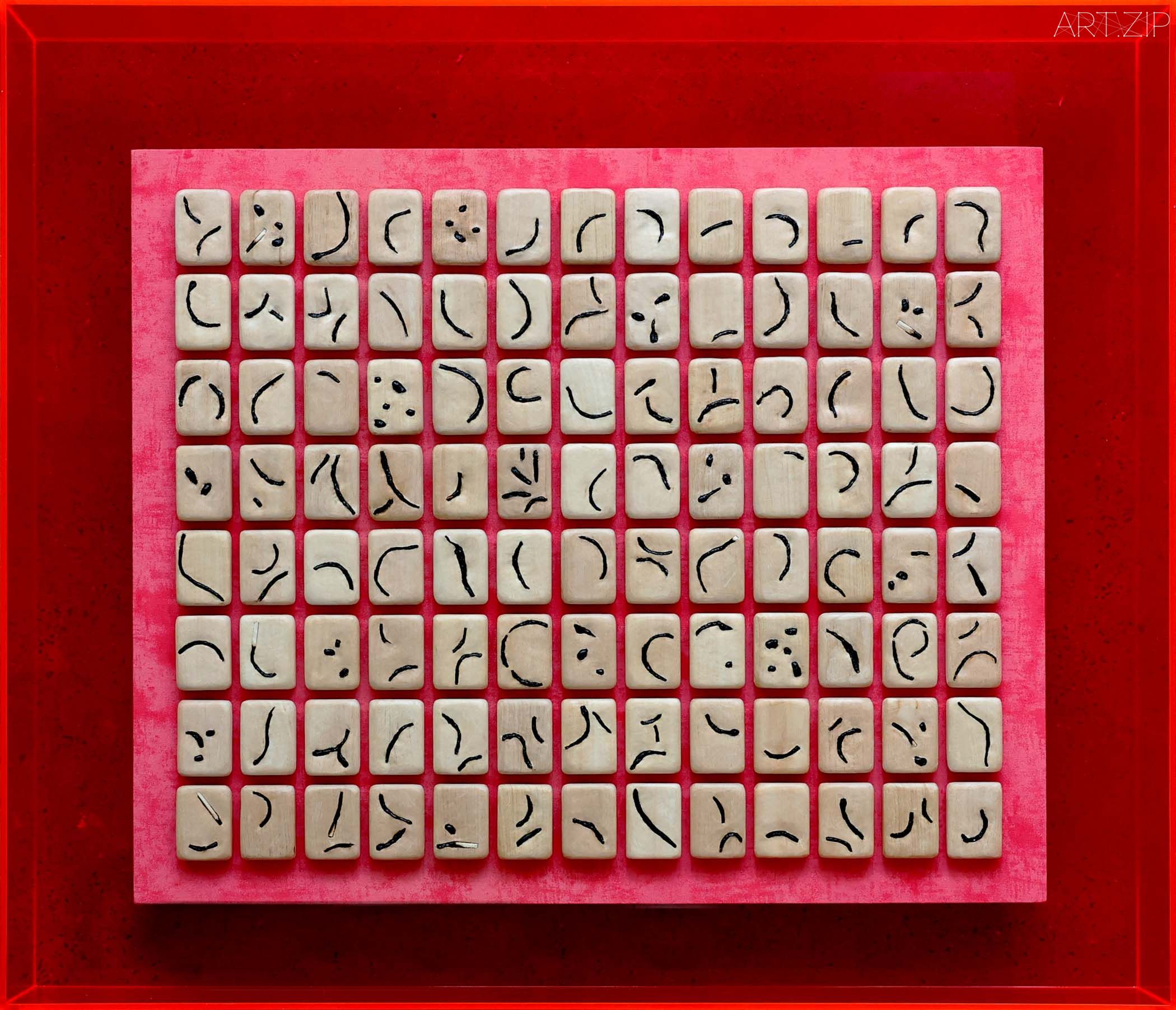
In Life Matrix, Chen reconfigures the visual politics of the grid. He neither lingers in Western Minimalism’s fetishisation of pure form, nor relies on Zen as a mere metaphor for spiritual discipline. He rather pursues a confrontational, body-centered practice, counteracting digital seamlessness through a physical toll – the inefficient, irreversible act of striking thousands of matches by hand. Pervasive scents of basswood and sulfur transform his studio into a monastic space, where repetitive labour mirrors rituals like sweeping or copying sutras, inducing a contemplative state stripped of extraneous thought.
A paradox unfolds between this embodied labour and its final presentation. Observed from afar, the work coalesces into a rational and orderly grid, evoking societal frameworks and monolithic structures. Approached closely, this order dissolves into a micro-network of fragile, collapsed, and fractured nodes left by human effort. This optical shift between distance and proximity mirrors the artist’s critique of virtual illusion versus material reality. The grid constructs the illusion of Rūpa (Form), yet what fills its void is a theater of Śūnyatā (Emptiness). Order is woven from vanishing moments; existence is sustained by ash. Through these somatic scars of the “anti-grid,” Chen achieves a visual realisation of the Heart Sutra’s core doctrine, that form is no different from emptiness, and emptiness no different from form.
The Future of Ash: An Unfinished Site
“The ravines sit in silence, empty of man; wild flowers bloom and fall, all on their own.”
– Wang Wei (AD 699-761)
Wang’s couplet observes a universe indifferent to human presence: blossoms open and fade in a solitary landscape, their lifespan dictated purely by natural physical laws. When Chen strikes a match in his studio, the act unfolds according to this very ethos – a moment of unburdened self-fulfilment, where combustion takes place as a pure, autonomous event, untouched by the gaze of an audience.
Yet within the discourse of contemporary art, such subtle passages of time tend to remain imperceptible in isolation. Time solidifies into a physical remnant worth contemplating as it undergoes destruction, collapse, and the subsequent mediation of the artistic institution. Chen’s inlaying and returning of matchstick ash functions as a systematic archiving of these micro-historical traces. Through this gesture, he weaves private physical labour, the uniform debris of the industrial era, and the phase transitions of matter into a series of micro-monuments to disappearance and memory.
Still, containment is hardly the final destination. The deeper capacity of the artwork lies in its role as a spatial conduit, which remains continuously porous to public realms and collective memory. As these spatial installations, assembled from matches, basswood, and ancient frames, cross the intimate boundaries of the studio into the public sphere, what began as a solitary spiritual practice undergoes a spatial transposition. It leaps into a social ritual that invites public engagement, evolving through the collision of micro-ash and shared memory into an open, resonant narrative.
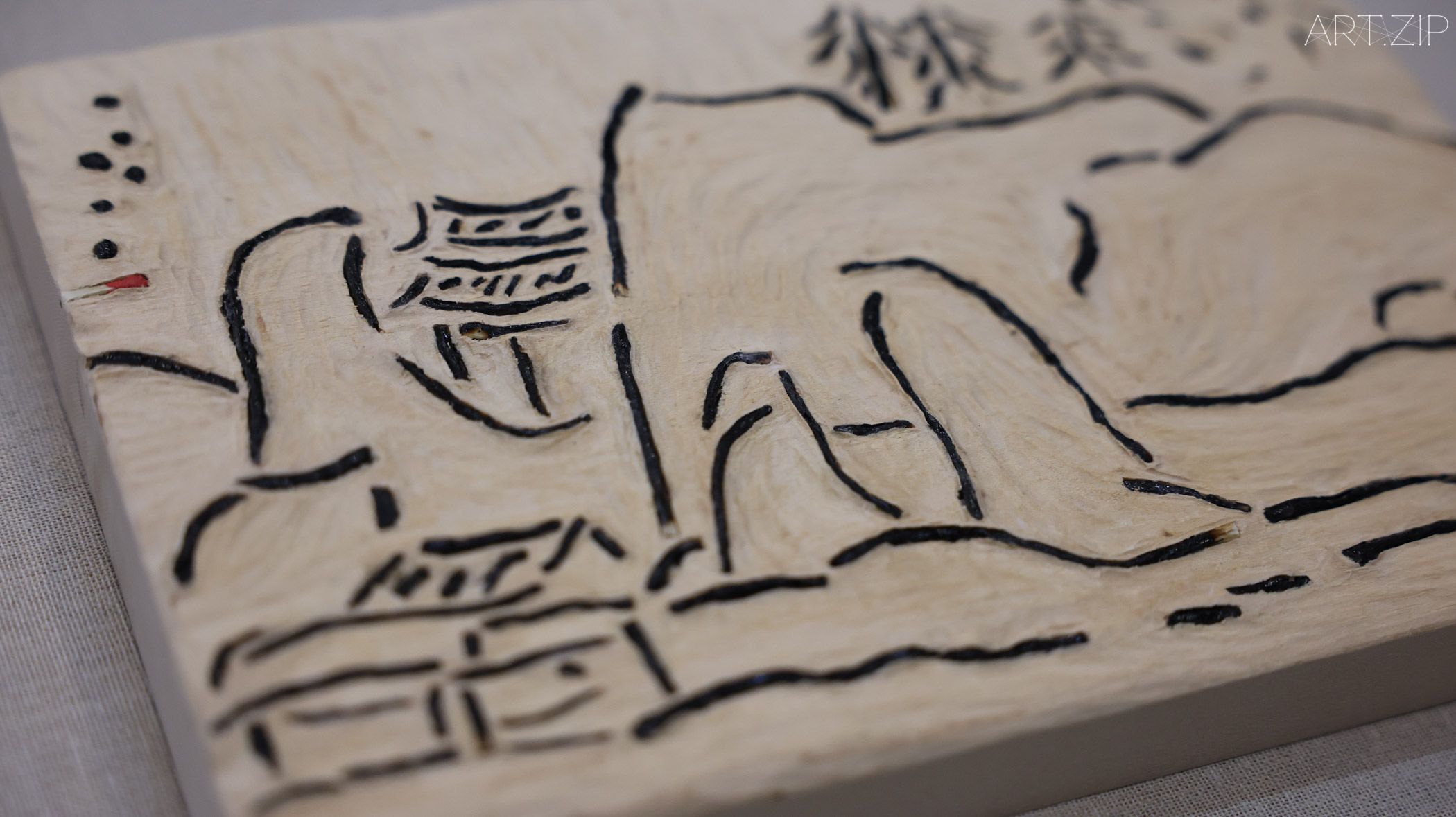
Shanshui – 01 (Close-up 1)(2026) Courtesy of the Artist’s Studio
劃一根火柴。
當摩擦熱點燃紅磷,一陣火花噴薄而出。隨後火勢微息,又猛然攀上木桿。
二氧化硫的氣味短促、強烈,宣告開始,也預示消逝。
火焰蔓延著,吞噬著,將火柴的軀乾灼燒、炭化;生命從誕生走向掙扎,從綻放歸於寂滅。
物質與輪回:木頭、火柴與床
上海藝術家陳惟蕊在創作過程中,使用與童年記憶尺寸一致的木質火柴。划燃後,他賦予那些脆弱易折的炭化殘骸一種類似塑畫的硬化處理,並將其鑲嵌進香椴木塊之中。樹木被削成規整的火柴,火柴在火光中獻祭;而熄滅後的灰燼與炭體,又倒過來重新嵌回木頭。
這其中輪回的不止是物性,更是生命。這種物與生命的雙重重疊,即是《火柴計劃》的起點。自2025年起,陳惟蕊由此延伸出《生命矩陣》、《重生》、《山水》等多個分支。凝視著火柴,他從俗世微塵中叩問生命與藝術的宿命,以及瞬間與永恆之間的辯證。
在《重生》系列中,陳惟蕊將民間收集的民國老架子床構件,作為鑲嵌火柴的框架結構。這些老木曾懸於床頭,雕鑿著縧環板與門罩掛落,是中國傳統臥具中最具代表性的空間符號。床,作為傳統社會中承載生命出生與死亡的最終邊界,其開光與板面上的繪圖雕花原本勾勒的是世俗繁衍的祈願,而陳惟蕊將炭化火柴屍骸框合其中,使得物理劇變(數秒間的燃燒)與人類生命週期(床所見證的代際更迭)發生碰撞,形成跨越時間尺度的同構。陳惟蕊藉由物質與空間的重疊,把對生命的寄託,揉入火柴不可逆的灰燼里,自然的物性循環由此轉譯為對生命的隱喻。
若將《火柴計劃》置於當代燃燒與灰燼藝術的脈絡中,陳惟蕊展示了與前人截然不同的思考。張洹的香灰畫依賴於香灰這一東方集體信仰殘餘的社會學符號,側重於集體記憶與精神飄逝;而西方藝術家如克勞德·萊維斯(Claude Lévêque)對火柴的使用,則往往指向瞬間的暴力、危險與青春期焦慮的物理爆發。
相比之下,陳惟蕊既未落入宗教符號的簡單借用,亦未止步於燃爆的戲劇性瞬間。他的突破在於建立了一套物性的閉環,將破壞的痕跡通過工藝強行歸還給原始材質的手法,將原本不可逆的消耗性燃燒,轉化為帶有物質同質性的相狀嬗變,進而完成了對工業化消耗品(火柴)的物質本體論重塑試驗。
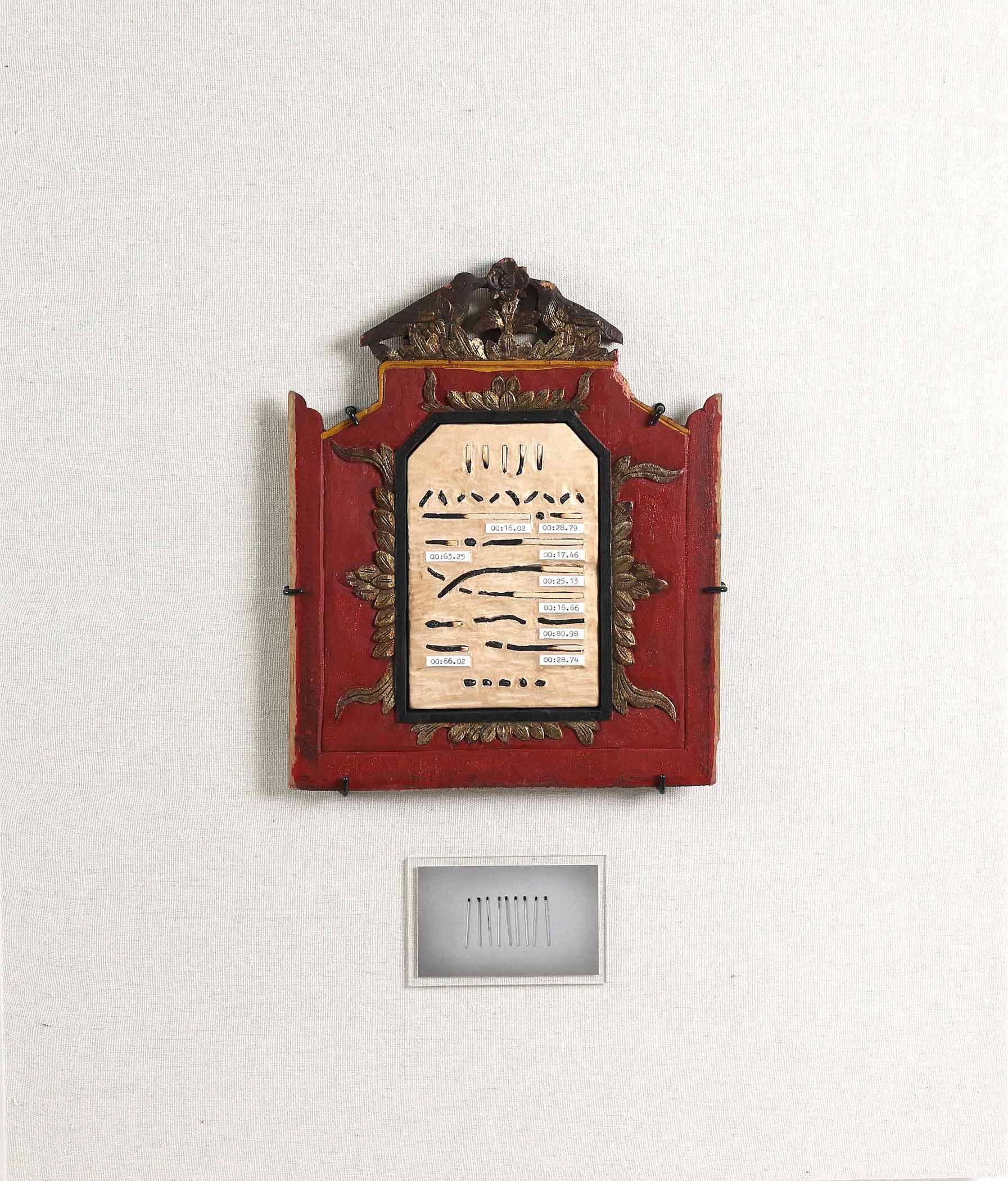
構框的移用:無字宣言
《重生》的靈感來自於陳惟蕊參訪歐洲教堂的經歷。在基督教傳統中,教堂牆壁與祭壇旁常嵌有銘文碑或戒律牌。它們記錄生平,或宣告神的律法,以堅硬的石材與莊嚴的構框,將特定階層的話語引入神聖。
陳惟蕊借用了這具備儀式感的構框與宣言形式。無論是神聖建築中的碑銘,還是世俗空間里的框域,其本質都在於通過確定的空間圍合與物質固化,將抽象的意涵、權威或集體記憶,提煉為值得被永恆凝視的儀式實體。
火柴的灰燼是被構框所錨定的歷史殘留。這種將瞬間殘跡納入長時段空間的手法,在空間上重構了一種關於廢墟的微觀紀念碑性。在當代中國的藝術實踐中,從張洹將寺廟香灰堆疊為帶有集體信仰與政治隱喻的圖像,到宋冬將日常廢棄物品轉化為家庭記憶的微觀檔案,對廢棄物與殘跡的物質化處理,往往是對宏大歷史敘事的一種微觀抵制。
而在構框與場域的轉移中,物質本身亦經歷著形態與相狀的嬗變。未划燃前,火柴是理性的幾何體,代表著秩序與執著的「固相」;火光迸發後,燃燒摧毀了直線的絕對性,硫磺與木桿坍塌、捲曲,化為代表無常與歸滅的炭化殘骸。
當陳惟蕊將這成百上千條斷續、彎曲的物理線條重新拼嵌進框域、由線聚集成「面」時,形態學上的嬗變便轉化為一張微觀的相狀圖譜。炭化的線條取代文字,成為抵抗失語的視覺符號,而那些軌跡本身,即是無名眾生在時間與無常中掙扎與寂滅的無字宣言。
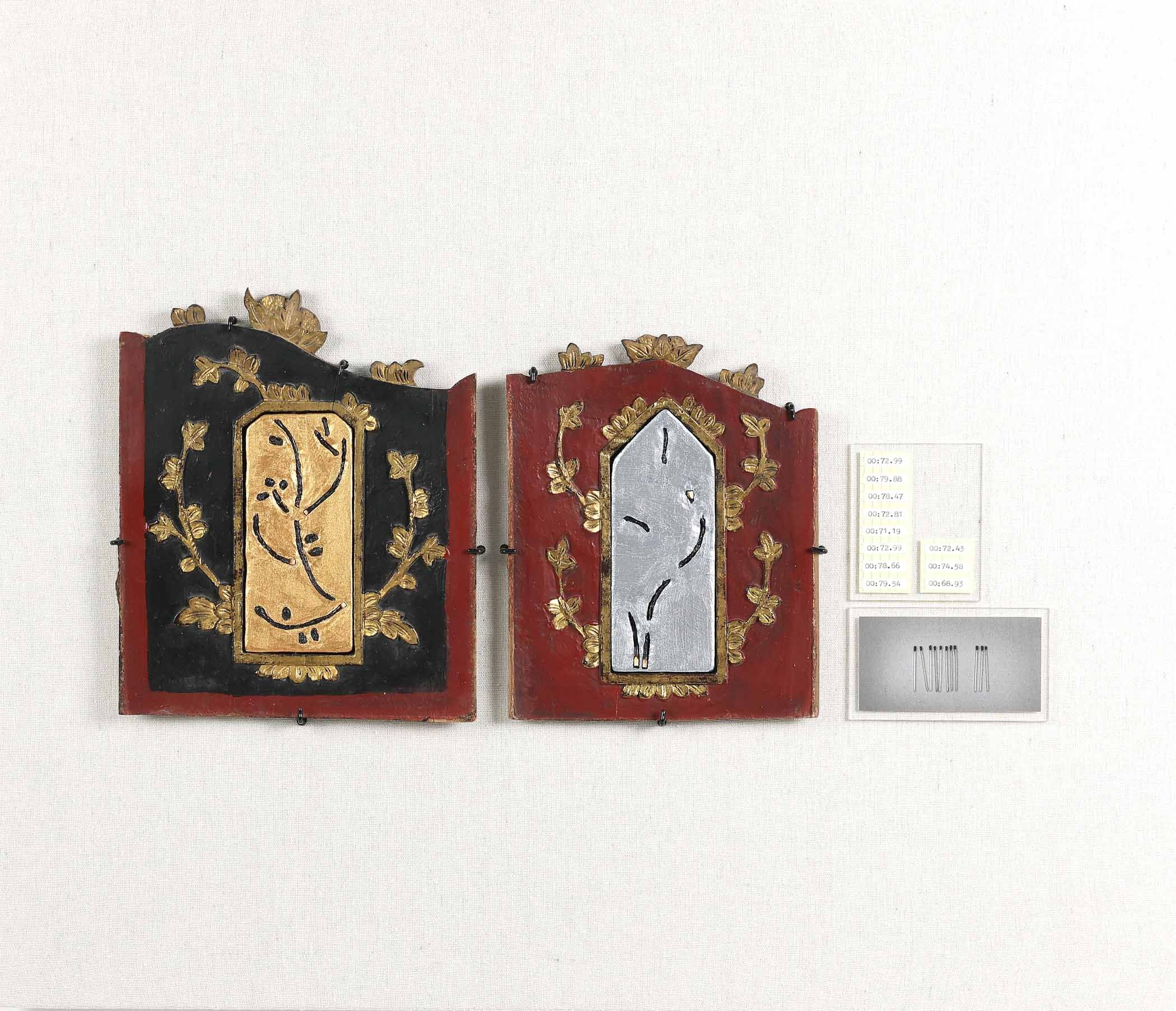
Rebirth (2026)Courtesy of Artist’s Studio
劈柴擔水,無非妙道
在重返純藝創作之前,陳惟蕊曾耕耘於遊戲行業,這一跨界背景為《生命矩陣》系列賦予了明確的媒介批判色彩。在現代主義藝術史的序列中,網格自阿格尼斯·馬丁(Agnes Martin)與索爾·勒維特(Sol LeWitt)以來,被視為排除敘事、宣示絕對理性與工業秩序的純粹形式。然而在數字時代,這種網格已演化為虛擬世界中最基礎的數字線框——憑代碼的複製與粘貼即可無成本地批量生成。
陳惟蕊在《生命矩陣》中重構了網格的視覺政治學。他並未停留在西方極簡主義對純粹形式的崇拜,亦非單純借用東方禪宗的修行隱喻,而是選擇了一種具有對抗性的物質實踐,以低效、不可逆的肉身耗損,以手划燃千百根火柴。工作室中彌散的香椴木與硫磺氣味,使創作如同禪宗中的掃地、敲木魚、抄經,重復的動作使藝術創作進入無雜念、身心入定的空靈狀態。
具身實踐與規整的呈現展現出嚴密的悖論張力:遠看作品,是一張象徵社會性規則與宏大實體的理性網格;近看,盡是肉身勞作留下的脆弱、坍塌與斷裂的微觀節點。遠與近的視覺錯位同樣回應了藝術家從數字空間中反思的的虛妄與真實——網格構建了「色」的假相,充盈其中的,卻是「空」的劇場。秩序由消逝織就,存在由灰燼支撐,陳惟蕊借由此類“反網格”的肉身痕跡,在虛擬與現實的交界處,達成了關於「色不異空,空不異色」的視覺證悟。
灰燼的未來:未完成現場
澗戶寂無人,紛紛開且落。在無人之境自開自落的花,其綻放與寂滅皆是自然的物理過程。陳惟蕊在工作室中划燃火柴的時刻亦如是——去功利化的自我完成,使燃燒本身成為一種不被看客干預的純粹事件。
然而,在當代藝術史的視域中,這種「自開自落」的時間流逝本身不可見;唯有經歷破壞、燃燒與坍塌,並被藝術機制介入與收容的瞬間,無形的時間才凝固為可被凝視的物理殘跡。陳惟蕊對火柴灰燼的拼嵌與歸還,正是對這種微觀歷史殘留的系統性收容——他將私人化的肉身勞作、工業時代的標準殘骸,以及相狀的動態嬗變,鍛造成一套關於消逝與記憶的微型碑銘。
收容並非終點。或許藝術品的終極價值,在於其作為一種空間介質,如何持續向未來的公共場域與社會記憶開放。當這些由火柴、香椴木與古老框域構成的空間裝置跨出工作室的私密邊界、步入公共場域時,原本屬於藝術家的個體修行,將通過空間場域的置換,躍遷為一場邀請公眾共同介入的社會性儀式。在微觀灰燼與公共記憶的對撞中,演化為觸動集體共鳴的開放性敘事。
Text by 撰文 x Huanzhi Zhang 張幻芷
Published on 16th October 2026


