

Text by Michael Kurtz
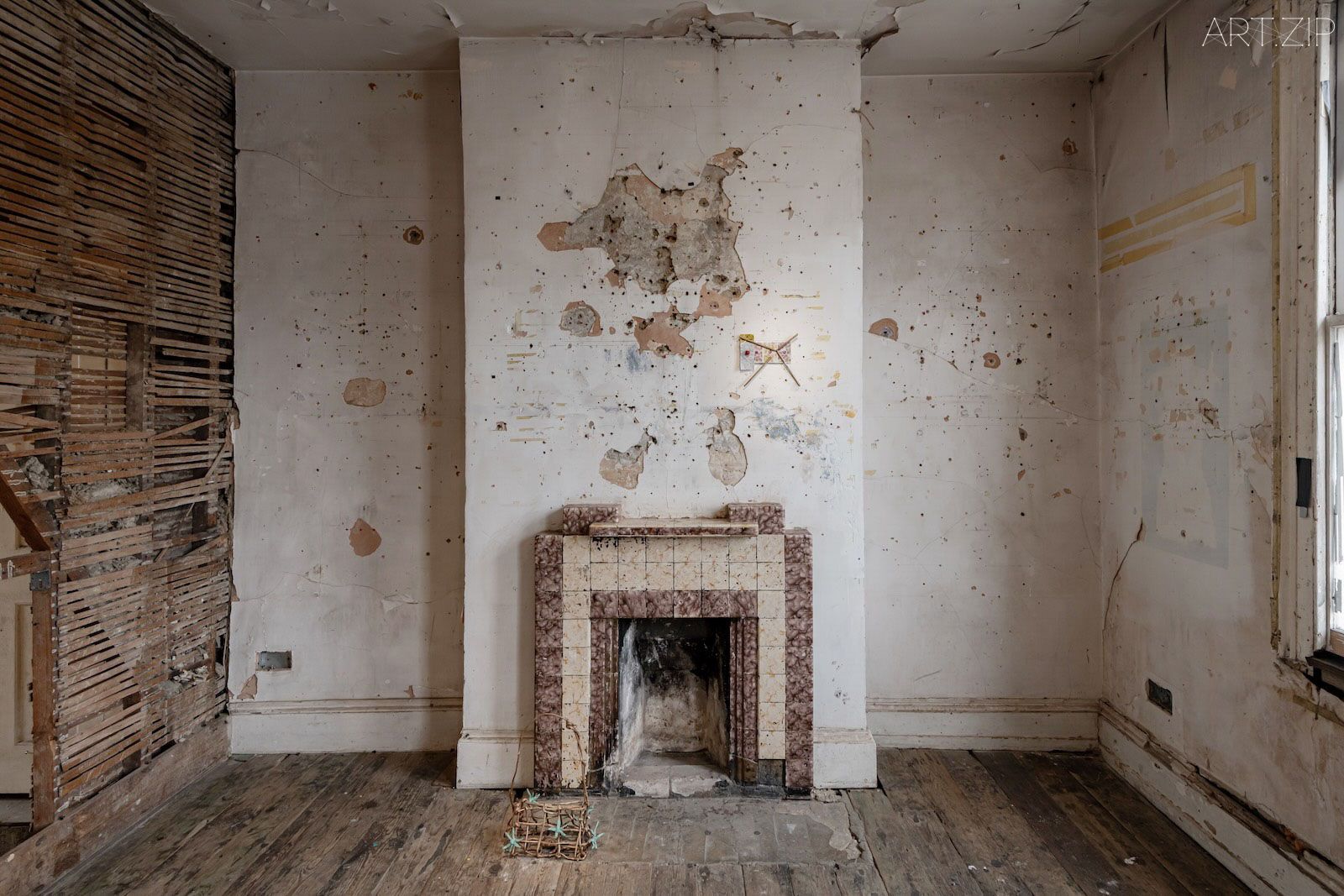
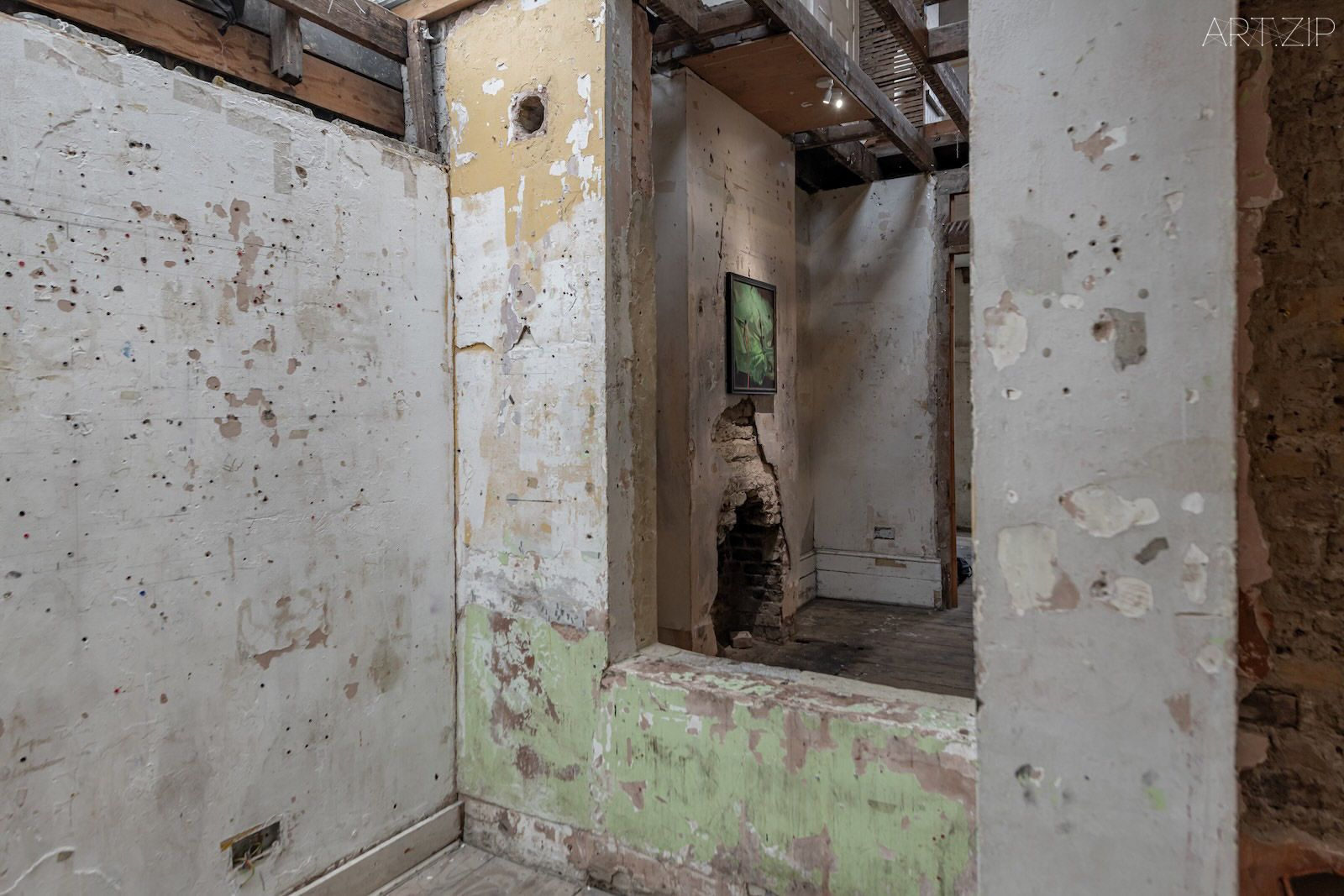
Safehouse 1 is a terraced house off Rye Lane. While much of Peckham is fast gentrifying, the building has been kept in a state of suspense – rented out for exhibitions and film shoots for over a decade and meanwhile left slowly to decay. As described on the venue website, it seeps an ‘abandoned house atmosphere’.
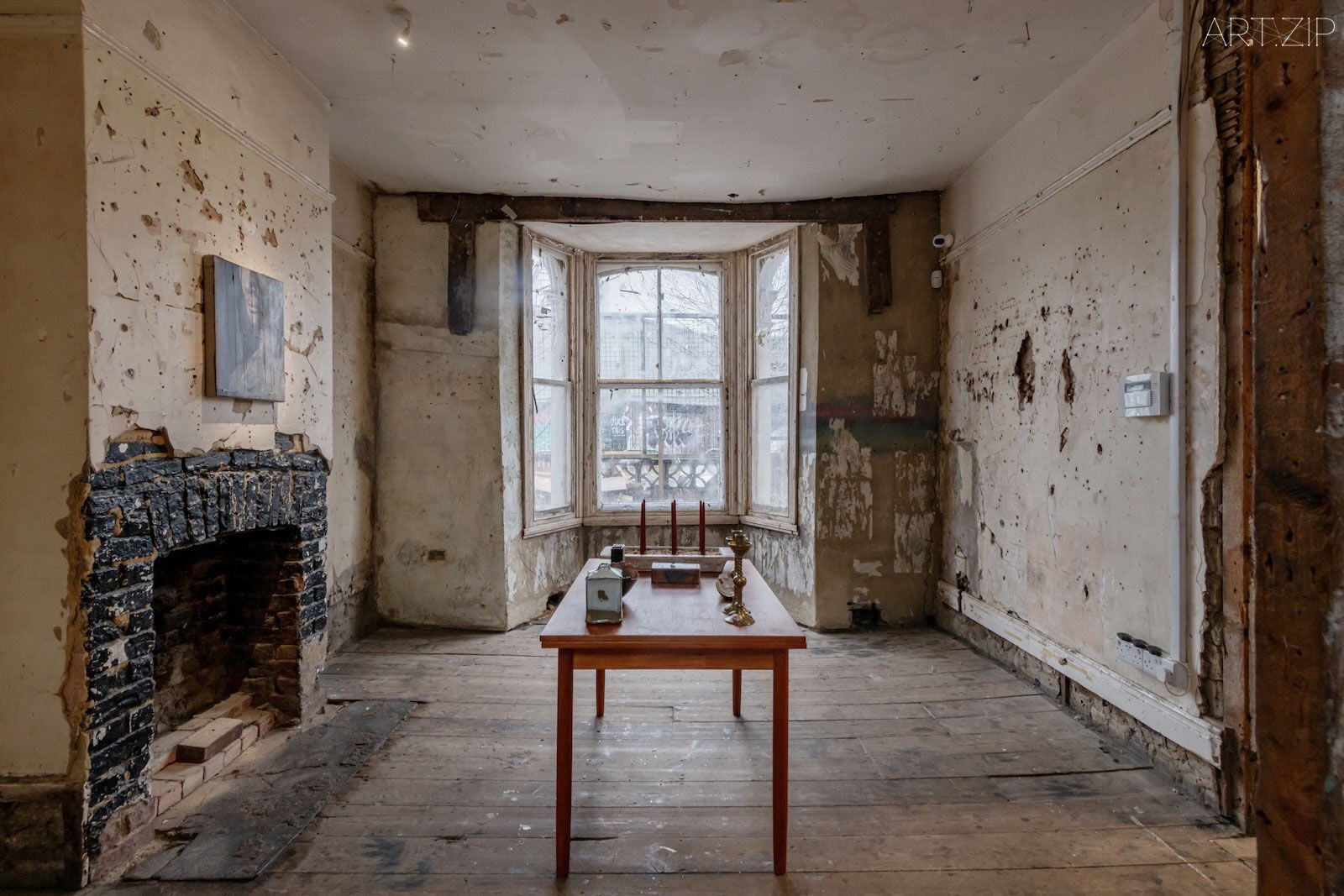
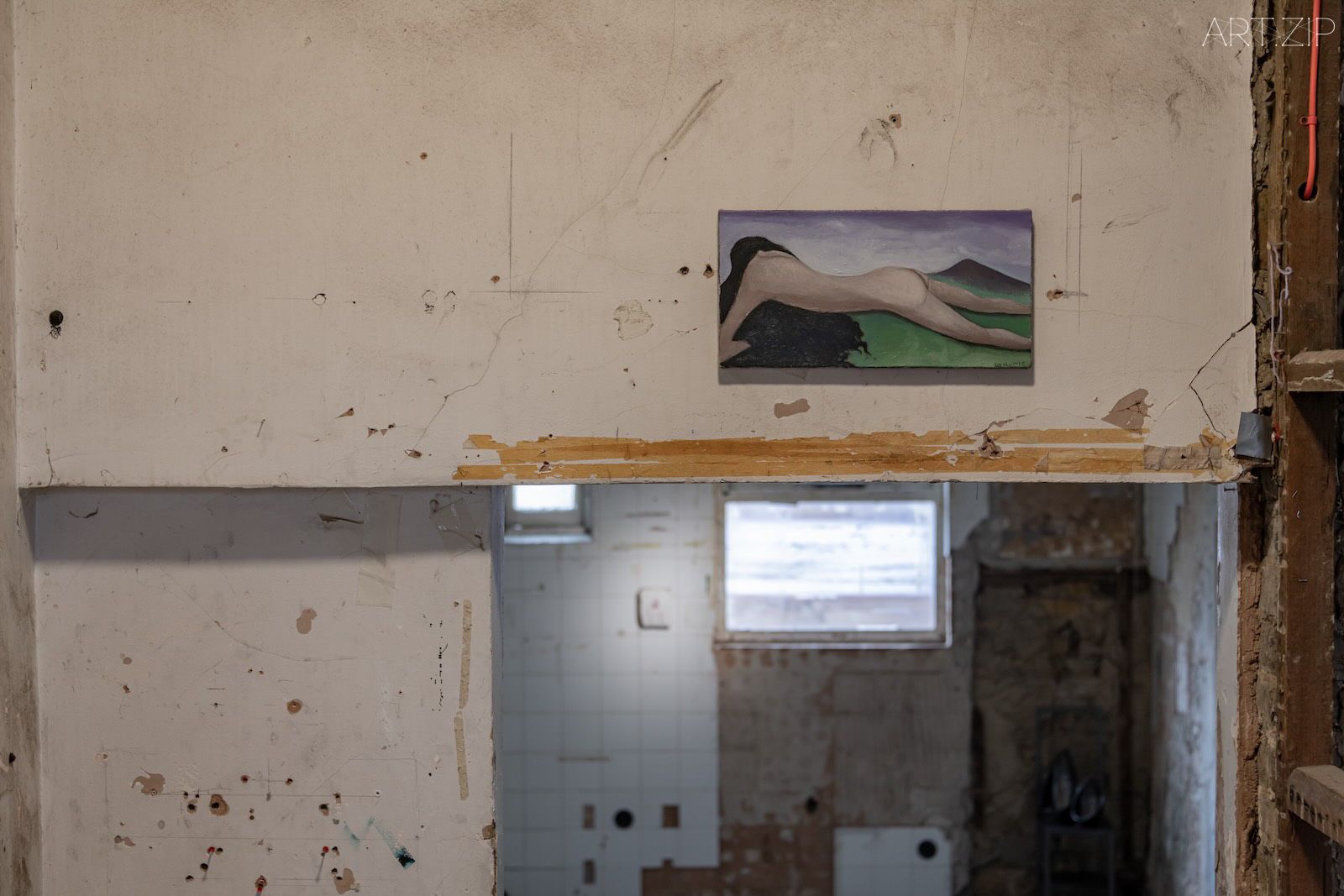
Gaps pierce the walls and ceilings, turning the two up two down into a single fragmented space. There is a view straight from the front room on the first level through to the back of the ground floor, punctuated by wooden beams and segments of brickwork. The plaster is crumbling to reveal many layers of paint and wallpaper. Time has been allowed to leave its mark on the house, encouraging visitors to think of its previous lives – from family squabbles and air raids to film crews and student exhibitions.
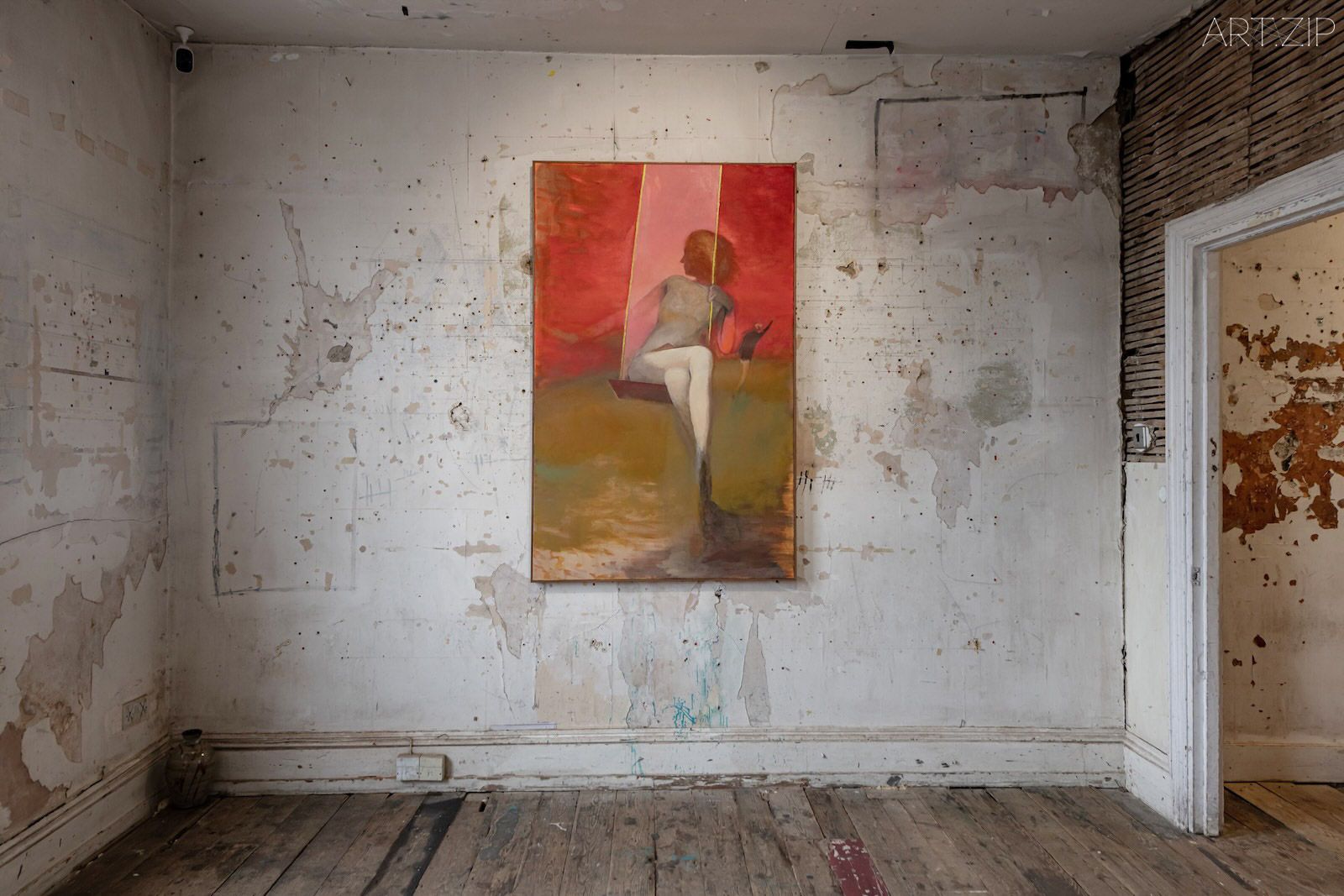
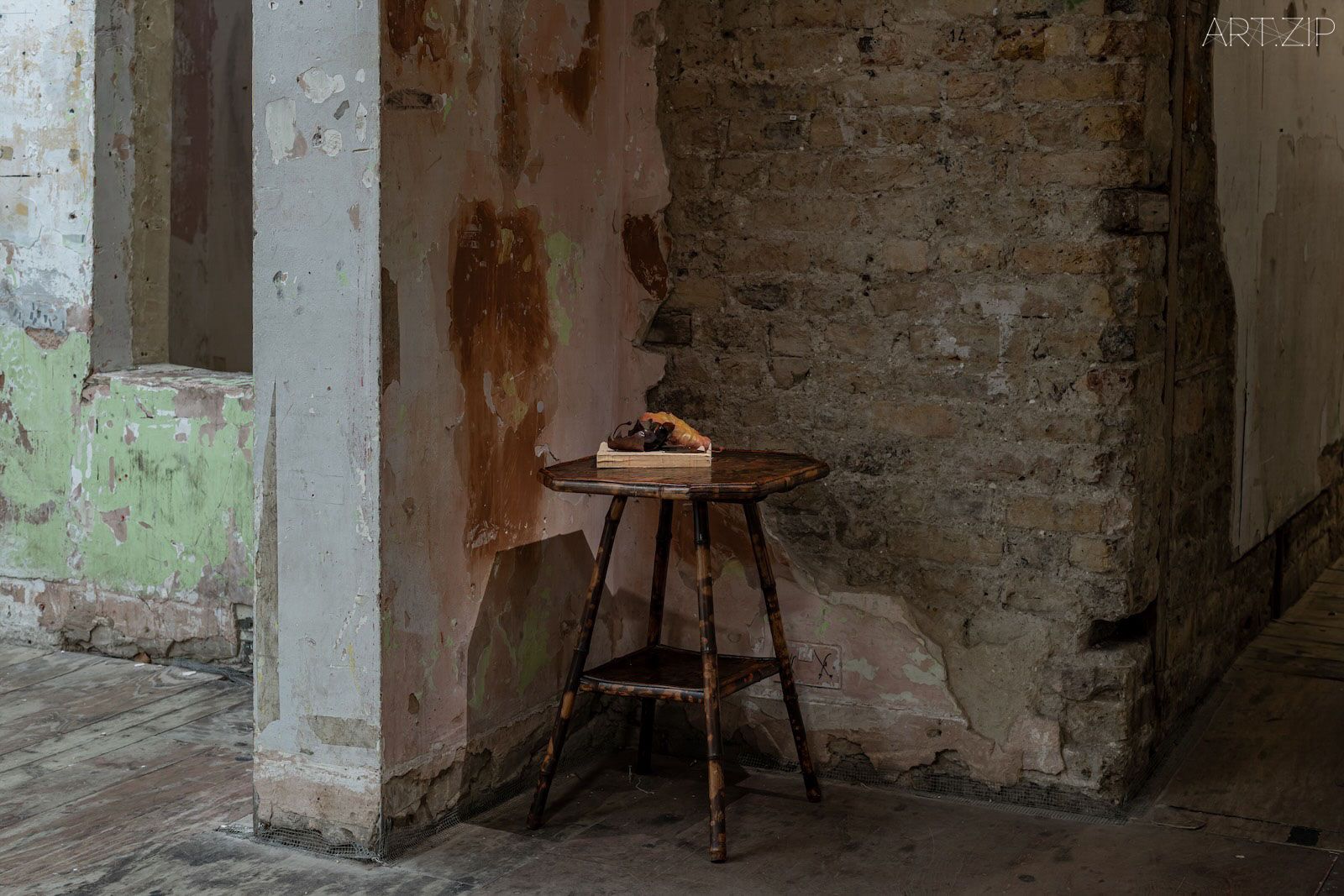
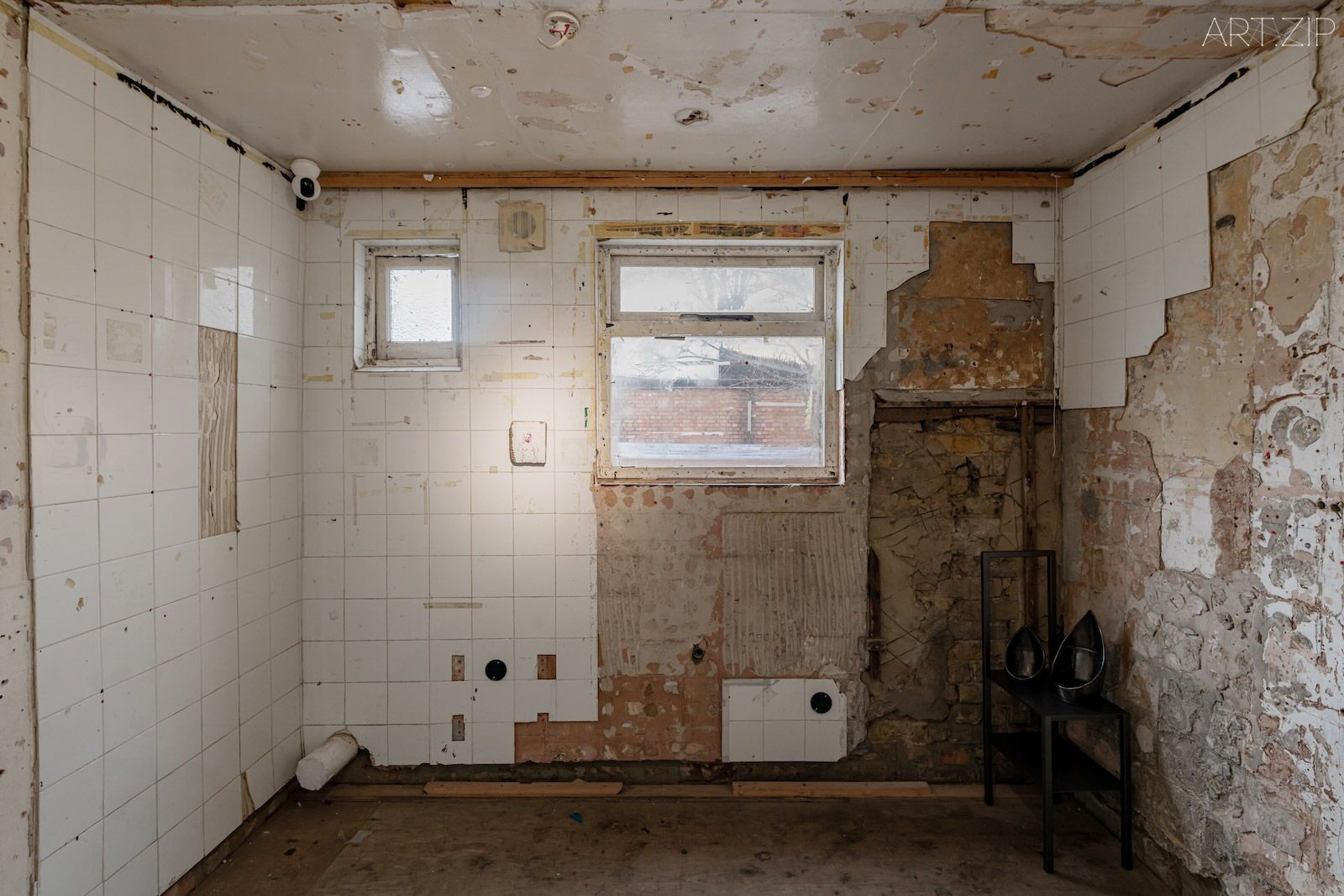
In the first weeks of February, this ‘abandoned house’ made an ideal setting for How to Disappear Completely: an exhibition of works by nine contemporary artists (some loaned from private collections, some from galleries and others directly from studios) curated by Iris Ziyao Li on behalf of her new site-less organisation, Jetlag Projects. According to Li’s accompanying text, the show responded to our ‘moment when visibility and articulation function as cultural imperatives’ by presenting paintings and sculptures that ‘operate through a deliberate withdrawal’ and ‘step away from the compulsion to signify’. In this way, it aimed to invite ‘a slower and more exposed form of attention from the viewer’.
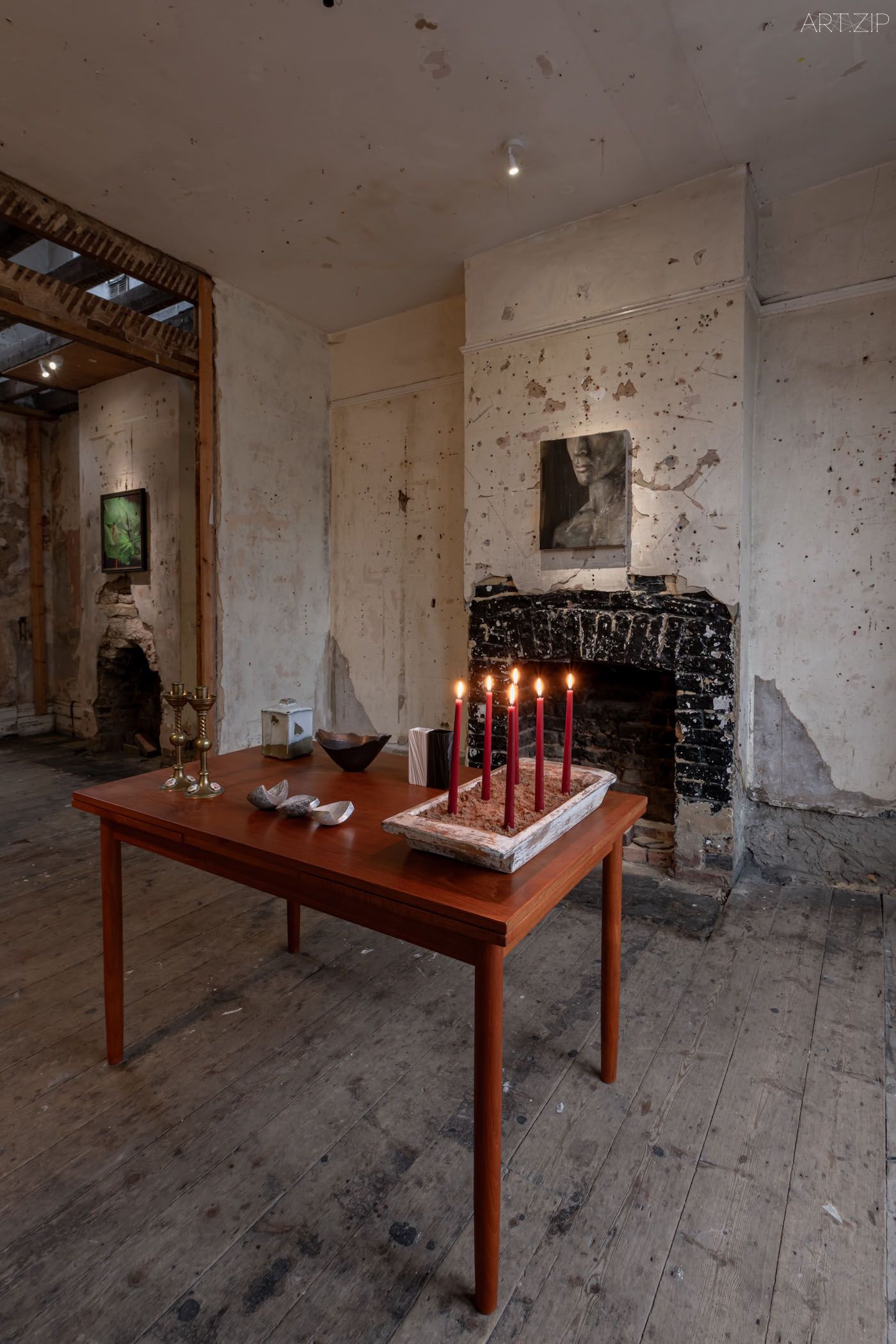
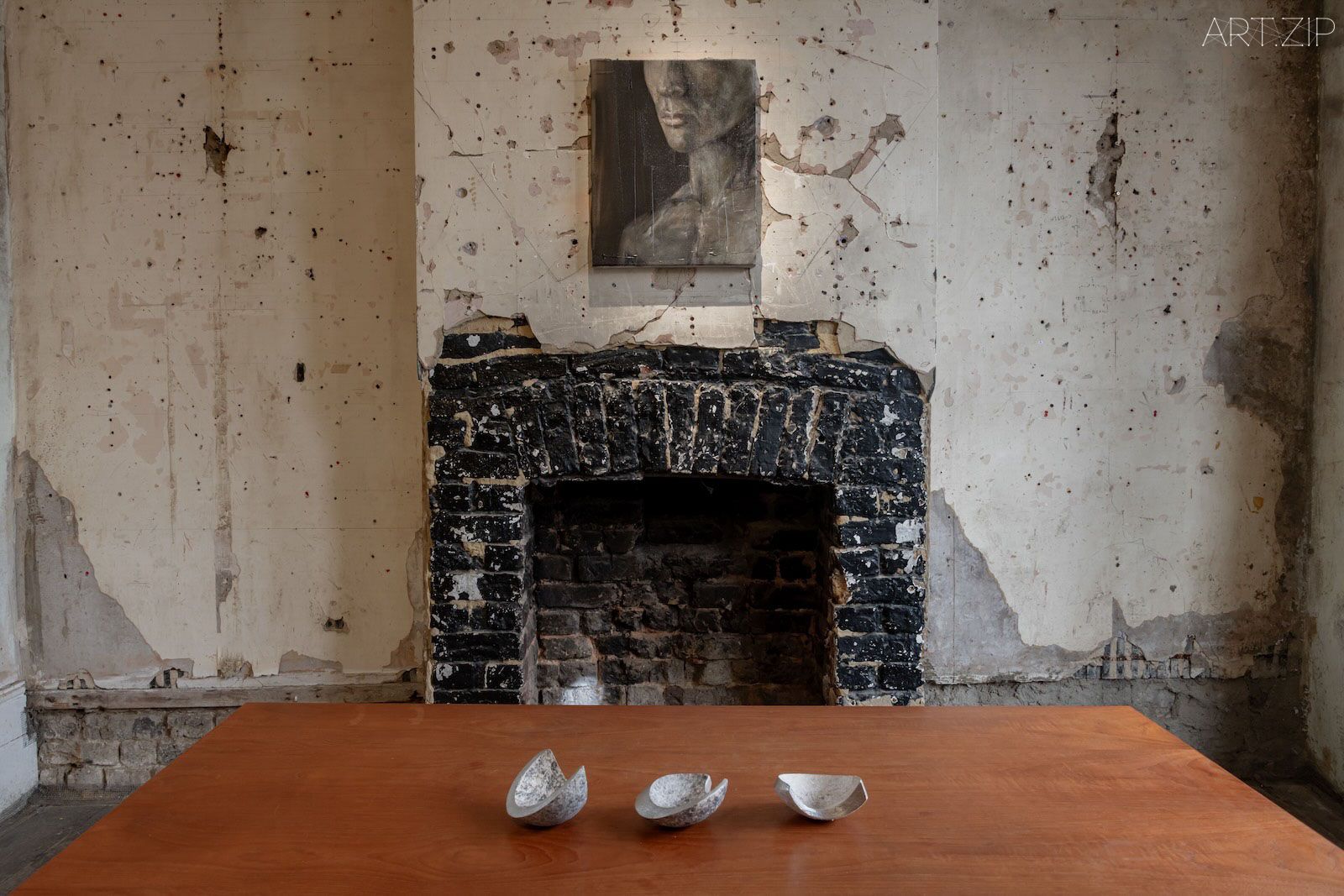
Above the bricked-up fireplace in the front room was document lack XIV (2026) by London-based artist Emanuel de Carvalho – a small dimly lit portrait of a masculine figure against a black background. Topless and handsome, the figure had the physical presence of a Fayum portrait (of the kind attached to coffins in ancient Egypt) and the high-gloss appearance of a fashion model, shimmering with the odd flick of off-white paint.
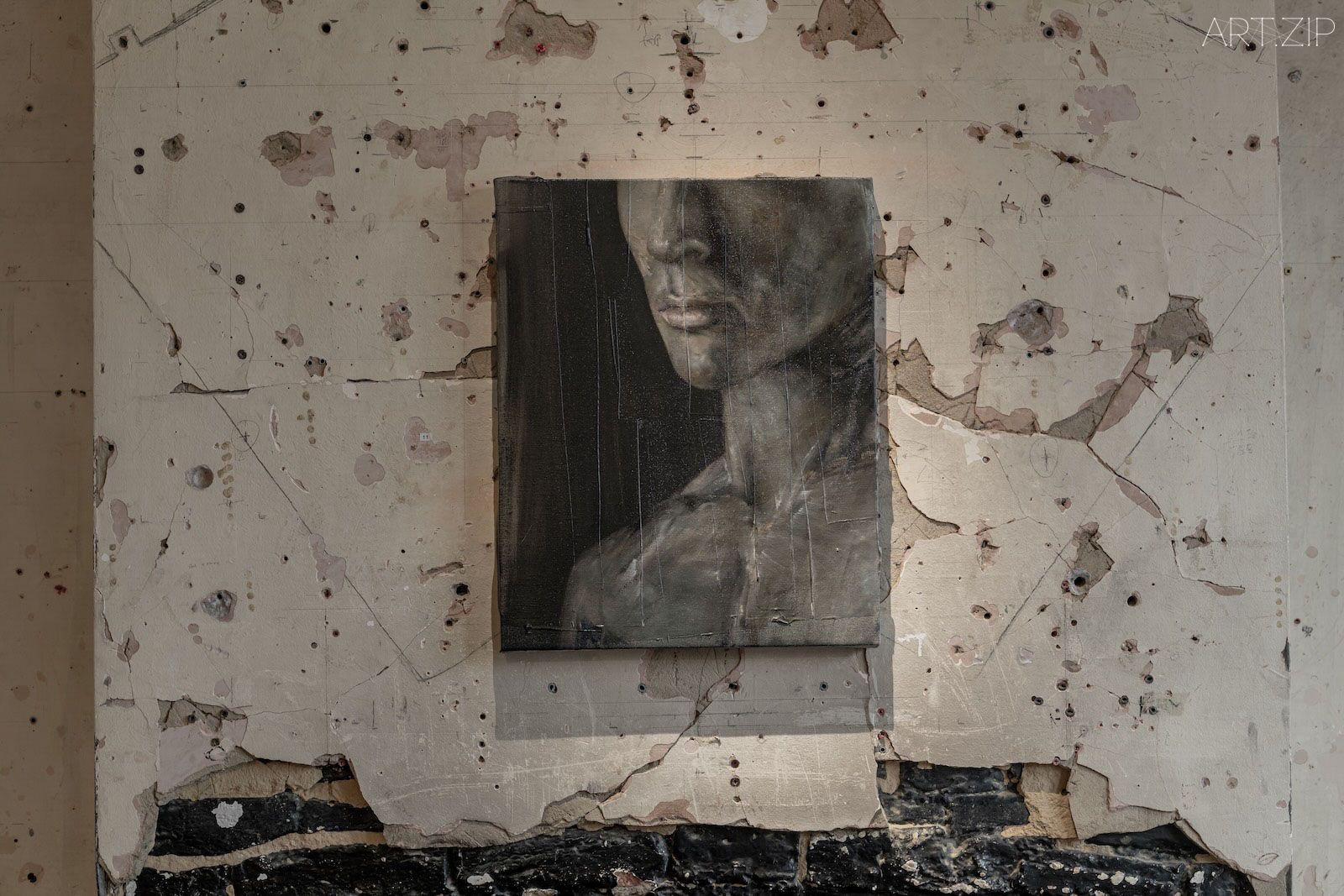
Emanuel de Carvalho, document lack XIV, 2026 Oil on linen with pumice 50 x 40 cm. Photo courtesy of the artist and Gathering Gallery. Installation shot. Photo credit: Studio Adamson
De Carvalho’s picture exhibited an unusual combination of ancient gravitas and contemporary sheen. The anonymous figure seemed to lurch forward into the room, out of the darkness, but was also aggressively cropped below the eyes, so held back from us, contained in the pictorial realm. The artist paints on a roughly applied gesso ground, and when the sun came out, impasto lines appeared like vertical slashes or bars across the man’s face. Inviting ‘a slower and more exposed form of attention’, as promised by Li, this shifting phenomenological experience subtly resisted the contemporary demands for immediate gratification and total ‘visibility’.
It was a shame Li’s essay was not more precise about how ‘visibility and articulation function as cultural imperatives’. Perhaps being specific would have risked succumbing to the imperative of articulation. But we can safely assume she was referring to what Byung-Chul Han calls ‘the transparency society’ in his 2012 book of the same name. Han criticises our culture of online oversharing and 24/7 surveillance, in which transparency has become an unquestioned ideal but erodes privacy, fosters conformity and undermines trust and depth in social and political life. Twenty years earlier, Martinican philosopher Édouard Glissant formulated the connected notion of ‘opacity’, which ‘is not the obscure’ but ‘that which cannot be reduced’. Opacity according to Glissant constitutes a rejection of the way in which, within the colonial paradigm, a subject must be measured and categorised in a taxonomic system of difference in order to be understood and accepted.
It is no surprise that references to opacity against transparency, or in Li’s exhibition ‘deliberate withdrawal’ against ‘visibility’, have become commonplace among contemporary art curators. Political justifications for vagueness allow exhibition organisers to sidestep the intellectual and logistical challenges associated with articulating lucid statements and making rigorous artwork selections. In How to Disappear Completely, the emphasis on ambiguity allowed a variety of more-or-less unrelated artefacts to be presented together. As Li states, the exhibition did ‘not offer a position to agree with or a story to follow’. We encountered astonishingly realistic painted bronze leaves by Lisa Chang Lee, scattered on the floor as if they had blown in through an open door; glistening grey panels covered in artificial dew by Massimo Bartolini; and a fiddly assemblage of pencils by Hamish Pearch – all interesting artworks in themselves.
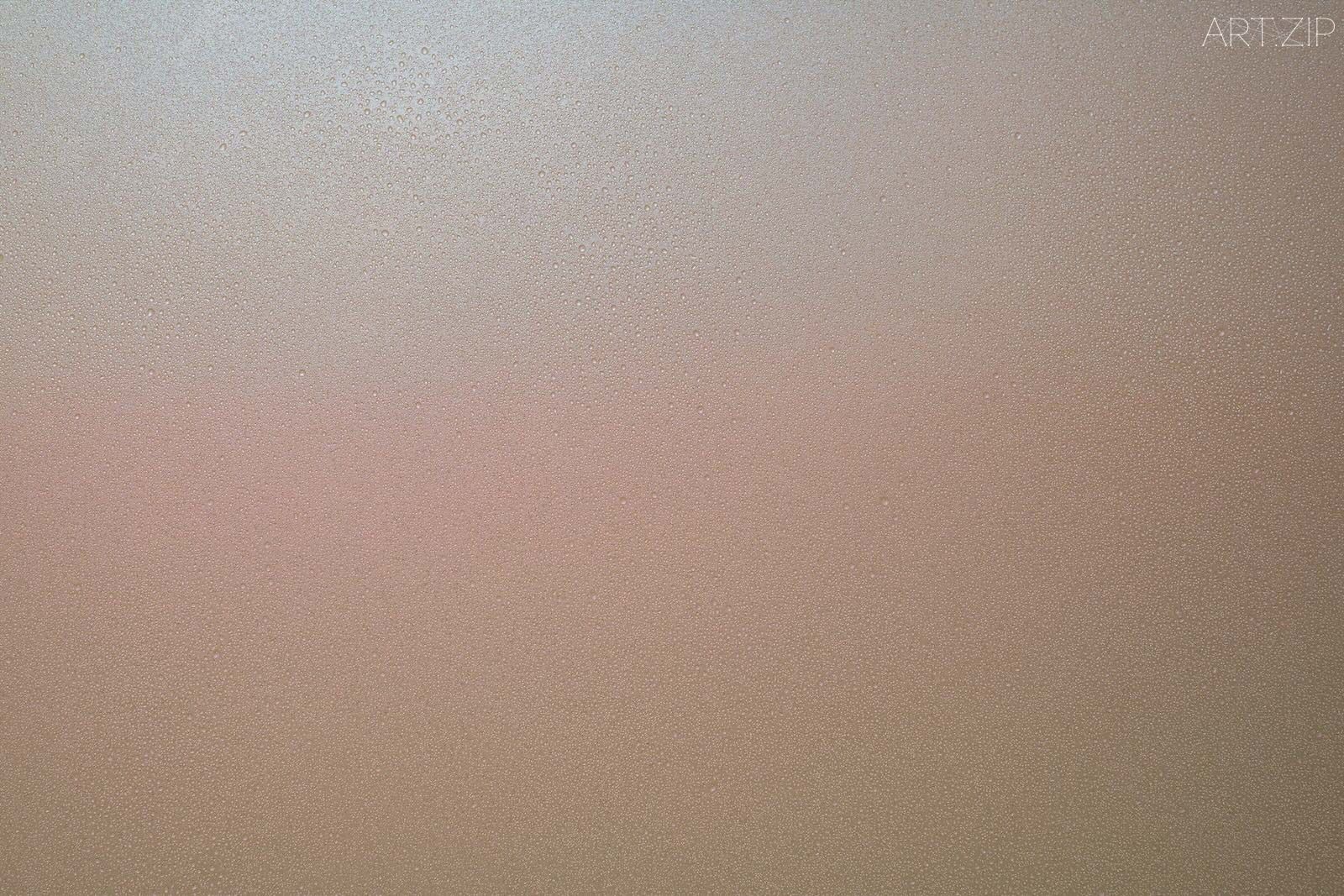
Massimo Bartolini, Dew, 2023 Aluminium, micallized paint / Alluminio, vernice micallizzata, rugiada 35 × 35 x 2.5 cm / 13 3/4 x 13 3/4 x 1 inches Ex. Unique. Photo courtesy of the artist and MASSIMODECARLO Gallery. Installation shot. Photo credit: Studio Adamson
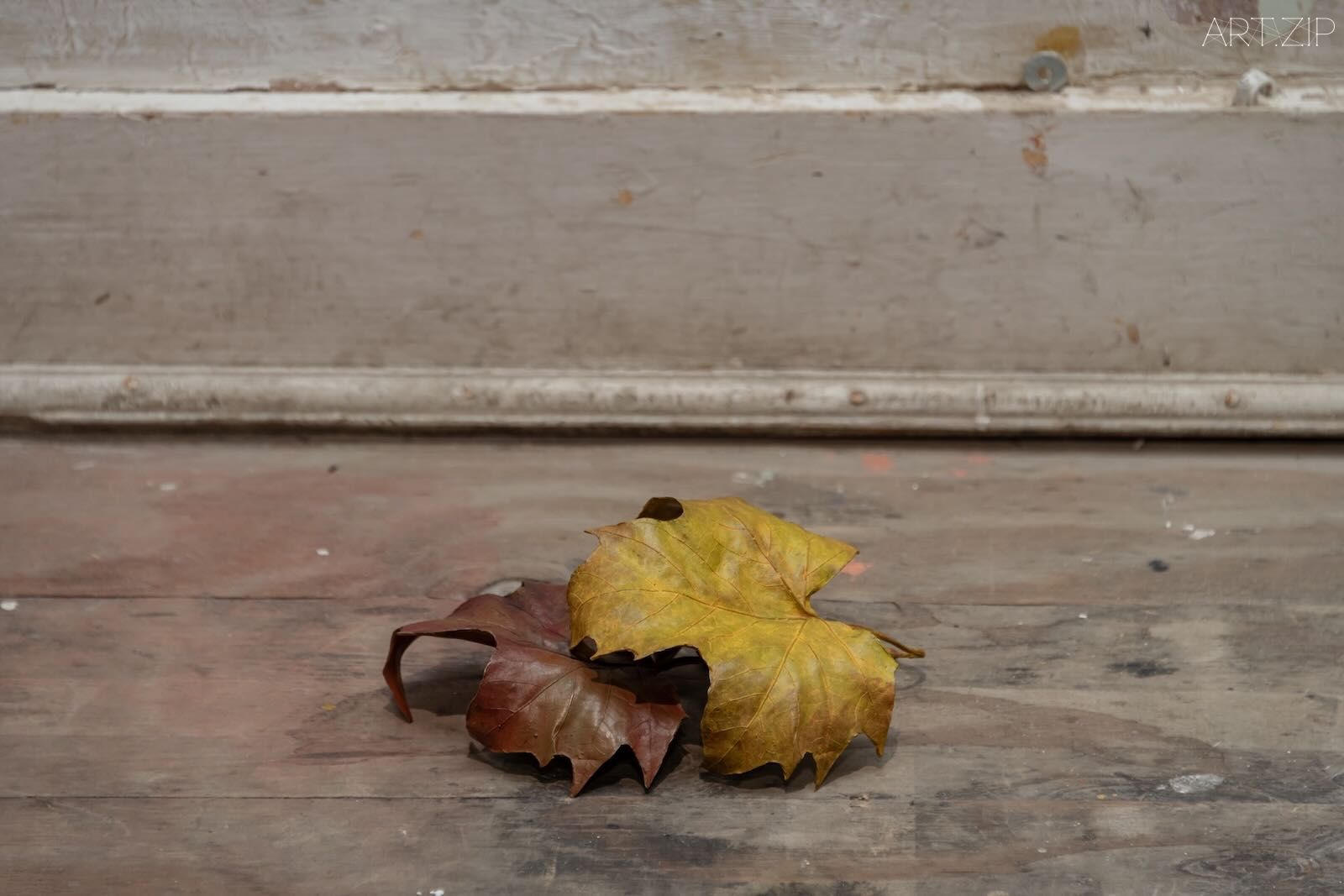
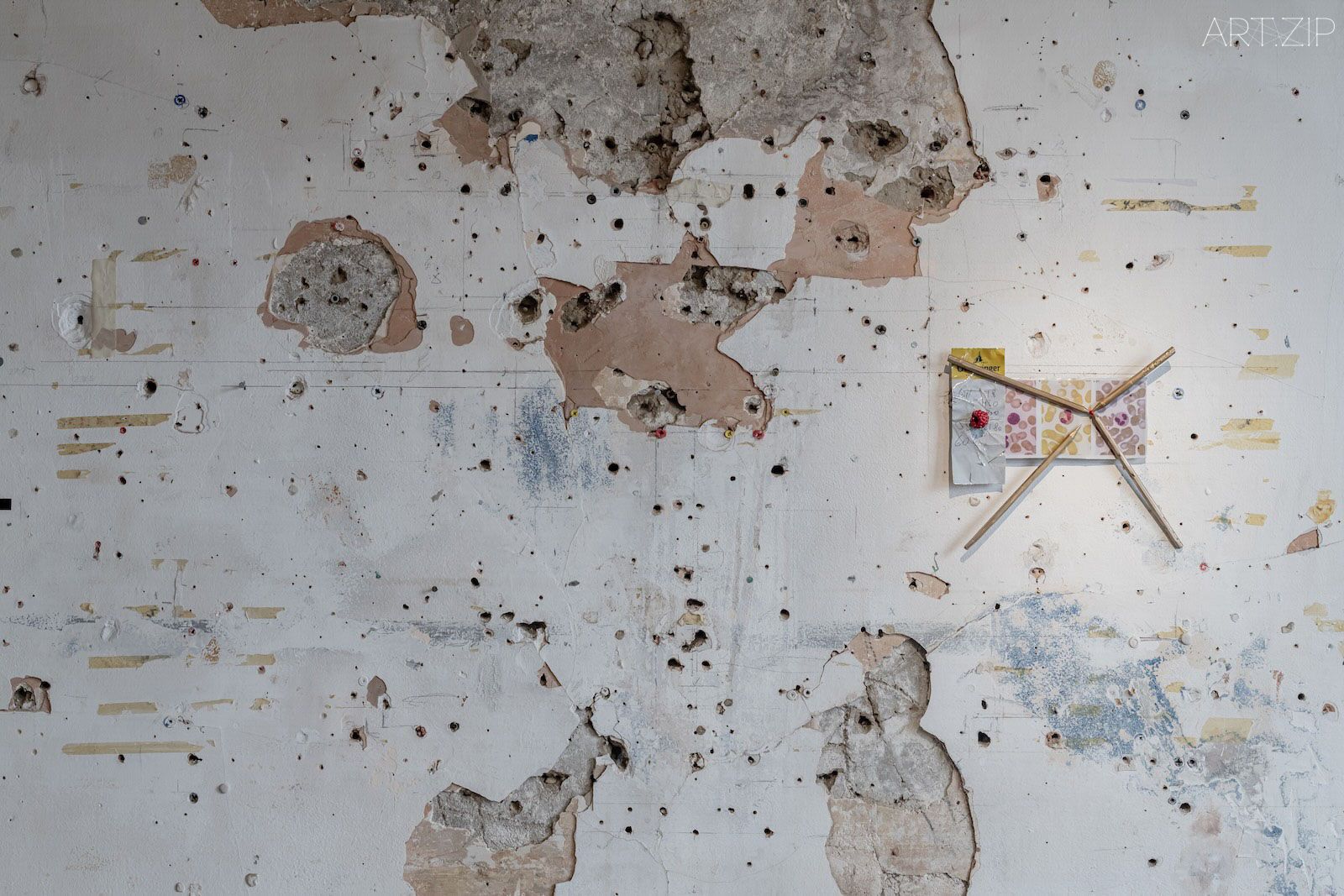
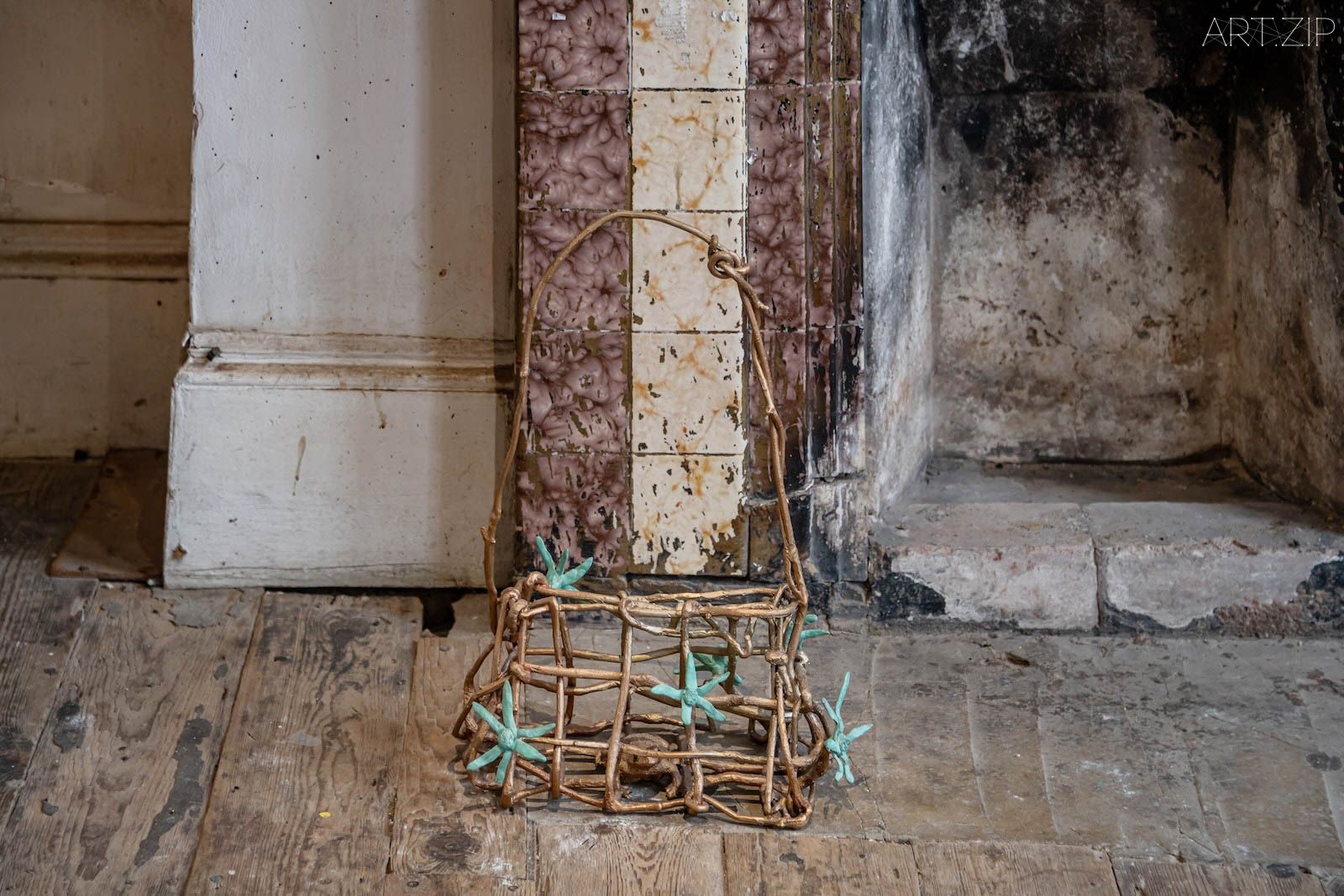
Although these works did not offer a clear narrative or meaning, though, most of them are quickly recognisable as being by their respective makers – who were all professional artists. They conform to signature styles and enable easy visibility within the markets and institutions of contemporary art. The surface-level aesthetic of withdrawal – of physical corrosion and semantic obscurity – did little to threaten the expectations of transparency and systems of measurement that the likes of Han and Glissant attack.
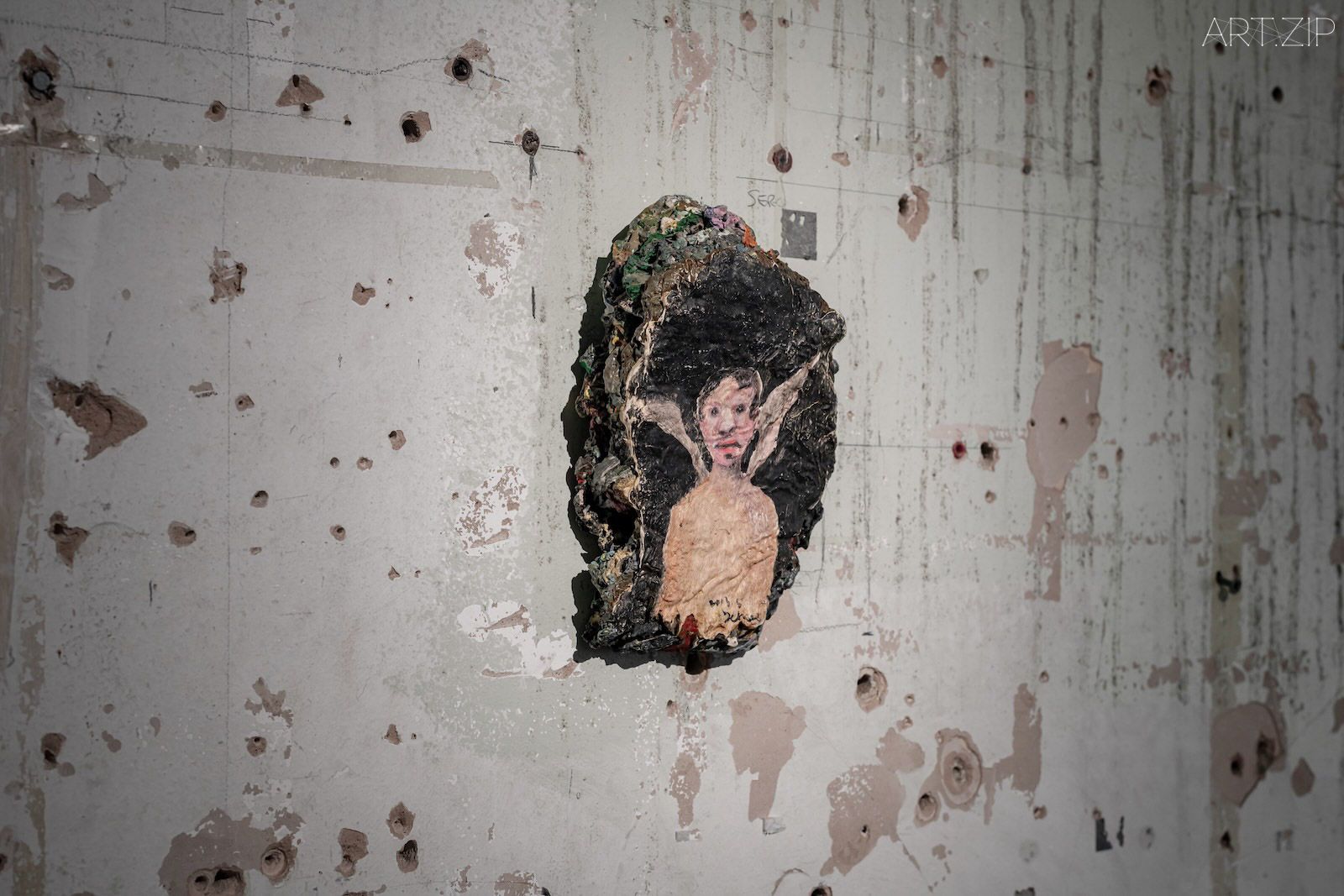
Nevertheless, the exhibition was sensitively curated with some impressive moments. Most of these stemmed from the way works rhymed with the building. In a small room upstairs, Li placed two cartographic drawings by Lisa Chang Lee on a wall covered in different patches of paint, itself like a map of some unknown land. Opposite was Andra Ursuta’s Untitled (fragment from “Alps”) (2016), a strange resin cast, the colour of sandstone and the shape of a weird bubbly creature. The work looked like a fossil severed from its geological surroundings, but there perfectly echoed the crumbling plaster of the wall on which it was hung.
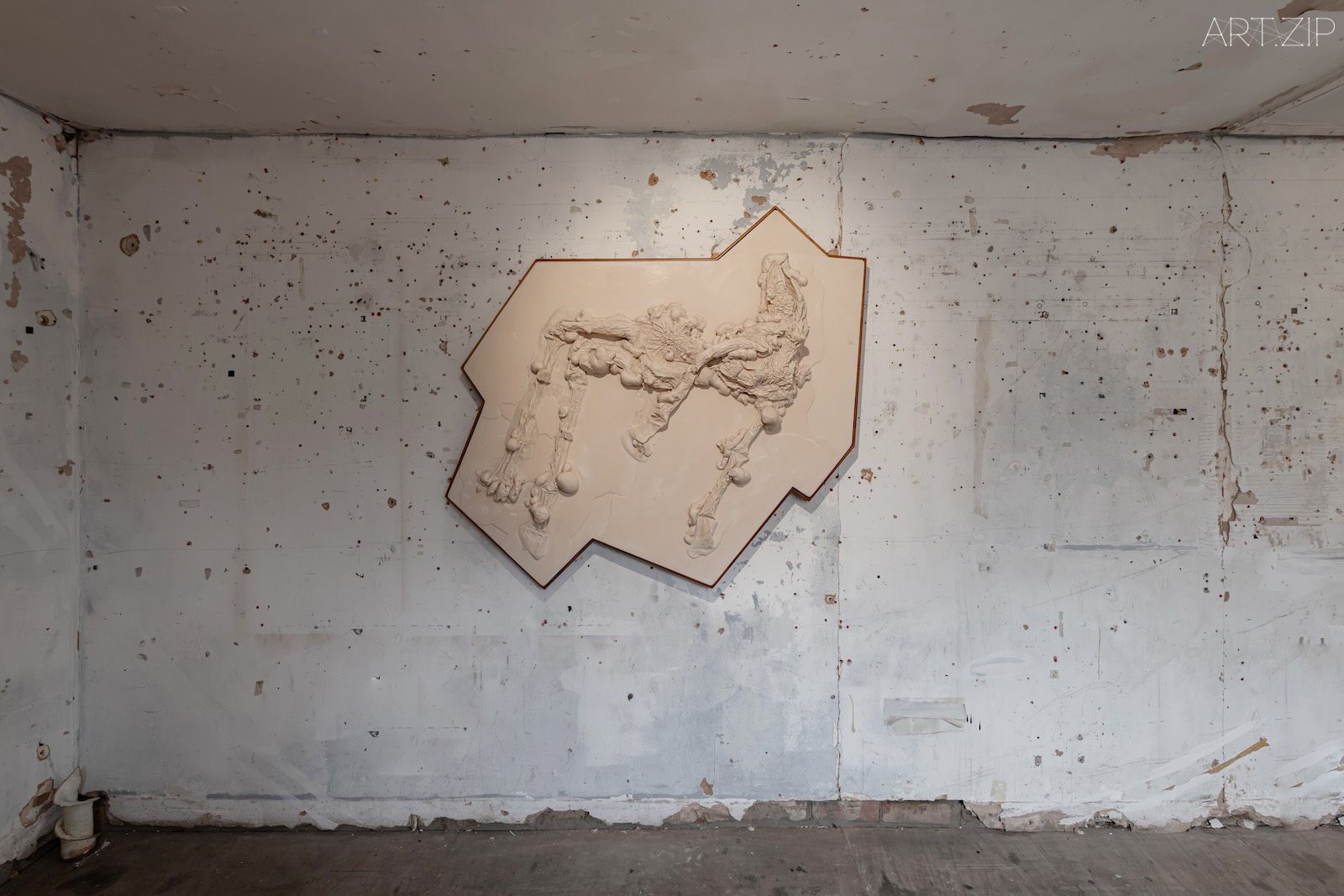
Andra Ursuta, Untitled (fragment from “Alps”), 2016 Aqua resin, urethane plastic, hardware, polyester / Aqua resina, plastica uretanica, ferramenta, poliestere 109.2 x 142.2 x 17.8 cm / 43 x 56 x 7 inches Ex. Unique. Photo courtesy of the artist and MASSIMODECARLO Gallery. Installation shot. Photo credit: Studio Adamson
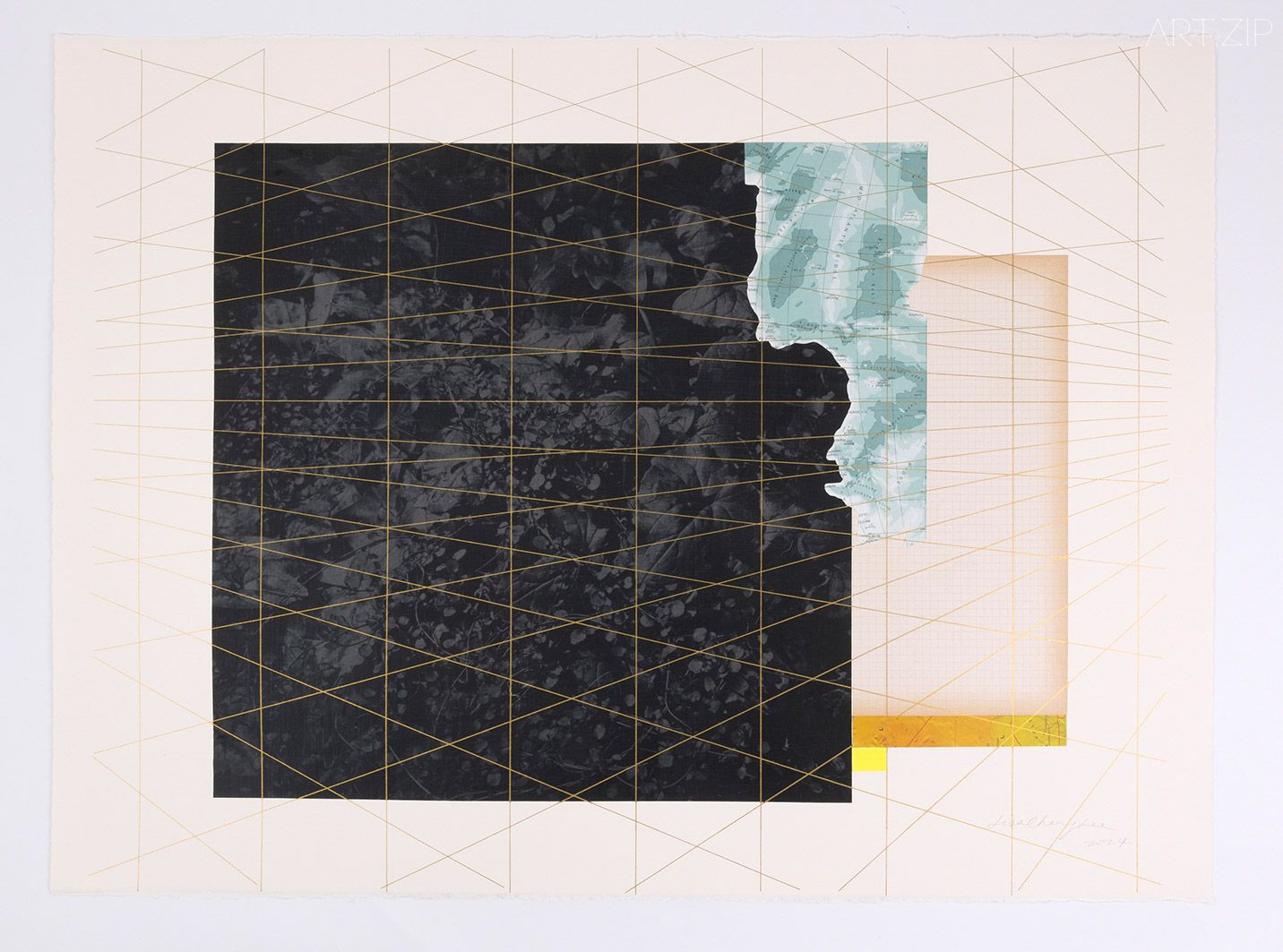
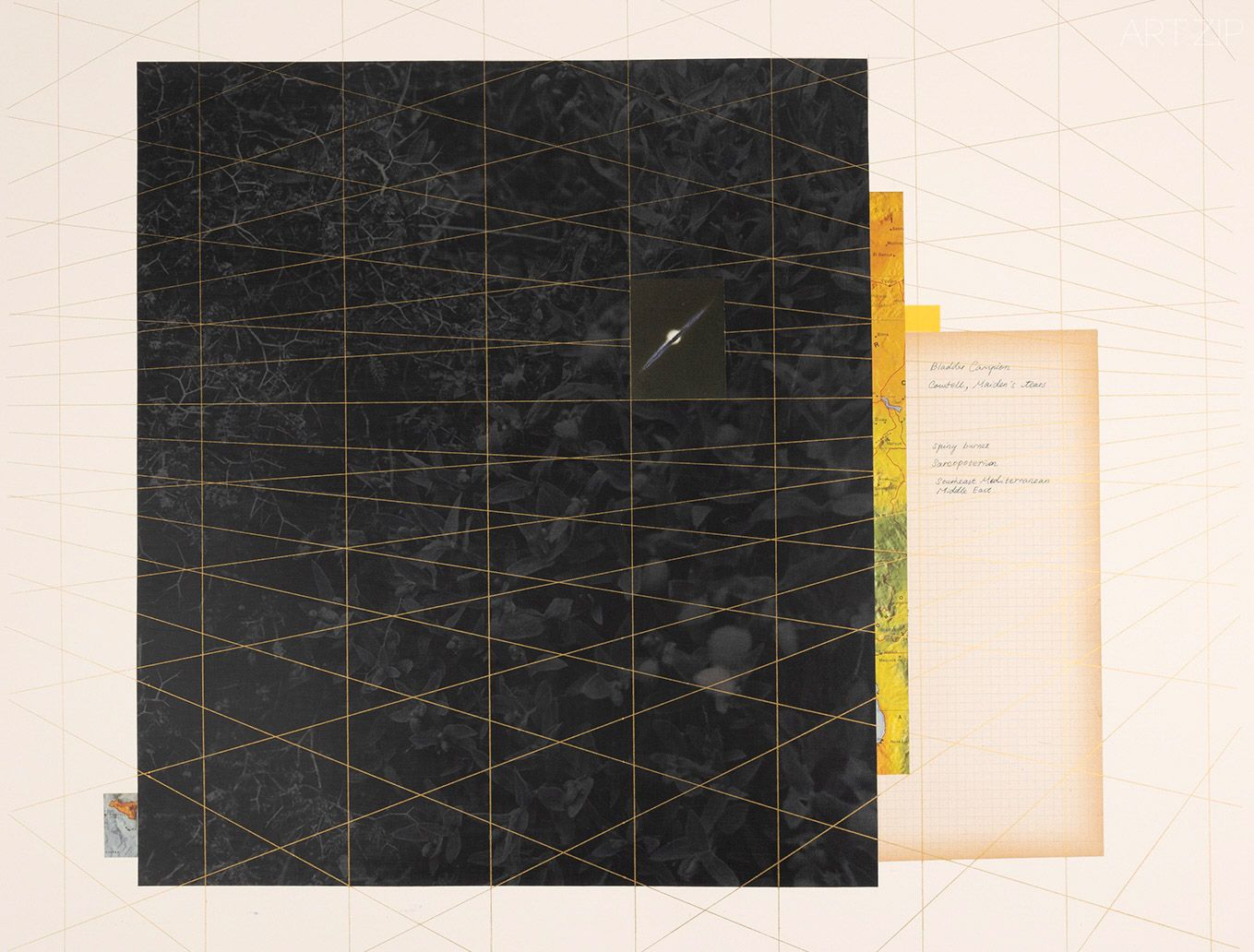
Downstairs at the back was Cabin (2022), a large-scale photograph by brilliant Portuguese artist Jaime Welsh, of two identical young women sat behind some kind of reception desk within a luxurious wood panel interior. On the one hand, the two figures represent subservience, sitting passively and waiting to help us. But on the other, they seem resistant – staring off to our left, looking bored, even angry. The tension between servility and opacity was intensified by the picture’s relationship with the room. Beams on the ceiling in the photograph mirrored the rafters above it in Safehouse 1, while the high-spec finish of the depicted interior evinced a world a long way away.
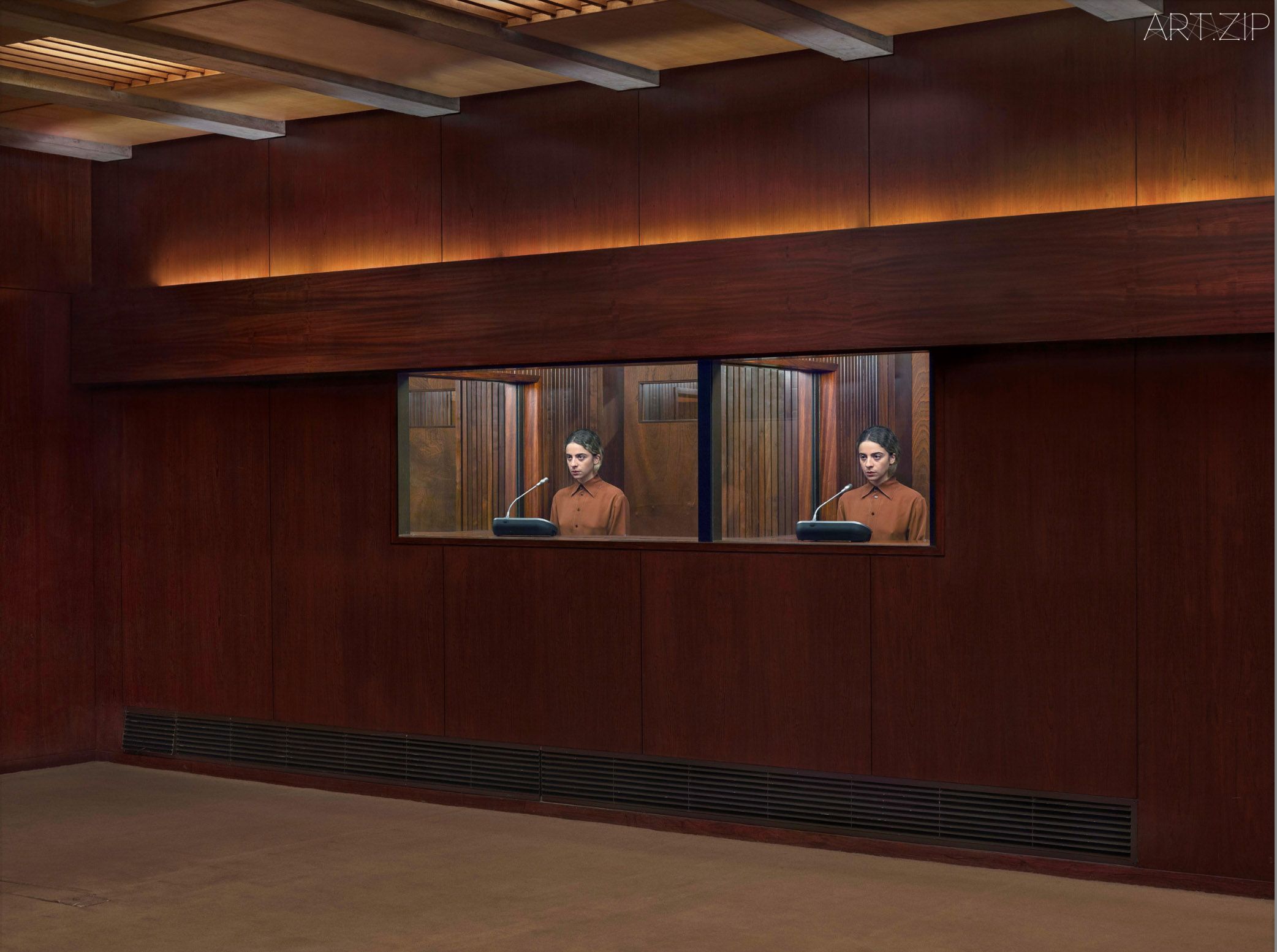
Jaime Welsh Cabin, 2022 Archival pigment print on baryta paper, AR92 glass, welded metal frame 130 x 174 x 4 cm edition of 3 + 2 AP. Photo courtesy of the artist and Madragoa Gallery
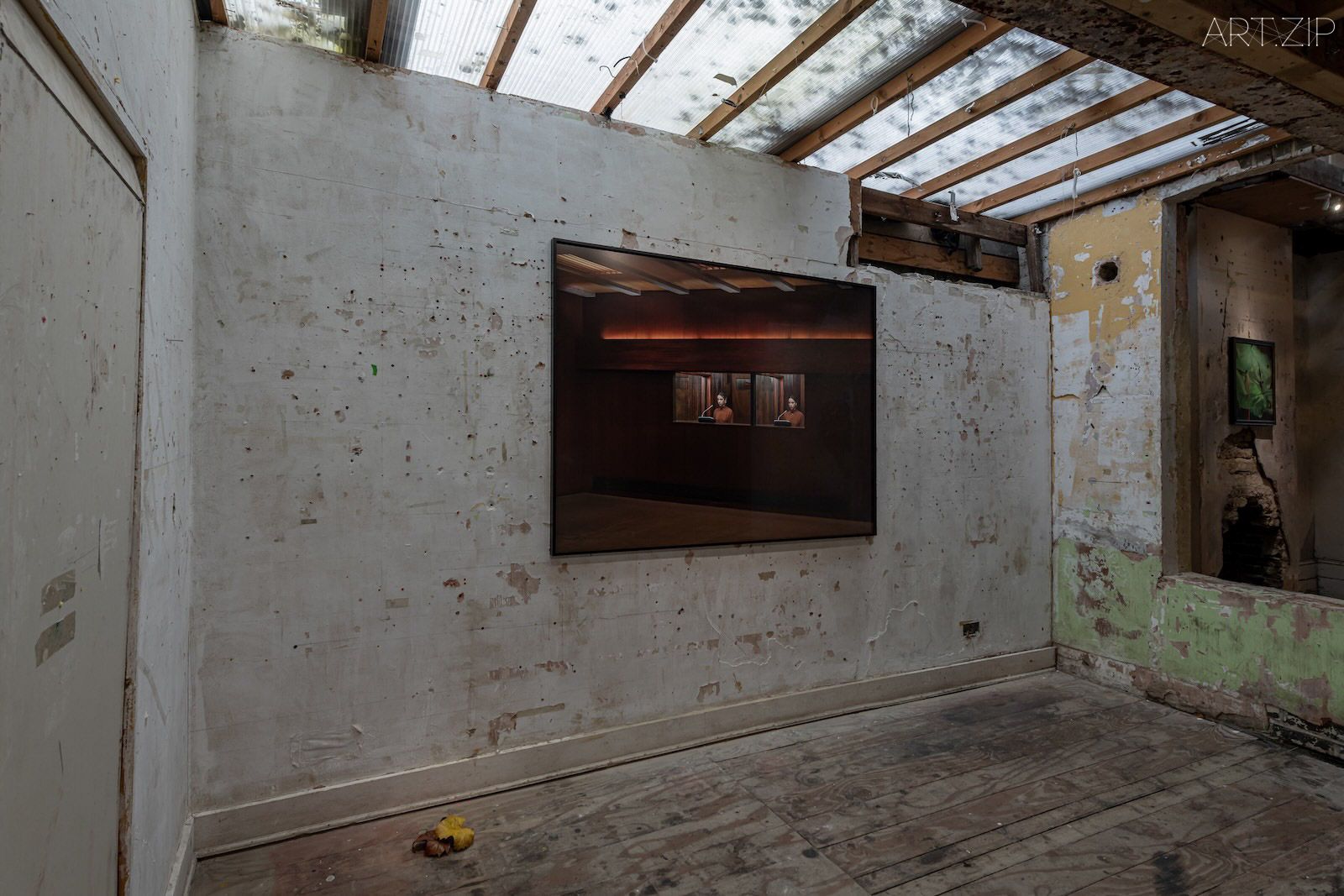
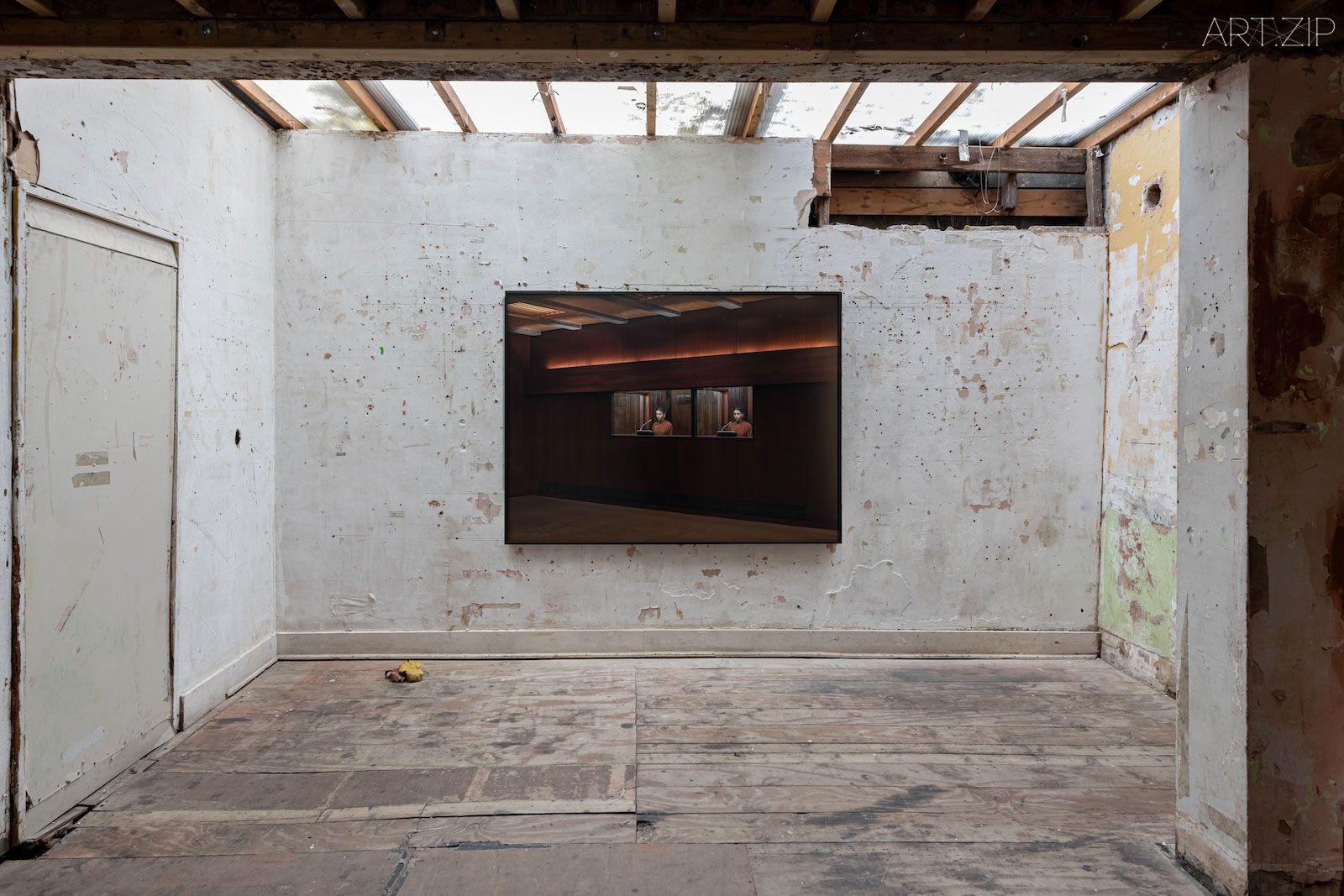
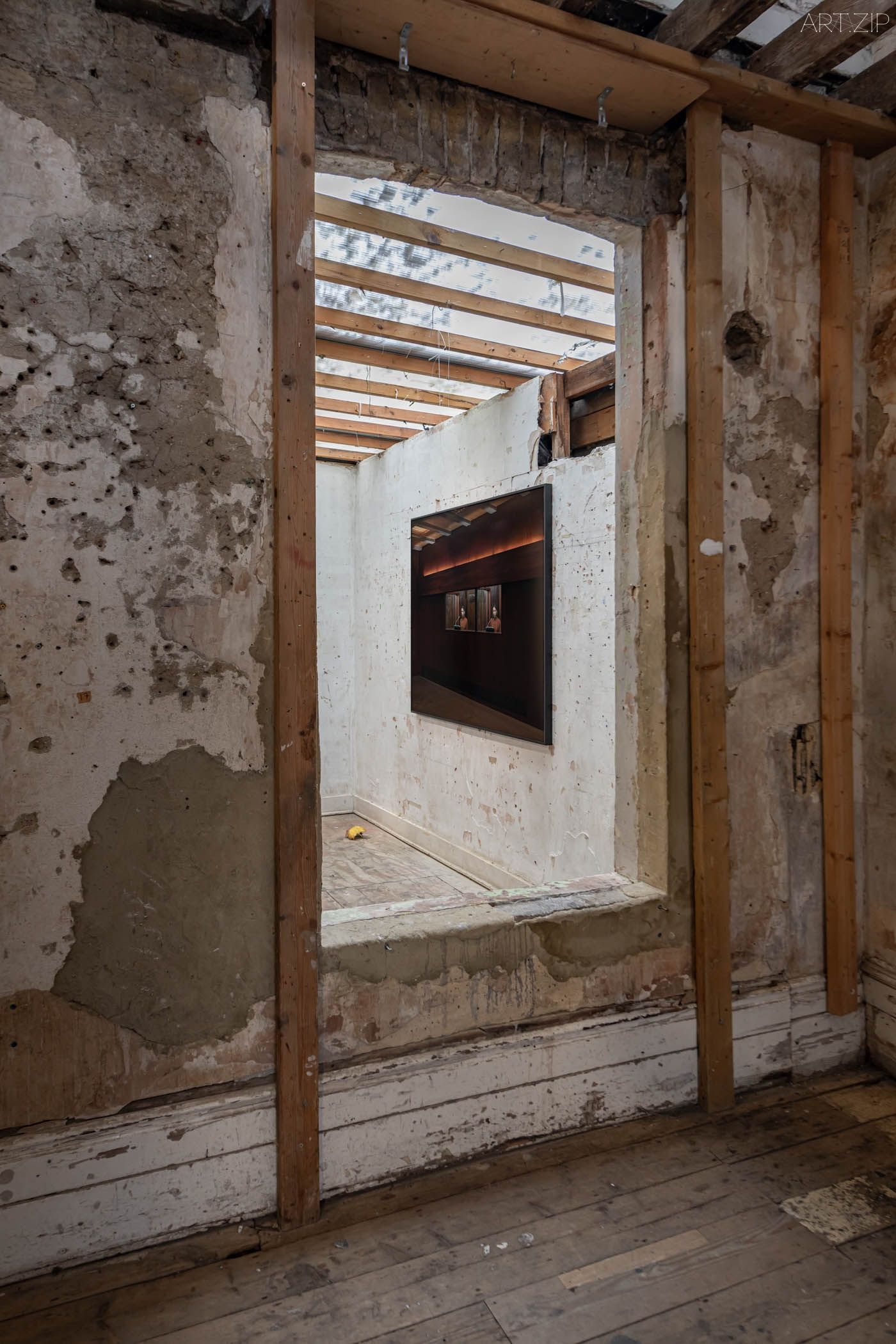
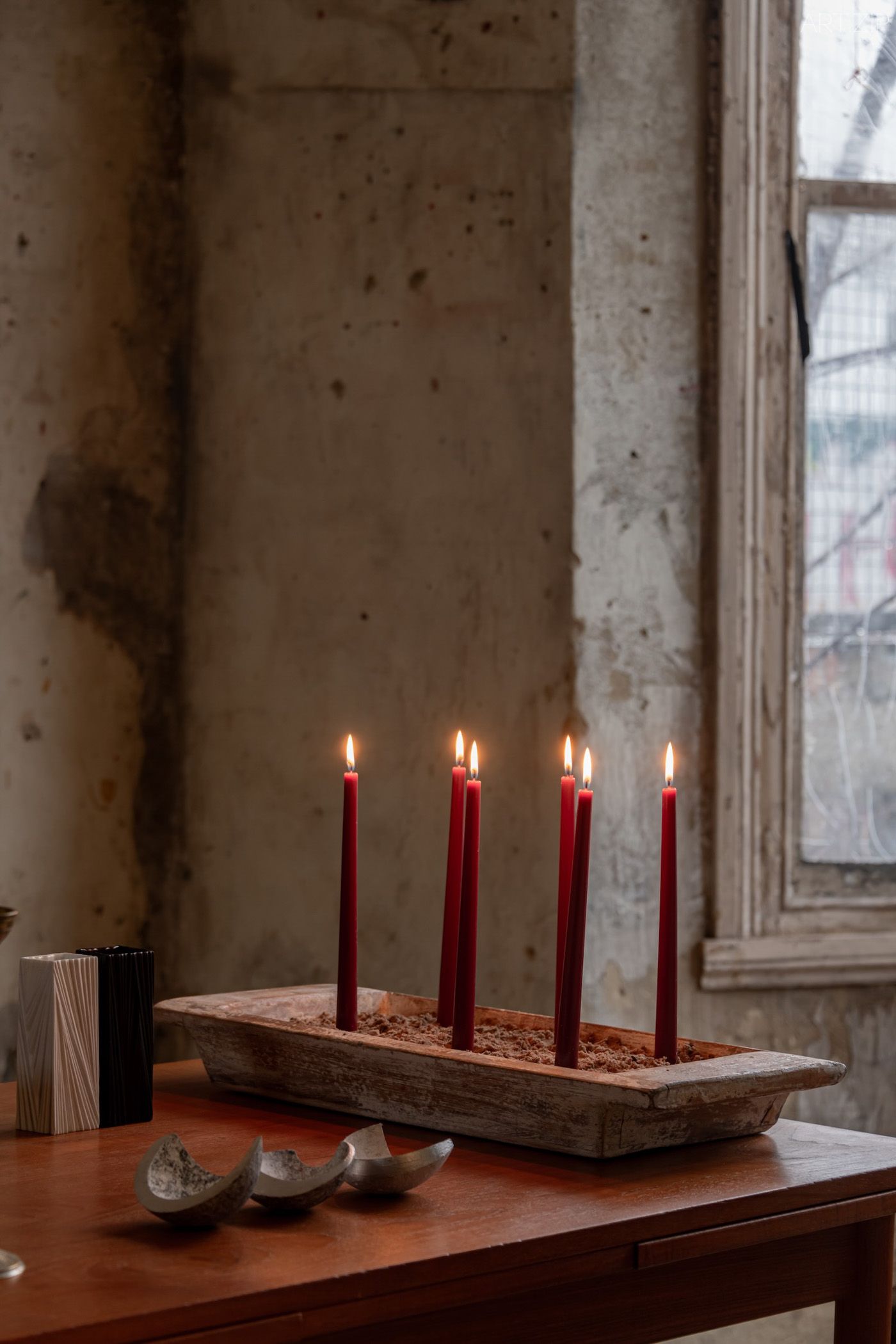
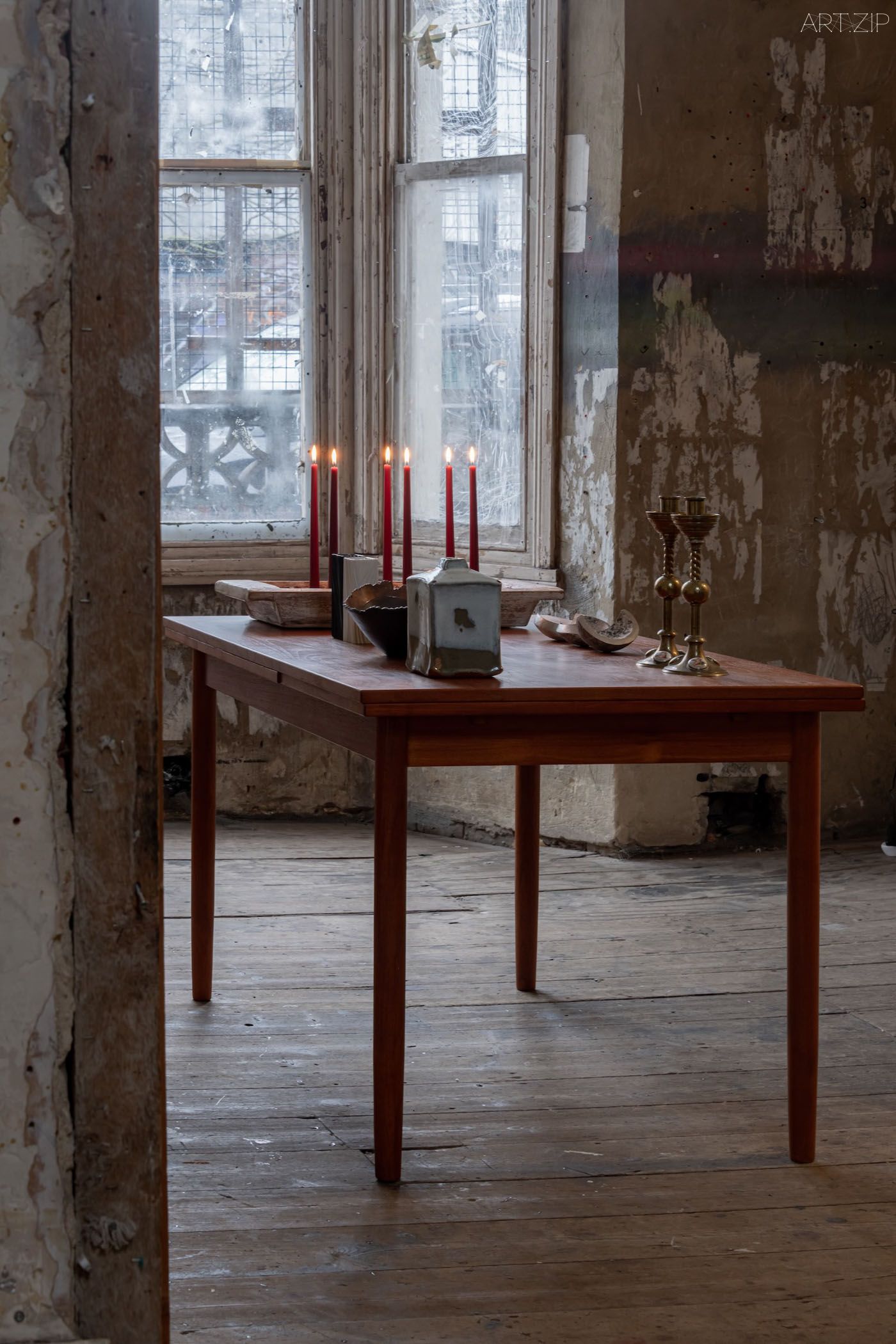
In all these cases, the works seemed at once to lurch forward to meet us and to retreat back into themselves, to become part of their temporary crumbling environment and then to reassert their autonomous status. Scattered through the space was a random assortment of tables and ornaments, candles and vases. Perhaps my favourite feature of the show, these caused me on several occasions to ask which items were artworks and which simply elements of the building. In these moments, when comfortable categories became unstable, a more authentic experience of ambiguity emerged.
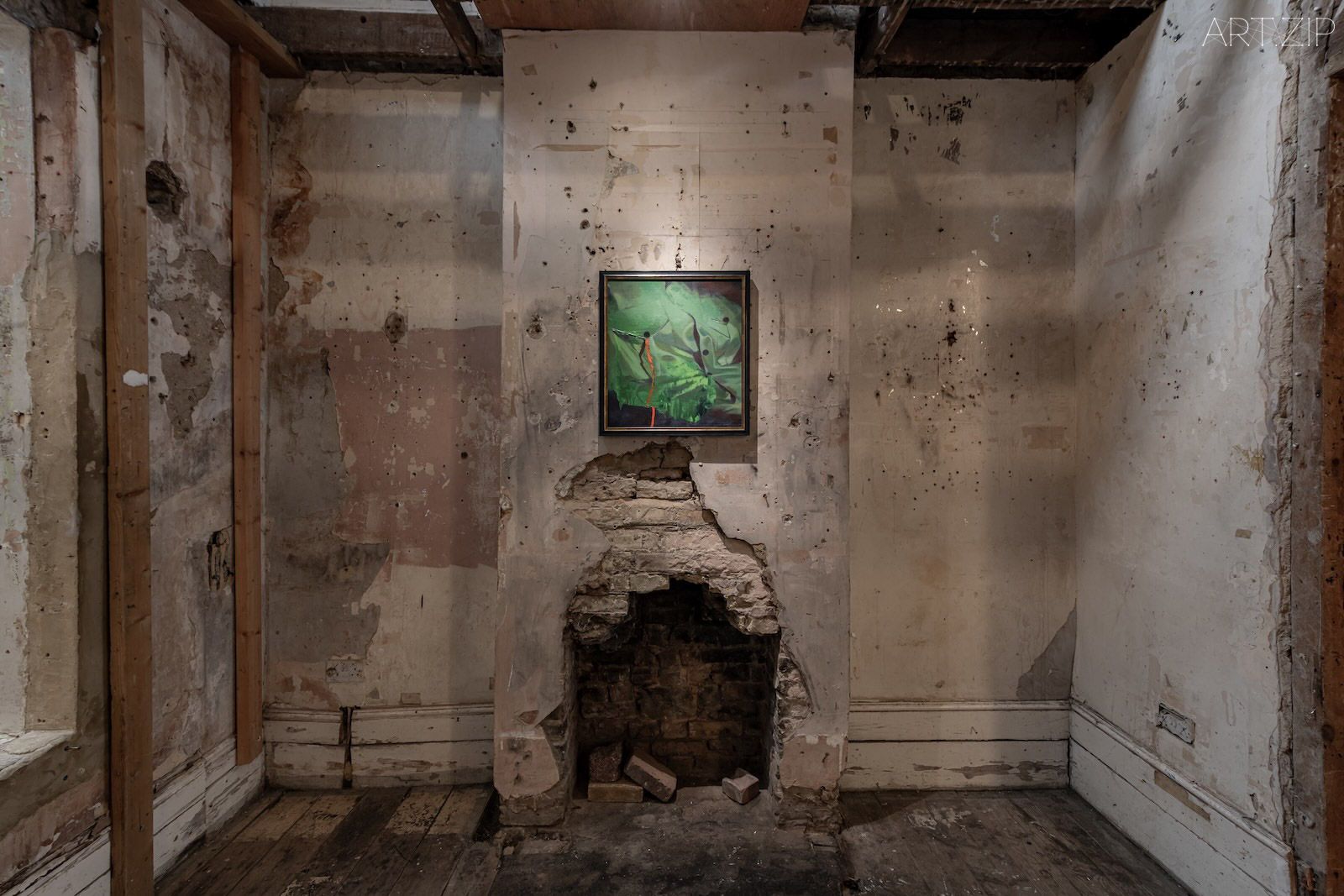
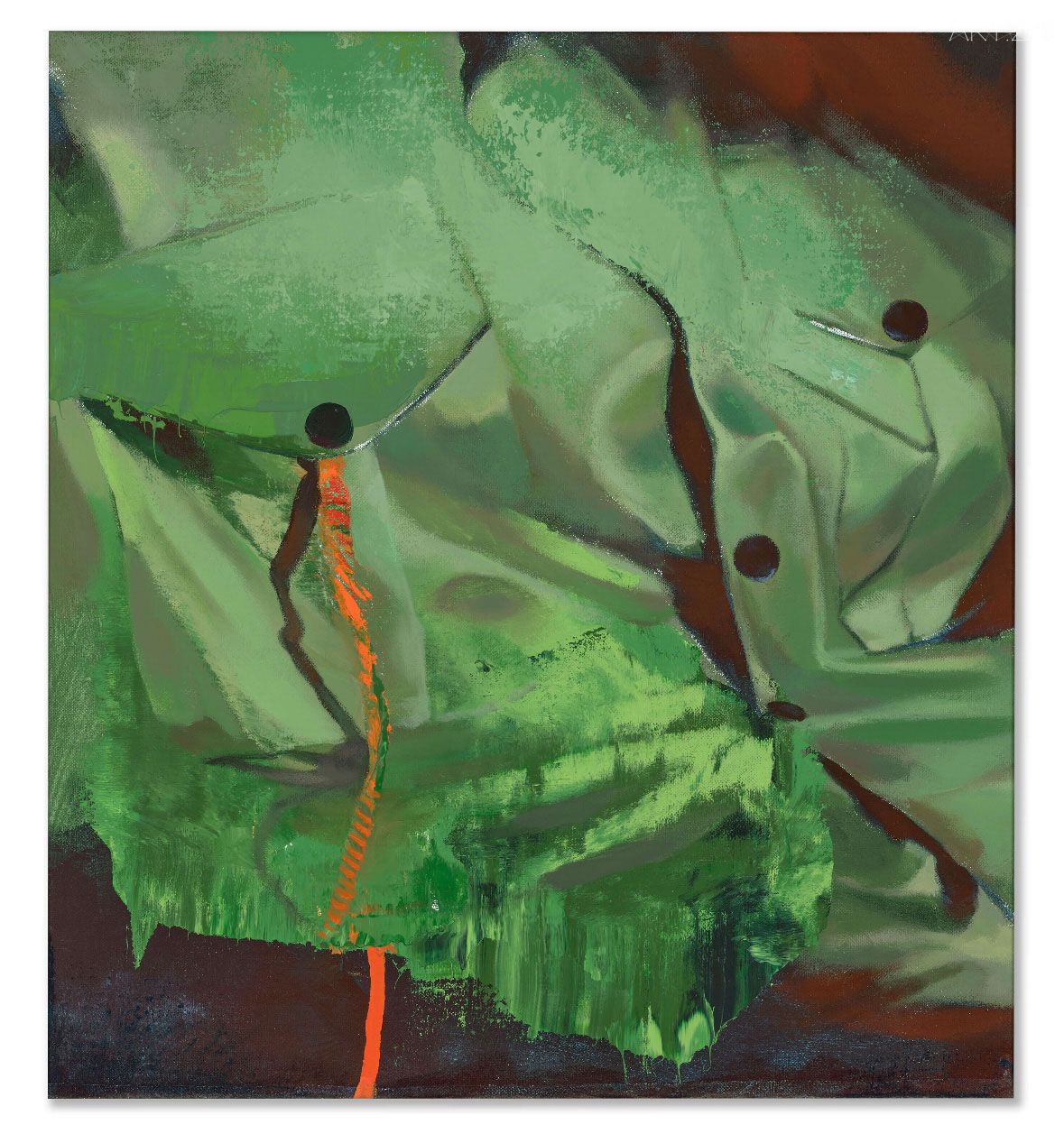
The aesthetic of evasion takes on a precise political significance in the work of Mohammed Sami, which was represented in How to Disappear Completely by Nineteen Eighty-Four II (2019). This small painting shows a green military shirt, slightly crumpled and blurred by Sami’s palette knife. The image is cropped very close, so it is not clear if anyone is wearing the shirt – if there is a body behind the fabric.
Born in 1980s Baghdad, Sami was recruited at a young age to paint propaganda for Saddam’s regime including large-scale likenesses of the dictator in official dress. In his canvases now, he often invokes figures of the kind he used to paint only to efface them – with black spray paint, close cropping, or a palette knife. The human body is obscured or erased as a way of rejecting the ideological role played by the iconic figure in propagandistic imagery. This is an aesthetic strategy developed within a specific political and visual context, not ambiguity for ambiguity’s sake.
More about the exhibition:
How to Disappear Completely
Jetlag Projects at Safehouse 1
4th – 12th February 2026
Safehouse 1, Peckham London SE15 38N
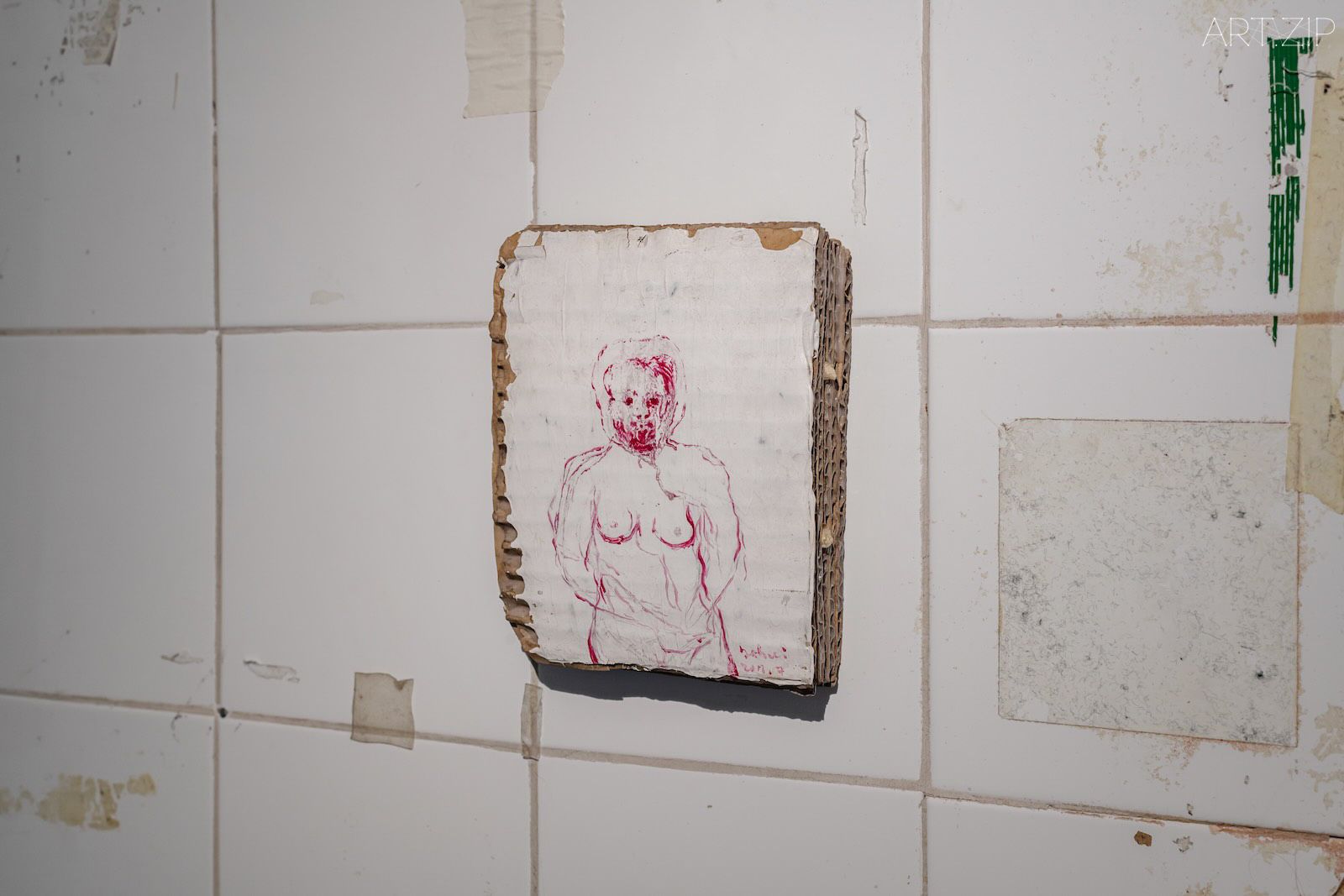
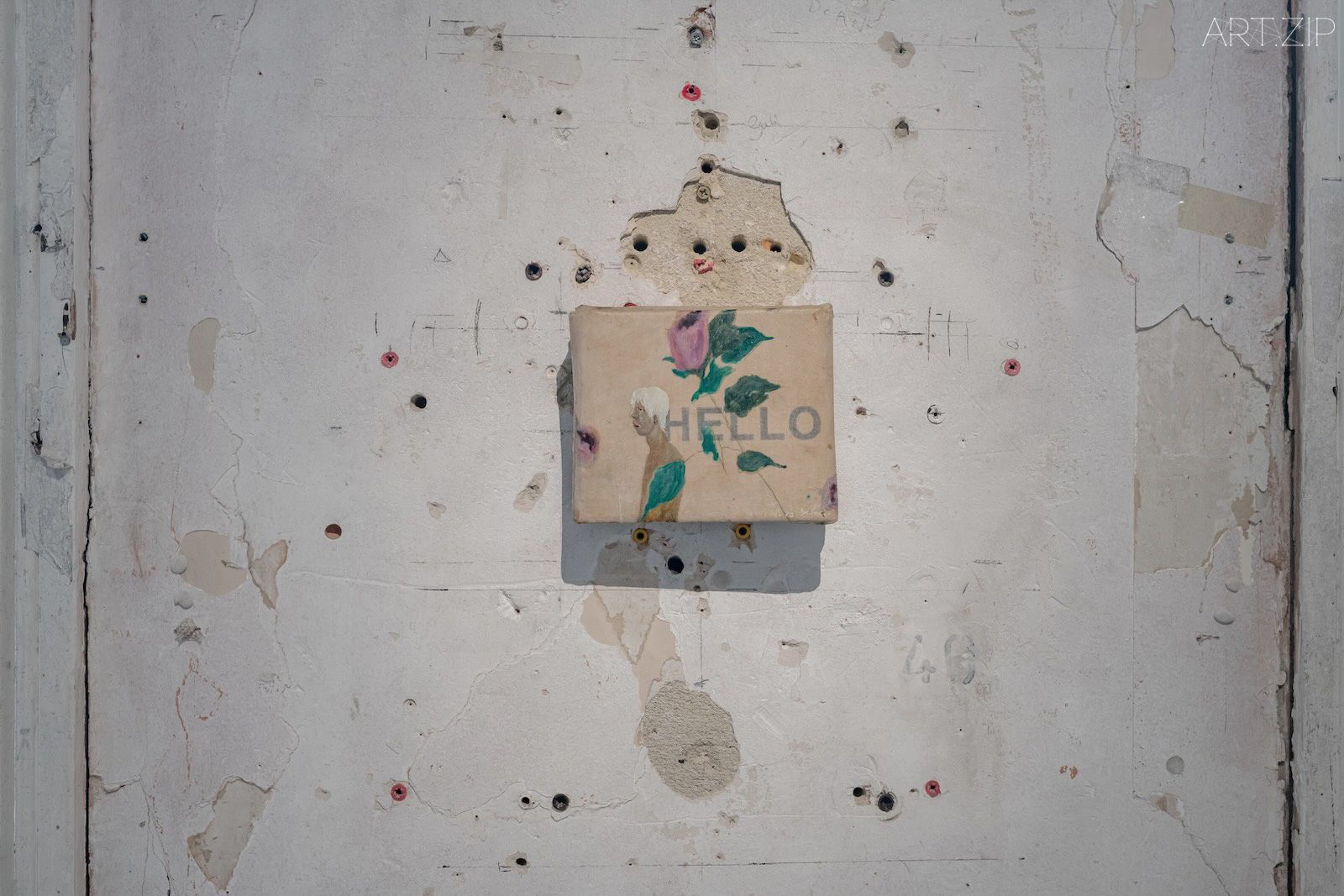
Curated by Iris Ziyao Li, How to Disappear Completely is a group exhibition presented at Safehouse 1, Peckham, London, a nineteenth century Victorian house that bears visible traces of wartime survival. The exhibition explores what remains perceptible when narrative no longer secures our encounter with the image. Participating artists include Massimo Bartolini, Emanuel de Carvalho, Ge Hui, Lisa Chang Lee, Hamish Pearch, Mohammed Sami, Andra Ursuța, Justin de Verteuil and Jaime Welsh.
Curator: Iris Ziyao Li
Assistant Curator: Zhaotong Wei
Organised by Iris Ziyao Li and Jordan Po Teng Chuang
More about Jetlag Projects:
Jetlag Projects is a curatorial platform founded by Iris Ziyao Li, dedicated to creating diverse and accessible ways of engaging with art. Moving across cities and contexts, Jetlag Projects transforms spaces into temporary sites of encounter, fostering a living dialogue between art, architecture, and the audience.
Published on 16th March 2026