
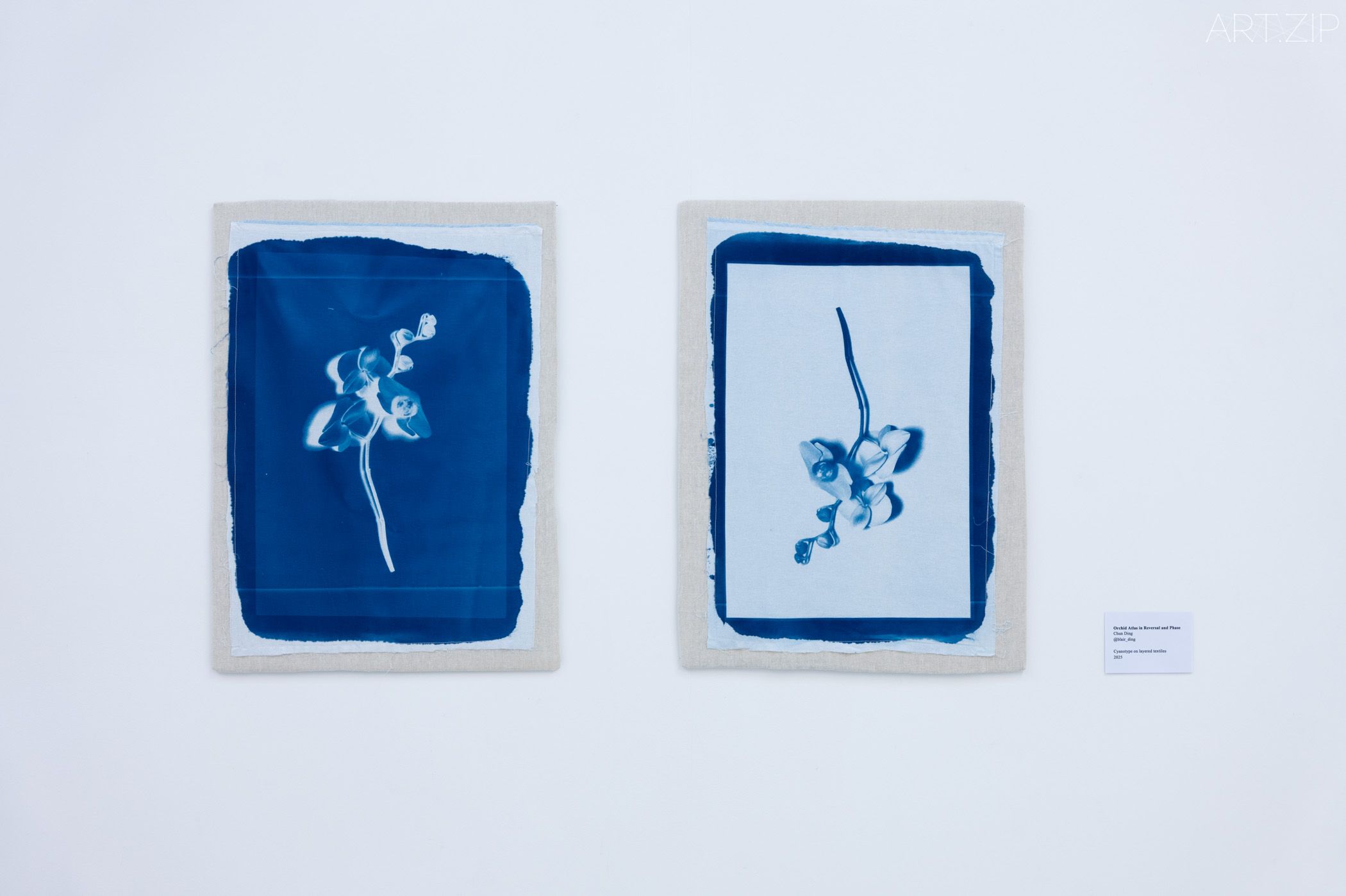
Through a materially attentive approach, visual artist Chun Ding explores how memory and transformation are inscribed upon both surface and skin. Her practice relieves the traditional photo processing technique of cyanotype of its technical symbolism to instead pursue a kind of sensory reflection, asking us to sit a while and consider how light permeates and transforms into texture. On the canvas, chemistry, sunlight and time interact with the residues of life, evade creases and enact meditative acts of recording; a leaf, a track, a filament of gesture impressed into the emulsion. Steered by experimental imaging, she then brings this structural framework into dialogue with emerging visual technologies, allowing disruptions, overlaps, and ghostings to surface. These gestures suggest a poetics of fragmentation, where precision coexists with dispersal.
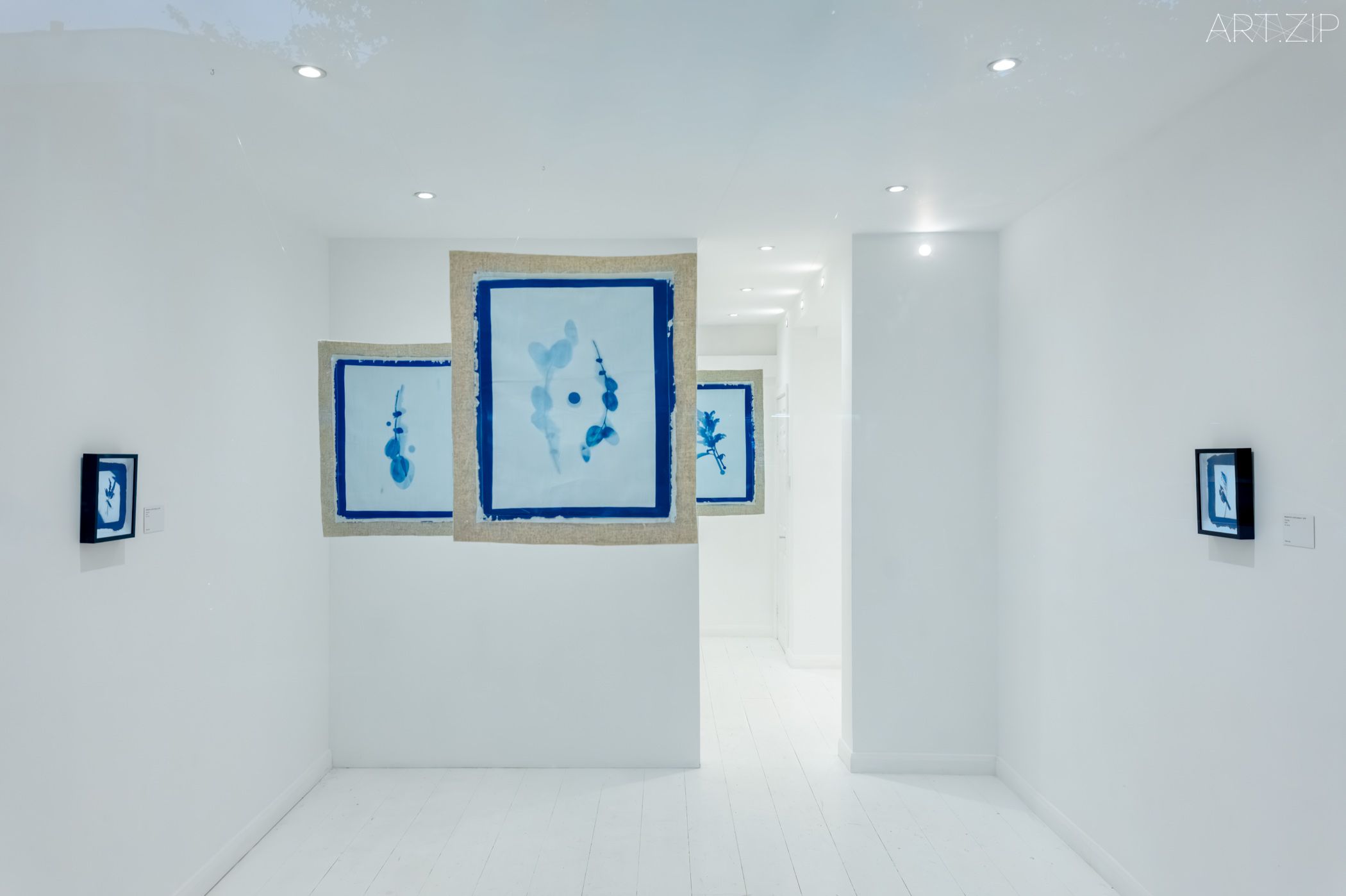
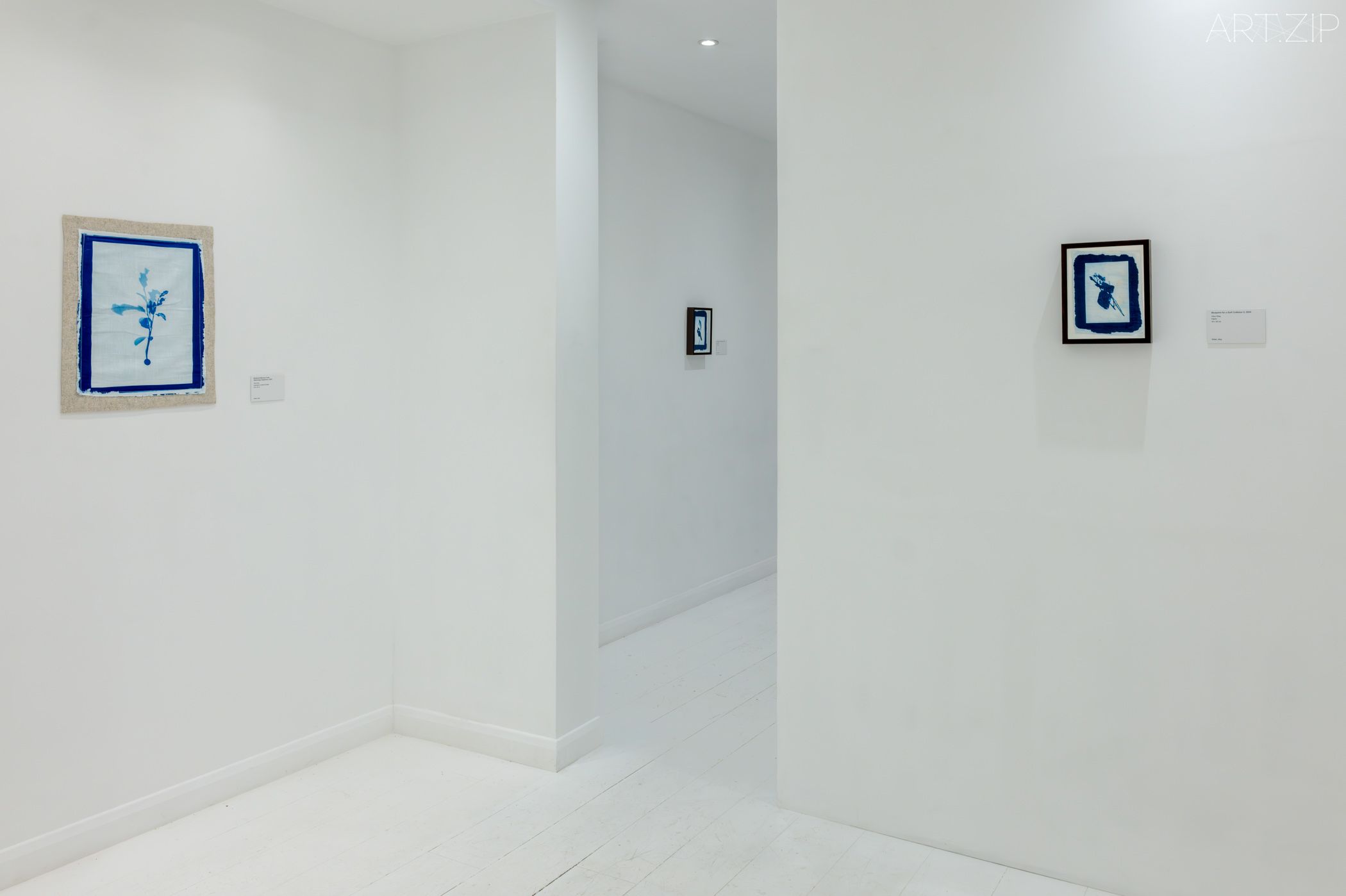
The Installation view of “Luminous Flesh Objects Between Presence and Absence” at the Purist Gallery, London. Photo by Jinming Liu.
By virtue of its processing and scientific intent, the cyanotype naturally focuses on a central form in a high-contrast negative space; Prussian Blue flowers and foliage are suspended in a field of cool, hazy white. In Asian aesthetic traditions, this empty space or ma is just as important as the subject. Not a mere backdrop but an active, open atmosphere, permitting the co-existence of contrasting entities and multiple possibilities.
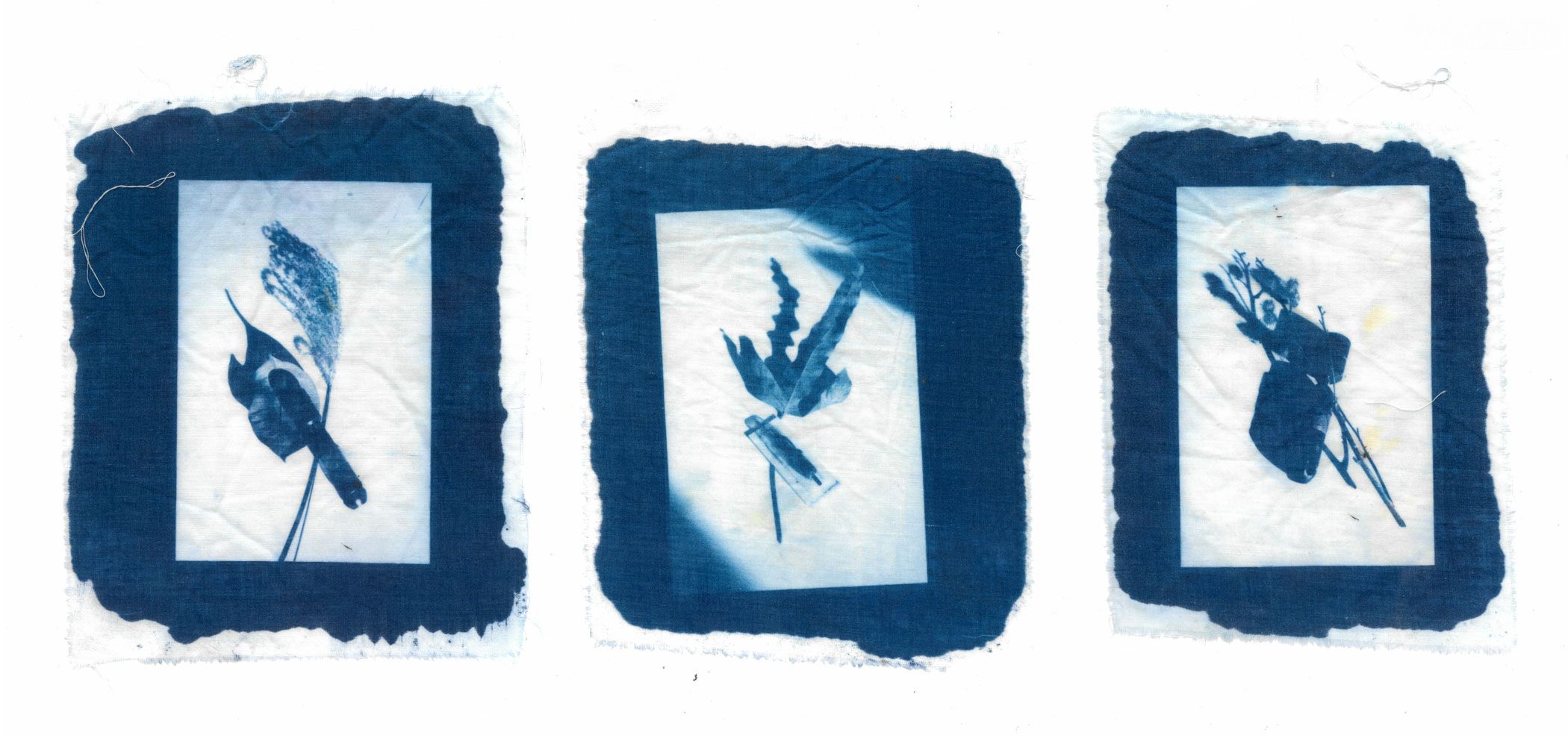
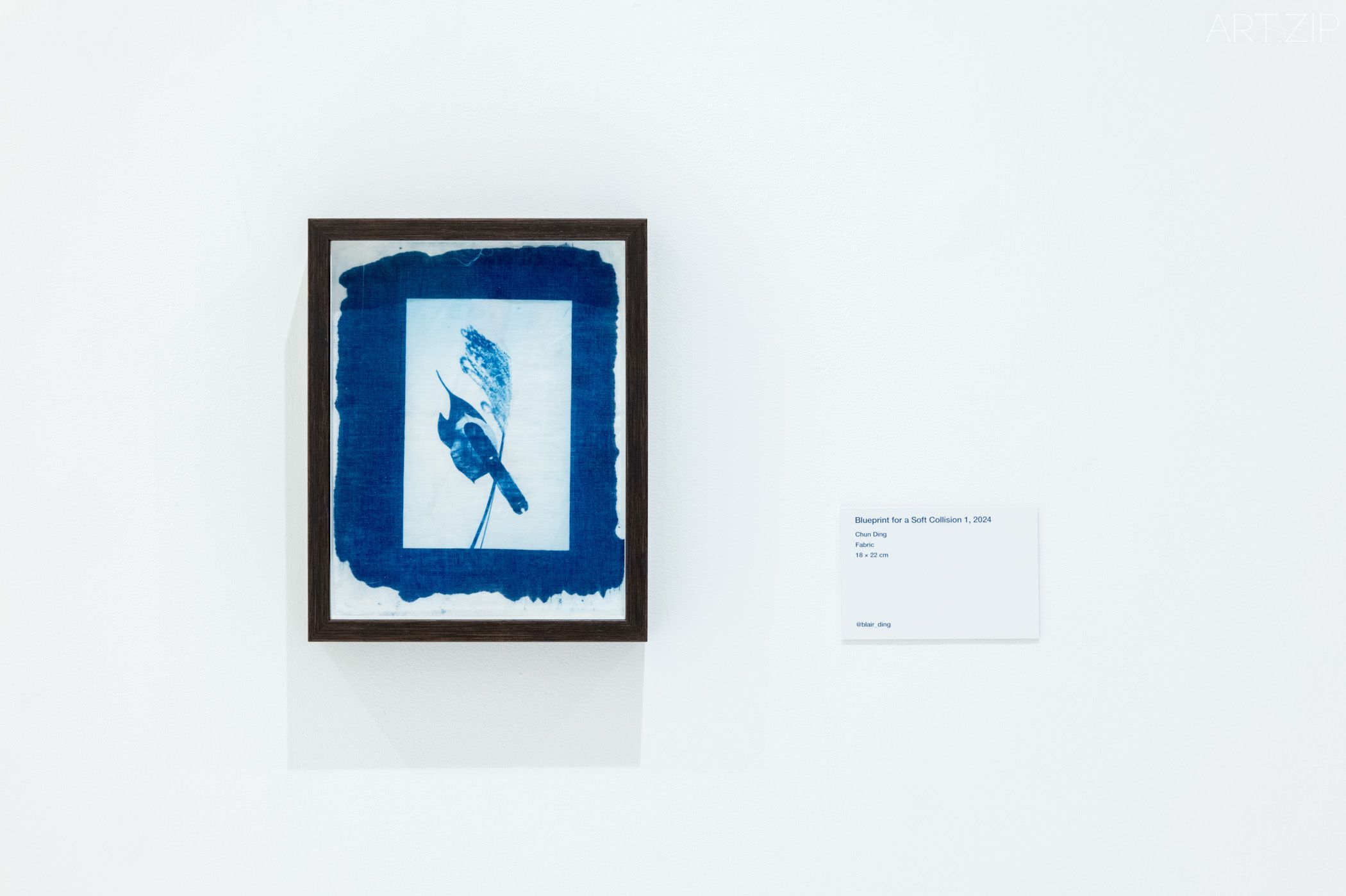
In the diptych Blueprint for a Soft Collision (2024) ––which featured in Ding’s recent solo exhibition ‘Luminous Flesh: Objects Between Presence and Absence; at Purist Gallery, London––she explores this potential via the quiet collision of mechanical precision and natural fragility. Totemic imprints such as that of a feather inclined toward the axis of a reed, and the bleached, translucent morphology of a leaf are disrupted by the deep silhouette of a tattoo needle. Its shape may not be immediately recognizable but its presence is nonetheless anomalous, rendering a site of quietness also one of entanglement between natural and artificial, surface and pressure, observation and touch.
Ding’s motivation for experimentation lies in an intrigue with the haptic nature of her process. Using fabric and photosensitive emulsion as well as layered digital interventions, she treats the skins of images as an interface between touch and memory. In every sense, her artworks are metaphors for imprint; that left by the object on the fabric, that left by the light on empty space, that left by technology on the image and that left by the image on our own eye. She evades the taxonomy of her floral and vegetal specimens––as was customary purpose of the process–– by allowing the patina of light to mostly reduce them to gesture.
視覺藝術家丁純以充滿物質敏感度的創作方式,探索記憶與嬗變如何銘刻於物表與肌膚之上。她的實踐將藍曬法這一傳統影像工藝從技術象徵中解放,轉而追尋一種感官的沉思,邀請我們駐足凝望光線如何滲透物質、蛻變為肌理的過程。在畫布上,化學試劑、陽光與時間與生命殘留物相互交融,繞過褶皺,完成一場場冥想式的記錄:一片落葉,一道軌跡,一縷姿態的印記,皆深嵌於感光乳劑之中。在實驗性成像的引導下,她讓這種結構框架與新興視覺技術展開對話,讓斷裂、疊印與重影自然浮現。這些手法構築起一種碎片化的詩學,使精確性與離散性得以共生。
基於其工藝特性與科學淵源,藍曬法天然聚焦於高對比度負空間中的主體形態:普魯士藍渲染的花葉懸浮於清冷朦朧的白色場域。在東方美學傳統中,這種虛空,或稱「間」,與實體具有同等重要的意義。它並非單純背景,而是一種流動開放的氛圍,允許多元實體與可能性共存。
在雙聯畫《Blueprint for a Soft Collision》(2024)中,丁純通過機械精度與自然脆弱的微妙碰撞來探索這種潛能。這幅作品曾亮相於她在倫敦Purist畫廊的個展「Luminous Flesh: Objects Between Presence and Absence」。羽毛倒向蘆葦軸的圖騰印記,葉片漂白透明的形態,皆被紋身針深色的剪影所打破。雖未必能即刻辨識其形,但它的存在卻自成異質,使靜謐之境化為自然與人工、表面與壓力、觀視與觸感交織的場域。
丁純的實驗動機源於對創作過程觸覺特質的迷戀。她以織物與感光乳劑為媒,輔以分層的數位干預,將圖像的「肌膚」視為觸摸與記憶的交接面。從任何意義上說,她的作品都是印記的隱喻:物體留於織物的印記,光線存於虛空的印記,技術刻於圖像的印記,以及圖像投映於我們視網膜的印記。
她摒棄植物標本分類學的傳統路徑,任時光的包漿將物象淡化為姿態,這些常顯幽微而精緻的殘像,使物之精氣躍然現於記憶之幕。
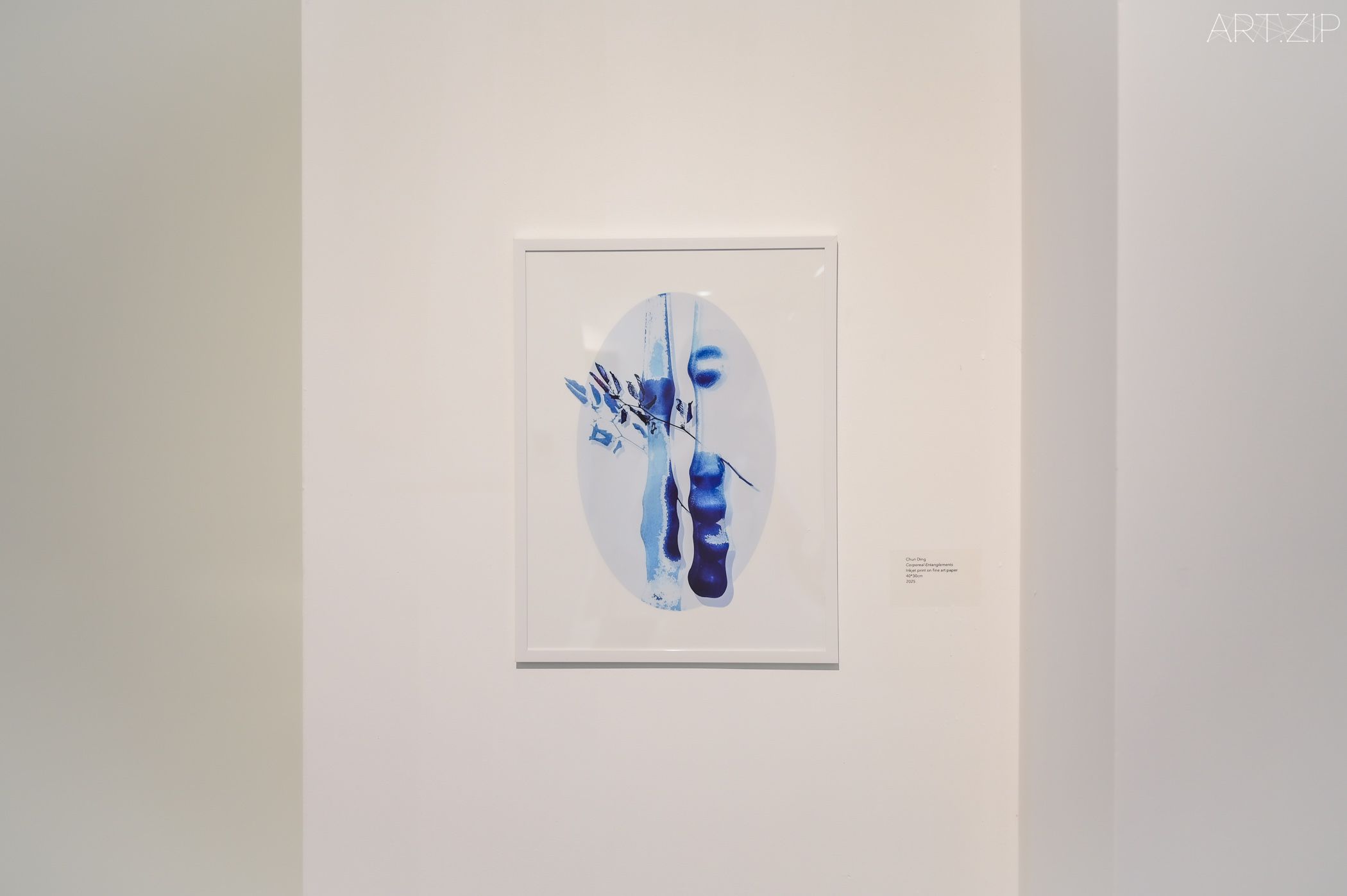
The Installation view of “Shall We Talk” at the Handbag Factory, London.Photo by Jinming Liu. Courtesy of the artist.
Text By 撰文 x Millen Brown-Ewens
Published on 1st December 2025