
Qishan Li works across moving image, installations, and photography to position the body not as a static subject, but as a dynamic interface between memory, form, matter, private experience and public inscription. Throughout her practice, the body is never singular. It is a site of negotiation shaped by societal expectations, yet Qishan Li continuously resists the need to adhere to it.
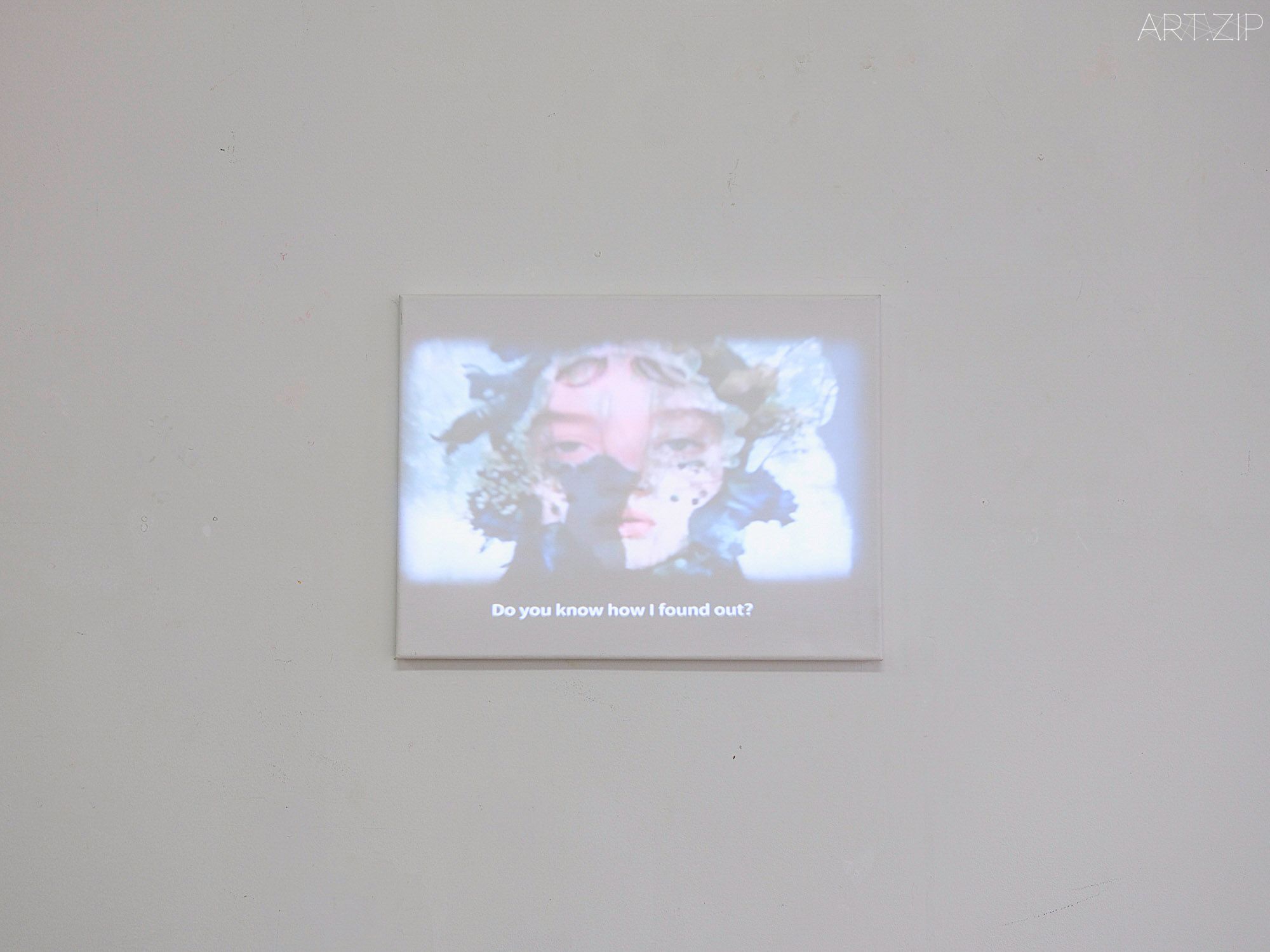
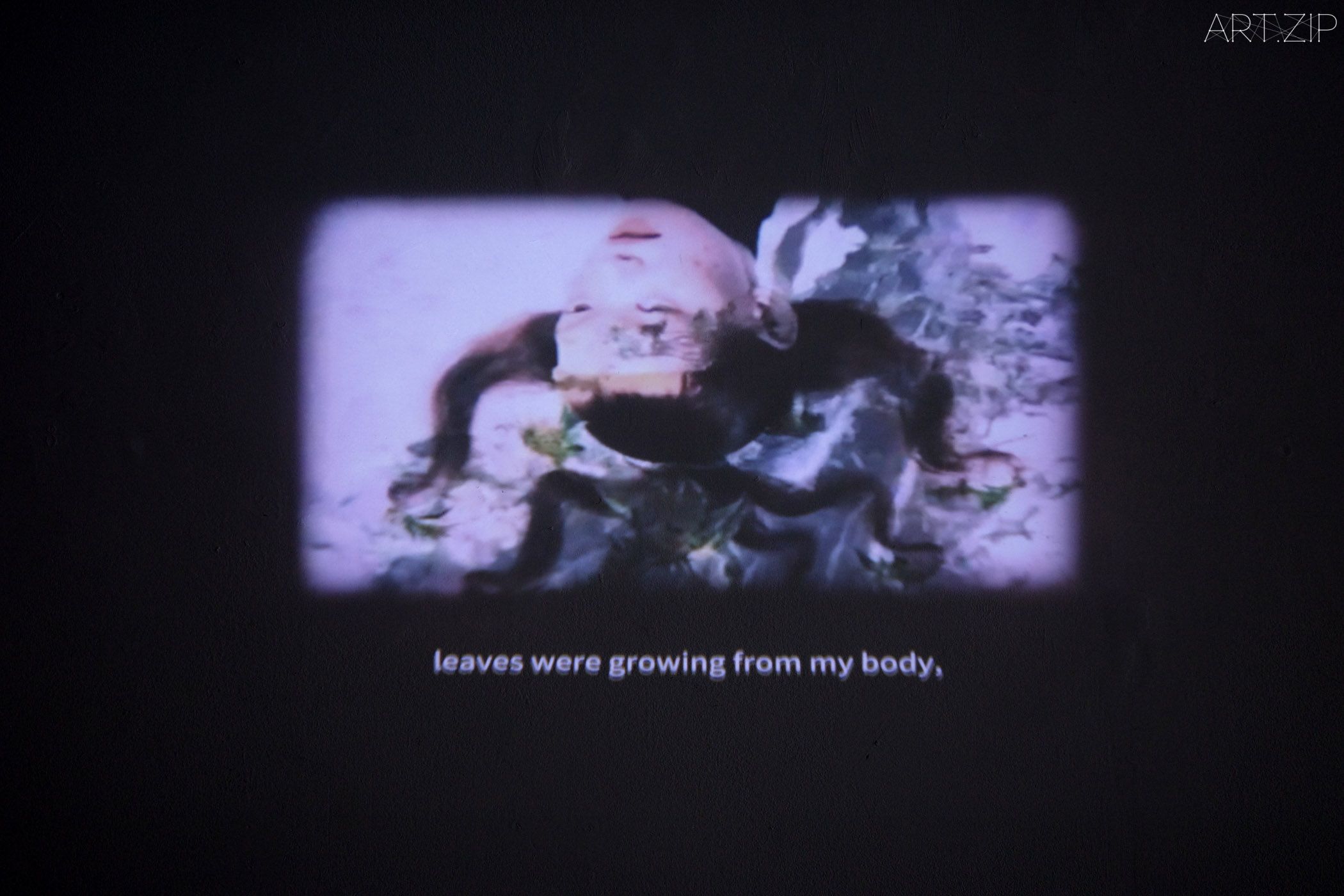
What naturally emerges as a consistent thread is Li’s insistence on reorientation of attitudes, of power, of perception in and of itself. In Handstand, this is seen as literal. The inverted body becomes both a conceptual and visual device, collapsing distinctions between human and more-than-human systems. Limbs echo roots; the torso becomes an axis point. Li’s gesture is simple, but the implications are expansive: to invert the body is to disrupt inherited hierarchies of vision. In a moment where social and political orientations feel unstable, Li proposes recalibration through embodiment, which suggests that clarity might not emerge through looking harder, but from looking differently.
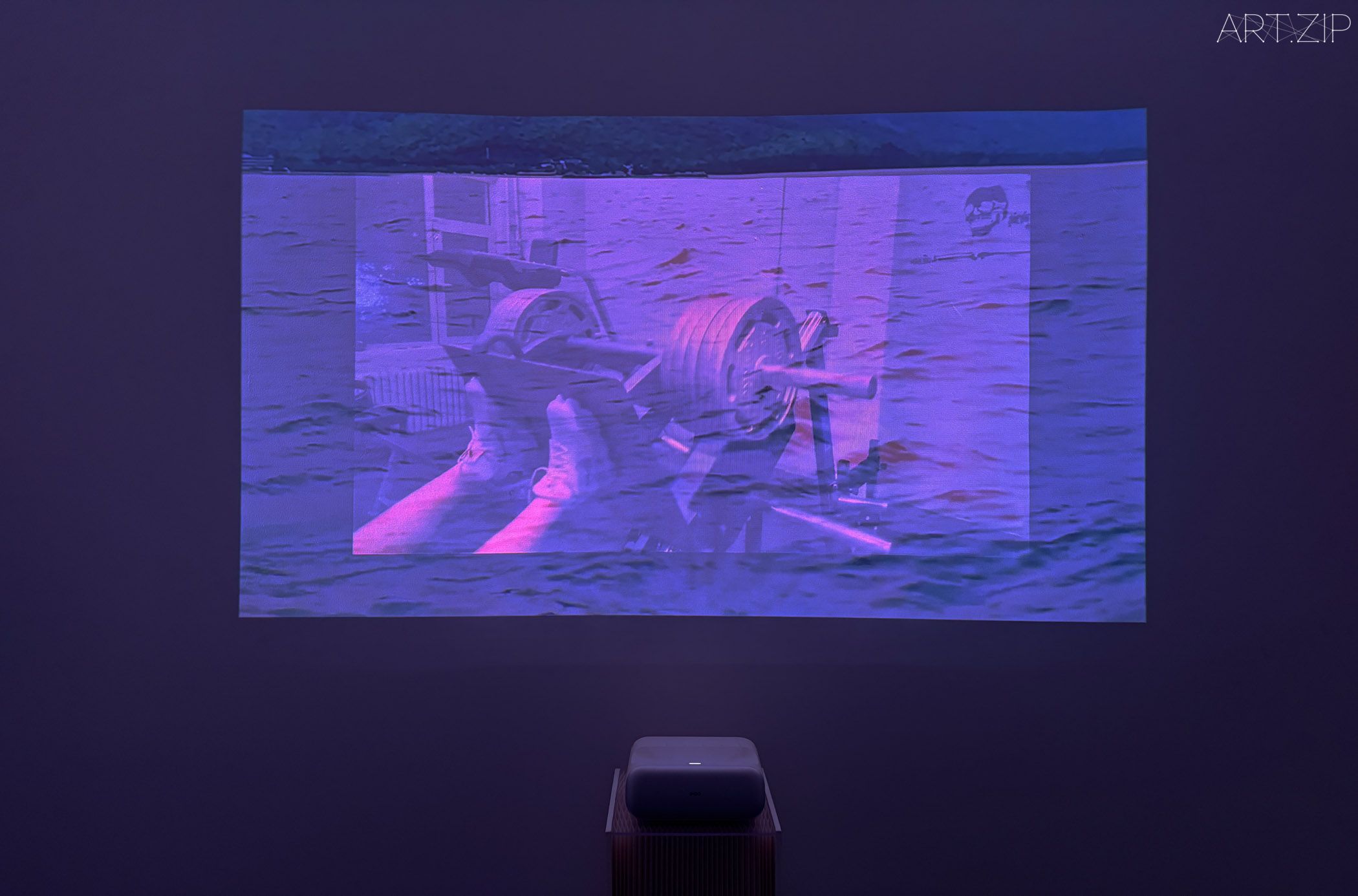
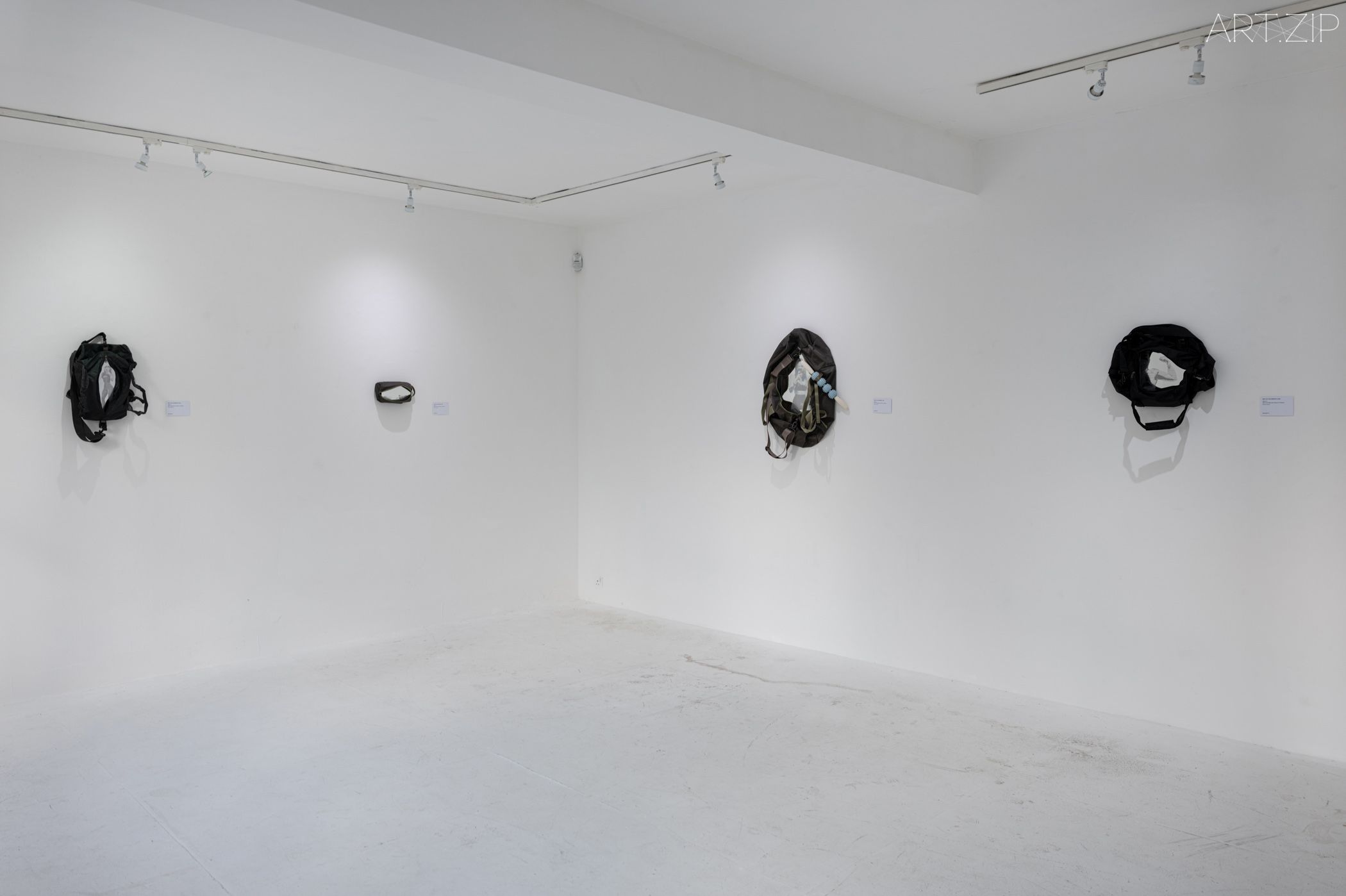
Until the Sea Turns Blue, 2023. Installation view at Sol de Paris Art Gallery. Courtesy of the artist.
Li’s concern with orientation branches out into her engagement with gendered space. Works such as Until the Sea Turns Blue and Self in the Mirror situate the gym as a charged site of visibility, where the female body is both self-authored and externally regulated. This is where Li aligns with a lineage of feminist critique from Suzanne Lacy to contemporary participatory practices, yet her approach lies distinctly intimate. She works through subtle disruptions such as poetic text, fragmented imagery, and altered reflective surfaces, rather than staging overt confrontation. Traditionally, the mirror has been a tool for self-surveillance, and in Li’s context, this becomes unstable, coded, meditated and resistant. The act of looking, Li reframes as something which can be reclaimed rather than simply endured.
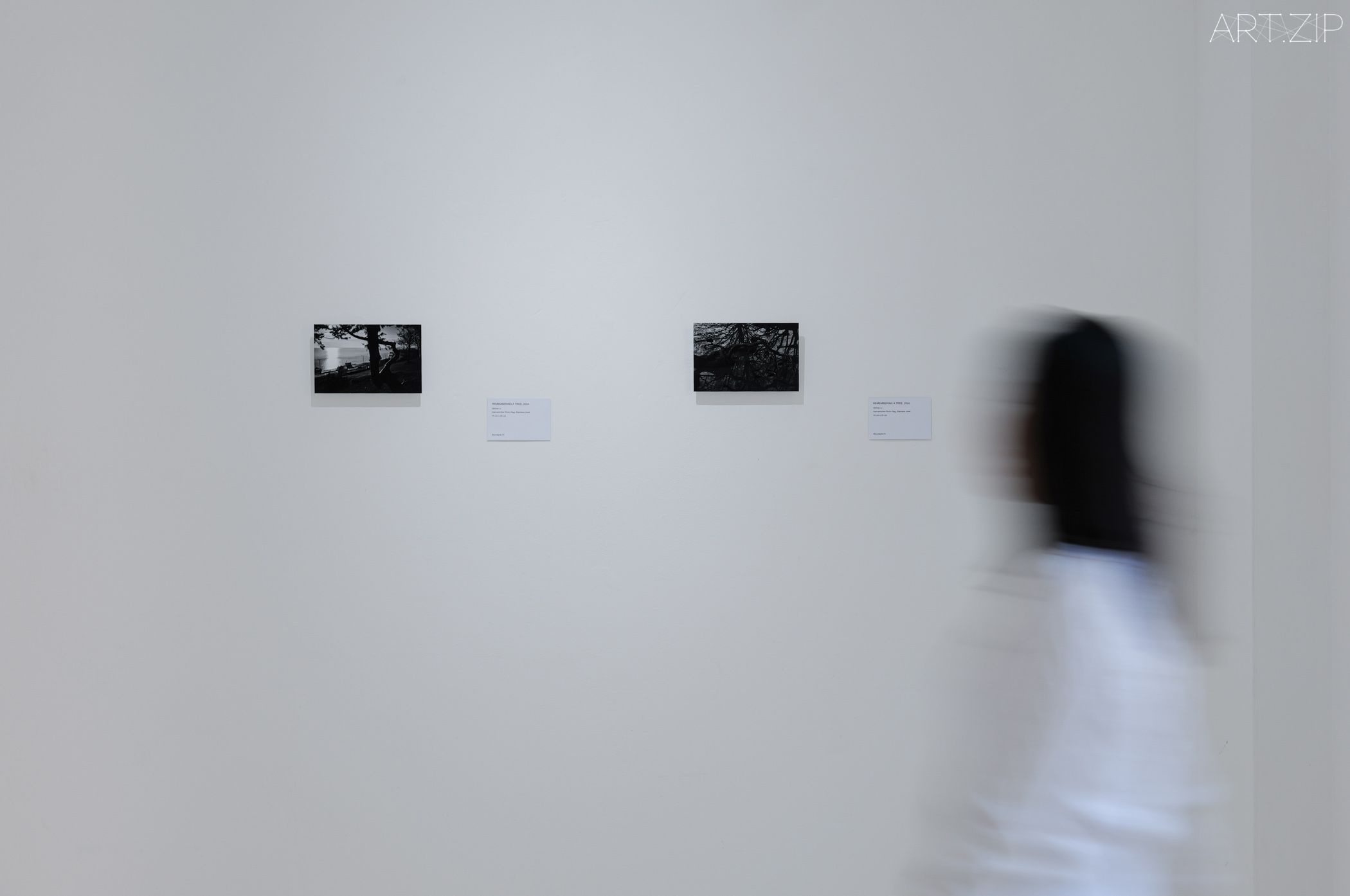
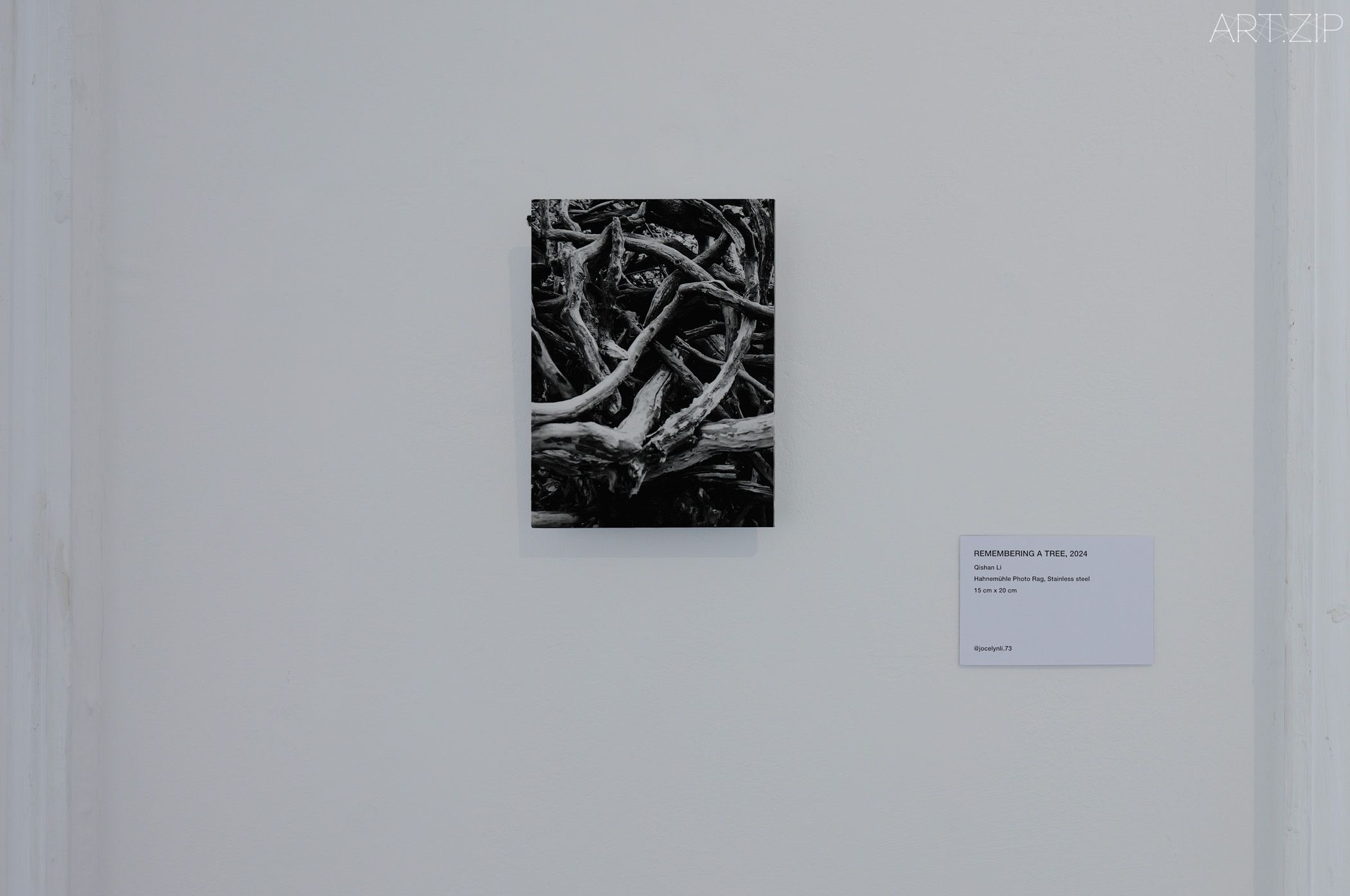
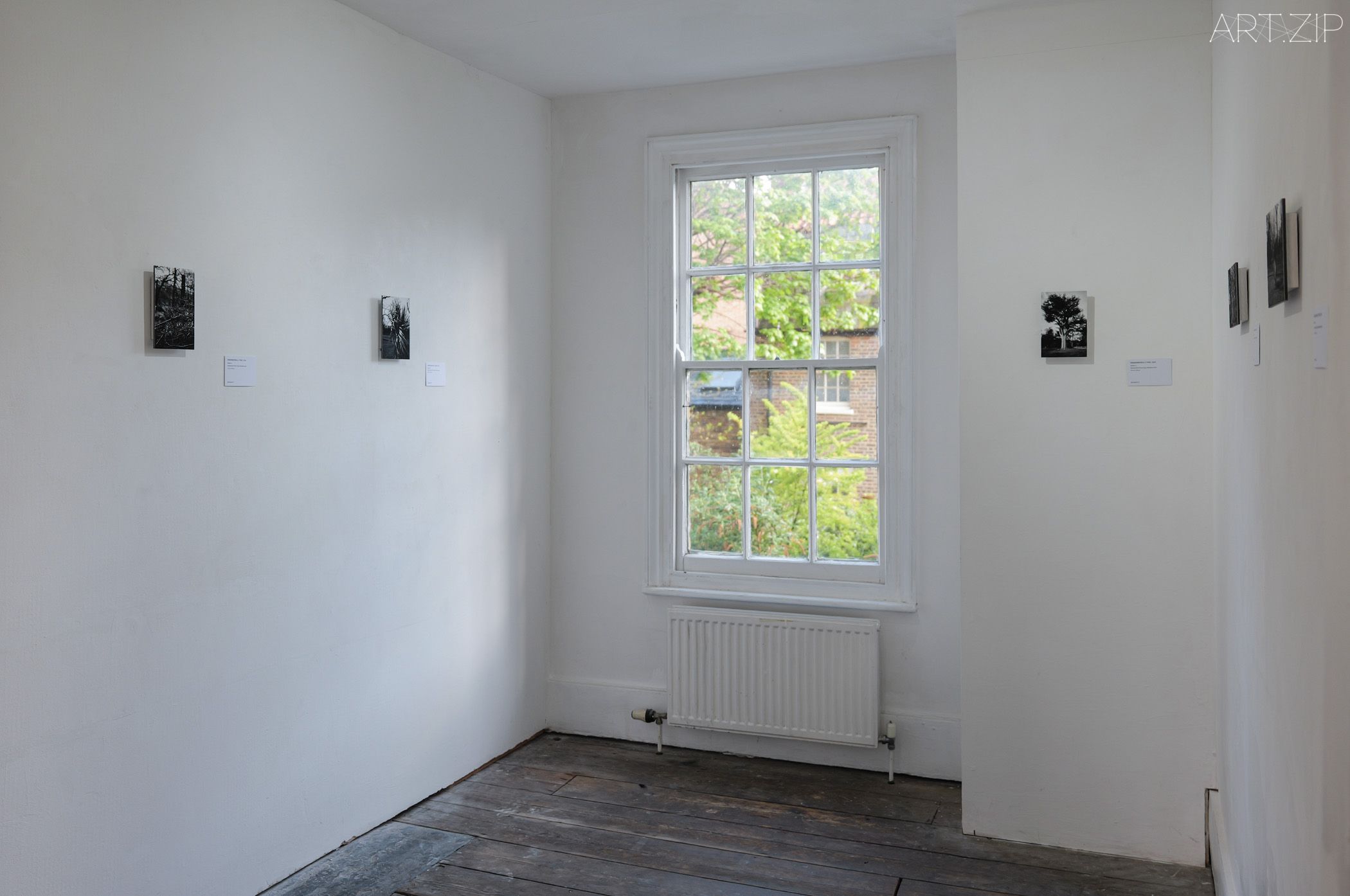
Remembering a Tree, 2024. Installation view at the Gallery 46. Courtesy of the artist.
Materiality plays a crucial role in this negotiation. Li’s How to Bind a Stone collection is where this comes to life; the use of rope-binding techniques introduces a tactile language of constraint and tension. Stones, traditionally symbols of permanence, are rendered vulnerable, bound within gestures that evoke both care and control. Li’s work sits in a subtle and quiet dialogue with feminist discourses around intimacy and power, exposing the subtle violences embedded within romanticised narratives of love. The process of binding becomes both a metaphor and a method as a way of making the invisible structures that shape emotional life.
Besides these explorations of the body under pressure, Li turns to nature as a parallel system of memory and time. Remembering a Tree redirects the focus outward, yet remains deeply connected to her central concerns. Textures of the tree bark become archival patterns and surfaces, echoing Claude Lévi-Strauss’s notion that objects are inseparable from cultural meaning. The body is no longer the only signature; instead, Li expands her inquiry to consider how environments can also uphold, process, and transmit memory.
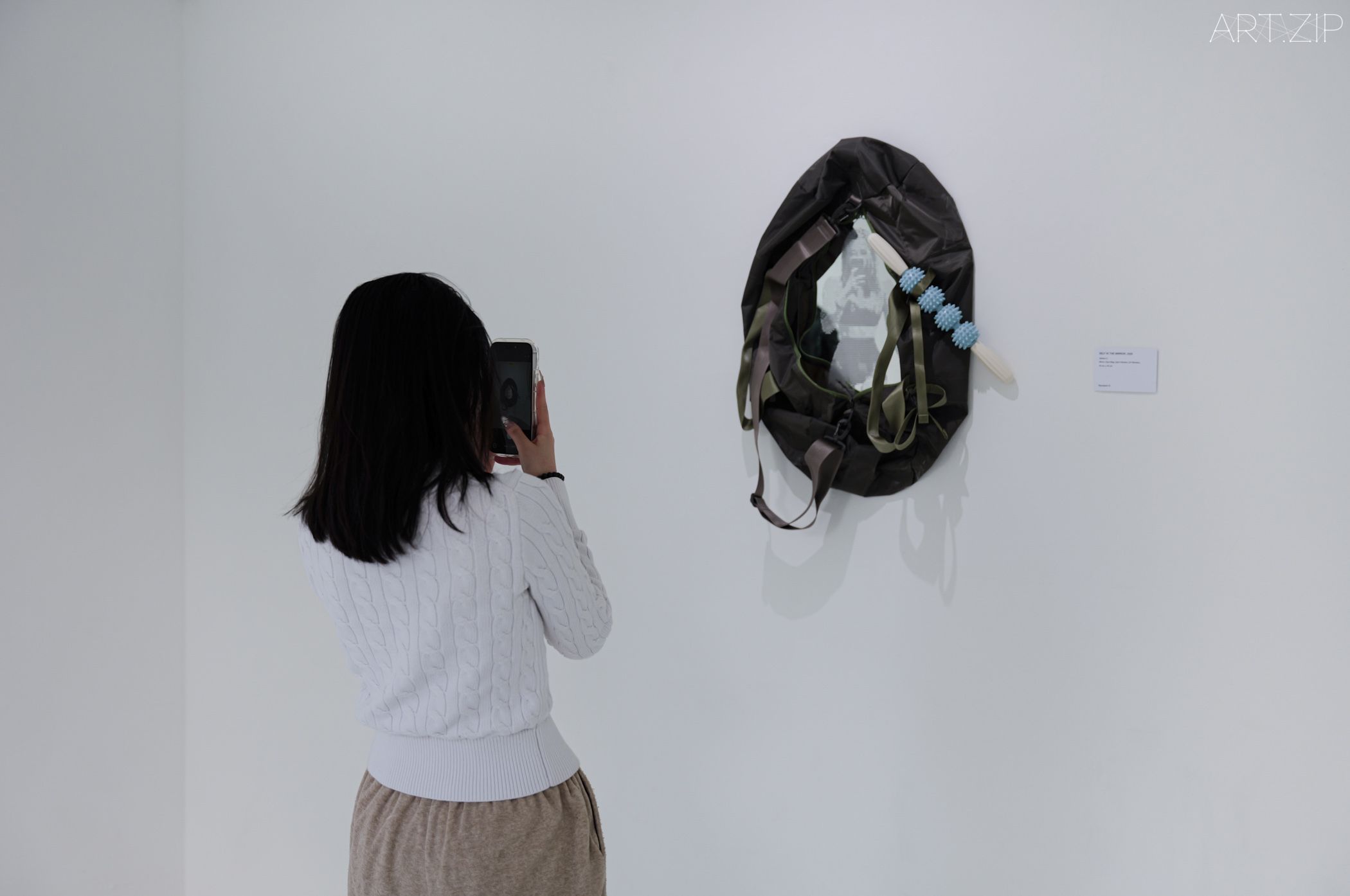
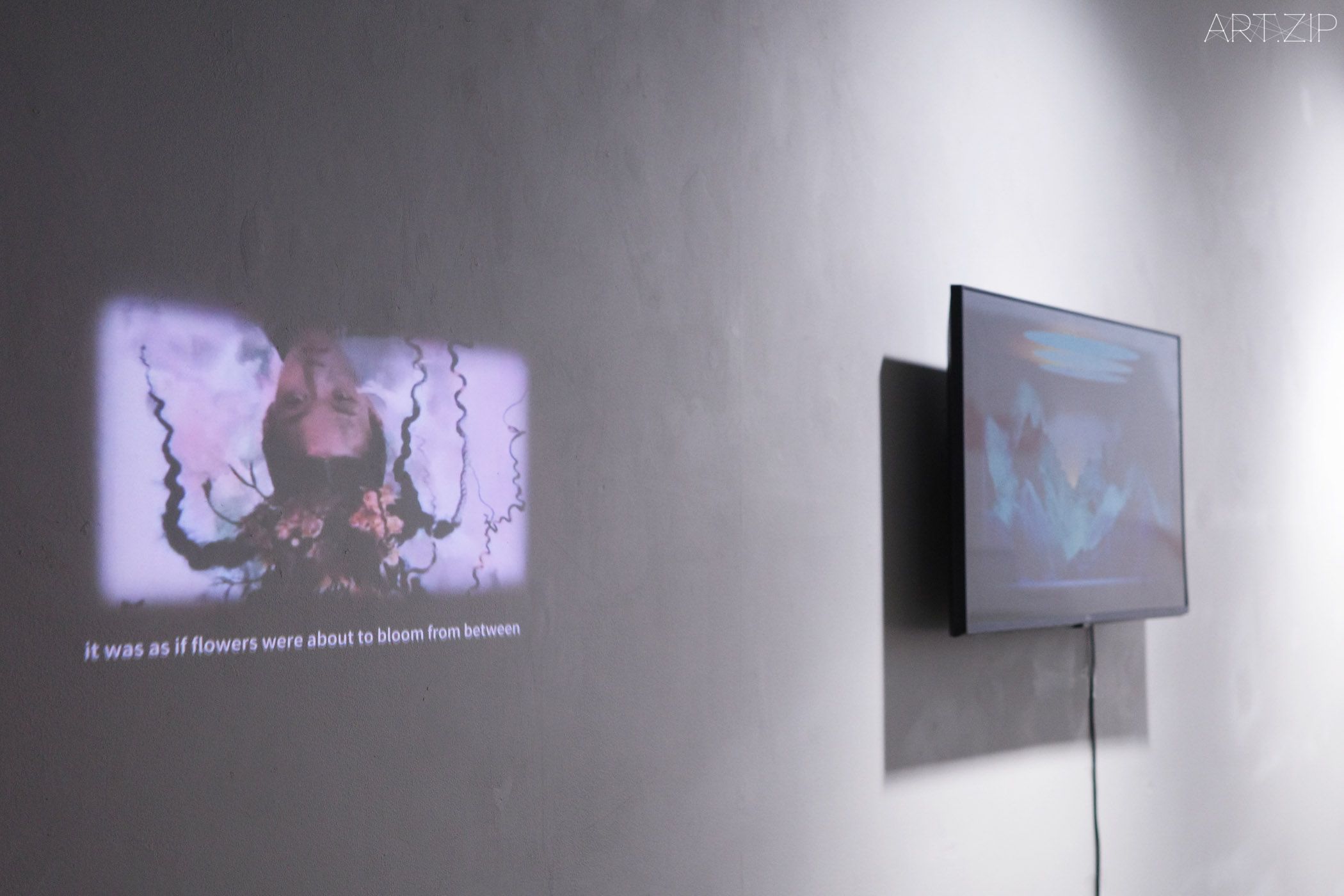
Her another body of work, Y3, extends its enquiry into the temporal conditions of contemporary life. Sleep, often imagined as a private refuge, is reframed as another contested terrain, shaped by the logics of late capitalism. The body becomes an exhausted, spectral, caught between productivity and rest. Her earlier works sought to reorient perception. Y3 reveals the limits of that agency within systems that commodify even our most intimate states.
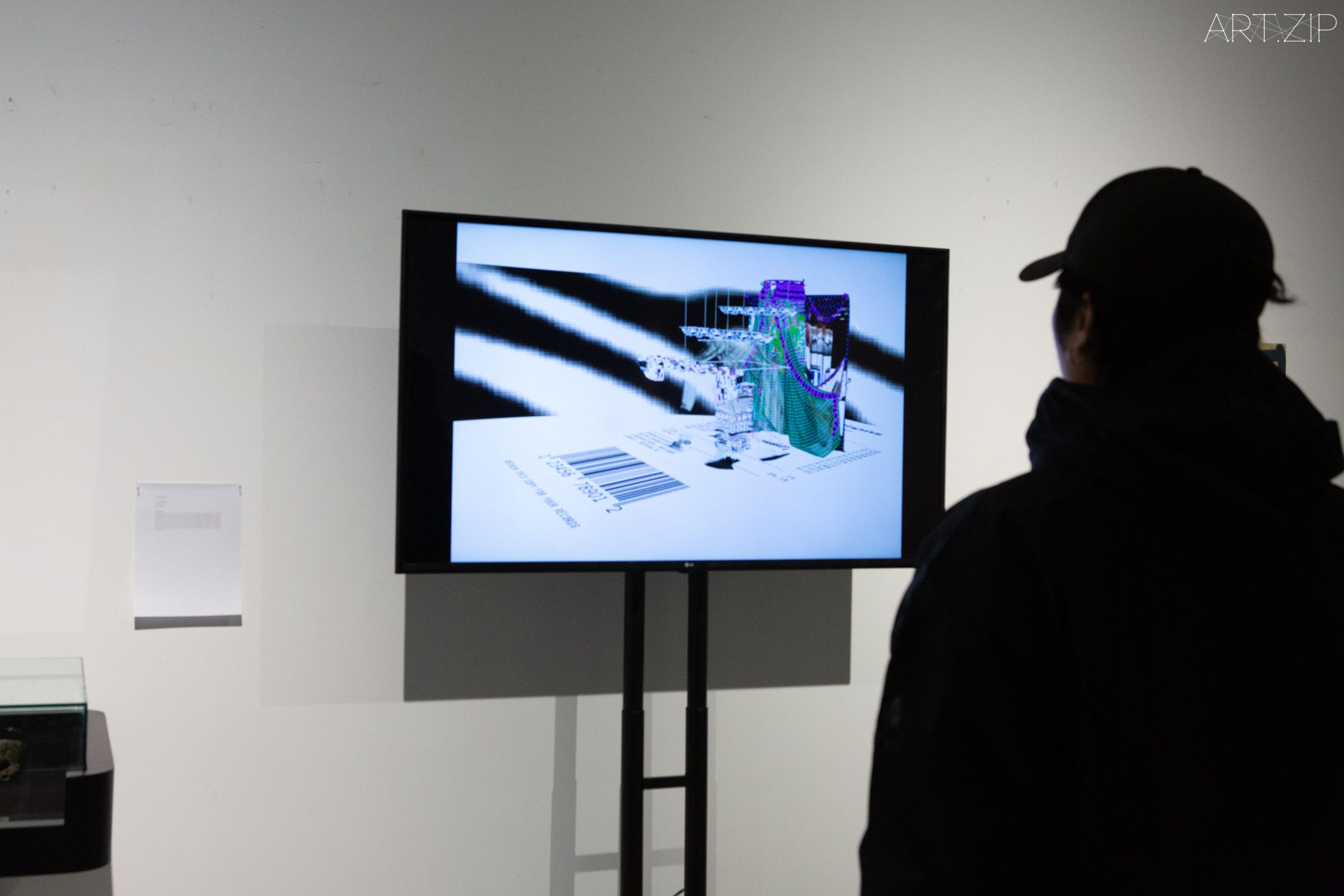
Y3, 2024. Installation view at the Gallery 46. Courtesy of the artist.
It’s clear that Li does not claim to offer a resolution; she instead constructs spaces, visuals, materials and conceptual works where the body can be reconsidered in relation to the forces that shape it. Her work goes beyond the spectacle; she is always opting for a slower, more intentional mode of engagement instead. She contributes to a wider contextual shift within contemporary art: one that moves away from representation and more towards relation, asking not only what a body is, but how it is continuously made.
李其珊的創作橫跨動態影像、裝置與攝影。她並沒有將身體視為一個靜態的題材,而是將其作為一個動態的界面,游走於記憶、形式、物質、私人經驗與公共銘寫之間。在她的實踐中,身體從來不是單一的。它是由社會期待所塑造的一個協商場所,而李其珊持續抗拒屈從於這種期待的必要性。
貫穿其作品的一條自然線索,是李其珊對態度、權力以及感知本身進行重新定向的堅持。在《Handstand》中,這一點以一種直接的方式被呈現。倒置的身體同時成為概念與視覺的裝置,消解了人與超人類系統之間的分野。四肢如同根莖,軀幹化作軸心點。李其珊的姿態看似簡單,其意涵卻極為廣闊。倒轉身體,即是顛覆繼承而來的視覺等級。在當下社會與政治取向皆顯不穩定的時刻,李其珊提出透過具身化來進行重新校準。這意味著,清晰或許並非來自更用力地觀看,而是來自換一種方式去看。
李其珊對「取向」的關注進一步延伸至她對性別化空間的介入。在《Until the Sea Turns Blue》和《Self in the Mirror》等作品中,健身房被呈現為一個充滿張力的可見性場域。女性的身體在此既是自我書寫的,也是被外部規訓的。在這一點上,李其珊與從Suzanne Lacy到當代參與式實踐的女性主義批判譜系形成呼應,然而她的方式卻帶有鮮明的私密性。她通過詩意的文本、破碎的影像以及被改寫的反射表面來進行微妙的擾動,而非採取直接對抗的姿態。鏡子在傳統上是自我監視的工具,而在李其珊的語境中,它變得不穩定,被編碼,被中介,且具有抵抗性。觀看這一行為,被她重新定義為一種可以被收回,而非僅僅被承受的經驗。
物質性在這一協商中扮演了關鍵角色。李其珊的《How to Bind a Stone》系列作品將這一點生動呈現。繩縛技法的使用引入了一種關於約束與張力的觸覺語言。石頭,傳統上作為恆久的象徵,在此被呈現為脆弱之物,被包裹在既像呵護又像控制的姿態之中。李其珊的作品與圍繞親密關係與權力的女性主義論述形成一種微妙而沉靜的對話,揭示了那些嵌刻在浪漫化愛情敘事中的隱微暴力。縛石的過程既是隱喻,也是方法——一種將塑造情感生活的隱形結構變得可見的方式。
除了這些對身體處於壓力之下的探索,李其珊也將自然作為記憶與時間的平行系統加以觀照。《Remembering a Tree》將焦點向外轉移,卻仍與她最核心的關切緊密相連。樹皮的紋理成為如檔案般的圖案與表面,呼應著 Claude Lévi-Strauss 關於物與文化之間不可分割的觀點。身體不再是唯一的印記。李其珊將她的追問擴展至思考環境如何亦能承載、處理並傳遞記憶。
她的另一組作品《Y3》則將探究延伸至當代生活的時間性境況。睡眠,常被想像為私密的避難所,在此卻被重新定義為另一處被爭奪的領域,並由晚期資本主義的邏輯所塑造。身體成為一種疲憊的、幽靈般的存有,陷於生產與休息的夾縫之中。她早期的作品致力於重新調整感知,而《Y3》則揭示了,在那些將我們最私密狀態也加以商品化的系統之中,主體性本身已然抵達其運作的邊界。
顯而易見,李其珊並不聲稱要提供某種解決之道。她所構建的是一種由空間、視覺、物質與概念交織而成的場域,在其中,身體得以被重新審視,並直面那些塑造它的力量。她的創作超越了奇觀,始終選擇一種更緩慢、更具意圖性的參與方式。她為當代藝術中一種更廣泛的語境轉向做出了貢獻——這一轉向從再現走向關係,不再只問身體是什麼,而是追問它如何被不斷生成。
Text by Seetal Solanki
Published on 25th April 2026