To stand before a portrait by Jan van Eyck is to be reminded of how much a human face can reveal. Bloodshot eyes, emerging stubble, an uneven eyebrow: six centuries after they were painted, such details remain astonishingly vivid. Now, for the first time, the National Gallery in London has brought together all nine of his surviving portrait paintings, offering a rare opportunity to encounter the individuals behind these extraordinary works.
Van Eyck: The Portraits (21 November 2026 – 11 April 2027) also includes the Netherlandish painter’s only surviving drawing. With around twenty paintings by Van Eyck surviving today, this is an exceptional gathering, and one unlikely to be repeated soon.
Van Eyck’s place in the history of Northern Renaissance painting is beyond dispute. While earlier portraits often placed greater emphasis on status, elegance and dynastic identity, his paintings brought an extraordinary degree of attention to individual likeness. He recorded the features that made one face different from another, including those a more flattering portrait might have concealed.
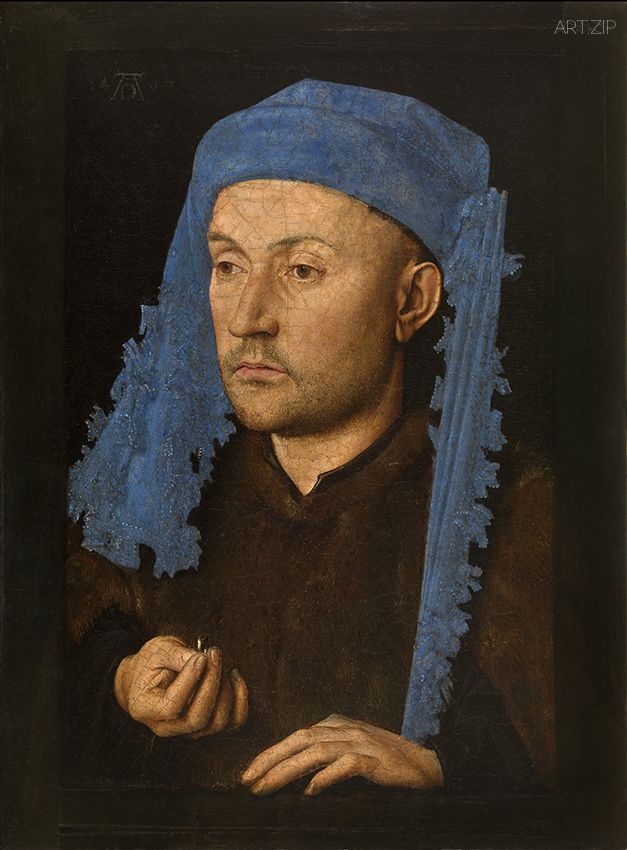
The exhibition begins with Portrait of a Man (Self Portrait?) (1433), displayed alone beneath a spotlight. Often overshadowed by the National Gallery’s more famous Arnolfini Portrait, it finally takes centre stage. The sitter wears an elaborate crimson turban, its folds rising above a narrow, rather severe face. His eyes are slightly bloodshot, his chin covered with short stubble. He looks straight at us, with an expression that seems both watchful and faintly challenging. The frame bears Van Eyck’s motto, Als ich kan (As well as I can), a phrase that also plays on his name. It sounds modest enough, yet carries a more confident suggestion: perhaps no one else could do quite what he could. Whether the painting is a self-portrait remains uncertain. What is harder to doubt is the force of that gaze.
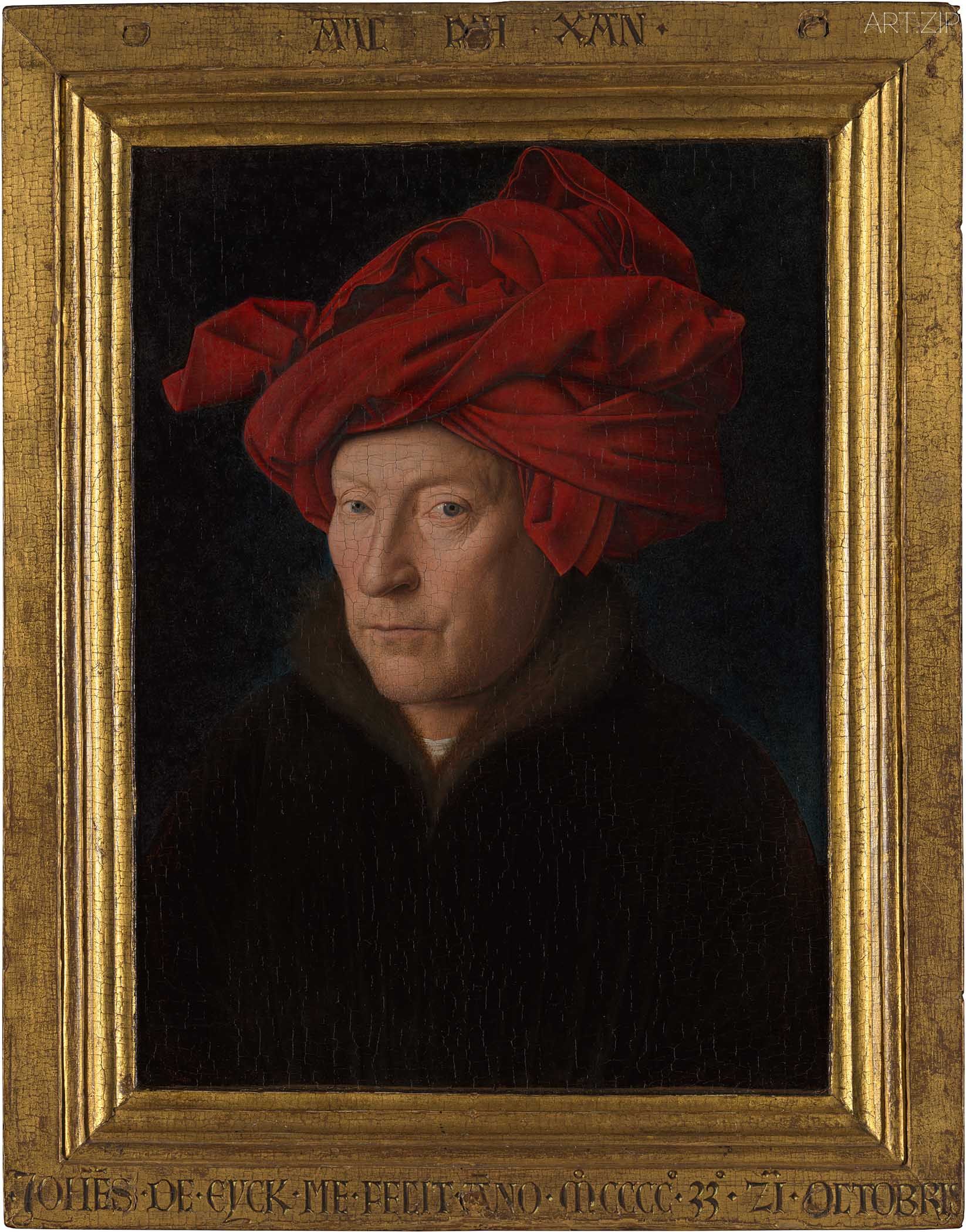
Jan van Eyck. Portrait of a Man (Self Portrait?) 1433 oil on wood 33.1 x 25.9cm (including original frame) © The National Gallery, London
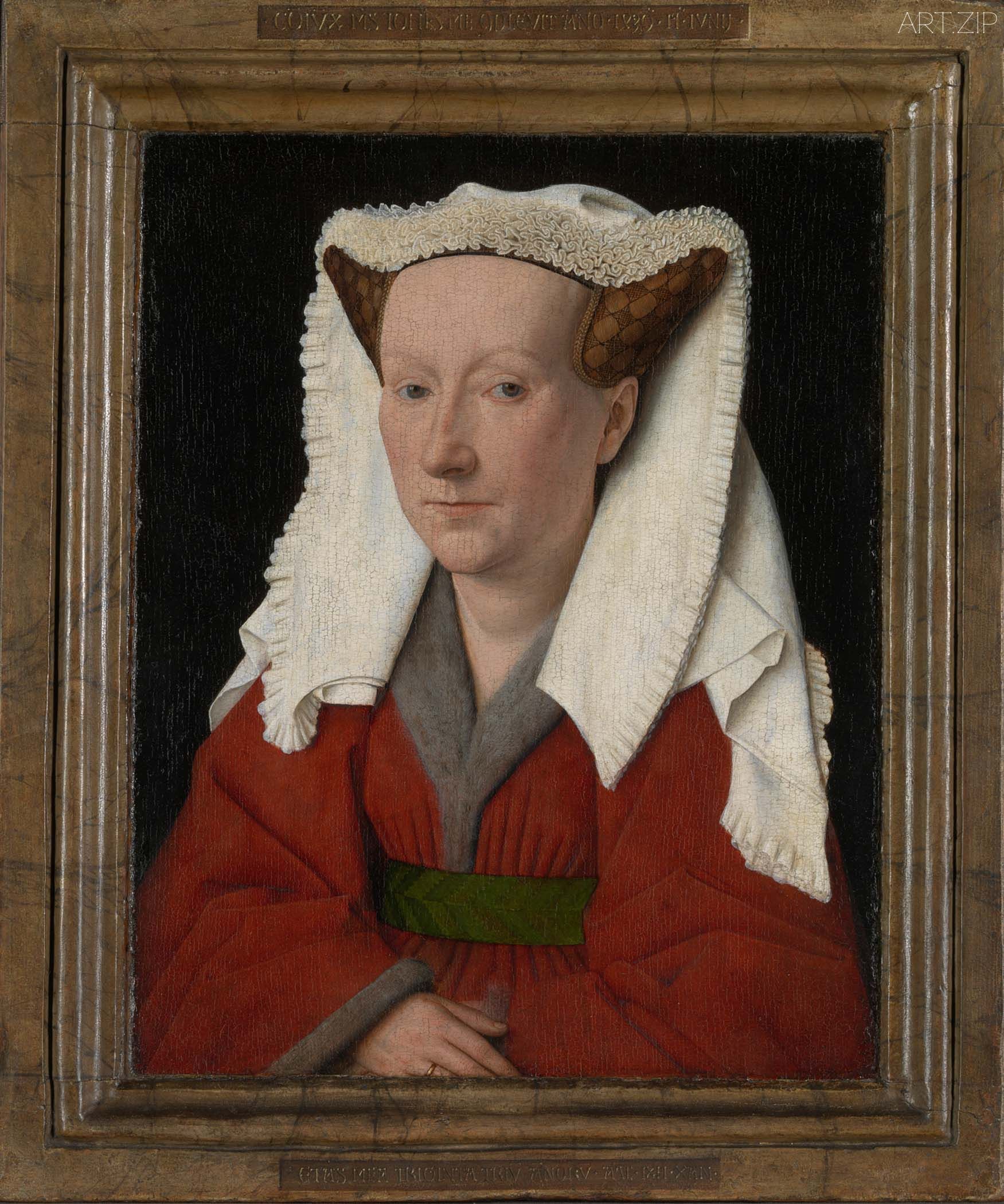
Margaret van Eyck, painted by her husband in 1439, looks equally self-possessed. Her expression is composed, perhaps a little stern, and Van Eyck has recorded even a small gap in her left eyebrow. There is nothing particularly flattering about the portrait, nor does there seem to be any attempt to soften her features. Still, she has a quiet presence that makes it difficult to look away. It is also the first dated, identifiable portrait of a woman outside the aristocracy.
The inscription on her frame is stranger still. Rather than simply stating that Van Eyck painted her portrait, it speaks as though Margaret herself were addressing us. Her husband Johannes, it declares, “completed me” on 15 June 1439, when she was 33. The wording seems to give the sitter a voice of her own, although it is the painter who has written it.
Jan van Eyck. Portrait of Margaret van Eyck, 1439 Oil on wood 41.5 × 35 cm (including original frame) Musea Brugge – Groeningemuseum, Bruges (Inv. OOOOGRO 0162.I) © Musea Brugge. Photo: The National Gallery, London
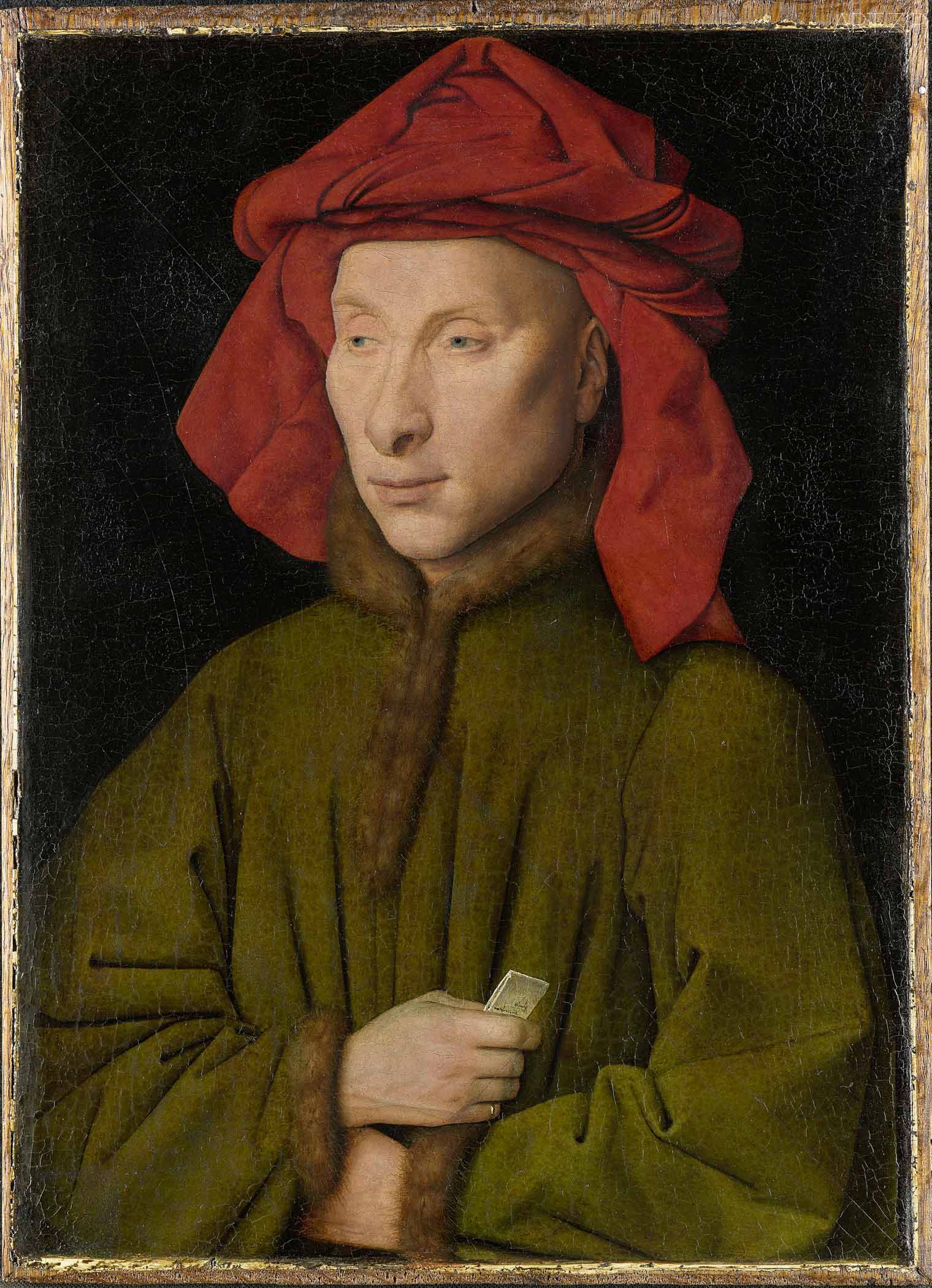
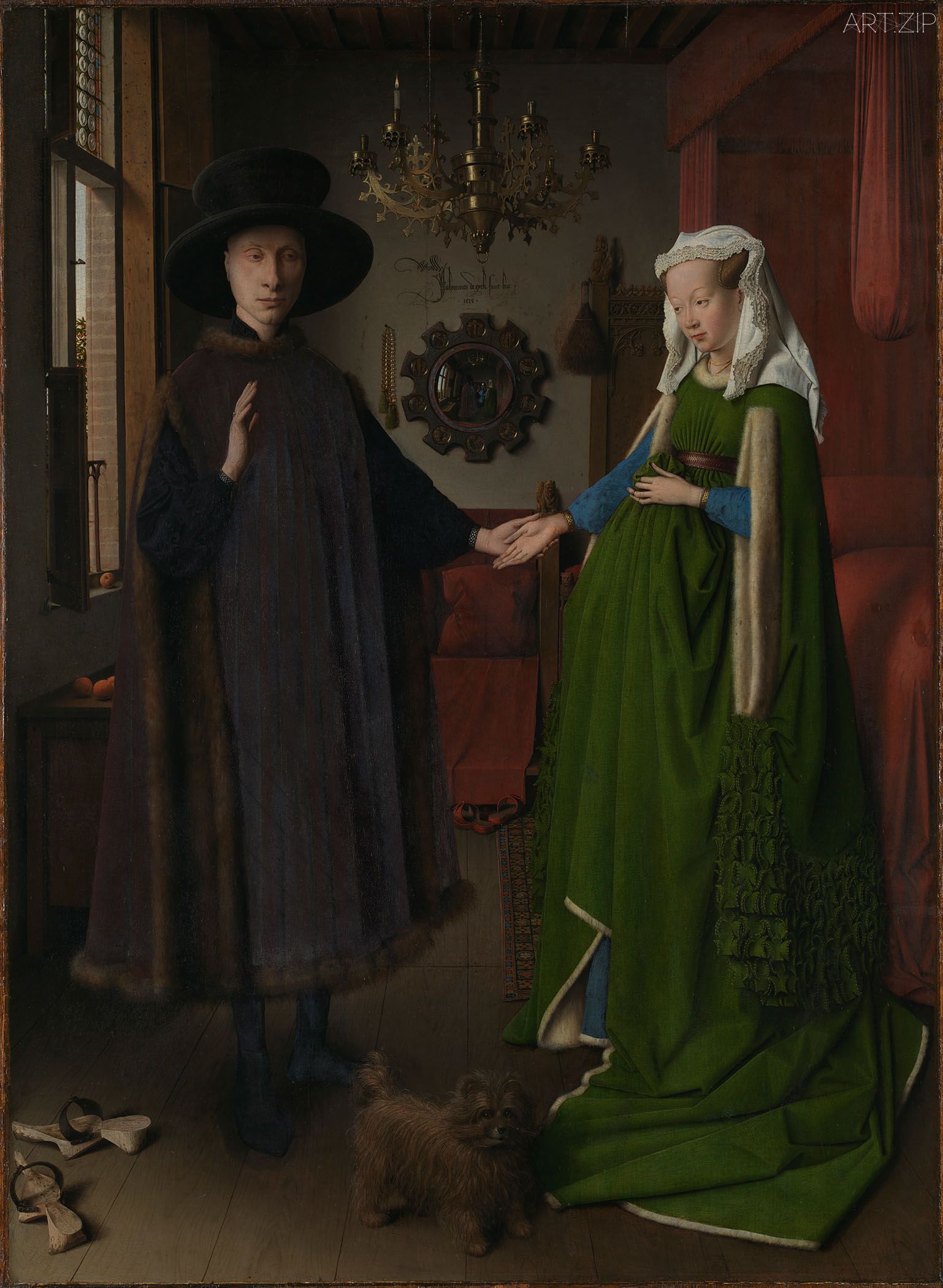
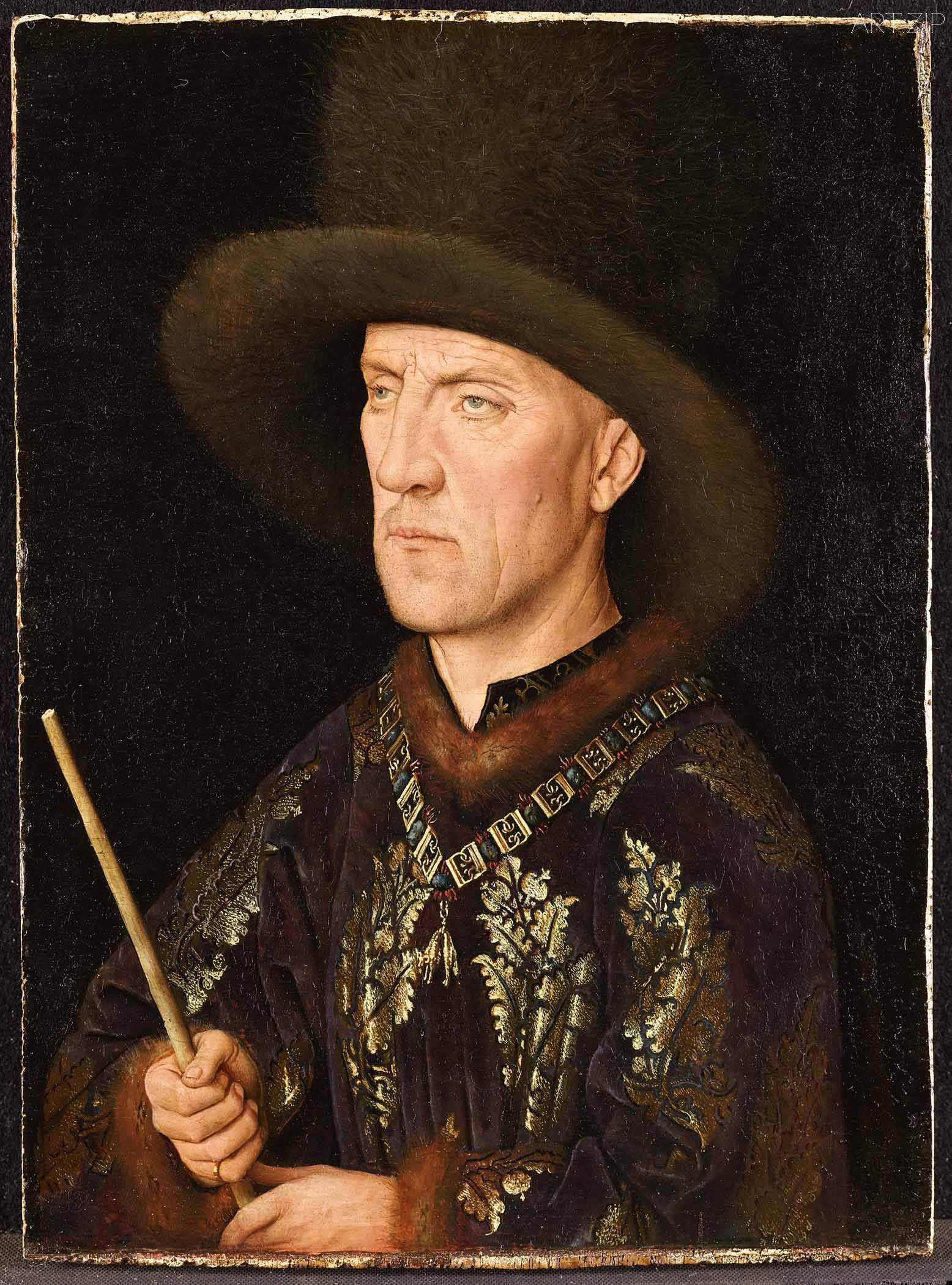
One of the exhibition’s great pleasures is seeing the National Gallery’s Arnolfini Portrait (1434) beside a male portrait from Berlin, believed to depict the same sitter. The long face, prominent nose and elusive expression are immediately recognisable. The two paintings have never been exhibited together before. Apart from portraits of rulers, such a repeated depiction of the same individual was virtually unprecedented in the fifteenth century. The comparison also makes us aware of how little we know about the man himself. Even his identification as Giovanni Arnolfini remains uncertain.
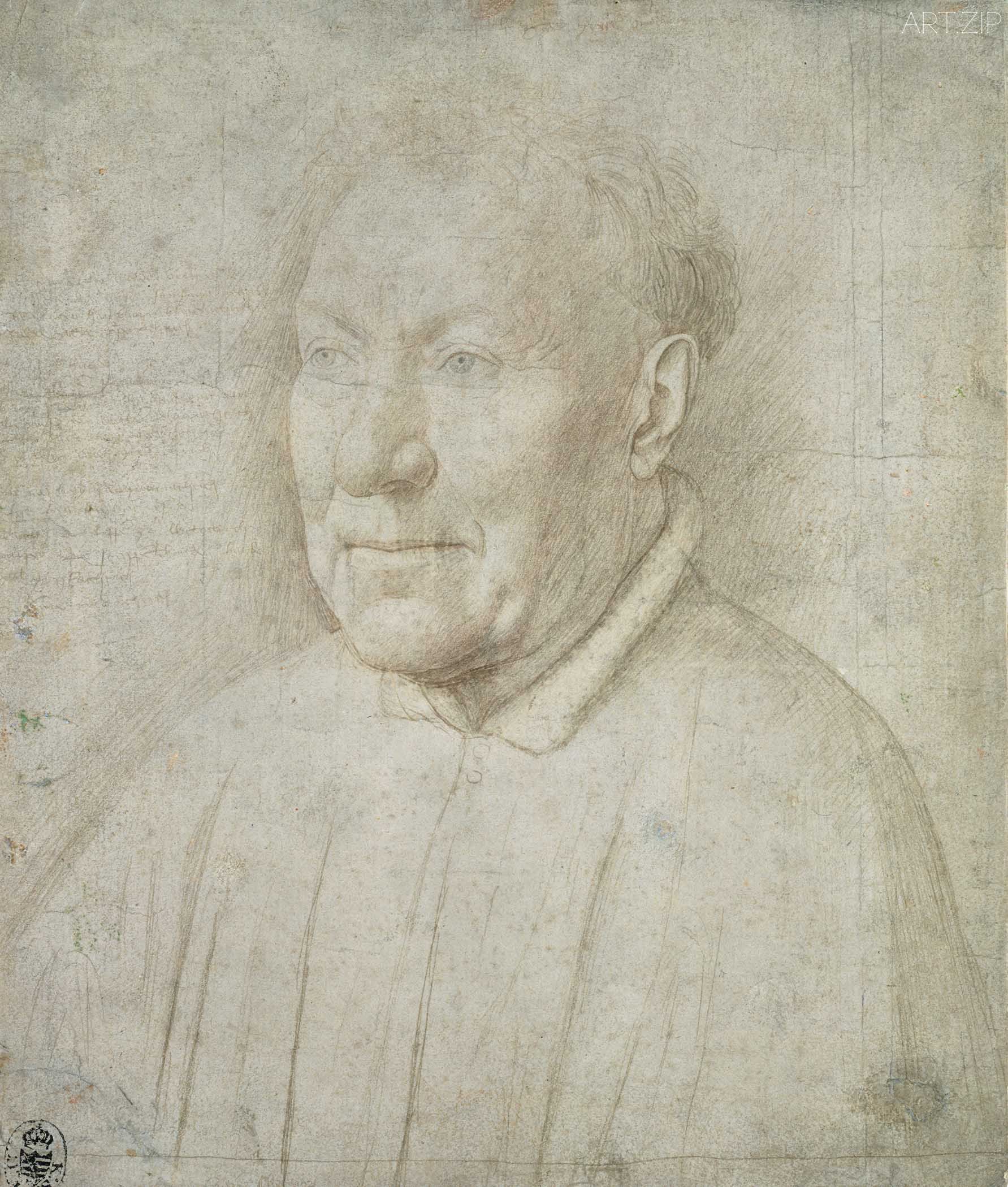
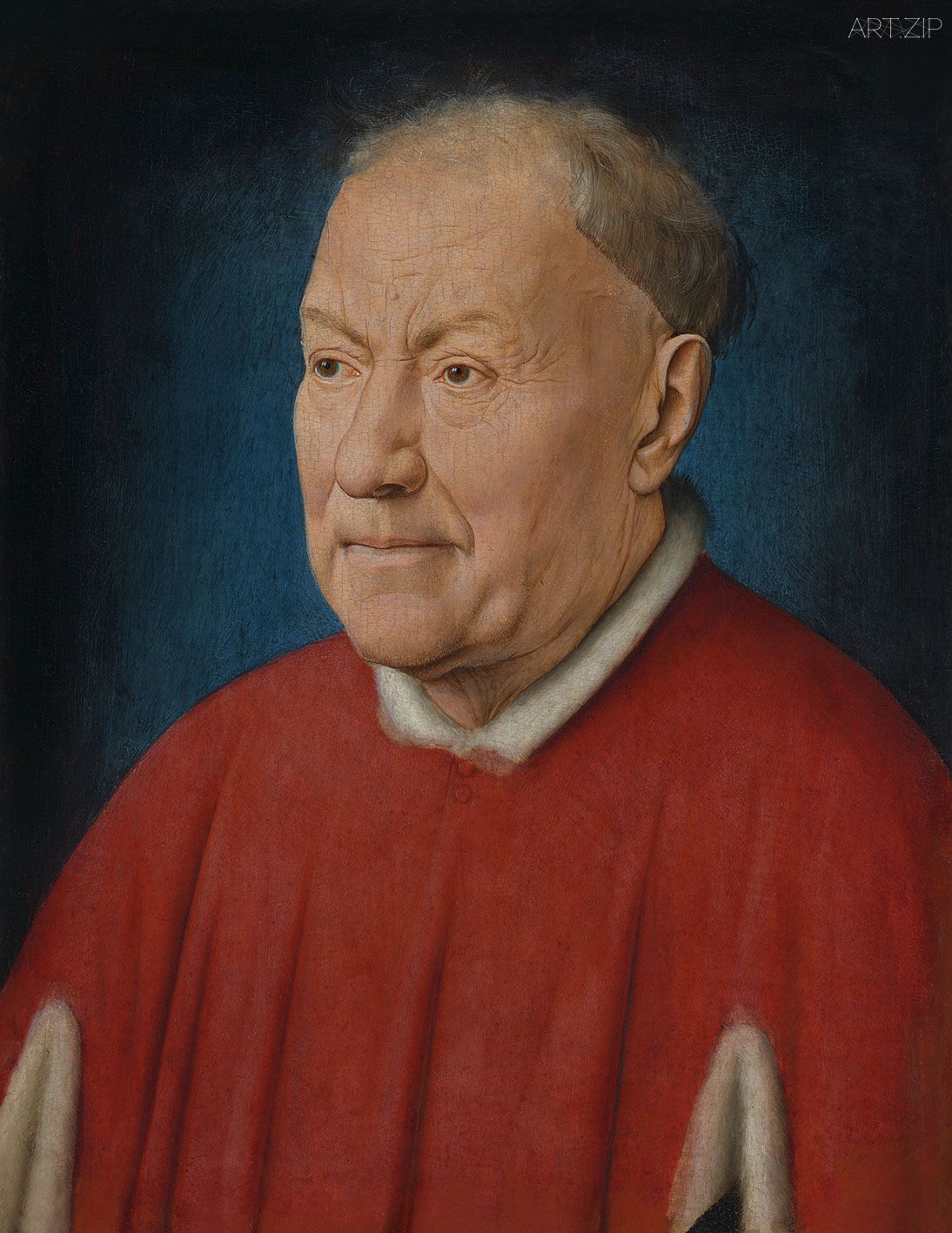
A drawing of an elderly man from Dresden offers a different kind of encounter. Reunited for only the second time with the corresponding painting from Vienna, it reveals something of Van Eyck’s working process. The delicate metalpoint lines are accompanied by colour notes, recording observations that would later inform the finished portrait. Looking between the two works, we see not simply an artist’s technical skill, but the patience of someone studying another human face.
Van Eyck’s realism was never quite as straightforward as it appeared.
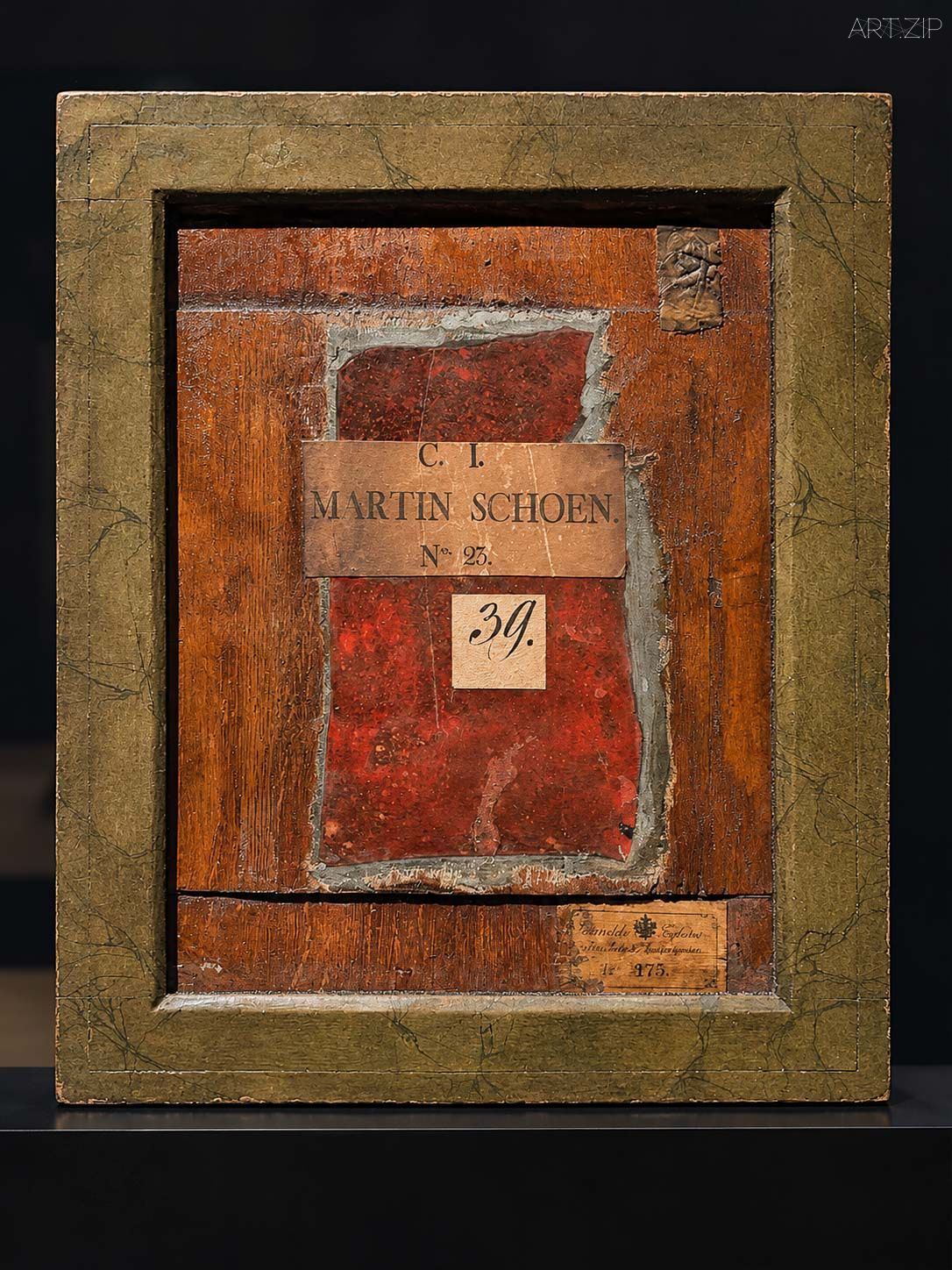
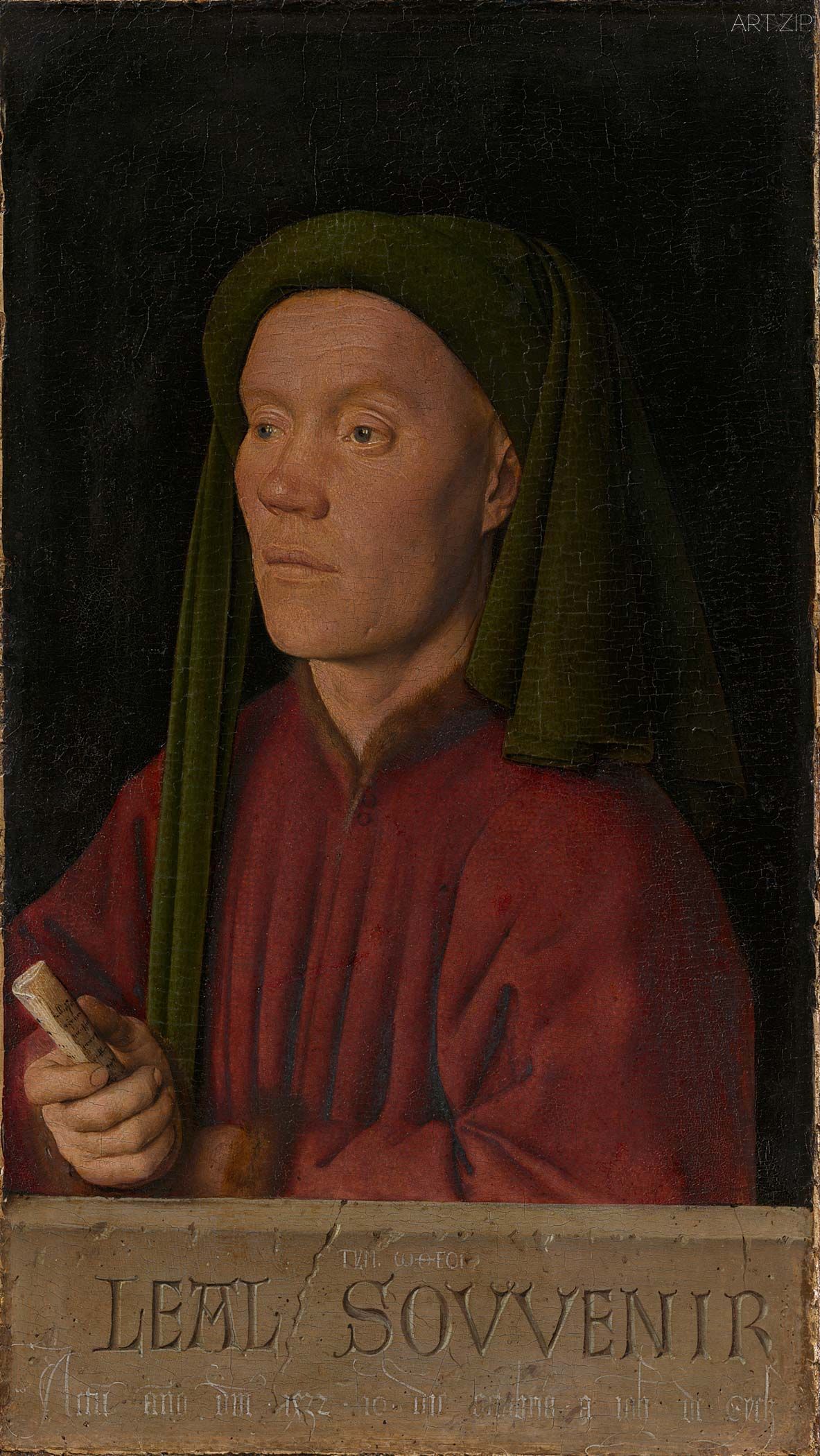
His painted frames imitate stone and precious metal, while inscriptions appear to have been carved or engraved rather than applied with a brush. These inscriptions seem to offer clues about the sitters and their identities, yet their meanings are often far from straightforward. Even the backs of several portraits are painted to resemble polished stone. These were objects intended to be handled, turned and examined from different angles.
The exhibition makes a particular effort to reveal this aspect of his practice, allowing visitors to see the marbled reverses of several panels. The reverse of Margaret’s portrait is particularly revealing. While her face is painted with extraordinary care and restraint, the imitation stone on the back is handled with a much freer touch. The contrast suggests an artist equally at ease with meticulous observation and playful experimentation.
The artist who could distinguish the finest irregularities of a human face was equally capable of making wood look like something else entirely. He wanted us to trust our eyes, but he also knew how easily they could be fooled.




Rather than filling the galleries with additional works, the curators have chosen to give each portrait room to breathe, encouraging visitors to slow down and look closely. It is a thoughtful approach. But looking slowly is not quite the same as being able to see clearly. The rooms are dark, the works are small, and the subdued lighting, while atmospheric, makes close examination frustrating, particularly for visitors whose eyesight is less than perfect. Some of the details that make Van Eyck so extraordinary are easier to read about on the wall text than to discover in the paintings themselves.
There may be good conservation reasons for keeping light levels low, especially where the delicate drawing is concerned. But this need not prevent other ways of looking. The complimentary audio guide offers commentary, but not the means to look more closely. Digital magnification is hardly new, and not even new to Van Eyck: in 2023, Berlin’s Gemäldegalerie, which is among the lenders to this exhibition, invited visitors to zoom into his paintings through interactive high-resolution projections. The absence of a similar facility at the National Gallery is therefore all the more disappointing. High-resolution images would have allowed visitors to examine the tiny inscriptions, compare the drawing with its finished painting, or explore the painted surfaces and marbled backs in greater detail. Such resources would not compete with the originals. They would help us appreciate what we were standing in front of.
Six centuries later, Van Eyck can still make us look twice. We find ourselves studying a face so convincingly painted that we almost forget the wooden panel beneath it. Then a carved inscription turns out to be painted, or a piece of marble reveals itself as wood. His sitters seem so real, yet the painter himself seems to be hiding among these little illusions, winking at us across the centuries.
站在揚·凡·艾克(Jan van Eyck)的肖像畫前,才會發現一張面孔原來可以透露這麼多細節。眼中的血絲、剛冒出的胡茬、眉毛上細小的缺口——六百年過去,這些特徵依然清晰得令人吃驚。如今,倫敦英國國家美術館首次將他現存的九幅獨立肖像油畫聚在一起,讓我們有機會近距離看看這些生活在六百年前的人。
《凡·艾克:肖像》(Van Eyck: The Portraits,2026年11月21日至2027年4月11日)還展出了這位尼德蘭畫家唯一存世的素描。凡·艾克流傳至今的繪畫只有約二十幅,能夠一次看到其中這麼多件作品,機會實在難得,恐怕短期內也不會再有。
凡·艾克在北方文藝復興繪畫史上的地位早已確立。在他之前,肖像畫往往更注重表現人物的身份、儀態與家族地位。凡·艾克卻格外留意每張面孔的不同之處,連那些一般畫家可能會稍加修飾的特徵,也照樣畫了下來。
展覽以《男子肖像(自畫像?)》(Portrait of a Man (Self Portrait?),1433)開場。畫作獨自陳列在聚光燈下。平日在國家美術館,這幅肖像多少被名氣更大的《阿爾諾芬尼夫婦像》搶去了風頭,這一次終於輪到它成為主角。男子頭戴鮮紅的頭巾,層層堆疊的布料高高隆起,下面是一張瘦削、略顯嚴肅的臉。他的眼睛微微充血,下巴長著短短的胡茬,直直地望向觀眾,神情警覺,似乎還帶著一點挑釁。
畫框上寫著凡·艾克的格言「Als ich kan」(盡我所能),其中還藏著他名字的諧音。這句話乍聽謙遜,卻也有另一層意思:或許只有我才能做到。畫中男子究竟是不是凡·艾克本人,至今沒有定論。但無論他是誰,那道目光都很難讓人忽略。
1439年,凡·艾克為妻子瑪格麗特繪製的肖像同樣引人注目。她神情平靜,略帶嚴肅,連左邊眉毛上一處小小的缺口也被畫了下來。凡·艾克沒有刻意美化妻子的容貌,也沒有柔化她的五官。她就這樣端坐在畫中,帶著一種安靜而堅定的神情。這也是現存最早有明確紀年、人物身份可辨認的非貴族女性肖像。
畫框上的銘文更有意思。它沒有簡單地說凡·艾克為妻子畫了一幅肖像,而是讓瑪格麗特彷彿自己開口說話:「我的丈夫約翰內斯於1439年6月15日完成了我。」那一年,她33歲。「完成了我」這個說法頗為奇特,畫中人似乎有了自己的聲音,但說到底,這些話仍是畫家替她寫下的。
展覽另一個難得的安排,是將國家美術館收藏的《阿爾諾芬尼夫婦像》(The Arnolfini Portrait,1434)與柏林收藏的一幅男子肖像首次並置展出。兩幅畫被認為描繪了同一個人:細長的臉、突出的鼻樑,以及那種難以捉摸的神情,確實十分相似。在15世紀,除了君主,同一個人被同一位畫家反覆描繪的情況幾乎沒有先例。不過,兩幅畫放在一起,也提醒我們對這名男子其實所知甚少。就連他是不是喬瓦尼·阿爾諾芬尼,至今也沒有定論。
來自德累斯頓的一幅老年男子素描,則讓我們有機會看看凡·艾克是如何工作的。這幅素描與維也納收藏的對應油畫,至今只重聚過兩次。細密的金屬尖筆線條間,還留著畫家對膚色等細節所作的顏色註記。對照素描與完成的油畫,可以看到他如何一步步將觀察轉化為繪畫。比起技法本身,更讓人在意的是他花了多少時間,仔細端詳眼前這張臉。
凡·艾克筆下的真實,並沒有看起來那麼簡單。
他把木質畫框畫得像石材或貴金屬,銘文看起來彷彿真的刻在表面。這些文字似乎透露了畫中人物的身份,仔細琢磨,卻又未必能得到明確的答案。有些肖像連背面也畫上了仿大理石紋理。這些畫原本不只是掛在牆上供人觀看的平面圖像,也可以拿起來翻轉,從正反兩面欣賞。
這次展覽特別讓觀眾看到部分畫板背面的裝飾,其中瑪格麗特肖像的背面尤其有趣。正面的人物畫得極其細緻、謹慎,背面的仿石紋卻自由得多,筆觸流動,甚至帶著幾分隨興。原來這位對人物面容一絲不苟的畫家,也有如此輕鬆、愛玩的一面。
凡·艾克能畫出臉上最細微的特徵,也能把一塊木板畫得像另一種材料。他讓我們相信眼睛所見,卻又不時提醒我們,眼睛其實很容易被騙。
策展人沒有用其他作品填滿展廳,而是希望觀眾能夠放慢腳步,好好看清每一幅肖像。這個想法很好,只是慢慢看,不代表就能看得清楚。展廳光線偏暗,畫作本身又小,柔和的燈光雖然營造了適合靜靜欣賞的氣氛,卻也讓近距離觀察變得吃力,尤其對視力不太好的觀眾而言。有些讓凡·艾克如此出色的細節,從展簽上讀到,反而比在畫中親眼找到容易。
調低燈光亮度或許是出於作品保護的考慮,尤其展覽中還有一幅脆弱的紙本素描。但除了直接觀看原作,應該還有其他方法可以幫助觀眾看得更仔細。展覽提供了免費的語音導覽,卻沒有相應的放大觀看設施。其實,數位放大技術早已不是新鮮事。2023年,柏林繪畫陳列館(Gemäldegalerie)就曾以互動式高解析度投影,讓觀眾放大欣賞凡·艾克畫中的局部細節。而柏林繪畫陳列館,恰好也是這次展覽的借展機構之一。
相比之下,這次國家美術館沒有在展廳提供類似的設施,多少令人惋惜。如果能透過高解析度圖像,放大畫框上細小的銘文、比較素描與完成的油畫,或看看畫板正反兩面的紋理,觀眾便能發現更多原本不容易注意到的細節。這並不是要用數位影像取代原作,而是讓我們在欣賞原作時,看得更多一些。
六百年後,凡·艾克筆下的面孔依然鮮活得彷彿近在眼前。然而,再仔細一看,原以為刻在畫框上的文字,竟然也是畫出來的;看似大理石的表面,原來只是木頭。畫中人如此真實,畫家卻藏在那些真假難辨的細節裡,隔著六百年,向我們眨了眨眼。
Van Eyck: The Portraits
The National Gallery, London
21 November 2026 – 11 April 2027
Text by Michelle Yu


