

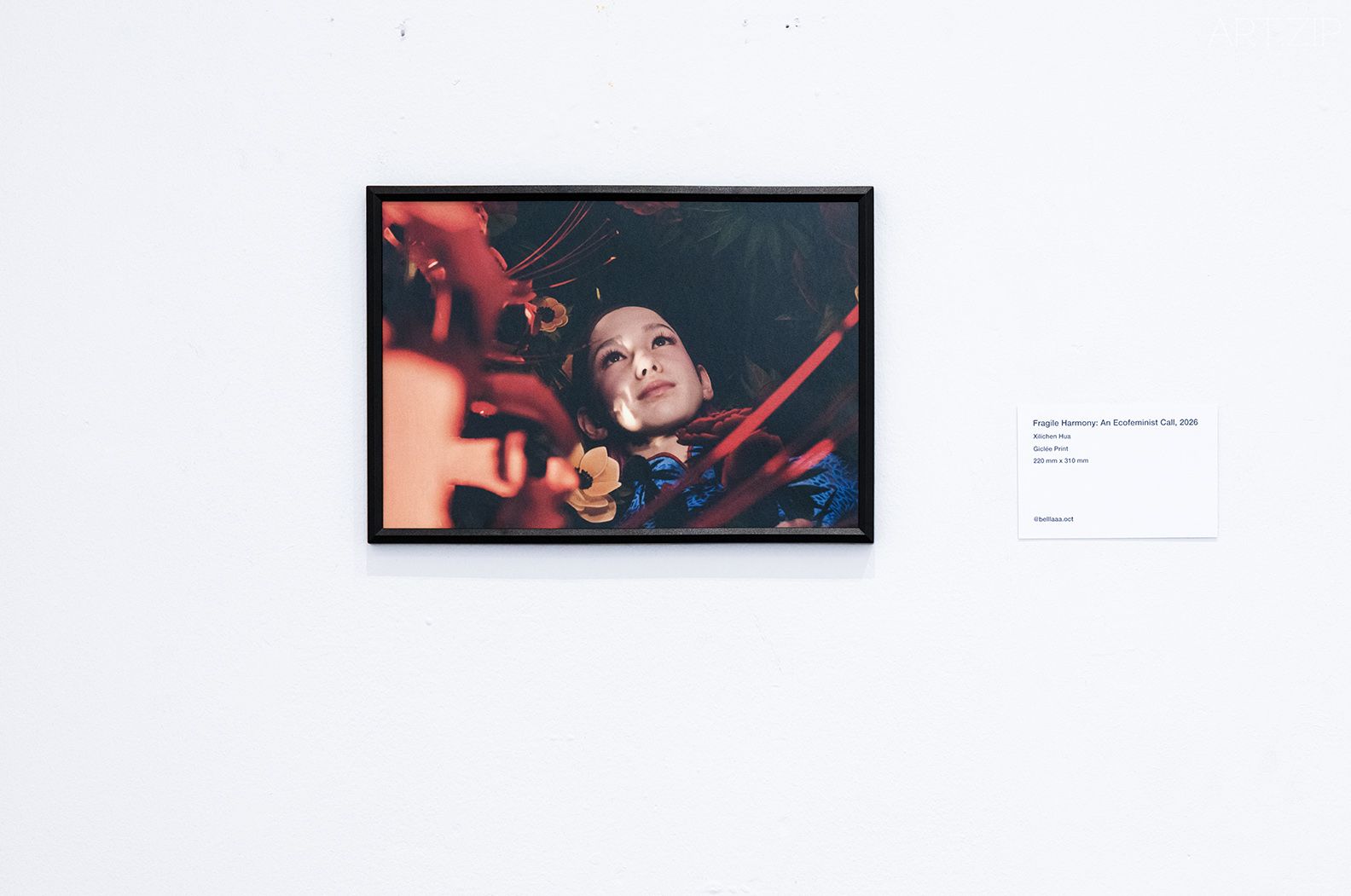
Through moving images and sound, digital and mixed-media artist Xilichen Hua establishes new modes of coexistence, responsiveness, and governance. In her four-channel moving image piece Fragile Harmony: An Ecofeminist Call (2026), she takes a distinctly ecofeminist worldview, connecting gendered oppression and environmental destruction.

Fragile Harmony: An Ecofeminist Call, 2026. Installation view at Apsara Studio. Courtesy of the artist.
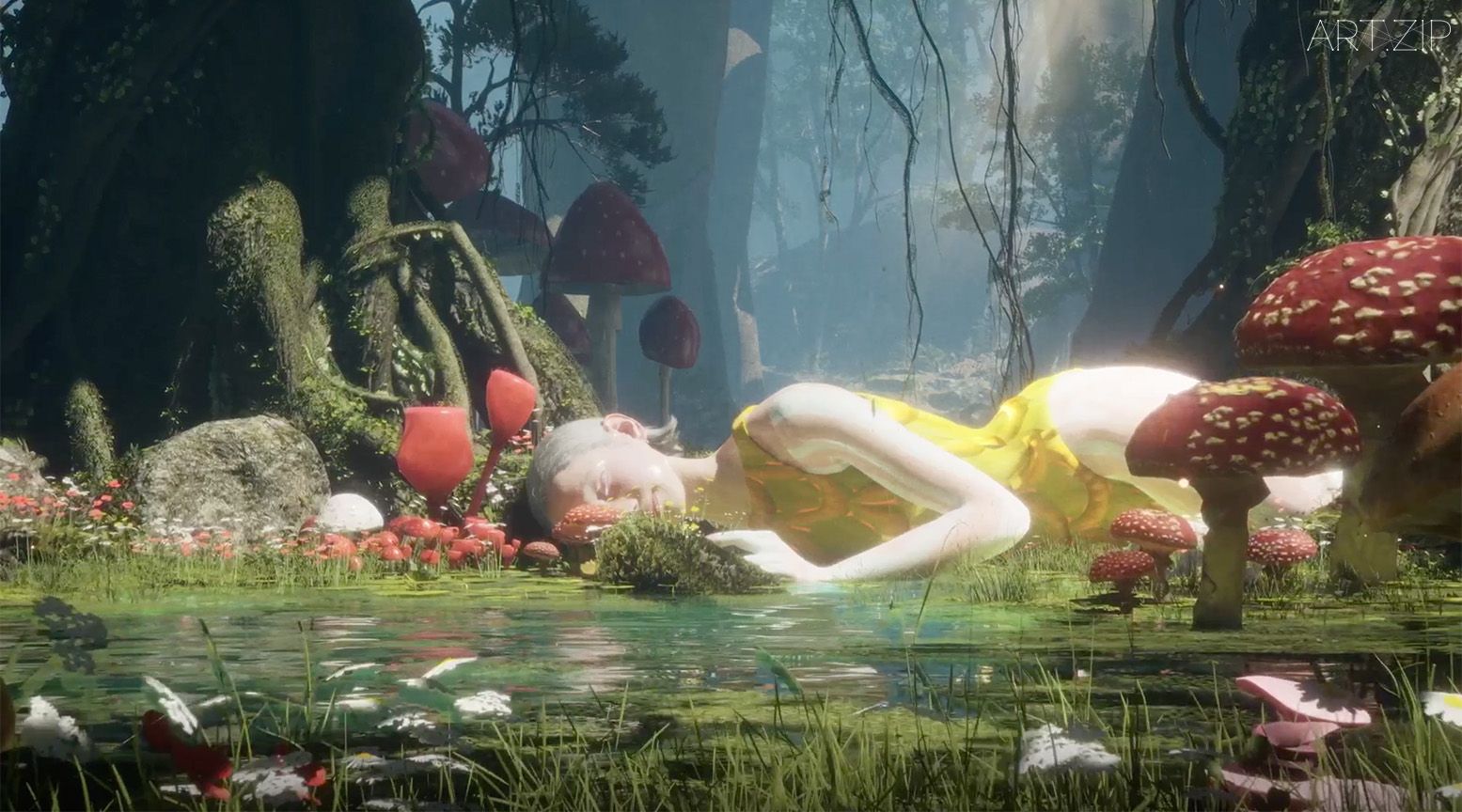
Although the scenery of the films comprising Fragile Harmony take cues from the natural world, the characteristics of computer-generated images such as hypermediated interfaces, sharp edges and aesthetic over stimulation, make for somewhat uncanny viewing. Stems whet into thorny wires and butterfly wings glint with synthetic sheen in crude biomimicry.
Still Image of Fragile Harmony: An Ecofeminist Call, 2026. Courtesy of the artist.
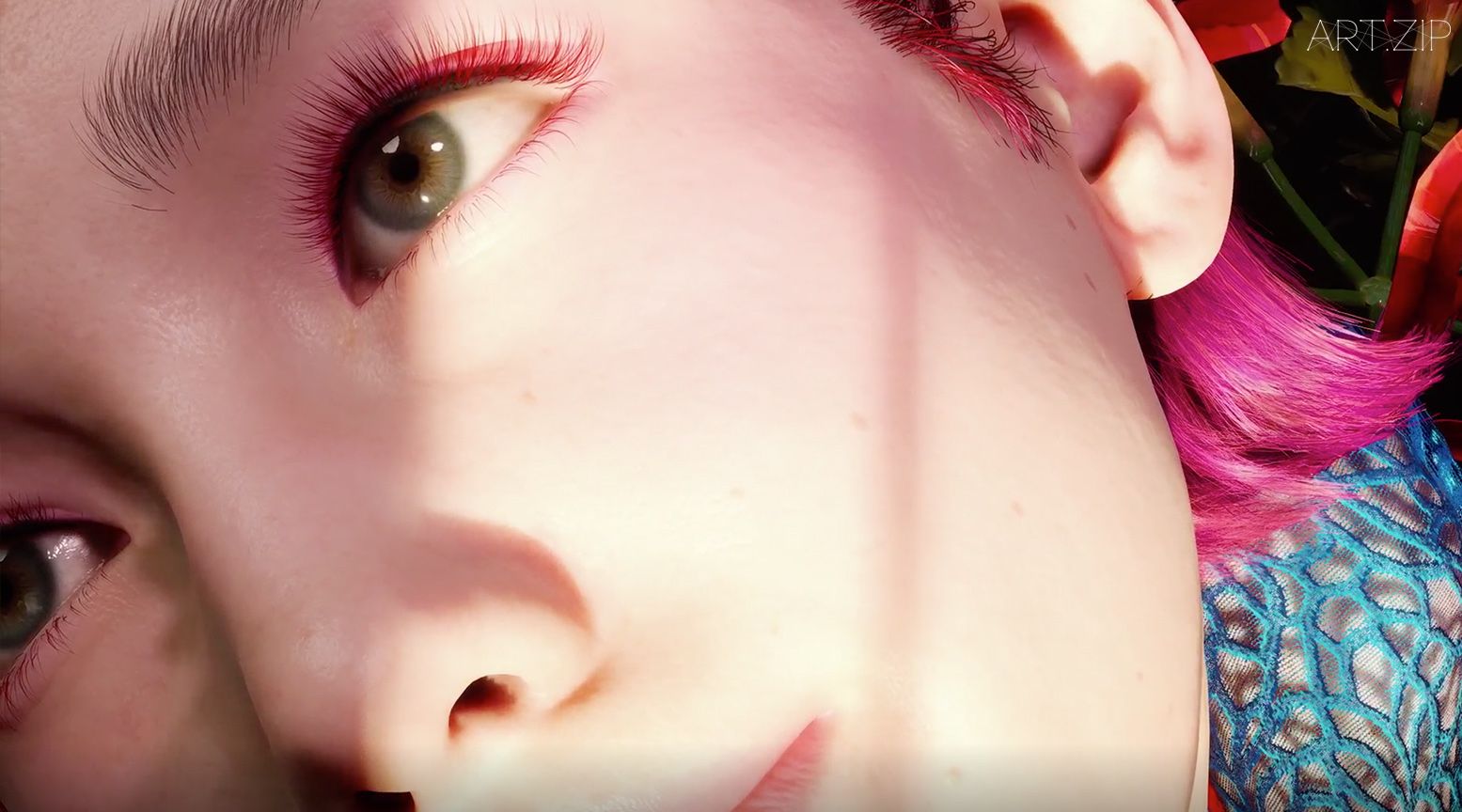
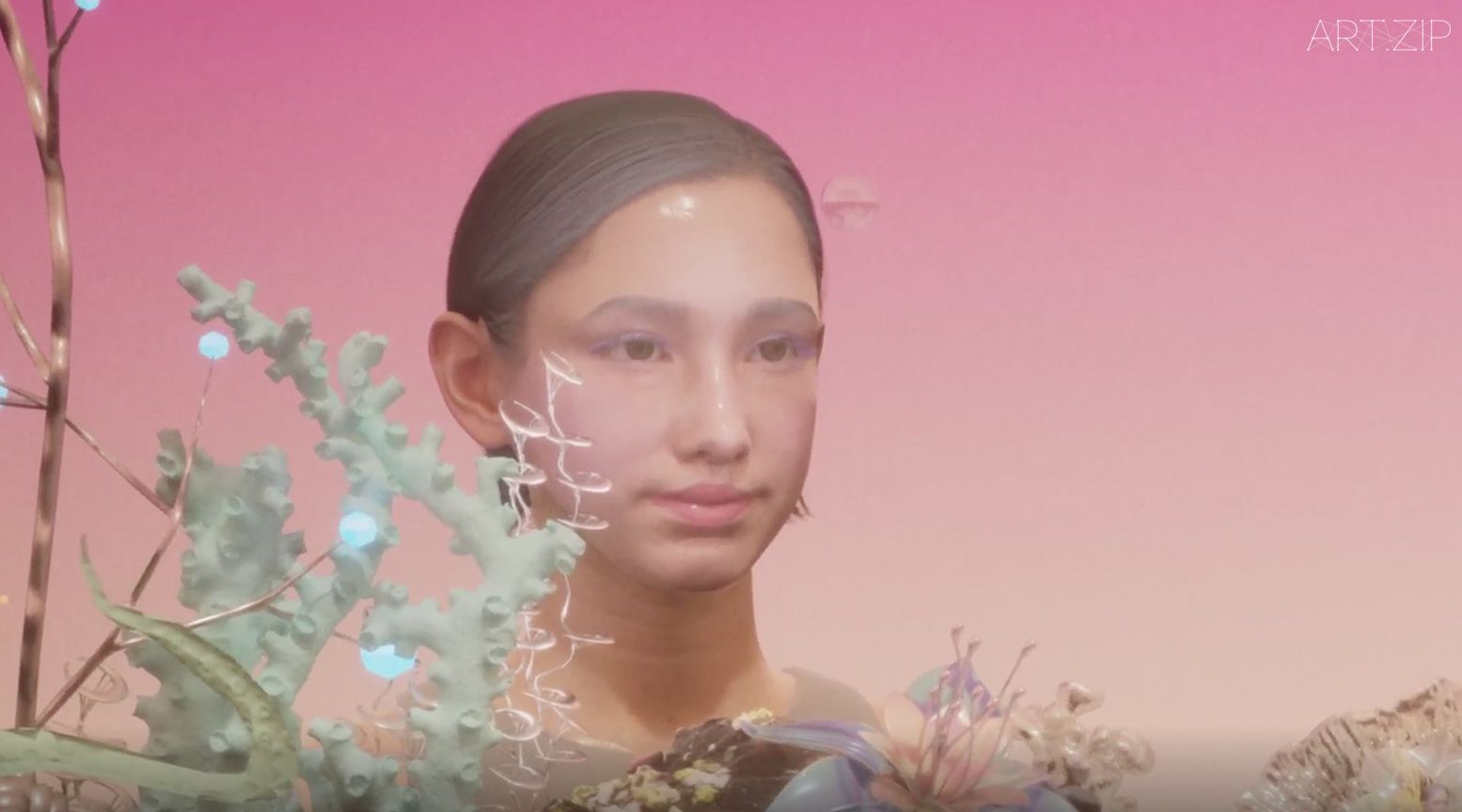
To these environments, Hua inserts her own digitally rendered body, in possession of a type of synthetic femininity and beauty familiar to our digitalised world. Dazed and dancing, the figure’s silent presence and near-camouflaged aspect –– hair and eyelashes taking on the colour of the flora –– appear to exist in perfect harmony with its surroundings. This interplay of supranatural elements throws into relief the inextricable relationship between the female body and environmental ecosystems, a perspective Hua first began exploring in her single-channel video Self Gaze (2025).
Still Image of Self Gaze, 2025. Courtesy of the artist.
Attuned to the rhythms and vital tension of life’s cycles –– primarily restoration and regeneration –– and faced with the decimation of the natural world, the sensitivity of women’s nature emerges as its own resilient ecological force. Within the artist’s lush visual world, silence becomes a language of resistance, and softness is read as a form of strength. In Fragile Harmony, Hua constructs a kind of visual poetry of body and consciousness, fragility and fortitude, inviting us to re-encounter the historically overlooked and unheard body whilst considering its place within the context of contemporary ecological imbalance.

Still Image of Fragile Harmony: An Ecofeminist Call, 2026. Courtesy of the artist.
Each video commences with the viewer looking upon a snow globe, Hua’s avatar the cynosure of a miniaturised idyll, passing through the seasons. On first encounter, the glowing orb emits a spirit of sanctum but given the artist’s preoccupation with themes of perception and agency, the glass is also representative of our mediated relationship with both the natural world and women. In presenting a digital construct of both, Hua implies a disillusionment with the reality of being fully immersed in nature and by extension, calls into question the objectification of women whose pixel physiognomy is more familiar than their true nature.
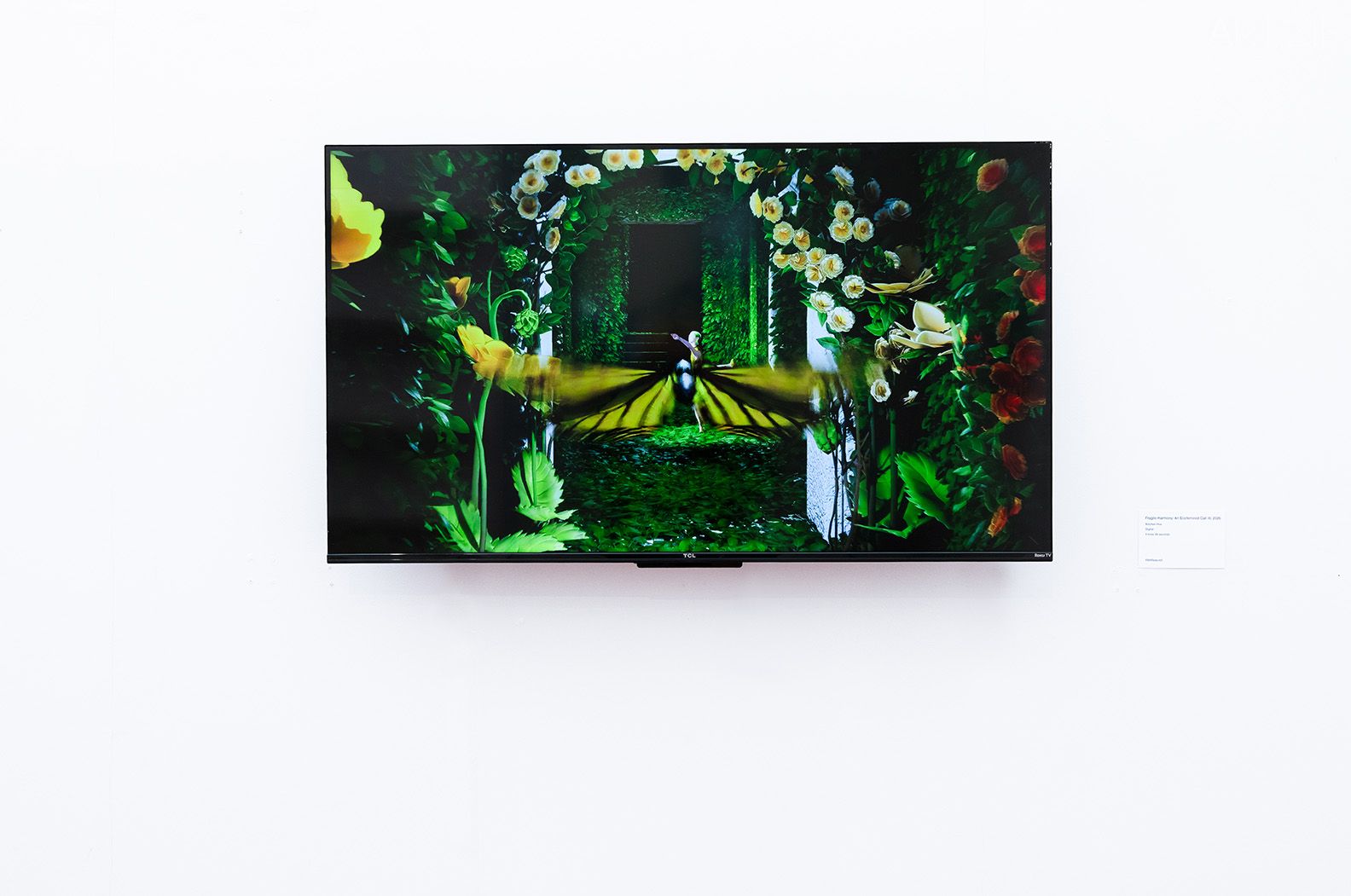
Within scenes where splendour and tranquillity coexist, Hua’s intentionally posthuman aesthetic, marked by glitchy arabesques, morphing geometry and limbs absorbed beneath artificial plains, ask whether such harmony truly has a place in today’s world.


透過動態影像與聲音,數位與混合媒介藝術家華茜李晨建立起新的共存、響應與治理模式。在她由四通道動態影像組成的作品 《Fragile Harmony: An Ecofeminist Call(2026)》中,她採納了一種鮮明的生態女性主義世界觀,將性別壓迫與生態破壞相互連接。
儘管構成 《Fragile Harmony》 的影像在取景上借鑑了自然世界,但電腦生成影像的典型特徵,即超媒介介面、銳利邊緣、過度刺激的美學,使觀看帶有一層難以言明的詭奇感。莖稈化為帶刺的金屬線,蝶翼閃爍著合成材料特有的光澤,呈現出一種粗糙的擬生態。
在這些環境中,華茜李晨置入了她自身以數位技術渲染的身體,這具身體攜帶著一種我們數位化世界所熟悉的合成式的女性氣質與美。神情恍惚、舞動著的這一形象,以靜默的姿態與近乎融入背景的偽裝(髮絲與睫毛取用了植物的色彩),彷彿與其周遭環境達成了完美的和諧。這種超自然元素的交織,凸顯了女性身體與生態系統之間不可分割的關聯,這一視角最早出現在她的單通道影像作品 《Self Gaze(2025)》中。
在面對自然界遭受重創的當下,華茜李晨敏銳於生命循環(主要是修復與再生)的節奏與張力,女性天性的敏感由此顯現為一種獨特的韌性生態力量。在她豐盈的視覺世界中,靜默成為一種抵抗的語言,柔軟被解讀為一種力量。在 《Fragile Harmony 》中,她構建了一種關於身體與意識、脆弱與堅韌的視覺詩學,邀請我們重新遭遇那個在歷史上被忽視與未被傾聽的身體,並思考其在當代生態失衡語境中的位置。
每一段影像均以觀者凝視一個雪花玻璃球開始,華茜李晨的化身成為其中微縮田園世界的焦點,穿行於四季之間。初次相遇時,這發光的球體散發出某種聖域的氣息,但鑑於藝術家對感知與主體性議題的持續關注,這層玻璃也象徵著人與自然世界、與女性之間那種被中介化了的關係。透過呈現一個數位建構的自然與女性,華茜李晨暗示了一種對全然沉浸於自然之現實性的祛魅,並由此進一步質疑女性被物化的境況,她們被像素化的面容遠比其真實本性更為我們所熟悉。
在壯麗與靜謐並存的場景之中,華茜李晨有意為之的後人類美學,以充滿故障感的蔓藤紋、變幻的幾何形態、被人工平面吸納的肢體為標記,促使我們追問:這樣的和諧,在今日的世界中,是否真有容身之所。
Text by Millen Brown-Ewens
Published on 10th April 2026