
London-based curator Xin Liu is part of a new generation of independent curators who conceive the curatorial framework of an exhibition as an environment where history, identity and art intersect. Moving away from the traditional curatorial approach of presenting artworks as tightly organised and interpreted within a rigid framework in a traditional gallery space. A talented young curator to watch, Xin Liu is developing an intellectual and boundary-breaking curatorial practice that lends itself to a degree of ambiguity and interpretation, instead of presenting definitive conclusions to her audience with labelling and chronological hanging.
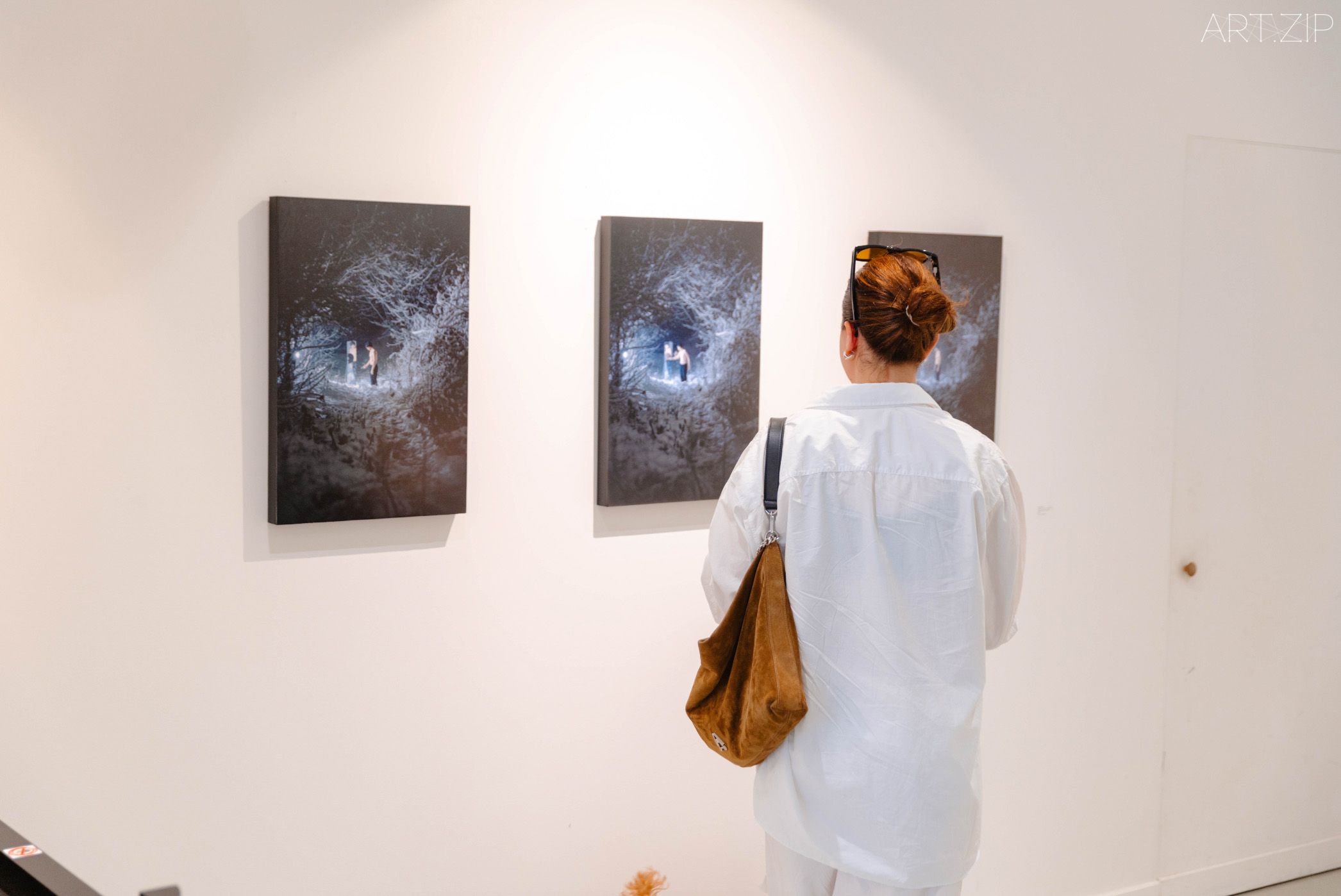
Xin Liu curates exhibitions that allow viewers to observe and digest the featured artworks and draw their own conclusions, while allowing conceptual space to exist between the works. This distinctive curatorial approach is demonstrated by Liu with The Interval, her recent group exhibition at 1215 Gallery in Canada. The Interval brings together Canadian and Chinese artists Alasdair Reinert, Martin Blanchette, Kaiyuan Yang, Xiaoming Ai and Chonghao Hua, and invites a nuanced meditation on cultural exchange, memory and transition. In her choice of artworks and exhibiting artists, Liu avoids Occidental tropes or stereotypes and steers viewers away from outdated East-West binaries. Cultural and geographical distinctions and barriers are quietly dissolved into a shared psychological landscape.
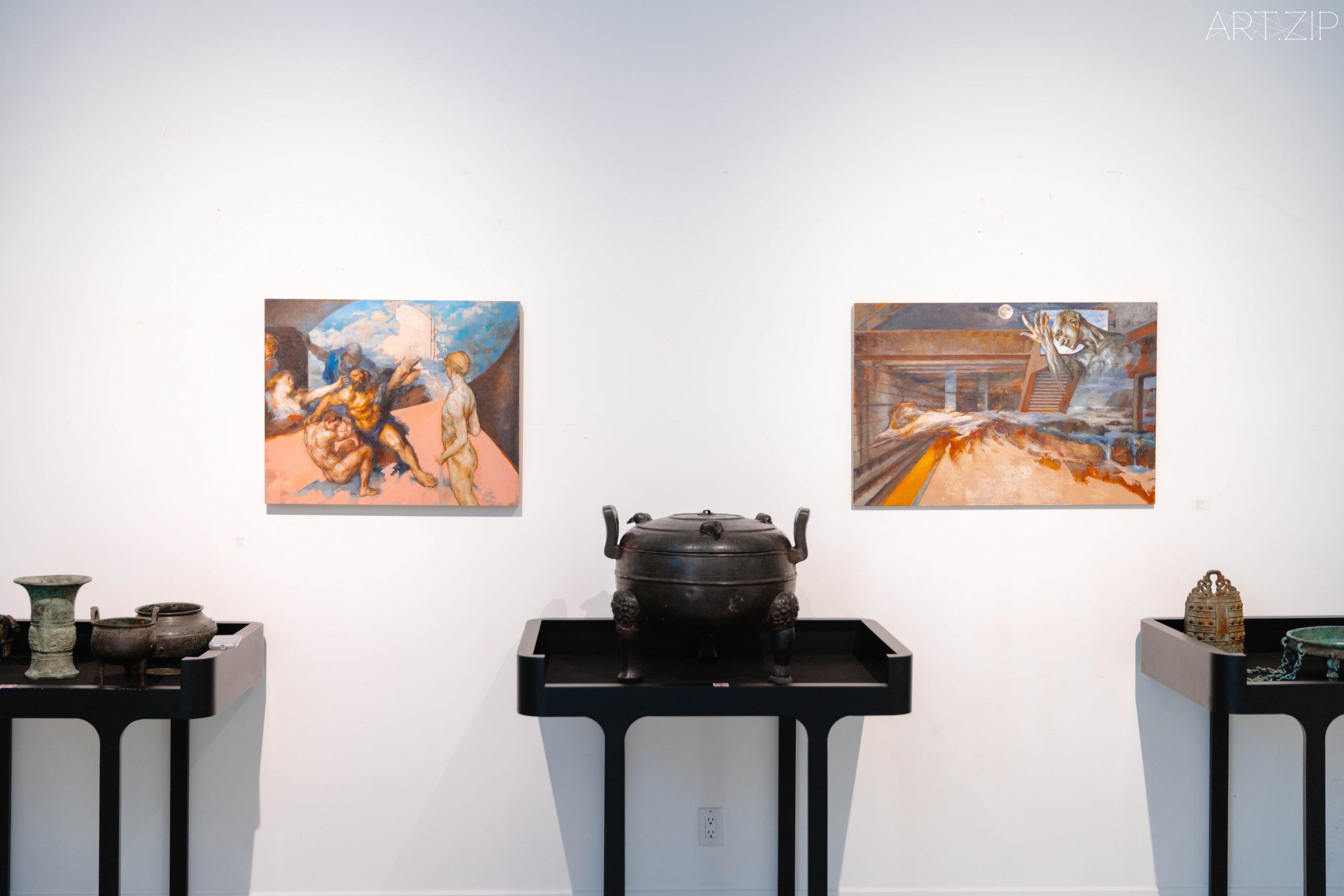
The Installation view of “The Interval” at the 1215 Gallery, Canada. Courtesy of the artist.
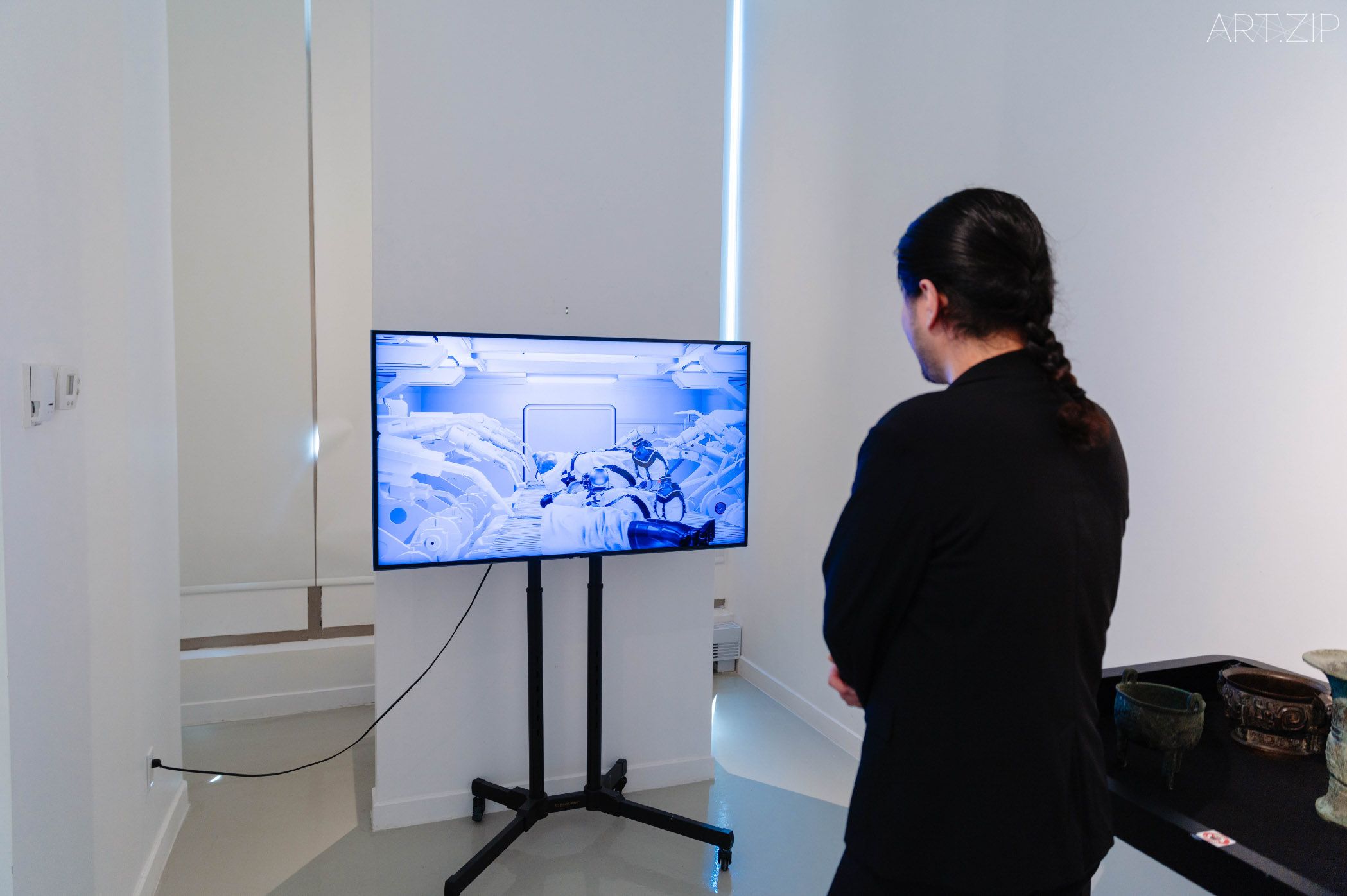
By choosing the name The Interval, Xin Liu indicates that the exhibition explores a suspended moment in time which offers possibilities of different outcomes. Liu’s curatorial statement points at a world existing between historic narratives and an unknown future. Highlights include Kaiyuan Yang’s Conversations with the Reflection, and works by Xiaoming Ai and Chonghao Hua. Chonghao’s Burnout Current depicts a dystopian society where workers labour robotically in a workshop, and the divide between human and robot, humanity and machination becomes blurred.
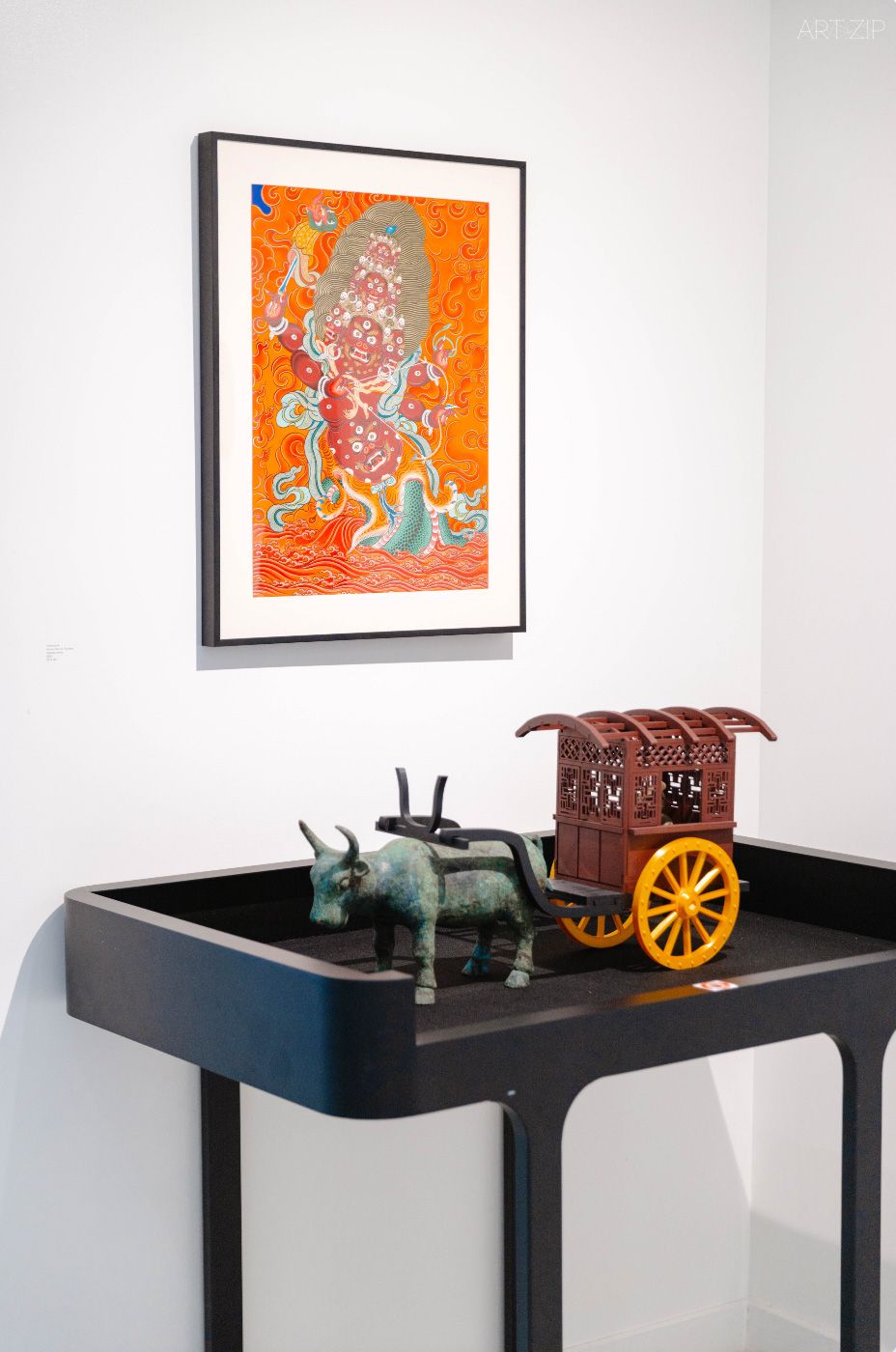
Liu’s curatorial decision to juxtapose paintings with sculptural objects and video works creates a dialogue between bucolic or painterly images rooted in art history and futuristic screen-based visual worlds. This innovative fusion of genres suggests Liu’s interest in merging art historical knowledge with cross-cultural narratives and technological media through contemporary curating.
A Turner-esque image of sky and distant architectural ruins encapsulates the enigmatic visual journey of The Interval. The image suggests the concept of an exhibition acting as a portal or threshold through which another world is accessible. In Liu’s curatorial methodology, the exhibition design and choice of artists is an extension of conceptual thinking and not simply a neutral canvas for artworks. She establishes an unexpected relationship between painting, sculpture and video that invites interpretation and is full of intrigue.
Liu’s academic training at King’s College London in Creative and Cultural Industries, combined with her participation in Tate’s Museum Curating Now programme, shines through in her curation of The Interval, by her ability to adapt institutional methodologies of curation for a unique, independent exhibition. Yet there is an element of ambiguity in her resistance to offering definitive explanations about the artworks, instead leaving some interpretation open to the viewer.
The Interval demonstrates how a curator can conceive an exhibition as emotional architecture, creating an experience where the viewer can encounter seemingly disparate medium relating to a philosophical concept of The Interval. Contemporary curatorial practice seems to be pivoting away from authoritative narratives towards considered and unexpected presentations of artists working in different mediums, inviting the viewer to draw their own conclusions. Liu’s skill as a curator seems to be adopting a role as a mediator of artworks offering new ways of seeing.
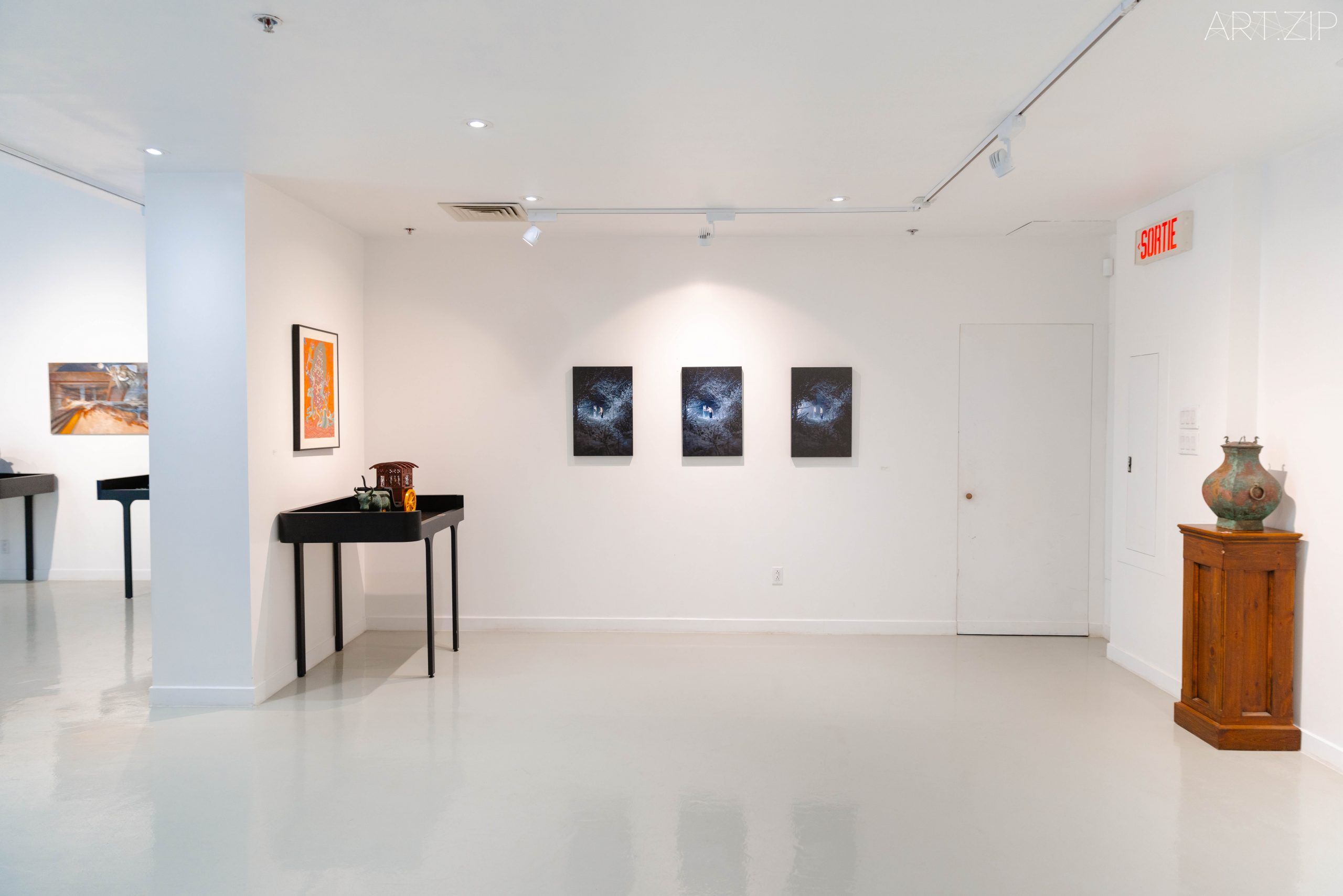
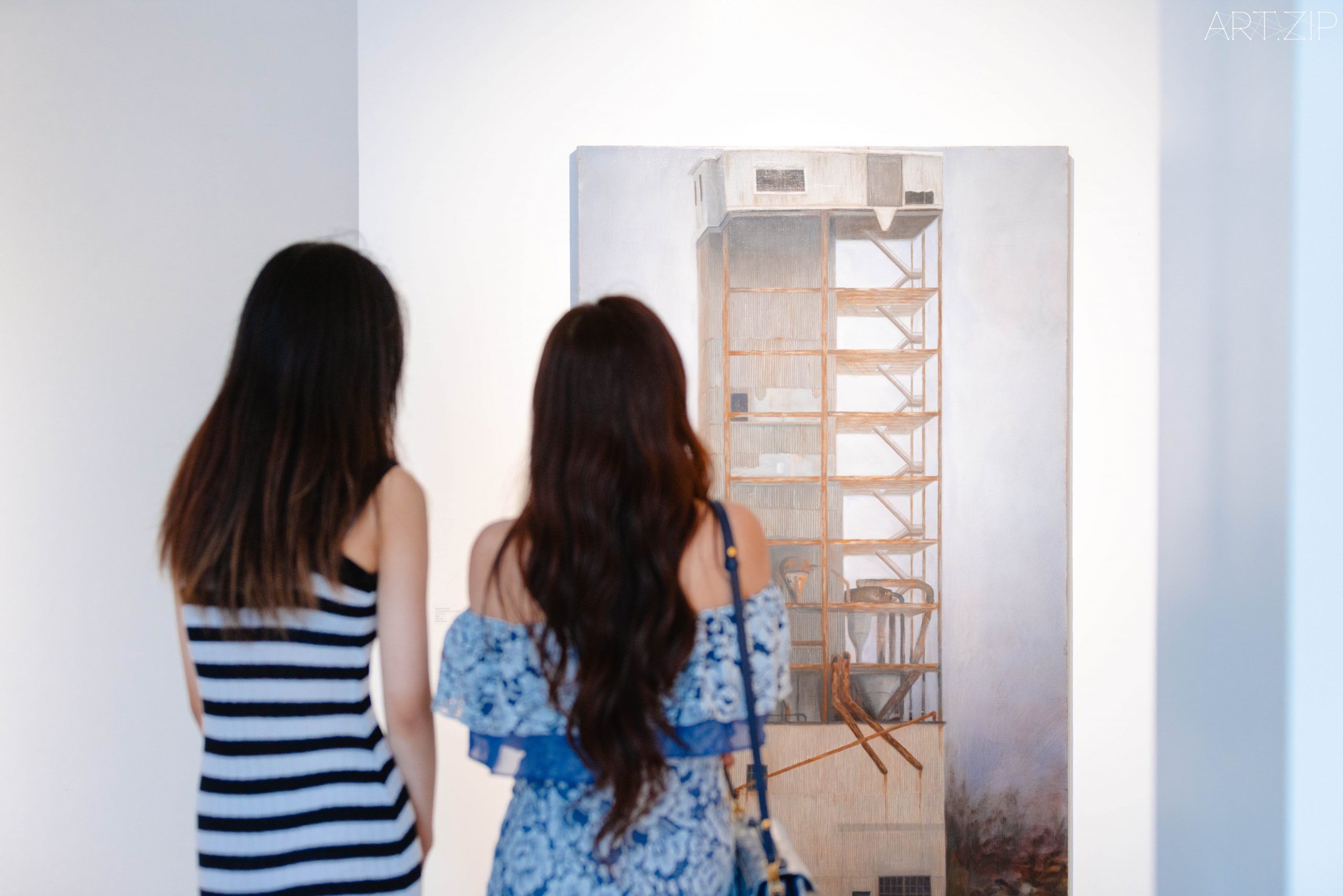
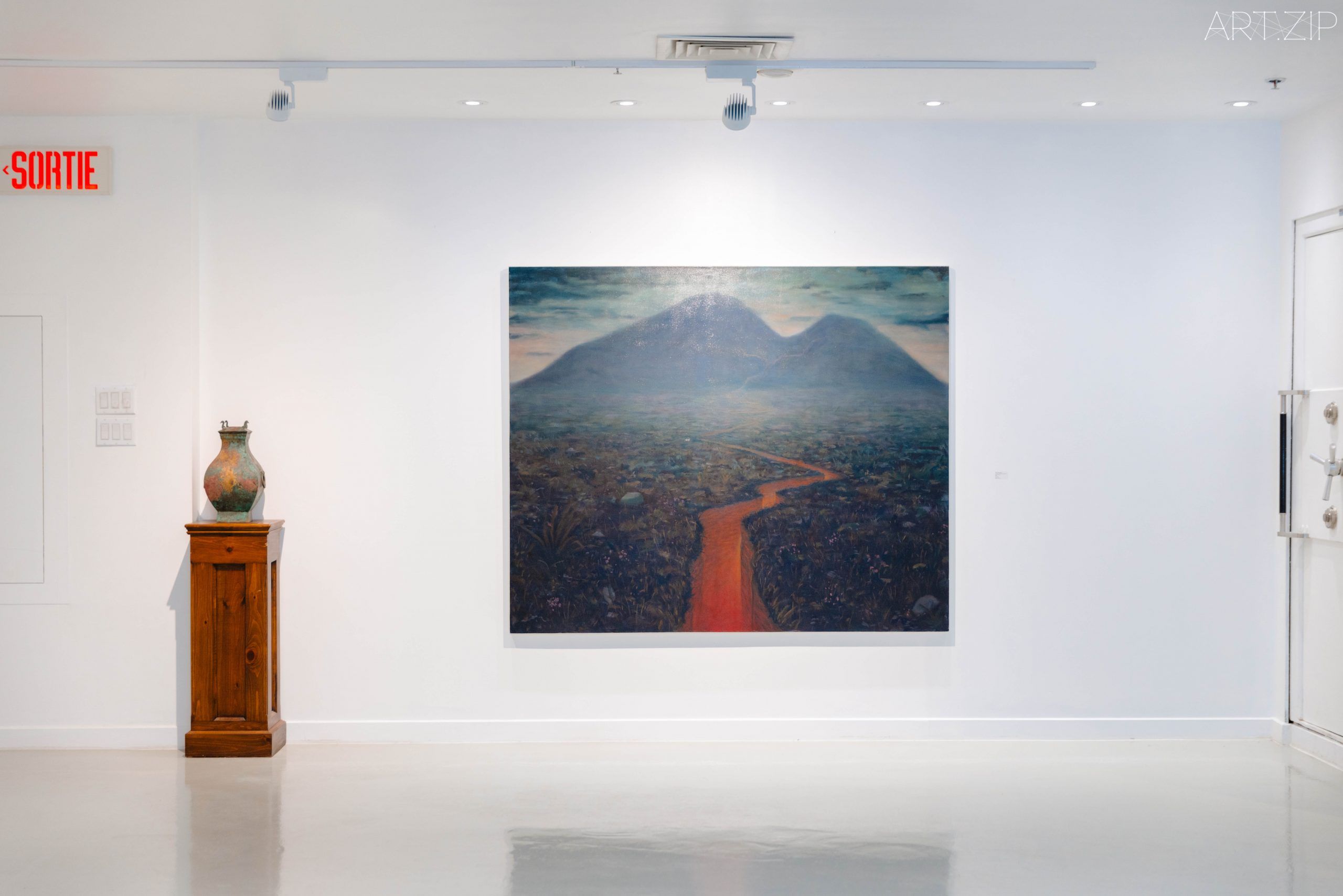
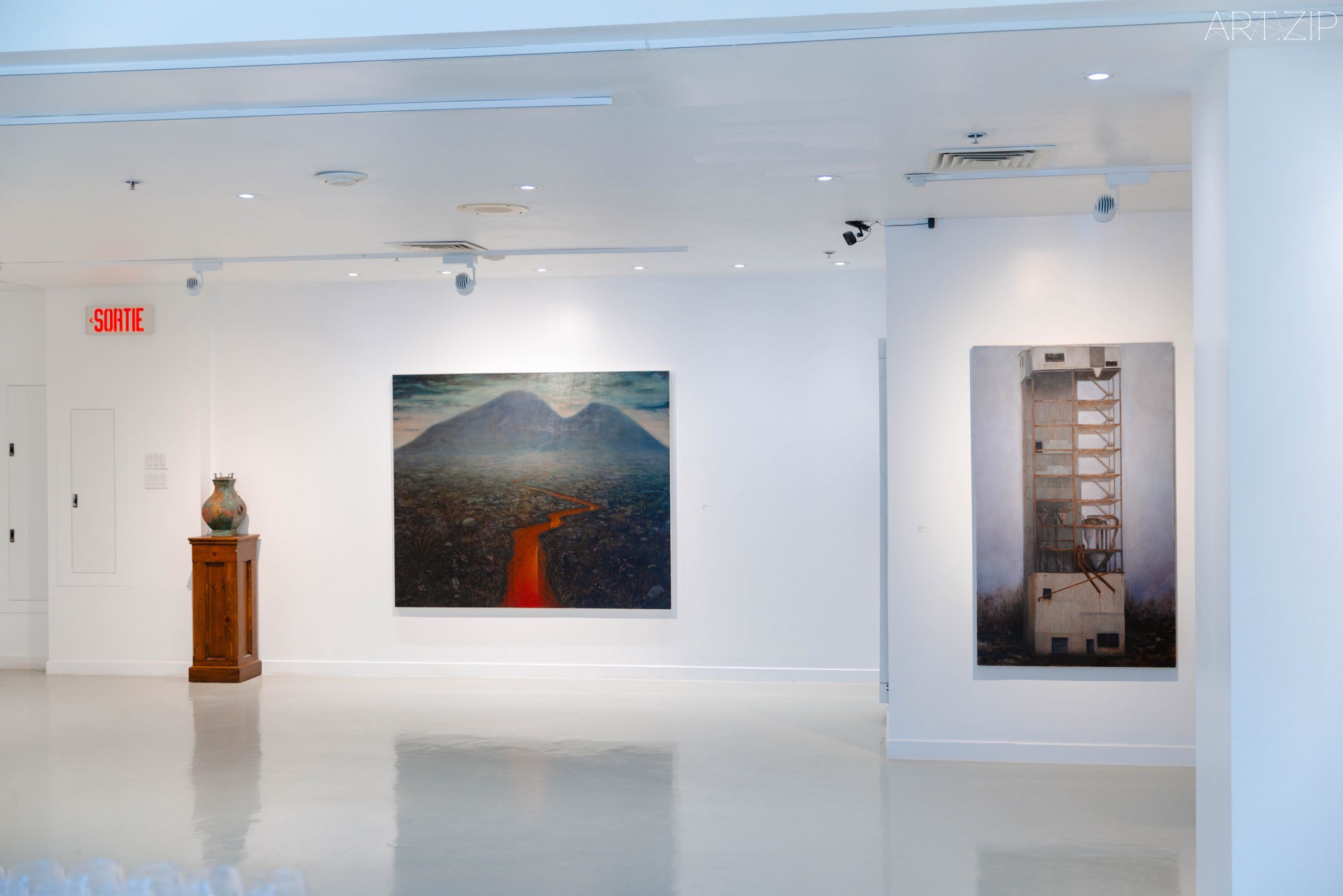
The Installation view of “The Interval” at the 1215 Gallery, Canada. Courtesy of the artist.
常駐倫敦的策展人劉昕,屬於新一代獨立策展人。在她手裡,展覽的框架不是一套先於作品的秩序,而是一處讓歷史、身份與藝術交會的場域。在傳統常規畫廊裡,作品被嚴密編排、依年代陳列,每一件都配好了該如何被理解的說明。作為一位值得關注的年輕策展人,劉昕正在發展一種兼具智識性與突破邊界的策展實踐。這種實踐容納了一定程度的模糊與開放性詮釋,不急著把定論交到觀眾手上。
劉昕讓觀眾自己觀察、自己消化,並自行得出判斷,同時也在作品與作品之間留出供概念棲身的空隙。這種獨特的策展方式在她近期於加拿大1215 Gallery的群展《The Interval》中展開得最為完整。展覽匯集了加拿大與中國藝術家——Alasdair Reinert、Martin Blanchette、楊開沅、艾曉明和華崇皓,邀請人們對文化交流、記憶與過渡展開細膩的沉思。在對藝術作品及參展藝術家的選擇上,劉昕避開了常見的俗套和刻板印象,也把觀眾帶離陳舊的東西方二元對立。文化與地理的差異及界線,就此被悄然消解於一片共有的心理景觀之中。
以《間隔(The Interval)》為名,劉昕指向一個被懸置的時刻,其中蘊含著不同走向的可能性。劉昕的策展陳述所描述的世界,棲居在一個既有的歷史敘事與未知的未來之間。展覽的亮點包括楊開沅的《Conversations with the Reflection》,以及艾曉明和華崇皓的作品。華崇皓的《Burnout Current》描繪了一個反烏托邦的社會,工人在車間裡如同機器人般勞作,人與機器、人性與機械運轉之間的界線逐漸模糊。
劉昕將繪畫與雕塑物件、影像作品並置,使植根於藝術史的田園式或繪畫性圖像,與未來主義的屏幕視覺世界之間建立了一種對話。這種跨媒材的融合透露出劉昕的旨趣:藉由當代策展將藝術史知識、跨文化敘事與技術媒介相互貫通。
一幅特納式的天空與遠處建築廢墟的圖像,凝練了《The Interval》那趟神祕的視覺旅程,也暗示著展覽本身可以作為一個通道或閾限,讓人通往另一個世界。在劉昕的策展方法論裡,展覽設計與藝術家的選擇是概念思考的延伸,而不僅僅是承載作品的中性畫布。她在繪畫、雕塑與影像之間構築了一種出人意料的關係,這種關係邀請詮釋,且耐人尋味。
劉昕在倫敦國王學院修習創意與文化產業的學術訓練,加上參與泰特美術館的「Museum Curating Now」項目的經歷,清晰地展現在《The Interval》的策劃裡,尤其是她把機構化的策展方法,轉用於一場獨立展覽的能力。然而,她的實踐中也帶有一種模糊性,她拒絕為作品提供確切的闡釋,而是將部分解讀空間留給觀者。
《The Interval》展示了策展人如何將展覽構想為一種「情感建築」,創造一種體驗,讓觀者在其中與看似不相干的媒介相遇,而它們共同指向「間隔」這一概念。當代策展實踐似乎正在從權威性的敘事轉向對不同媒介藝術家的深思熟慮且出人意料的呈現,並邀請觀者自行得出答案。劉昕作為策展人的位置,或許正在於她承擔了藝術作品的調解者角色,提供新的觀看之道。
Text by Lee Sharrock
Published on 28th June 2026