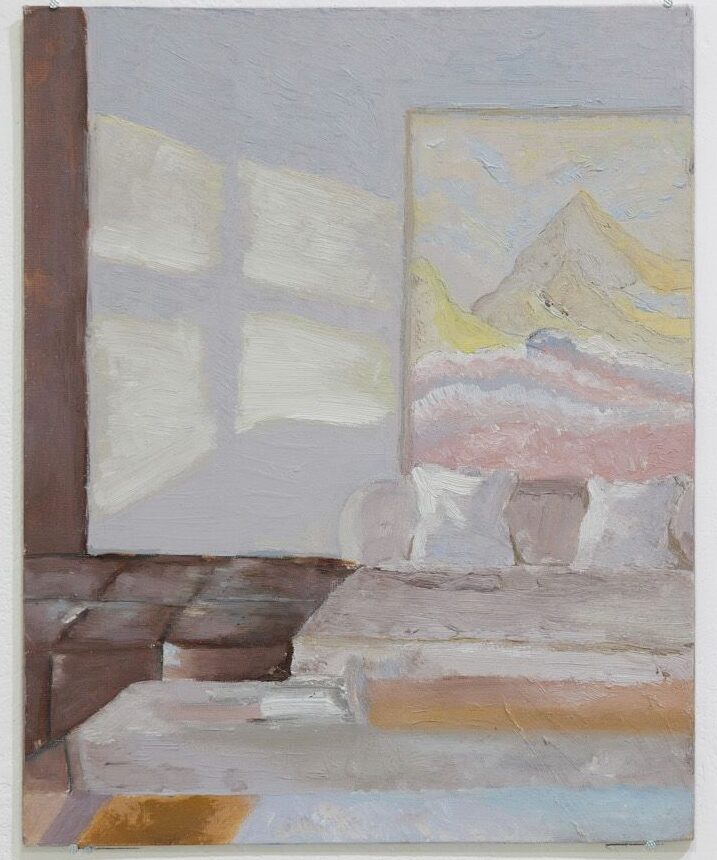
Have you ever looked at a painting and just felt a sense of calm brush all over you? Yue Zhou’s canvasses depicting pastel-coloured interiors have that effect.
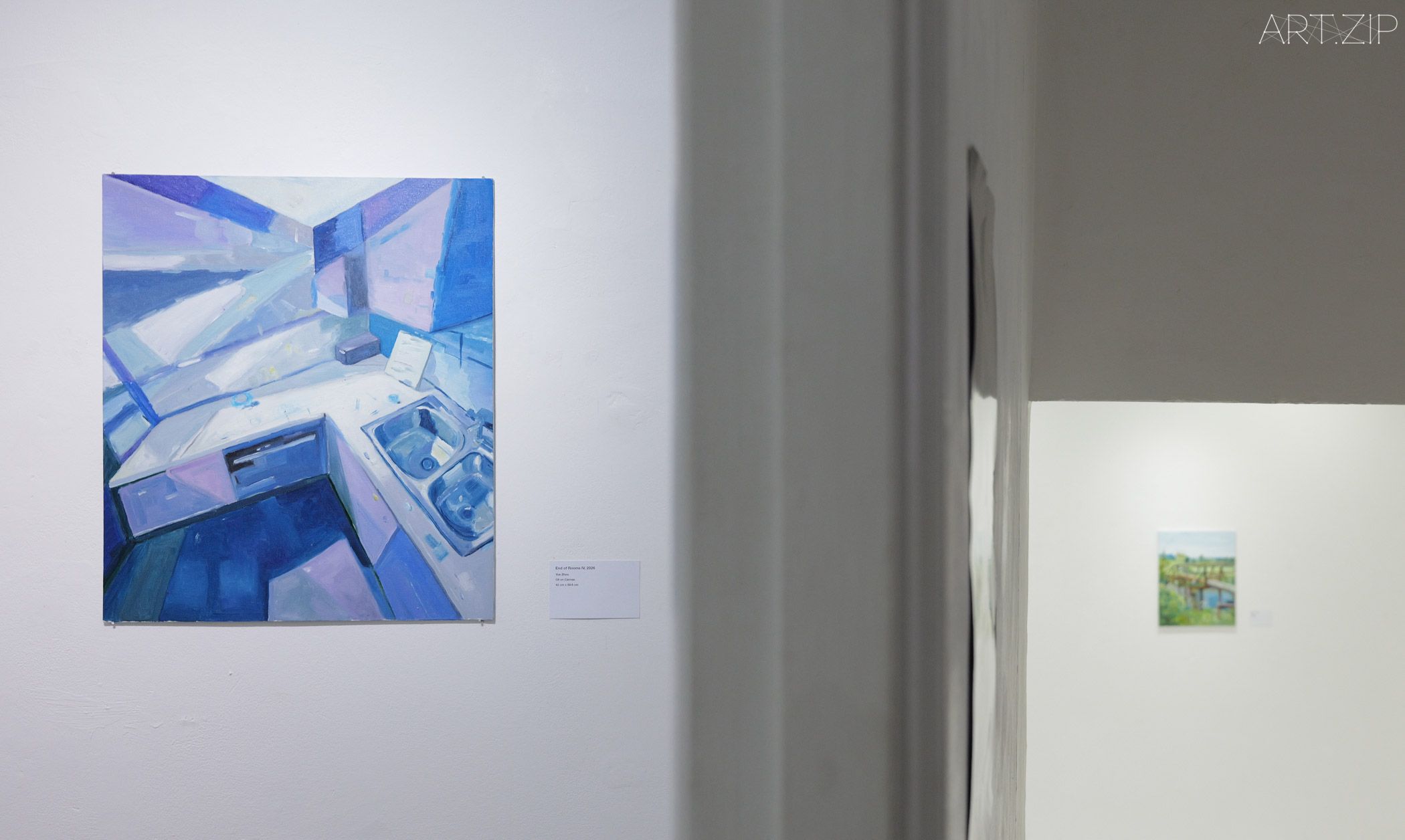
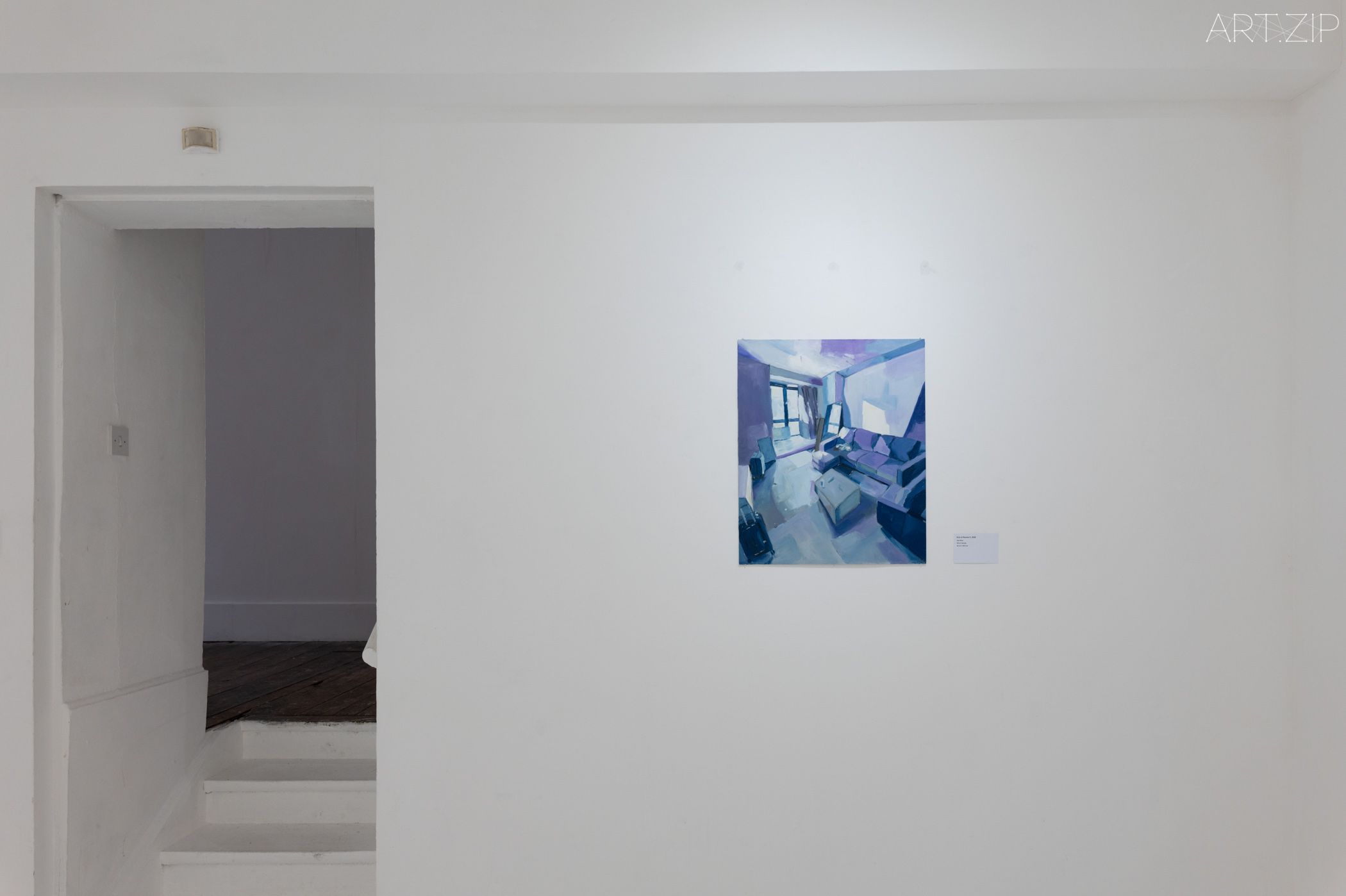
In her series End of Rooms (2025-26), Yue draws attention to the boundaries of seemingly familiar spaces. One contains an open fridge while another is recognisably a kitchen counter with a sink. However, these rooms are also not as literal as they first appear. Strong diagonals evoking projected and reflected light confuse our spatial perception, further accentuated by Yue’s choice to paint her scenes from an elevated angle. We feel like voyeuristic giants looking into these semi-inhabited spaces as if they were dollhouses.
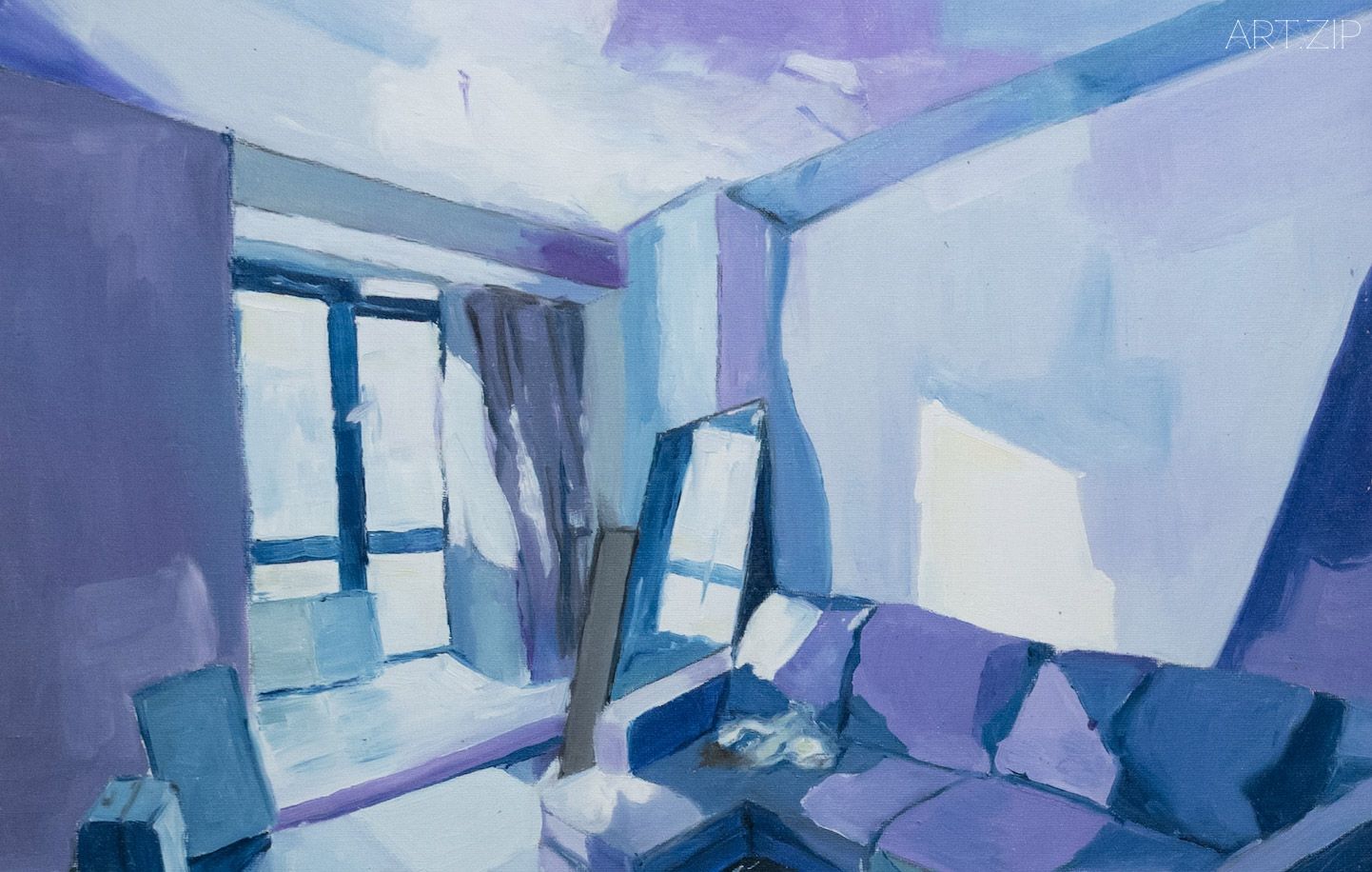
Detail of End of Rooms II, 2026, Courtesy of the artist.
Yue’s practice blends the realms of reality, memory, and dreams. Rather than approaching it in an overt manner like 20th-century Surrealism, her paintings subtly mutate between each conceptual layer, provoking sustained curiosity instead of immediate surprise. Although the experience is like looking at an Edward Hopper painting, her scenes rarely feature people, inviting us to play detective on how these spaces were used based on the state of objects in the room. Why is the fridge open? Are the two suitcases from a recent trip or are they about to leave? Who lived here and what are their stories?
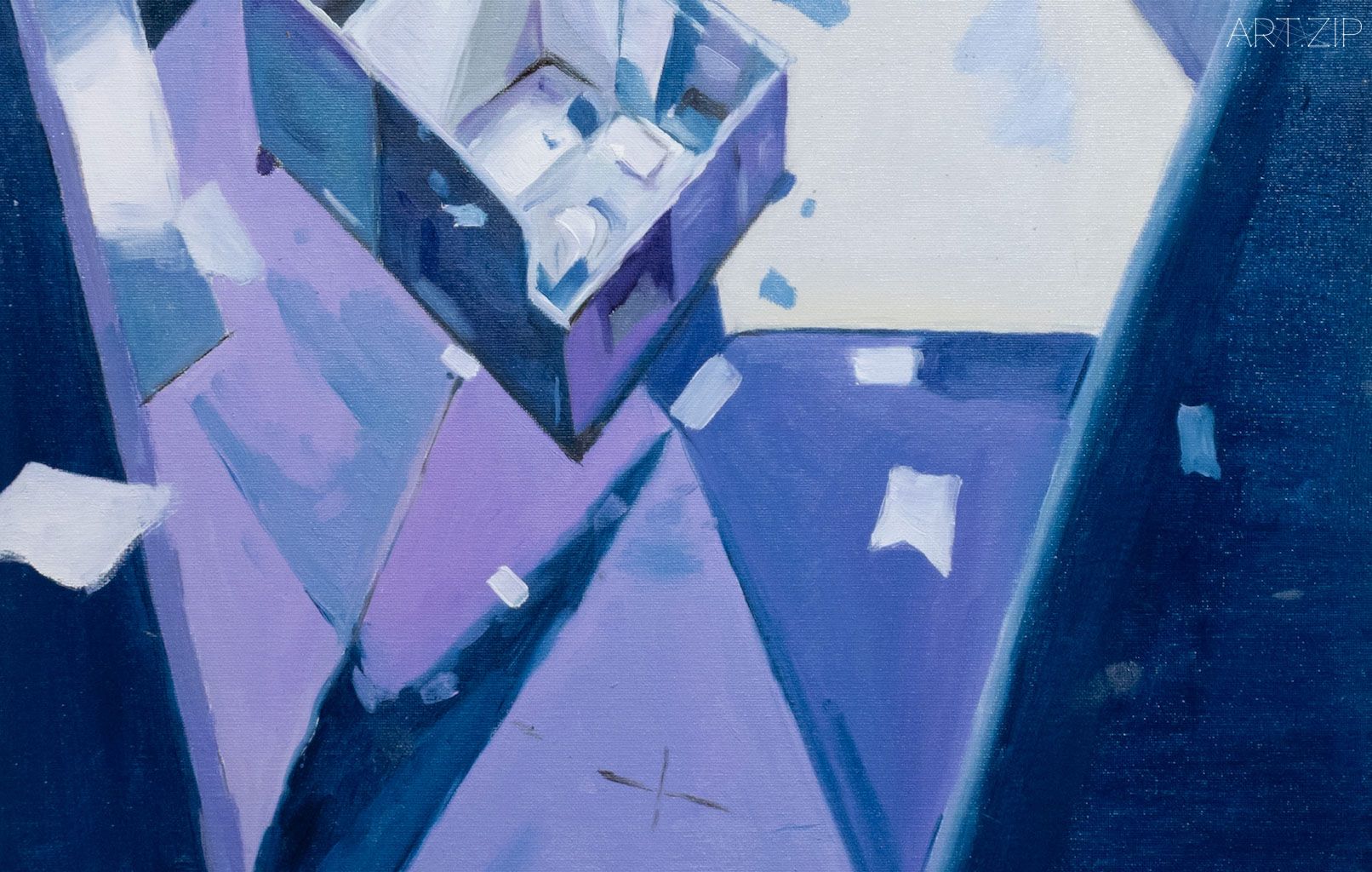
Detail of End of Rooms II, 2026, Courtesy of the artist.
Lighting is an important device in Yue’s works, inviting comparisons with the work of Vilhelm Hammershøi and Rose Hilton. In Another Window (2025), natural light floods into the scene, guiding our eyes towards a mountainous landscape in the background, and playing with the concept of a painting-within-a-painting. The similarities in colour palette for both the fictional landscape and Yue’s actual painting presents an interesting dilemma about what is real and what we are seeing. Both are rendered with highly textured brushstrokes that energetically jump across the surface, while the contours of the mountainous forms almost seem to bleed out of the frame and converge with the shadows on the wall.
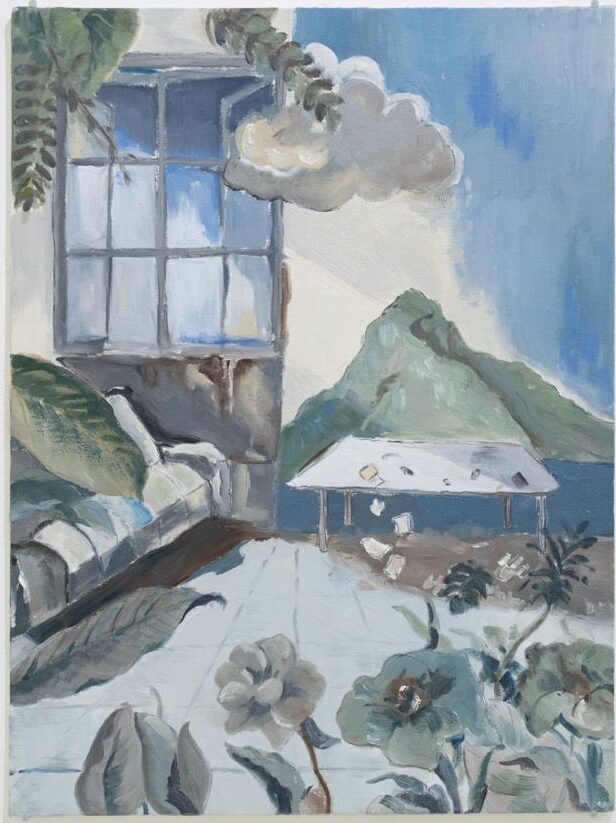
Indoor Weather (2025) illustrates Yue’s practice most effectively. The scene shows an interior space with panelled floors somehow being overtaken by the natural elements. There are plants growing out of the floor, a cloud hovers above the room, and a large table seems to merge with a distant mountain. Yue describes this painting as a comment on the housing crisis, focusing more explicitly on what happens when individuals are forced to remain indoors for extended periods of time, and how this affects their inner, psychological state. This painting reflects that inner climate, which changes and adapts to the variables one faces in daily life.
Finally, Before Becoming (2024) is one of very few pieces that features a person. Yet this simple image of a girl waving towards glimmering sunlit sea does not exist in real life; it is a fantasy that Yue has concocted as an imagined reality in the future. One might call it a dream, but Yue thinks of it as allowing the figure to dwell in a time that has never been defined, but one that has already begun to shape us.
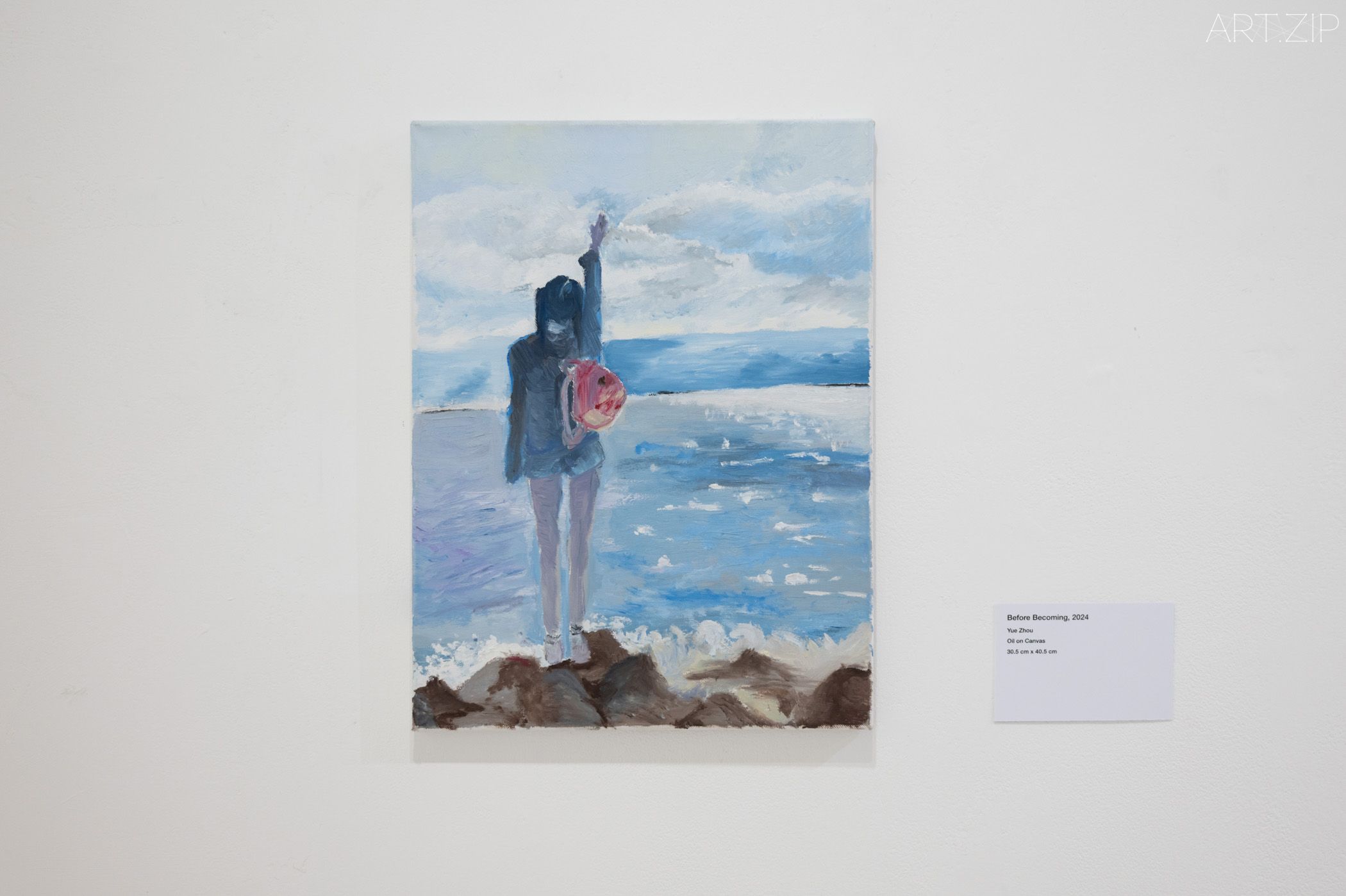
Installation View of Before Becoming, 2024, Courtesy of the artist. Photopgrapher: Violet.
Yue’s paintings invite us to pause and reflect. Whether that experience is one of meditative introspection or playful imagination, her open narratives offer an escape into a psychological bubble away from the outside world. As a result, we as audiences are given the time and permission to nurture a forgotten skill: the art of close looking.
Text By Nigel Ip
Published on 16 November 2026