
The exhibition was planned as a celebration. Developed over several years with Julio Le Parc and his Atelier, the exhibition brings together more than sixty works tracing a practice that runs from the late 1950s to the 2020s. Le Parc was to have come to London himself, for the invited preview on 8 June. He did not get there. He died in Paris on 30 May 2026, aged ninety-seven, twelve days before the public opening. His son Yamil said that his father had fought to the last, and that the exhibition was still on his mind.
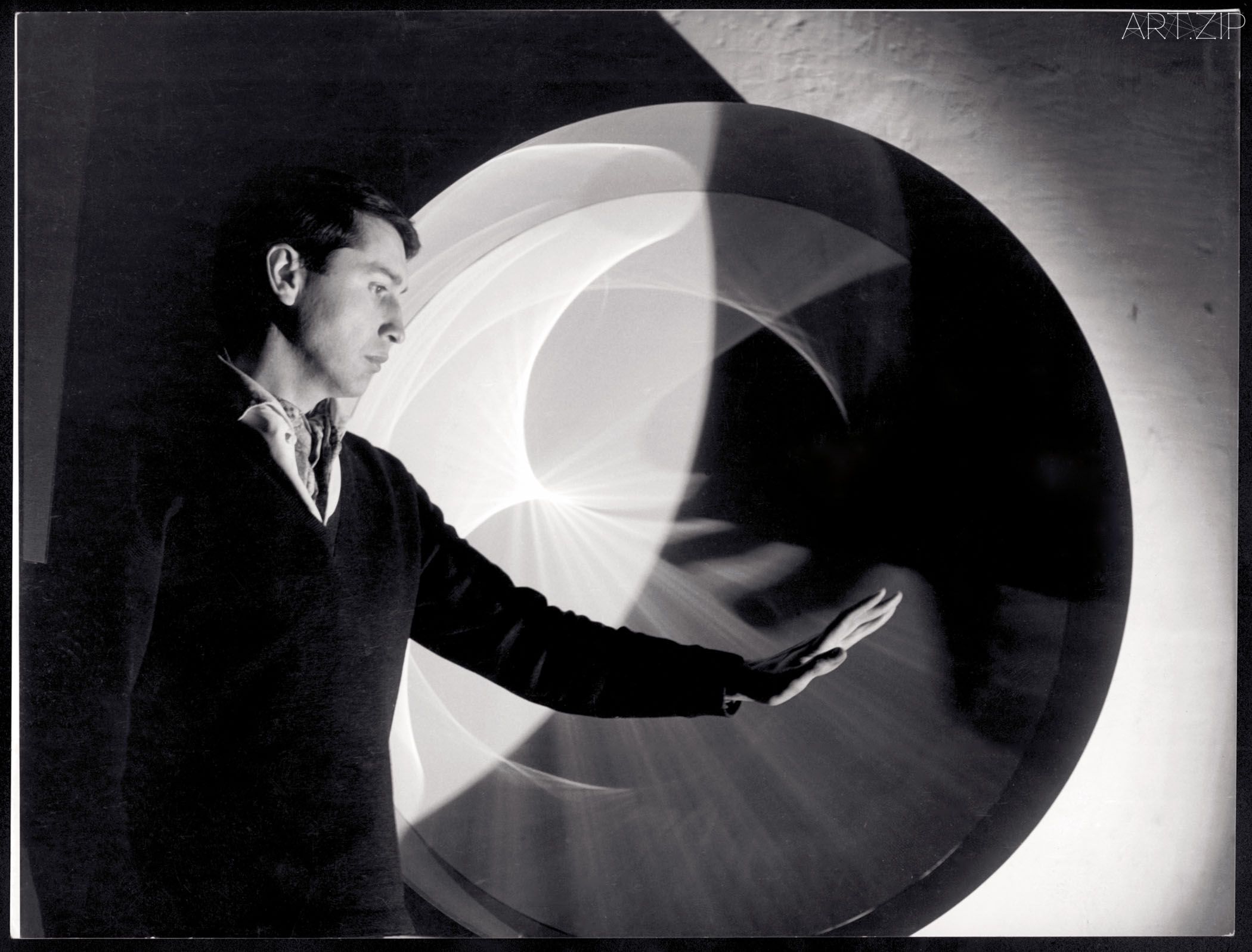
Julio Le Parc with Continual Light Cylinder 1962 © Atelier Le Parc 2026 ADAGP Paris, and DACS London.
So the show arrives as a farewell it was never designed to be. What is strange — and, walking through it, quietly moving — is how little the absence registers as absence. Le Parc spent seventy years shifting attention away from himself and towards the conditions of looking. Some works wait, apparently inert, until someone arrives; others are already in motion, but remain incomplete until a viewer moves around, through or against them. What he distrusted most was not authorship itself, but the authority traditionally granted to the singular artist. He was also the last surviving founding member of the Groupe de Recherche d’Art Visuel, so what closes here is not one career but the final thread of a collective argument. An exhibition that no longer has its artist in it turns out to be, in some sense, the condition he had been rehearsing all along.
Le Parc was born on 23 September 1928 in Mendoza, Argentina, and spent his childhood between Mendoza and Palmira. The son of a railway worker, he began earning money at thirteen, delivering newspapers and repairing bicycles, and studied fine art at night in Buenos Aires while working days in factories and bookshops. In 1955 he took part in the student movement that occupied the city’s three fine art schools and demanded sweeping reforms to their administration and curricula. In 1958 a scholarship from the French cultural service took him to Paris, where he arrived that November and stayed. In 1960 he co-founded the Groupe de Recherche d’Art Visuel (GRAV) with Horacio García Rossi, François Morellet, Francisco Sobrino, Joël Stein and Yvaral — a collective committed to dissolving the myth of the solitary genius and replacing passive contemplation with situations the viewer had to set in motion. In 1966 Le Parc won the Grand Prize for Painting at the 33rd Venice Biennale, by then his work was made of light and movement, and had almost nothing to do with painting. During the events of May 1968 he left his studio to join the Atelier Populaire at the École des Beaux-Arts, helping to produce collectively authored, mostly silkscreened posters; that June he was arrested at the Renault plant in Flins while supporting striking workers, and the French government, calling him a foreign agitator, expelled him from the country. Five months later, after sustained pressure from the cultural world, the order was lifted and he returned. He lived and worked at Cachan, outside Paris, for the rest of his life. None of this is decorative biography. The politics and the optics were the same argument.
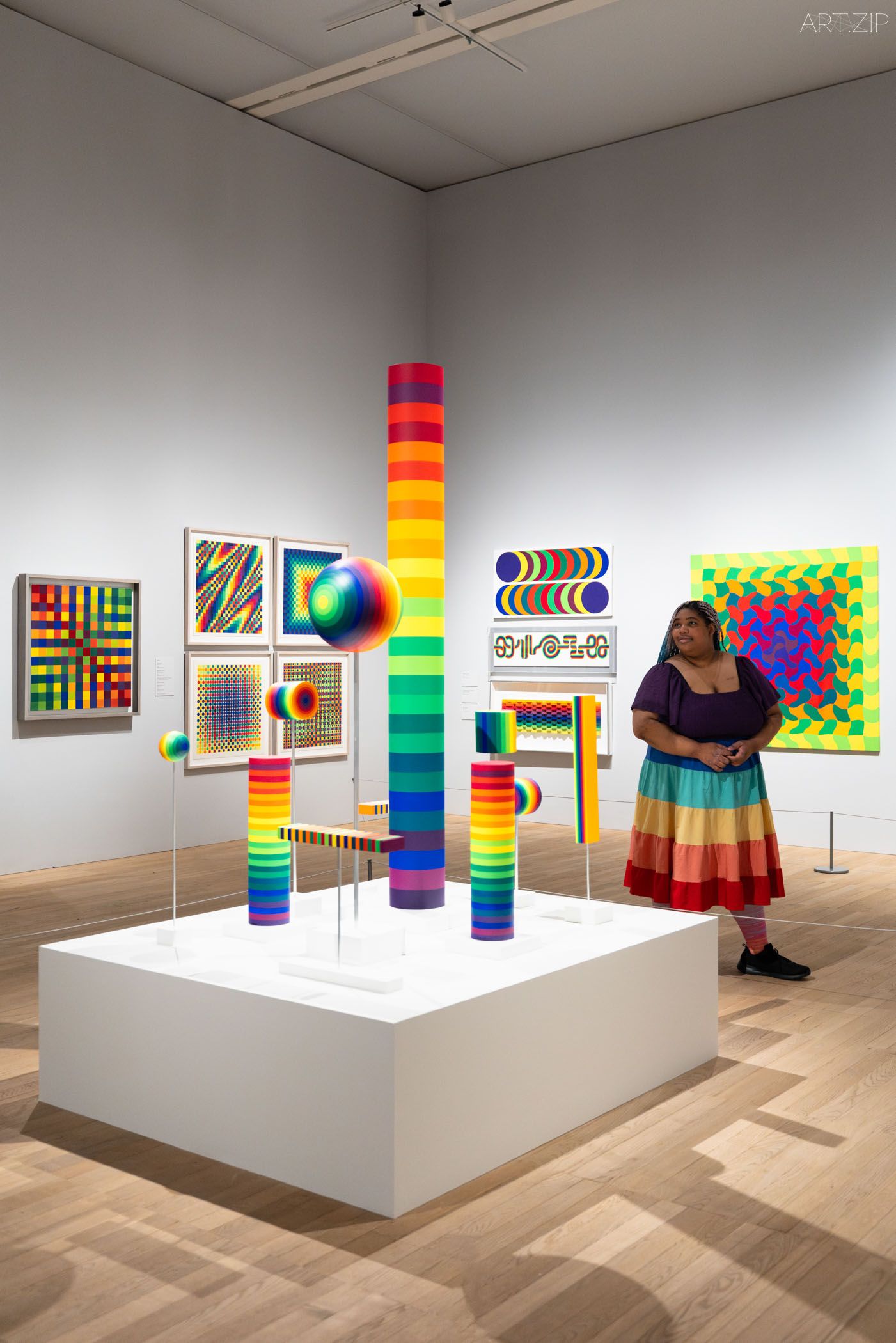
Julio Le Parc at Tate Modern. Photo (c) Tate Photography (Kathleen Arundell)
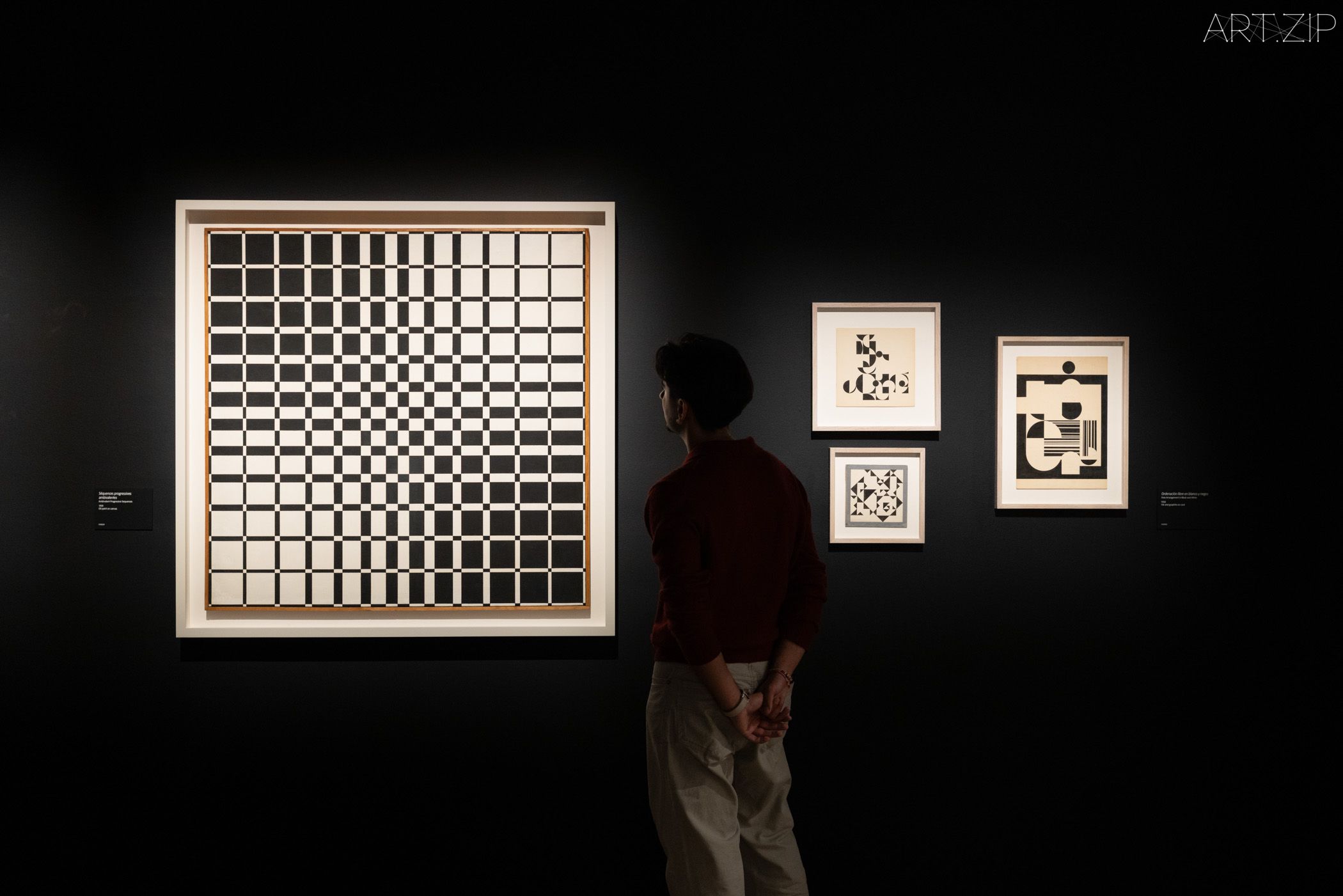
After a brief prologue devoted to Le Parc’s early black-and-white Surfaces — modular gouaches and paintings made after his arrival in Paris, among them Instability (1959) and Progressive Sequences (1959) — the exhibition’s circulation falls roughly into three movements: light, interaction and colour. The order matters. Before light becomes an actual substance in the gallery, movement first appears as an optical disturbance on a static surface: the impression that a pattern is vibrating, rotating or slipping out of alignment beneath the eye.
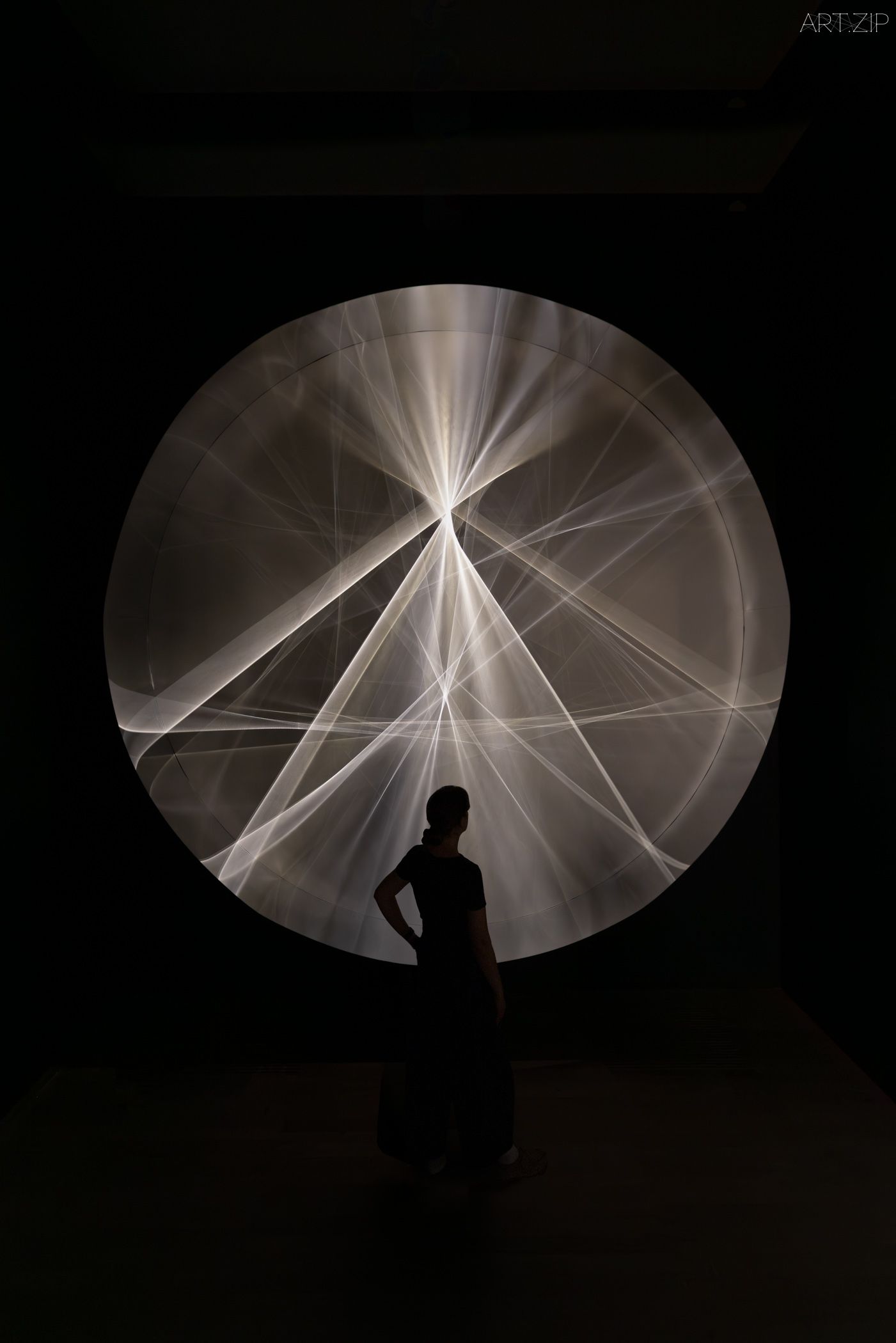
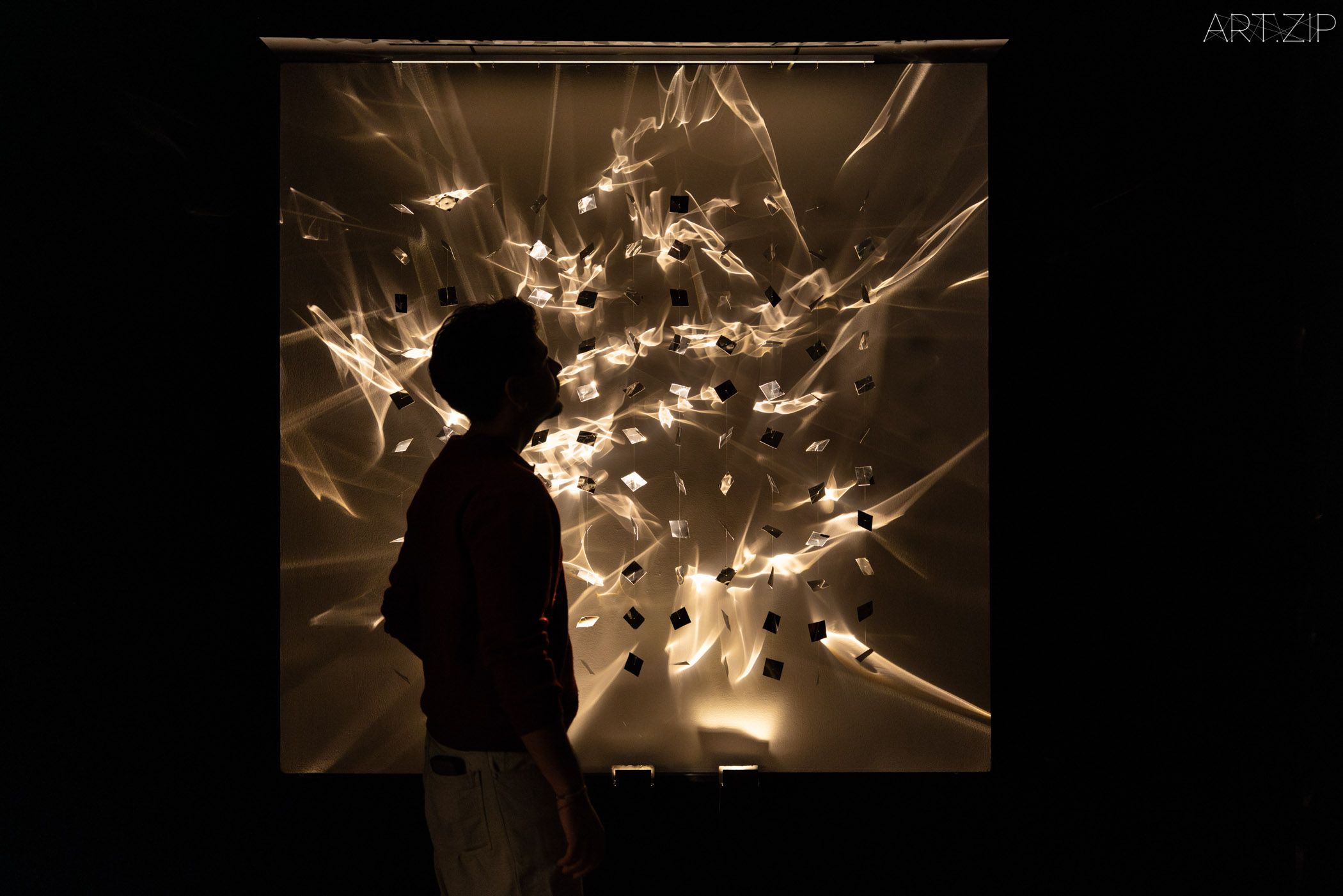
From those monochrome studies, the exhibition moves into a sequence of darkened galleries. Geometric structures hang in the air; light shifts across mirrored surfaces and flickers slowly in the dim. The sequencing seems to rely on something instinctive — the pull towards a light source — to draw the visitor further in. Light here is not simply illumination. It is the material itself, generated, displaced and altered in space. Before you can take it in, it has changed. You become aware, quite quickly, that your eye is doing something it is not used to doing.
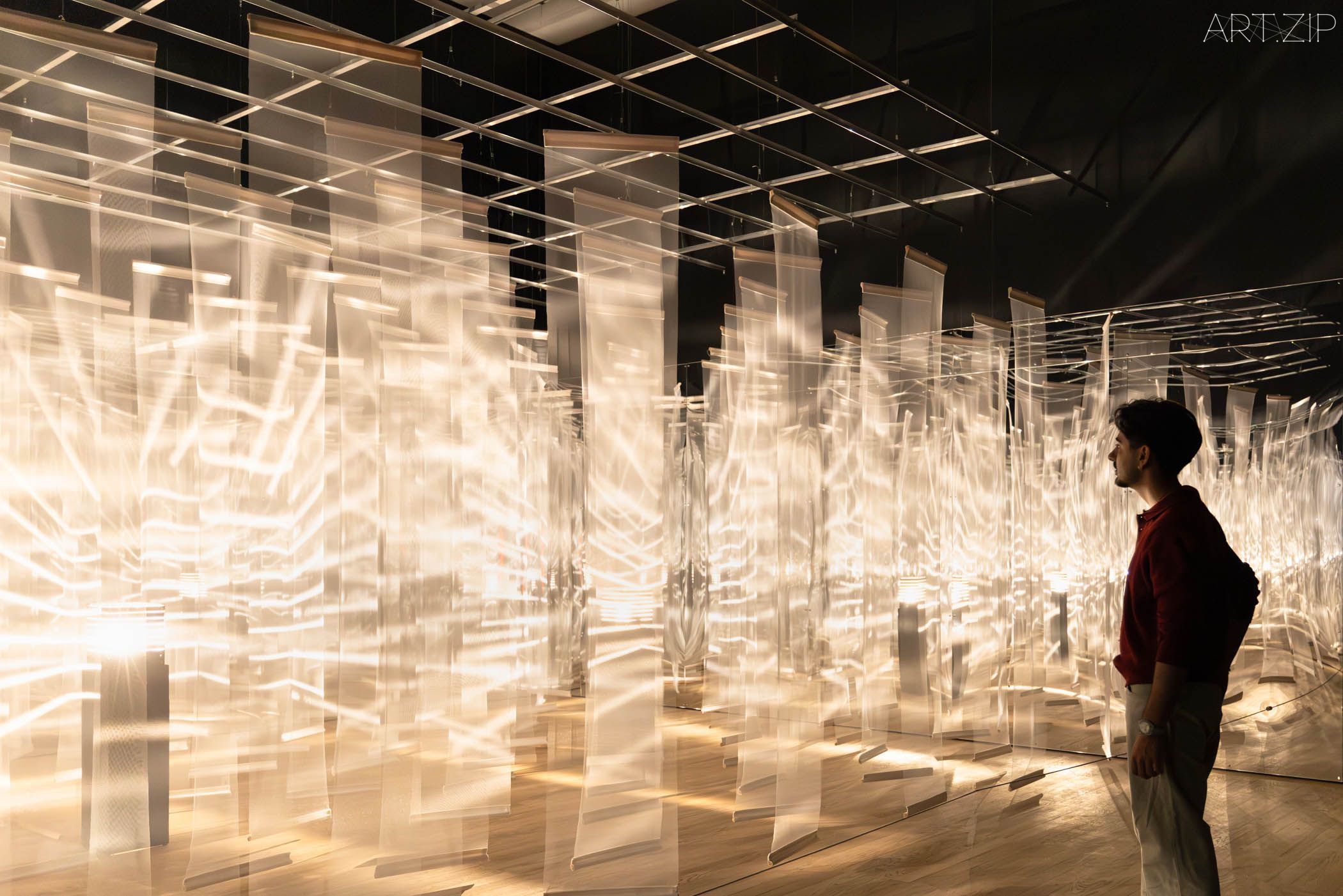
Then the darkness opens into the participatory rooms, which are noisier and considerably less solemn. Ensemble of Eleven Surprise Movements (1965), one of the Game Room installations, invites visitors to press buttons that set wheels spinning, strips bouncing, and small mechanisms rattling. Machines whir, clatter and vibrate. The room behaves like an arcade, and is meant to. “Through my works, I have always sought to get spectators to behave differently,” Le Parc said. The ambition sounds gentle. It was not. He wanted to interrupt the posture of reverence that galleries train into people, and he understood how much of an institution’s authority is carried in that posture.
Participation here depends on no digital sensors or invisible technology. Some works are activated directly by buttons and handles; others use motors, suspended reflective elements, moving air or the changing position of the spectator. In 64 Reflective Blades (2017), visitors walk between a painting and a screen formed from sixty-four reflective stainless-steel blades. As they pass, their own image is fragmented and folded into the work. The work does not merely respond to the viewer. It makes the viewer newly conscious of having a body — and of what a museum usually asks that body to do: stand still, keep quiet, don’t touch.
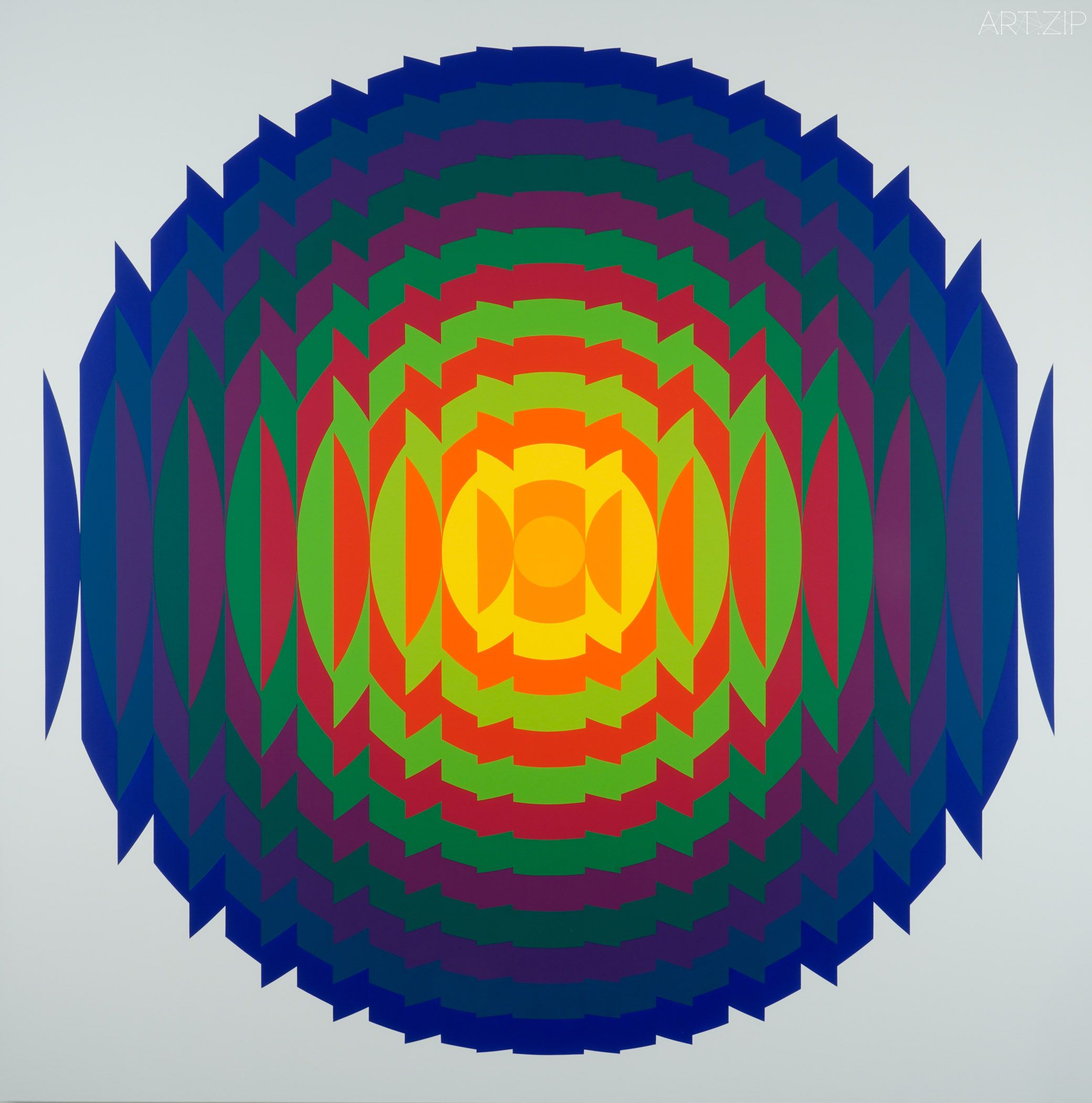
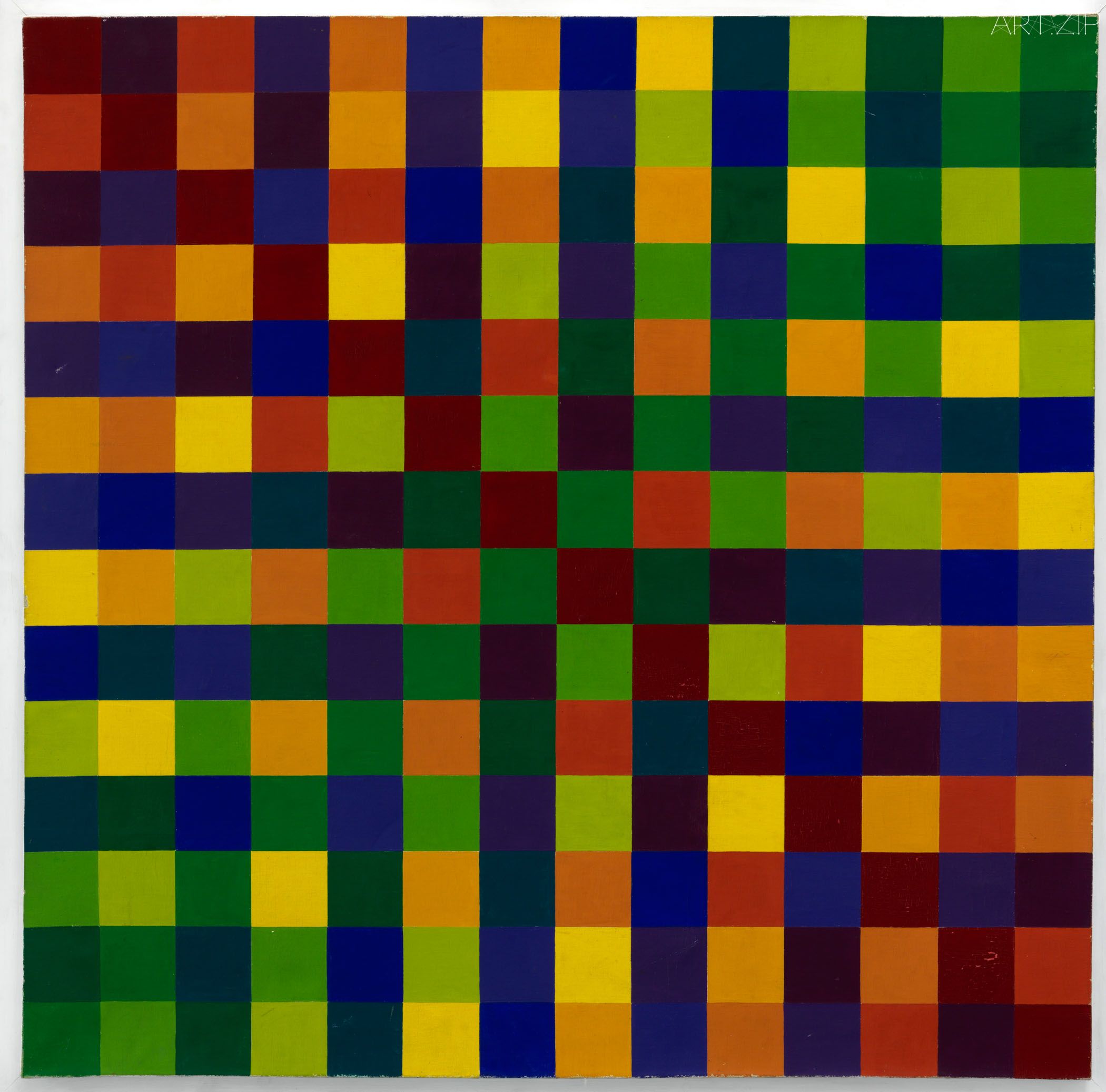
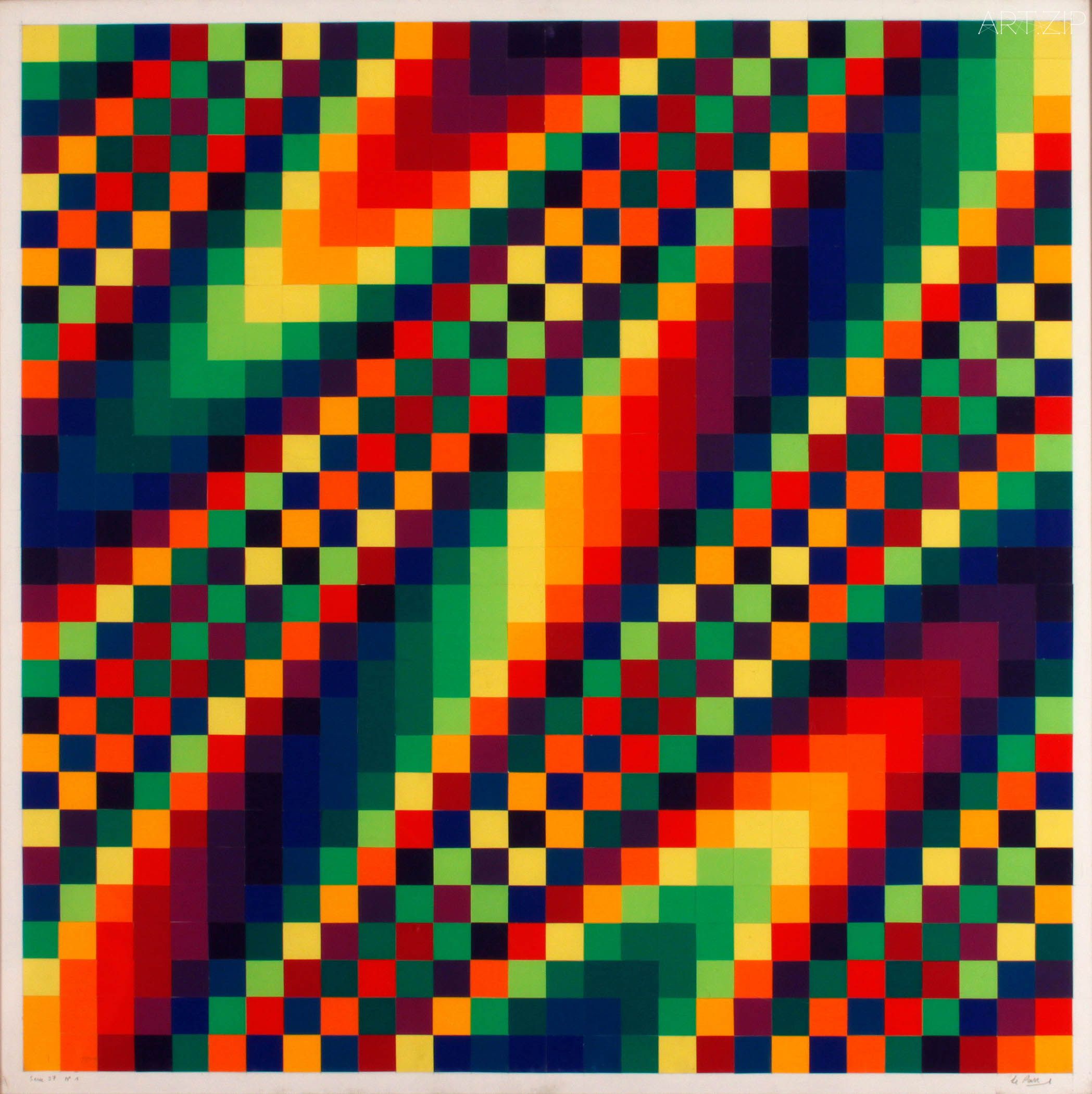
The final section returns to surface. Much of Le Parc’s colour work rests on a palette of fourteen hues he first set out in 1959, in the Colour Project — small gouaches working through every combination those fourteen allow, one by one. He kept returning to it: the wave paintings, including Waves 176 (2024), and the later Modulations and Alchemies series. Seen at the end rather than the beginning, these works read less as conventional painting than as the same experiment conducted by other means: movement held still on canvas and left for the eye to complete.
The exhibition’s trajectory — from optical movement to actual movement and back again — makes clear that Le Parc was never interested in motion as spectacle alone. Movement is a means of unsettling certainty: the stability of an image, the authority of the artist, the neutrality of the museum and the passivity expected of the person standing inside it. The viewer may enter because the works are playful, but play is the method rather than the conclusion.
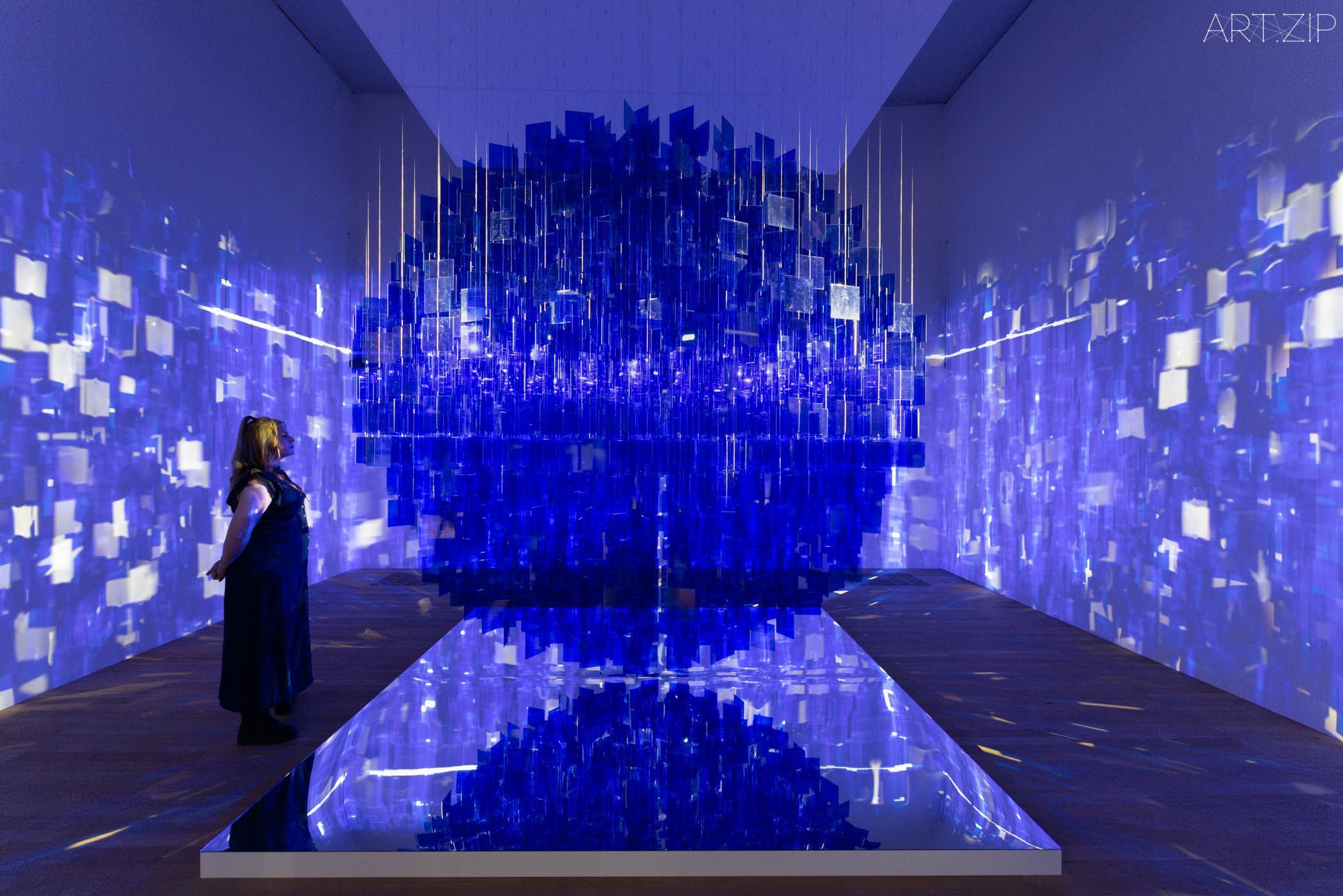
Beyond the ticketed exhibition, in the entrance hall of the Blavatnik Building, a new large-scale Continual Light Mobile made in 2026 — the year he died — hangs high above the stairs. Hundreds of small reflective plates on threads, scattering light across the raw concrete. You meet it on the way up to somewhere else, past a sign pointing to the galleries. No ticket, nobody asking you to look. The work has always behaved as if it belonged to whoever was standing in front of it. This one still does.

這場展覽原本是為慶祝而來。
此前數年,胡里奧·勒·帕克與他的工作室一直密切參與籌備。逾六十件作品,串聯起一條從1950年代末延伸至2020年代的創作軌跡。勒·帕克原本打算親自來到倫敦,出席6月8日的受邀預展。
但他沒能等到那一天。
2026年5月30日,勒·帕克在巴黎逝世,享年97歲,距離展覽正式開幕僅十二天。兒子亞米爾回憶,父親一直撐到生命的最後,心中惦記的,仍是這場即將在倫敦揭幕的展覽。
於是,它以一種從未被設想的方式抵達——不是慶典,而是一場告別。
奇特的是,走在展覽之中,缺席卻並不顯得像缺席。勒·帕克用了七十年,把注意力從藝術家本人身上移開,轉向觀看如何發生。有些作品看似靜止地等待著,直到有人走近;另一些早已處於運動之中,卻仍需要觀眾繞行、穿越,或改變自身的位置,才能真正完成。
他警惕的並不是作者身份本身,而是傳統上被賦予單一藝術家的絕對權威。他也是「視覺藝術研究小組」(GRAV)最廣為人知的六人核心陣容中,最後一位在世者。在此落幕的,因而不只是一段個人的藝術生涯,也是某種集體理想最後的一縷迴響。
一場不再有藝術家在場的展覽,某種意義上,恰恰成為了他一生都在排演的狀態。
勒·帕克於1928年9月23日出生於阿根廷門多薩省,童年在門多薩與帕爾米拉之間度過。父親是一名鐵路工人。十三歲起,他便開始謀生:送報、在單車修理鋪做助手,也曾進入製作水果木箱的小工廠工作。搬到布宜諾斯艾利斯後,他白天先後在皮具工廠、書店與冶金工廠做工,夜晚修習美術。1955年,他參與學生運動,佔領當地三所美術學校,要求全面改革學校的管理與課程制度。
1958年,勒·帕克獲得法國文化處獎學金,於當年11月抵達巴黎。1960年,他參與創立「視覺藝術研究小組」(Groupe de Recherche d’Art Visuel,簡稱GRAV)。到次年,團體的核心陣容由勒·帕克、奧拉西奧·加西亞·羅西、弗朗索瓦·莫雷萊、弗朗西斯科·索布里諾、若埃爾·斯坦與伊瓦拉爾組成。他們試圖瓦解「孤獨天才」的神話。在這些作品裡,觀眾不再只是站在一旁的見證者,而成為作品得以啟動、變化和完成的條件。
1966年,勒·帕克獲得第33屆威尼斯雙年展繪畫大獎——彼時他的作品已由光線與運動構成,早已不是繪畫。1968年五月風暴期間,他離開自己的工作室,加入設於巴黎美術學院的「人民工作室」(Atelier Populaire),參與集體設計和製作以絲網印刷完成的匿名政治海報。同年六月,他在弗蘭的雷諾工廠聲援罷工工人時被捕,法國政府以外國「煽動者」為由將他驅逐出境。五個月後,在法國文化界的持續聲援與施壓之下,政府撤銷了驅逐令,他回到巴黎。此後,他長期在巴黎近郊卡尚生活與工作,直至終老。這些並不是附著在作品之外、可有可無的生平註腳。對勒·帕克而言,政治與視覺,從來是同一個論證。
展覽首先以勒·帕克早期的黑白《表面》(Surfaces)系列作為序章——那是他抵達巴黎後創作的水粉與繪畫,以同一組幾何單元反覆排列,藉由數學規則與細微變化製造視覺擾動,其中包括《不穩定》(Instability, 1959)與《漸進序列》(Progressive Sequences, 1959)。此後,展覽大致展開為三個樂章:光、互動與色彩。這個順序並非偶然。在光真正成為展廳裡的材料之前,運動先以視覺擾動的形式出現在靜止的平面上——圖案彷彿正在震動、旋轉,或在眼睛的注視下逐漸偏離原有的秩序。
運動尚未真正發生,觀看卻已經開始動搖。
從這些黑白研究出發,展覽逐步進入一系列昏暗的展廳。幾何結構懸浮於空中,光線掠過鏡面,在幽暗中游移、反射、緩慢閃爍。動線的安排似乎倚仗著一種本能——人對光源的趨近——引導觀眾一步步深入。此處的光不只是照明。光就是材料本身,在空間中不斷生成、位移與變化,你還來不及看清,它已經換了樣子。你很快就會發現,自己的眼睛在做一件它並不習慣的事。
穿過黑暗,進入可以動手的房間。那裡吵鬧得多,也遠沒有那麼肅穆。屬於「遊戲室」系列的《十一種驚奇運動的組合》(Ensemble of Eleven Surprise Movements, 1965)邀請觀眾按下按鈕,讓輪盤轉動、金屬條彈跳,小型機械裝置隨之碰撞作響。機器嗡鳴、喀噠作響,不斷震動。這個房間像一座遊戲廳,而它本就應該如此。勒·帕克曾反覆表示,他希望透過作品,改變觀者的行為方式。這個願望聽來溫和,其實不然。他要打斷的,是美術館長久以來訓練在人身上的那副虔敬姿態——他也深知,一個文化機構的權威,有多少正藏在這些看似自然的身體規訓之中。
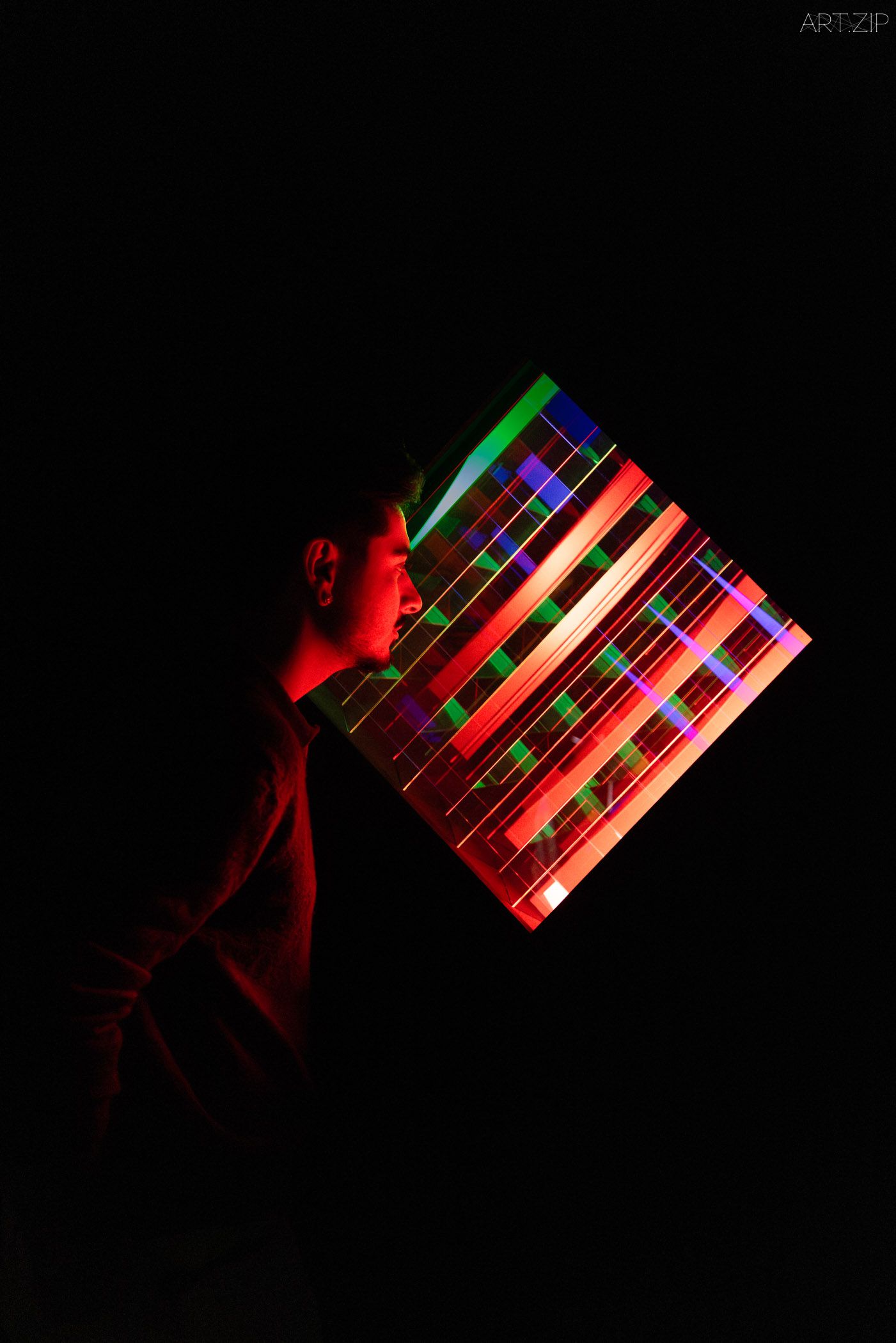
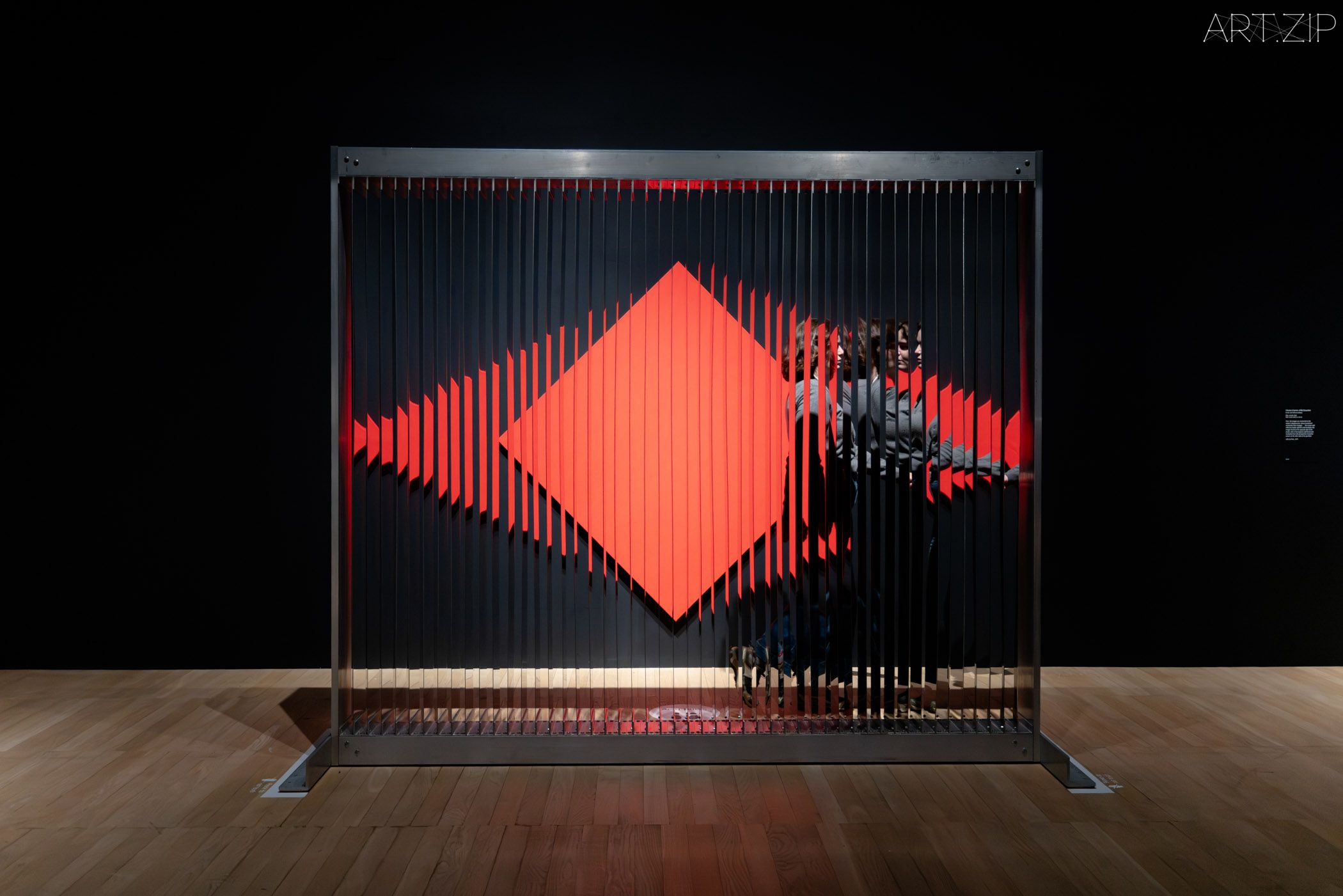
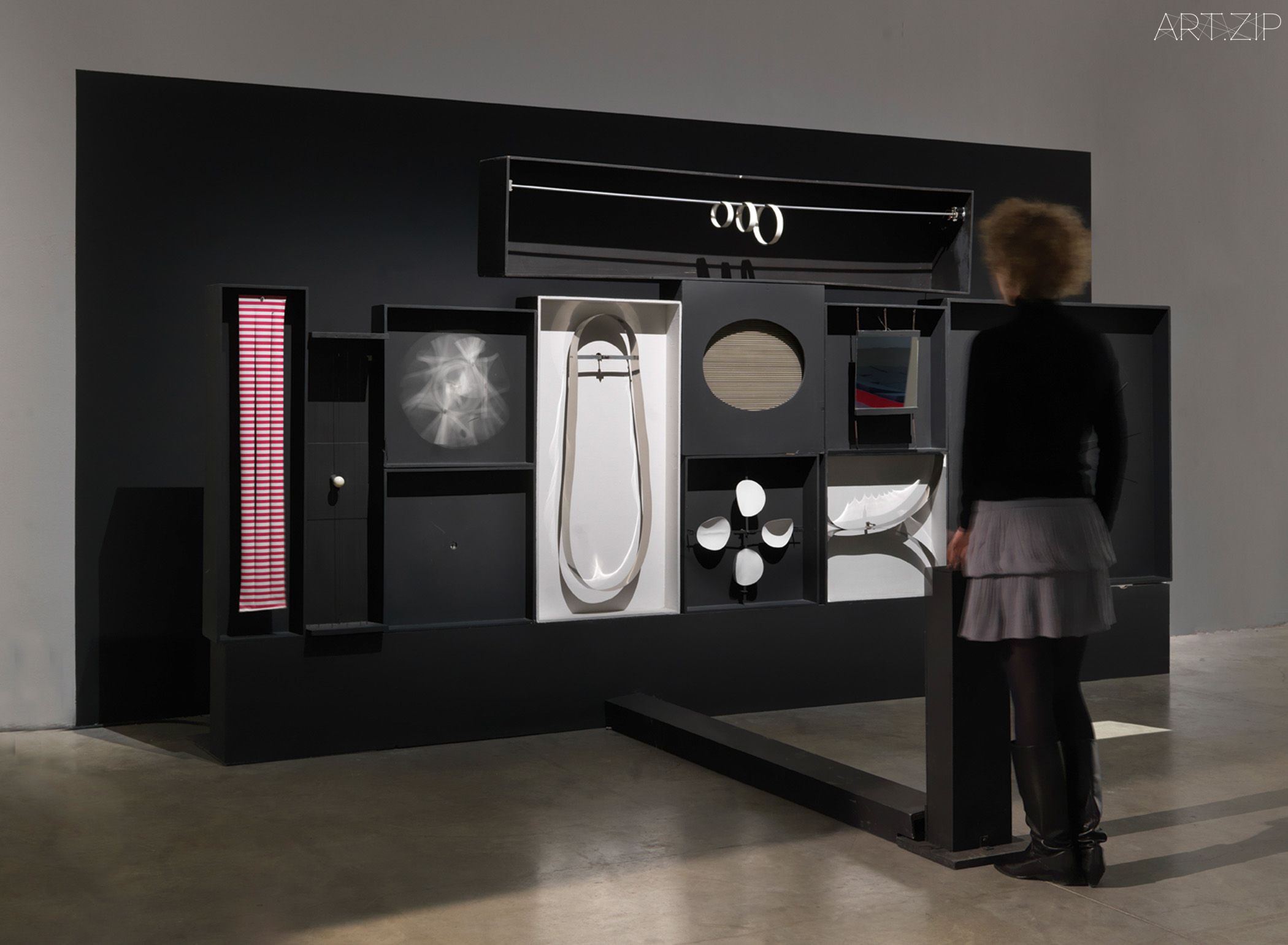
這裡的參與往往不需要數碼感應器或其他看不見的技術。有些作品由按鈕和把手直接啟動;另一些則運用馬達、懸掛的反光部件、流動的空氣,或觀看者位置的改變。在《六十四片反光葉片》(64 Reflective Blades, 2017)中,觀眾走入一幅繪畫與一道由64片反光不鏽鋼葉片構成的隔屏之間。隨著人們從中穿過,自身的影像被切割、折射,捲入作品之中,然後又在下一刻消失。作品不只是回應觀眾。它讓人重新感覺到自己的身體:腳步、位置、距離,以及身體在空間裡製造的每一次變化。它也讓人忽然意識到,美術館對身體有著多少不言自明的要求——站定、噤聲、不要伸手。
展覽的最後部分重新回到平面。勒·帕克的色彩實踐,大多建立在他於1959年確立的十四色系統之上。《色彩計劃》(Colour Project)中的小幅水粉,把這十四色所能生成的組合逐一畫盡。此後,他不斷回返於這一結構——包括《波浪176》(Waves 176, 2024)在內的波紋繪畫,以及後期的《調變》(Modulations)與《煉金》(Alchemies)系列。把它們放在結尾而非開頭來看,這些作品與其說是傳統意義上的繪畫,不如說是同一場實驗換了媒介:畫布留住的是靜止,運動要由眼睛完成。
從視覺上的運動,走向空間裡真實發生的運動,再重新回到平面,勒·帕克從未把運動僅僅當作一種奇觀。運動是他用來動搖確定性的:圖像的穩定、藝術家的權威、美術館所宣稱的中立,以及身處其中的人被期待保持的安分與被動。人們或許是被作品的趣味吸引進來的,但遊戲只是他的方法,從來不是結論。
展廳之外,一件全新的、2026年完成的《持續之光活動雕塑》(Continual Light Mobile, 2026)懸在布拉瓦特尼克大樓入口的樓梯高處——2026那正是他去世的這一年。數百片細線垂吊的反光板,把光斑撒在光潔的混凝土牆上。人們是在上樓的途中會遇見它。不必買票,沒人要求你抬頭。他的作品向來表現得像是屬於此刻站在它面前的人。這一件仍然如此。
展廳之外,《持續之光活動雕塑》(Continual Light Mobile, 2026)懸在布拉瓦特尼克大樓入口的樓梯高處——他去世的那一年。數百片細線垂吊的反光板,把光斑撒在裸露的混凝土牆上。人們是在上樓的途中遇見它的。不必買票,沒人要求你抬頭。
他的作品向來屬於站在它面前的人。這一件仍然如此。
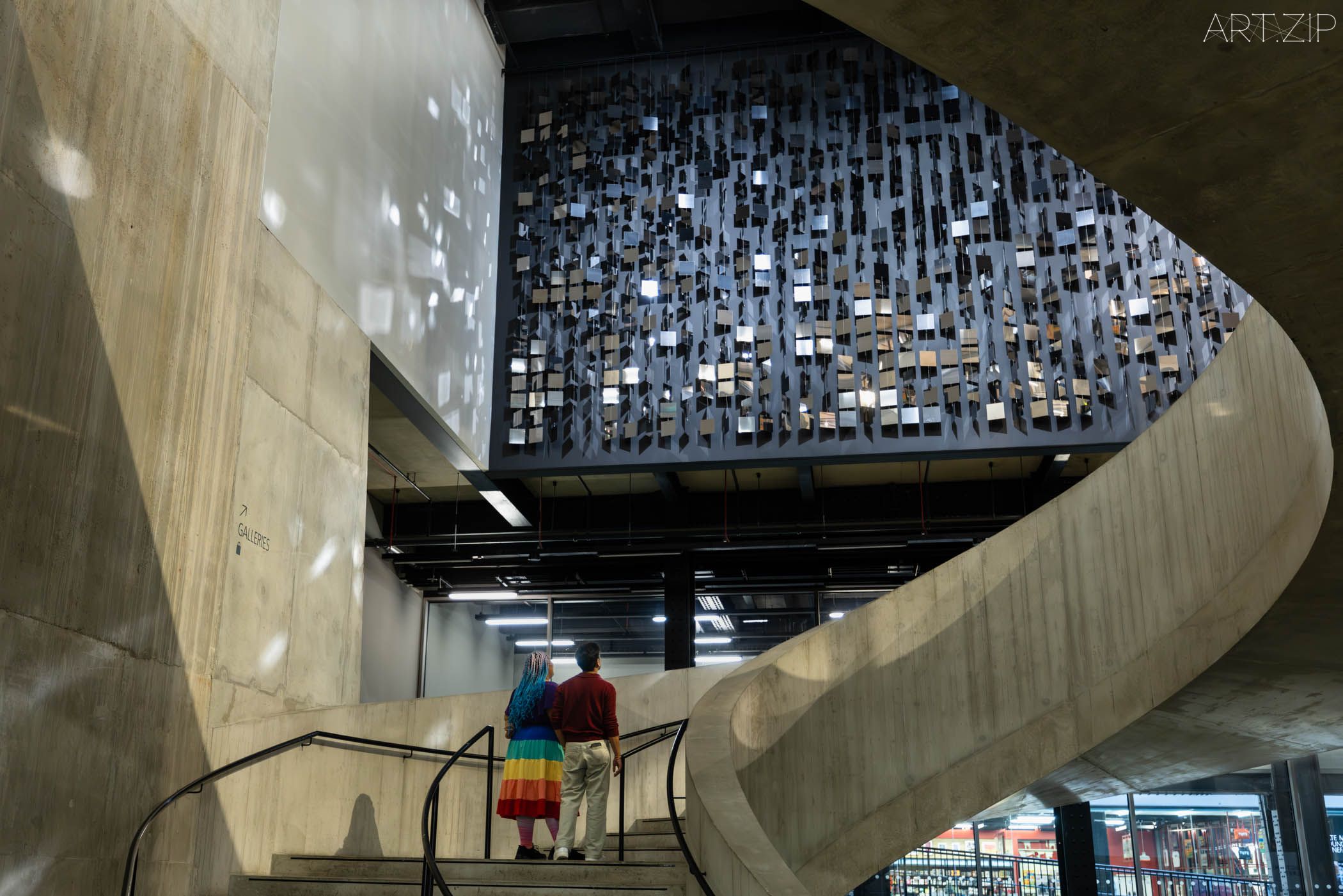
Julio Le Parc at Tate Modern. Photo (c) Tate Photography (Kathleen Arundell)
Julio Le Parc: Light. Colour. Action.
Tate Modern, London
11 June 2026 – 3 May 2027
Text by 撰文 x Jackie Liu, Michelle Yu