


How the Narrative Turns Female Solidarity into Patriarchy’s Aftercare
女性情義如何在敘事中替父權善後
Leaving the cinema, I had to admit that Dear You had moved me. Long after the screening ended, many of its scenes continued to linger in my mind. But being moved does not mean that I must follow the film’s narrative logic—to read a life shaped for decades by misunderstanding, kindness and silence, simply as a story of devotion, with forgiveness as its only possible resolution.
When the seemingly thoughtful, well-meaning advice to “bring tissues” becomes a film’s emotional point of entry, the audience has already been placed in a particular viewing position. By the time we enter the cinema with a packet of tissues in hand, that packet seems to serve another purpose besides catching tears. It begins to resemble a consent form for weeping, signed in advance: we have come prepared to be moved, prepared to understand, prepared to place the suffering on screen within some larger, gentler, more forgiving emotional frame.
In recent years, many films about family, motherhood and women’s suffering have summoned audiences in precisely this way. In media coverage and word of mouth surrounding Hi, Mom (2021), viewers were repeatedly advised to “bring tissues”; More Than Blue (2019) was more direct still, with publicity and related coverage carrying the line: “The only viewing advice you need: bring plenty of tissues.” There is, of course, nothing malicious in such reminders. Many of these films are sincere, and many genuinely move audiences to tears. Yet after the catharsis of a good cry, I still find myself wanting to ask: when a woman’s loss of agency has already been packaged as a tear-jerking experience, how much room remains for discomfort, for anger, for questions?
With Dear You, this “bring tissues” framing becomes more complicated. It is neither simply a slogan issued by the distributor nor merely a piece of social-media clickbait. In mainland China, the film became a sleeper hit through roadshows and word of mouth. As it travelled overseas, however, “bring tissues” resurfaced as a recurring refrain, amplified by mainstream coverage, premiere reports, audience reactions and short-form videos. Reports from the London premiere repeatedly noted that all 400 packets of tissues supplied by the organisers had been handed out. Headlines roughly translated as “after crying across China, audiences are now crying overseas”, while People’s Daily Online likewise reported that the organisers’ entire supply had been used. In the process, “bring tissues” ceased to be merely a viewing tip. It became one of the frames through which the film was recommended, retold and understood.
Against this backdrop, the film’s UK and Ireland release on 26 June becomes especially worth considering. Following its surprise success in mainland China, written and directed by Lan Hongchun and running 118 minutes, Dear You became a box-office phenomenon; by 27 June, it had grossed more than RMB 1.9 billion, roughly £200 million. For Chinese-speaking audiences overseas, there is much in the film that deserves to be seen: its Teochew dialogue; qiaopi—the letters, remittances and related documents exchanged between Chinese emigrants and their families at home; and the history of Teochew migration to Nanyang and the family separations it produced. Experiences like these rarely appear on screen in such an accessible, mainstream form. The film brings into view the lives of women long obscured by stories of men who “went away, struggled, sent money home and returned”: women who cooked, raised children, kept house, waited for letters, received them and endured. In places where their labour was never recognised as a contribution, they quietly kept a household—and sometimes an entire extended family—going.
The film opens, however, not with those women but with a debt. Xiaowei, the grandson, leaves for Thailand without telling his family, hoping to track down the grandfather he has heard was a wealthy man. What he brings back instead is the revelation that his grandfather died decades ago, and that the person who had been corresponding with his grandmother all those years was a stranger. It is worth holding onto this beginning; I will return to it.
There are many moments in the film that catch in the throat and bring tears to the eyes. What moved me most were the letters passing back and forth.
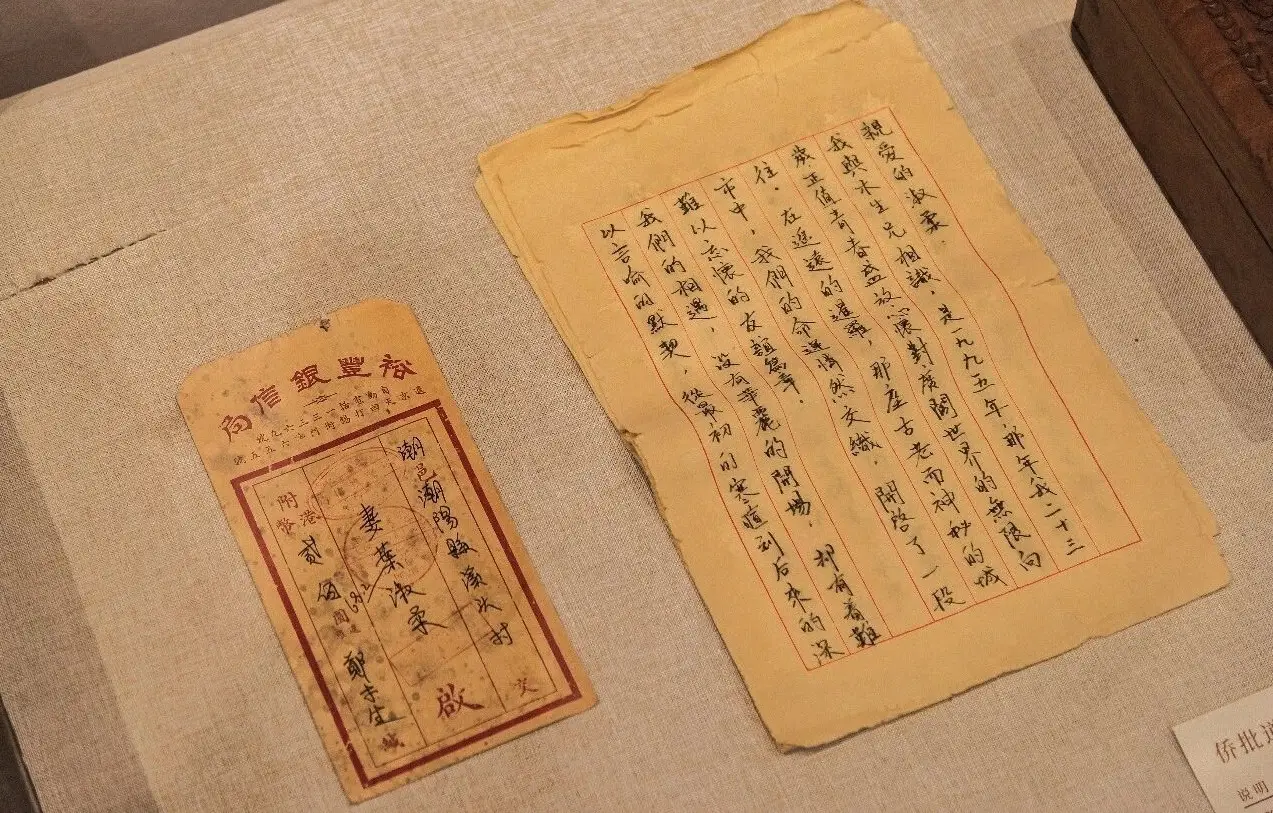
A qiaopi travels from Siam to Chaozhou; a reply makes the journey from Chaozhou back to Siam. The words on the page are read aloud, and the camera cuts to another woman’s life. She opens the letter, reads it, cooks, cares for the children and waits for news of her husband. Elsewhere, the woman actually writing the letters continues to earn a living, taking on the burden of supporting his family in place of a man who can no longer speak. On the surface, these are love letters from a husband to his wife: Shurou believes she is reading letters from Musheng. In reality, what she is reading is Nanzhi’s empathy, care and sense of responsibility; an ethic of mutual aid forged across the distance between Chaozhou and Nanyang; and a remorse Nanzhi has never quite been able to lay down. One woman waits for her husband through the letters; the other writes in his place, keeping alive the belief that he is safe, dutiful and still thinking of home.
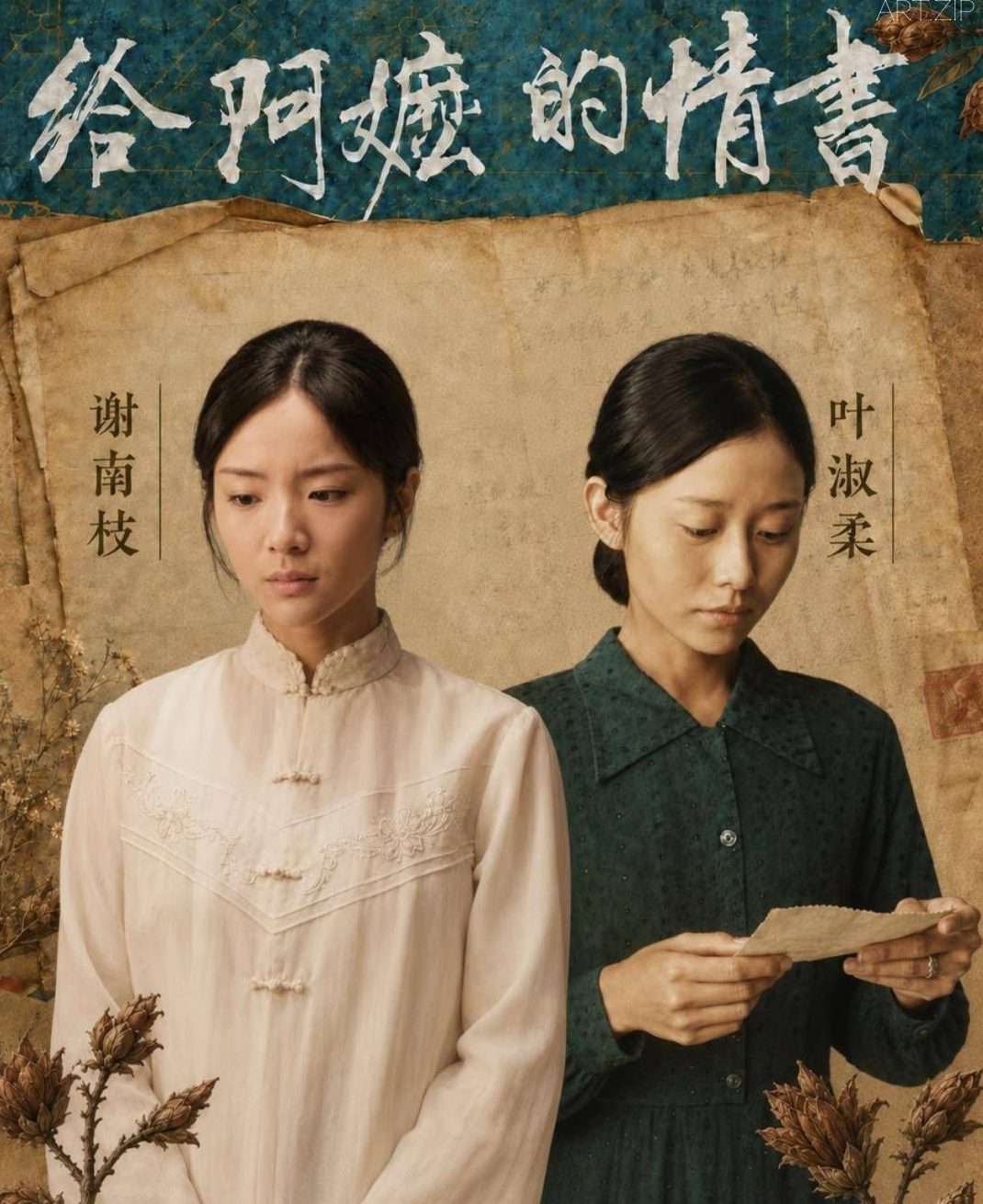
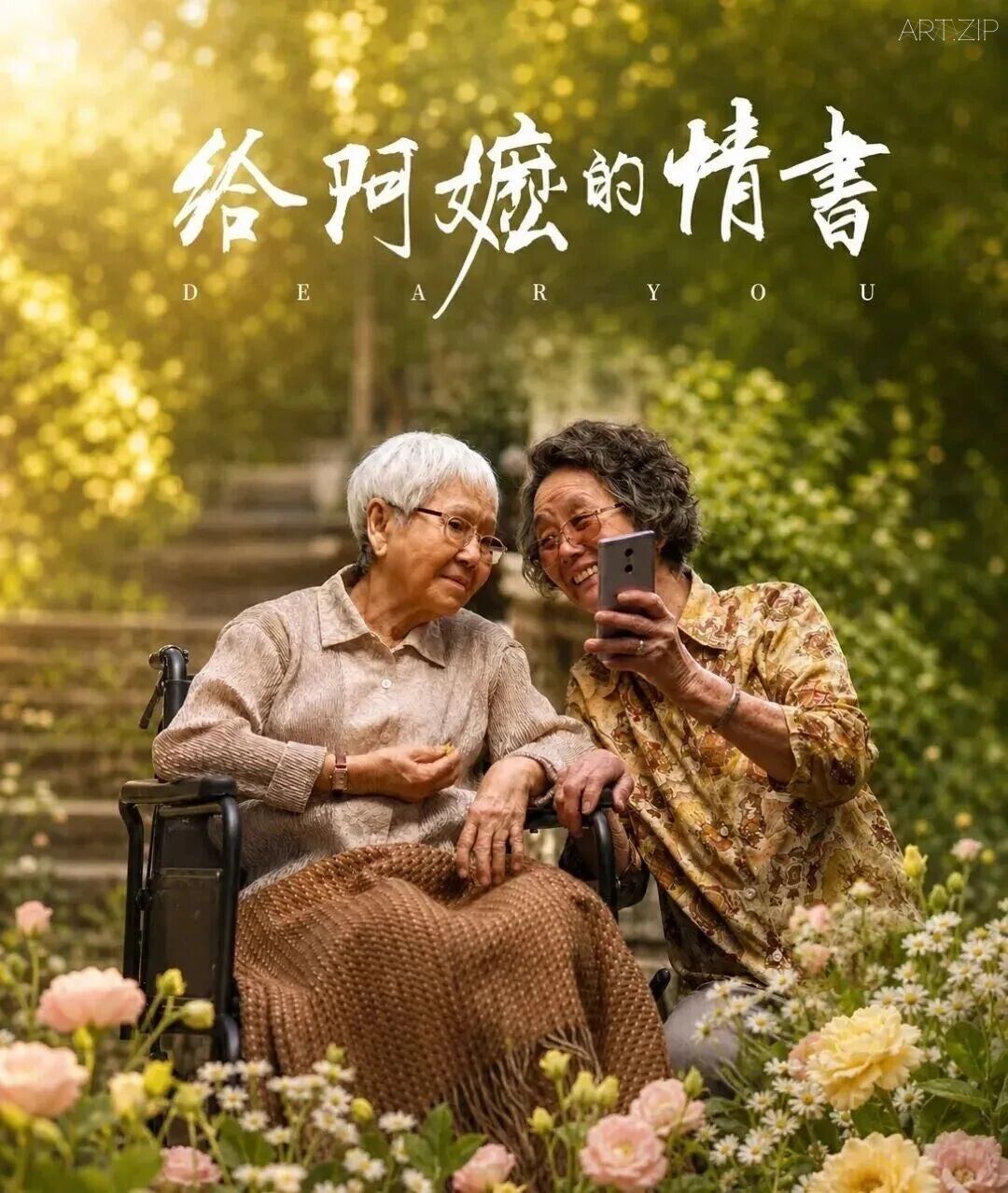
What makes Dear You so moving is the way a correspondence that ostensibly belongs to a husband and wife gradually becomes an exchange between two women. They do not live together, yet they live parallel versions of the same daily life. They never truly speak to one another, yet through the letters they carry between them the weight of children, poverty, ageing, waiting and life itself. In these letters, two women hold up two homes.
This bond cannot be reduced to a lie deliberately sustained by one person. It also grows out of an older, more elemental ethic. In an age marked by displacement, poverty and uncertain communication, people from the same hometown, strangers far from home, even women who have never met, may come to care for one another because they recognise a shared fate. Nanzhi sees the letters that migrant men write to their wives and children, and she feels for the woman far away in Chaozhou, waiting desperately for news of her husband. Her choice is shaped by kindness and care, but also by an unwillingness to stand by and watch a marriage and a family collapse under the weight of that loss.
Yet this solidarity between women is not grounded in equality, freedom or full knowledge on both sides. For much of the story, it depends on Shurou remaining in the dark. Nanzhi writes and sends money in Musheng’s name, assuming the responsibilities he left behind as husband and father, while preserving his place in the story Shurou has been led to believe about her own life. Kindness and fellow feeling cannot undo the inequality on which this relationship rests. Care and consideration cannot place a life built around that false premise beyond scrutiny. To understand why Nanzhi acted as she did does not mean that the questioning should stop—still less that we have the right to forgive Nanzhi on Shurou’s behalf.
What demands scrutiny, then, is not simply the choices made by the characters, but the way the film’s narrative guides us, step by step, towards understanding, tears and reconciliation. It takes a life shaped for decades by misunderstanding, kindness and silence, and makes it seem almost natural to recast that life as a tender, tearful story of devotion. This is why I want to reconsider Dear You within the tradition of melodrama.
In Chinese, melodrama is conventionally translated as qingjieju (情节剧), a term too readily reduced to lurid plotting, emotional excess or manipulation. But I am not using melodrama here simply as a genre label. I am thinking of it as a narrative structure and an emotional logic: a way of arranging misunderstanding, belated truth, unspoken love and indebtedness, and of guiding an audience towards understanding, weeping and reconciliation.
In film history, melodrama has roots in theatre and early cinema. By the 1930s and 1940s, it had become closely entwined with the Hollywood tradition of the woman’s picture—films centred on women’s lives and addressed largely to female audiences—and with the tear-jerker, or weepie. Films such as Stella Dallas (1937), Now, Voyager (1942) and Mildred Pierce (1945) often revolve around women’s experiences of love, motherhood, class, sacrifice and reputation, as well as desires that cannot be spoken aloud. The phrase “three-handkerchief weepie” describes precisely this mode of viewing: before the film has even ended, tears have already become part of the way we understand a woman’s fate.
The ambiguity of melodrama lies here. On the one hand, it gives visibility to feelings suppressed by the structures of family, morality, class and gender. A woman’s grievance, a mother’s sacrifice, a daughter’s resentment, an unacknowledged desire, love and hatred that cannot be voiced—all can be heightened and made visible through melodrama. It recognises that some pain really is unbearable; that many relationships cannot end with dignity; that life is full of misunderstandings; and that not everyone finds a way out.
On the other hand, melodrama has long been disparaged for precisely these qualities. It is too closely associated with female audiences, domestic narratives, tears, motherhood and sacrifice, and is therefore often dismissed as insufficiently sophisticated, excessively emotional or too adept at manipulating its audience. In English, the word melodramatic is commonly pejorative: exaggerated, contrived, overdone. Many films would rather call themselves dramas, family dramas or historical dramas than openly acknowledge themselves as melodramas. Drama sounds restrained and respectable; melodrama evokes tears, suffering, coincidence and emotional coercion.
But tears are not the whole reason melodrama remains controversial. The deeper problem is that tears can take the place of questions, deferring or even concealing ethical problems that remain painfully unresolved in life. At last the misunderstanding is cleared up; at last the truth is spoken; at last those long separated are reunited; at last forgiveness is granted. In that moment, the audience experiences release and may, with the tears, also set aside its judgement. We have cried, understood, forgiven and left the cinema. Yet once we look again at the story’s structure, the questions that matter are precisely these: who is required to wait, who performs the labour of care, whose name is preserved, whose truth is delayed, and who, in a seemingly complete reconciliation, loses the chance to understand her own life anew?
This is not to equate melodrama with patriarchal narrative. Quite the opposite: melodrama has often allowed suppressed female feeling, the difficulties of motherhood and domestic pain to become visible. The problem arises when these forms of pain are ultimately folded back into narratives of family, sacrifice, understanding and forgiveness. Melodrama can then become one means by which the patriarchal order repairs itself. It makes women’s suffering visible, only to render it bearable, admirable and ultimately something the audience can leave behind with its tears.
The complexity of Dear You lies precisely here. The film renders the empathy, care and mutual support between women profoundly moving. It also brings long-obscured forms of women’s labour into view. Yet at the same time, it folds that labour and pain back into the consoling closure of family, devotion and forgiveness.
On the surface, Dear You is a family drama. Its narrative structure, however, follows the logic of the family melodrama: the husband is absent, the wife waits, another woman writes in his name; the truth is postponed for half a lifetime, while love, indebtedness, responsibility and silence remain sealed within letters, remittances and the moral obligations of family, before being released all at once. What brings tears is not suffering alone, but the bonds of affection that grow around it. One woman waits for half a lifetime without knowing the truth; another spends half a lifetime carrying the burden left behind by a man. Yet through the tears of family melodrama, all of this becomes understandable—and therefore easier to forgive.
This also explains why “bring tissues” became the film’s most readily circulated invitation to watch. Audiences are invited not only to cry but, through crying, to accept this belated reconciliation. The film comes close to turning a life lived for decades under a false premise, and only finally unravelled, into a story of devotion moving enough to bring tears—and moving enough to make forgiveness feel natural. But what Shurou loses is not simply the chance to change her life. She loses the possibility of understanding her own life anew once the truth is known. At the very least, she might have learned sooner who it was she was really waiting for, and for whose sake she had kept waiting all those years.
I am not trying to judge women of that era by today’s ideals of romantic and marital freedom. Quite the opposite: Shurou may indeed have had very few realistic choices. She might not have been able to divorce easily, remarry without social disgrace, or truly escape the position assigned to her by family and history. Nor does Nanzhi act from a position of freedom or ease. She too is constrained by her time, by poverty, displacement, remorse and responsibility, and by a reality in which survival depends on people caring for and looking out for one another.
One woman waits for half a lifetime; another carries the truth for half a lifetime. Nor do I want to cast Nanzhi simply as the person at fault. She later tries to tell the truth in her own name, but the letter never arrives. Yet precisely because the delay cannot be reduced to malice, the film’s narrative choices deserve closer scrutiny. How do they take a life distorted by misunderstanding, accident, compassion and years of care, and recast it as a tender story of devotion?
Within that tenderness, the patriarchal order never truly leaves the scene. Musheng is dead, but his name lives on. Shurou believes the letters come from her husband, yet the person actually writing, sending money, providing care and assuming responsibility is Nanzhi. For decades, Nanzhi’s care can reach Shurou only under Musheng’s signature—and only by sustaining the illusion that the family remains intact. The letters connect two women, but they also allow a dead man to continue occupying the place of husband and father: the man is gone, but the children remain; the husband dies, but motherhood continues; the father is absent, and two women hold life together. Yet the father has not truly been removed. He has merely ceased to be a flesh-and-blood person and become instead a signature on a letter, the symbolic source of the family’s income, and the illusion of an intact home.
The solidarity between the women in Dear You is real. Nanzhi’s empathy is real; her care is real; Shurou’s waiting is real. The problem is that, within the film’s narrative structure, these genuine bonds ultimately become a form of aftercare for patriarchy. Women perform all the labour of sustaining life and family, while a man’s name and symbolic position remain stamped across that labour. The man dies, and a woman steps into the breach; the man can no longer repay what he owes, and a woman repays it for him; the man can no longer act as husband and father, and the film leaves a woman to preserve his place as both.
There is no denying the emotional power of Dear You. It gives cinematic visibility to women’s waiting and silence, to the history of Teochew migration to Nanyang, to the family memories carried in qiaopi, and to the mutual care that sustained people far from home. As this Teochew-language film reaches British screens, it brings far more than the promise of a good cry. It brings into view the lives of ordinary women whom mainstream cinema has rarely taken seriously.
Yet precisely because the film is so moving—and because the lives it brings into view matter so deeply—I still want to ask: are we too easily moved?
When one woman spends half a lifetime waiting without knowing the truth, while another spends half a lifetime filling the space left by a man—and all of it is shaped into a tender, moving story of devotion—will we, after the tears, still ask why these women had to spend their lives this way?
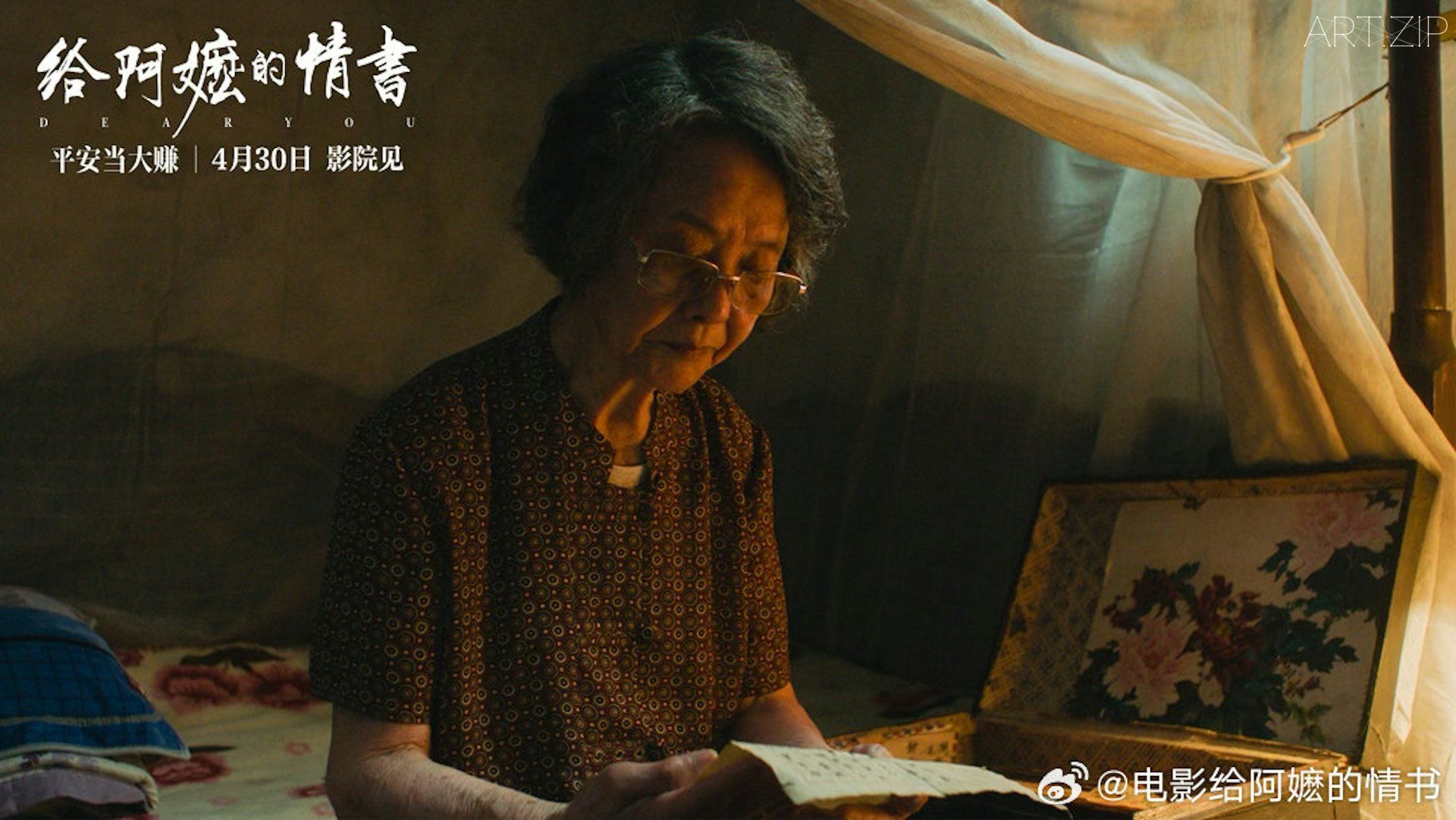
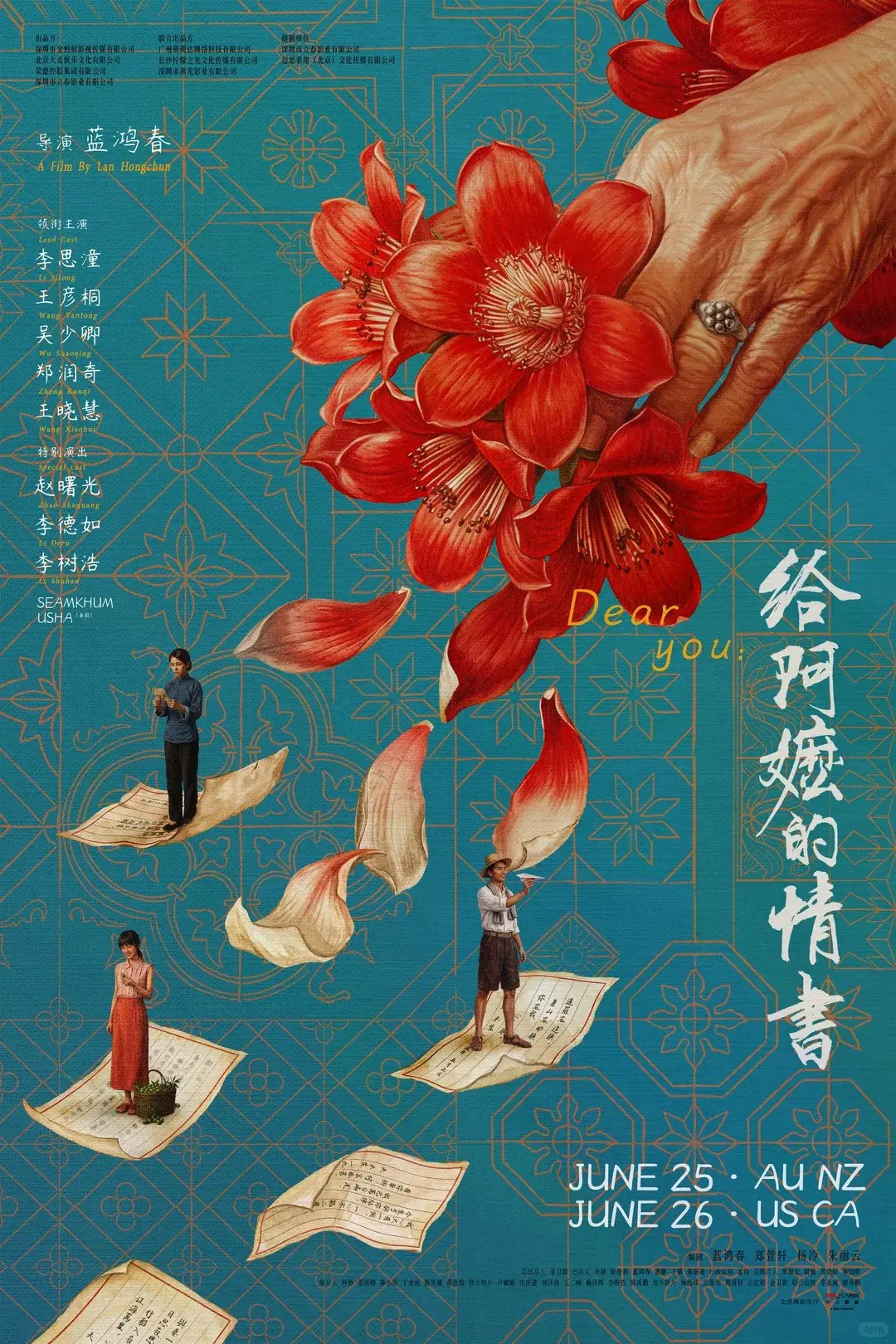
從影院走出來,我不得不承認,《給阿嬤的情書》確實動人。很久以後,其中許多片段依然縈繞在我的腦海中。但被打動,並不意味著我必須順著影片的敘事,把這場由誤會、善意和沉默共同維持的半生錯位,直接讀成情義,並把原諒當作它唯一的出口。
尤其當「帶好紙巾」這句看起來貼心而善意的觀影提醒,成為一部電影的情緒入口時,觀眾其實已經被提前安排好了觀看的位置。當大家人手一包紙巾入場時,那包紙巾除了用來應付眼淚,似乎也像一份預先簽好的催淚知情協議:我們已經準備好被打動,準備好去理解,準備好把銀幕上的苦難收進一種更宏大、更溫柔的情緒里。
近些年,許多親情片、母職片和苦情片都習慣用這樣的方式召喚觀眾。《你好,李煥英》(2021)的媒體報導和觀影傳播中,「帶好紙巾」曾反覆作為觀影提醒出現;《比悲傷更悲傷的故事》(2019)則更直接,定檔物料和相關報道中都出現過「唯一觀影提示:請帶足紙巾」的說法。這類提醒當然沒有惡意,許多電影也確實真誠、好哭。可在痛快地流過一場淚後,我還是忍不住想追問:當一場女性失權被預先包裝成催淚體驗,我們還剩下多少空間去表達不適、去生氣、去追問?
到了《給阿嬤的情書》,這種「帶好紙巾」的觀看提示又變得更微妙。它並不只是片方單向寫在海報上的一句口號,也不只是自媒體標題黨。影片在國內靠路演和口碑發酵成為黑馬,而當它走向海外,「紙巾」又被主流媒體、首映報導、觀眾反饋和短視頻傳播不斷放大。倫敦首映時,媒體報道反覆提到「400包紙巾全送完」、「全國哭完海外哭」,人民網也寫到主辦方準備的紙巾全部用完。於是,「帶好紙巾」不再只是一個觀影提醒,而逐漸成為這部電影被推薦、被轉述、被理解的方式之一。
也正是在這樣的傳播語境裡,影片於6月26日在英國和愛爾蘭院線上映,才顯得格外值得討論。
繼影片在中國內地上映成為票房黑馬後,截至6月27日,累計票房已突破19億元人民幣(約合兩億英鎊)。對於海外華語觀眾來說,這部電影當然有它值得被看見的地方:潮汕話、僑批——海外華人與中國家人之間往來的家書、匯款及相關憑證,2013年入選聯合國教科文組織《世界記憶名錄》——以及南洋遷徙與家族離散。這些經驗很少以如此大眾化的方式出現在銀幕上。影片讓那些長期被「男人遠行、打拼、寄錢、回鄉」的敘事遮蔽的女性生活浮出水面:做飯、養孩子、守家、等信、收信、忍耐。她們在從未被命名為「貢獻」的地方,默默維持著一個家,甚至一個家族的繼續運轉。
不過,影片真正的開端並不是這些女人,而是一筆債。孫子小偉瞞著家人前往泰國,想去找那位傳說中發了財的阿公。他帶回來的,卻是阿公早已在異鄉去世的消息,以及與阿嬤通信多年的另有其人。這個開端值得先記住,我稍後會回到它。
片中有很多讓人鼻子一酸、忍不住落淚的地方。最打動我的,是那些來往的信件。
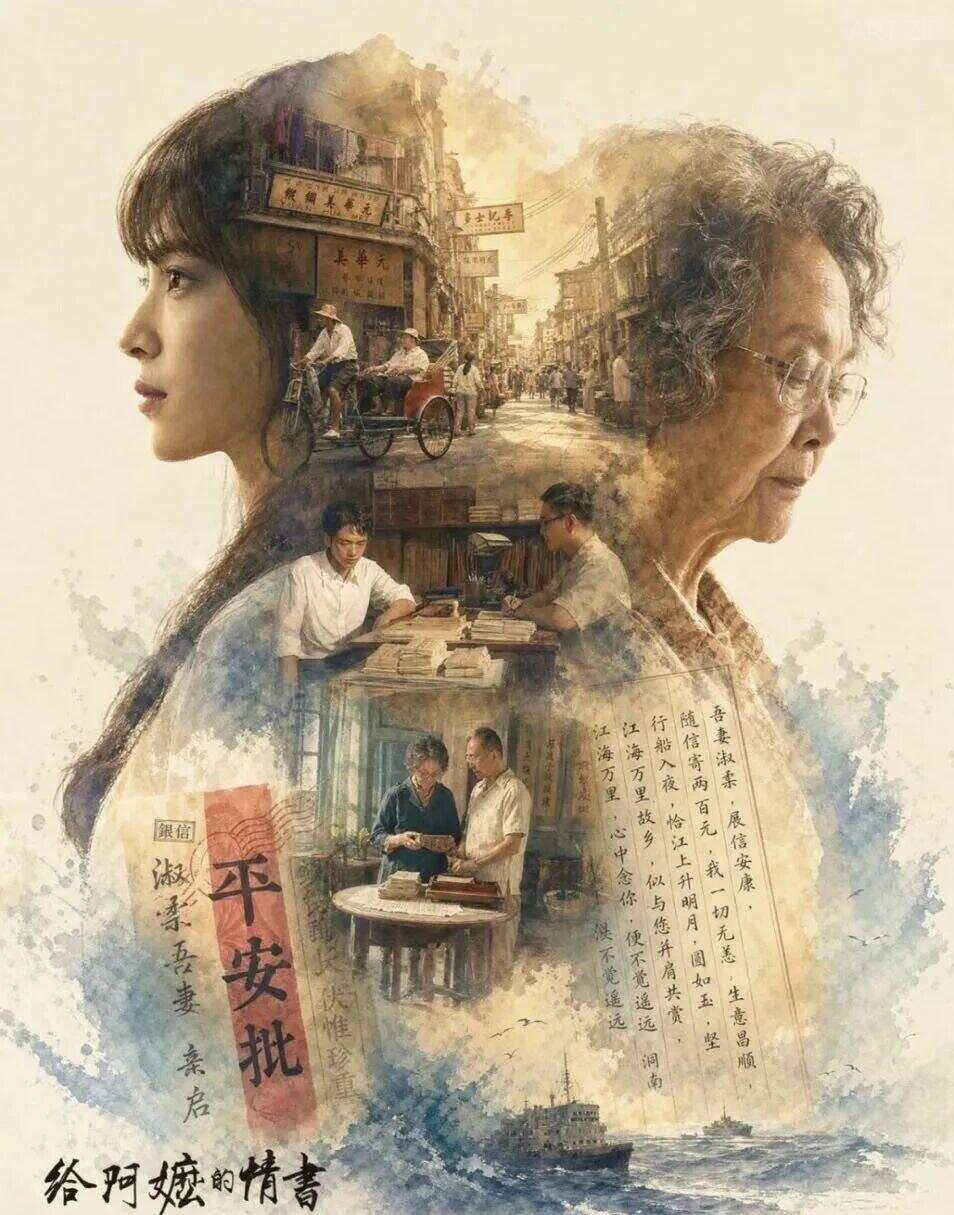
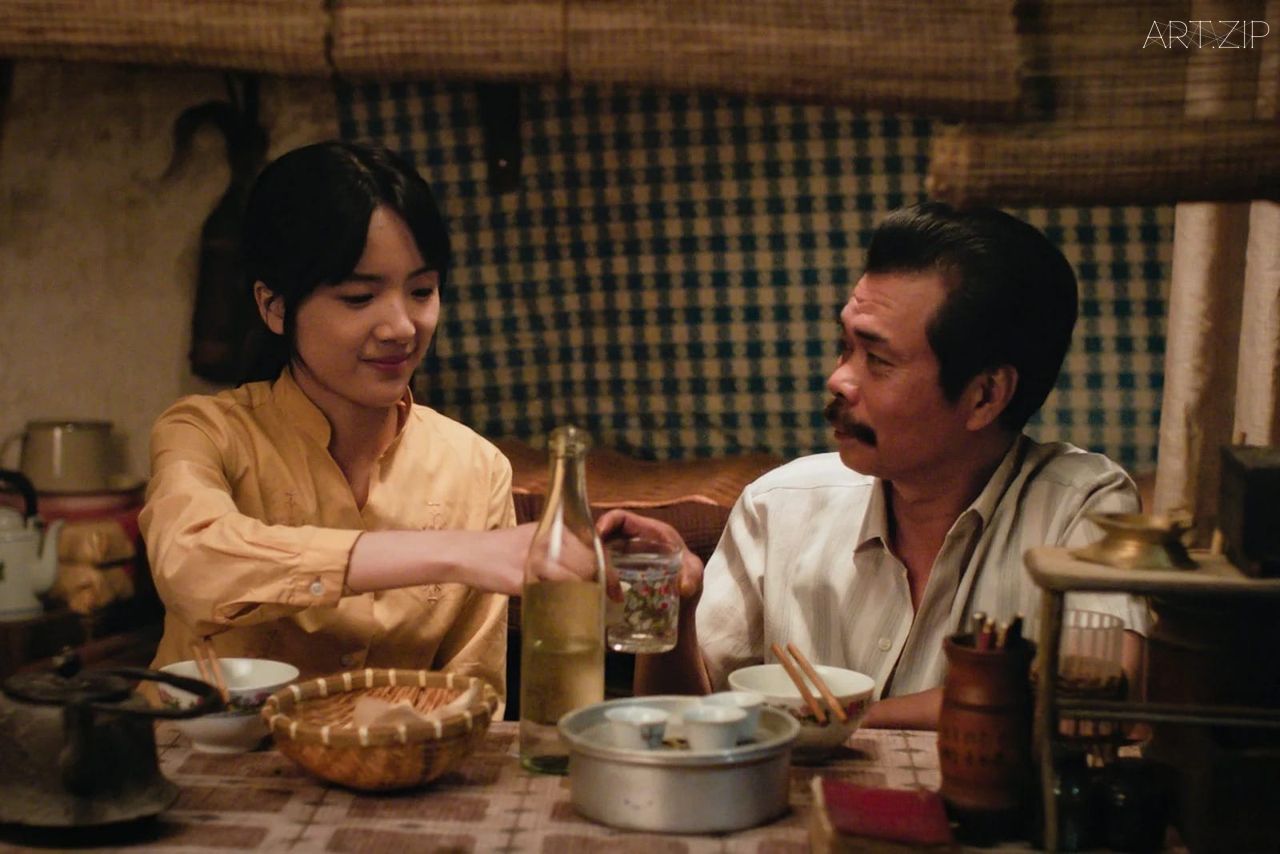
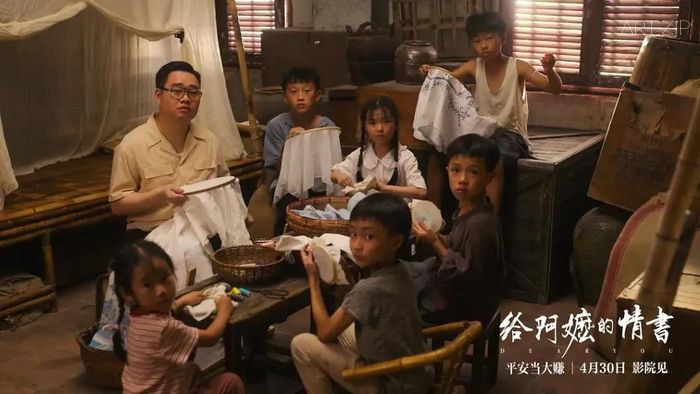
Images from Dear You(《給阿嬤的情書》). © Damai Entertainment
一封僑批從暹羅寄回潮汕,一封回信又從潮汕寄往暹羅。紙上的字被念出來,鏡頭便切到另一個女人的生活裡。她拆信、讀信、做飯、帶孩子,等待丈夫的消息;而真正寫信的人,則在另一處繼續謀生,替一個已經無法開口的男人承擔養家的責任。表面上,這是丈夫寫給妻子的情書:淑柔以為自己讀到的是木生的信。實際上,她讀到的是南枝的共情、照料與責任,是潮汕與南洋離散處境中的守望相助,也包括某種始終無法放下的歉疚。一個女人在信裡等待丈夫,另一個女人則在書寫中替丈夫延續著平安、責任與牽掛。
《給阿嬤的情書》最動人的地方,是這一段原本屬於夫妻之間的情書,慢慢演變成兩個女人之間的通信。她們沒有住在一起,卻共享著同一種日常;她們沒有真正交談,卻通過信件共同承受孩子、貧困、衰老、等待和生活的重量。在這些信里,兩個女人撐起了兩個家。
這份情義當然不能只被理解成某個人有意維持的謊言。它也來自一種更古老、更樸素的倫理:在離散、貧窮和音訊艱難的年代裡,同鄉之間、異鄉人之間,甚至彼此並不相識的女人之間,也會因為共同的命運而生出守望相助。南枝看見那些遠行男人給妻兒寫信,也共情那個遠在潮汕、苦苦等待丈夫消息的女人。她的選擇里有善意,有照料,也有對一段愛情和一個家庭的不忍。
可是,這份女性情義並非建立在一種平等、自由、彼此知情的關係之中。至少在很長一段時間裡,它建立在淑柔的不知情之上。南枝替木生寫信、匯款,承擔丈夫和父親留下的責任,也讓木生繼續佔據淑柔對於自己人生的理解與想像。善良與情誼不能自動消解這份不平等;照護與體貼,也不能讓這場漫長的錯位變得無須追問。理解南枝為何這樣做,並不意味著追問應該停止,更不意味著我們可以替淑柔完成原諒。
真正值得追問的,不只是影片中人物的選擇,而是影片在敘事層面如何一步步引導我們理解、落淚,並把這場由誤會、善意和沉默共同維持的半生錯位,看似順理成章地置入一場溫柔、催淚的「情義」裡。這也是我想把《給阿嬤的情書》放進情節劇傳統(melodrama)中重新審視的原因。
「Melodrama」 通常被譯作「情節劇」,在中文語境里很容易被簡單理解成「狗血」或「煽情」。但我在這裡說的「 melodrama」,不只是一個類型標籤,而是一種敘事結構和情緒組織方式:它如何安排誤會、遲到的真相、無法說出口的愛與虧欠,又如何把觀眾一步步帶向理解、落淚與和解。
在電影史中,情節劇有著舞台劇和早期電影的傳統。到了好萊塢三四十年代,它又與以女性觀眾和女性命運為核心的女性電影傳統(woman’s picture),以及催淚片(weepie)緊密糾纏在一起。像《斯特拉·達拉斯》(Stella Dallas, 1937)、《揚帆》(Now, Voyager, 1942)、《慾海情魔》(Mildred Pierce, 1945)這樣的電影,常常圍繞女性的愛情、母職、階級處境、犧牲、名譽,以及無法被直接說出口的慾望展開。所謂「三手帕催淚片(three-handkerchief weepie)」,說的正是這樣一種觀看經驗:電影還沒有結束,眼淚便已經成為我們理解女性命運的一部分。
情節劇的曖昧也正在這裡。一方面,它讓許多被家庭、道德、階級與性別秩序壓抑下去的情感獲得可見性:女人的委屈,母親的犧牲,女兒的怨恨,無法被承認的慾望,以及說不出口的愛與恨,都可以在情節劇中被放大。它承認有些痛苦本就難以承受,很多關係無法體面收場,人生就是會充滿誤解,也並非所有人都能從中順利逃脫。
另一方面,情節劇也長期因為這些特點而受到輕視。它與女性觀眾、家庭敘事、眼淚、母職和犧牲聯繫得太深,常常被認為「不夠高級」「太情緒化」「太會操控觀眾」。在英語里,「melodramatic」 也常帶有貶義:誇張、做作、煽情過度。許多電影寧願把自己稱為劇情片(drama)、家庭劇情片(family drama)或歷史劇情片(historical drama),也不願主動承認自己是一部 「melodrama」。因為 「drama」 聽起來總是更克制、更體面;「melodrama」 卻讓人想到眼淚、苦情、巧合與情感操控。
但眼淚並不是情節劇受到爭議的全部原因。真正的問題是,眼淚有時會替代追問,把現實中難以解決的倫理問題推遲,甚至隱藏。誤會終於解除,真相終於說出,久別的人終於重逢,傷害終於得到原諒。觀眾在那一刻釋放情緒,也很容易伴著淚水放下判斷。哭過了,理解了,原諒了,散場了。可是,一旦把它放回敘事結構中來看,真正值得追問的恰恰是:誰被要求等待,誰承擔照料,誰的名字被保留,誰的真相被推遲,又是誰在一場看似圓滿的和解裡,失去了重新理解自己人生的機會。
並不是說情節劇天然等同於父權敘事。恰恰相反,情節劇曾經讓許多被壓抑的女性情感、母職困境和家庭傷痛獲得了可見性。可問題在於,當這些痛苦最終總要被重新安放回家庭、犧牲、理解與原諒之中時,情節劇也很容易成為父權秩序自我修復的一種敘事方式。它讓女人的痛苦被看見,卻又把這種痛苦處理成可以被承受、被讚美、被流淚送別的東西。
《給阿嬤的情書》的複雜之處正在這裡。它確實讓女性之間的共情、照料和守望相助變得動人,也讓那些長期被遮蔽的女性勞動浮出水面;但它同時又把這份勞動和痛苦,重新收束進家庭、情義與原諒的圓滿結構里。
影片表面上是一部家庭劇情片,敘事結構卻接近家庭情節劇(family melodrama):丈夫缺席,妻子等待,另一個女人代筆;真相被推遲半生,愛、虧欠、責任和沉默被壓在信紙、匯款與家庭倫理之下,最後被一次性釋放。催淚的並不只是苦難,還有圍繞苦難而生的情義。一個女人在不知情中等待了半生,另一個女人在男人留下的空缺里承擔了半生;可這一切在眼淚中變得可以理解,也因此更容易被原諒。
這也解釋了為什麼「帶好紙巾」會成為它最容易被傳播的觀看姿勢:觀眾被邀請去哭,也被邀請在哭泣中接受這場遲來的和解。影片幾乎把這個維持了半生、最終才被解開的錯位,拍成了一種足以讓人落淚、也足以讓人原諒的情義。可淑柔失去的不只是改變生活的機會。她失去的,是在知道真相之後重新理解自己人生的可能。她至少本可以更早知道,自己究竟在等待誰,又究竟為誰守了這半生。
我並不是要用今天的婚戀自由回頭審判那個年代的女性。恰恰相反,那個年代的淑柔也許確實沒有多少現實選擇:她未必能輕易離婚、體面改嫁,甚至無法真正擺脫家庭和時代為她安排的位置。南枝同樣沒有站在一個自由而從容的位置上。她受困於時代、貧窮、離散、歉疚和責任,也身處一種必須依靠彼此照料和守望才能活下去的現實之中。
一個女人等了半生,一個女人帶著真相走了半生。我也不想把南枝簡單寫成加害者。她後來也曾試圖以自己的名字說出真相,只是這封信沒有抵達。可也正因為真相的遲到並不完全來自惡意,影片的敘事安排才更值得細看,它如何把誤會、意外、不忍和長期照料造成的人生錯位,最終置入一場溫柔的情義裡?
而在這份柔情裡,父權的秩序始終沒有真正退場。木生死了,但他的名字沒有死。淑柔以為自己收到的是丈夫的信,可真正寫信、匯款、照料和承擔責任的人,是南枝。在很長一段時間里,南枝的照料必須借用木生的署名,才能抵達淑柔,也才能維持那個家庭尚未破碎的想象。信件連接了兩個女人,卻也讓一個已經死去的男人繼續佔據丈夫和父親的位置:男人不在了,孩子留下了;丈夫死去了,母職繼續;父親缺席,兩個女人撐起生活。可父親並沒有真正被移除。他只是從一個具體的人,變成了信紙上的署名、經濟來源的象徵,以及家庭仍然完整的幻覺。
所以,《給阿嬤的情書》裡的女性情義並不虛假。南枝的共情是真的,照料是真的,淑柔的等待也是真的。問題是,這些真實的情義在影片的敘事結構里,最終承擔了替父權善後的功能。女人完成了維持生活與家庭的全部勞動,男人的名字和符號卻長期覆蓋在這份勞動之上。男人死去,女人補位;男人無法償還,女人代償;男人不能繼續做丈夫和父親,女人卻被安排去盡可能維持他的丈夫與父親之位。
不可否認,《給阿嬤的情書》所傳遞的感情很有力量。它也確實讓女性的等待與沉默、潮汕人的南洋遷徙、僑批里的家族記憶,以及同鄉之間的守望相助,在大銀幕上獲得了可見性。尤其當這部潮汕話電影走上英國銀幕時,它帶來的不只是「好哭」,還有那些很少被主流銀幕認真看見的普通女性人生。
可正因為如此,我還是想問:我們是不是太容易被感動了?當一個女人在不知情中等待半生,另一個女人在男人留下的空缺裡補位半生,而這一切被拍成一場溫柔動人的情義,我們哭過之後,還會不會繼續問一句——她們為什麼非得這樣過完一生?
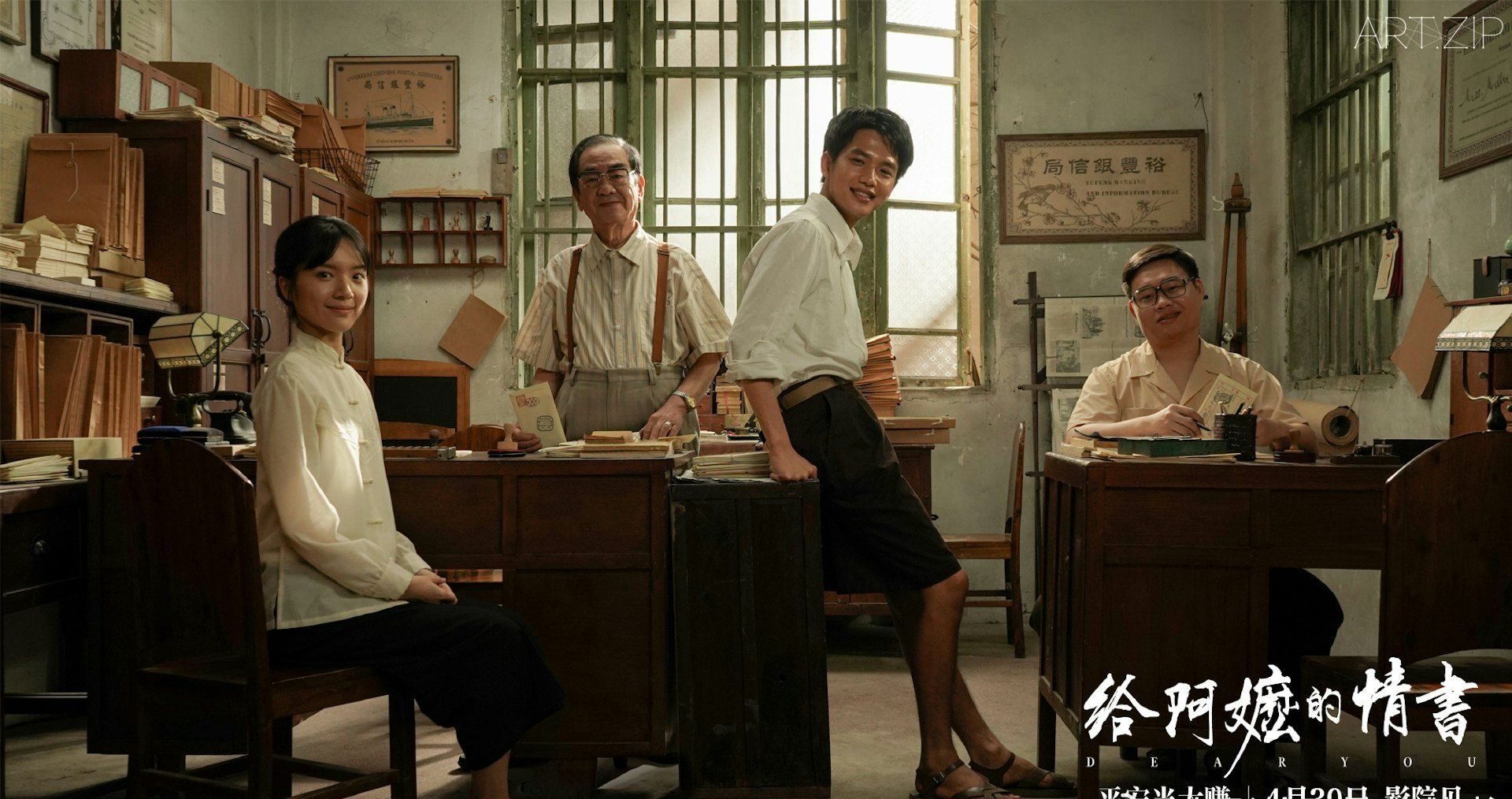
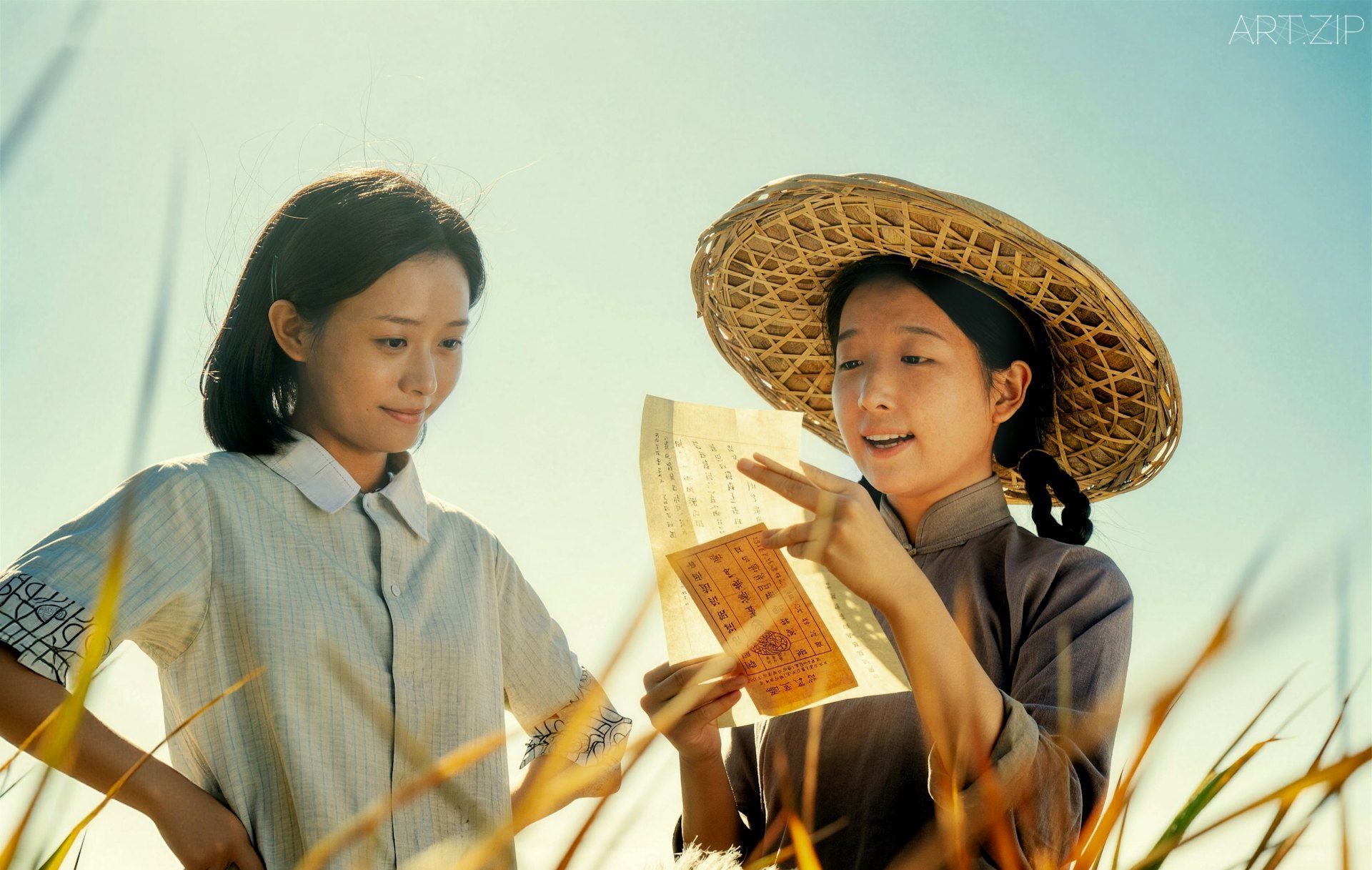
Text by 撰文 x Dr. Zhang Hening 張鶴寧