

Few artists make you question your own eyes even as you look. Walking into M.C. Escher: The Exhibition at the Somerset House, that feeling sets in almost from the first step.
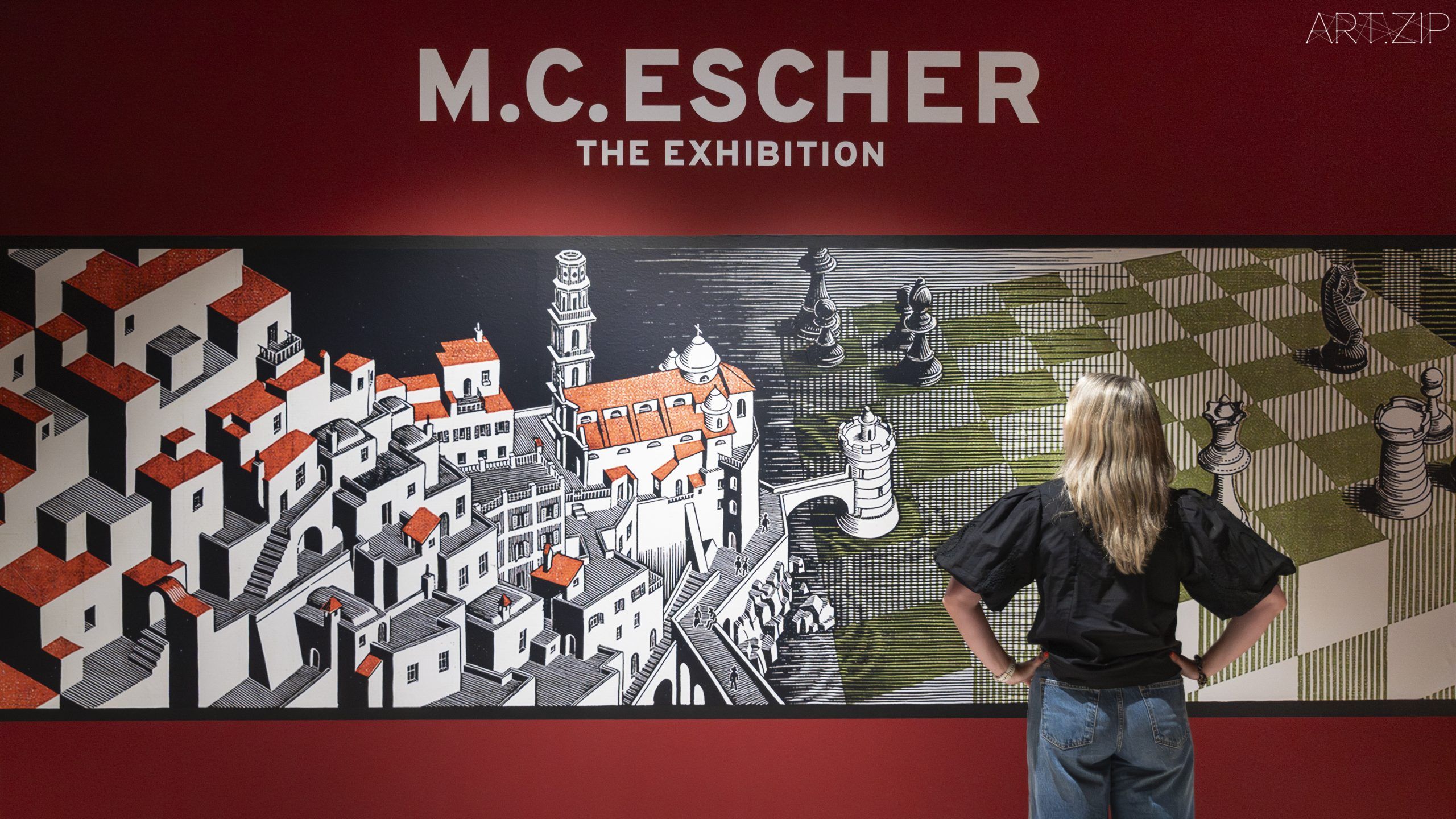
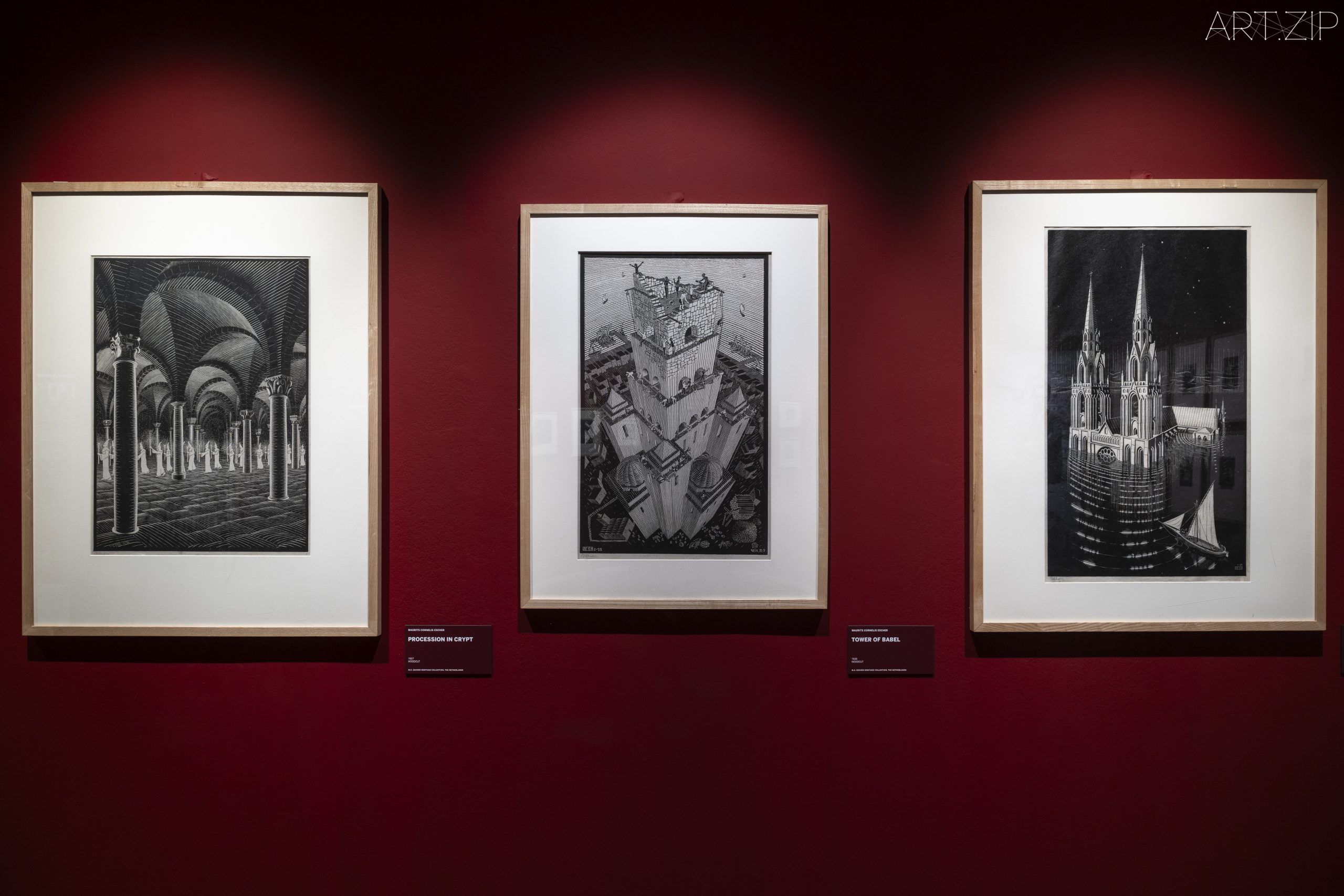
Installation view. M.C.Escher : The Exhibition. Somerset House 2026. Photo:Stephen Chung
A Building Made for Escher
Somerset House may be the most fitting space in London to host an Escher exhibition.
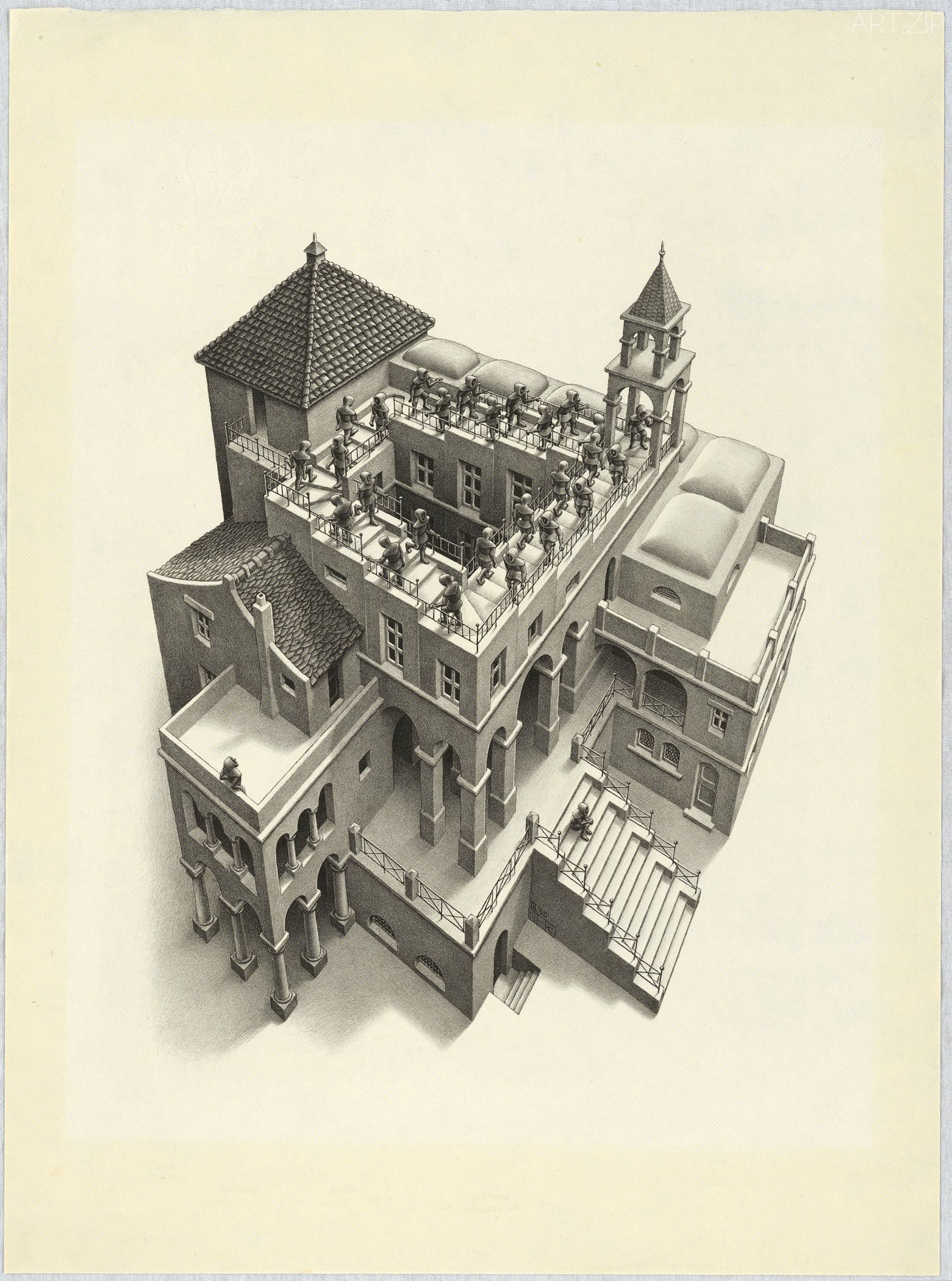
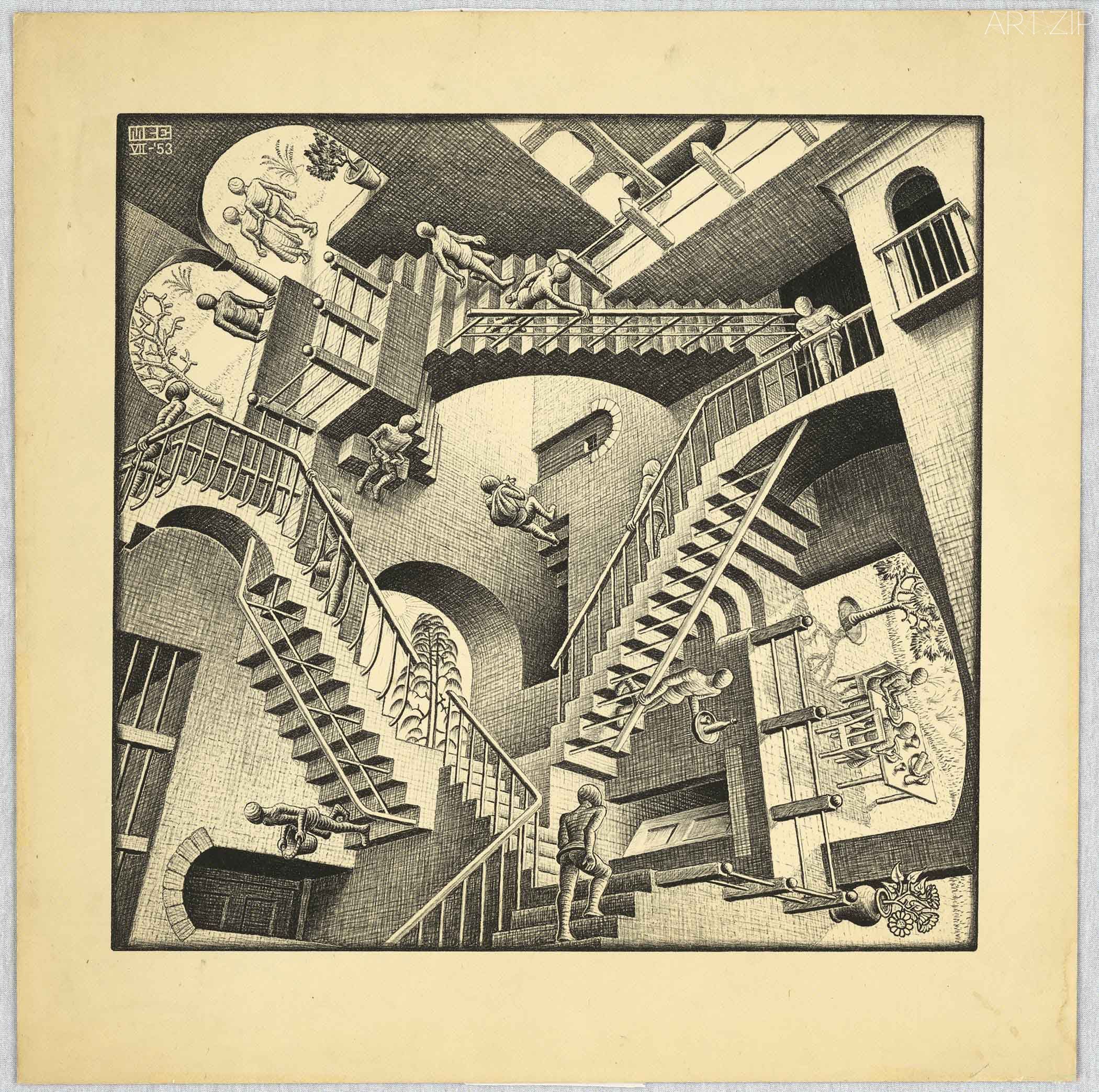
Stairs greet you from the moment you enter the galleries. Throughout the visit they keep rising and descending, carrying you between floors, and it is hard not to think of Escher’s famous “impossible architecture” — as though, at any moment, the figures from “Ascending and Descending” might come walking toward you from the far end of a staircase.
The entrance and exit answer one another with quiet wit. The ticket desk and the shop sit at opposite ends of the route and look strikingly alike, a visual design that leaves you with a sense of circling back. As you leave, a subtle illusion takes hold: you seem to have gone all the way around, only to arrive again at the start.
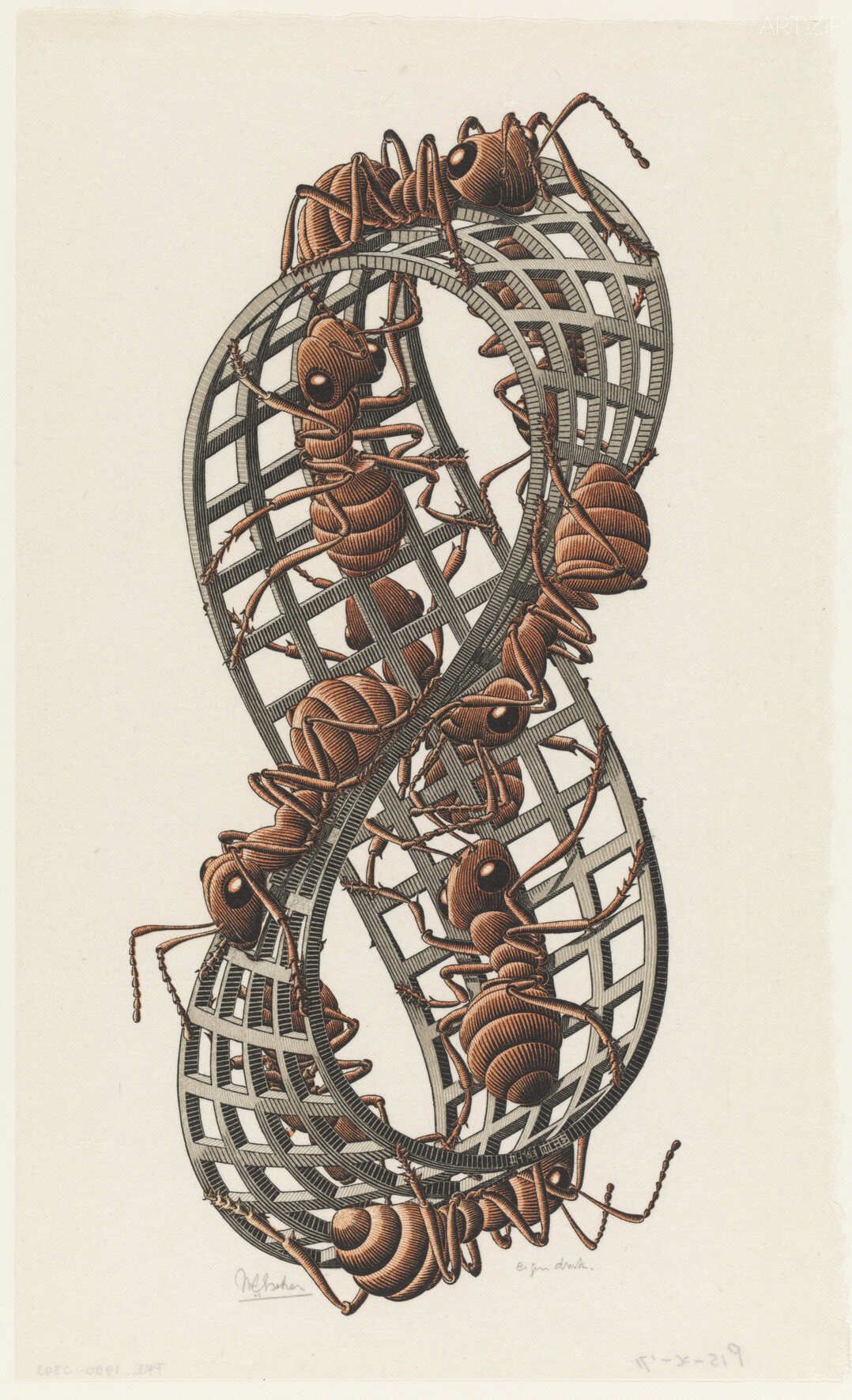
This sense of beginning and end folding into each other calls to mind the Möbius strip — that infinite loop with a single surface and a single edge. For Escher, after all, repetition, recurrence and endless extension were among his most enduring obsessions.
The domed space on the upper floor offers another kind of echo. Its semicircular structure and shifting light recall Escher’s preoccupation with the order of space. Here, the architecture itself seems to become part of the exhibition.
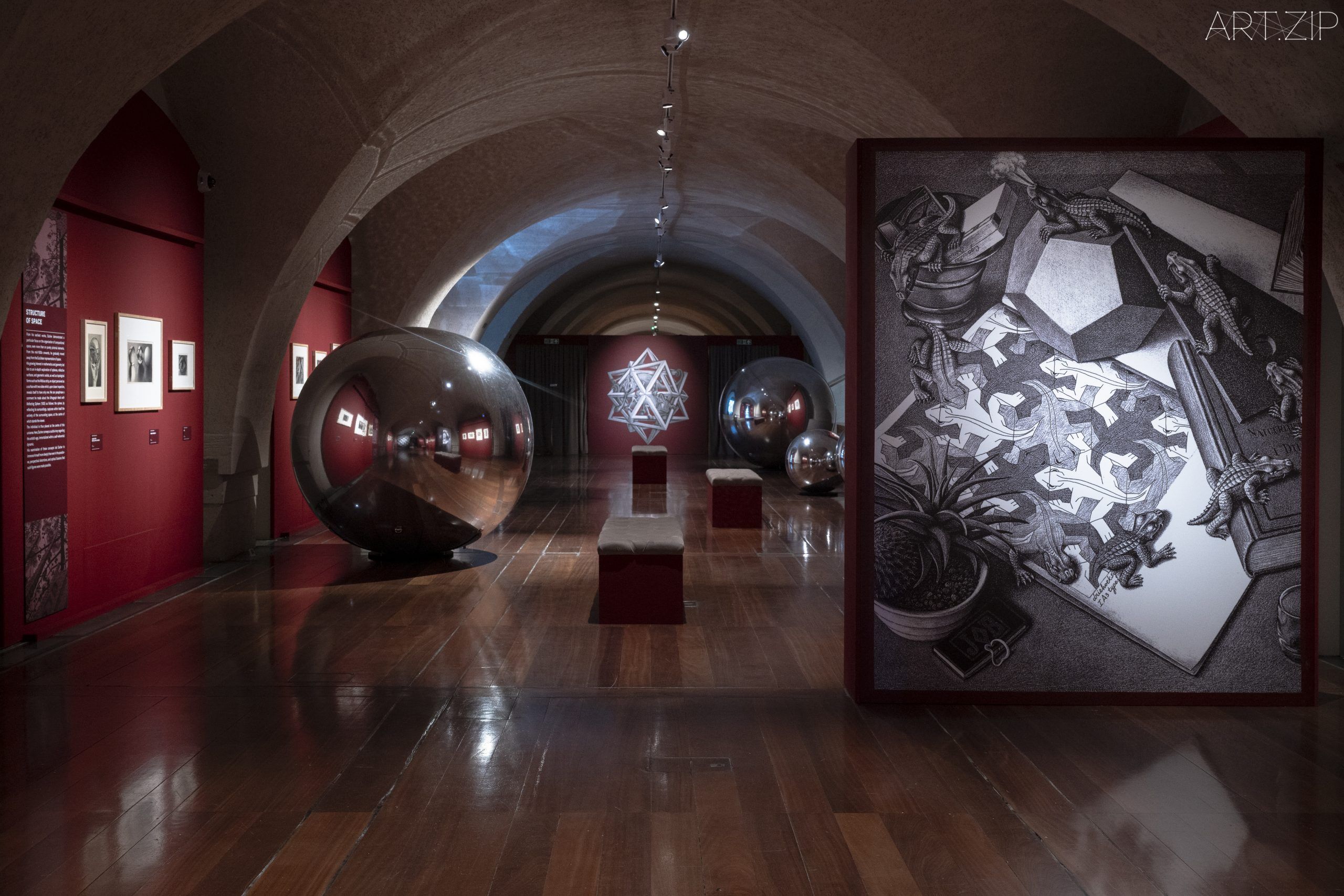
Installation view. M.C.Escher : The Exhibition. Somerset House 2026. Photo:Stephen Chung
A Man Forever in Search of Order
Most people remember Escher for the vertiginous visual paradoxes. But perhaps the exhibition’s greatest value lies in showing us how those works came to be, step by step.
As a young man, Escher studied architecture but failed to complete his degree, his grades falling short; he then moved into the decorative arts. In hindsight, that detour shaped nearly everything that followed.
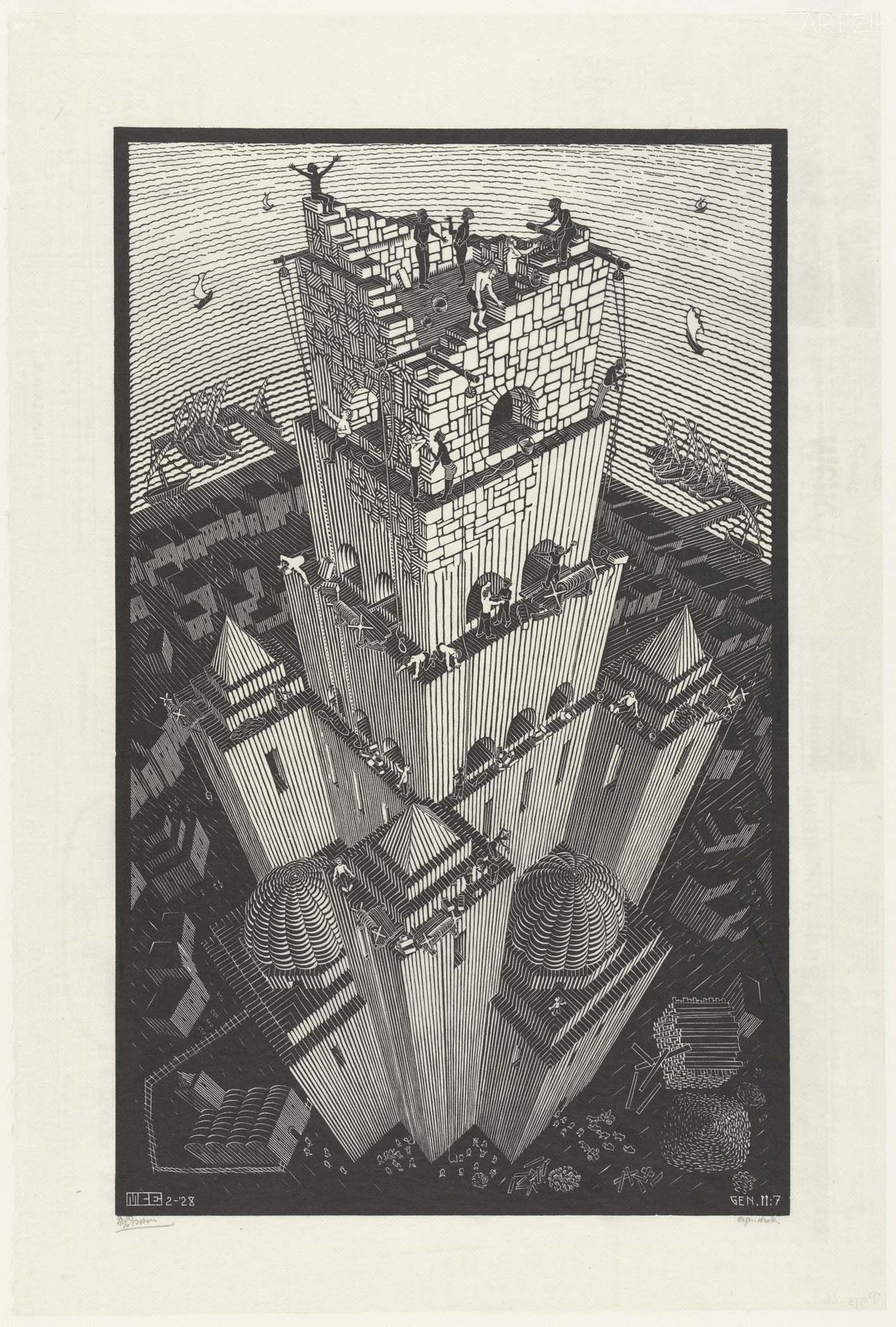
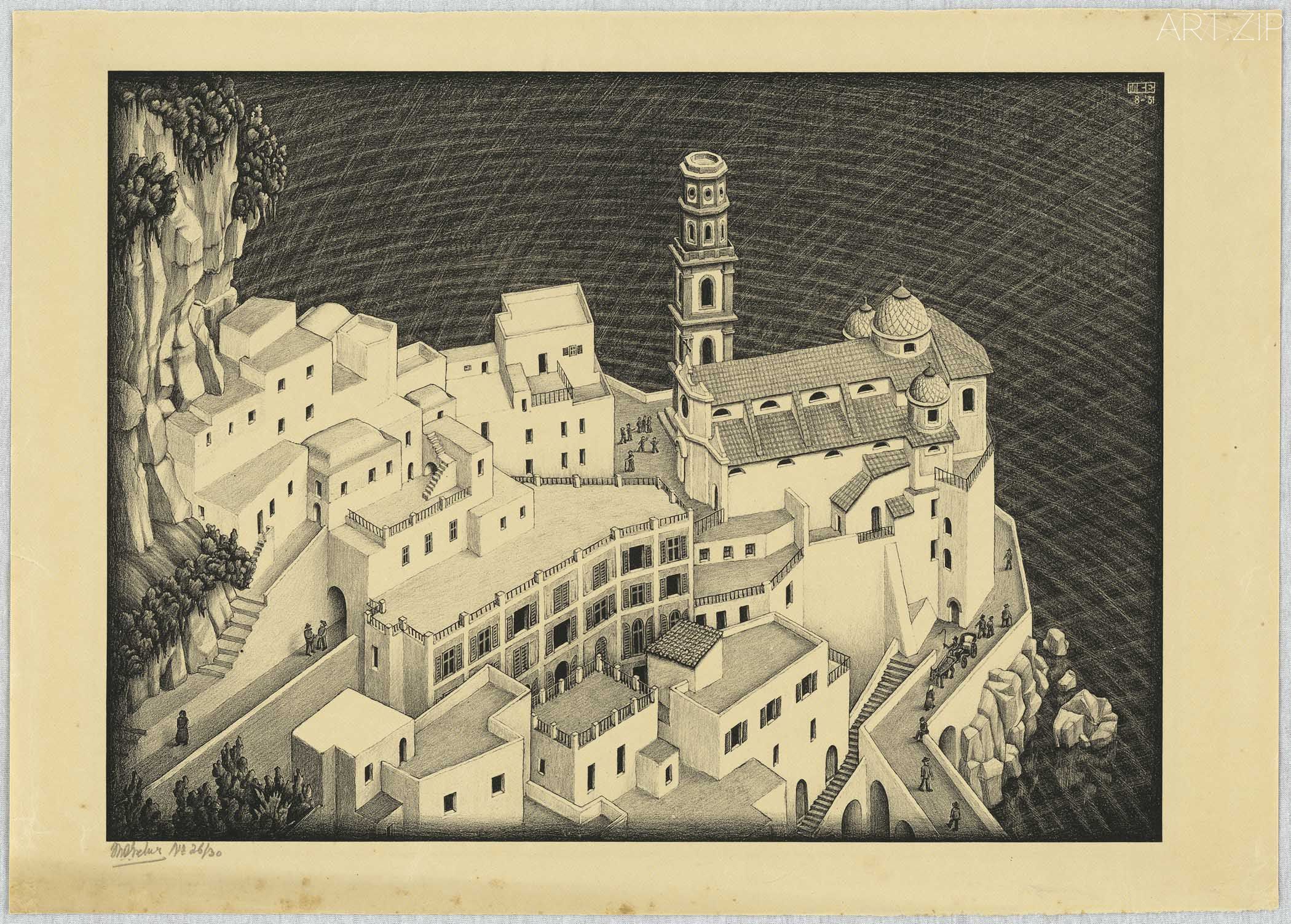
His early landscapes — trees, mountains, rivers — reveal an appetite for observing the world. His long travels through Italy and Spain then turned his attention to architectural structure, spatial relationships and geometric order. The mosaic decoration of the Alhambra in Granada, above all, proved almost decisive: those infinitely extending, interlocking patterns showed him that an image could possess a logic as rigorous as mathematics.
And so landscape gradually gave way to structure. The real world gave way to imagined space.
Mathematics, though never his field, became one of his most vital sources of inspiration. The infinite loops, impossible architectures and spatial paradoxes for which he is now known were born precisely in that ongoing collision between art and mathematics.


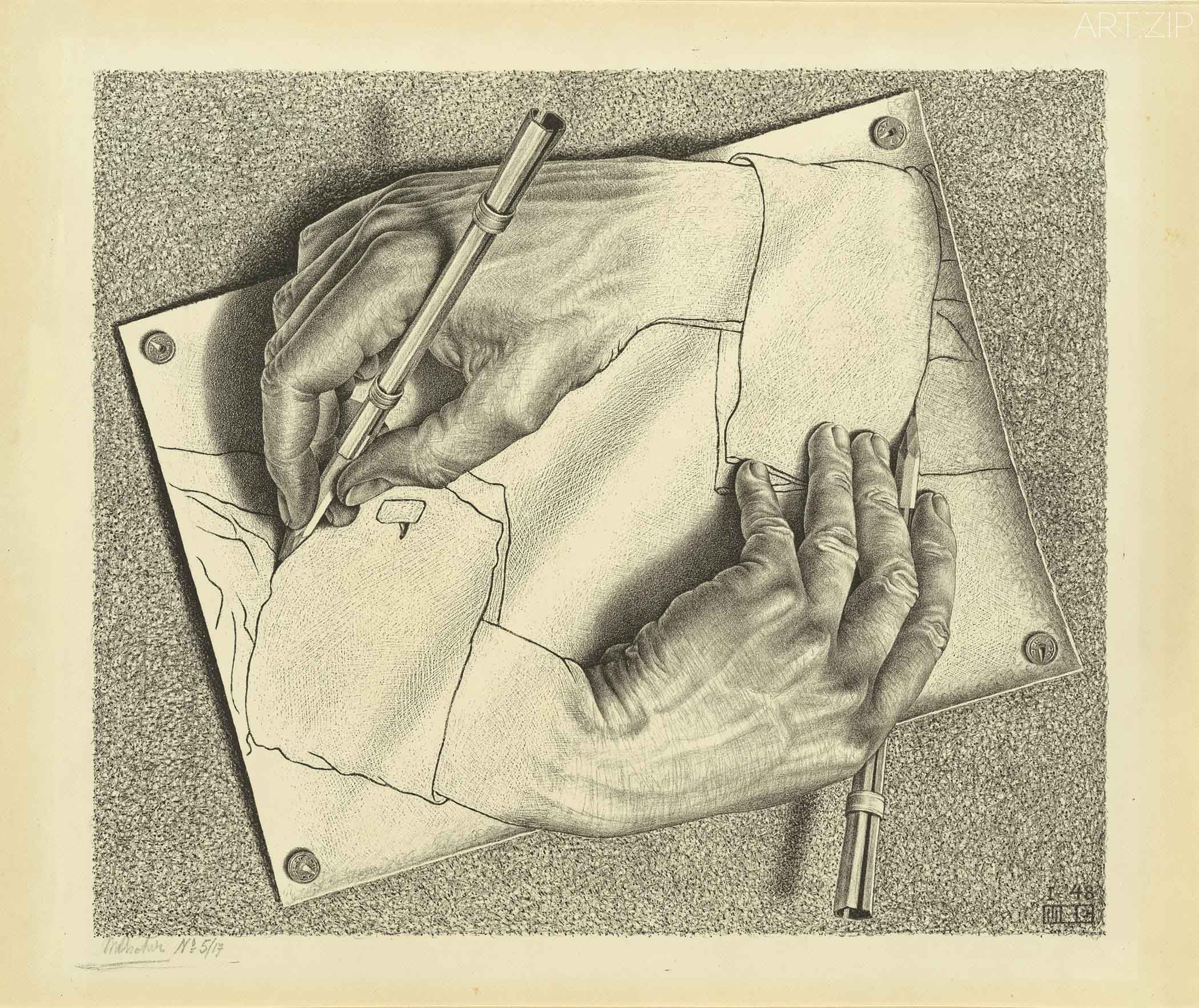
M.C. Escher Drawing Hands, 1948 Lithograph, 282×332 mm M.C. Escher Heritage Collection, The Netherlands All M.C. Escher works © 2026 The M.C. Escher Heritage, Baarn, The Netherlands All rights reserved www.mcescher.com
A Public Lecture on Illusion
The most pleasant surprise of this exhibition is that it refuses to simply display the work. It sets out to explain why the work holds together at all.
The moment a question about a particular printmaking technique surfaces in your mind, the next panel offers a detailed account of woodcut, lithography and other processes. Tools, materials, methods and film footage together form a complete path of learning.
The videos are especially well-designed. A large projected piece at the entrance pulls you swiftly into Escher’s world, while another animation patiently takes apart how an image flips, loops and locks into place to produce those seemingly impossible effects. Compared with static display, this kind of moving explanation does far more to convey how Escher thought.
The exhibition also stages a number of physical models of optical illusion: spatial experiments in concave and convex, the celebrated Penrose triangle, and assorted paradox devices that let visitors feel, first-hand, how an illusion takes shape.
Drawing has always been, in a sense, a kind of deception. Escher simply pushed that deception to its limit.

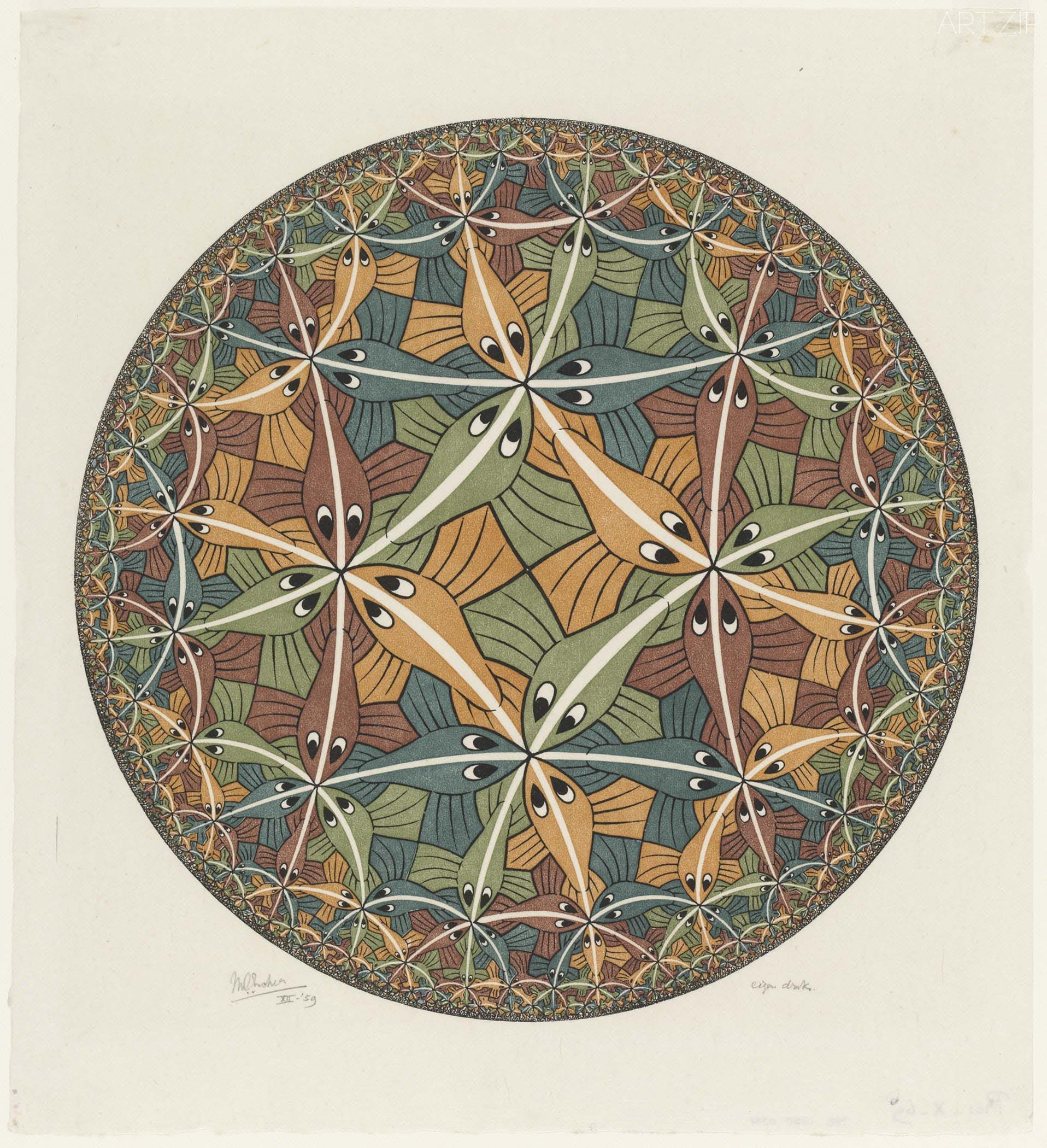
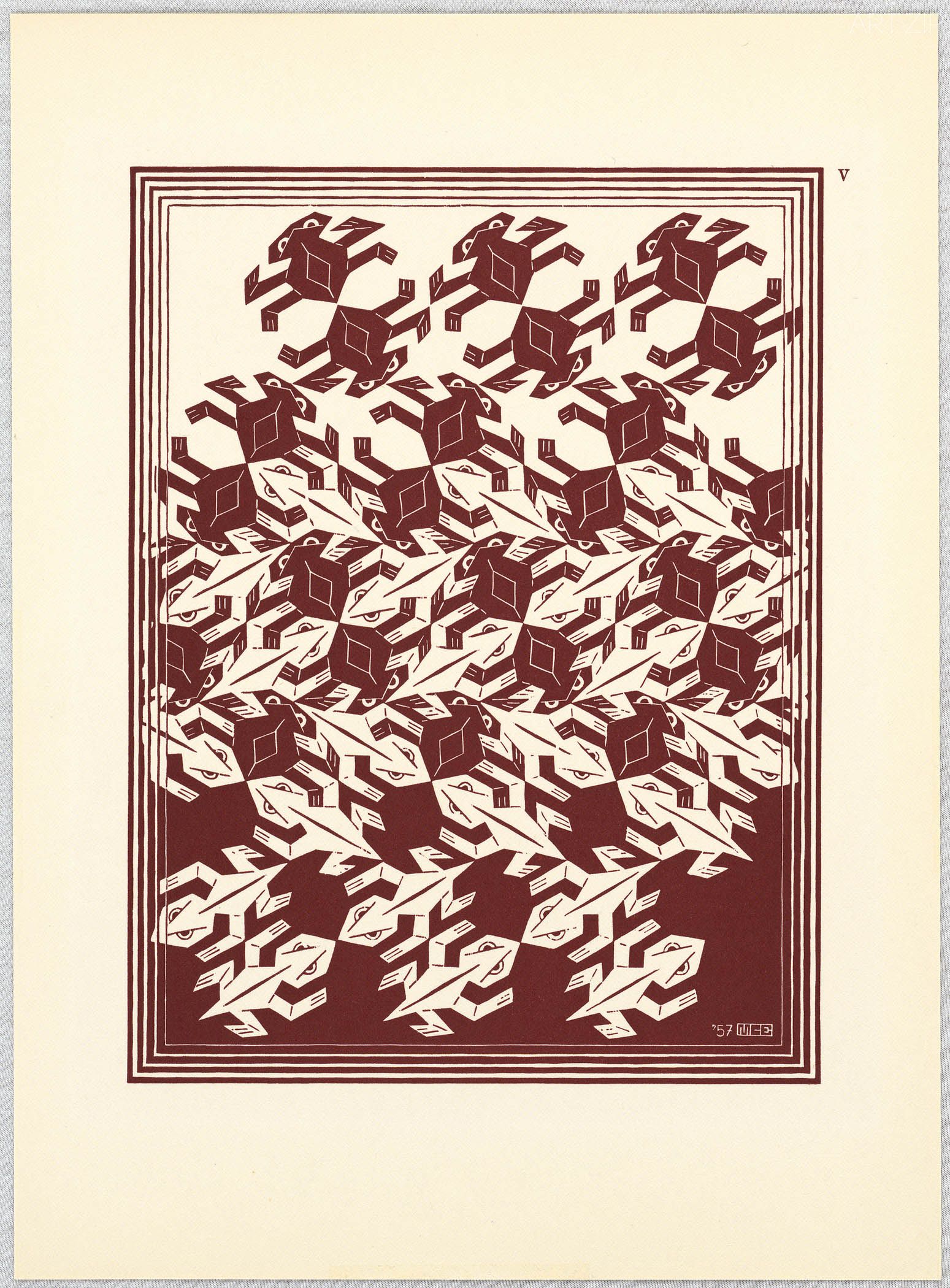
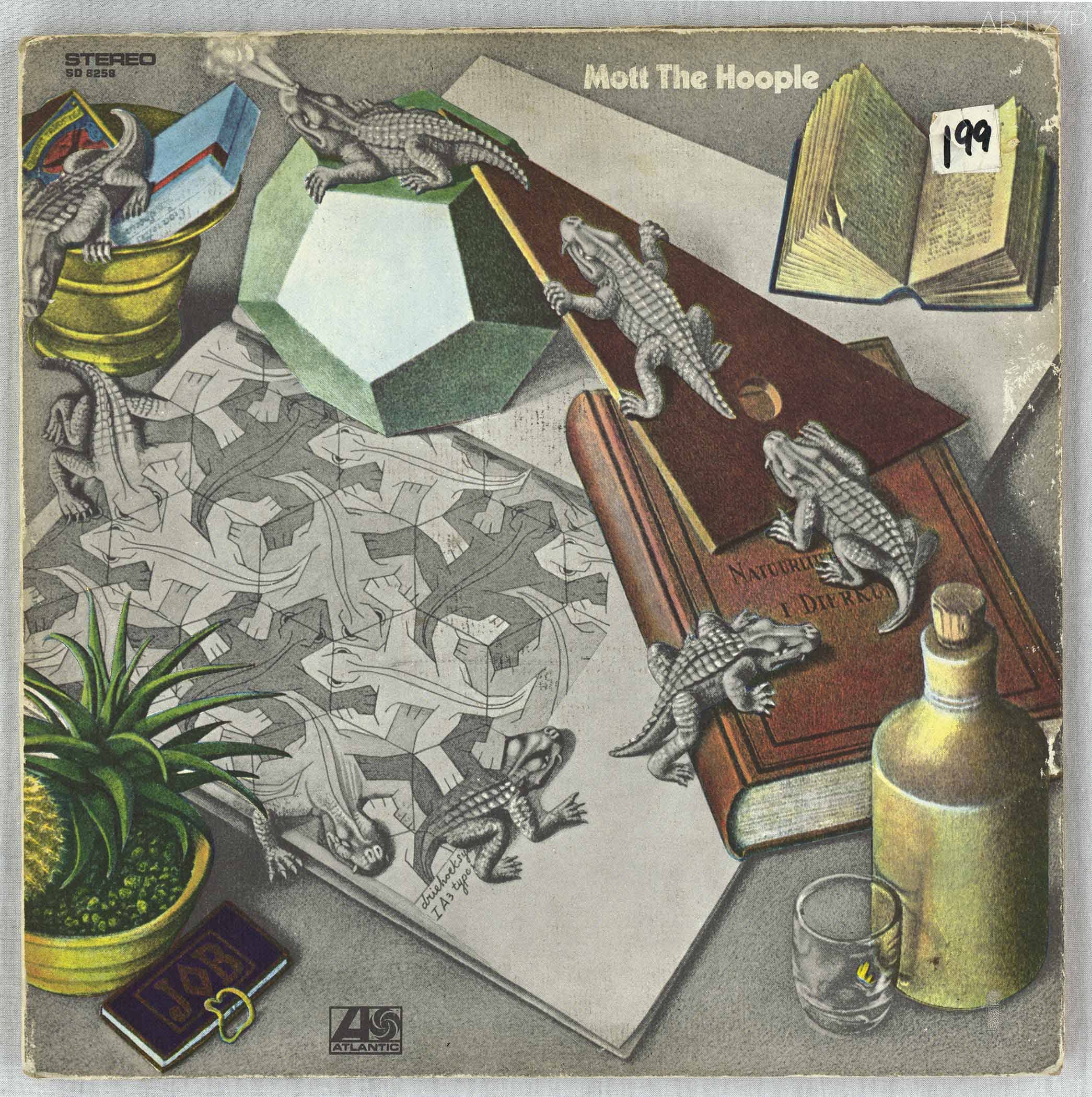
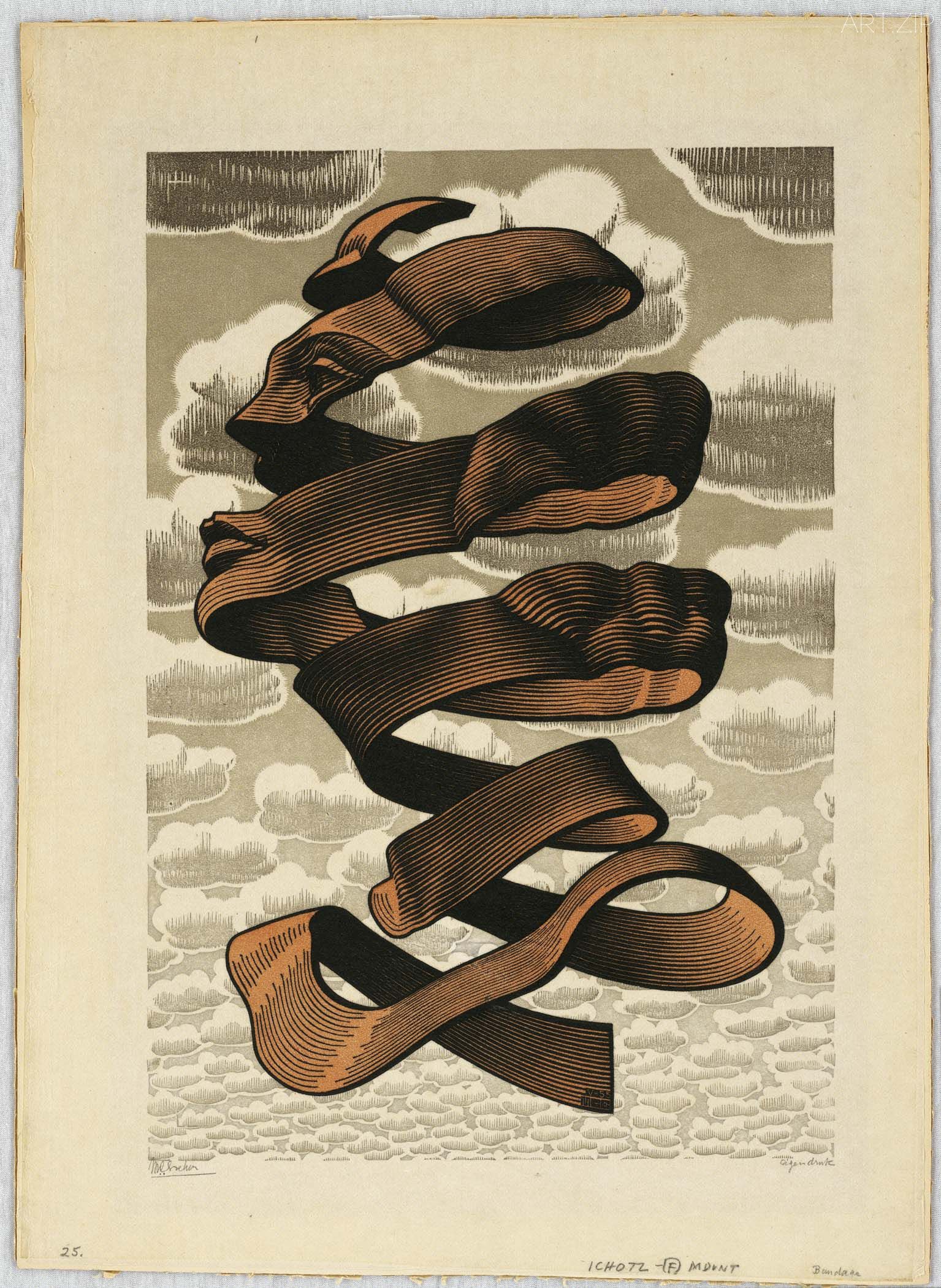
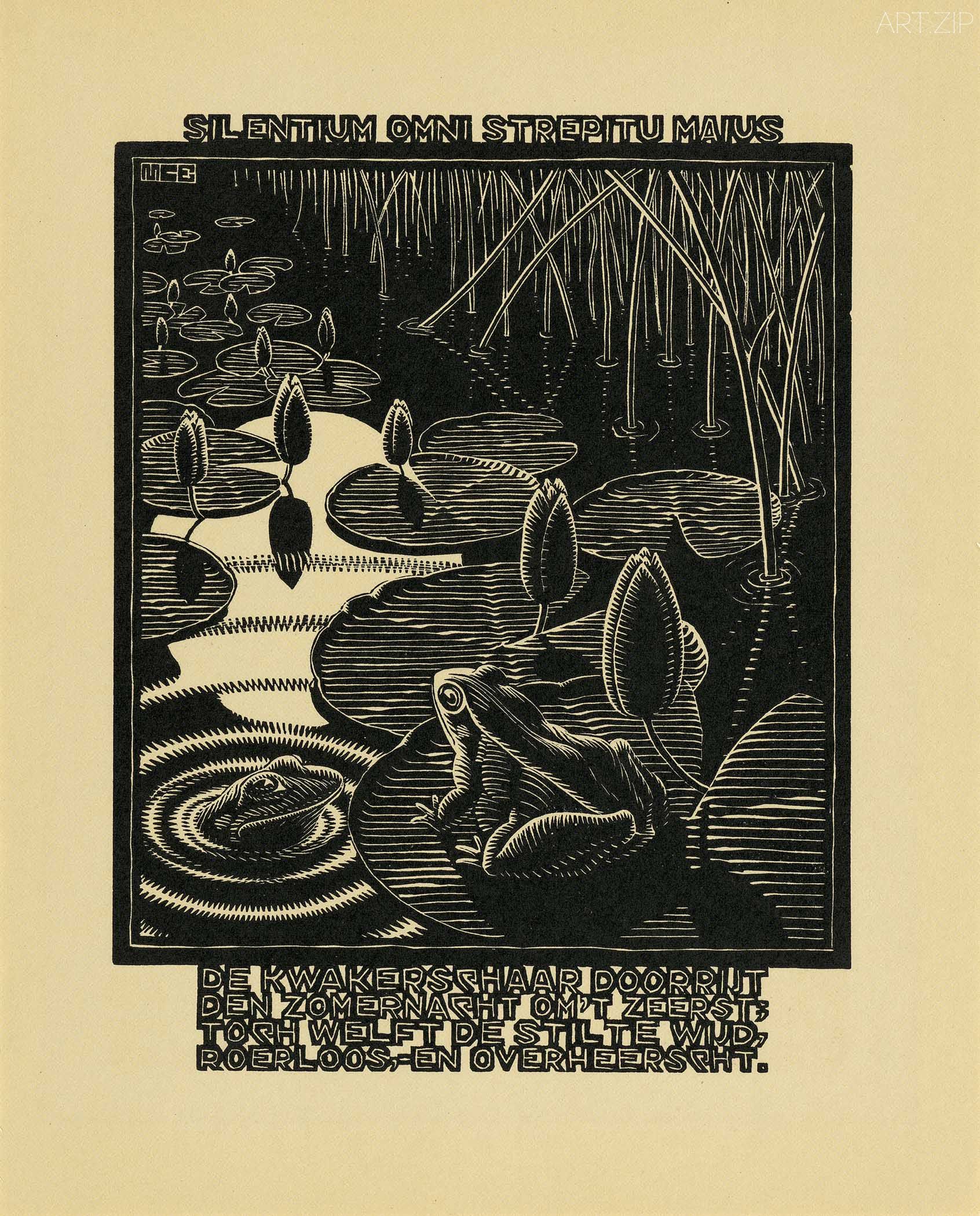
When the Viewer Steps into the Picture
If part of this exhibition is about “learning” Escher, another part is about “becoming” him.
There are plenty of interactive stations, their labels reading “Now it’s your turn!” — and they truly make you feel you might.
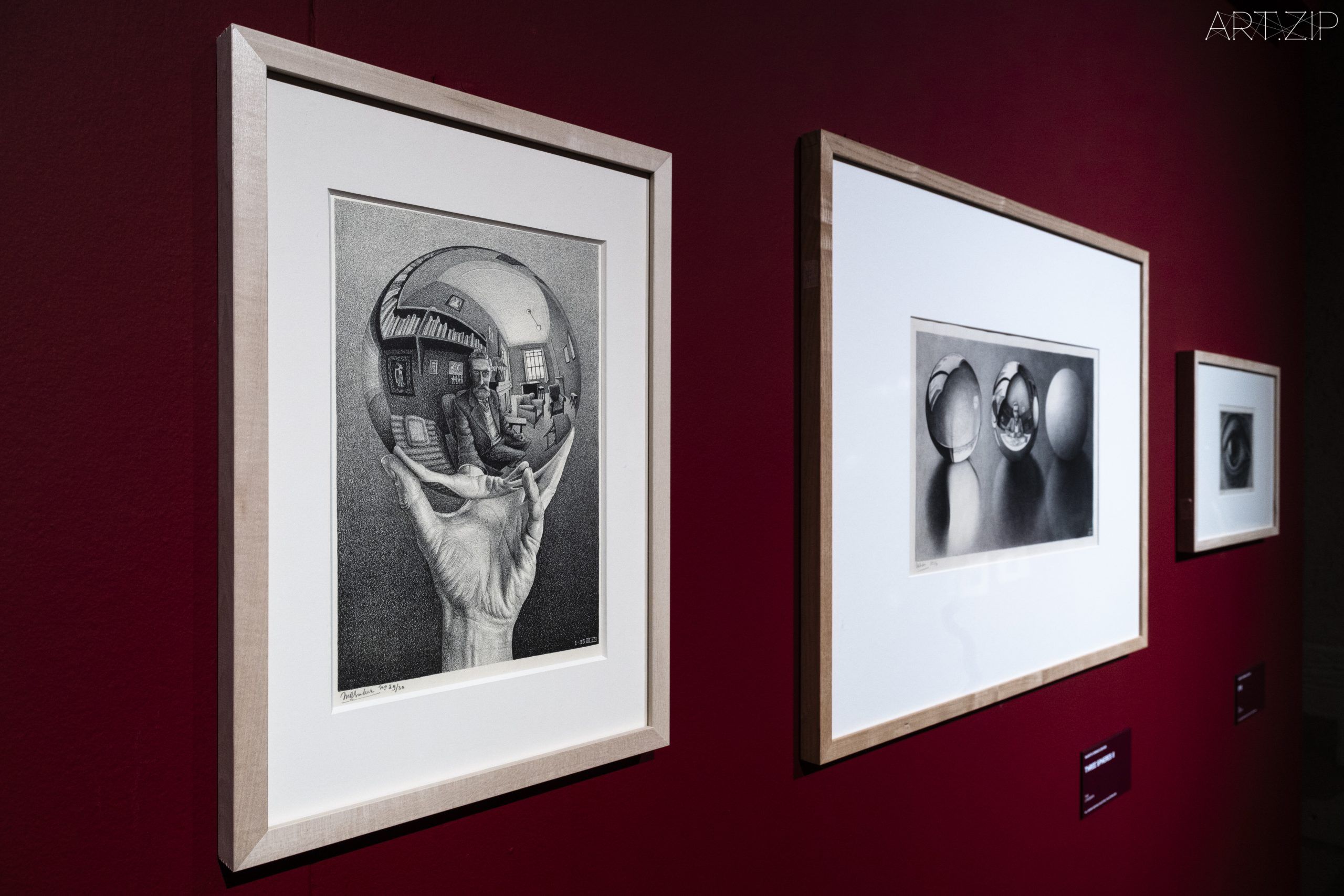
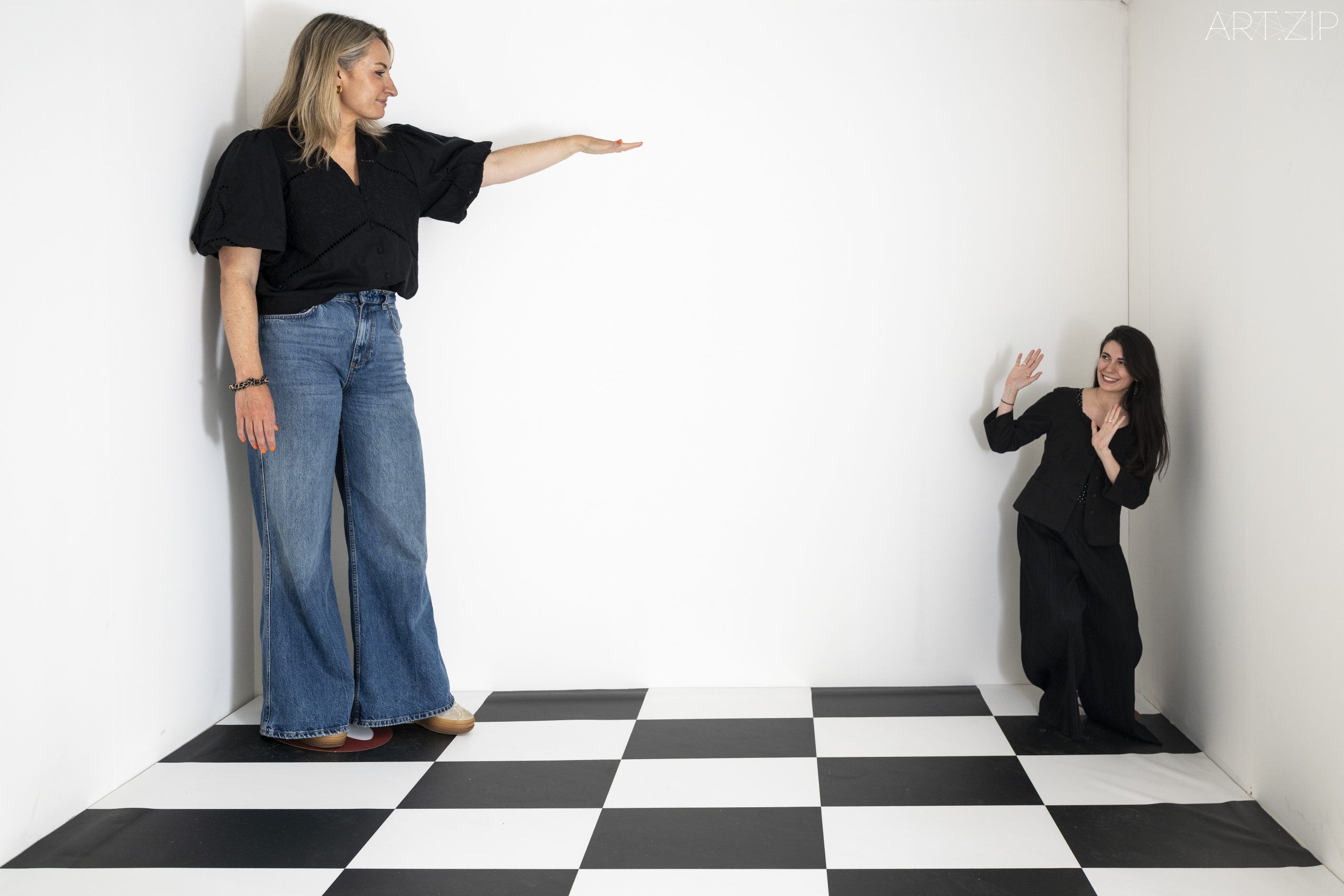
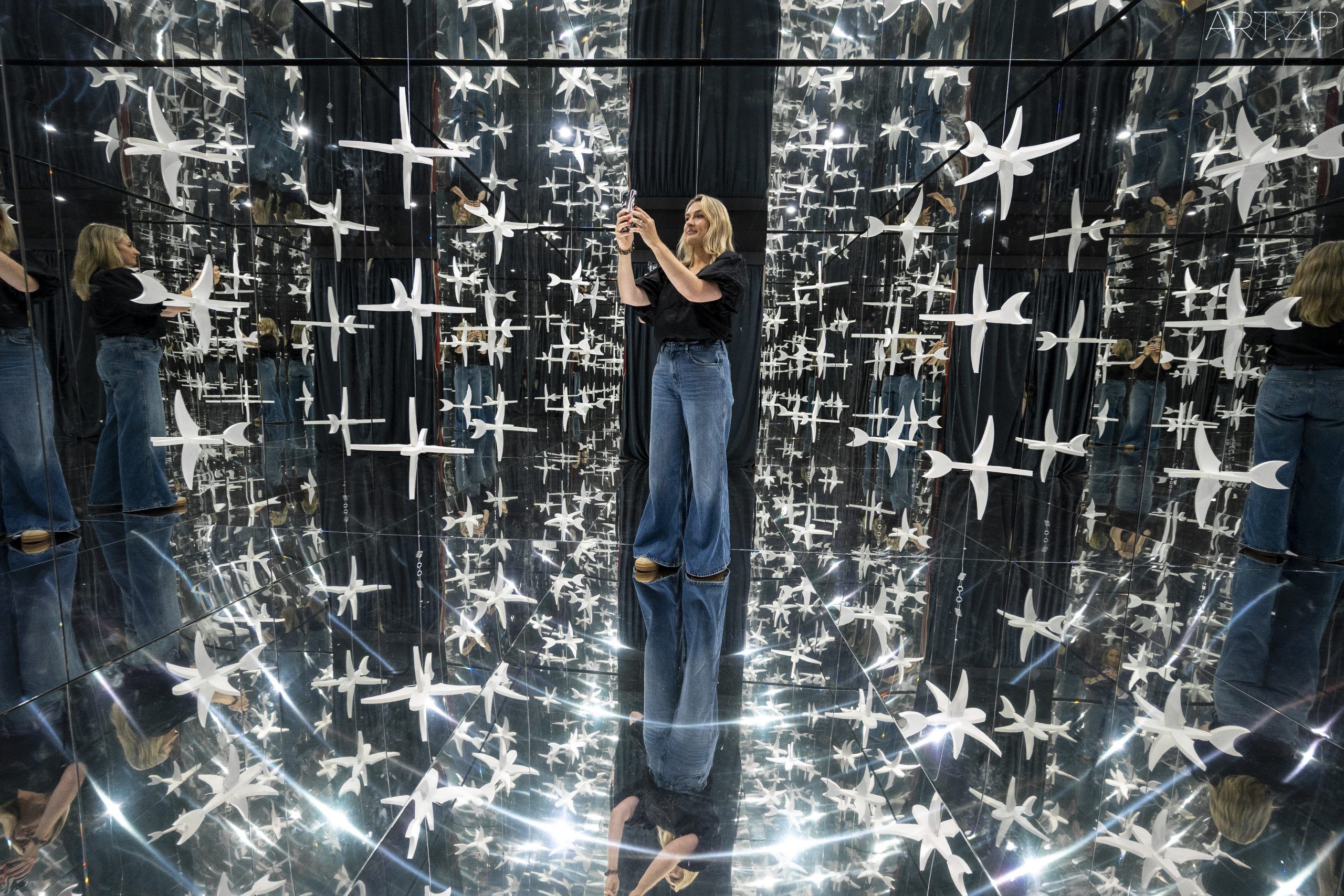
The Relativity Room, built on the principles of perspective, tilts its floor and ceiling and uses a specially proportioned grid to fool the brain, making two people standing on either side appear wildly different in height. In Escher’s original “Hand with Reflecting Sphere“, the artist studies himself and the entire room through a mirrored orb; in the interactive version, you become the figure within the sphere, standing in the artist’s place to look at yourself anew. In the Droste effect station, an image within an image repeats without end, an infinitely recursive loop in which you are at once the viewer and part of the picture.
These interactions are not merely for photographs. They let visitors grasp the core of Escher’s project — that we believe we are observing the world, when much of the time we are seeing only the brain’s interpretation of it.
By the time you leave, you may already have forgotten the title of any particular work. But you will surely remember the feeling: that the moment your eyes begin to doubt themselves, the world suddenly becomes more interesting than reality itself.
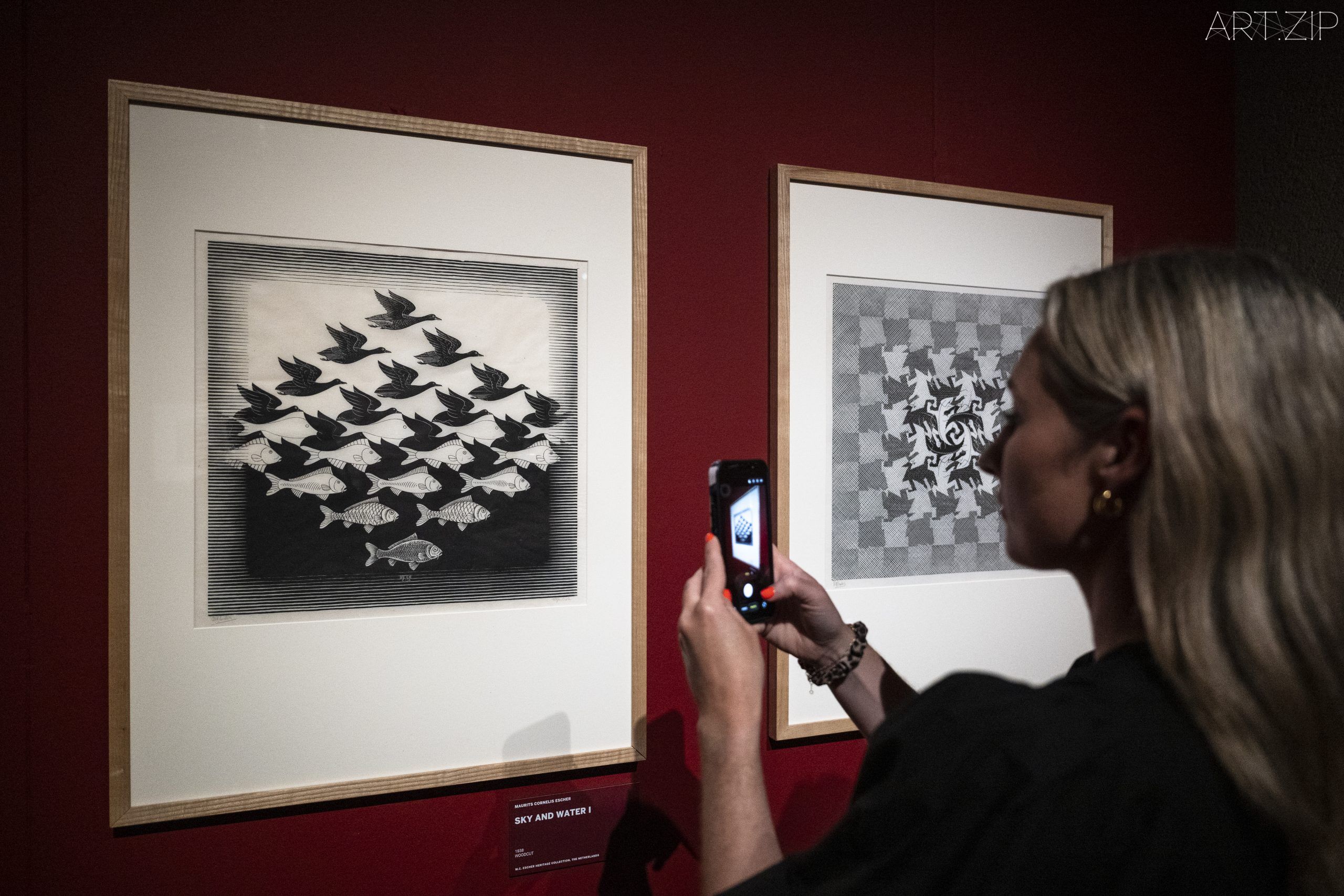
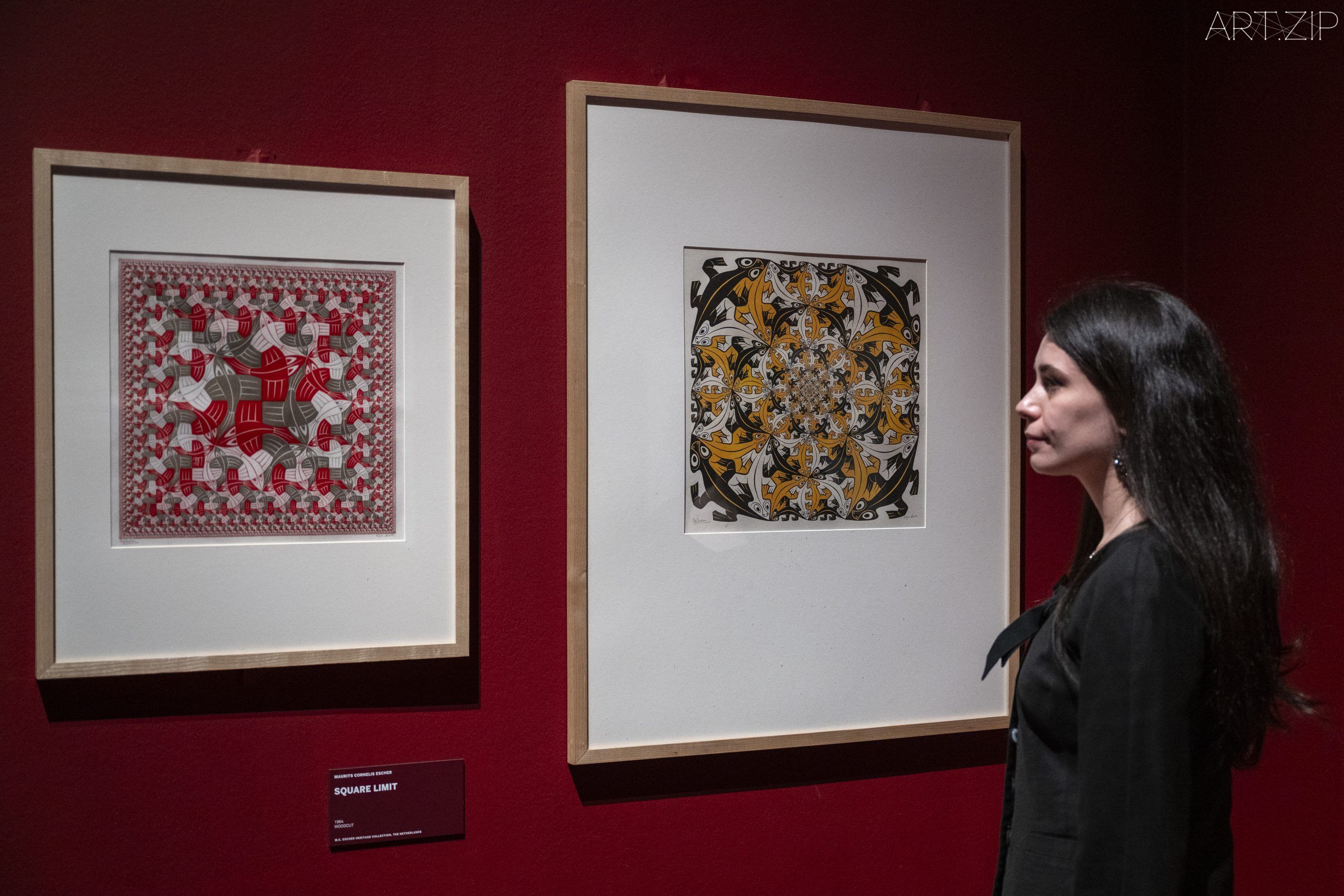
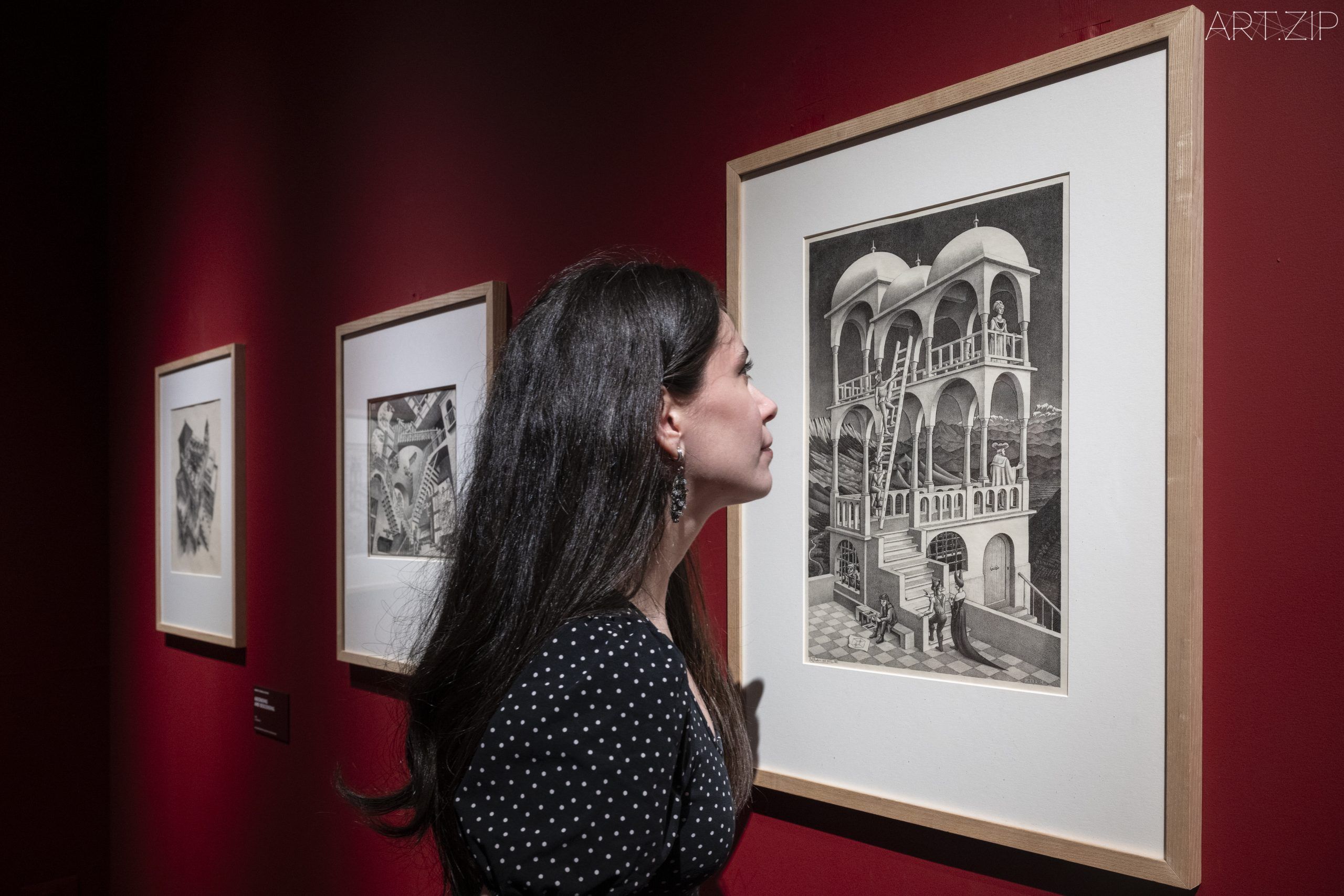
很少有藝術家的作品,能讓人一邊觀看,一邊不斷懷疑自己的眼睛。
走進薩默賽特宮( Somerset House )的埃舍爾( M.C.Escher )展覽,這種感覺幾乎從第一步就開始了。
一座屬於埃舍爾的建築
薩默賽特宮或許是倫敦最適合舉辦埃舍爾展覽的空間。
從進入展廳開始,就能看到樓梯。而觀展過程中,樓梯不斷向上、向下延伸,觀眾在不同樓層之間穿梭,很容易聯想到埃捨爾 那些著名的「不可能的建築」。彷彿下一秒,就會看見《上升與下降(Ascending and Descending)》中的人物從樓梯另一端走來。
展覽的入口與出口也形成了很巧妙的呼應。售票處與商店位於動線的兩端,看起來十分相似,這種視覺設計讓人產生一種循環往復的感覺。離開展覽時,會產生一種微妙的錯覺:好像自己繞了一圈,又回到了起點。
這種首尾相連的體驗,不禁讓人想到莫比烏斯環——那條只有一個面與一條邊的無限循環曲線。對於埃舍爾而言,循環、重復與無盡延伸,本就是他最著迷的主題之一。
而二樓的穹頂空間又帶來了另一種呼應。半圓形結構與不斷變化的光線,讓人聯想到埃舍爾作品中對於空間秩序的探索。在這裡,建築本身彷彿也成為了展覽的一部分。
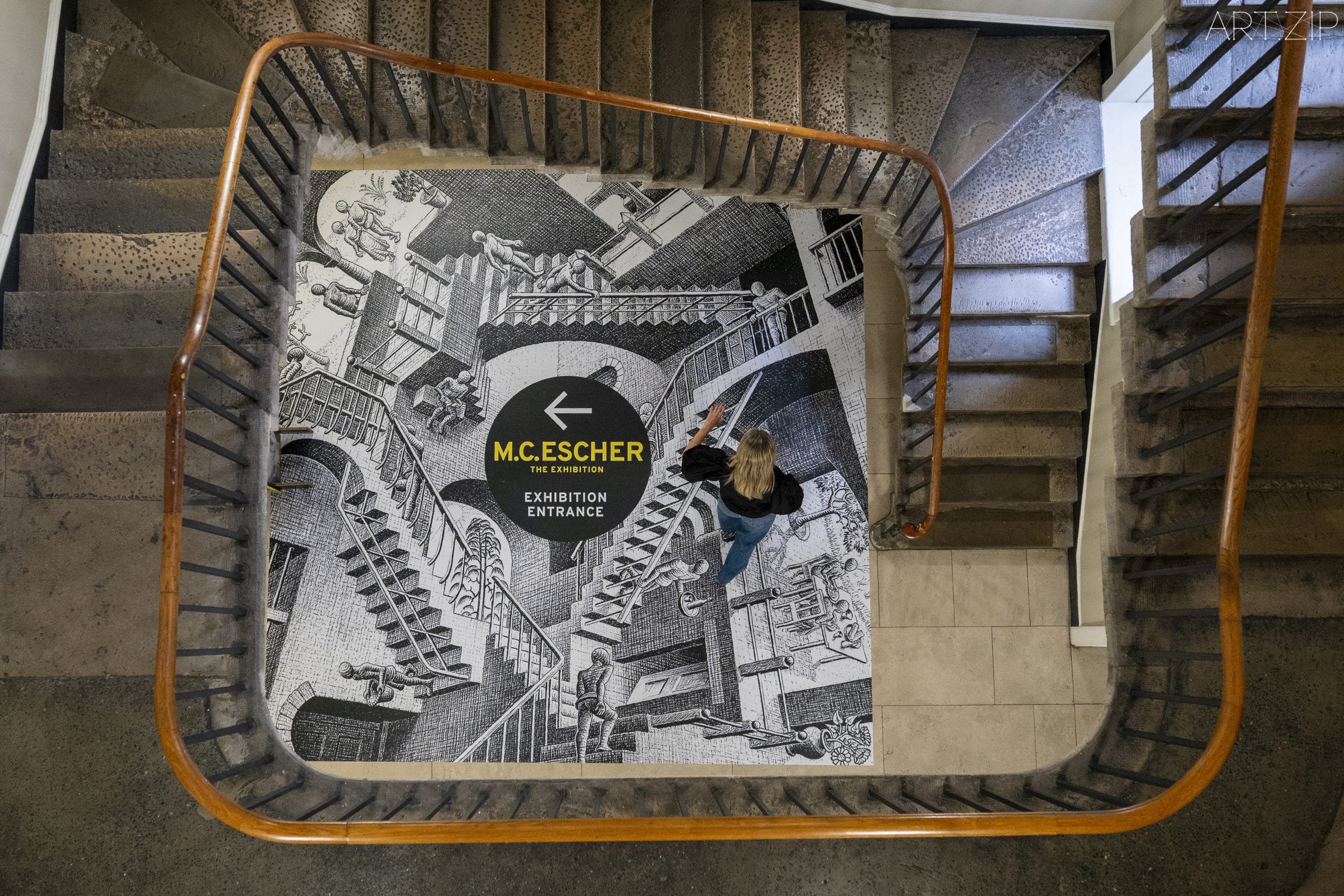
M.C.Escher : The Exhibition. Somerset House 2026. Photo:Stephen Chung
一個不斷尋找秩序的人
很多人記住埃舍爾,是因為那些讓人頭暈目眩的視覺悖論。
但展覽最有價值的地方,或許在於它讓觀眾看到這些作品是如何一步步形成的。
年輕時的埃舍爾曾學習建築,卻因為成績不理想而未能完成學業。後來轉入裝飾藝術專業。回過頭來看,這段經歷幾乎影響了他之後的整個創作生涯。
早期作品中的自然風景、樹木與山川,展現出他對於觀察世界的興趣。而隨後在意大利與西班牙的長期旅行,則讓他開始關注建築結構、空間關係與幾何秩序。
尤其是西班牙阿爾罕布拉宮的馬賽克裝飾,對他的影響幾乎是決定性的。那些能夠無限延展、彼此嵌合的圖案,讓他意識到圖像可以像數學一樣擁有嚴謹的邏輯。於是,風景逐漸讓位於結構。現實世界開始讓位於想象中的空間。
數學雖然從來不是埃舍爾的專業領域,卻成為了他最重要的靈感來源之一。那些後來廣為人知的無限循環、不可能建築與空間悖論,正是在藝術與數學不斷碰撞的過程中誕生的。
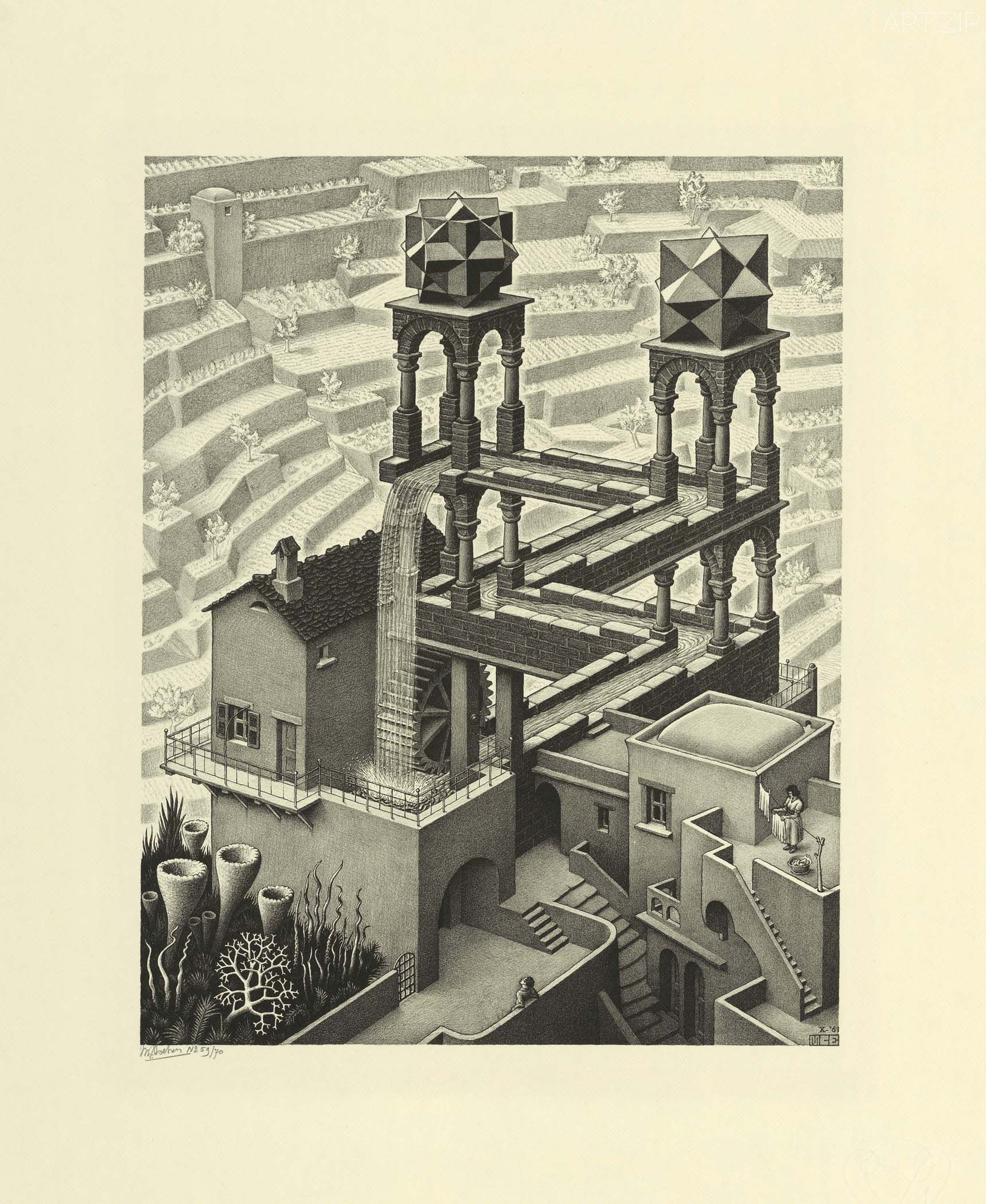
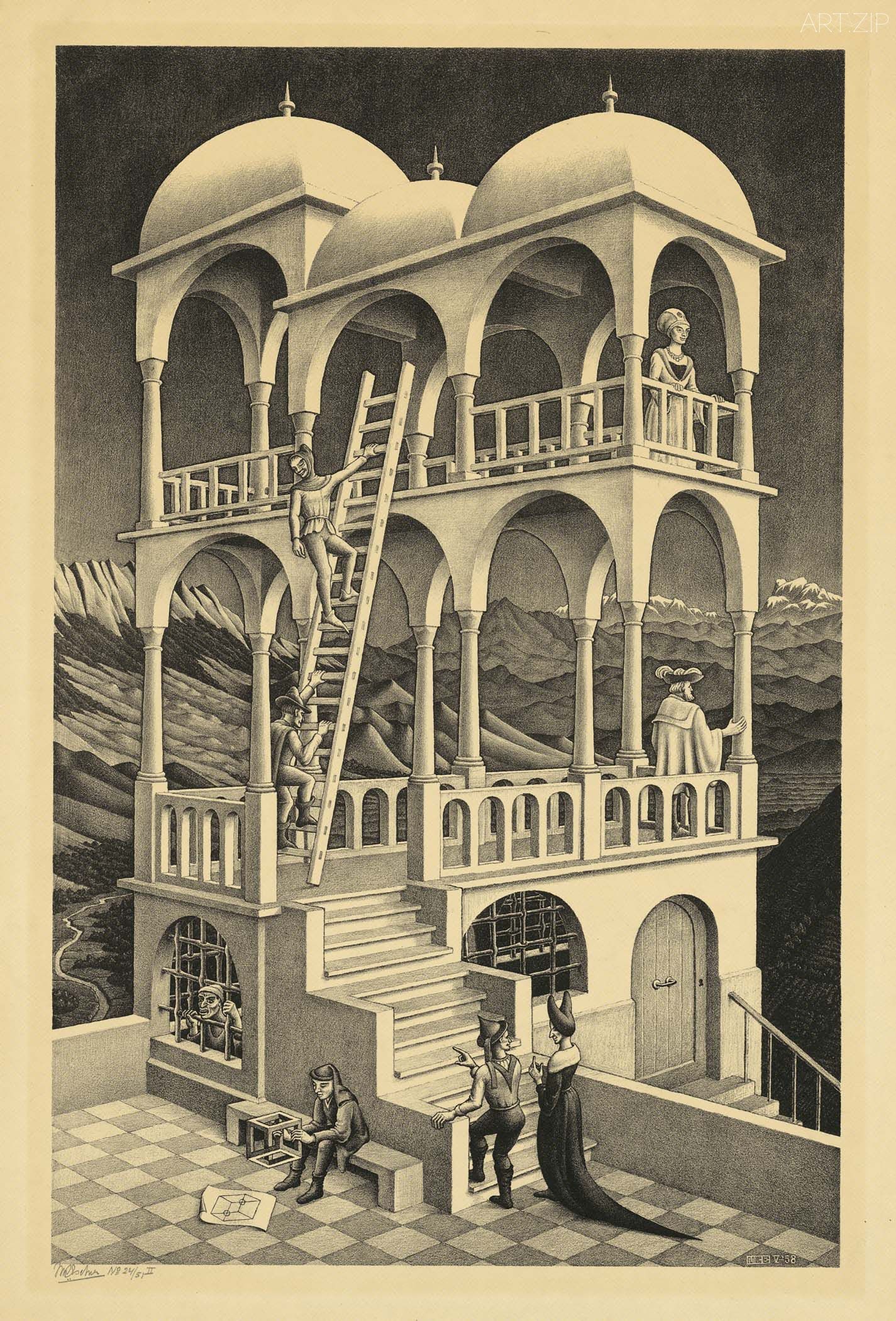

關於錯覺的一堂公開課
這場展覽最令人驚喜的部分,是它並不滿足於展示作品本身。
它試圖解釋這些作品為何能夠成立。
觀展時,剛剛對某種版畫技法產生疑問,下一秒便出現了關於木版畫、石版畫與其他版畫工藝的詳細介紹。工具、材料、製作過程以及影像資料共同構成了一條完整的學習路徑。
展覽中的視頻尤其出色。入口處的大型影像作品迅速將觀眾帶入埃舍爾的世界;而另一組動畫則詳細拆解了畫面如何翻轉、循環與銜接,最終形成那些看似不可能的視覺效果。相比靜態展示,這種動態解釋更能幫助觀眾理解埃舍爾的思考方式。
同時,展覽還設置了多個關於視覺錯覺的實體模型。凹面與凸面(concave and convex)的空間實驗、著名的彭羅斯三角( Penrose Triangle),以及各種視覺悖論裝置,都讓觀眾能夠親身體驗錯覺是如何產生的。
繪畫某種程度上本來就是一種「欺騙」。只是埃舍爾將這種欺騙發揮到了極致。
當觀眾走進畫里
如果說展覽的一部分是在學習埃舍爾,那麼另一部分則是在成為埃舍爾。
展覽中有不少觀眾可以參與的互動環節,展簽上寫著「輪到你啦!(Now it’s your turn!)」確實讓人覺得自己可以成為埃舍爾。
透視錯覺屋(Relativity Room)基於透視學原理,地板和天花板呈傾斜設計,配合特殊比例的網格圖案,利用欺騙人腦的視覺錯覺,讓站在房間左右兩側的兩個人產生巨大的身高差對比。
在埃舍爾的原作《舉著反光球的手(Hand with Reflecting Sphere)》里,藝術家透過鏡面球體觀察自己與整個房間。而在互動,觀眾也能夠成為球體中的人物,站在藝術家的位置重新觀看自己。
在德羅斯特效應(Droste Effect)的互動中,畫面中的畫面不斷重復,形成無限遞歸的循環結構。觀眾既是觀看者,也是畫面的一部分。
這些互動並不只是為了拍照。它們讓觀眾真正理解埃舍爾的創作核心——我們以為自己在觀察世界,但很多時候,我們看到的只是大腦對於世界的解釋。
離開展覽的時候,人們或許已經忘記了某件具體作品的名字。
但一定會記得那種感覺:當眼睛開始懷疑自己時,世界忽然變得比現實更加有趣。
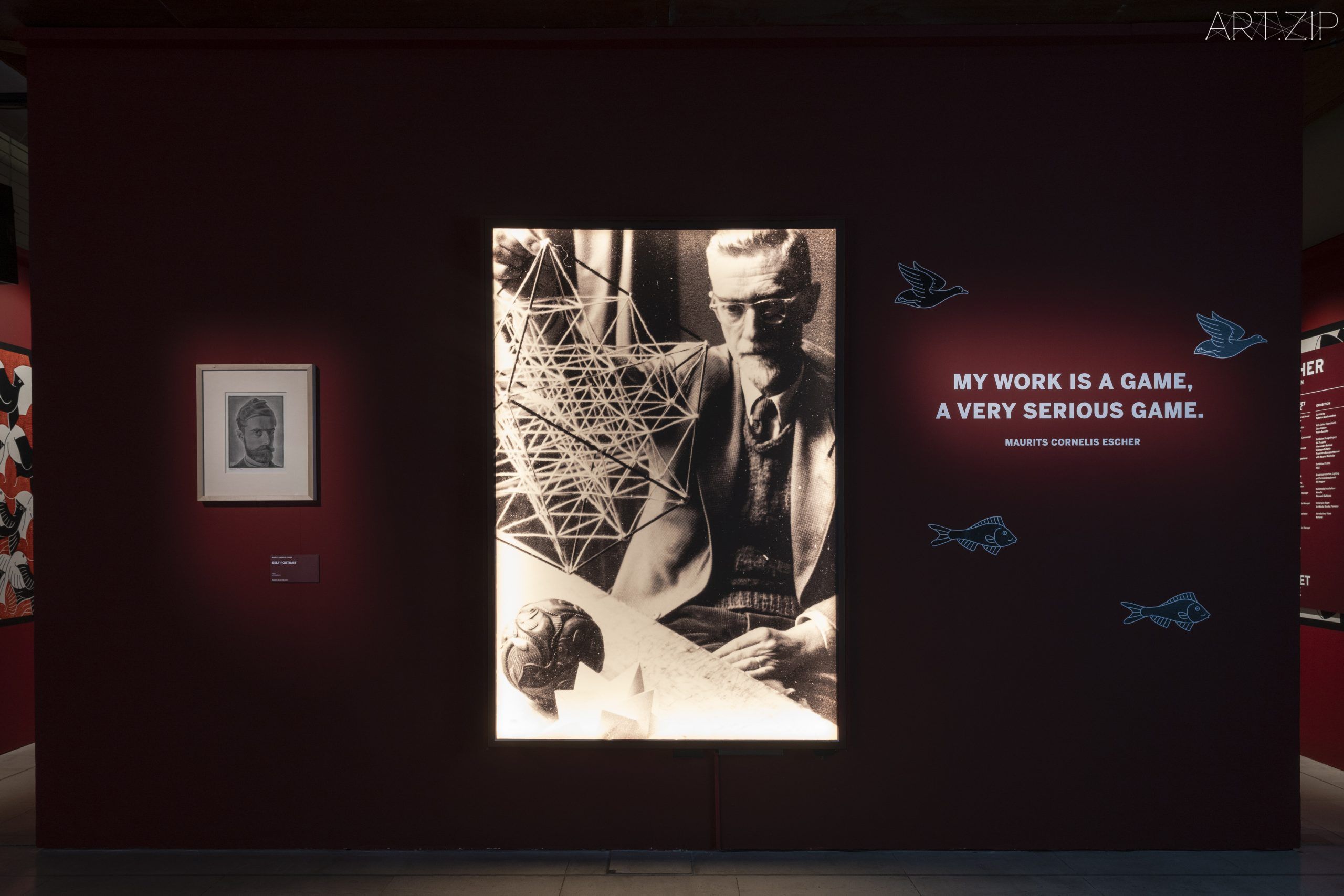
Installation views of M.C.Escher exhibition at Somerset House, London, UK
If the exhibition is itself an invitation into illusion and order, then what truly makes that invitation possible are the people behind the works — those who unfold one small, precise print after another into a world you can walk through. M.C. Escher. The Exhibition is produced by Arthemisia and FEVER, which over twenty-five years has carried more than a thousand shows out of the scholarly realm and into public view. On the occasion of its London edition, we spoke with two of the figures from Arthemisia at its heart: Tiziana Parente, the exhibition’s Project Manager, and Iole Siena, President and CEO of Arthemisia. The former takes us into the texture and the making of the exhibition on the ground; the latter speaks to the tension between accessibility and depth, the future of exhibitions in a digital age, and a question that may hold particular interest for Chinese audiences — when will Escher come to China?
AZ: This exhibition has already toured internationally. How does the London edition differ from previous presentations — is there anything designed specifically for London, or for the architecture of Somerset House?
TP: Over the years, we have developed this exhibition into a format that combines a rigorous academic component with playful and educational elements that help visitors to better understand the works and, at the same time, allow them to “take a breather.” Striking the right balance between these two aspects has undoubtedly contributed to the project’s success, but also to the ever-wider dissemination of knowledge about Escher — something that is very close to our hearts. Although the overall structure is similar, each venue becomes a stand-alone, site-specific exhibition, because we conceive and design it anew each time, adapting to the spaces that host us and always finding a way to engage with them.
The highly distinctive architectural structure of Somerset House has proved particularly well-suited to this exhibition layout, as the route is characterised by staircases that rise and fall, connecting the various levels: it is almost as if visitors were actually stepping into the work Relativity, which is the quintessential Escher icon. In this way, the rooms have themselves become an integral part of the exhibition project.
AZ: Escher’s works are often small, precise prints, yet they open up enormous mental spaces. What was the biggest challenge in translating this intimacy into a large-scale exhibition experience?
TP: In fact, his works retain the sense of intimacy and contemplation inherent in them, even within large and complex spaces such as Somerset House or other venues where we have had the opportunity to exhibit them. Although they are, all things considered, modest in size, they are utterly mesmerising and completely immersive, thanks to their wealth of detail and masterful execution. In my view, every work is an experience for visitors: and being able to showcase them all in such a large-scale exhibition is, rather than a challenge, a source of great pride for us, because over the years we have seen interest in and attention towards Escher and his art grow.
AZ: The exhibition includes interactive and educational installations. For Arthemisia, are these simply ways of attracting wider audiences, or are they essential to understanding Escher’s work? How did you prevent them from overwhelming the original prints?
TP: In all of Arthemisia’s exhibitions — not just the Escher one — ample space is devoted to interactive and educational elements; however, these are never an end in themselves but are in constant dialogue with the works on display and the themes explored throughout the exhibition.
These elements are conceived and created in collaboration with scholars and experts who work alongside us to translate even the most complex topics into interactive or immersive stations through which visitors can experience the most challenging theories or principles first-hand.
As can also be seen in the Escher exhibition, each station is accompanied by explanatory panels and features the relevant artwork, precisely because these elements serve to complete the experience rather than being merely a playful feature disconnected from the rest. The educational and interactive elements do not overshadow the artworks but coexist with them in harmony, as their purpose is to make them even clearer and more accessible to the public.
AZ: Escher is often loved by very different audiences — art lovers, designers, mathematicians, children, and people simply fascinated by illusion. How do you create an exhibition that speaks to such different visitors without simplifying the artist?
TP: I think this is something that comes with experience, but also with a respectful approach towards the artist and his works. Last year, Arthemisia celebrated its 25th anniversary: over this long period, we have engaged with a wide variety of themes and artists, ranging from archaeology to contemporary art, devoting ever more attention and energy to making our exhibitions accessible to everyone in terms of both understanding and interaction. As our President, Iole Siena, always says, in an exhibition the narrative and the in-depth analysis are just as important as the artworks themselves: this helps to make the artist more accessible and more relatable. The artist leaves a deeper impression and the visitor leaves feeling enriched by the experience: in short, it’s a win-win for both!
AZ: Arthemisia is known for making art accessible to broad audiences. Yet some critics worry that blockbuster exhibitions can dilute the seriousness of art. How do you find the balance between accessibility and depth?
IS: Depth and accessibility are not two opposing concepts; on the contrary, they are complementary. We design our exhibitions for everyone — for experts and scholars, but also, and above all, for those who are unfamiliar with art or with the subject matter of the exhibition. We put ourselves in the shoes of visitors who enter the exhibition out of curiosity, wanting to learn something new. So our exhibitions speak different languages, ranging from the simplest, most educational and emotional ones to the most complex and in-depth. That is why our exhibitions are generally so successful.
Moreover, we have found that it is often the “knowledgeable” people themselves — scholars and critics — who enjoy the educational experiments, immersive rooms and so on the most. It all contributes to knowledge, which is what matters most to us.
AZ: Immersive and digital exhibitions have proliferated in recent years, drawing both enthusiasm and criticism. How do you see the future of this field, and where does the Escher exhibition sit within it?
IS: We use technology and digital tools to create areas for deeper exploration and emotional engagement within a traditional curatorial itinerary, featuring actual artworks. Entirely digital exhibitions — in my view — are something else; they belong to the realm of entertainment, not that of art. Personally, I’m not particularly fond of this type of “exhibition”; we’ve even organised a few ourselves, but I find them tedious — they more or less always follow the same pattern. They’re enjoyable, even astonishing, and certainly do no harm to anyone; on the contrary, they help people to appreciate art and artists, which is a good thing. However, if I have to imagine the future of art in this sort of exhibition… I hope not, that’s all. Reproduction is a useful tool, but it lacks the main ingredient of art, which is the emotion of standing before something unique.
AZ: Could you tell us how the partnership with Fever began? How did the collaboration come about, and were there any turning points along the way worth sharing?
IS: The partnership with Fever began a couple of years ago; we’d known each other for some time, but as is always the case in business, there comes a moment when it makes sense to take action, and that moment arrived. Fever is a leader in its sector, and Arthemisia is a leader in hers. We complement each other perfectly because we do very different things; each of us had something the other lacked, and so far it seems to me that this partnership is yielding excellent results. I think the Escher exhibition at Somerset House is a good example.
AZ: Arthemisia’s exhibitions travel across different cities and cultures. Do audiences respond differently to the same Escher show — and do you hope to bring it to Asia, for example,to China?
IS: Great artists all share the common trait of being able to touch everyone’s hearts, regardless of location or continent. So no, there aren’t any major differences in audience behaviour in Italy, France, Japan or the USA; quite simply, an artist like Escher is successful everywhere because he speaks a universal language. If anything, there is a difference in how the artist is “received,” in the sense that in some countries he is already well known and in others less so. In France, it took us ten years to overcome a general skepticism about his work; now everyone is mad about Escher. In China, we haven’t yet managed to organise an exhibition of his work because he isn’t that well known there yet, but I’m sure that as soon as they get to know him, he’ll become the new Van Gogh!
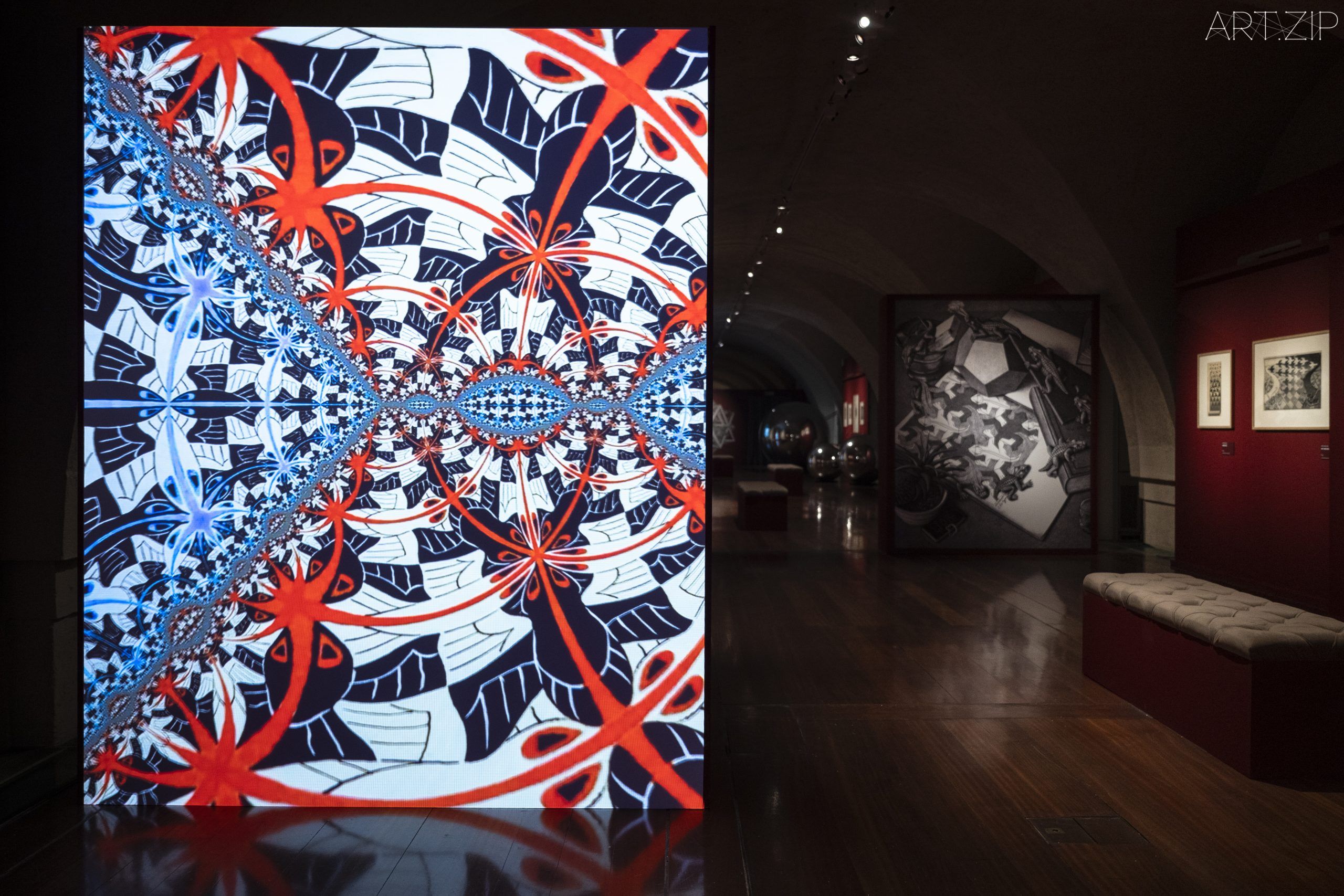
Installation views of M.C.Escher exhibition at Somerset House, London, UK
如果說展覽本身是一場關於錯覺與秩序的邀請,那麼真正讓這場邀請得以成立的,是那些站在作品背後、把一件件小尺幅版畫鋪展成一座可供穿行的世界的人。這場名為《M.C. 埃舍爾:一場展覽》的回顧展由Arthemisia 與FEVER共同策劃——二十五年來,他們把上千場展覽從學術的殿堂帶到大眾的眼前。借此次倫敦展之機,我們與Arthemisia 兩位關鍵人物展開了對話:本次展覽的項目經理 Tiziana Parente(蒂齊亞娜·帕倫特),以及 Arthemisia 總裁兼首席執行官 Iole Siena(約萊·西耶納)。前者帶我們走進展覽搭建的肌理與現場,後者則談及普及與深度的張力、數字時代的展覽未來,以及一個或許中國觀眾會格外關心的問題——埃舍爾,何時來到中國。
AZ: 這場展覽已在國際上巡回展出。倫敦這一站與此前各站有何不同?是否有專為倫敦、或為薩默塞特府的建築空間而做的特別設計?
TP: 這麼多年来,我們將這場展覽打磨成一種獨特的形式——既有嚴謹的學術內容,又有寓教於樂的趣味元素,幫助觀眾更好地理解作品,同時也讓他們得以「喘口氣」。在這兩者之間找到恰當的平衡無疑是這個項目成功的關鍵,也讓更多人得以認識埃舍爾——而這正是我們格外珍視的事。儘管整體結構相似,但每一站都會成為一場獨立的、因地制宜的展覽,因為我們每次都重新構思、重新設計,順應接納我們的空間,並總能找到與之對話和互動的方式。
薩默塞特府極具特色的建築結構特別契合這次的展陳方式——參觀動線由上上下下、連接各個樓層的樓梯構成,幾乎讓觀眾彷彿真正走進了《相對論》那件作品,而它正是埃舍爾最具代表性的標誌。就這樣,展廳本身也成了整個展覽構思中不可分割的一部分。
AZ: 埃舍爾的作品往往是尺幅不大、精密細緻的版畫,卻能開啓極為遼闊的精神空間。把這種私密感轉譯為一場大型展覽體驗,最大的挑戰是什麼?
TP: 事實上,他的作品即便置身於薩默塞特府這樣宏大而複雜的空間——或我們曾有機會展出它們的其他場館——也依然保有其內在的私密與凝神之感。這些作品尺幅雖然總體不大,卻憑借豐富的細節與精湛的技藝,令人著迷、引人完全沉浸其中。在我看來,每一件作品對觀眾而言都是一場體驗:能夠在如此大型的展覽中把它們悉數呈現,與其說是挑戰,不如說是我們莫大的驕傲——因為這些年來,我們親眼見證了人們對埃捨爾及其藝術的興趣與關注不斷增長。
AZ: 展覽設有互動與教育裝置。對 Arthemisia 而言,這些只是吸引更廣泛觀眾的手段,還是理解埃舍爾作品不可或缺的部分?你們如何避免它們蓋過原作本身?
TP: 在 Arthemisia 的所有展覽中——不只是埃舍爾這一場——我們都會為互動與教育部分留出充足的空間;但這些設計從不為自身而存在,而是始終與展出的作品、與整條動線所探討的主題保持對話。這些環節是與學者、專家攜手構思和製作的,他們與我們合作,把最艱深的課題轉化為互動或沉浸式的體驗站,讓觀眾得以親身體驗那些最難理解的理論或原理。
正如在埃舍爾展上也能看到的,每一個體驗站都配有說明展板,並放置了相關的作品——正因為這些環節是對體驗的補全,而非與其餘部分割裂的、單純的趣味裝置。教育與互動的部分並不會壓過作品,而是與之和諧共存,因為它們的作用恰恰是讓作品對公眾而言更加清晰、更易親近。
AZ: 埃舍爾深受各類人群喜愛——藝術愛好者、設計師、數學家、孩子,以及單純著迷於錯覺的人。你們如何打造一場能與如此不同的觀眾對話、卻又不把這位藝術家簡單化的展覽?
TP: 我想這是隨著經驗積累而獲得的,但也源於一種對藝術家及其作品的尊重。去年,Arthemisia 迎來了二十五週年。在這段漫長的歲月里,我們接觸過最為多樣的題材與藝術家,從考古到當代藝術,並投入越來越多的心力,讓我們的展覽無論在理解還是互動層面都人人可及。正如我們的總裁 Iole Siena 常說的,在一場展覽里,敘述與深度解讀和作品本身同樣重要:這有助於讓藝術家更易親近、更貼近人心。藝術家給人留下更深的印象,觀眾也帶著被豐盈過的體驗離開:總之,是雙方共贏!
AZ: Arthemisia 以讓藝術走向大眾而著稱。但也有評論者擔心,熱門大展——或者說所謂的「網紅展」,會稀釋藝術的嚴肅性。你如何在普及與深度之間取得平衡?
IS: 深度與普及並非兩個對立的概念,恰恰相反,它們是互補的。我們為所有人設計展覽——為專家、為學者,但同時、尤其是為那些不熟悉藝術、或不瞭解展覽主題的人。我們設身處地為那些懷著好奇走進展廳、想學到新東西的觀眾著想。因此,我們的展覽說著不同的語言,從最簡單、最具教育性與感染力的,到最複雜、最深入的,應有盡有。這正是我們的展覽通常如此成功的原因。
何況我們還發現,往往恰恰是那些「懂行」的人——學者與評論家——最享受這些教育實驗、沉浸式展廳等等。這一切都在為「認知」添磚加瓦,而這正是我們最為珍視的。
AZ: 近年來,沉浸式與數字展覽大量湧現,既受追捧,也招致批評。你如何看待這一領域的未來?埃舍爾這場展覽又處在其中什麼位置?
IS: 我們運用科技與數字手段,在一條以真跡為主的經典策展動線之中,開闢出供人深入探究、引發情感共鳴的區域。在我看來,完全數字化的展覽是另一回事,它屬於娛樂表演的範疇,而非藝術。就個人而言,我對這類「展覽」並無太多好感;我們自己也辦過幾場,但我覺得它們乏味——來來去去幾乎都是同一套路。它們令人愉悅,甚至驚艷,當然也不會對任何人造成傷害;相反,它們有助於讓人喜愛藝術與藝術家,這是好事。然而,倘若要我去想象藝術在這類展覽中的未來……我只能說,但願不會如此。複製是一種有用的工具,卻唯獨缺了藝術最核心的成分——那種站在獨一無二之物面前的感動。
AZ: 能否談談與 Fever 合作的緣起?這段合作是如何開始的,過程中有沒有什麼值得一說的轉折?
IS: 與 Fever 的合作始於兩年前;我們彼此早已相識,但正如商業中常有的情形,總會有那麼一個時刻,讓人覺得是時候做點什麼了,而那個時刻剛好到了。Fever是其領域的翹楚,Arthemisia也是自己領域里的佼佼者。我們彼此完全互補,因為我們所做的事情大不相同;各自都擁有對方所欠缺的那一部分。至今為止,在我看來,這次結合正帶來極好的成果。我想,薩默塞特府的這場埃舍爾展便是一個很好的例子。
AZ: Arthemisia 的展覽輾轉於不同的城市與文化之間。面對同一場埃舍爾展,各地觀眾的反應會有所不同嗎?你們是否希望把它帶到亞洲,譬如,中國?
IS: 偉大的藝術家有一個共同點:無論身處何地、哪片大陸,他們都能走進每一個人的心裡。所以,在意大利、法國、日本還是美國,觀眾的反應並無顯著差異;說到底,像埃舍爾這樣的藝術家在哪裡都會成功,因為他說的是一種普世的語言。若說有差別,那也只是在藝術家的「接受度」或「認知度」上——在有些國家他早已廣為人知,在另一些則尚不為人熟知。在法國,我們花了十年才打破人們對他作品普遍的懷疑,如今人人都為埃舍爾痴迷。在中國,我們還沒能辦成一場他的展覽,因為他在那裡還不那麼為人所知。但我深信,只要人們認識了他,他就會成為下一個梵高!
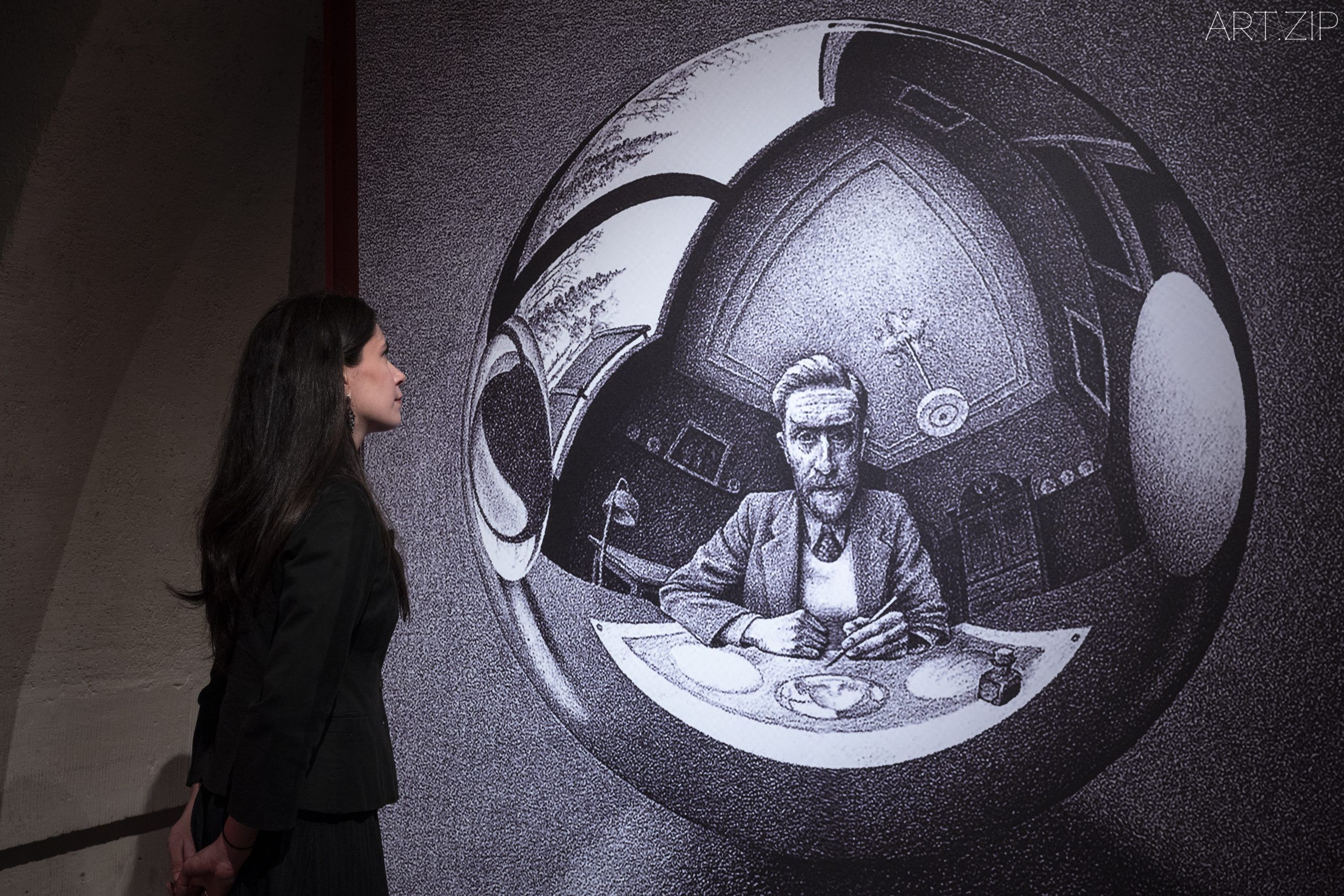
Installation view. M.C.Escher : The Exhibition. Somerset House 2026. Photo:Stephen Chung
M.C. Escher. The Exhibition
Somerset House Embankment Galleries
5th June – 6th September 2026
Book Tickets
Text by 撰文 x Shoran Jiang 姜嘯然
Interview and Edited by 採訪及編輯 x Michelle Yu