


I moved through the crowds of the London Book Fair with a black tote bag over my shoulder. It had been handed to me in passing as I walked past a publisher’s stand. The publisher’s name was printed on it. It hung lightly from my shoulder, like a temporary pass, like a small sense of belonging I had happened to receive inside this city temporarily assembled from data, business cards and international rights deals. Or perhaps, more precisely, the illusion of belonging.
At the fair, conversations about books were everywhere, restless and abundant: rights, markets, trends, lists. Crowds pressed past one another; the stands were compact and brightly lit; meeting tables were arranged in neat rows; business cards and glances were exchanged in haste. Everything seemed to revolve around books, and yet not quite to belong to them. Books were everywhere here, and somehow, for the moment, absent. They were spoken of through covers, catalogues, summaries, sales figures and territorial rights, while the act of reading itself seemed to have withdrawn to a quieter distance.
Two days before the fair, I had happened to read an essay Dubravka Ugrešić wrote in 2000, looking back on the London Book Fair of 1990. In it, she wrote of how literature becomes wrapped, layer upon layer, in all the matters that gather around a work; of how the making of books increasingly resembles a business; and of how writers and readers are drawn farther and farther apart along an ever-lengthening chain. More than twenty years later, the essay still feels sharp. Amid the noise of the fair, it kept returning me to a question: when we speak so often, and so fluently, about books, are we still speaking about literature itself?
Ugrešić’s words were still lingering in my mind. And yet, as a reader, to encounter, amid such noise, an author who had once truly moved me made even the sharp London wind of early spring feel a little less tiring. Perhaps for this reason, I still wanted to believe that literature had not really disappeared. At least, beyond the dazzling covers, discourses and packaging, I could still find my way back to the source of what had first moved me in a book. I could still meet the person who, quietly and almost without my noticing, had once changed the rhythm of my breathing as I read. There was something almost stubborn in that feeling, something close to naïve. But I knew that, in this sense, I was fortunate.
In a place where speed, efficiency and visibility seemed to be held up as virtues, the value of Satoshi Yagisawa’s work became clearer to me. Today’s publishing industry allows books to travel across languages, oceans and markets before finally arriving in the hands of readers. I, of course, am also a beneficiary of that chain of circulation. And yet, within such a rapidly turning system, the quietest and most delicate parts of literature, those least suited to being measured, packaged or made visible, are often the first to slip from view.
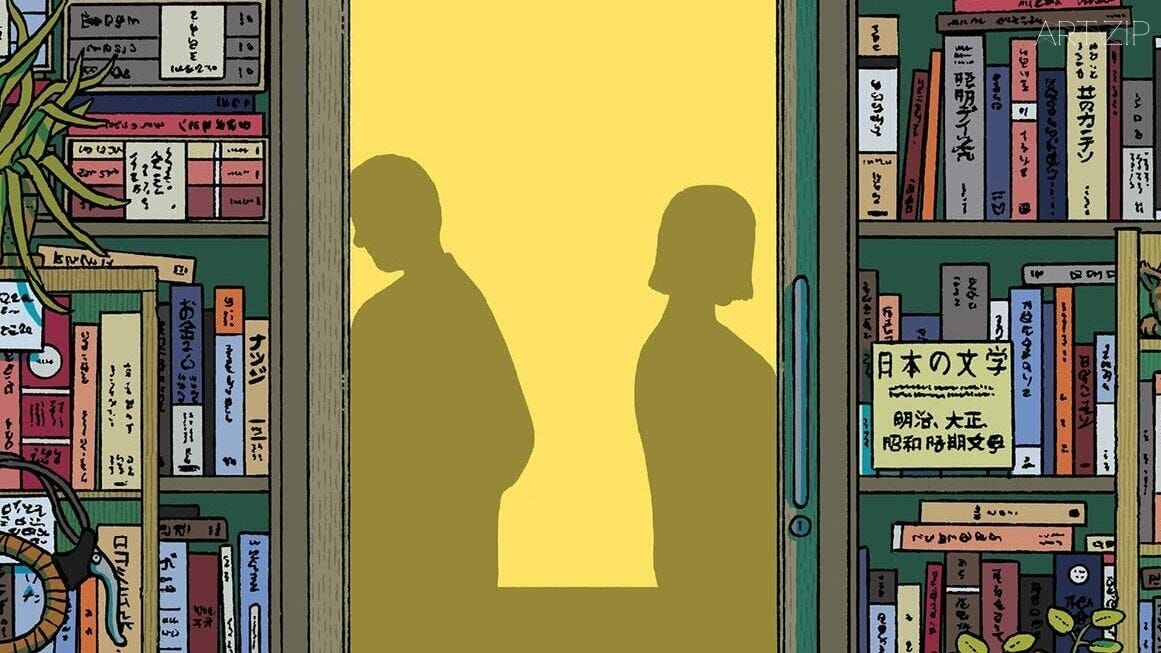
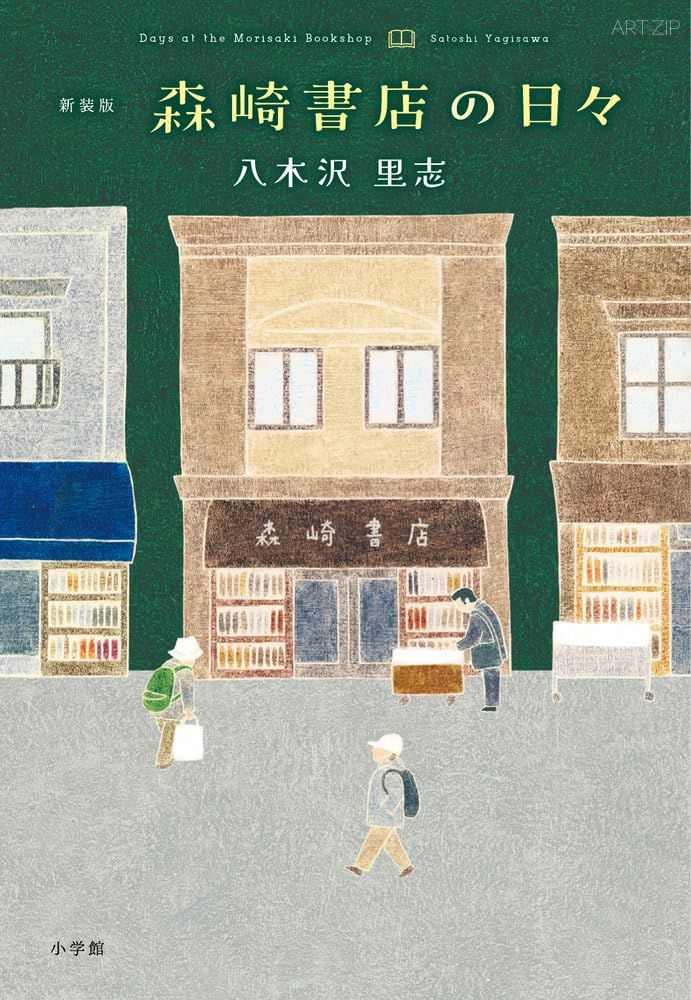
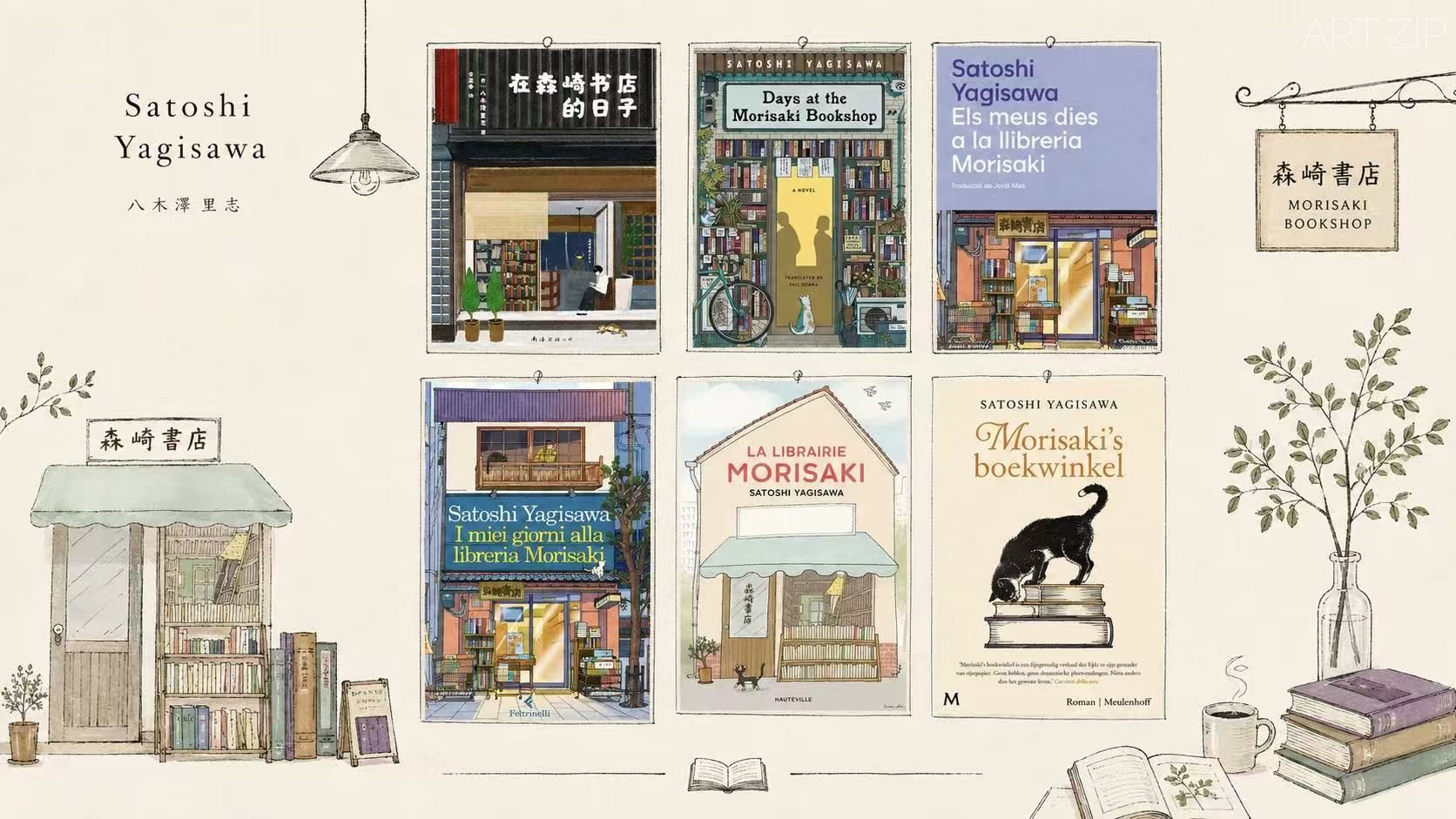
Days at the Morisaki Bookshop has always reminded us that what truly touches a reader’s heart is not necessarily something grand, fervent, or immediately recognisable. More often, it is made of moments we barely notice at the time, only for them to return to memory much later: an idle afternoon in an old bookshop carrying the scent of age; a simple meal prepared with care; a small excursion; a sentence left unfinished; a relationship that never comes too close, yet somehow remains present. Perhaps literature still matters because it refuses to accelerate with the world. It allows what is blurred to remain blurred. It allows those who are not yet ready to stand again to sit quietly for a little while.
Before meeting Satoshi Yagisawa, I had already cried over many passages in Days at the Morisaki Bookshop. Not only because I, too, had an uncle like Satoru, someone who left a deep imprint on my life; not only because its writing on parting, reunion and death is so tenderly moving. What stayed with me most were, instead, the things so quiet they seemed almost soundless: the room above the second-hand bookshop, the afternoon light slowly dimming, the trust that gathers between people little by little, and those emotional ties that are never hurriedly named or loudly declared. Aunt Momoko’s hand, which “always seemed as though it would grow smaller and smaller, melting away like light snow,” has stayed with me too. Within all this, there seemed to be something harder to put into words: the possibility, in an exhausted life, of pausing for a while, and learning once again how to read, and how to breathe.
After truly living through a period in which I pressed pause on my own life, I gradually came to understand that Yagisawa’s stories cannot be easily gathered under a word like “healing.” They are not a weightless promise that “everything will be all right,” nor do they quietly arrange a rounded answer in advance. They are closer to this: when a person has been carried along by life for too long, there comes, at last, a moment when they do not have to recover immediately, do not have to move forward at once, do not have to pretend that everything is fine. Literature, here, is neither an answer nor a method. It simply keeps open a room where one may catch one’s breath.
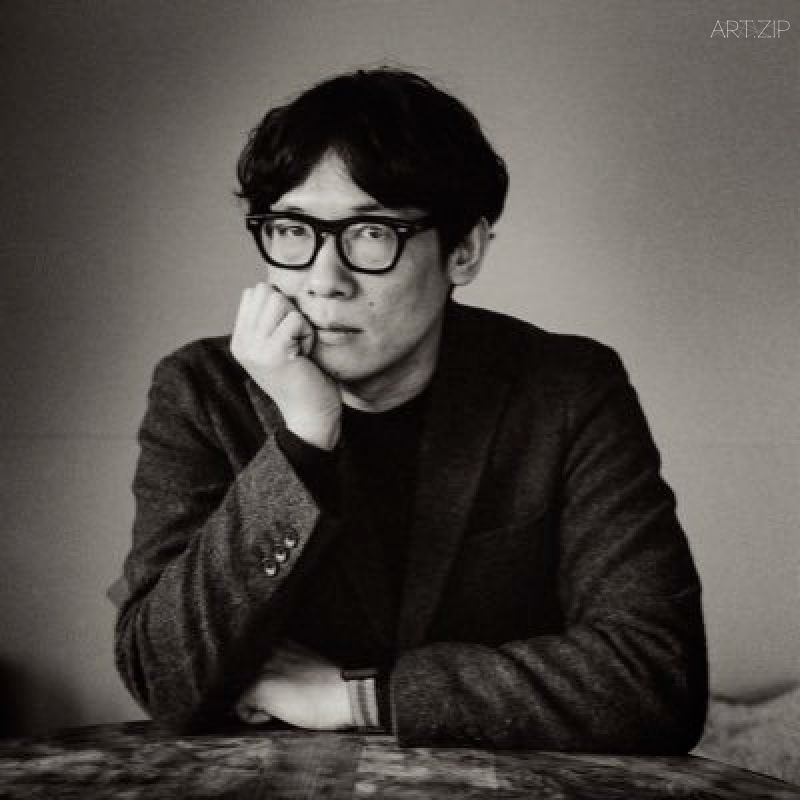
At the book fair, Satoshi Yagisawa wore black-framed glasses. He spoke softly, with a gentle smile often resting on his face. Yet there was nothing loose in that gentleness, nothing merely polite or superficial. It felt much like his novels: restrained, quiet, never in a hurry to push emotion to its highest pitch, and perhaps for that very reason, more able to leave an echo in the heart.
In this interview, we began with bookshops, cafés and small inns, those spaces where one can breathe. We spoke of relationships that need not come too close, yet can still quietly hold one another up; of how to write a kind of tenderness that does not slip into easy sentimentality; and of whether, in an age that keeps urging us to run forward, fiction can still return to readers a deeper form of consolation.
As Britain marks the National Year of Reading 2026, with its theme “Go All In,” there is a renewed effort to awaken the habit of reading for pleasure, for wellbeing, and for self-nourishment. But whether reading can truly be called back by a campaign may not depend on slogans alone. For many people, what brings them back to books is often a particular book, a particular sentence, or a moment in which they finally feel: perhaps I can stop for a while.
Perhaps literature has not disappeared into the noise after all. It remains, simply, in places that do not draw attention to themselves. It remains in the room above an old bookshop, between two hearts that keep their distance and yet are deeply connected, and in the moment when someone, already worn down by life, finally allows themselves to admit: I am tired. I want to pause. What follows is my conversation with Satoshi Yagisawa.
ART.ZIP: Across your books, places like a second-hand bookshop, a café, or a pension become spaces where people can slowly recover themselves. When you begin a story, how do you know what kind of place it needs, and how does that place begin shaping the emotional rhythm of the novel?
SY: To be honest, I don’t begin by deciding, “This is the place where my character will recover.” Rather, the settings form naturally from spaces where I myself have felt a sense of ease—places like the used bookshops of Jimbocho, where I once found a kind of salvation, or the tucked-away, hideaway-like coffee shops in the old part of town. Places where I instinctively feel “ah, here I can breathe.” Here the stories and settings come about naturally.
Once a place takes shape, its sounds and smells seem to establish the story’s tempo on their own; the dry rustle of old pages turning, the deep aroma of coffee in a café. As I attune myself to these quiet presences, which feel in danger of being drowned out by the busyness of modern life, the melancholic hearts of the characters gradually settle into the unhurried rhythm of the place. It’s as though I, too, experience that synchronization between the setting and the heart as I write.
ART.ZIP: Readers often describe your fiction as gentle, but the gentleness in your work never tips into sentimentality. How do you keep that balance between warmth and emotional depth?
SY:I’m genuinely glad to hear that! It may be the thing I care about most in my writing. What I always try to avoid is writing easy lies. When you force a story toward a happy ending, or decorate emotions to make the reader cry, something inevitably feels false, and that falseness produces a cloying, sticky sentimentality.
But reality is quieter than that, and less accommodating. When we are sad, we are simply sad. When we are lonely, we are lonely regardless of who is beside us. I want to write as honestly as possible, without denying those moments when life doesn’t go our way, to let those moments exist as they are. I believe that when I do, the warmth that surfaces in small, unguarded moments reaches the reader as something genuine rather than manufactured.
ART.ZIP: I’m curious about your writing life in a more practical sense: when you are working on a novel, how do ideas usually arrive and how do you hold on to them? Do they come through places, memories, conversations, or a regular writing routine?
SY: Inspiration itself arrives in a flash, an instant you cannot manufacture or summon on command. It comes uninvited during a walk, while I’m eating ramen (laughs), and during perfectly ordinary, unguarded moments of daily life.
But shaping that single flash into something with the weight and form of a story requires a completely different kind of effort: a much deeper concentration. For me, that often happens while walking or exercising. I immerse myself entirely in the idea, letting it pull me in. As I walk, I set the characters moving inside my head, let them speak to one another, and slowly trace the outline of the story.
By staying submerged in that world for a sustained period, what began as scattered fragments gradually coalesce into a single, large stream of thought. Time spent at the desk matters, of course, but for me, those hours of deep immersion while my body is in motion, wrestling with the story from the inside, feels like the true core of the writing itself.
ART.ZIP: The relationship between Takako and her uncle Satoru sits at the heart of the book — two people who are family but have always kept a certain distance, slowly finding their way towards each other. What first led you to imagine this bond, not a close friendship, not a romantic relationship, but something more oblique and familial?
SY: Actually, part of it comes from my own background. I didn’t grow up in a particularly fortunate home environment. My childhood was spent in a household where my parents were constantly fighting. Perhaps because of that, I have always been acutely sensitive to the distance between people.
From those experiences, I think a character like Satoru emerged from a part of me. He is someone who understands that not intruding, simply being present and watching over someone, is its own form of love. Though he does occasionally contradict himself with bouts of excessive interference (laughs).
In any case, I believe there are relationships that collapse precisely because they are too close, and others that save us precisely because they maintain a certain distance. A bond like the one between Takako and Satoru — quietly connected at the deepest level while preserving a measured space between them — may have been, for me, something like an ideal refuge I had been searching for throughout my own life.
ART.ZIP:The scene where Takako and her aunt Momoko visit the hot spring together is quietly one of the most moving passages in the book. Many writers struggle to portray perspectives different from their own without falling into cliché or projection; this is especially true of women’s inner lives in intimate scenes. Your writing, however, feels remarkably careful and precise. When writing such scenes, how do you find your way into them?
SY:When I write characters whose circumstances differ from my own, the thing I hold above all else is the need to set my ego aside. I try to put down the desires I carry as a writer — the instinct to think I would feel this way — and simply become the character: carefully registering what they are seeing, what they are feeling against their skin.
Letting go of the ego entirely is, of course, enormously difficult. But in the kind of story I write — one that tries to stay close to the deepest part of a character’s heart — I believe it is the most essential part of the process.
When I was writing the hot spring scene, I felt as though I myself were immersed in that water. The grief Momoko had carried for so long; the quiet affection quietly taking root inside Takako. I tried to share those things as one living human being to another, reaching across the divide of gender. By writing in that way — holding my breath, staying very still beside them — I find that honest words, at last, begin to come out.
ART.ZIP: You have spoken before about writing universal human emotions. Has there been a particular response from a reader outside Japan — perhaps something unexpected, specific, or even a little different from how the book is read in Japan — that has stayed with you?
SY: Occasionally, readers from Europe or North America tell me that reading the book felt like a kind of reading meditation. That response has been a genuinely delightful discovery for me.
My personal impression is that awareness of self-care and mental care tends to run stronger in the West than in Japan. When it comes to the idea of valuing oneself, that idea still lacks much presence in Japan — and I think the difference in these responses reflects something of that. At the same time, it may also be a sign that people everywhere in the world today are simply exhausted, and that the time to quietly look after themselves is being taken from them. Modern people, on the whole, are tired, aren’t they?
If, for the duration of reading my book, someone can silence the noise of the outside world and slowly return to their own centre — if what I’ve written can be, for even one person, the means of finding that kind of particular time — there is no greater happiness I could ask for as a writer.
ART.ZIP:Many young people today live under constant pressure to keep going, keep competing, and keep being productive. Your book quietly argues for something else–that the ability to pause, rest, and return to books can feel both precious and necessary. What do you think fiction can still offer readers today: not only comfort, but perhaps also the courage to pause?
SY:As you say, we live in an era where the voices telling us to keep running, to become someone, seem to follow us everywhere. But if you tell someone who is already pushing themselves to their limit, “Please, rest” — those words don’t tend to land easily.
That, I think, is where fiction has something to offer. Because it works through story, it never becomes a sermon — it slips quietly past the reader’s defenses and carries the words somewhere deeper. By witnessing a character who pauses for a moment, who takes a breath, the reader can arrive almost naturally at a kind of self-forgiveness: ah, perhaps I’m allowed to stop, too.
To hand the reader the courage to pause through the roundabout path of narrative — I think that may be one of the most significant reasons why, in this modern age, we still write and read novels.
我背著一個黑色環保袋,穿梭在倫敦書展的人群里。它是我路過某家出版社展位時,工作人員順手遞來的。袋子上印著出版社的名字,輕飄飄地掛在肩頭,像一張臨時通行證,也像我在這座由數據、名片與跨洋版權交易臨時搭起的城裡,偶然得到的一點歸屬感,或者說,歸屬的幻覺。
書展里關於書的談話總是流動而紛繁:版權、市場、趨勢、名單。人群摩肩接踵,展台緊湊而明亮,會議桌整齊排開,名片和眼神被匆匆交換。一切都圍繞著書展開,卻又並不完全屬於書。書在這裡無處不在,又彷彿暫時缺席。它以封面、目錄、簡介、銷量和版權地域的形式被談論,真正的閱讀本身,反而退到了稍遠的地方。
參加書展前兩天,我恰好讀到杜布拉夫卡·烏格雷西奇一篇寫於 2000 年、回望 1990 年倫敦書展的文章。她寫文學如何被作品之外的瑣事層層包圍,寫書籍生產如何越來越像一門生意,也寫作者與讀者如何在這條不斷延長的鏈條里被越拉越遠。二十多年過去,那篇文章讀來仍舊鋒利。它讓我在書展的喧鬧中不斷想起一個問題:當我們如此頻繁、如此熟練地談論書時,我們談論的究竟還是不是文學本身?
杜布拉夫卡·烏格雷西奇的文字還在我的腦海裡徘徊。可作為一個讀者,若能在這樣的喧鬧里遇到真正曾經打動過自己的作者,連走在乍暖還寒的倫敦大風,也不再讓人覺得那麼疲憊。也正因如此,我還是願意相信,文學並沒有真正消失。至少,在那些令人眼花繚亂的封面、話語與包裝之後,我仍然可以抵達一本書最初打動我的那個源頭,見到那個曾經在閱讀中悄無聲息地改變過我呼吸節奏的人。那種感覺幾乎有點固執,甚至近於天真,但我知道,從這一點上來講,我是幸運的。
在這樣一個以速度、效率與可見性為美德的場合里,我反而更清楚地感到八木澤里志作品的珍貴。如今的出版業讓一本本書跨越語言、大洋與市場,最終抵達讀者;我自己當然也是這條流通鏈條上的受益者。可也正是在這樣高速運轉的體系里,文學中那些最安靜、最細微、最不適合被量化與包裝的部分,常常最先變得不可見。而《森崎書店的日子》始終在提醒人們,真正擊中讀者心靈的,未必是那些宏大、熱烈、可以被迅速辨認與理清的時刻。更多時候,是一些當時被我們輕輕略過、卻會在日後重新回到記憶中的瞬間:在有著陳舊味道的舊書店裡一個無所事事的午後,一頓簡單但充滿心意的飯菜,一次遠足,一句沒有說完的話,一段不過分靠近卻始終在場的關係。文學之所以仍然重要,或許正因為它拒絕與這個世界一起加速。它讓模糊保有模糊,也讓那些還沒有準備好重新站起來的人,先安靜地坐一會兒。
在見到八木澤里志之前,我已經在《森崎書店的日子》的許多片段裡掉過眼淚。不只是因為我也有一個像阿悟那樣、曾在生命里留下深刻痕跡的叔父,也不只是因為那些關於分離、重逢與死亡的書寫格外溫柔。真正留在心裡的,反而是那些安靜得近乎沒有聲響的東西:舊書店樓上的房間,午後微微發暗的光線,人與人之間緩慢建立起來的信任,還有那些沒有被急著命名、也沒有被高聲宣告的情感聯結。桃子舅媽那只「總覺得會越來越小,如淡雪般消融不見」的手,也一直留在我心裡。那裡面似乎有一種更難說清的東西,一種在疲憊生活里暫時停下來,重新學會閱讀與呼吸的可能。
在自己真實經歷過一段給人生按下暫停鍵的時間之後,我漸漸明白,八木澤里志筆下的故事,並不能簡單地被「治癒」這樣的詞概括。它不是輕飄飄的「會好起來的」,也不是替人預先安排好一個圓滿的答案。它更像是,當一個人被生活推著走了太久,終於有一刻,可以不必立刻振作,不必馬上向前,也不必假裝一切都好。文學在這裡不是答案,也不是方法,它只是替人保留了一間可以喘息的房間。
書展上的八木澤里志戴著黑框眼鏡,說話很輕,臉上總帶著溫和的笑意。那種溫和並不鬆散,也不是表面的客氣,更像他的小說給人的感覺:克制,安靜,不急著把情緒推到最高處,卻因此更容易在心裡留下回聲。
在這次訪談里,我們從書店、咖啡館與旅館這些“可以呼吸”的空間談起,談到那些不必過分靠近、卻依然能安靜托住彼此的關係;談到如何寫出一種不流於廉價煽情的溫柔,也談到在一個不斷催促人向前奔跑的時代里,小說是否仍能把某種更深的安慰交還給讀者。
正值英國 National Year of Reading 2026,人們試圖以 「Go All In」為主題,重新喚起為了快樂、為了身心安頓、也為了自我滋養而閱讀的習慣。但閱讀是否真的能被一場運動重新召回,也許並不只取決於口號。對許多人來說,真正讓人回到書中的,往往是某一本書、某一個句子,或某個終於讓人覺得「我可以先停一下」的時刻。
也許文學並沒有在喧嘩中消失。它只是仍然留在那些不那麼醒目的地方,留在一間舊書店的樓上,留在兩顆保持距離卻依然彼此相連的心之間,也留在一個已經很累的人終於承認“我想停一下”的時刻里。
接下來,是我與八木澤里志的對話。
ART.ZIP: 在您的作品中,二手書店、咖啡館,或是小旅館這樣的場所,常常成為人們慢慢找回自己的空間。您在開始一個故事時,是如何知道它需要怎樣的場所的?而這個場所又是如何開始塑造小說的情感節奏的?
SY: 說實話,我並不會一開始就決定「這裡將是人物獲得療癒的地方」,那些場所,更多是自然而然浮現出來的。它們往往來自我自己曾經感到安心的空間。比如神保町的舊書店,那裡曾在某種意義上拯救過我;又或者老街深處那些像隱秘小屋一樣的咖啡館。那是一些讓我本能地覺得「啊,在這裡終於可以呼吸了」的地方。於是,故事和場景也就在這樣的感受中,自然而然地生長出來。
一旦某個場所逐漸成形,它的聲音與氣味,似乎也會自己為故事定下節奏。舊書頁被翻動時乾燥而輕微的沙沙聲,咖啡館裡深沉而溫熱的咖啡香氣——當我讓自己去貼近這些安靜的存在時,那些幾乎要被現代生活的喧囂淹沒的細微事物,也開始慢慢浮現。人物心中帶著憂傷的部分,便會一點一點地安放進這個地方從容而緩慢的節奏里。寫作的時候,我彷彿也在親身經歷著這種同步:場所與內心,漸漸調成了同一種呼吸。
ART.ZIP: 讀者常常形容您的小說是溫柔的,但您作品中的溫柔從不會滑向廉價煽情。您是如何在溫暖與情感深度之間保持這種平衡的?
SY: 能聽到這樣的評價,我真的非常高興。也許這正是我在寫作中最在意的事情。我一直努力避免的,是寫出那些太容易出口的假話。倘若強行把一個故事推向幸福的結局,或是刻意修飾情緒,只為了讓讀者落淚,那麼其中必然會露出某種不真實。而那份虛假,最終就會變成一種甜膩的、黏滯的煽情。
但現實其實要安靜得多,也並沒有那麼善解人意。悲傷的時候,我們就只是悲傷;孤獨的時候,即便身邊有人陪伴,我們依然可能感到孤獨。我希望自己能盡可能誠實地寫作,不去否認那些人生並不如願的時刻,而是讓它們以本來的樣子存在在那裡。我相信,正因為如此,那些在細小而毫無防備的瞬間里浮現出的溫暖,才會作為一種真實之物直抵讀者內心,而不是被人為製造出來的感動。
ART.ZIP: 我也很好奇您更實際層面的寫作生活:當您創作一部長篇小說時,靈感通常是如何到來的?您又如何把它們留住?它們是來自某個地方、某段記憶、某次談話,還是一種固定的寫作習慣?
SY: 靈感本身,往往是一瞬間閃現的——那是無法刻意製造,也無法隨時召喚的東西。它會在散步的時候、吃拉麵的時候(笑),或者在日常生活中那些再普通不過、毫無防備的片刻里,忽然到來。
但要把這一瞬間的閃光,慢慢塑造成一個有分量、有形狀的故事,就需要另一種完全不同的努力:更深的專注。對我來說,這常常發生在散步或運動的時候。我會讓自己完全沈浸在那個想法里,被它一點點帶進去。走著走著,我會讓人物在腦海裡動起來,讓他們彼此說話,然後慢慢摸索出故事的輪廓。
當我持續一段時間沉在那個世界里,原本零散的片段,就會漸漸匯聚成一條更大的思緒之流。當然,坐在書桌前的時間也很重要;但對我而言,身體在移動時那種深深的沈浸,那種從故事內部與它反復相處、反復較量的時刻,才更像是寫作真正的核心。
ART.ZIP: 貴子與舅舅阿悟之間的關係,是這本書最核心的部分——他們是家人,卻一直保持著某種距離,又在這種距離中慢慢走向彼此。最初是什麼讓您想到去書寫這樣一種關係?它既不是親密的友情,也不是愛情,而是一種更迂迴、更屬於家人之間的聯結。
SY: 其實,這其中有一部分來自我自己的成長經歷。我並不是在一個特別幸運的家庭環境中長大的。童年時期,我的父母總是在爭吵。也許正因為如此,我一直對人與人之間的距離格外敏感。
從這些經歷里,我想,像阿悟這樣的人物,是從我內心的某個部分慢慢浮現出來的。他明白,不貿然闖入對方的世界,只是安靜地待在那裡,守望著一個人,本身也是一種愛。當然,他偶爾也會因為過度干涉而和這個原則自相矛盾(笑)。
無論如何,我始終相信,有些關係正是因為太過靠近才會崩塌;而另一些關係,卻恰恰因為保有一定的距離,反而能夠拯救我們。像貴子和阿悟之間這樣的聯結,在最深的地方靜靜相連,同時又為彼此保留著恰到好處的空間,於我而言,也許就像是我在人生中一直尋找的一處理想的避難所。
ART.ZIP: 貴子和舅媽桃子一起泡溫泉的那一幕,是書中安靜卻格外動人的段落之一。許多作家在書寫與自身經驗不同的視角時,往往很難避開陳詞濫調,也很難不把自己的想象投射到人物身上,尤其是在描寫親密場景中的女性內心時。然而您的書寫卻顯得格外謹慎、細膩,也非常準確。寫這樣的場景時,您是如何一步步進入人物內心的?
SY: 當我書寫處境與自己不同的人物時,最重要的,是盡量把自我放到一邊。我會試著放下自己作為作者的慾望,比如那種忍不住去想「如果是我,大概會這樣感受吧」的衝動。然後,我只是盡可能成為那個人物,仔細感受她正在看見什麼,肌膚正在觸碰到什麼。
當然,要完全放下自我,是非常困難的。但在我所寫的這類故事里,那些試圖貼近人物內心最深處的故事里,我相信,這正是最不可缺少的過程。
寫那場溫泉戲的時候,我感覺自己彷彿也浸在那片水中。桃子長久以來獨自背負的悲傷,貴子心中正在悄悄生根的情感,我試著越過性別的距離,像一個活生生的人面對另一個活生生的人那樣,去感受、去靠近這些東西。
也正是在這樣寫的時候,我屏住呼吸,安靜地停留在她們身邊,誠實的話語終於會慢慢浮現出來。
ART.ZIP: 您曾談到,自己想書寫的是能夠跨越地域與文化的人類情感。在日本以外的讀者那裡,有沒有哪一次回應讓您格外難忘?也許是出乎意料的,很具體的,甚至和日本讀者理解這本書的方式有些不同。
SY: 有時,來自歐洲或北美的讀者會告訴我,讀這本書時,他們感覺像是在經歷一種「閱讀中的冥想」。這樣的回應,對我來說是非常令人欣喜的發現。
以我個人的感受來說,西方社會對於自我關照和心理照護的意識,似乎比日本更強一些。關於“珍視自己”這件事,在日本還沒有那麼自然地被人們說起,也沒有真正成為一種普遍的意識。我想,讀者反應上的這種差異,或許也和這一點有關。
但與此同時,這也許也說明,今天無論身處世界何處,人們都已經太疲憊了。我們被奪走的,正是那些能夠安靜觀照自己的時間。現代人,歸根到底,都很累吧。
如果有人能在閱讀我的書的那段時間里,讓外界的噪音暫時安靜下來,慢慢回到自己心裡的某個位置;如果我寫下的文字,哪怕只是對某一個人而言,能夠幫助他找回這樣一段只屬於自己的時間,那麼作為作家,我想不到比這更幸福的事了。
ART.ZIP: 今天的許多年輕人,似乎都生活在一種不能停下來的壓力里:要繼續向前,要不斷競爭,要始終保持有用、保持高效。而您的作品安靜地指向了另一種可能:人也許需要停一停,需要休息,需要重新回到書里,回到一段只屬於自己的時間。您覺得,在今天,小說還能為讀者帶來什麼?除了安慰之外,它是否也能讓人獲得一種停下來的勇氣?
SY: 正如您所說,我們生活在這樣一個時代。那些催促我們繼續奔跑、催促我們成為某種人的聲音,似乎無論走到哪裡,都會一直跟在身後。可是,一個人如果已經把自己逼到了極限,這時即便有人對他說「請休息一下吧」,這樣的話也未必真的能進入他的心裡。
我想,小說能夠做到的,或許正在這裡。因為它不是直接把道理說出來,而是借由一個故事,慢慢走近讀者。它不會變成說教,而是安靜地繞過人心裡的防備,把某些話送到更深的地方。當讀者看見一個人物終於停下來,稍微喘了一口氣,他也許也會在不知不覺間,允許自己松開一點。也許會想,啊,原來我也可以停下來。原來我不必一直這樣逼迫自己。
通過故事這樣一條迂迴的路,把「可以停下來」的勇氣輕輕交給讀者。我想,這或許正是到了今天,我們依然寫小說、讀小說的一個重要理由。
Text by 撰文 x Dr. Hening Zhang 張鶴寧
Edited by 編輯 x Michelle Yu 余小悅