
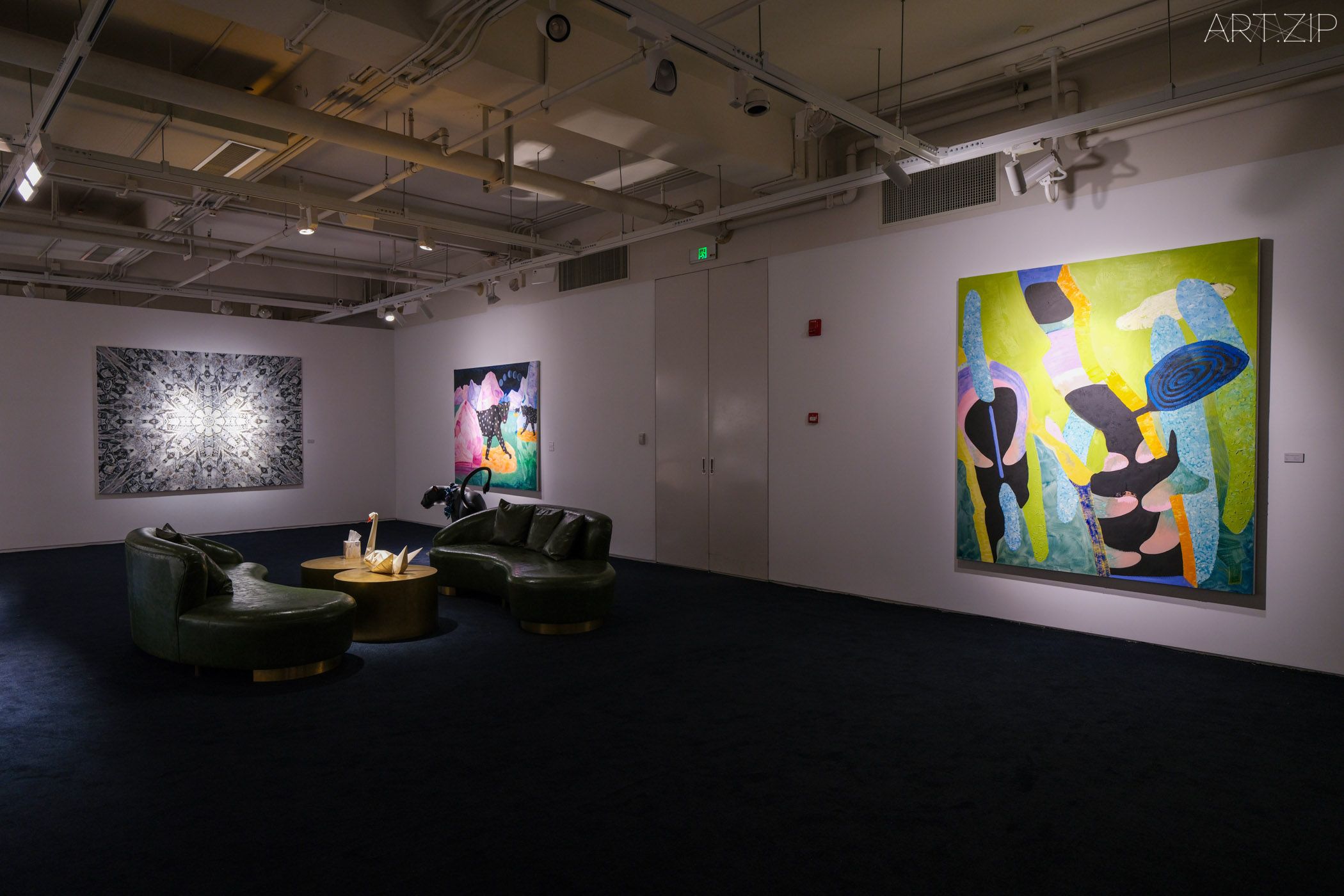
From 25 March to 10 April 2026, the VIP Gallery at HOW Art Museum in Shanghai presented Reconstructed Scripts — Defocus and Encounter, curated by Mengqi Ye. Featuring six artists—Chen Qiang, Fu Yao, Xie Caomin, Feng Zhijia, Jia Hui, and Kang Shixin—the exhibition critically examines the production and transformation of images. It also reconsiders the relationship between viewing and narrative within a contemporary framework.
The exhibition develops along several linked paths. Feng Zhijia and Xie Caomin focus on deconstructing and reconstructing images. Fu Yao and Kang Shixin address subjectivity through encounter and performance. They also explore the interplay between writing and reading. Chen Qiang and Jia Hui use order and abstraction to loosen narrative patterns. These ways of working meet in the gallery space. The approaches are layered, dialogical, and interpretive.
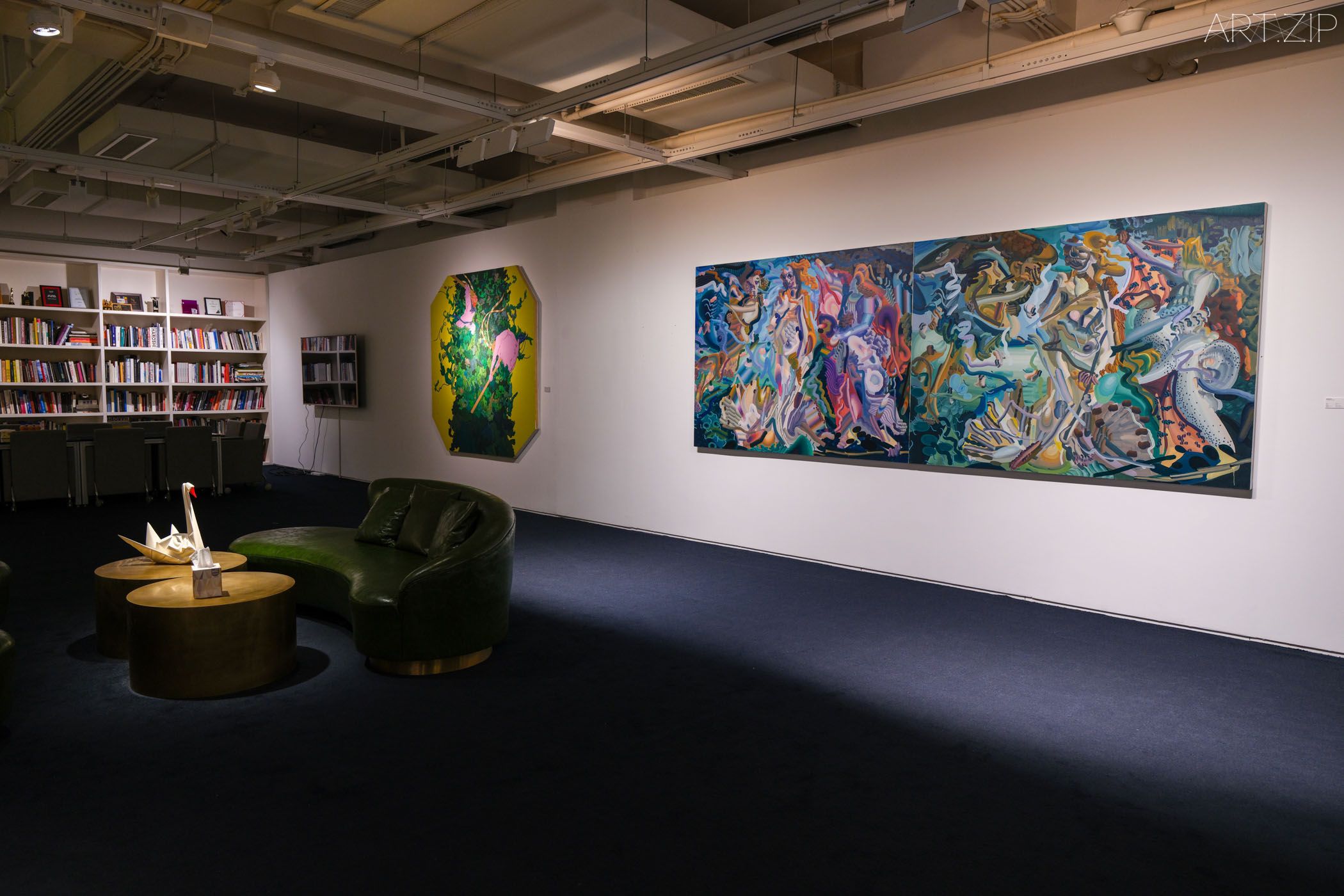
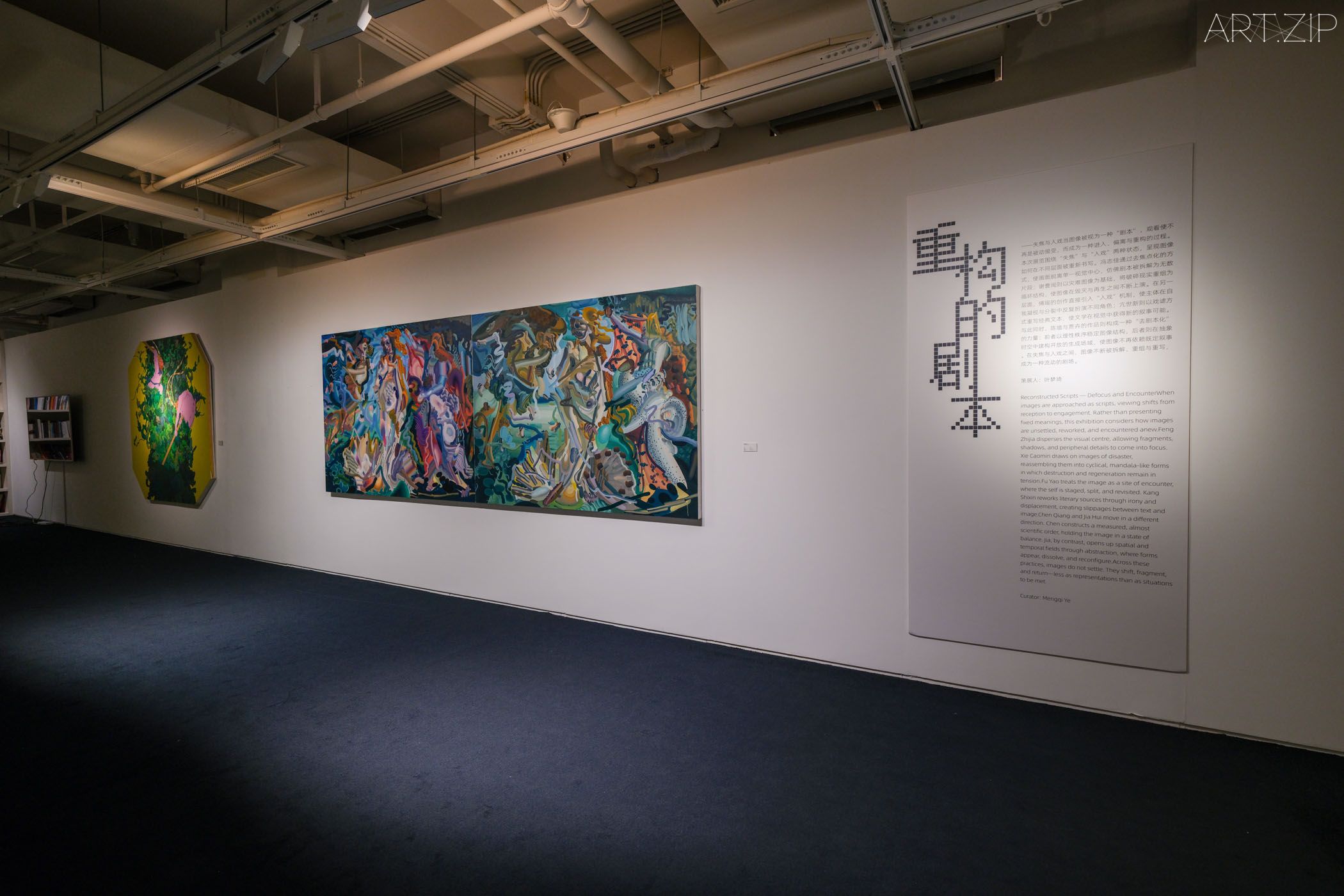
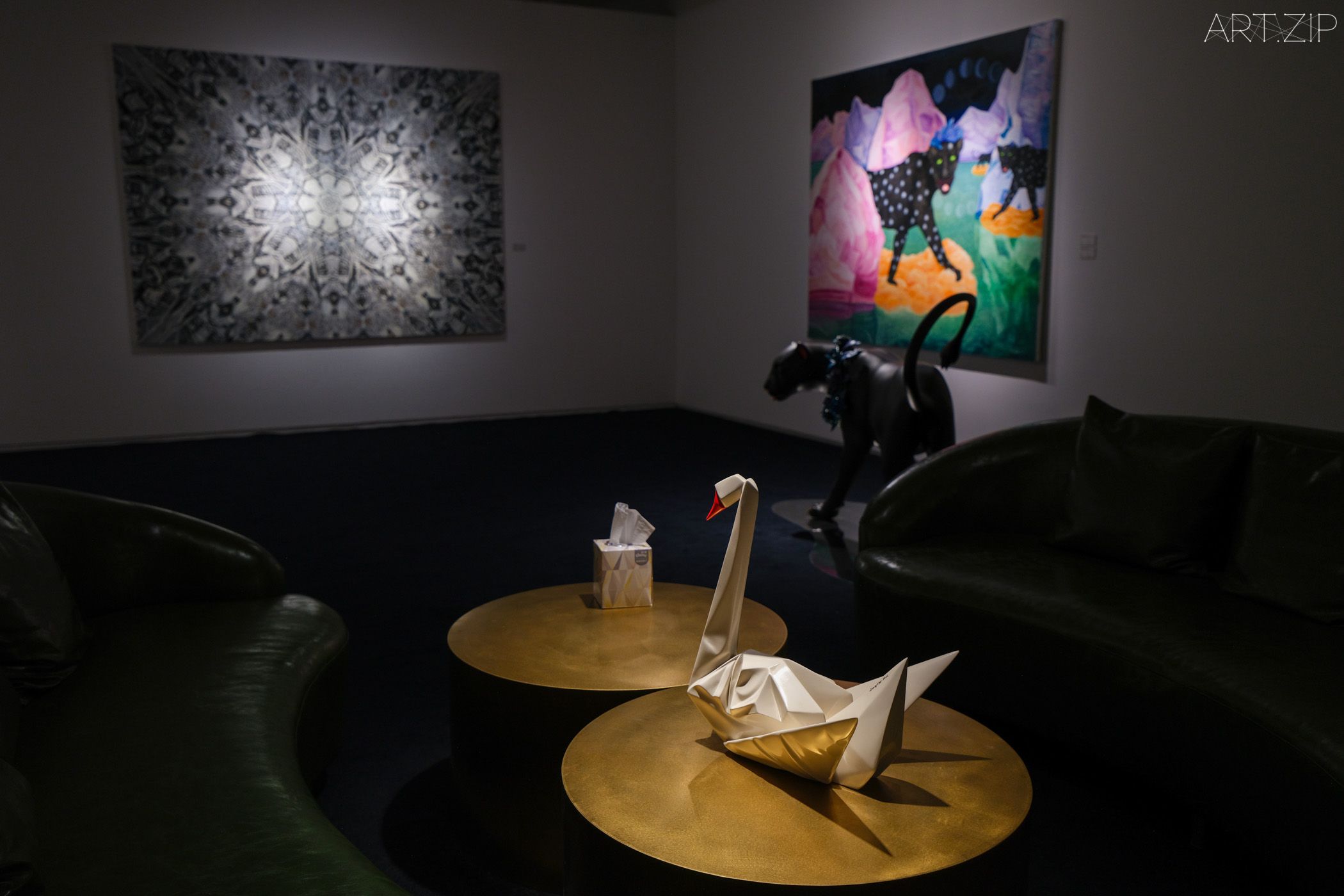
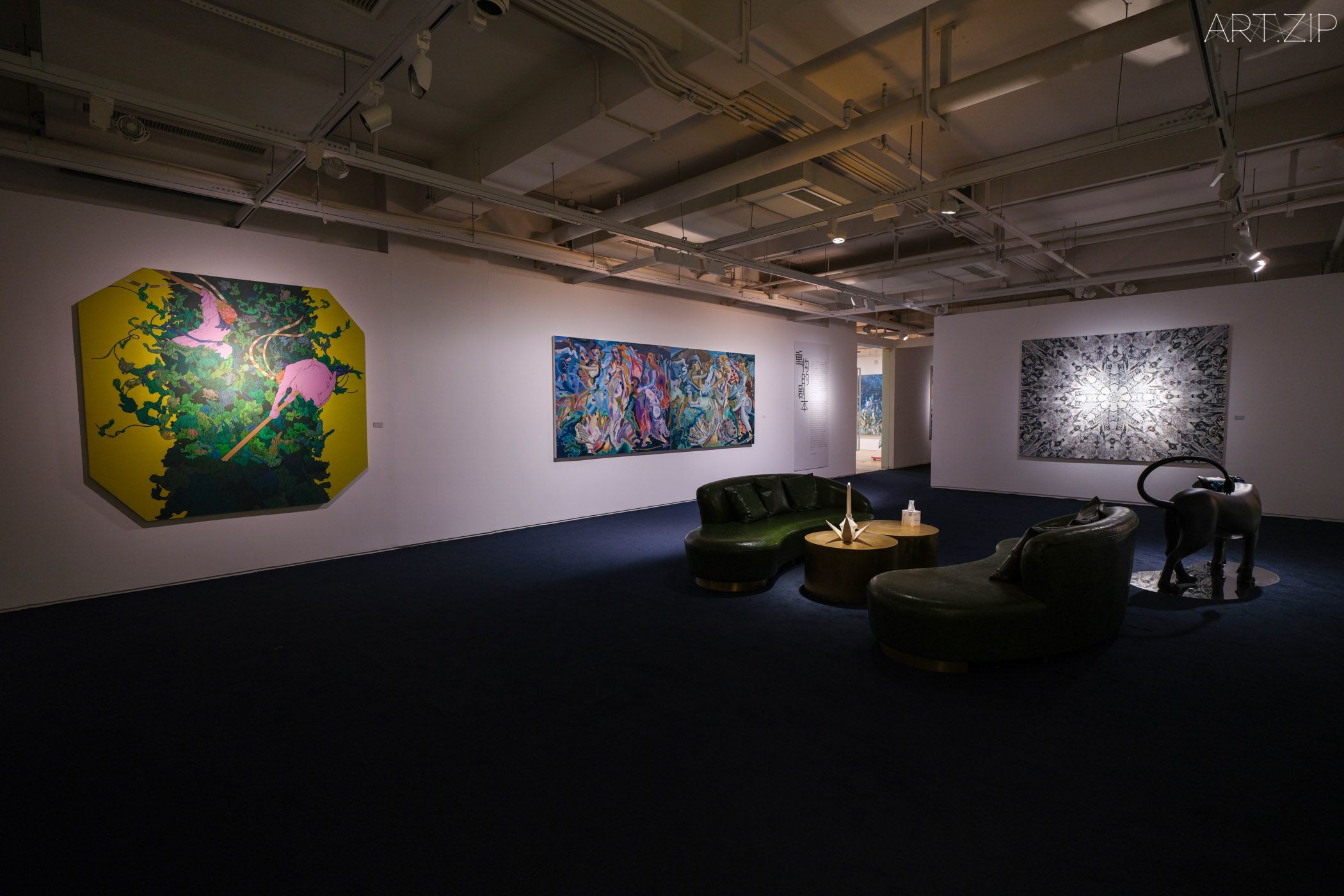
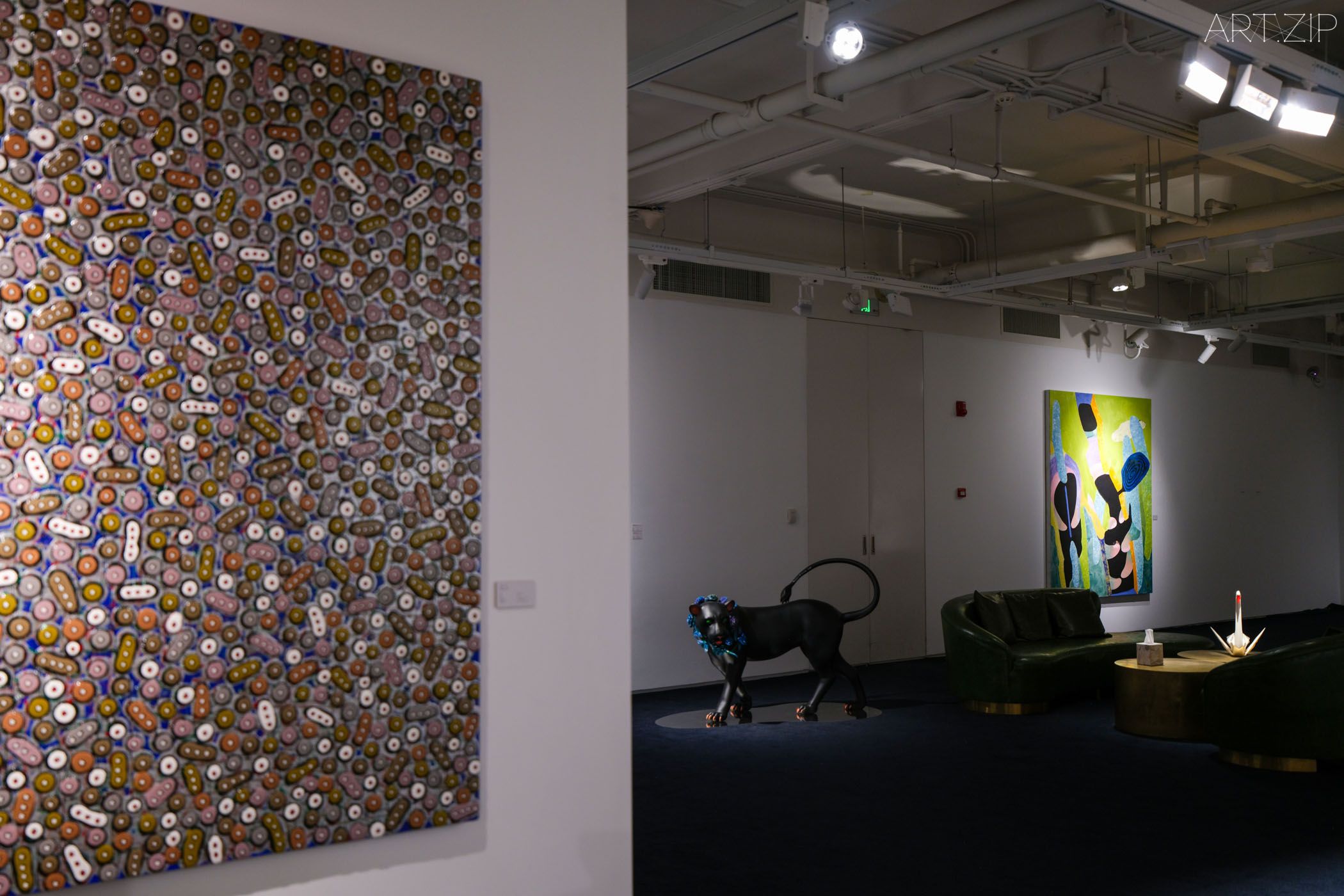
Installation view, Reconstructed Scripts — Defocus and Encounter, HOW Art Museum (VIP Gallery), Shanghai, 2026. Courtesy of HOW Art Museum.
Viewing Mechanism and Curatorial Concept
The VIP Gallery at the HOW Art Museum is not the usual neutral white cube. Its space brings viewers closer to the art and helps them focus. This creates a more personal and focused experience. Mengqi Ye uses these features in her curatorial approach. She arranges the exhibition in the order of “defocus, encounter, and de-scripting.”
This curatorial approach responds to today’s high-speed world. In cities, there is much information and constant change. People’s sense of self is shaped through shifting roles and stories. We often move between being involved and stepping back. At times, we act; at times, we watch ourselves. In this setting, images do not just show reality but become spaces where what we see and what we imagine meet.
As a result, space takes on an active role, directing, interrupting, and reorganising the viewer’s attention.
“Defocus — Encounter — De-scripting” as a Theatrical Structure
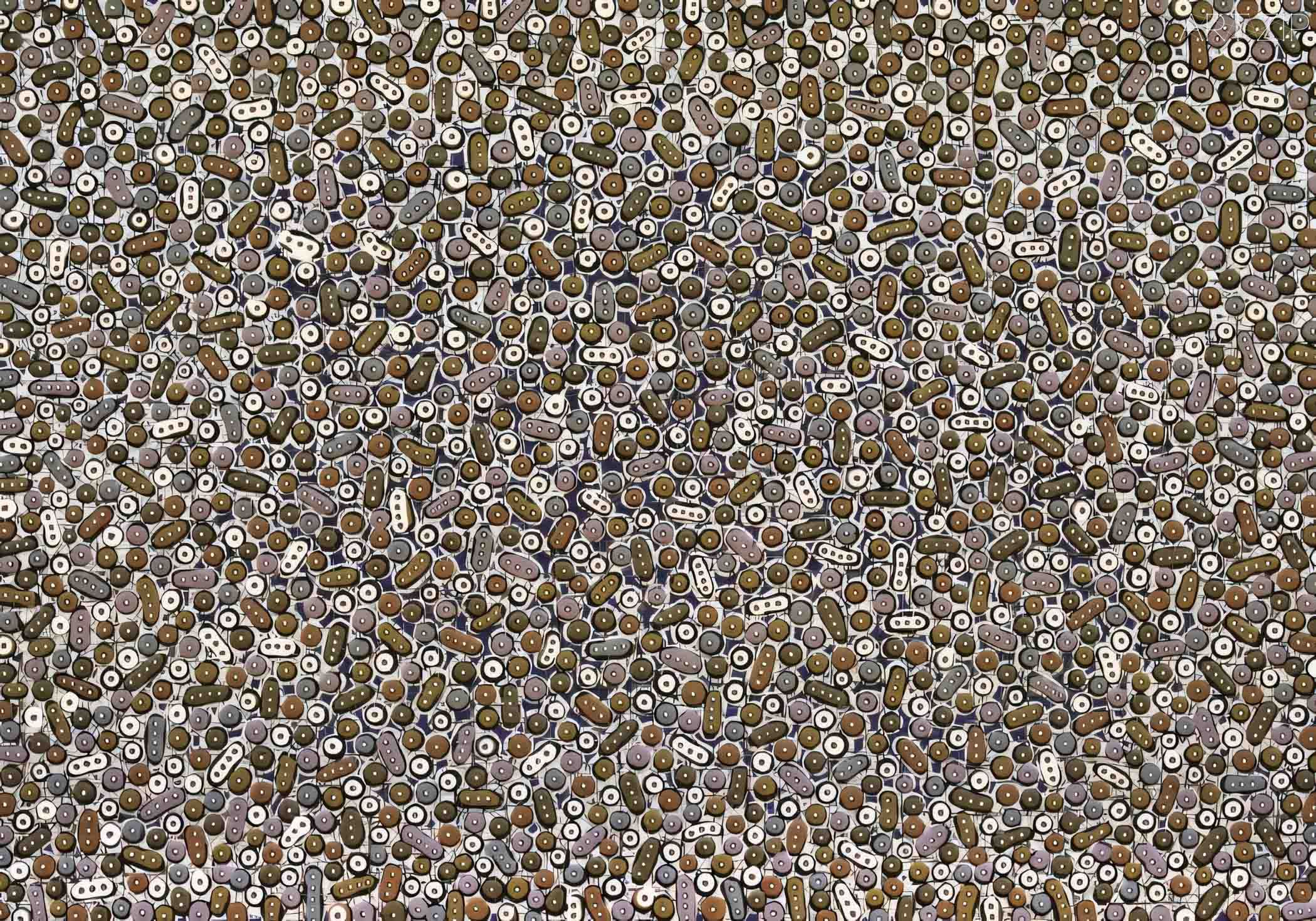
The exhibition opens with Chen Qiang’s Work 11-9 (2011), in which repeated symbolic units generate a decentralised yet ordered visual field. This repetition initially implies coherence but gradually disperses the viewer’s focus, inducing a state of defocus.
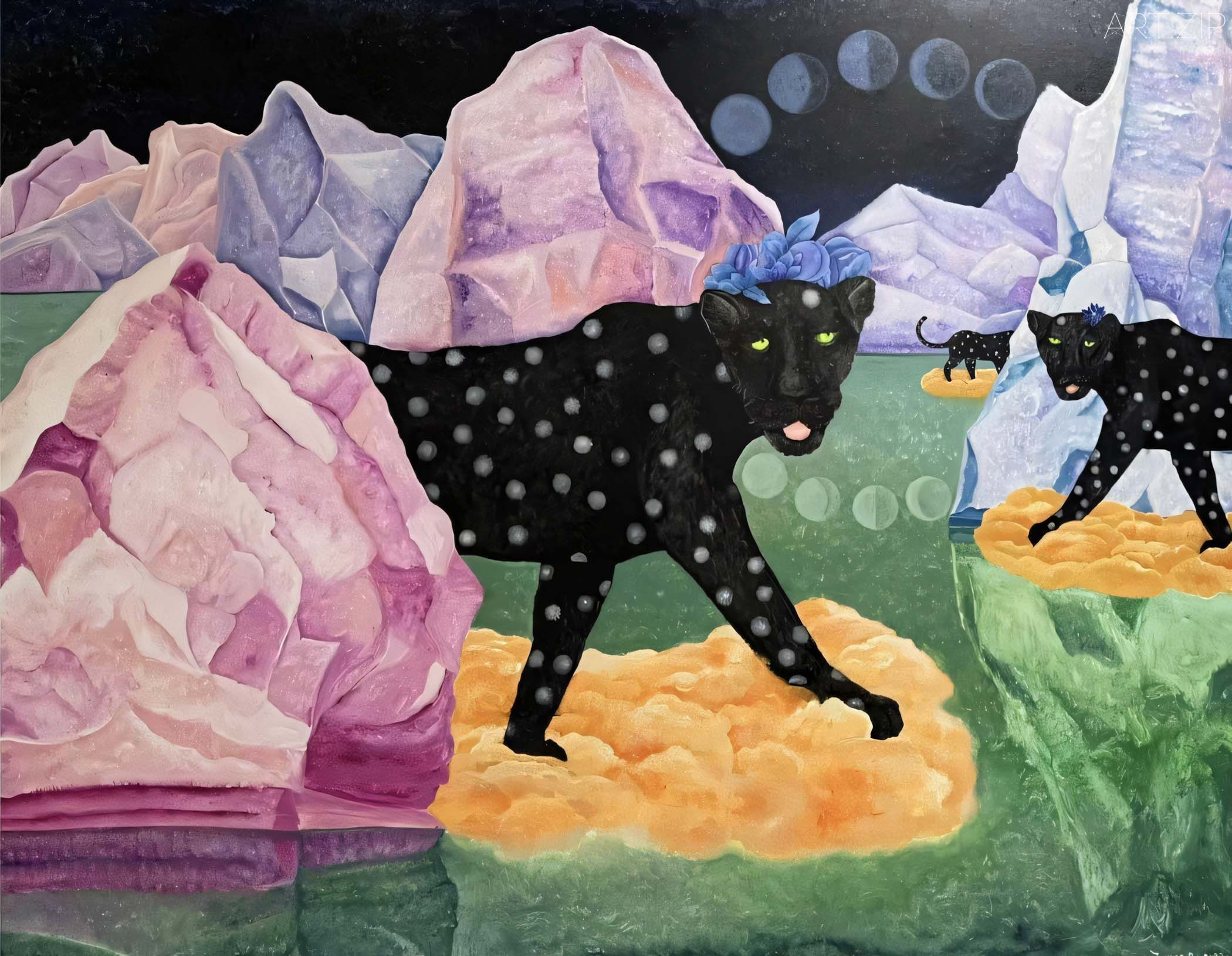
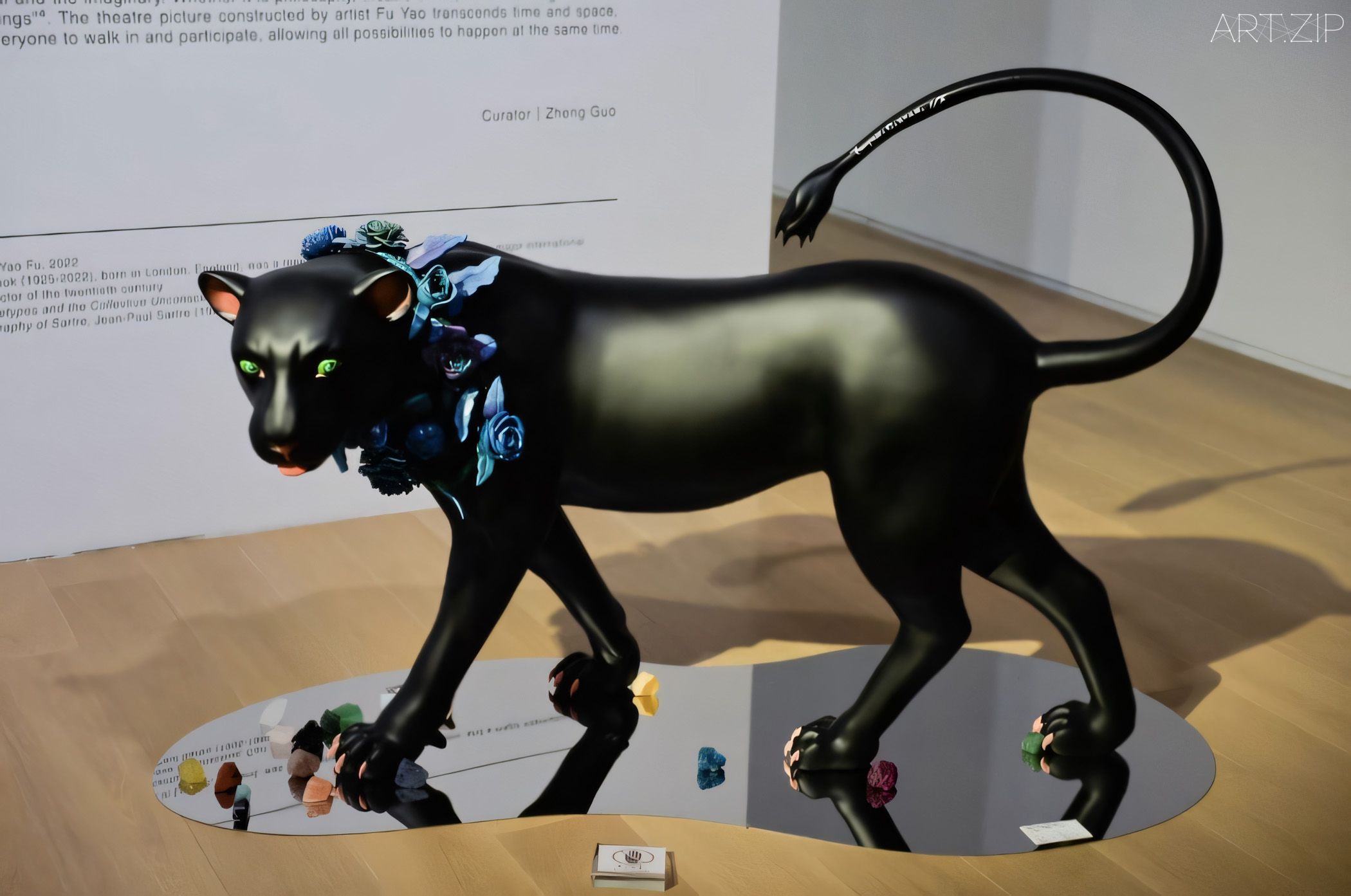
This state shifts to “encounter” in Fu Yao’s Narcissus Syndrome series. In Narcissus Syndrome-4 (2023), the central figure is exposed and self-contained. At the same time, it invites projection and resists interpretation. This tension spills over into the sculpture Me & Me (2024). In this work, the viewer’s role shifts from voyeur to participant.
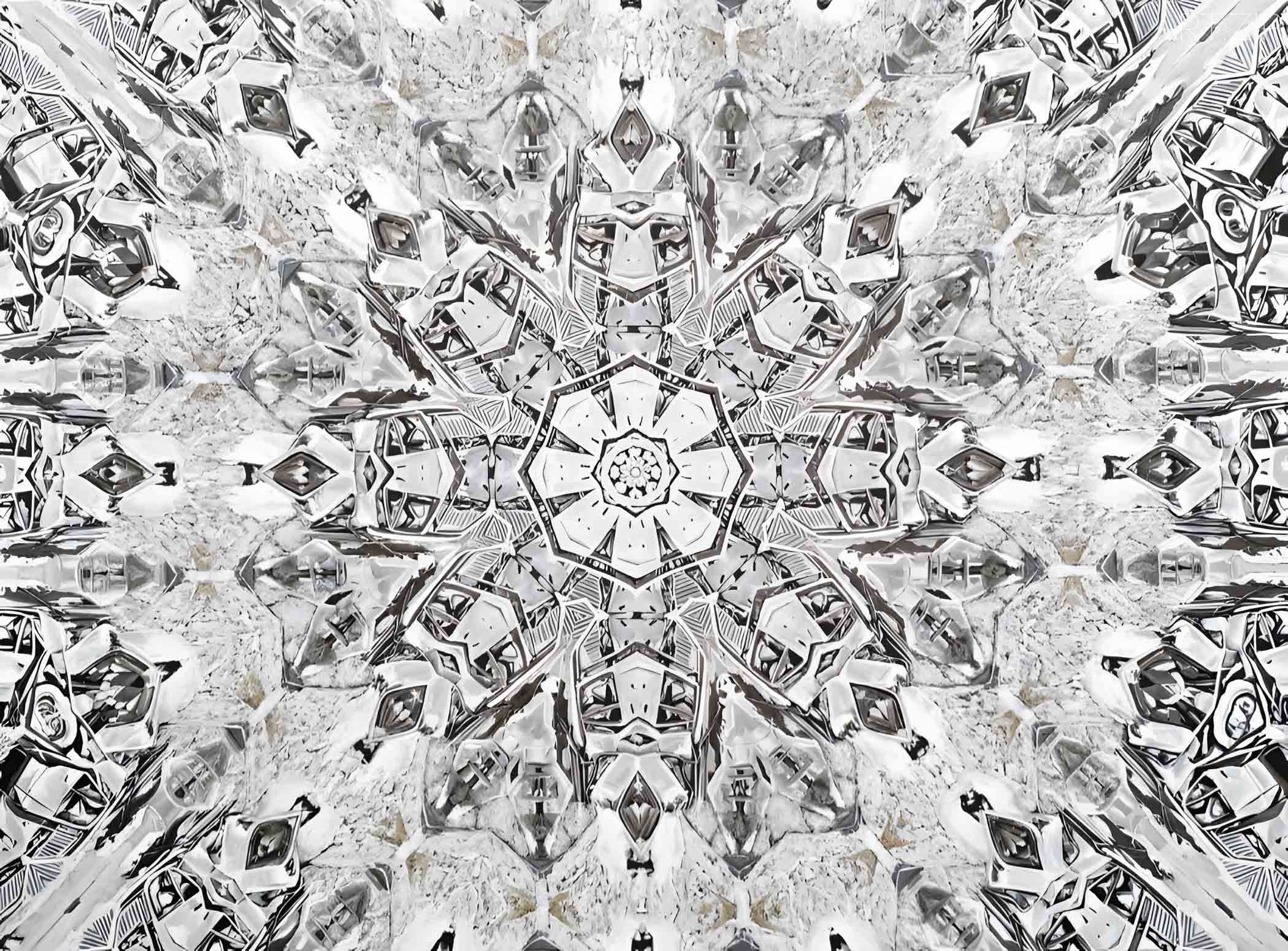
Xie Caomin’s Mandala series shows a different structural logic. Fragmented and catastrophic imagery is reorganised into cyclical forms. This maintains tension between destruction and regeneration. It also creates a compressed, intensified visual field.
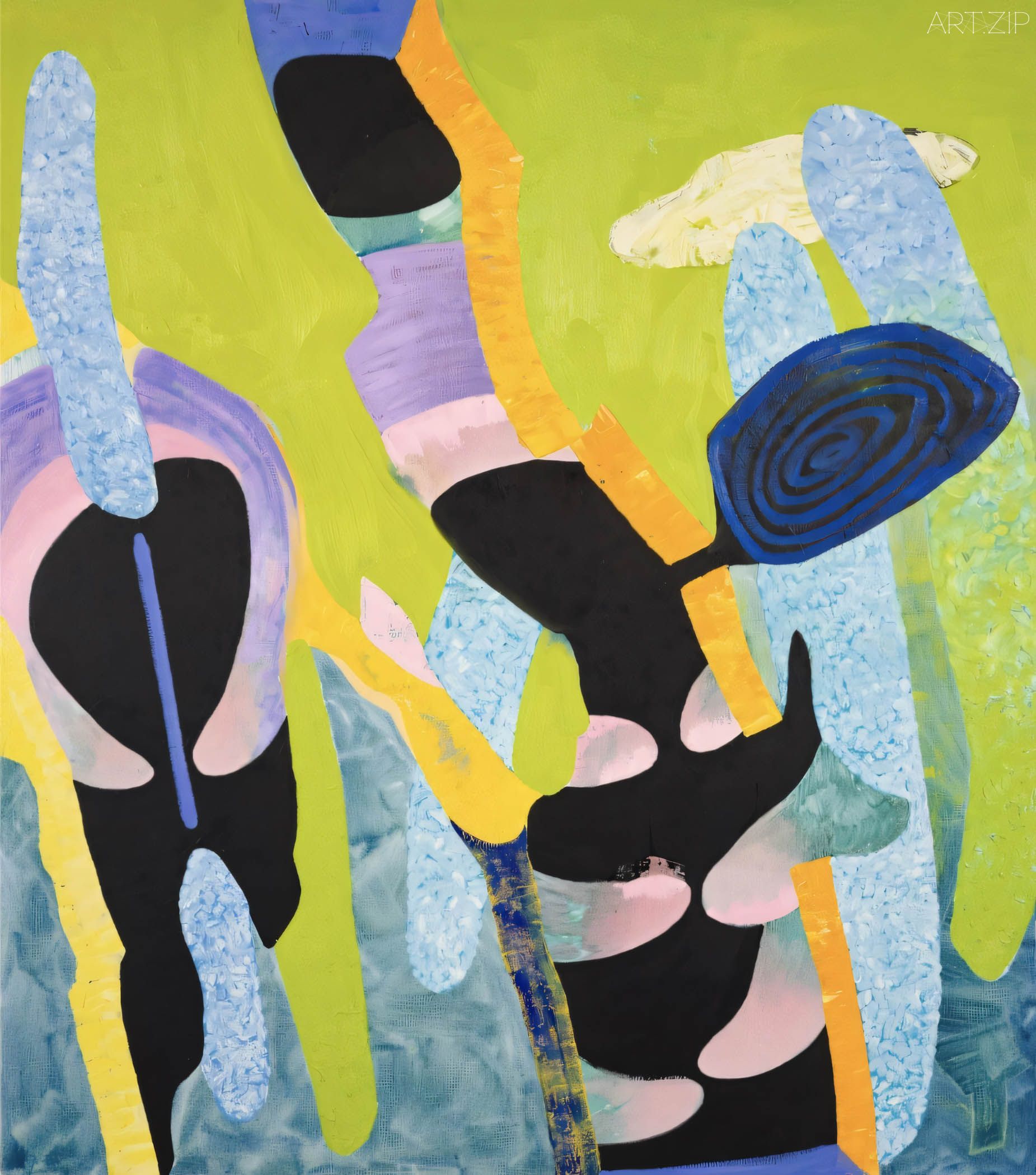
Later in the exhibition, the visual space opens up. Feng Zhijia’s The Birth of Venus (2020) breaks figures into pieces and traces. Jia Hui’s Shadow of Time and Space (2021) creates a flowing space where shapes appear and disappear. Here, the images keep changing instead of settling into a final form.
The exhibition ends with Kang Shixin’s Beat the Grass to Startle the Snake (2012). The work is named after a Chinese saying about unexpected results. By reimagining this reference, the work creates a key shift between words and images. Here, de-scripting is clear. It is not an ending, but a way to move beyond a set story.
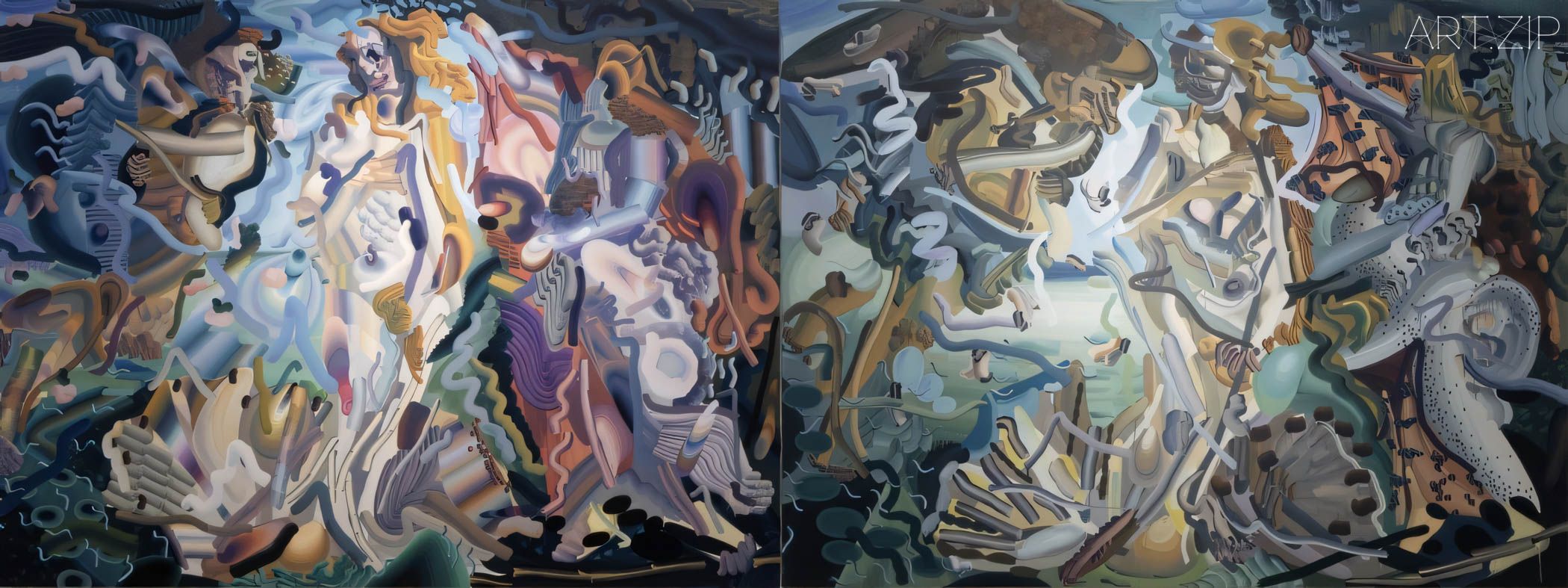
Feng Zhijia, The Birth of Venus, 2020, Acrylic on canvas, 400 × 150 cm 馮志佳,《維納斯的誕生》,2020,布面丙烯,400 × 150 cm
Curating as a Generative Structure
As an emerging curator who works with image, subjectivity, and translation of classical language, Mengqi Ye always investigates how knowledge of structure informs viewing. She treats curating as an evolving system. She balances attention to detail with an understanding of overall organisation.
Her curatorial practice reframes exhibition-making as a generative structure. Viewing is no longer fixed; it is conditioned by sequence and perceptual displacement. In this way, curating as an intervention becomes active.
Reconstructed Scripts shows this approach in action. By moving through defocus, encounter, and de-scripting, the exhibition questions set ideas about stories. It opens new ways of thinking about painting today. As curators reflect more on their work, approaches like Mengqi Ye’s help change how exhibitions are made and experienced.
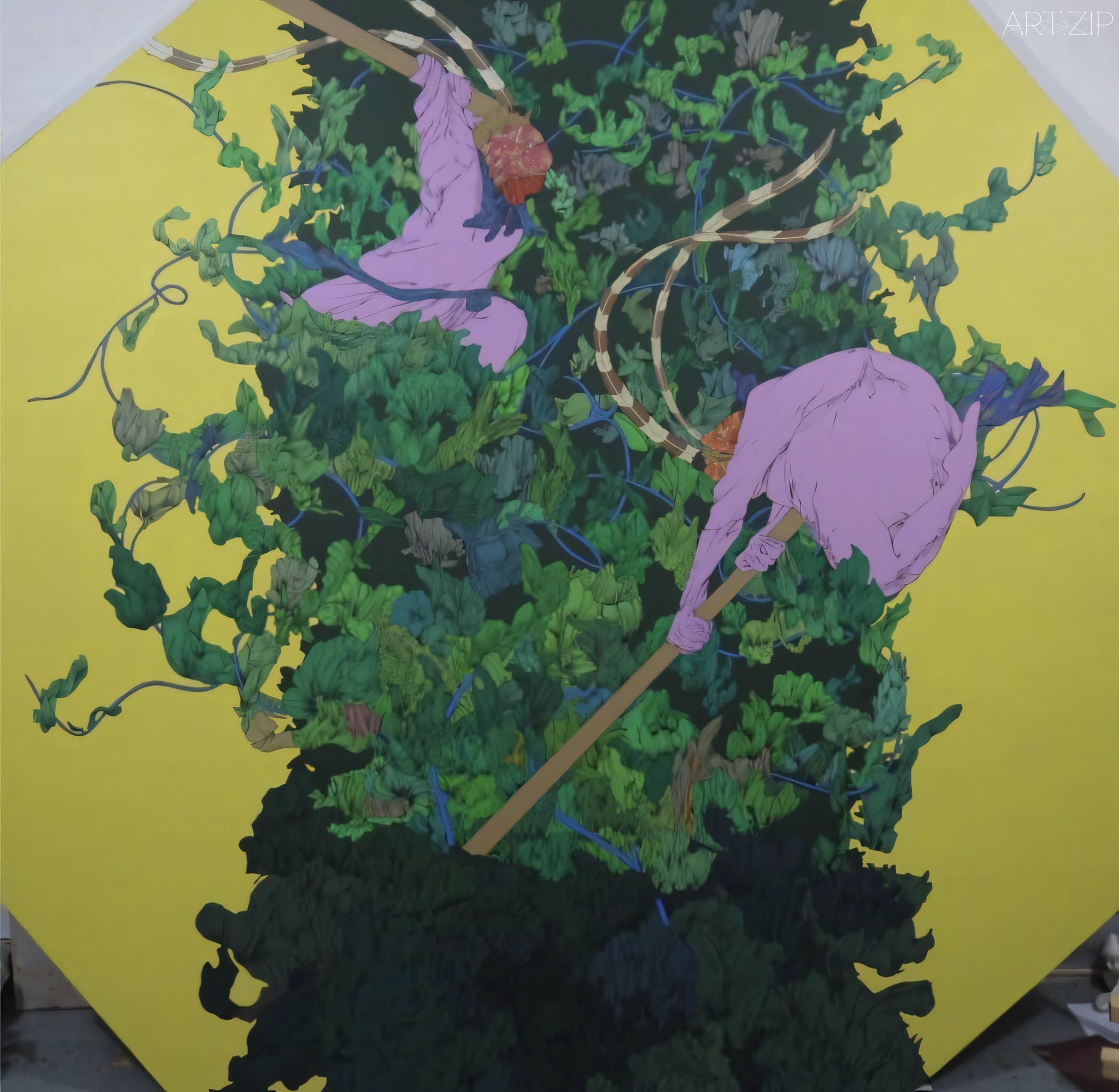
Jia Hui, Shadow of Time and Space , 2021, Acrylic on canvas, 210 × 184 cm 賈卉,《時空之影》,2021,布面丙烯,210 × 184 cm
2026年3月25日至4月10日,上海HOW昊美術館VIP展廳呈現由葉夢琦策劃的展覽《重構的劇本——失焦與入戲》。展覽匯集陳牆、傅瑤、謝曹閔、馮志佳、賈卉與亢世新六位藝術家,圍繞圖像的生成與轉譯展開批判性探討,並在當代語境中重新思考觀看與敘事之間的關係。
展覽沿多條彼此關聯的路徑展開。馮志佳與謝曹閔聚焦於圖像的解構與重組;傅瑤與亢世新則從「入戲」與表演出發,探討主體性問題,並延伸至書寫與閱讀之間的互動關係;陳牆與賈卉則透過秩序與抽象的運用,鬆動既有的敘事結構。這些不同的實踐在展覽空間中交匯,形成層次分明、具對話性且開放詮釋的整體結構。
觀看機制與策展概念
不同於白盒子空間的開放與中性,上海昊美術館VIP展廳強化了觀者與作品之間的距離關係,形成一種親密而高度凝練的觀看方式。葉夢琦將此空間特質納入策展方法之中,並以「失焦—入戲—去劇本化」的順序組織展覽結構。
這一策展方式回應了當代高速運轉的社會條件。在資訊密集與持續變動的城市環境中,個體的自我認知往往在不斷轉換的角色與敘事之中被塑造。我們在投入與抽離之間反覆移動:時而參與其中,時而成為自身的觀察者。在此語境下,圖像不再僅是現實的再現,而成為觀看與想像交織的場域。
因此,空間不再只是展示的容器,而成為一種能夠引導、打斷並重新組織觀看注意力的主動裝置。
「失焦—入戲—去劇本化」作為一種劇場結構
展覽以陳牆的《作品 11-9》(2011)作為開端,建立起理性的視覺基底。無數重複的符號單元構成精確而可延展的結構場域,使觀看逐漸進入「失焦」狀態。
此一狀態在傅瑤《水仙花奇藝綜合症》系列中轉向「入戲」。於《水仙花奇藝綜合症-4》(2023)中,中心形象既呈現暴露性,同時保持自我封閉;它既邀請觀者投射,又抗拒被完全詮釋。這種張力延伸其雕塑作品《我與我》(2024),使觀者的角色由窺視者轉變為參與者。
謝曹閔的《曼陀羅》系列則呈現另一種結構邏輯。破碎且帶有災難性的圖像被重新組織為循環形式,在毀滅與再生之間維持持續的張力,並構成一個壓縮而高度集中的視覺場域。
在展覽後段,視覺空間逐漸開展。馮志佳的《維納斯的誕生》(2020)將形象拆解為碎片與殘影;賈卉的《時空之影》(2021)則生成一個流動的空間,使形態在顯現與消散之間不斷轉換。在此,圖像不再指向固定結果,而維持於持續變動的過程之中。
展覽最終以亢世新的《打草驚蛇》(2012)收束。作品借用一則成語典故,並對其進行重新詮釋,在文本與圖像之間形成關鍵轉換。在此,「去劇本化」得以清晰呈現——它並非結束,而是一種超越既定敘事的開放方式
策展作為生成機制
作為一位關注圖像、主體性與經典語言轉譯的年輕策展人,葉夢琦的實踐持續探討結構認知如何影響觀看經驗。她將策展視為一個不斷演化的系統,在細節控制與整體結構之間保持平衡。
她的策展方法將展覽重新界定為一種生成性的結構。在此,觀看不再是固定不變的,而是受到順序安排與感知位移的影響而不斷變化。策展亦因此成為一種主動的介入方式。
《重構的劇本》正體現了這一實踐路徑。透過「失焦—入戲—去劇本化」的推進,展覽對既有敘事提出質疑,並為當代繪畫開啟新的思考維度。在策展實踐日益自覺與方法化的當下,葉夢琦此類取徑,正持續改變展覽的生成方式與觀看經驗。
Edited by Rinka Fan
Published on 28th April 2026