


At the China Pavilion of London Craft Week 2026, “craft” was not presented merely as a display of traditional techniques. Instead, the exhibition used garments, textiles, patterns, and materials to explore a deeper question: what constitutes “Chinese beauty,” and how that beauty has been continuously shaped and transmitted through everyday life.
Under the title They Made China More Beautiful, the exhibition connected women’s experiences with traditional craftsmanship and the aesthetics of daily living. From ceremonial wedding garments to embroidered household textiles, from the weaving traditions of Southwest ethnic minorities to contemporary reinterpretations of traditional materials, the exhibition functioned less as a presentation of “intangible cultural heritage” and more as an examination of the structures underlying Chinese aesthetics.
The “they” of the exhibition referred not only to embroiderers, weavers, and designers, but also to generations of women whose labour has long remained embedded within ordinary domestic life. Chinese aesthetics, the exhibition suggests, has been shaped not only by imperial courts or literati culture, but equally by needles, fabrics, and inherited practices of everyday living.
Wedding Garments and the Aesthetics of Ritual
The exhibition opened with a display of traditional Chinese bridal garments from different dynasties. From the shenyi robes of the Han dynasty to Tang dynasty wedding attire and the elaborate fengguan xiapei (phoenix coronet and ornamental scarves) of the Ming dynasty, the progression of garments and accessories established a visual atmosphere that was both opulent and ceremonial.
What immediately drew attention was the extraordinary refinement of the craftsmanship. Gold-thread embroidery, woven brocade motifs, diancui (kingfisher feather inlay) ornaments, pearl tassels, and layered constructions transformed these garments into something beyond clothing, becoming architectural expressions of ritual and identity. The restraint of Han dress, the richness of Tang aesthetics, the elegance of Song attire, and the ritual order embodied in Ming dynasty bridal costume together formed a long visual lineage of Chinese wedding culture.
The significance of this section lay not only in its visual splendour, but in the way it introduced viewers to a distinctly East Asian ritual aesthetic. Bridal garments in Chinese culture have never been purely personal expressions of romance; they are also deeply connected to family structure, social order, and collective symbolism.

Installation view. Xishuangbanna ethnic minority costumes. From left to right: Bulang bridal attire, Hani bridal attire, Dai bridal attire, and Lahu bridal attire. By Ai Huihua.
Beauty and Emotional Structures in Everyday Life
In contrast to the formality of ceremonial dress, another section of the exhibition turned toward the aesthetics of everyday life.
Traditional auspicious motifs such as “lotus flowers with mandarin ducks”, “Bai Zi Tu” and “living to a ripe old age together” were widely used in quilts, embroidery, and textiles. These motifs functioned not merely as decoration, but as visual expressions of traditional Chinese ideas surrounding family, prosperity, and emotional continuity.
One particularly moving example was The eternal quilt, created by the Raojia ethnic group of the Miao communities in Guizhou. More than a wedding textile, it served as a repository of familial memory: pieces of relatives’ old garments were sewn into the fabric itself, allowing cloth to become a carrier of emotion and time.
What makes these works compelling today is precisely their rootedness in ordinary life. Chinese aesthetics has often emerged not through overt individual expression, but through long-term domestic practices that gradually shaped a quiet and enduring visual order.
Nature, Ethnic Craft, and Material Memory
The exhibition’s focus on the crafts of ethnic minorities in Southwest China further expanded the geographical and cultural dimensions of Chinese aesthetics.
Miao embroidery, silver ornaments, Dong cloth, batik, and liezhi (split-weave) techniques are inseparable from the environments in which they developed — mountains, forests, local plants, and regional systems of living.
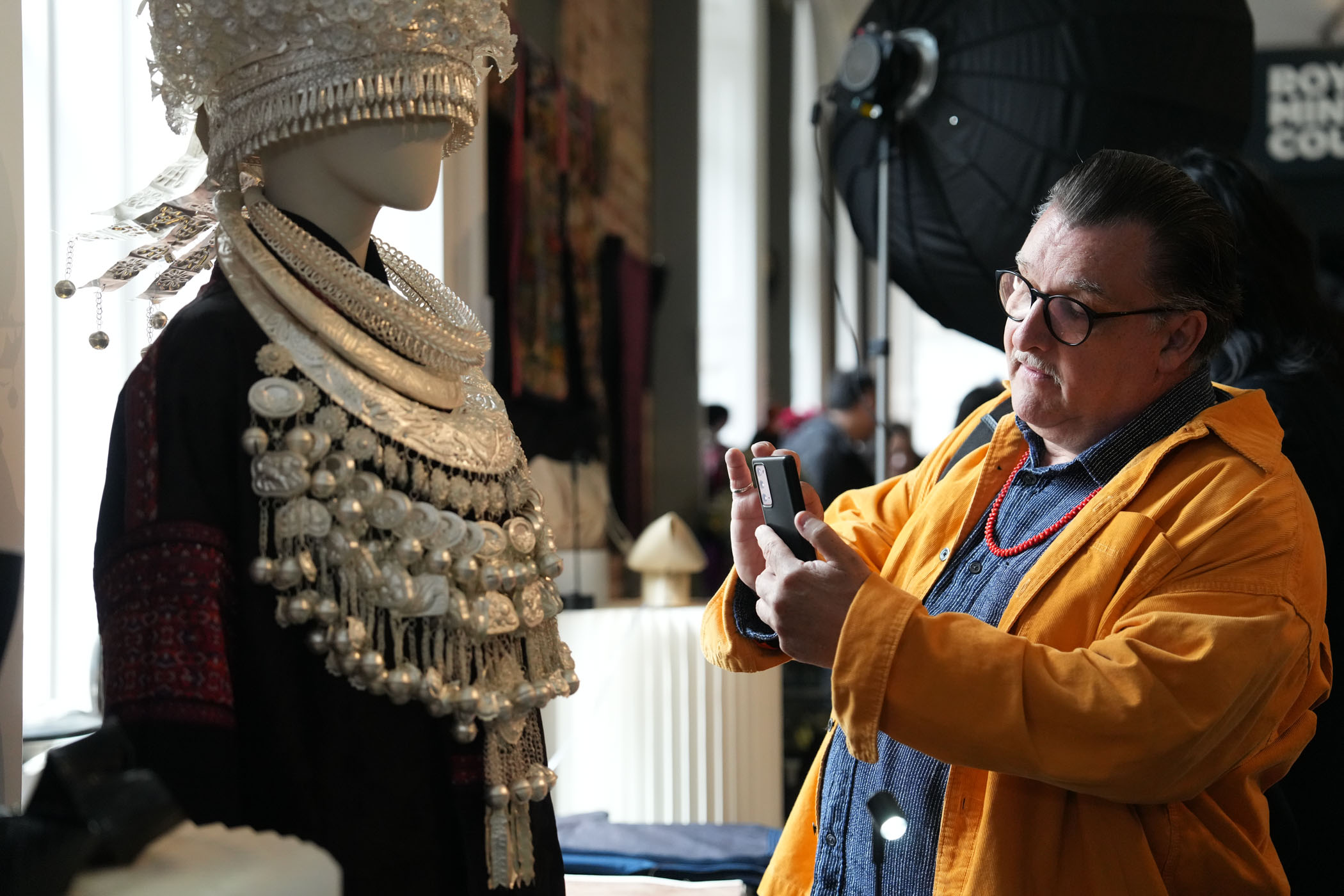
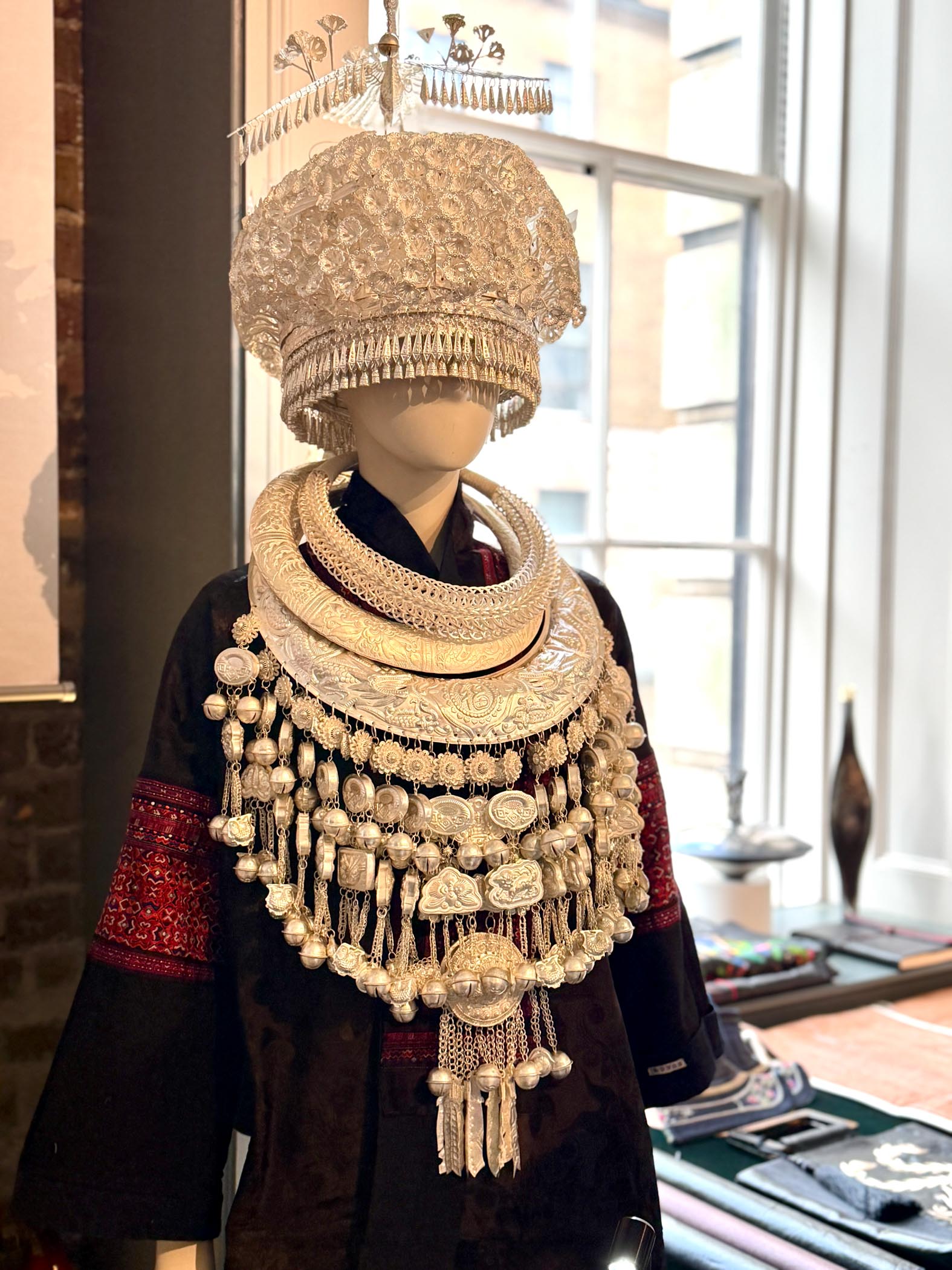
Among the highlights were the intricate silver ornaments of the Miao people. Their layered structures, densely worked patterns, and sculptural weight demonstrated remarkable metalworking skills while also embodying ideas of ancestry, nature, and protection. In many ways, these ornaments functioned less as accessories than as forms of cultural memory worn on the body.
The exhibition also demonstrated how traditional craft can be transformed within contemporary design. Restudio’s Dong Series, designed by Huang Huizhen and Tang Weikun, used traditional Dong shiny cloth as its primary material. Through more than ten handcrafted processes, including repeated hammering and coating with egg white, the fabric acquired an almost metallic sheen and structural rigidity. Originally used as clothing material, the textile was reimagined as a “garment” for contemporary vessels, its folded surfaces creating forms that oscillate between softness and solidity.
Rather than losing its cultural specificity through contemporary reinterpretation, the texture and handmade traces of Dong cloth were further amplified. Traditional craft here became not a preserved relic, but an active material language participating in contemporary visual culture.
藏家:李如秀.jpg)

When Tradition Enters Contemporary Design
Importantly, the exhibition did not treat ethnic crafts as static heritage objects. Whether through collectors preserving historical textiles and silverwork, or designers reinterpreting traditional materials, the exhibition revealed an ongoing process of cultural rediscovery and renewal.
One notable example was Zhou Fang’s Crane’s Head Blessing and Prosperity series, which combined lacquer, gourds, and turquoise to transform traditional Chinese lacquer techniques into contemporary wearable objects and sculptural forms. Lacquer, once primarily associated with historical vessels, was here returned to the body and to everyday life.
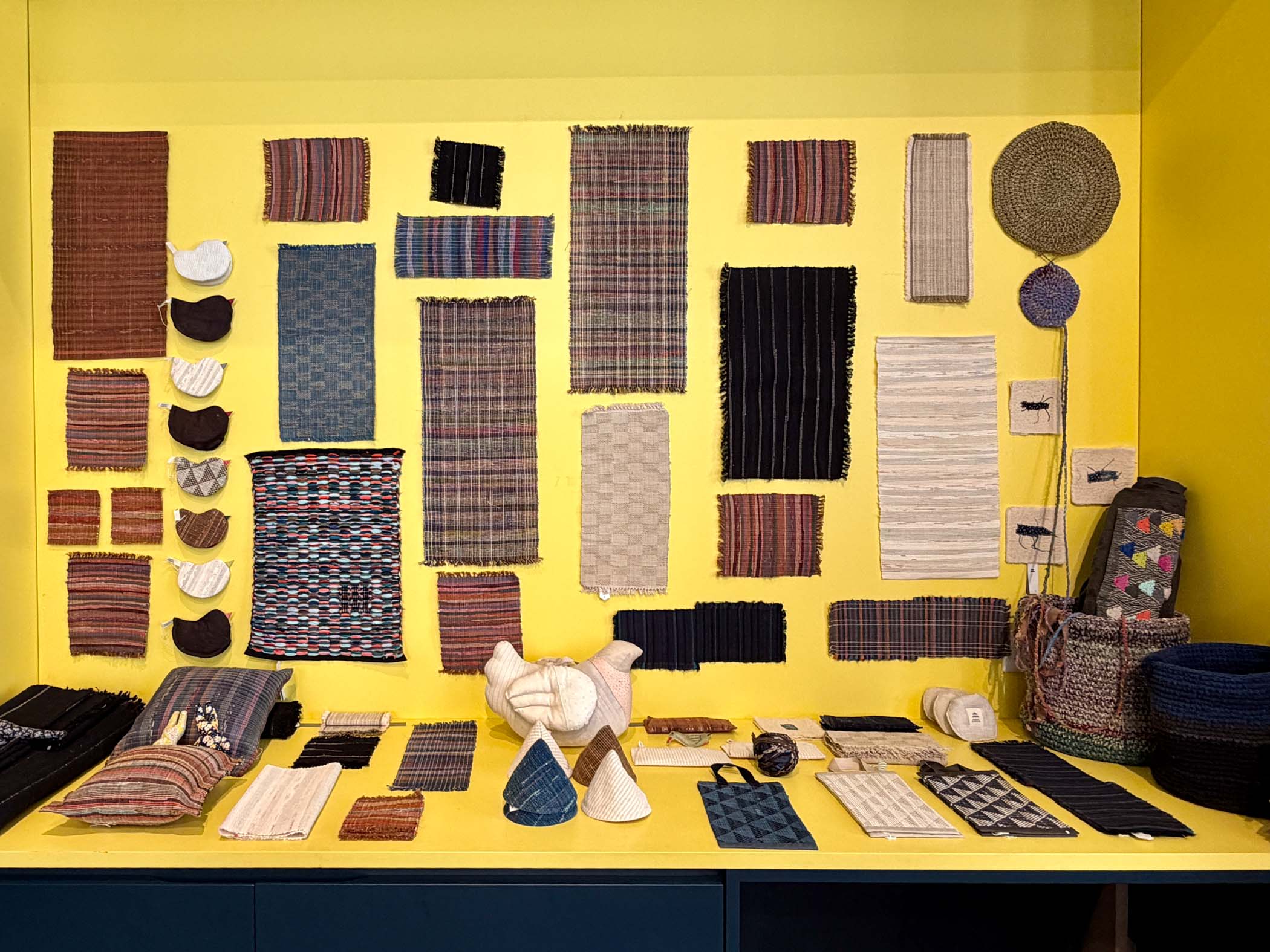
Another striking work was Mengjinongga Feathered Garment Made with Split-weaving Technique. By combining handloom weaving with recycled fabric strips, the designer created textiles that appeared soft, floating, and almost organic in movement.
The significance of these works lies not simply in the reuse of “traditional elements,” but in their ability to reactivate traditional craftsmanship within contemporary life. Tradition here was not treated as a fixed cultural artifact, but as a material and aesthetic language still capable of transformation and growth.
What They Left Behind Was More Than Craft
Ultimately, They Made China More Beautiful was not merely an exhibition about the development of Chinese craftsmanship. More importantly, it reminded viewers that many of the visual experiences now associated with “Chinese aesthetics” have long emerged from women’s labour and everyday life.
The blessings embroidered into bridal garments, the emotions woven into household textiles, and the experiences preserved through patterns and materials together form an enduring East Asian aesthetic tradition.
Chinese beauty does not exist only in museums or art history. It also survives within the slow, repetitive gestures of ordinary handmade labor.

Mengjinongga split-weave textile series. By He Yan’er
在 2026 年倫敦工藝周中國館的展覽現場,「工藝」並未被單純作為傳統技法進行呈現。相反,展覽試圖通過服飾、織物、紋樣與材料之間的關係,重新討論何為「中國的美」,以及這種美如何在日常生活中被持續建構與傳承。
以「她們讓中國更美麗」為主題,展覽將女性經驗、傳統工藝與生活美學聯繫在一起。從婚禮服飾到被面紋樣,從西南少數民族織繡到當代設計師對傳統材料的再造,展覽更像一次關於中國審美結構的梳理。
在這裡,「她們」既是繡娘、織工與設計師,也是那些長期隱於日常生活中的女性勞動者。中國傳統美學的形成,並不只來自宮廷與文人,同樣也來自針線、織物與代代相傳的生活經驗。
從嫁衣開始的東方禮儀
展覽以歷代中式嫁衣作為開篇。從漢代深衣、唐代婚服到明制鳳冠霞帔,不同時代的婚服與首飾依次展開,為整個展覽奠定了華麗而莊重的基調。
最吸引觀眾的,是這些服飾極其精細的工藝細節。金線刺繡、織錦紋樣、點翠頭飾與珠翠流蘇,使婚服不僅僅是服裝,更像一種關於禮儀與身份的視覺建築。漢代的端莊、唐代的豐麗、宋代的雅致與明代鳳冠霞帔的秩序感,共同構成中國婚禮文化漫長的視覺譜系。
這一部分之所以成為展覽最有力的開場,並不僅僅因為其視覺上的華麗,更因為它迅速將觀眾帶入一種屬於東方禮儀文化的審美氛圍之中。婚服從來不只是個人情感的表達,它同時關乎家族、身份與社會秩序。
日常生活中的美與情感結構
相較於婚服的儀式性,展覽另一部分內容則更貼近日常生活。
荷花鴛鴦、百子圖、白頭偕老等傳統吉祥紋樣,被大量運用於被面、刺繡與織物之中。這些圖案並非單純的裝飾元素,而是中國傳統生活觀念的一部分,承載著對於婚姻、家庭與幸福的想象。
例如黔東南侗族支系的「萬年被」,不僅是婚嫁用品,也是一種家庭記憶的儲存方式。織物中縫入親人的舊衣,使布料本身成為情感與時間的載體。
這些作品最動人的地方,在於它們所呈現出的「生活性」。中國傳統美學很多時候並不強調強烈的個人表達,而是在長期的日常實踐中,形成一種溫和而穩定的審美秩序。
民族工藝中的自然經驗
展覽中關於西南少數民族工藝的部分,則進一步擴展了「中國美學」的地理維度。
苗繡、銀飾、侗布、蠟染與裂織等工藝,始終與山林、氣候、植物染料及地方性的生活經驗緊密相連。
其中,苗族銀飾尤為引人注目。層層疊疊的銀片、繁復細密的紋樣與極具重量感的結構,不僅展現出高超的金屬工藝,也承載著苗族對於祖先、自然與吉祥寓意的理解。某種程度上,這些銀飾甚至超越了單純的裝飾功能,更像是一種被佩戴在身體上的文化記憶。
與此同時,展覽也呈現了傳統工藝如何在當代設計中獲得新的表達方式。例如 Restudio 的《Dong系列》,以侗族亮布為核心材料,通過捶打、蛋清塗抹等傳統工序,使布料呈現出近似金屬的光澤與硬挺質感。設計者將原本用於服飾的侗布轉化為花器表面的「器衣」,通過褶皺結構塑造出介於柔軟與堅硬之間的形態。
傳統材料並未因為進入當代設計而失去自身的文化屬性,相反,其原有的肌理與手工痕跡,反而在新的結構中被進一步放大。
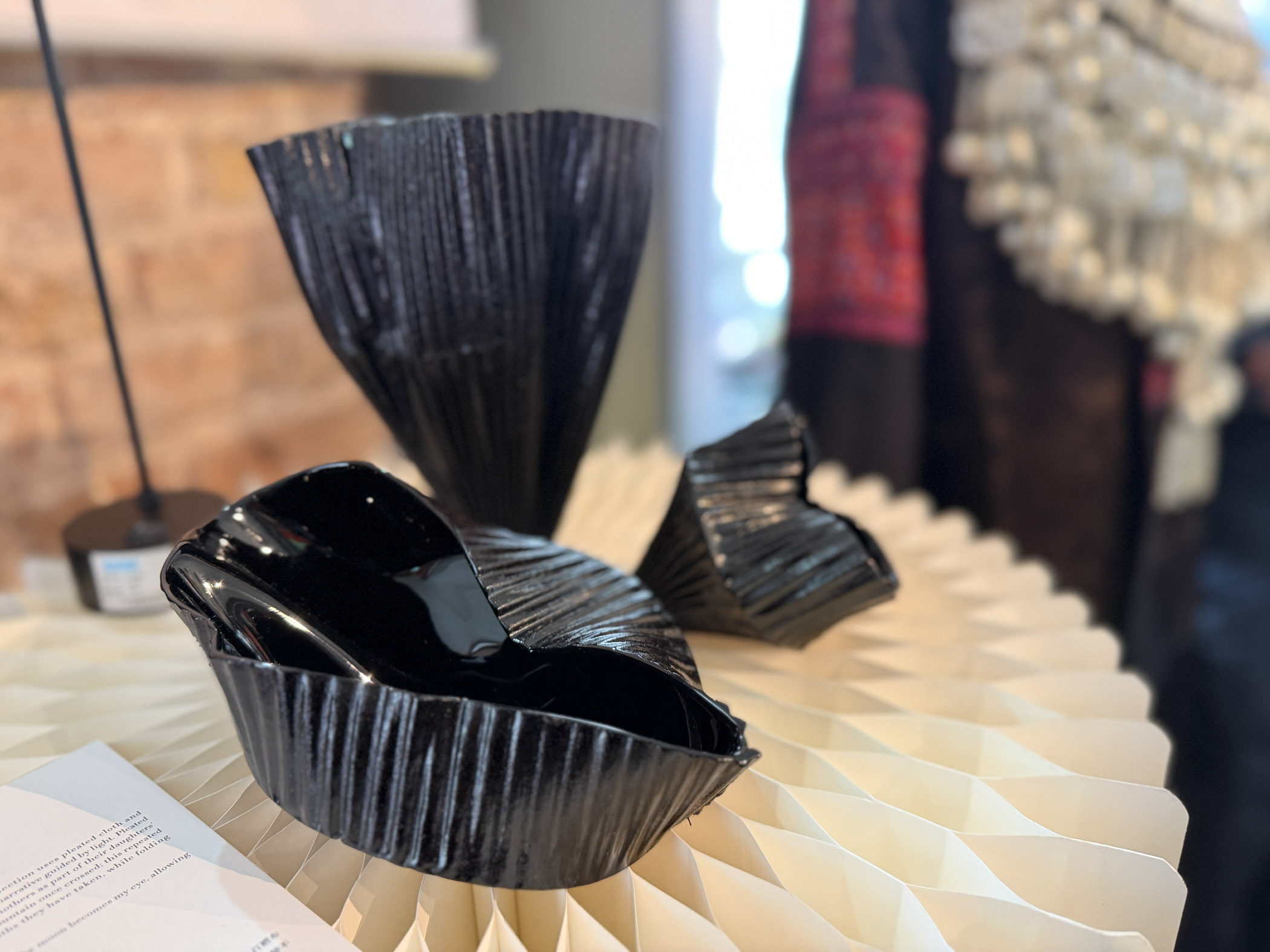
Restudio, Dong series.
當傳統進入當代設計
值得注意的是,展覽並未將這些少數民族工藝處理成靜止的「傳統遺產」。無論是收藏者對於老織物、銀飾與服裝的長期保存,還是當代設計師對於傳統材料的重新轉譯,都能夠看出一種持續進行中的文化保護與再發現。
其中,周芳的《鶴首福祿》系列尤為引人注目。作品以大漆、葫蘆與綠松石為主要材料,將傳統漆藝語言轉化為具有當代氣質的飾品與器物。大漆原本更多存在於傳統器皿之中,而在這裡,它被重新帶回身體與日常生活。
另一件令人印象深刻的作品,是 《Mengjinongga 裂織工藝羽毛衣》。設計師將苗族傳統裂織工藝與邊角布料重新結合,使織物在打結過程中呈現出羽毛般輕盈的質感。
這些作品最重要的意義,並不只是「傳統元素」的再利用,而在於它們重新激活了傳統工藝進入當代生活的可能性。傳統在這裡不再是靜止的文化遺產,而成為一種仍然能夠繼續生長的材料與審美語言。
結語|她們留下的不只是工藝
回看整個展覽,「她們讓中國更美麗」所呈現的,並不僅僅是中國傳統工藝的發展脈絡。更重要的是,它重新提醒人們:許多被視為「中國美學」的視覺經驗,其實長期來源於女性勞動與日常生活。
那些被縫進嫁衣的祝福、被織入被面的情感,以及被保留在紋樣與材料中的生活經驗,共同構成了一種持續至今的東方審美傳統。
中國的美,並不只存在於博物館與藝術史之中,它同樣存在於普通生活緩慢而重復的手工勞動里。

Text by 撰文 x Shoran Jiang 姜嘯然
Edited by 編輯 x Jackie Liu 劉潔鎧