
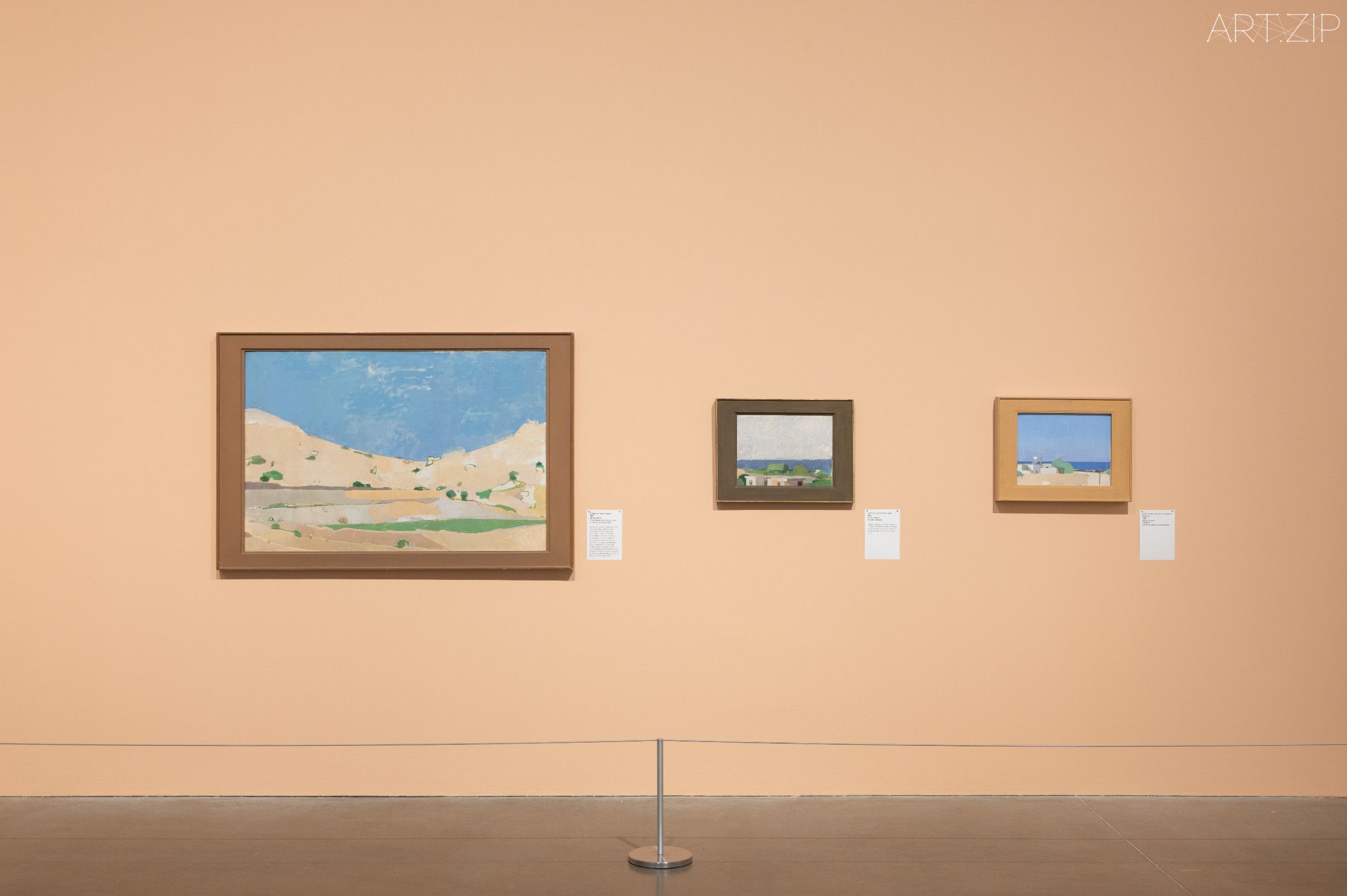
I still remember the summer of 2024, standing before Euan Uglow’s work for the first time at Hazlitt Holland-Hibbert. The paintings were not loud, one could even say they were quiet. And yet that quietness held something irresistible. I remember moving closer, then stepping back, then closer again, until I realised a long time had passed. That slow and lingering tremor has remained in my memory ever since.
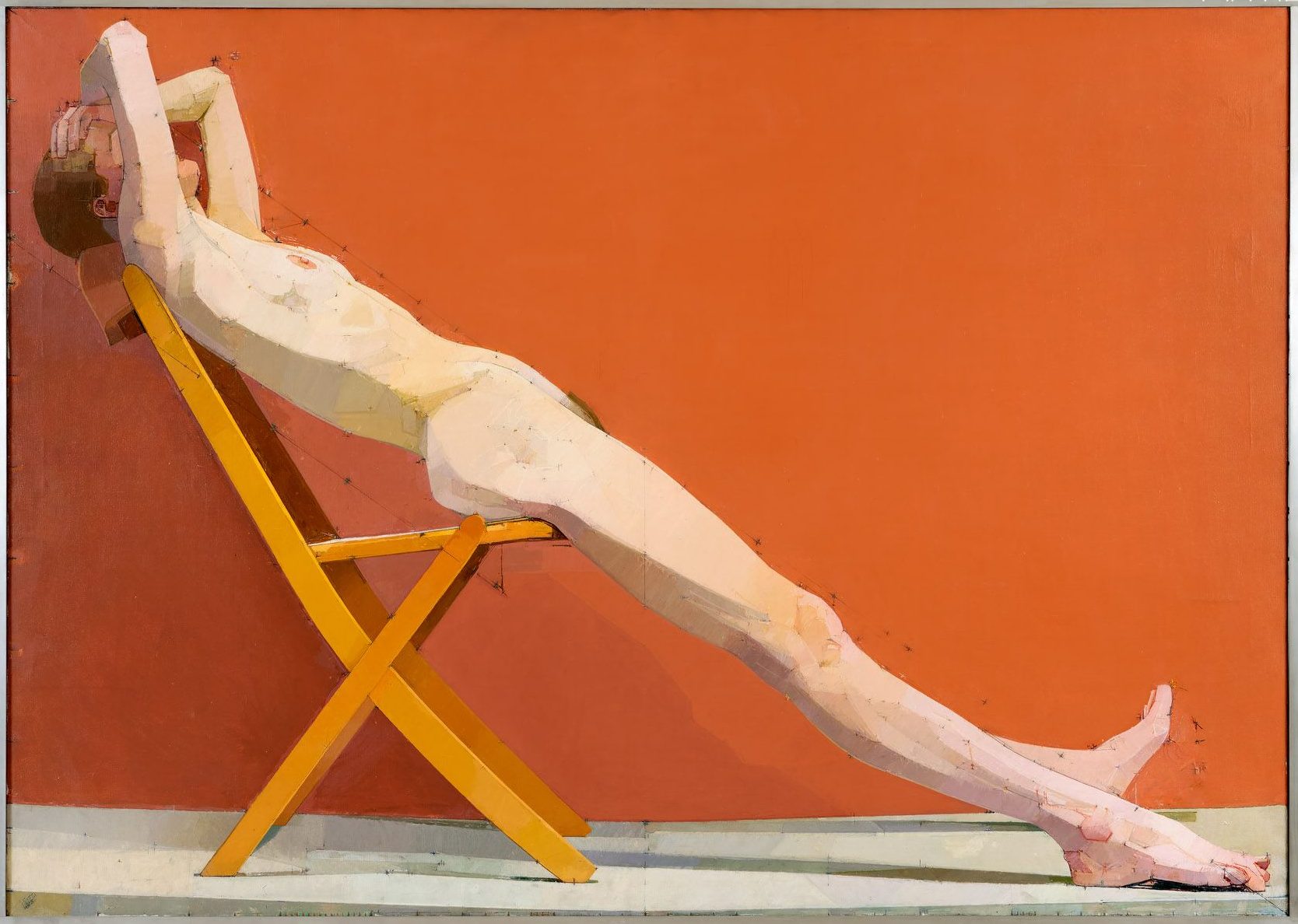
The gallery’s rooms varied in size, unfolding one after another, distinct yet naturally connected. Uglow’s paintings seemed to share the same rhythm: there were large scale works such as The Diagonal (1971–77) alongside small ones like The Blue Towel (1982). They offered no explanation of themselves, made no effort to be liked. It is difficult to say what kind of force this is. Not awe, not drama, not emotion rushing towards you. Rather, it is something extremely quiet and yet insistently present: a steady, restrained energy that glows faintly from within, drawing you to stand there and keep looking.
What is it, exactly, that makes one stop? The near-perfect proportions? The dense clusters of measurement marks? Or those colours that feel pleasurable and relaxed, yet precise to the point of coolness? It is a rare feeling: harmonious, complete, as if a breath were held somewhere deep inside the canvas, or as if everything had been compressed into a very particular silence.
After leaving the gallery, the paintings did not come to an end. Instead, they drifted and slowly deepened in memory. Long afterwards, I still found myself looking for reasons to go back.
I began reading more about Uglow after that. Only gradually did I come to understand those measuring lines, those grids, and why he so often spent years completing a single painting. Yet what is strange is that before I truly understood his methods, the paintings had already struck me. There is something in them that does not require comprehension. You are caught before you know it.
Two years later, when I learned that MK Gallery would be staging Uglow’s largest museum retrospective exhibition in more than two decades, something leapt in me, as if I were about to see a long-missed friend. On the day of the preview, Milton Keynes was overcast, the sky low and grey. But the moment I stepped inside, that familiar feeling returned quietly, as if light had found its way into every corner of the space. Not a dazzling light, but one distilled through long and patient looking; a light that in no hurry to illuminate, yet allowing everything to come forward slowly.
Uglow’s work suggests a strange kind of balance. Beneath an intensely rational structure, there lies something deeply sensory that runs like an undercurrent. The traces of measurement, the geometric proportions, the almost obsessive act of looking: together they make the canvas resemble a precise technical diagram, or a mathematical study of the body. By all logic, such paintings ought to feel cold, even mechanical.
But they are not cold.
What ultimately remains before the eye is something almost poetic. It depends on neither narrative nor expression. Instead, within silence, it slowly establishes an order of its own. Standing before the paintings, what one feels is not cold geometry but the very specific presence of a human being: with weight, with warmth, with skin that has been looked at inch by inch over time, and with a silence one can almost hear. Time is slowed in his paintings. Figures are motionless, yet seem to breathe; bodies are steady, yet carry the faintest tremor of an afterimage.
Perhaps this tension — the barely visible seam between the reason and the feeling — is precisely why Uglow has his singular place in contemporary painting. He never belonged to any movement, yet he has never truly disappeared. His paintings remain there, quietly waiting for those willing to slow down.
After standing in the gallery for a while, something fluid begins to come up. At first glance, Uglow’s paintings appear figurative: figures, still lifes, landscapes, recognisable bodies and spaces. Yet these forms seem, little by little, to loosen from their own names, becoming proportion, colour, line, weight and rhythm; becoming something suspended between presence and abstraction. They still point towards reality, but they no longer remain within it.
It was with this lingering tremor still lodged in memory that I began my conversation with Catherine Lampert, the curator of this exhibition at MK Gally. Lampert has studied Uglow for decades and witnessed his work and thinking at close range. Through her account, we try to move closer to this painter who was always present, yet never loud; and to the time, order, obsession and warmth that lie behind those measurement lines and colours.
還記得2024年的夏天,在Hazlitt Holland-Hibbert畫廊第一次看見尤恩·烏格洛(Euan Uglow)的作品。那些畫並不喧嘩,甚至可以說是安靜的,但正是這種安靜里蘊藏著一種難以抗拒的力量。直到今天,我依然記得自己站在畫前的樣子:一次次走近,又一次次退後,不知不覺便過去了很久。那種緩慢而持久的震動,始終留在記憶之中。
畫廊的展廳大小不一,彼此錯落,卻又自然相連。烏格洛的畫也是如此,有大尺幅的《對角線(The Diagonal, 1971-77)》,也有小尺幅的《藍色毛巾(The Blue Towel, 1982)》。它們不急著解釋自己,甚至不急著讓人喜歡。很難說清楚那究竟是一種怎樣的力量。那不是震撼,不是戲劇性,也不是撲面而來的情緒,它更像是某種極其安靜、卻始終在場的能量,穩定、克制,又隱隱發亮,讓人不由自主地站在畫前,一直看下去。
到底是什麼讓人停下來?是近乎完美的比例嗎?是那些密密麻麻的測量標記嗎?還是那些令人愉悅、放鬆,卻又精確到近乎冷靜的色彩?那種感覺很少見,和諧,完整,徬佛一口氣屏在畫面深處, 又像是一種被高度壓縮後的沉默。離開展廳後,那些畫並沒有隨之結束,反而在記憶里慢慢浮動、發酵。過了很久,它們仍讓人想找一個理由,再回去看一眼。
在那之後,我查閱了許多關於他的資料,才慢慢理解那些測量線、那些網格、以及他為何常常要花數年時間完成一幅畫。可奇妙的是,在真正理解這些方法之前,他的畫已經先一步擊中了我。它們有一種很特殊的力量——你不必完全明白它,卻已經被它抓住。
兩年後,當我得知MK Gallery將舉辦烏格洛近二十多年來最大規模的美術館個展時,心中竟生出一種雀躍的期待,彷佛要再次見到一位久別的朋友。預展當天,Milton Keynes的天色陰沉,但走進展廳的瞬間,那種熟悉的感覺又悄悄回來了,彷佛看見光灑落在展廳的每一個角落。那不是炫目的光,而是一種被長時間凝視所沉澱下來的光;不急於照亮什麼,卻讓一切慢慢顯現。
烏格洛的作品讓我想到一種奇特的平衡,在極度理性的結構之下,潛藏著一條非常感性的暗流。那些測量的痕跡、幾何的比例、近乎執念的凝視方式,讓畫布看起來像一張精密的圖紙,也像一次關於身體的數學推演。按理說,這樣的繪畫應該變得冷靜,甚至機械。
但它不冷。
最終留在眼前的,卻是一種近乎詩意的存在感。它不靠情節,也不靠表情,只是在沈默之中緩慢地建立起一種屬於自己的秩序。站在畫前,感受到的不是冰冷的幾何,而是某種非常具體的人的存在,有重量,有溫度,有一寸一寸被時間凝視過的皮膚,也有一種幾乎可以聽見的靜默。時間在他的畫裡被無限放慢。人物靜止著,卻彷佛仍在呼吸;身體穩定著,卻帶著一絲微微顫動的餘韻。
這種張力——理性與感性之間那道幾乎看不見的縫隙——或許正是烏格洛在當代繪畫中佔據獨特位置的原因。他從不屬於任何潮流,卻也從未真正消失。他的畫始終在那裡,安靜地等著那些願意放慢腳步的人。
在展廳里站久了,會慢慢察覺到某種說不清的流動。烏格洛的畫乍看之下是具象的,有人物,有靜物,有風景,有可辨認的身體與空間,但那些形體似乎一點點從自身的名稱中松脫出來,變成比例、色塊、線條、重量與節奏,變成一種介於存在與抽象之間的東西。它們仍然指向現實,卻不再停留在現實之中。
也正是帶著這種停留在記憶里的震動,我與此次展覽的策展人凱瑟琳·蘭伯特(Catherine Lampert)開始了這次對談。她長期研究烏格洛,也曾近距離見證他的創作與思想。在她的講述中,我們試圖更靠近這位始終在場、卻從不喧嘩的畫家,還有那些測量線與色彩背後的時間、秩序、執念與溫度。


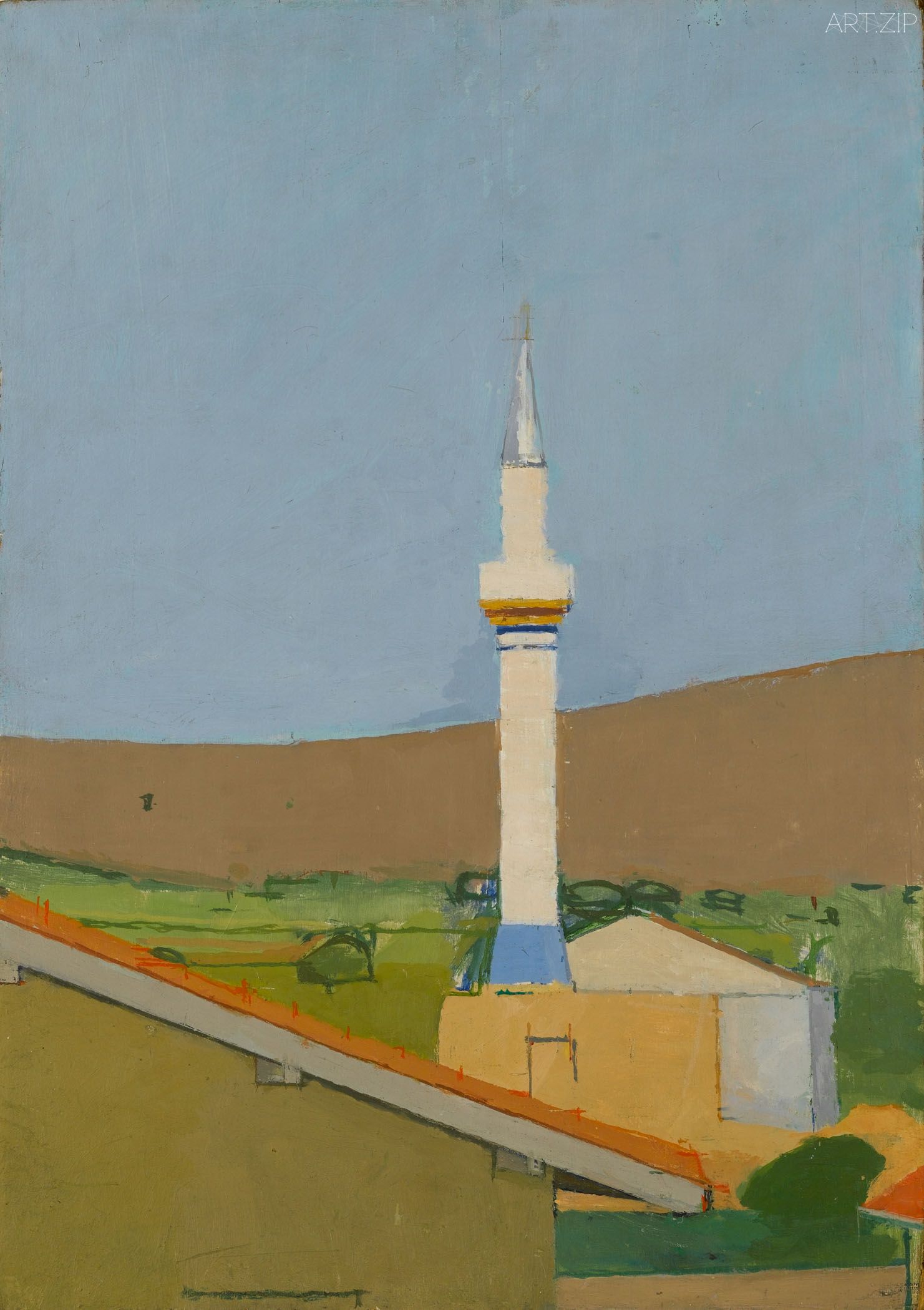

AZ: Uglow’s paintings look figurative at first glance, yet once one understands his method, they feel profoundly abstract. He once mentioned “if pictures are not abstract they’re no good at all… not of abstraction as in ‘abstract art’, but of a thing living in itself.” It reminded me of artists like Hiroshi Sugimoto, who compress time, space and thought into a single image, or even of Chinese landscape painting, where what is conveyed is not a literal scene but a kind of qi — a vibration or energy. Do you think Uglow’s work operates on a similar level — beyond representation?
CL: Yes, I agree with that reading. I would never simply describe him as a figurative or realist painter. Observation was essential for him, but observation was also a way to activate imagination. He was deeply interested in how colour changes across surfaces — flesh, landscapes, flowers, fruit — how tone shifts in minute areas.
When you look closely at his paintings, you become very aware of the line and the facets of colour. Apparently, he would sometimes leave a drop of a mixed colour in water overnight, so he could return the next day and continue with exactly the same tone.
The brushstrokes were never expressionistic. Every mark was deliberate. He worked patiently, sometimes for years, and if something went wrong, he would persist until the painting reached where he believed it should go.
There was always an intellectual and conceptual dimension to the work, alongside the physical act of painting.
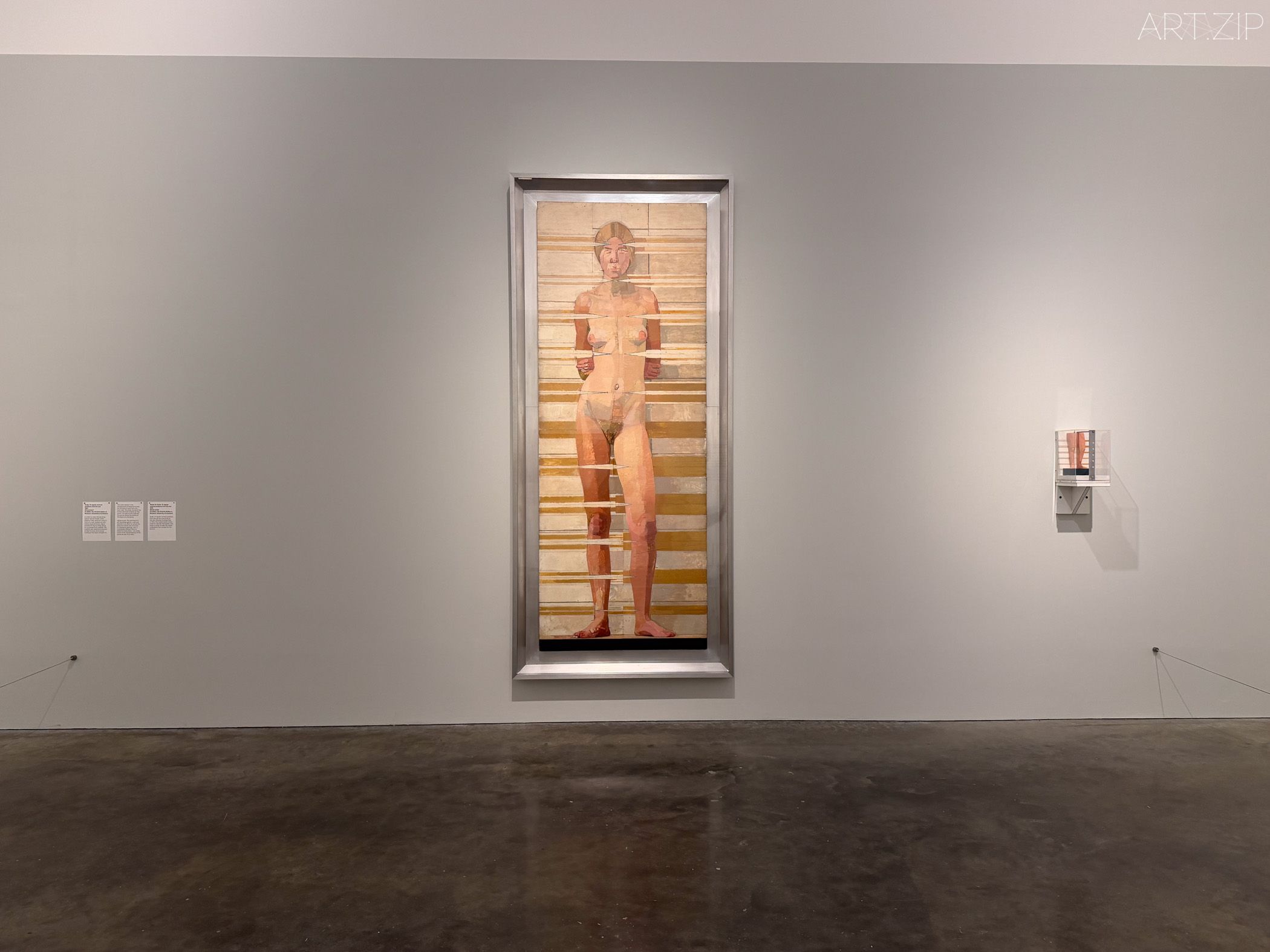
The structure of the painting mattered enormously to him. He would carefully establish horizontal and diagonal systems across the canvas. For example, a diagonal from upper left to lower right could become a compositional challenge that structured the entire work. Everything had to begin from a precise system.
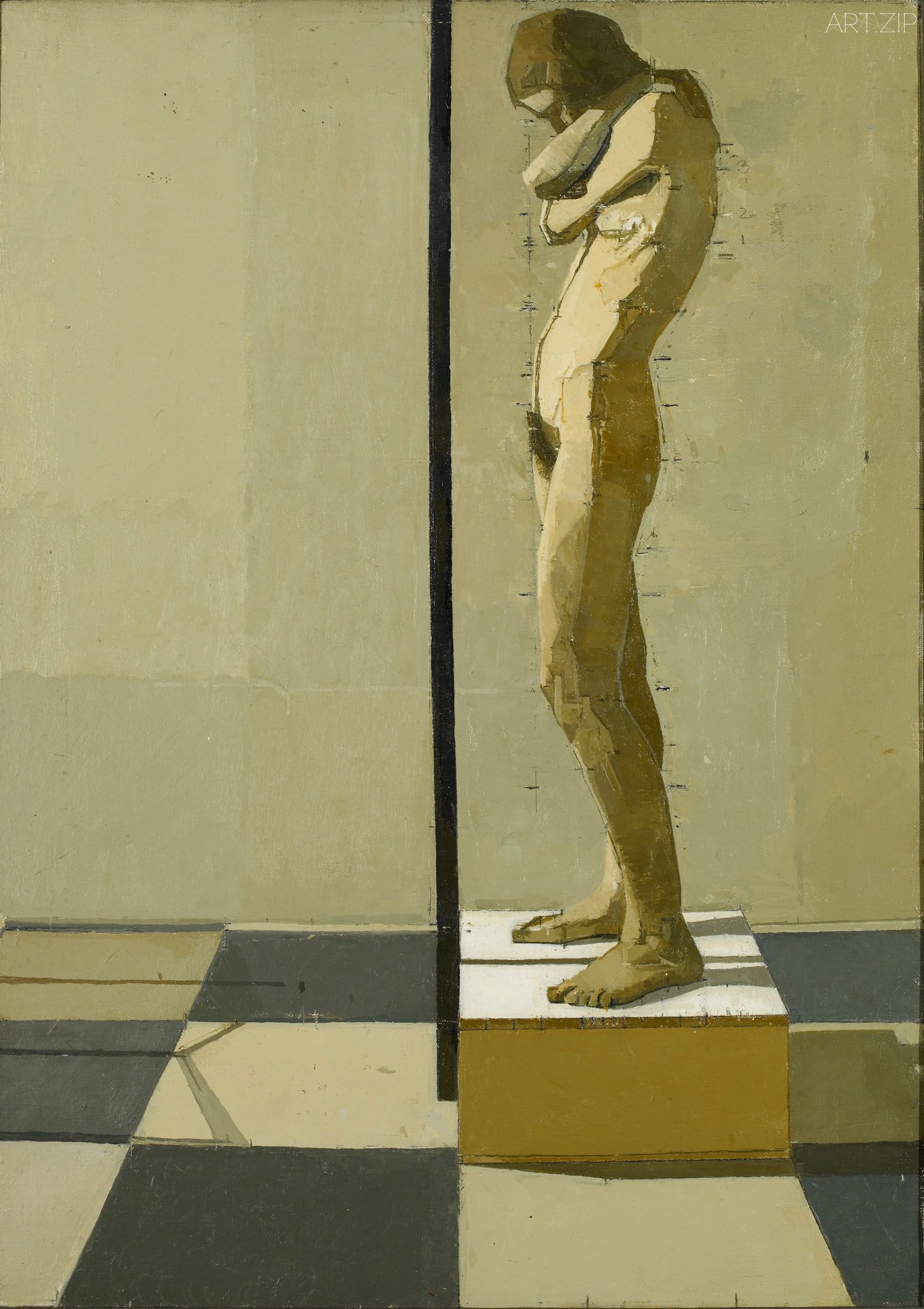
It is more like a vibration and a celebration; his work isn’t about representation. He let the model move around while he drew, and often she would come into a pose that gave him an idea for a painting. Some drawings he started with a formal idea — take The Diagonal, which was to do with a diagonal going the wrong way. But sometimes he just let things happen, with no preconceived idea about what he wanted to do. He would have the model moving around in the studio, perhaps for a day or more, just looking at her, to see what natural positions she got into. (From a conversation with Andrew L., May 1999.) He would then think about this and devise an ordered rectangle — the measurements of the canvas, the set-up for the model. On some occasions the perspective made the orthogonal lines of a stool or table too disturbing, and he would remake the furniture, as he did with Curled Nude on a Stool.
AZ: 烏格洛的畫乍看之下是具象的,但一旦瞭解他的創作方式,又會感到它們是那麼地抽象。他曾說過:「如果畫不夠抽象,就毫無價值……這裡的抽象,不是抽象藝術意義上的抽象,而是一件事物活在自身之中。」這讓我想到像杉本博司那样的艺术家,他們將時間、空間與思想壓縮進一張圖像,同时也讓我聯想到中國山水畫,傳達的不是字面意義上的风景,而是一種「氣」,一種振動或能量。您覺得烏格洛的作品是否也有相似之處?
CL: 是的,我赞同這個解讀。我從來不會簡單地將他描述為一位具象畫家或寫實畫家。觀察對他而言至關重要,但觀察同時也是激活想像力的方式。他對色彩如何在不同表面上變化有著極深的興趣——皮膚、風景、花卉、果實——色調如何在極細微的區域裡發生推移。
當你仔細觀看他的畫,會非常清晰地看到線條與色塊的層次。他有時把一些調好的顏色滴入水中,隔夜留存,以便第二天能以完全相同的色調繼續作畫。
烏格洛的筆觸從來不是表現性的。每一個筆觸都是深思熟慮的結果。他工作起來非常有耐心,有時一幅畫會持續創作數年;如果出了什麼問題,他一直到畫到滿意為止才會放手。
他的作品始終包含一個智識與概念的維度,與繪畫的這個行為並存。在許多方面,他是一位概念藝術家,同時也是一位畫家。
繪畫的結構對他而言極為重要。他會在畫布上仔細建立橫向與斜向的系統。比如,從左上到右下的一條對角線,可以成為一個構圖上的挑戰,從而構建整幅作品的骨架。一切都必須從一個精確的系統出發。
或許可以這麼說,那更像是一種振動,一種禮讚;他的作品與再現無關。他讓模特在他作畫時自由走動,模特常常會自然進入某個姿勢,由此帶給他一幅畫的靈感。有些畫他是從一個形式構想出發的——比如《對角線 (The Diagonal, 1971-77)》,靈感來自一條「走錯方向」的對角線。但有時他完全順其自然,對自己想畫什麼毫無預設,只是讓模特在畫室裡移動,也許長達一天甚至更久,靜靜觀察她,看她會落入什麼樣的姿勢(他曾經在1999年5月跟Andrew L.提到)。然後他會反覆思量,再設計出一個有序的矩形,畫布的尺寸,模特需要的道具。有時透視會使凳子或桌子的正交線條顯得過於突兀,他便會重新製作那件傢具,《蜷縮的裸體(Curled Nude on a Stool, 1982-1983)》那張作品就是那樣。

Euan Uglow, The Diagonal, 1971-77

Euan Uglow, Curled Nude on a Stool, 1982-1983
AZ: I’m fascinated by the tension in his work between measurement and emotion. The grids and markings feel mathematical and rational, almost like mapping the body scientifically. Yet the colours are luminous and deeply tender, emotionally charged. Do you think the emotional intensity in his paintings comes through restraint?
CL: He spoke of painting to convey “controlled passion.” He definitely wasn’t mapping the body — he made equivalents for parts, sometimes more compact, responding to changes in tone and colour but not to the veins, freckles, or literal details of the skin. Root Five Nude (1974-75), for instance, reinvents the architecture and structure of the model’s body.
The so-called “controlled passion”, the feeling in the painting could originate from something personal — perhaps the smile of a particular person — but the final painting was never about simply recording that smile literally.
Instead, he tried to convey a deeper emotional state: joy, calmness, peace, or inner feeling.
He worked in silence and with immense discipline. He had extremely high standards, both ethically and artistically.
AZ: 他的作品中有一種張力令我著迷——就是那種精確測量與情感之間的張力。那些網格和標記是數學性的、理性的,幾乎像是在對身體進行科學的丈量。然而他的色彩卻是那樣光彩熠發,甚至近乎溫柔,充滿情感的重量。您認為他畫中的情感強度,恰恰是從克制中生長出來的嗎?
CL: 他曾經提到,繪畫是為了傳達「受控的激情」。他絕對不是在丈量身體——對他來說,他為身體的每個部分創造視覺上的對應——有時更為凝練,回應的是色調與色彩的變化,而非皮膚上的血管、雀斑或任何字面意義上的細節。《根號五(Root Five Nude, 1974-75)》便是對模特身體結構與建築感的重新創造。
所谓的「受控的激情」,那種情感可能源自某個非常私人的東西,也許是某個人的微笑,但最終的畫作從來不是在記錄那個微笑本身,而是試圖傳達一種更深的情感狀態:喜悅,平靜,安寧,或某種內在的感受。他在沉默中工作,帶著極高的自我要求,無論在倫理上還是藝術上,他的標準都極為嚴苛。

Euan Uglow, Root Five Nude , 1974-5, Oil on canvas. Image courtesy Browse and Darby, London. © The estate of Euan Uglow. All rights reserved 2025 / Bridgeman Images
AZ: The poses in his paintings often appear relaxed — almost casual, like everyday gestures. Yet we know they were highly constructed over months or years, sometimes physically exhausting for the model. How did Uglow choose a pose? Was he searching for stillness, or for a moment on the verge of movement?
CL: Usually, he would spend time drawing a model before deciding whether a painting was possible. He needed to establish trust and determine whether the person could sustain long sittings. Sometimes he already had a formal idea in mind. For example, when he installed a new skylight in the studio, he became fascinated by how overhead light would fall across the body.
The poses were often physically difficult. In Root Five Nude, the model eventually needed support to maintain the pose. But he was never cruel. He understood how demanding posing could be and allowed regular breaks. Importantly, he never treated the studio like a bohemian space. There was enormous discipline and respect. He did not casually observe the nude body outside the pose itself. Once the sitting ended, the model would put on a dressing gown and he would leave the room.
The model was asked to stay as still as possible. He thought of wanting to paint at a single second — the moment of an inhale, an exhale. But he wasn’t searching for a single frozen moment; he wanted to contemplate and reinvent. What he described as happening perhaps once a week was a kind of harmony of form, light and colour.
AZ: 他作品里的模特姿勢看起來往往很放鬆——幾乎是隨意的,像日常動作。但實際上這些姿勢是經過數月乃至數年構建而成的,有時對模特來說應該是極為疲憊的。烏格洛是怎麼選擇一個姿勢的?他追尋的是靜止,還是一個即將運動的臨界瞬間?
CL: 通常他會先花時間為模特画素描,再決定是否可以發展為一幅油畫。他需要和模特建立信任,確認對方是否能承受長時間的靜坐。有時他心中已有一個形式構想,例如,當他在畫室裝了一扇新的天窗後,他開始著迷於頂光如何落在身體上。那些姿勢对于身體来说往往很不容易。在《根號五裸體(Root Five Nude)》中,模特最終需要支撐才能維持那个姿勢。但他對模特從不殘忍,他知道擺姿勢的艱辛,會定時讓模特休息。重要的是,他從不把畫室視為一個隨心所欲的波西米亞式空間。那裡有極嚴格的紀律,對模特也有極大的尊重。他从不随便审视绘画姿势以外的裸体。模特一旦结束绘画姿势就会马上披上浴袍,烏格洛也会离开画室。
模特被要求盡可能保持靜止。他想象自己是在捕捉某一秒——呼吸的那一刻。但他並非在追尋某個凝固的瞬間,而是要在沉思中重新創造。他描述說,也許每周會有一次,形式、光線與色彩達到某種和諧。

AZ: We live in a culture of scanning rather than looking. Uglow insisted on slowness. His paintings feel both still and vibrating at the same time — I think that makes them more radical than ever. For audiences today, what is the most challenging part?
CL: To look at one painting for a length of time — not just to walk past it or keep talking. And to remember that the criterion is creating something marvellous that goes beyond the present. For Uglow, it wasn’t about fidelity to the subject or a recreation of an everyday experience. He had to get his eye in the right place.
One of the motivations behind exhibiting his work today is precisely because contemporary image culture is so fast, photographic, and screen-based. Uglow encouraged students to sit in front of a painting in the National Gallery for at least half an hour — really looking slowly. He loved painters like Francisco Goya, but what mattered most to him was sustained looking. The longer you look, the more you begin to perceive: the colour shifts, the structure, the spatial relationships. That, fundamentally, is what art is about.
Museums today are often crowded and noisy, which makes sustained attention difficult. One of the last journeys Uglow made before he died was to Arezzo in Italy to see the frescoes again. He was already very ill. Designer Paul Smith arranged for him to have private access to the chapel for a short period, so he could sit alone quietly with the paintings. For him, that was one of life’s greatest pleasures.
I do think “radical” is the right word. His paintings foreground time, labour, execution, and attention in ways that feel increasingly rare. At the same time, the paintings are unmistakably of their era — the poses, the atmosphere, the models belong to the 1970s–90s — yet they also bring the past into the present. You feel suddenly present with another human being at a specific moment in their life.
AZ: I was also struck by the frames. His paintings seem to work equally well with classical and modern framing.
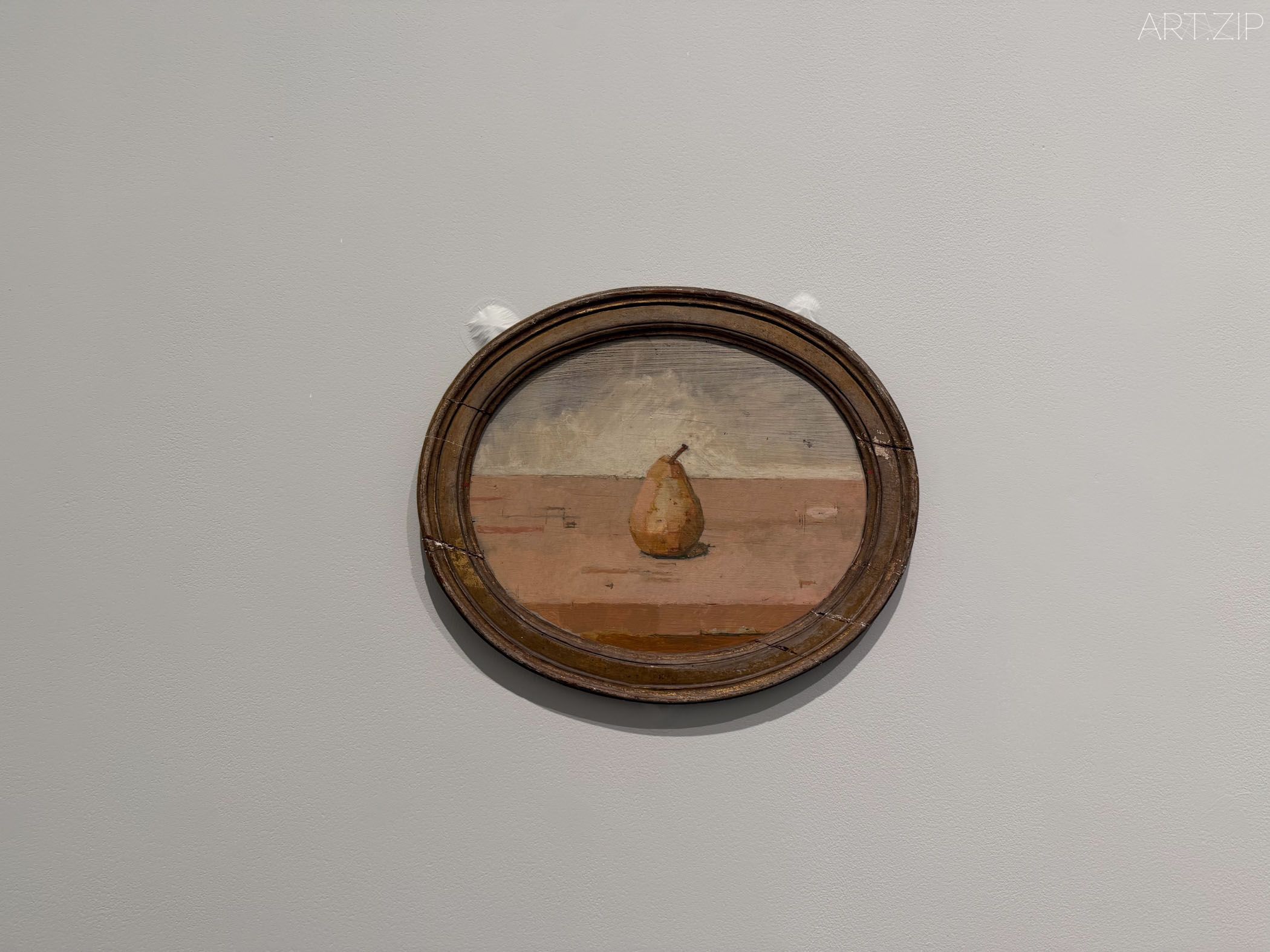
CL: Frames mattered enormously to him. Early on, he even made some himself, and later worked closely with frame makers. The colour and structure of the frame were considered part of the painting. Sometimes old frames were cut down or reconstructed to suit a specific work. He cared about every detail.
AZ: You organised some of his earlier exhibitions. How is this exhibition different? Why has it taken so long for a major museum to revisit him? Did you make any new discoveries in the process?
CL: I only began organising exhibitions — for the Arts Council of Great Britain — in 1974, when I was in my twenties. Uglow did have a show in 2003 at Abbot Hall Gallery in Kendal, so it has been twenty-three years. There are aspects of Uglow’s work that go against the grain of some contemporary painting, but when his work was shown at Hazlitt Holland-Hibbert, London, in May 2024, the reaction was very positive, especially among artists.
AZ: 我們生活在一個掃視而非凝視的文化之中,而烏格洛一直在堅持慢的品質。他的畫同時給人靜止與振動的感覺。我認為這使它們比以往任何時候都更具顛覆性,更「激進」。對於今天的觀眾而言,最具挑戰性的是什麼?
CL: 我想對觀眾來說最具挑戰的是在一幅畫前駐足足夠長的時間——不只是走過去看一眼,或不停地說話。還有就是要記住,評判的標準是,作品是否創造出某種超越當下的非凡之物。對烏格洛來說,繪畫不是忠於繪畫對象,也不是再現日常經驗。他必須將自己的眼睛放到那個唯一正確的位置 ,他讓眼睛看到該看的。
我認為展出烏格洛的作品的動機之一,正是因為當代圖像文化是如此之快、如此攝影化、如此以螢幕為中心。烏格洛鼓勵學生在國家美術館的一幅畫前坐滿至少半小時——真正地、緩慢地看。他熱愛哥雅這樣的畫家,但對他而言最重要的,是持續的凝視。你看的時間越久,你才越能開始感知:色彩的推移,結構,空間關係。那從根本上說才是藝術的意義所在。
當今的美術館往往擁擠而嘈雜,持續的專注變得困難。烏格洛去世前做的最後一次長途旅行,是去義大利阿雷佐再看一次那裡的壁畫,那時他已病得很重。設計師保羅·史密斯(Paul Smith)為他安排了私人進入小教堂的時間,讓他能夠獨自一人,安靜地坐在那些畫前。對他而言,那是人生最大的喜悅之一。
我確實認為你用「激進」這個詞很正確。他的畫把時間、勞動、執行與專注推到了前景,而這在今天變得越來越稀有。與此同時,那些畫又清晰地屬於它們的時代——姿勢、氛圍、模特,都屬於1970至90年代——但它們也將過去帶入了當下。你忽然感到自己與另一個人同在,在他們生命中某個具體的時刻裡。
AZ: 烏格洛選擇的畫框也很有特點。他的畫不論是與古典還是現代畫框搭配都一樣和諧。
CL: 嗯,畫框對他而言至關重要。早年他甚至自己製作畫框,後來也與裱框師密切合作。畫框的色彩與結構被視為畫作的一部分。有時舊畫框會被切割或重建,以適應某幅特定的作品。他在乎每一個細節。
AZ: 您曾組織過他早年的一些展覽。這次展覽有什麼不同?為什么要隔這麼長時間才等到大的美術机构来呈現他的作品?您在籌備過程中有什麼新的發現嗎?
CL: 我是從1974年才開始為英國藝術委員會組織展覽的,那時我二十多歲。2003年烏格洛在肯德爾的雅伯特·豪爾畫廊舉辦過一次展覽,所以距今是二十三年。烏格洛的作品在某些方面與當代繪畫的潮流走向相逆,但2024年5月他的作品在倫敦Hazlitt Holland-Hibbert 畫廊展出時,反響非常熱烈,尤其在藝術家群體中。
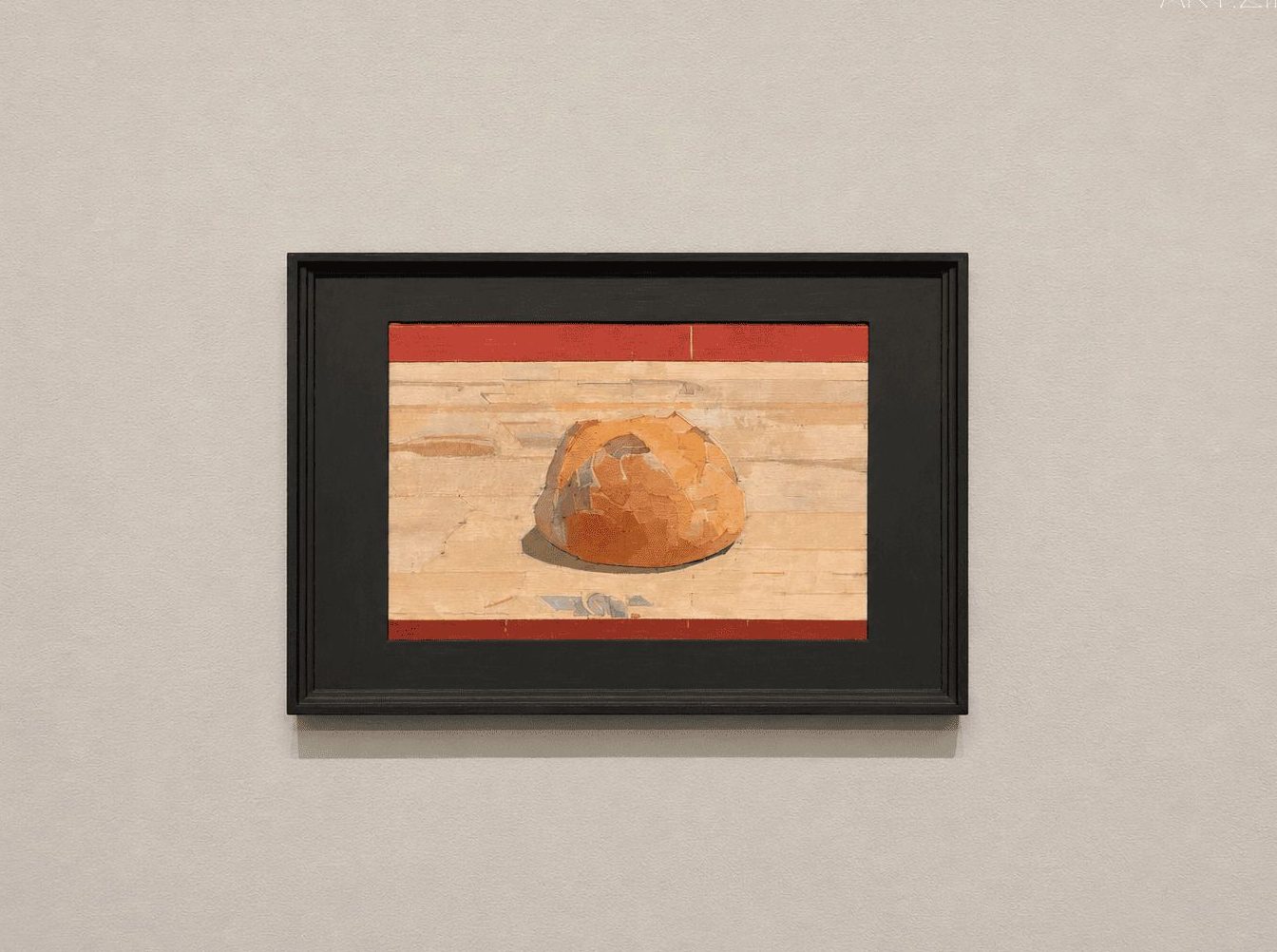
AZ: His still life paintings often feel even more abstract than the nudes. He once said that if you get the sides right, the middle grows naturally. Can you talk about his method in the still lifes, and how you see the relationship between those works and the figures?
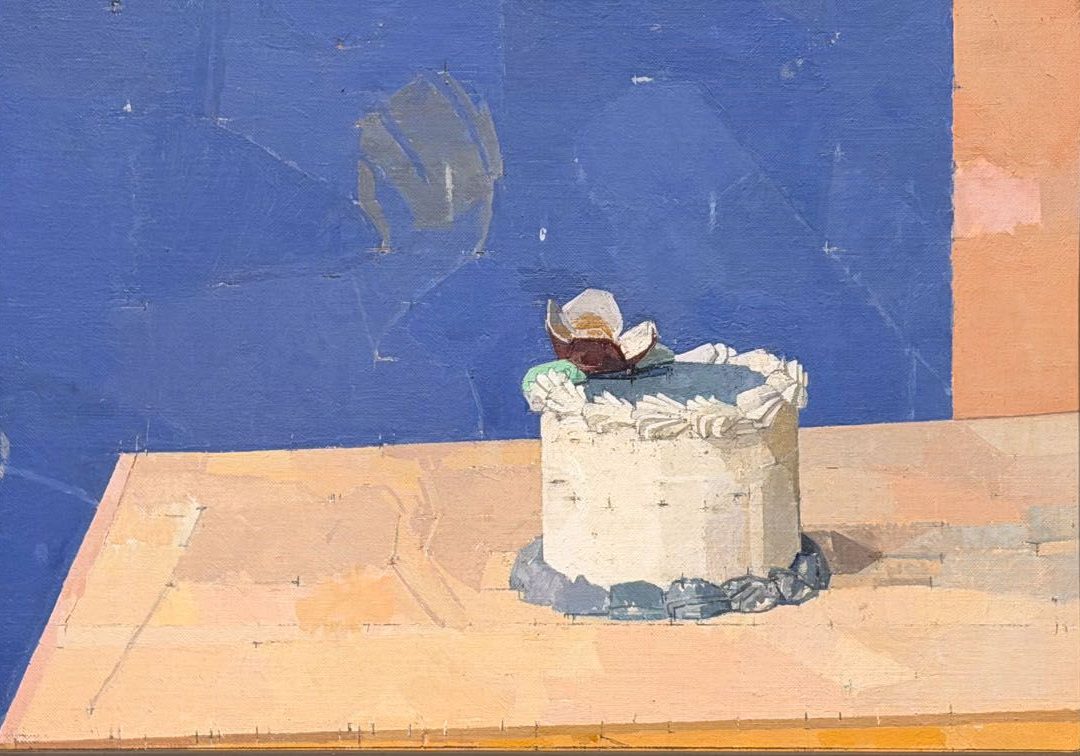
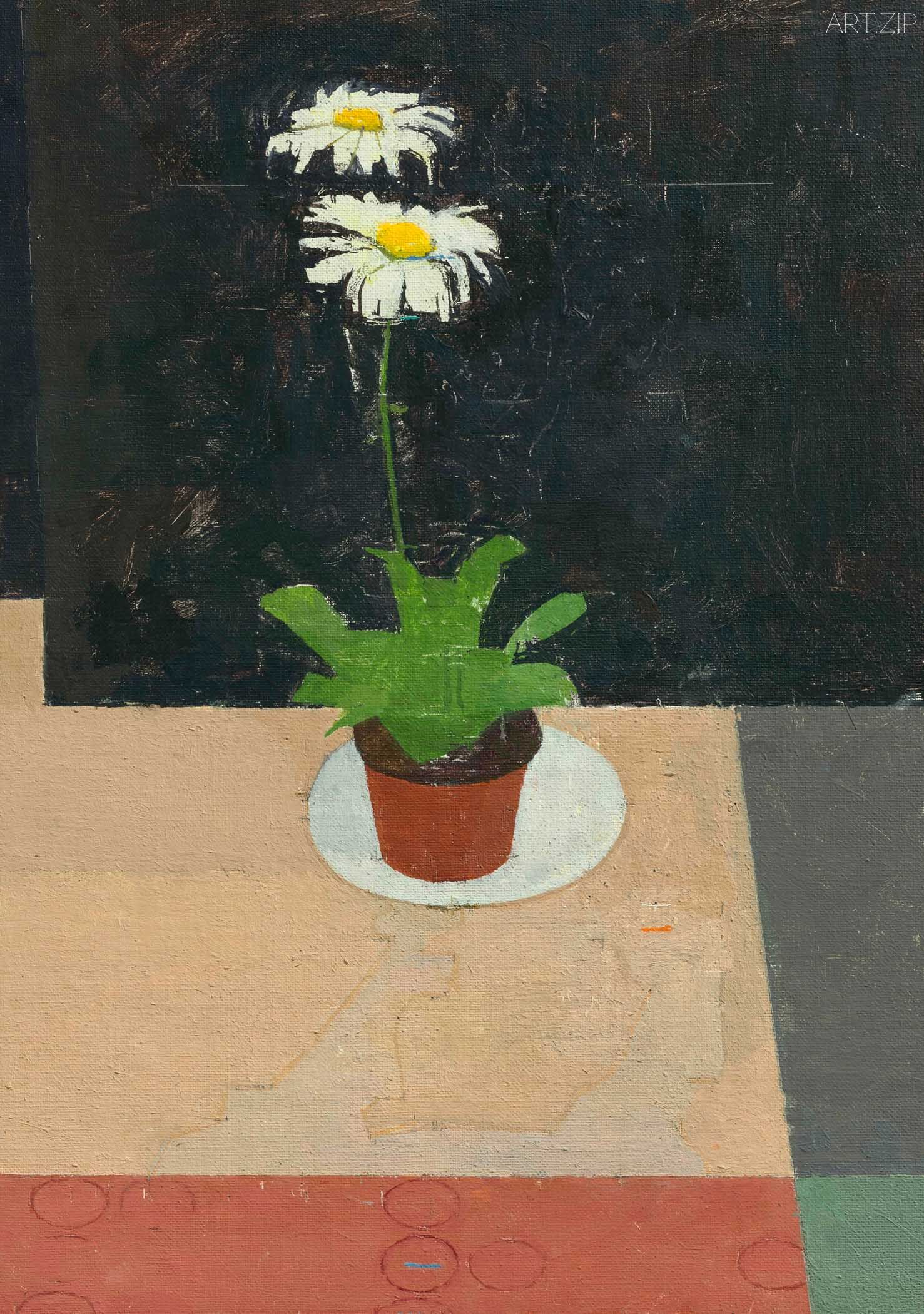
CL: He also painted landscapes in the Mediterranean. In the still lifes — fruit, bread, flowers — there was a special urgency, since the subject would begin to rot, move, or shrink. Flowers carried associations with people and moments in his life: the artificial little cake belonged to his friend Craigie Aitchison, and the plaster hellebore had been a present Uglow gave to someone he cared about. He liked trying to paint new materials — plastic, glass — and thinking carefully about colour. Polygons, for example, has a special colour for the background and surface, with a blue in the middle that came from concentrated Reckitt’s powder mixed with linseed oil.
AZ: 他的靜物畫往往比裸體畫感覺更為抽象。他曾說,只要把邊緣處理好,中間自然會生長出來。您能談談他在靜物創作中的方法嗎?您如何看待靜物與人體作品之間的關係?
CL: 除了静物和人体,他其实也畫地中海的風景。在靜物畫裡,水果、麵包以及鮮花都有一種特殊的緊迫感,因為這些對象會腐爛、移動、收縮。鮮花承載著他生命中與某些人或某系時刻的聯想:那只人造小蛋糕屬於他的朋友克雷基·艾奇遜(Craigie Aitchison),那朵石膏做的鐵筷子花是烏格洛送給他在乎的某人的禮物。他喜歡嘗試描繪新的材質——塑料、玻璃——並仔細思考色彩。作品《多邊形(Polygons)》就是一个很好的例子:背景與表面各有專屬的顏色,中間那片藍是用濃縮的 Reckitt 牌清洁用的蓝粉末與亞麻子油的調和出来的。

Euan Uglow, Polygons, 1970.
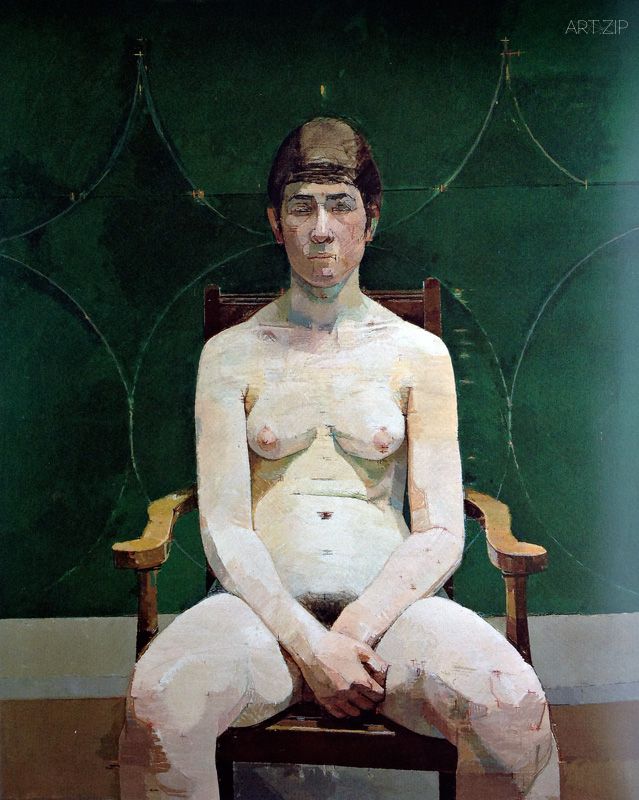
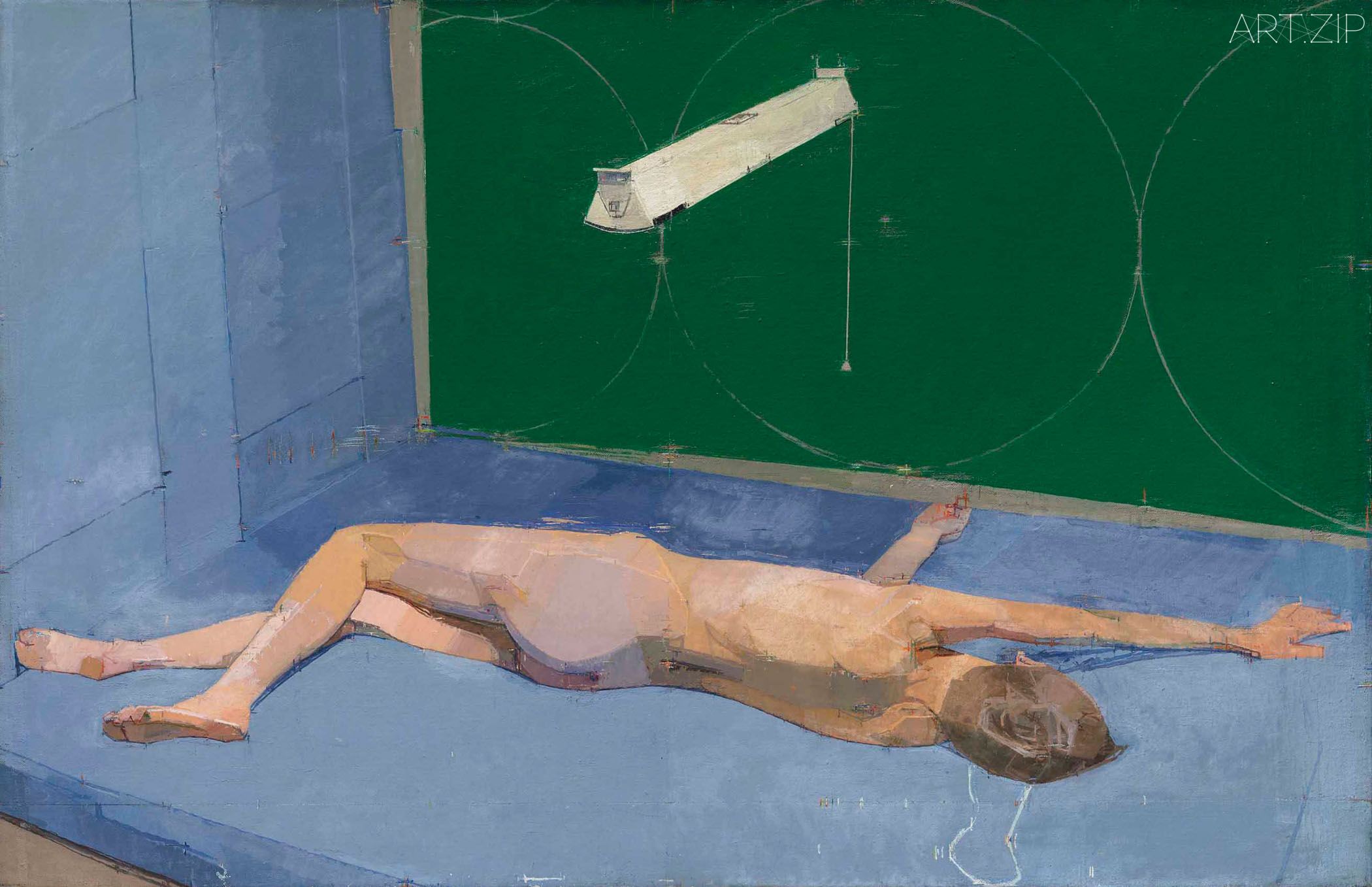
AZ: He described Nude with Green Background (1964-195) as one of his most abstract works — and he kept the chair. Why did he consider that painting so abstract?
CL: I’m not entirely sure. He felt he didn’t have to make a pleasing nude, or one that suggested movement — she was completely still — and he had the background with its large circles, and light falling directly on her body. Abstract in the sense that nothing was “happening.”
AZ: 他將《綠色背景裸體 Nude with Green Background (1964-1965)》描述為自己最抽象的作品之一,並且保留了那把椅子。他為何認為這幅畫如此抽象?
CL: 我不完全確定。他覺得自己不必去創作一幅討人喜歡的裸體畫,也不必暗示任何動感——模特完全靜止——背景就是那些大圓形,而光線直接落在她的身體上。抽象,是因為什麼都「沒有發生」。

AZ: In Chinese art history, the nude is not a sustained tradition, and I sometimes feel uneasy looking at explicit figurative works. But with Uglow’s nudes I never felt that — I see beauty, and I can keep looking. Some critics speak of a suppressed eroticism in Uglow’s work. As a curator, and as a woman, how do you approach looking at works of nudes?
CL: For me, his nudes are transformed by the un-lifelike poses and by the clarity and light. They are totally real. I spoke to nearly every model between 2002 and 2007, and some more recently. They all remembered the experience with positive feelings — it was a collaboration, and Uglow said he couldn’t have done this without them. Many were students or not native to Britain; he gave them a routine, and employment, that meant a great deal. He was proud of them as they went off into their professional and personal lives. He said he never looked them in the eye while painting, and never looked at them when they weren’t posing.
Thinking of nudes as a category isn’t very useful. The review by Chloe Ashby in the Guardian completely missed the point: the model for Root Five Nude, Sietske, was very strong and tall — but what Uglow saw was being transformed into a painting, an independent invented object, not a photographic rendering. Making the table curve so that its entire edge was equidistant from his eye, for instance, was an experiment.
As for being a curator and a woman — if paintings are strong, it doesn’t matter to me whether I am female or male, or whether the subject is male or female. Lucian Freud’s nudes are the same for me. The painter is very dependent on the person being painted, and in my experience — I sat for Frank Auerbach, not nude, for forty-six years — it is a fantastic privilege to have a role in making great art.
AZ: 裸體在中國傳統繪畫歷史上並不是主流的宏大主題。有時在觀看西方裸露的具象作品時我可能會不知道怎麼觀看。但在烏格洛的裸體畫作前,我從未有過這種不知所措的感覺。相反的,我看到美,並且想要主動地去長久凝視。曾有些評論者談及烏格洛的作品中被壓抑的情色意味。作為策展人,也作為一位女性,您是怎麼觀看裸體作品的呢?
CL: 對我而言,因為那些不像生活中的姿勢,還有畫面傳達的清晰與光線,從而使他的裸體畫形成了一種轉化。它們看起來很真實的。我在2002年至2007年間與幾乎每一位模特都交談過,近年也與一些模特交流過。她們都以積極的心情回憶那段經歷——那是一種協作。烏格洛曾經說過,沒有她們他就沒有辦法完成這些作品。模特里很多人是學生,或著是非英國本地人;烏格洛給了她們一個生活規律,一份工作,這對她們來說意義重大。當她們走向各自的職業與個人生活時,烏格洛為她們感到驕傲。他曾經表示他在畫畫的時候他從來不正視她們的眼睛,她們不在擺姿勢的時候烏格洛就不會看她們。
把裸體作為一個類別來思考並沒有太大意義。克洛伊·阿什比(Chloe Ashby)在《衛報 (The Guardian)》上的那篇評論完全沒有抓住烏格洛作品的重點,她說《根號五裸體》的模特西耶茨克(Sietske)身材高挑、體格健碩;但烏格洛其實是把所見的轉化為一幅畫,一件獨立的、被創作之物,而非對所見之物的照相式再現。比如,烏格洛將桌子做成弧形從而使它的整條邊緣與他自己的眼睛等距,這個做法本身就是一次實驗。
至於作為策展人和女性,如果畫作足夠強大,對我而言無論我是女是男,還是畫中對象是女是男,都無關緊要。盧西安·弗洛伊德(Lucian Freud)的裸體畫對我來說也是如此。畫家極度依賴於被畫的那個人,以我自己的經驗來說,我為弗蘭克·奧爾巴赫(Frank Auerbach)做了四十六年的模特,並非裸體模特,能夠參與偉大藝術的創作,是一種非凡的特權。
Euan Uglow, Three in One , 1967-68, Oil on canvas. Image © 2014 and courtesy Christie’s Images Limited. © The estate of Euan Uglow. All rights reserved 2025 / Bridgeman Images
As the conversation drew to a close, Lampert also spoke of Uglow’s time in China, where he had lived and taught for a period. What he left with the students, she suggested, was not merely a method of painting, but an almost absolute demand placed upon looking, upon space, and upon painting itself — a demand that had little to do with language or cultural background, and everything to do with the eye. He wanted there to be no unnecessary interference between the artist and the subject. He also kept reminding his students that what mattered was not what one painted, but whether the painting truly had something to do with oneself; whether it possessed an inner necessity.
The sky outside was still grey and heavy. Leaving the gallery, I found my thoughts returning to Uglow’s Shrunken Tangerine (1988).That small tangerine had collapsed and creased with time, its skin wrinkled, its volume diminished, and yet it felt, at that moment, more substantial than ever. Something in it had grown heavier, as if time itself had been detained there, pressed into that small passage of colour, dense and weighty. It was so tiny, and yet it seemed to carry the weight of an entire duration.
After speaking with the curator, I no longer felt any regret that this retrospective had not taken place in one of London’s large, crowded museums. Uglow’s paintings were never meant to be consumed by a rush of passing eyes. On the contrary, I began to feel that perhaps this kind of encounter was actually closer to what Uglow himself had intended. What these works require is someone willing to stop, willing to look, and willing to return time to painting. In that moment, looking was no longer merely looking; it became a way of sharing with him a certain kind of precious, slowly unfolding time.
Such conditions can be met anywhere.
採訪將近尾聲,Lampert還提到烏格洛曾赴中國駐留與教學。她說,烏格洛留給學生的,不只是繪畫的方法,更是一種對觀看、對空間、對繪畫本身近乎絕對的要求——那種要求,和語言無關,和文化背景無關,只和眼睛有關。他希望藝術家與對象之間沒有多餘的乾擾,也不斷提醒學生:重要的不是畫什麼,而是畫面是否真正與自己有關,是否擁有一種內在的必要性。
外面的天色依然灰蒙蒙的。走出展廳,烏格洛的《萎縮的橘子(Shrunken Tangerine,1988)》忽然浮上心頭。那個在時間裡一點點鄒縮、塌陷的小橘子,皮已經皺了,體積已經小了,但此刻顯得格外有力量,彷彿有種東西更重了,像是時間本身被留了下來,壓在那一小塊色彩里,沈甸甸的。它如此微小,卻彷彿承受著整段時間的重量。
和策展人談完之後,我不再惋惜這場烏格洛的回顧展沒有落在倫敦某座人頭攢動的大型美術館裡。烏格洛的畫從來不是為了被蜂擁而至的目光消費的。相反,我開始覺得,也許這樣的相遇反而更接近烏格洛本身。這些作品需要的,是一個願意停下來、願意凝視、也願意把時間交還給繪畫的人。那一刻,觀看不再只是觀看,而像是與他共享了某種珍貴而緩慢的時間。
這些條件,在任何地方都可以成立。

Euan Uglow, Shrunken Tangerine,1988
Euan Uglow: An Arc from the Eye
14 February – 31 May 2026
MK Gallery
Interview and Text 採訪及撰文 x by Michelle Yu